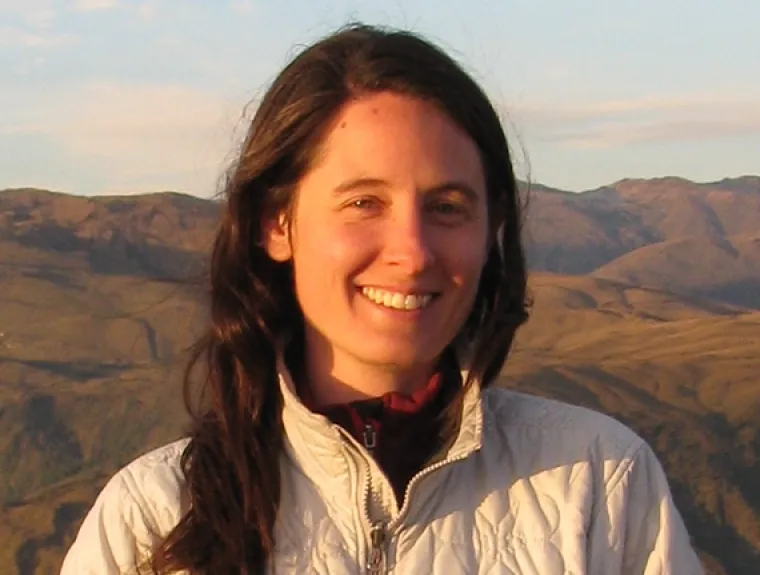
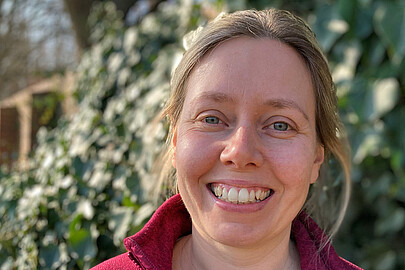
Zhigang Zak Fang is a Professor in the Department of Metallurgical Engineering at the University of Utah, specializing in advanced metallurgical processing technologies. His work focuses on sustainable metal production, titanium powder metallurgy, additive manufacturing, and hydrogen storage materials. With over 360 publications and 60 US patents, Fang has commercialized novel titanium production methods that could significantly reduce costs and greenhouse gas emissions. PhD in Materials Science and Engineering (University of Alabama at Birmingham, 1991) MS and BS in Materials Science and Engineering (University of Science and Technology Beijing, 1984) Research Interests: Fang's research bridges materials engineering with environmental sustainability, particularly through hydrogen-assisted metallurgy and powder-based manufacturing. His work on TiFe alloys for hydrogen storage and WC-Co composites demonstrates innovation in both fundamental science and industrial applications. Notable Awards: R&D100 Awards (2009, 2023) Humboldt Research Award (2023) Fellow, National Academy of Inventors (2017) Editor-in-Chief of the International Journal of Refractory Metals and Hard Materials Grants: Fang has secured ~$30M in external funding, including DOE projects for clean steel production (2024-2027) and ARPA-E energy storage initiatives.
Professor Zoe Marshman is a faculty member at the University of Sheffield School of Clinical Dentistry , where she holds the Professorship in Dental Public Health and serves as an Honorary Consultant in Dental Public Health across multiple institutions. She leads major NIHR-supported research initiatives including the CALM trial (self-help CBT for dental anxiety) and BRUSH project (school toothbrushing programs), while co-leading the national NIHR oral health research incubator . BDS, MPH, DDPH, FDS (DPH), PhD Research interests focus on child-centred dentistry, with expertise in: Preventive oral health interventions Implementation and improvement science Process evaluations of complex trials Behavioral approaches for dental anxiety Reducing oral health disparities in deprived populations Dental public health policy frameworks Scientific contributions include 15 recent publications on topics ranging from: Oral health policy evaluation (sugar tax) Supervised toothbrushing program effectiveness Cognitive behavioral therapy for children Caries management techniques Digital health interventions Special needs dentistry for autistic children Teaching encompasses Dental epidemiology Dental public health systems BDS and Masters program leadership External examination roles across UK universities Professional leadership includes Chair of North of England Dental Public Health Audit Group NIHR Regional Research Network Oral/Dental Lead Academic director for Charles Clifford Dental Services NIHR Senior Investigator (2025)
Roger Lewis is a Professor of Mechanical Engineering at the University of Sheffield , affiliated with the School of Mechanical, Aerospace and Civil Engineering . He graduated from Sheffield in 1996 with an MEng and completed his PhD in the Tribology Research Group . His academic career progressed from Lecturer (2002) to Senior Lecturer (2006), Reader (2011), and finally a personal chair in 2013. In 2019, he was appointed a Royal Academy of Engineering Research Chair , co-funded by the Rail Safety and Standards Board , focusing on low adhesion management in wheel/rail interfaces. PhD in Tribology (University of Sheffield) MEng in Mechanical Engineering (University of Sheffield) His research spans two domains: industrial wear solutions (railway wheel/rail tribology, friction modifiers, condition monitoring) and human tissue interactions (skin friction modeling, medical device interface analysis, slip/fall mechanics). He pioneered ultrasonic techniques for contact analysis and edited The Wheel/Rail Interface Handbook . Awards include the Tribology Trust Bronze Medal (2001), Brian Mercer Innovation Award (2003), and Donald Julius Groen Prize (2020). Roger's recent publications (2025-2024) focus on railway wear mechanisms (corrosion interactions, Mn13/CrB1400 rail steels), particle entrainment modeling , and adhesion optimization via sanding. His work integrates experimental twin-disc testing , DEM/CFD simulations , and real-time monitoring of wheel/rail contacts. Scientific Honors: Tribology Trust Bronze Medal (2001) Brian Mercer Award for Innovation (2003) Institute of Physics Innovation Prize (2008) Donald Julius Groen Prize (2020) Chartered Engineer and IMechE Fellow Roger leads the Leonardo Tribology Centre and has developed laser cladding techniques for rail repair. His work on friction modifiers and adhesion management has direct applications in railway safety and efficiency.
Dr. Kimberly Meidenbauer is an Assistant Professor in the Department of Psychology at Washington State University and serves as Director of the Social, Cognitive, & Environmental Neuroscience (SCENe) Lab. She joined WSU after completing postdoctoral research at the University of Chicago, where she earned her Ph.D. in Psychology (2020) following a B.A. in Psychology from the University of Wisconsin-Milwaukee (2012). Ph.D., University of Chicago (2020) B.A., University of Wisconsin-Milwaukee (2012) Her research investigates how physical and social environments influence brain function, mental health, and behavior through: Heat exposure effects on cognitive decline and aggression Environmental justice frameworks for health disparities Mobile neuroimaging (fNIRS) in naturalistic settings Computational modeling of environmental impacts Validation of methods bridging lab experiments with real-world applications The SCENe Lab emphasizes open science practices, including data sharing, reproducible code, and pre-registration. Recent publications highlight: 2025: Environmental impacts on impulsivity and aggression in urban forests 2024: Thermal comfort dynamics and neural responses to natural environments 2023: Mouse movement analysis as digital behavioral biomarkers 2022: fNIRS for cognitive load measurement and urban design preferences 2021-2018: Longitudinal studies on nature preference development As an educator, she teaches graduate seminars on cognition and affect and undergraduate courses in environmental psychology and human well-being. Lab personnel include both graduate and undergraduate researchers exploring nature-brain-behavior relationships through interdisciplinary approaches.
Rachel Gallery is an Assistant Professor at the School of Natural Resources and the Environment, University of Arizona, specializing in soil microbial ecology, biogeochemical cycles, and climate change impacts. Her research spans diverse ecosystems including alpine forests, semi-arid regions, and tropical alpine páramos, with a focus on microbial responses to disturbances like wildfire, drought, and climate warming. Research Themes : Microbial community dynamics, carbon cycling, mineral weathering, critical zone science, and ecosystem resilience. Methodological Focus : Integration of field measurements, genome-resolved metagenomics, remote sensing, and modeling approaches to understand soil processes. Recent work highlights seasonal snowmelt effects on microbial activity, novel applications of the MIMICS model, and soil connectivity mechanisms. While her publications emphasize collaborations through CZNet and Critical Zone Observatories, no specific advising or grant details are listed in the provided data.
Christian Schwarz is an Assistant Professor at KU Leuven, affiliated with the Department of Civil Engineering and the Department of Earth and Environmental Sciences. His work focuses on coastal and estuarine geomorphology, leveraging interdisciplinary approaches that integrate modeling, field observations, experimental data, and remote sensing to study eco-morphodynamic systems. Research Interests: Coastal and estuarine systems, sediment transport dynamics, and bio-geomorphic interactions are central to his research. His projects explore how biological and physical processes shape coastal landscapes and influence carbon sequestration, climate adaptation, and nature-based solutions. Publications: His recent work includes studies on hybrid restoration techniques, mangrove-saltmarsh ecotones, and sediment transport mechanisms, reflecting a strong emphasis on coastal resilience and sustainable engineering practices. Teaching: He contributes to courses such as Ecology and Biogeochemistry of Aquatic Systems , River Geomorphology , and Measuring Techniques for Water Resources Engineering , integrating practical and theoretical aspects of coastal and fluvial systems.
Noeline W Prins-Horton is a Researcher in the Department of Biomedical Engineering at the University of Minnesota, specializing in brain-computer interfaces and neurotechnology applications for spinal cord injury rehabilitation and neuroethics. Her active research career spans from 2012 to 2025 with 21 peer-reviewed publications. Her research centers on invasive brain-computer interfaces using electrocorticography (ECoG) for motor restoration in quadriplegia patients, neuroprosthetics development for spinal cord injury rehabilitation, and neuroethics frameworks addressing responsible innovation in medical neurotechnology. Key focus areas include long-term implantable systems, at-home BCI platforms, and ethical implications of technologies like cochlear implants. Recent publications (2022-2025) demonstrate clinical translation of BCIs through longitudinal patient studies and modular system design, while concurrently advancing neuroethics discourse on stakeholder roles in neurotechnology development. Her work bridges engineering innovation with critical analysis of societal impacts in neural interface technologies.
Allan Crowe is an Adjunct Professor in the School of Earth, Environment & Society at McMaster University. His academic work focuses on groundwater-surface water interactions , contaminant transport , and coastal ecosystem dynamics , with a particular emphasis on the Laurentian Great Lakes region. He has contributed extensively to studies on environmental remediation , hydrological modeling , and public health implications of groundwater quality . Research Interests : Crowe's work spans environmental hydrology , groundwater contamination , and wetland remediation . His studies often integrate field measurements with numerical modeling to address issues like nutrient loading , pesticide transport , and microbial pollution in coastal zones. Publication Trends : Over 35+ years, Crowe has published on topics including stochastic groundwater modeling , constructed wetland effectiveness , and DDT persistence . His recent work (2013-2018) emphasizes urban stormwater management , herbicide impacts , and microbial water quality in Great Lakes beaches. Methodological Contributions : Notable technical developments include Excel-based tools for trilinear plot generation and groundwater level animation , enhancing accessibility for hydrological data analysis.
Dr. Katharina Leiber-Sauheitl is a researcher at the Institute of Earth System Sciences , Leibniz University Hannover , specializing in Soil Science and Climate Change research. She is affiliated with the Department of Soil Science 's Soil Chemistry Group . Education : Geoecology studies (2002-2008) at University of Bayreuth; Diploma thesis in soil science (2008). Professional Background : Research Associate at University of Bayreuth (2008-2010), Thünen Institute for Agricultural Climate Protection (2010-2016), and current DBU Project (since 2016). Her research focuses on peat substitute materials , greenhouse gas dynamics in peatlands , stable isotope techniques , and biomarker analysis . She has contributed to 15 publications (2010-2025) spanning climate change mitigation, soil biogeochemistry, and paleoenvironmental reconstruction. She serves as an ad-hoc expert for journals including Geoderma and Soil Biology and Biochemistry , and has developed methodologies for national greenhouse gas inventories. Her work includes experimental approaches like microcosm experiments and biomarker analysis .
İsmail Ertan Ertürk is a Lecturer in the Interior Design department at Karabuk University , specifically at Safranbolu Şefik Yılmaz Dizdar Vocational School. His academic career spans multiple institutions, including collaborations with scholars from Marmara University, Hacettepe University, and others in Turkey. Education Master’s Degree in Interior Architecture from Marmara University Institute of Fine Arts (1995-1999) Bachelor’s Degree in Interior Architecture and Environmental Design from Hacettepe University Faculty of Fine Arts (1988-1992) His research focuses on Interior Architectural Design , Conservation , Renovation , Restoration , and Green Buildings and Environments . His recent publications emphasize historical preservation, sustainable practices, and the application of digital tools in design processes. Notable article themes include: Eco-entrepreneurship and environmental awareness among students Adaptation of historical structures for tourism and sustainability Use of computer-aided design software in furniture production Perspective and studio-based design methodologies He has contributed to international conferences and has collaborated with researchers such as Mehmet Nuri Yıldırım , Abdurrahman Karaman , and Ayşen Esra Bölükbaşı Ertürk . His work aligns with academic metrics in the fields of architecture, planning, and design.
Nina Sivertsen is an Associate Professor at UiT The Arctic University of Norway with a specialization in Sami nursing education in Kautokeino. She also holds a position at Flinders University in Adelaide, Australia. As an Indigenous Sámi woman living and working on Kaurna Lands in Australia, her academic work focuses on cultural responsiveness in curriculum design and implementation to positively engage students in learning about First Nations health. Her educational background includes RN, BNg (Hons First Class), Grad Cert Ed (Higher Ed), and PhD from Flinders University. Dr. Sivertsen's research centers on community and health systems research in partnership with First Peoples, with a focus on restorative policy and practice, particularly around women's health within the socio-political context of assimilation and colonization. She works in inter-Indigenous settings with First Nations health professionals globally to improve healthcare and health outcomes for all First Nations people. Her specific research interests include: First Nations health Cultural safety Restorative health policy Culturally responsive curriculum design First Nations women's and children's health Health experiences within health systems Nursing research Aboriginal Australian cultures Sámi nursing and midwifery Her publication record demonstrates consistent contributions to Indigenous health research, particularly examining the intersections between Sámi and Aboriginal Australian health experiences, vaccine decision-making, culturally safe healthcare, and the impacts of housing instability on healthcare access. Her research often involves collaborative approaches with Indigenous communities and focuses on developing culturally appropriate healthcare models. Dr. Sivertsen has received numerous prestigious awards recognizing her contributions to teaching and innovation: 2021 Women in Innovation SA Award 2021 National Finalist AFR Teaching Excellence Award 2021 Vice-Chancellor's Award for Innovation in Teaching 2020 CNHS Excellence in Teaching Award 2019 International Women's Day Irene Bell Award 2018 Roger Wurm Award She has successfully secured multiple research grants including Flinders Foundation grants, Hospital Research Foundation funding, Arts in Health grants, and international collaborations through organizations like the Canadian Institute of Health Research. Her grant work focuses on women's and children's health, particularly addressing the needs of marginalized communities. Dr. Sivertsen is an active member of community organizations and academic committees, providing space for Indigenous voices within strategic planning, governance, and curriculum development. She supervises research higher degree students, helping to build capacity and create new knowledge in Indigenous health research.
Silvia Gron is an Associate Professor at the Department of Architecture and Design (DAD) at the Polytechnic University of Turin, where she has been actively teaching and conducting research in architectural and urban composition. Her academic career spans multiple doctoral programs, including the Architectural Heritage and Architectural and Landscape Heritage programs at Politecnico di Torino. She serves as a scientific director for numerous research agreements with municipalities and cultural organizations across Italy. Professor Gron's research interests focus on typological and morphological analyses, architectural design, urban planning, urban redevelopment, and living spaces. Her work explores the relationship between historical urban landscapes, cultural heritage, and contemporary urban challenges. She examines how cities evolve through time, with particular attention to spatial appropriation, urban memory, and the role of cultural institutions in urban transformation. Her interdisciplinary approach combines theoretical frameworks with practical applications for urban regeneration and heritage conservation. Her recent publications reveal a consistent focus on urban transformation processes, particularly how historical contexts inform contemporary design interventions. She investigates the relationship between museums and urban spaces, the significance of everyday practices in shaping urban identity, and innovative approaches to revitalizing historic centers. Her work demonstrates a strong commitment to sustainable urban development aligned with UN SDG Goal 11 for sustainable cities and communities. Professor Gron has supervised PhD students including Cristiano Tosco, whose thesis examined post-earthquake interventions on rural heritage in southern Marche, and Caterina Di Felice, who researched new spaces of the urban museum as dynamic operators in city transformation processes. She leads numerous research projects focused on urban regeneration, including agreements with municipalities like Candiolo and Castelluccio Inferiore, as well as cultural organizations like the Barriera Design District APS Association. She is actively involved in the Transitional Morphologies research center at DAD and serves as editor for the Elzeard magazine. Her teaching spans multiple levels, from undergraduate Atelier City and Territory courses to doctoral programs in Architectural Heritage, demonstrating her commitment to architectural education across generations of students.
Eugene V. Golanov, MD, PhD, is Research Professor of Neurosurgery at Houston Methodist and Weill Cornell Medical College. He serves as Full Research Member of the Research Institute, Director of Cerebrovascular Research within the Department of Neurosurgery, and is affiliated with the Center for Neural Systems Restoration, Center for Neuroregeneration, and the Neurological Institute. Research Interests: Cerebrovascular pathophysiology and neuroprotection Mechanisms of injury and recovery following subarachnoid hemorrhage Glymphatic cerebrospinal fluid flow and its impairment after brain injury Neuroregeneration and neural systems restoration Translational studies involving MRI-based quantification of fluid dynamics Across more than 100 research outputs, Dr. Golanov's work integrates advanced imaging, experimental animal models, and clinical insights to address acute and chronic sequelae of cerebrovascular events. His recent publications emphasize MRI quantification of CSF flow, complement-mediated neuroinflammation, memory impairment after hemorrhage, and novel therapeutic devices for CSF drainage. Scientific Awards: Prize for work on “Impaired CSF flow following subarachnoid hemorrhage, the role of tissue factor” – February 19, 2016 Top reviewer in Publons' global Peer Review Awards – 2018 (national/international honor) Active Projects & Grants: Assessing CSF flow in glymphatics (ongoing clinical trial; role: Key Personnel) Laboratories & Teams: Dr. Golanov directs the Cerebrovascular Research program within the Department of Neurosurgery and collaborates closely with the Houston Methodist Research Institute, the Neurological Institute, and the Center for Neuroregeneration, fostering interdisciplinary teams that span neurosurgery, biomedical engineering, and neuroimaging.
Paul Catanzaro serves as Professor & State Extension Forester at the University of Massachusetts Amherst, Department of Environmental Conservation, and Co-Director of the Family Forest Research Center, a collaborative effort between the USDA Forest Service, Northern Research Station and UMass Amherst. His work integrates research and outreach to family forest owners across Massachusetts and the Northeast, focusing on conservation-based estate planning and ecological forestry across multi-owner landscapes. As an extension faculty member, he bridges academic research with practical land management applications for the 70% of Massachusetts forests classified as family forests. Dr. Catanzaro's research interests center on family forest management, with particular emphasis on landowner decision-making processes, conservation-based estate planning, and ecological forestry across multi-owner landscapes. His work addresses critical challenges in forest continuity, exploring how landowners can make informed decisions about the future of their land while maintaining forest cover. He investigates gender differences in land management, the application of behavioral models to conservation planning, and the economic and social dimensions of forest stewardship. His research consistently connects theoretical frameworks with practical applications for landowners. Analysis of Dr. Catanzaro's publication record reveals a consistent focus on family forest ownership dynamics, with particular attention to estate planning, landowner decision-making, and forest conservation. His work spans multiple disciplines including forestry, sociology, economics, and extension education, reflecting the interdisciplinary nature of family forest management. Recent publications increasingly address emerging challenges such as invasive species impacts (particularly emerald ash borer) and gender perspectives in land management, while maintaining his core focus on ensuring forest continuity through effective estate planning and conservation tools. Through his role as State Extension Forester, Dr. Catanzaro leads several significant outreach initiatives including MassWoods (an online resource for Massachusetts landowners), MassKeystone (a training program for landowners and community leaders), and programs focused on conservation-based estate planning and restoring old-growth forest characteristics. His extension publications translate complex forestry concepts into accessible resources for landowners, covering topics from timber harvesting to will preparation for land transfer. He has developed numerous outreach materials adopted across multiple states, demonstrating the regional significance of his work. Dr. Catanzaro teaches Forest Resources Management (NRC 540) and has previously taught Land Protection Tools and Techniques (NRC 574), Forest Ecology and Conservation (NRC 270), Silviculture (NRC 526), Forest Measurements (NRC 534), Timber Harvesting (NRC 521), and Natural Resources Inventory of Local Lands (NRC 586). His courses integrate his extension experience, professional relationships, and applied research, providing students with practical knowledge grounded in real-world forestry challenges. His teaching emphasizes the connection between academic forestry principles and on-the-ground management decisions faced by family forest owners.
Sebastien Brion is a full professor in the Department of People Management in Organizations at IESE Business School. His academic expertise lies in organizational behavior, with a specific focus on power dynamics, leadership, and group behavior within organizations. Professor Brion's educational background includes: PhD and Master's in Organizational Behavior from the Haas School of Business, University of California at Berkeley Bachelor's in Psychology from Tufts University Professor Brion's research primarily centers on the psychological effects of power within organizations. His work examines how power is acquired, maintained, and lost in group settings. He has made significant contributions to understanding how individuals' perceptions of their alliances affect their power retention, how overconfidence impacts leadership effectiveness, and the crucial distinction between leadership emergence and leadership effectiveness. His research bridges psychological theory with practical organizational applications, offering insights that help managers navigate complex power dynamics in the workplace. Through his publications in prestigious journals and contributions to media outlets like The Economist, Le Monde, and Die Welt, Brion has established himself as a thought leader in organizational behavior. Professor Brion's publication record demonstrates a consistent focus on power, influence, and leadership dynamics. His recent work explores the intersection of traditional power structures with modern challenges like virtual work environments and data-driven decision making. The recurring themes across his articles include organizational decision making under ambiguity, CEO power dynamics, social transmission of cognitive biases, and the application of power principles in contemporary business contexts. His research increasingly incorporates insights from behavioral economics and social psychology to explain complex organizational phenomena. At IESE Business School, Professor Brion teaches Leadership and Human Resources Management core courses as well as Power and Influence elective courses in MBA and executive education programs. He has also taught executive programs for major organizations including L'Oréal, Santander, Nissan, NLNG (Lagos, Nigeria), and Kazakhstan Temir Zholy (Kazakhstan's national railway network). Additionally, he has served as a visiting professor at the Tuck School of Business at Dartmouth College and has taught in executive programs at the Haas School of Business and MDE (Abidjan, Ivory Coast).