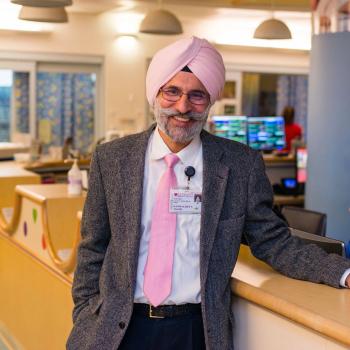
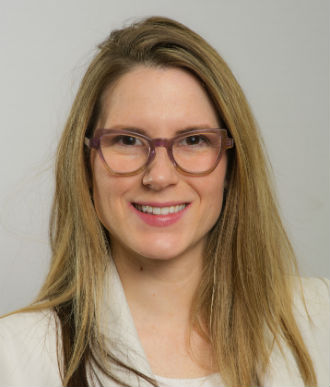
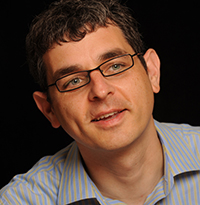
Dr. Kanwaljeet S. Anand is a dual-appointed Professor of Pediatrics (Pediatric Critical Care) and Anesthesiology, Perioperative & Pain Medicine at Stanford University School of Medicine. As director of the Pain/Stress Neurobiology Lab and Jackson Vaughan Critical Care Research Fund, he serves as Editor-in-Chief of Pediatric Research and maintains active membership in Bio-X, MCHRI, and Wu Tsai Neurosciences Institute. Rhodes Scholar with D.Phil from University of Oxford Harvard postdoctoral fellowship and Boston Children's Hospital residency Founded Harmony Health Clinic - Arkansas' largest charitable medical-dental facility A translational researcher with 30+ years of impact, Dr. Anand established the first scientific framework for infant pain perception and developed novel pain assessment methodologies. Current research focuses on: Hair biomarker analysis for stress and social affiliation (cortisol/oxytocin) Machine learning systems for objective pain detection in non-verbal infants Biopsychosocial interventions for stress reduction in disadvantaged youth Neurotoxicity mechanisms of sedatives in developing brains Global NICU opioid usage patterns through the NeoOpioid Consortium His work has yielded over 260 publications and significant advances in: Pediatric pain management protocols Neonatal stress biomarker development Critical care neurobiology insights Community health initiatives AI-driven clinical decision support systems Scientific Recognition 9th Annual 'In Praise of Medicine' Public Address, Erasmus University (2014) Nightingale Excellence Award (2016) Honorary Doctorate from University of Örebro (2019) NIH SBIB-H82 Study Section Chair (2018) Multiple IASP and American Pain Society awards Swedish Academy of Medicine's Nils Rosén von Rosenstein Award (2009) St. Jude Endowed Chairholder (2010) As mentor to Med Scholar Anjali Gupta and advisor to numerous professional bodies, Dr. Anand maintains active clinical leadership in Pediatric Intensive Care while advancing computational approaches to pain detection through collaborations with Stanford's AI researchers.
Vanessa Nomellini, MD, PhD is an Associate Professor in the Division of Burn, Trauma, Acute and Critical Care Surgery at UT Southwestern Medical Center. She joined UT Southwestern in 2023 as the director of research for her division and leader in the Critical Care Outcomes Research Translation (CORT) group. Education: Dr. Nomellini earned her MD and PhD in Cellular and Molecular Biochemistry from Loyola University. She completed her general surgery residency at the University of Wisconsin and Surgical Critical Care fellowship at the University of Pennsylvania. Research Interests: Her work focuses on immune dysfunction in critically ill patients, particularly sepsis and trauma-induced immunosuppression. She leads studies on immune recovery mechanisms and develops the ICU Recovery Program for long-term patient management. Her NIH-funded research (R35 NIGMS) investigates immune suppression through both animal models and human observational studies. Publications Trends: Her recent work emphasizes sepsis pathophysiology, coagulopathy management, and clinical improvements in critical care. Key areas include immunomodulatory therapies, biomarker utility, and optimizing ICU protocols. Scientific Awards: Recipient of NIGMS R35 grant (2019-current) Advising & Grants: Leads a multi-institutional research team and holds leadership roles in CORT. Her grants focus on translational immunology and critical care outcomes. Labs & Teams: Directs research at UT Southwestern's Critical Care Division, collaborating with Drs. Levi and Carlson in CORT initiatives.
Elizabeth A. Dubey, MD, is an Associate Professor in the Department of Emergency Medicine at Wayne State University School of Medicine and serves as the Residency Director at Detroit Receiving Hospital. She is an attending physician with the Medical Center Emergency Services at Detroit Medical Center and has held faculty appointments at both Wayne State and Columbia University Medical Center. Education M.D., Wayne State University, 2004–2008 Bachelor of Science (Cell and Molecular Biology), University of Michigan, 2000–2004 Residency in Emergency Medicine, Jacobi/Montefiore EM Training Program, Albert Einstein College of Medicine, 2008–2012 Research Interests Dr. Dubey’s scholarly work focuses on emergency cardiology diagnostics, specifically the utility of electrocardiography in detecting left ventricular hypertrophy among asymptomatic hypertensive patients presenting to the ED. She has also investigated the safety and efficacy profiles of intravenous combination sedatives used in emergency procedural sedation. Her broader interests span acute care pharmacology, medical toxicology, and innovative methods for clinical education and simulation-based training of residents and medical students. Publications Overview Her recent peer-reviewed publications (2013–2014) address pressing ED issues: one examines ECG-based screening for cardiac end-organ damage in hypertensive patients, while the other evaluates sedation protocols to optimize patient safety and procedural efficiency. These works collectively highlight her commitment to evidence-based emergency practice and translational research that directly impacts bedside care. Teaching & Mentorship Dr. Dubey is deeply invested in medical education. She directs mock oral-board preparation sessions, coordinates intern reports, and serves as faculty advisor for medical students. She has led international medical missions (e.g., Nicaragua 2016) and mentors residents in scholarly activity and lecture development. At Columbia, she precepted clinical skills tutorials and lectured in the EM sub-internship. Professional Service & Societies Alternate Councilor, American Academy of Women Emergency Physicians (AAWEP), ACEP Member, ACEP Education Committee – Online Education Subcommittee Member, SAEM Resident and Student Advisory Committee WSUSOM CME Dean’s Council Active member: American College of Emergency Physicians, Society for Academic Emergency Medicine, American Academy of Emergency Medicine Laboratory & Clinical Teams She leads educational initiatives within the Detroit Receiving Hospital Emergency Medicine residency program and collaborates with multidisciplinary teams across Detroit Medical Center to enhance patient care quality and resident training experiences.
Dr. Candemir ÖZCAN is an Assistant Professor at the Department of Clinical Sciences, Faculty of Veterinary Medicine, Kastamonu University. His academic career spans veterinary surgery, clinical diagnostics, and comparative medicine. Adnan Menderes University (BSc, Veterinary Medicine, 2013) Mehmet Akif Ersoy University (PhD, Veterinary Surgery, 2018) Burdur Mehmet Akif Ersoy University (PhD, Veterinary Surgery, 2022) Research focuses on veterinary ophthalmology, dental thermography, and hormonal impacts on clinical metrics. Key methodologies include thermal imaging, intraocular pressure analysis, and estradiol biomarkers. His 15 most recent publications highlight diagnostic imaging, anesthesiology, and periodontal disease dynamics. Scientific contributions include: 2022 Oral Presentation First Prize from Güven Plus Group A.Ş. 5 funded projects (2018-2025) addressing hoof diseases, neuro-ocular interactions, and imaging techniques Collaborations with researchers like Kürşad Yiğitarslan (13 co-publications) and Elif Doğan (5 co-publications)
Hannah Wunsch is a Professor of Anesthesiology at Weill Cornell Medical College , Cornell University. She serves as an Attending Anesthesiologist at NewYork-Presbyterian/Weill Cornell Medical Center. M.D. from Washington University School of Medicine (2003) M.Sc. from London School of Hygiene and Tropical Medicine (2002) A.B. from Harvard University (1997) Her research focuses on critical care medicine , with particular emphasis on sepsis outcomes , mechanical ventilation practices , opioid use in postoperative and ICU settings , and health services research utilizing large administrative datasets. Key trends in her recent publications include ICU staffing models , opioid prescription patterns , mechanical ventilation strategies , and long-term outcomes after critical illness . She has published extensively in top-tier journals like Critical Care Medicine , JAMA , and The Lancet .
Ken B. Johnson, MD, MS is a Professor in the Department of Anesthesiology at the University of Utah School of Medicine, where he has served on faculty since completing residency in 1999. His clinical expertise spans regional anesthesia, acute pain management, processed electroencephalogram monitoring, and neuromuscular blockade monitoring. His research program focuses on: Genetics and epigenetics of pain pathways Clinical pharmacology of anesthetic agents Medical device development for monitoring and simulation Simulation-based experiential learning for all medical trainees Analysis of his 15 most recent publications reveals dominant themes in pharmacokinetic-pharmacodynamic modeling (40% of works), opioid-related pain management (30%), and innovative monitoring techniques (20%). His work consistently bridges basic science with clinical applications, particularly in trauma scenarios and perioperative optimization. Professional recognition includes: Editorial board membership for Anesthesia and Analgesia Leadership in American Society of Anesthesiologists Simulation Education Role as standardized oral board examiner for American Board of Anesthesiology Dr. Johnson's educational leadership extends to curriculum development for medical students through faculty, with emphasis on simulation-based training for airway management and crisis response. His collaborative research spans multiple departments including Orthopedics and Pharmacology, with recent focus on genetic determinants of pain response in joint replacement patients.
Thomas Heldt is Associate Professor of Electrical and Biomedical Engineering in the Department of Electrical Engineering and Computer Science at MIT, and a Principal Investigator at MIT's Research Laboratory of Electronics. He leads the Integrative Neuromonitoring and Critical Care Informatics Group and serves as Associate Director of the Institute for Medical Engineering and Science. Research focuses on: Noninvasive intracranial pressure monitoring Computational models of cerebrovascular dynamics Sepsis detection algorithms Wearable physiological monitoring Clinical decision support systems Recent publications (2022-2024) demonstrate advances in hemodynamic modeling, diagnostic algorithms for critical care, and AI applications for physiological monitoring. Key innovations include open cranium models for intracranial hypertension studies, deep learning frameworks for fatigue assessment, and mobile-based neurocognitive tracking. Professor Heldt collaborates with Boston Children's Hospital, Beth Israel Deaconess Medical Center, and Boston Medical Center to translate research into clinical practice. His work has been recognized through the W.M. Keck Career Development Professorship and IEEE EMBS Distinguished Lectureship.
Gert Van Assche is a Full Professor at the Department of Chronic Diseases and Metabolism within the Faculty of Medicine at KU Leuven, affiliated with the Translational Research in GastroIntestinal Disorders unit at UZ Leuven. His institutional roles include membership in the Biomedical Sciences Group Evaluation Committee (Clinical), Council of the Faculty of Medicine, POC Arts-specialist in opleiding, Council of the Department of Chronic Diseases and Metabolism, and UZ Leuven Executive Board. His research focuses on translational gastroenterology, particularly inflammatory bowel disease (IBD), Crohn's disease, and ulcerative colitis. He leads the Clin-IC project (2018-2025) developing medtech solutions for patients, bridging clinical practice with technological innovation. His work spans clinical trials, health data utilization, and patient-centered outcomes research. Analysis of his 2020-2022 publications reveals a multidisciplinary approach integrating radiology, psychology, and health informatics. Key themes include advanced imaging for Crohn's disease (MRE-histology correlation), behavioral assessment tools (IBD-Bx questionnaire), international comparisons of IBD management challenges, and novel therapeutic interventions for refractory ulcerative colitis. He has served as promotor for the Clin-IC project and teaches courses including 'Innovative Health Technologies' (E0N72A) and 'Integrated Clinical Research and Reasoning' (E0C63B). His mentoring extends through co-authorship in international collaborations across gastroenterology, radiology, and patient quality-of-life studies. He operates within the Translational Research in GastroIntestinal Disorders unit at UZ Leuven, fostering collaboration between laboratory scientists and clinicians to accelerate therapeutic advancements for gastrointestinal diseases.
Quincy K. Tran is a Professor in the Department of Emergency Medicine at the University of Maryland School of Medicine. A physician-scientist with dual MD and PhD degrees in Biochemistry, he practices in the Critical Care Resuscitation Unit (CCRU) at the University of Maryland Medical Center, specializing in neurological injuries and critical care processes. Education: BS in Biochemistry (UC San Diego, 1996), PhD in Biochemistry (Virginia Commonwealth University, 2002), MD (Virginia Commonwealth University School of Medicine, 2008). Clinical Expertise: Emergency Medicine, Critical Care, and Resuscitation of transfer patients with spontaneous intracranial hemorrhage and stroke. His research focuses on blood pressure management and improving outcomes for transferred critically ill patients, leveraging clinical data from the CCRU. He founded the Research Associate Program in Emergency Medicine and Critical Care to train future physician-scientists through mentorship and productivity-based learning. Publications highlight innovations in interhospital transfer systems, blood pressure variability analysis, and critical care logistics. His work bridges clinical practice and translational research. Scientific Awards: Excellence for Resident Research (2012) Hero Award (2017, R Adam Cowley Shock Trauma Center) Distinguished Reviewer of the Year (2020, Western Journal of Emergency Medicine) Bronze Snapshot Abstract (2021, Society of Critical Care Medicine) As an editorial board member for multiple journals, he contributes to advancing emergency medicine research. His clinical and academic work emphasizes system-wide improvements in critical care delivery.
Bruce Dick is a Professor in the Department of Anesthesiology & Pain Medicine at the University of Alberta's Faculty of Medicine & Dentistry. He maintains dual clinical roles at the Pediatric Chronic Pain Clinic (Stollery Children's Hospital) and the Multidisciplinary Pain Centre (University of Alberta Hospital), integrating research with direct patient care. Education: Ph.D. in Clinical Psychology (Dalhousie University, Pediatric Pain Research Laboratory) Clinical training at Royal National Hospital for Rheumatic Diseases (Bath, UK) and IWK Health Centre (Halifax, NS) AHFMR Postdoctoral Fellowship (University of Calgary/Alberta Children's Hospital) Dr. Dick's research examines chronic pain's impact across the lifespan with particular focus on cognitive function , disability , sleep disturbances , and social stigmatization . His work bridges pediatric pain management with innovative distance treatment programs and population-level interventions. Key themes include psychosocial pain modulation in adolescents, virtual care adaptation during crises, and cancer pain self-management systems. Analysis of his 2020-2022 publications reveals dominant trends in pandemic-responsive pain care delivery, caregiver-focused interventions, and adolescent social dynamics. His work spans pediatric psychology , digital health implementation , and pain epidemiology with strong emphasis on real-world clinical translation. Scientific Awards: AHFMR Postdoctoral Fellow As a registered clinical psychologist, Dr. Dick directs multiple research streams including the Chronic Pain Network initiatives and Teens Taking Charge cancer pain program. His grant portfolio supports telehealth innovation and longitudinal studies of pain's social impact, while mentoring focuses on training the next generation of pain researchers through clinical rotations and co-authorship opportunities. Dr. Dick leads collaborative teams across the Stollery Children's Hospital Pediatric Chronic Pain Clinic and University of Alberta Multidisciplinary Pain Centre , with active partnerships in the Canadian Pain Society and international pain research consortia. Current projects emphasize scalable digital interventions and neurocognitive pain mechanisms using MEG technology.
Lisa Kung, M.D., is an Assistant Professor at the University of Toledo Medical Center, where she serves as Associate Vascular Fellowship Director. Her clinical focus lies in Stroke and Vascular Neurology, with extensive experience in vascular neurology fellowship training and acute stroke treatment. M.D. from University of Toledo Medical Center (2009-2013) Residency at University of Toledo Medical Center (2013-2017) Vascular Neurology Fellowship at University of Toledo Medical Center (2017-2018) Dr. Kung's research focuses on neurological complications of systemic diseases, particularly examining clinical outcomes in COVID-19 patients and advancing acute stroke triage systems. Her work bridges clinical neurology with emergency care optimization. Her recent publications span topics including neurological predictors in pandemics , prehospital stroke severity scales , and anesthesia protocols for neurointerventions , reflecting her expertise in vascular neurology and acute stroke management.
Dr. Michael E. Nemergut is a dual-board certified physician at Mayo Clinic in Rochester, Minnesota, specializing in Pediatric Critical Care Medicine and Pediatric Anesthesiology. He holds academic appointments in the Department of Anesthesiology and Perioperative Medicine within the Mayo Clinic Children's Center. Education: University of Virginia (MD, Ph.D.), Johns Hopkins (Fellowship, Residencies) His research focuses on anesthetic neurotoxicity in pediatric populations, pain management protocols, and anticoagulation strategies in critical care. Notable recent publications span topics from NanoLuc luciferase mechanisms to pediatric ECMO hemostasis. Scientific Awards: Multiple Top Doctors recognitions (2021-2023), Excellence Through Teamwork (2019), Howard Hughes Fellowship (1996) Dr. Nemergut maintains extensive professional memberships in anesthesiology and pediatric medical societies, contributing to clinical practice committees and education initiatives at Mayo Clinic.
Dr. Sharmila Anandasabapathy is a Professor of Medicine in Gastroenterology and Vice President & Senior Associate Dean of Global Programs at Baylor College of Medicine in Houston, Texas. She also serves as Director of Baylor Global Initiatives and the Baylor Global Innovation Center, overseeing Baylor's global health programs and affiliations. Her work focuses on developing innovative technologies for cancer screening and diagnosis in low-resource settings worldwide. Dr. Anandasabapathy's educational background includes: BA in English Literature from Yale University MD with distinction in Research, Molecular Biology from Albert Einstein College of Medicine Internship & Residency at New York-Presbyterian Hospital/Cornell Medical Center Gastroenterology Fellowship at Mount Sinai Medical Center Dr. Anandasabapathy is an advanced gastrointestinal endoscopist whose research focuses on developing and validating novel technologies for early gastrointestinal cancer diagnosis. Her primary areas of interest include Barrett's Esophagus, Esophageal Cancer, Gastric Cancer, and advanced endoscopic techniques including Confocal Microendoscopy, Fluorescent Imaging, and Magnification Endoscopy. She specializes in creating low-cost, portable diagnostic solutions for resource-limited settings. Her work bridges clinical gastroenterology with biomedical engineering, focusing on practical applications of advanced imaging technologies for cancer screening in global contexts. She has particular expertise in developing battery-operated, portable endoscopic devices suitable for use in low-resource environments across Africa, Central America, and Asia. Dr. Anandasabapathy's publication record demonstrates a consistent focus on high-resolution microendoscopy for gastrointestinal cancer detection, particularly in resource-limited settings. Her research spans technological development, clinical validation, and cost-effectiveness analysis across multiple international contexts. A significant portion of her recent work examines implementation strategies for low-cost endoscopic screening in diverse global populations, with particular attention to esophageal and colorectal cancers. Her collaborative approach is evident in the multidisciplinary nature of her publications, which frequently involve partnerships with engineers, public health experts, and international research teams. The evolution of her work shows increasing emphasis on practical implementation of screening technologies in real-world settings across multiple continents. Dr. Anandasabapathy has received numerous honors throughout her career: Zelig A. Rosen Award for Excellence in Cardiology (1996) Medical Society of the State of NY Award for Outstanding Community Service (1997) AMSA/National Health Service Corps Award for Community Service Project (1998) Ciba-Geigy Award for Outstanding Community Service by a Medical Student (1999) Physicians for Social Responsibility National Broadstreet Pump Award in Public Health (1999) David E. Rogers Memorial Research Award Finalist (2001) Chief fellow in Gastroenterology, Mount Sinai Medical Center (2003-2004) FOCDD Database Development Award Recipient (2004) Gulf Coast Digestive Disease Center Pilot Project Award (2008) Global Directory of Who's Who "Top Doctors" (2013) Dr. Anandasabapathy serves as Principal Investigator on multiple NIH-funded grants focused on developing innovative technologies for gastrointestinal cancer screening. Her current portfolio includes three NIH/NCI grants: "High Resolution Microendoscopy for the Management of Esophageal Neoplasia" (CA181275), "Low Cost Tethered Capsule Endoscope for Barrett's Esophagus Screening" (CA252245), and "The Effectiveness of High Resolution Microendoscopy in High Grade Intraepithelial Lesions Diagnosis for People Living with HIV" (CA232890). She also leads eight clinical trials testing portable endoscopic technologies across the United States, Africa, China, Mexico, and Honduras. Her research program involves extensive collaborations with academic institutions including Mount Sinai School of Medicine, Rice University, and Harvard University, as well as partnerships with NGOs and foundations focused on global health innovation. Through these collaborations, she has developed tablet-based reporting platforms, training modules for sedation/anesthesia, and environmentally appropriate innovations for chronic disease management in low-resource settings. Dr. Anandasabapathy directs the Baylor Global Innovation Center, which focuses on developing novel, environmentally appropriate technologies for addressing global disease burden. Her team works on creating mobile and portable solutions for clinical care and cancer screening, point-of-care diagnostic technologies, and low-cost devices for managing chronic non-communicable diseases worldwide. The center maintains active collaborations with academic centers, NGOs, and foundations to implement these innovations in regions including West Africa (The Gambia), India, China, and Central America.
Ian S. deSouza is an Assistant Professor in the Department of Emergency Medicine at SUNY Downstate Health Sciences University , where he also serves as Director of the American Heart Association (AHA) Training Center and Chair of the Resuscitation Committee. His clinical and research focus spans resuscitation science , critical care , and emergency cardiology , with a particular emphasis on antidysrhythmic therapies, syncope management, and acute coronary syndromes. Education MD, New York University School of Medicine , May 1999 Residency in Emergency Medicine at New York University Research Interests Dr. deSouza's work centers on optimizing pharmacologic interventions in acute emergencies, including comparative effectiveness of antidysrhythmic drugs (e.g., amiodarone vs. procainamide for ventricular tachycardia), innovative approaches to migraine management in the ED, and evidence-based risk stratification for syncope patients. He has pioneered network meta-analyses to evaluate therapies for atrial fibrillation, opioid overdose prevention, and point-of-care ultrasound (POCUS) applications in critical conditions like abdominal aortic aneurysm and pulmonary embolism. His recent publications highlight trends in Bayesian statistical modeling for clinical trials, emergency diagnostics (ECG interpretation, POCUS integration), and pharmacologic safety in acute care settings.
Selami Sedat AKGÖZ is a Turkish academician affiliated with Ahi Evran University where he serves as a Lecturer at the Mucur Vocational School in the Department of Management and Organization . With over two decades of experience, he previously held lecturing positions at Bayburt University’s Bayburt Vocational School. His work focuses on organizational economics , international logistics , and cooperative models , particularly examining traditional Turkish systems like the Imece and Ahilik in modern contexts. Academically, he holds a Bachelor’s Degree (1998) and Master’s Degree (2005) in Business Administration from İnönü University and Maltepe University respectively. His publications since 2009 include journal articles, conference papers, and book chapters comparing traditional cooperative models with contemporary systems like the Mondragon cooperative and exploring AI integration in collective production. Education : BA & MA in Business Administration Key Research Areas : Organizational Economics, Cooperative Models, Quality Management Recent Work : 2024 articles on Anatolian Imece comparative analysis and AI decision-making models