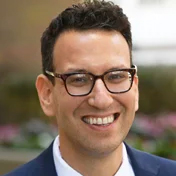
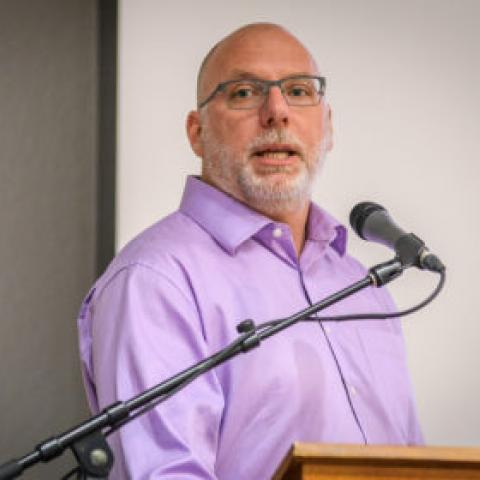
Doron Dorfman is a tenured Professor at Seton Hall University School of Law and an Affiliate at Harvard Medical School's Center for Bioethics. His expertise spans Torts, Health Law, Disability Law, Employment Law, Family Law, and Bioethics, with a focus on empirical legal studies. He holds advanced degrees from the University of Haifa (B.A., LL.B., LL.M.) and Stanford Law School (J.S.M., J.S.D.). His research explores disability rights, healthcare ethics, and legal responses to medical advancements. Notable contributions include analyzing genetic reproductive technologies, workplace accommodations, and pandemic-related legal challenges. His work has been cited by courts and featured in major newspapers like the New York Times. Key awards include the Michael J. Zimmer Memorial Award (2023) for rising scholars in employment law and recognition in Harvard's Junior Faculty Forum. Dorfman actively contributes to legal blogs and leads initiatives like the Disability Legal Studies Collaborative Research Network (CRN). Recent articles highlight themes such as disability metaphors in law, crisis standards of care, and preventive medicine stigma. His work bridges empirical research and legal policy, aiming to advance equity in health and workplace settings.
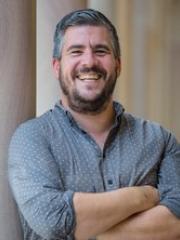
Dr. Alastair Stark serves as Associate Professor at the School of Political Science and International Studies, Faculty of Humanities, Arts and Social Sciences at The University of Queensland (UQ). As Director of the Graduate Centre in Governance and International Affairs, he combines academic leadership with public policy scholarship. Current research focuses on institutional amnesia in governance, policy learning mechanisms, and deliberative democracy applications to environmental policy Recipient of Mayer Prize (Australian Journal of Political Science) and Lasswell Prize (Policy Sciences) Principal investigator for Australian Research Council Discovery projects (2021-2025, 2018-2022) Active supervisor with current PhD projects on disaster recovery, institutional memory, and rapid evidence application Research Interests His work addresses three core areas: institutional memory in governance, crisis management through public inquiries, and deliberative democratic practices in policy-making. Recent articles explore Australian royal commissions, policy inaction dynamics, and post-pandemic governance responses. Scientific Contributions Authored/edited 4 books including Risk and Crisis Management in the Public Sector (3rd ed, 2024) and Public Inquiries and Policy Design (2024) Published 27 journal articles across Public Administration , Policy Sciences , and Governance Developed analytical frameworks for policy adoption, crisis dramaturgy, and deliberative governance Awards & Grants 2021-2025: ARC Discovery Project - Institutional Memory and Policy Processes 2018-2022: ARC Discovery Grant - Public Inquiries Implementation 2016-2019: ARC Discovery Grant - Social-Urban Planning Integration 2015: UQ Early Career Researcher Grant - Post-Crisis Policy Learning Professional Involvement Contributes to multiple research centers including the Graduate Centre in Governance and International Affairs. Participates in the Visual Politics Research Program and Visiting Researcher Program. Maintains active roles in policy evaluation and crisis management analysis.
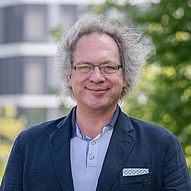
Christian Wolff is a University Professor and Chair of Media Informatics at the Institute for Information and Media, Language and Culture at the University of Regensburg. Since April 2022, he has served as the founding Dean of the Faculty of Computer Science and Data Science, while maintaining secondary membership in the Faculty of Languages, Literature and Cultural Studies (SLK). His academic career spans over three decades with significant contributions to multiple disciplines at the intersection of computer science and humanities. Wolff's research interests center around multimedia and multimodal information systems, electronic publishing, and text technology, particularly text mining. His work bridges computer science with digital humanities, legal informatics, and social media analysis. Recent publications demonstrate a strong focus on large language models, sentiment analysis applications across various domains, legal technology innovations, and virtual reality research for cognitive studies. His interdisciplinary approach has produced significant contributions in both technical and humanities domains. His recent publication trends reveal a strategic shift toward applied AI research, particularly in legal technology (LegalTech), social media analysis, and sentiment analysis using large language models. The publications show increasing collaboration across disciplines, connecting computer science with law, political science, literature, and psychology. His work on the digital basis document for legal proceedings represents a major practical application of his research in the German justice system. East Bavarian Cultural Prize Doctoral Award of the University of Regensburg Wolff has led numerous interdisciplinary research projects connecting computer science with humanities and legal studies. His leadership extends to institutional roles including Dean of Research, Vice Dean, and Dean of Faculty positions. He has been instrumental in establishing the new Faculty of Computer Science and Data Science at the University of Regensburg, demonstrating significant impact on institutional development and research infrastructure. Wolff directs research initiatives focused on text technology, digital humanities, and legal informatics. His work with the INDIGO - Internet and Digitization Eastern Bavaria initiative and the TRIO project demonstrates commitment to regional technology transfer and innovation. The interdisciplinary nature of his research groups connects computer scientists with legal scholars, linguists, and social scientists to address complex digital transformation challenges.
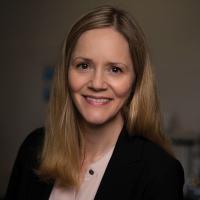
Colleen Murphy serves as the Associate Dean for Academic Affairs and the Roger & Stephany Joslin Professor of Law at the University of Illinois Urbana-Champaign College of Law, with courtesy appointments in Philosophy and Political Science. She chairs the Illinois Scholars at Risk Program and co-edits the International Journal of Transitional Justice. Her academic credentials include: PhD in Philosophy, University of North Carolina at Chapel Hill BA in Philosophy, University of Notre Dame Murphy's research centers on political philosophy , jurisprudence , and ethics , examining transitional justice mechanisms and moral frameworks for risk analysis. She investigates societal approaches to systemic wrongdoing and develops ethical methodologies for disaster risk mitigation through capability-based approaches. Her recent publications (2022-2025) reveal dominant themes in transitional justice, with concentrated analysis on accountability for historical injustices, racial redress, and post-conflict reconciliation. Concurrently, she explores technology's impact on equality and risk assessment, integrating philosophical ethics with practical disaster management frameworks. No specific scientific awards were detailed in the source material. Information regarding student advising and research grants was not provided in the available documentation. Murphy leads the Illinois Scholars at Risk Program supporting persecuted academics globally and shapes scholarly discourse through her co-editorship of the International Journal of Transitional Justice, fostering interdisciplinary research on justice after systemic oppression.
Fuchsia Howard, PhD, RN serves as an Associate Professor and PhD Coordinator at the University of British Columbia School of Nursing. Her office is located at T201 2211 Wesbrook Mall, Vancouver, BC V6T2B5, with contact via phone (1-604-822-4372) and email (fuchsia.howard@ubc.ca). Her research spans oncology nursing, reproductive health, critical care survivorship, and health equity . She investigates fertility preservation for cancer patients, endometriosis-associated dyspareunia management, and digital health interventions for sexual health. Her work emphasizes patient-reported and family-reported outcomes , particularly in chronic disease management and post-ICU recovery. Current projects address social determinants of health in critical illness survivorship and destigmatizing design for sexual health technologies. Her recent publications (2023-2025) demonstrate strong focus on Patient-centered outcome measures in oncology and gynecology Digital resource development for endometriosis and fertility challenges Family caregiver roles in critical illness recovery Health equity in Canadian cancer care systems Key methodologies include qualitative studies, scoping reviews, and mixed-methods approaches. As PhD Coordinator, she guides nursing doctoral candidates though specific students aren't listed in available materials. Her work connects with clinical practice through collaborations with BC Cancer and UBC-affiliated hospitals.
Connie M. Koski is an Assistant Professor in the Department of Criminal Justice at North Dakota State University. She earned her PhD from the University of Nebraska Omaha in 2013, an MS from Wayne State University, and a BS from Ferris State University. A retired police officer from Michigan, Koski brings practical experience to her academic work. Her research examines police-citizen perceptions, crime geography, formal/informal social control mechanisms, and officer wellness. Koski's interdisciplinary research spans police-community relations, historical marketplaces, disability access in archaeology, and gender barriers in leadership. Recent publications analyze millennial retention in hospitality sectors, heritage accessibility, and qualitative research challenges in developing nations. She has developed inclusive pedagogical tools like Inclusivity Knowledge Cards and led student consultancy projects with organizations including Lincoln City Football Club. At NDSU, she teaches Introduction to Policing (CJ 210) and Criminal Law and Procedure (CJ 330). Her professional background includes prior teaching positions at Longwood University and Oglala Lakota College.
Matthias Haake is a Research Fellow at the Department of Ancient History, Institute for Historical Sciences, University of Bonn. He specializes in the political cultural history of Hellenistic and Roman monarchy, social history of ancient philosophy, and Greek epigraphy. His work bridges cultural analysis with textual and inscriptional evidence. University of Bonn (since 2021, Heisenberg Fellowship) Eberhard Karls University Tübingen (2021–2024, Acting Professorship) His research examines: Hellenistic royal ideology , philosophical practices in Roman provinces , epigraphic documentation of societal structures , and supralocal sanctuaries as political arenas . He integrates literary and inscriptional sources to analyze how philosophy shaped elite identity and governance. Recent publications focus on: emperor image construction , Hellenistic biographies , and epigraphic traces of philosophical networks . Methodologically, he emphasizes interdisciplinary analysis of ancient texts and material culture. Heisenberg Fellowship (DFG, 2021–present) Editorship of Studies in Ancient Monarchies (since 2021) Contributions to Encyclopedia of Ancient History (2013) He contributes to editorial boards of journals including sehepunkte , Hormos , and Rivista Storica dell'Antichità , advancing discourse on ancient historiography and epigraphy.
Andrea Continella is an Associate Professor at the Faculty of Electrical Engineering, Mathematics and Computer Science of the University of Twente, where he contributes to the International Secure Systems Lab (iSecLab). His research focuses on systems security, particularly embedded firmware security, Android app security, malware detection, and program analysis techniques for vulnerability discovery. Ph.D. in Computer Science and Engineering, Politecnico di Milano (cum laude) Postdoctoral Researcher, Computer Science Department, UC Santa Barbara Visiting Researcher, School of Computer Science, University of Sydney Key research contributions include: Developing automated analysis techniques for embedded firmware (KARONTE, ShieldFS) Creating privacy leak detection mechanisms for mobile applications Designing ransomware defense systems using self-healing filesystems Advancing IoT security through misconfiguration detection (S3 buckets) and protocol analysis Pioneering semi-supervised methods for network traffic fingerprinting (FlowPrint) Scientific awards: Dutch Cyber Security Best Research Paper Award 2024 Runner-up USENIX Security Distinguished Reviewer Award 2024 Professional activities: Keynote speaker on firmware security (2024) Member of IPN Cyber Security Special Interest Group Oral presentations on automated vulnerability research (2023)
Fei He is an Associate Professor at Tsinghua University's School of Software, where he leads the THUFV research lab focused on formal verification and program analysis. His research spans formal methods, automated reasoning, and program verification, with applications in concurrent systems, networking (P4 programs), and probabilistic systems. Education & Employment: PhD from Tsinghua University (2008) Visiting Scholar at Carnegie Mellon University (2010-2011) and Politecnico di Milano (2006-2007) Faculty positions at Tsinghua since 2008 (Assistant Professor 2008-2011, Associate Professor 2011-present) Research: He's developed innovative techniques in SMT solving for concurrency verification, termination analysis, and regression verification. His tools like Deagle have won gold medals at SV-COMP. Current work focuses on probabilistic program verification and network program analysis. Publications: His 80+ publications demonstrate consistent contributions across formal methods (PLDI, OOPSLA, ICSE), networking (NSDI, INFOCOM), and software engineering (TSE, TOSEM), with recent emphasis on data-driven verification and automated invariant inference. Awards: Gold Medals in SV-COMP ConcurrencySafety (2022, 2023, 2025) Best Paper Awards at PPoPP 2022 and SETTA 2022 Advising: Mentors 13 PhD/Master's students in THUFV lab, with graduates joining Huawei, MPI-SP, and research institutions. Secured multiple NSF China grants for trustworthy software research. Service: Associate Editor for Theory of Computing Systems, program committees for PLDI/ICSE/OOPSLA, and former Local Chair for ISSTA 2019.
Prof. Dr. Stefan Esders is a Professor of Late Antiquity and Early Medieval History at the Friedrich Meinecke Institute , part of the Free University of Berlin . His scholarly work bridges Roman, Byzantine, and early medieval European history, with a focus on legal systems, oaths, and military structures. His research interests include: State formation and military organization across Rome, Byzantium, and the Frankish kingdoms. Legal history of oaths, loyalty, and conflict resolution (e.g., wergild and compensation). North Africa in late Roman and Vandal contexts, emphasizing cross-cultural interactions. Ethnic identity formation at imperial borders and Mediterranean cohesion (6th–9th centuries). Historiography and hagiographical narratives in Late Antiquity and the Early Middle Ages. His work spans the Gallia and Iberian Peninsula , analyzing the transition from Roman imperium to post-imperial regna. Notably, he explores vernacular legal practices and the role of religion in political identity. His scientific accolades include: Distinguished Fellow at the Hebrew University of Jerusalem (2025/26). Corresponding Fellow at the Medieval Academy of America (since 2025). Visiting Research Fellow at the University of Tokyo (2024). Premio Anassilaos (2024) for interdisciplinary contributions. Member of the Academia Europaea (since 2021) and the Monumenta Germaniae Historica (since 2020).
Hilary Charlesworth is a distinguished academic and legal scholar, currently serving as Harrison Moore Professor and Melbourne Laureate Professor at the University of Melbourne Law School and Honorary Professor at the Australian National University's School of Regulation & Global Governance (RegNet). She has been a Judge of the International Court of Justice since 2021. Her expertise spans international law, human rights, and global governance. Education: BA (Hons) and LLB (Hons) from the University of Melbourne, SJD from Harvard Law School. Research focuses on international law's theoretical and practical dimensions, human rights implementation, conflict resolution, and the role of the UN Security Council. She has led projects like 'Peacebuilding Compared' and 'The Art of International Law.' Her awards include the Goler T Butcher Medal (2006), election to the Institut de Droit International (2011), and an Honorary Doctorate from Université Catholique de Louvain (2016). Contributions include editorial roles at the Australian Yearbook of International Law and the American Journal of International Law. She advised on the ACT Human Rights Act 2004 and has engaged with NGOs to advance human rights standards.
Dr. Joost Leunissen is a Senior Lecturer in Psychology and Co-Programme Leader for the BSc Psychology programme at the University of Winchester. He holds degrees from Leiden University (BA, MPhil, MA) and a PhD from Erasmus University Rotterdam (2014). Previously, he held positions at the University of Southampton and Nottingham Trent University before joining Winchester in 2019. His research focuses on organizational nostalgia, narcissism, and reconciliation processes, with emphasis on work meaning, employee motivation, and interpersonal dynamics. Education: BA in Psychology, Leiden University MPhil in Social and Organizational Psychology (cum Laude), Leiden University BA and MA in Public Administration, Leiden University PhD in Psychology, Rotterdam School of Management, Erasmus University Rotterdam Research Interests: Dr. Leunissen explores how organizational nostalgia enhances workplace motivation and meaning, particularly in contexts of injustice. He investigates narcissism’s role in apology avoidance and examines mechanisms of forgiveness and reconciliation. His studies combine experimental methods with organizational behavior frameworks to address real-world challenges in workplace culture and social interactions. Key Research Trends: His publications emphasize the dual nature of nostalgia (e.g., affective ambivalence), the motivational impact of organizational nostalgia in low-justice environments, and the psychological underpinnings of forgiveness. Recent work bridges social psychology with organizational studies, offering insights into workplace well-being and conflict resolution. Advisory & Grants: While no specific grants are cited, Dr. Leunissen actively supervises research students exploring emotions, organizational behavior, and reconciliation. His work contributes to academic-practice linkages through evidence-based models for improving organizational dynamics.
Dr. Kenneth Grad is an Assistant Professor at the Faculty of Law , University of Manitoba , specializing in criminal law, evidence, legal history, and human rights. His research examines hate speech regulation, constitutional law, and historical contexts of legal prosecutions. Education: B.A. (University of Toronto), M.A. (History, Queen’s University), J.D. and Ph.D. (Osgoode Hall Law School), LL.M. (Harvard Law School). Kenneth's scholarly work focuses on: Development of criminal sanctions for hate speech Legal history of Holocaust denial prosecutions in Canada Intersections of criminal law with constitutional protections Alternative civil remedies like the Marcus Hyman Act Impact of judicial precedents on bail procedures Evolution of self-defense doctrines in Canadian jurisprudence His publications span multiple peer-reviewed journals, with recent contributions addressing pandemic-related speech issues and comparative legal analysis. Kenneth's research combines doctrinal analysis, historical inquiry, and contemporary policy evaluation. Scientific Awards: 2023-24 R. Roy McMurtry Fellowship 2023 Switzer-Cooperstock Student Prize 2020-23 SSHRC Bombardier Doctoral Scholarship 2022 Peter Oliver Prize in Canadian Legal History Multiple scholarships and law prizes from Osgoode Hall Law School As a practicing attorney, Kenneth has appeared before all Ontario court levels and holds bar credentials in Ontario and New York. He previously clerked for Justice Morris Fish at the Supreme Court of Canada and practiced civil litigation in New York City.
Prof. Dr.-Ing. Richard Membarth is a Research Professor for System-on-a-Chip and AI at the Edge Computing at Technische Hochschule Ingolstadt (THI). He is affiliated with the Hardware-Software Co-Design group and holds a secondary position at the German Research Center for Artificial Intelligence (DFKI) Saarbrücken. Co-creator of DSL frameworks like AnyDSL and Hipacc Key contributor to MetaDL (AI metaprogramming) and PRIME (predictive rendering) His research bridges GPU computing , domain-specific languages , and compiler technology , with recent work on Vulkan SPIR-V compilation and device-driven SpMV algorithms . Notable awards include the HiPEAC Paper Award (2018) and multiple Best Paper Awards for his compiler frameworks.
Ken MacLean is Professor of International Development and Social Change at Clark University , where he also holds faculty appointments at the Strassler Center for Holocaust and Genocide Studies and the Center for Gender, Race, and Area Studies (CGRAS) . With more than two decades of experience working with NGOs across Southeast Asia, he investigates state-sponsored violence, forced migration, and the politics of humanitarian evidence. Education Ph.D. in Anthropology, University of Michigan, Ann Arbor (2005) M.S. in Natural Resources and the Environment, University of Michigan, Ann Arbor (2004) M.A. in Anthropology, University of Michigan, Ann Arbor (1998) B.A. in Anthropology, Princeton University (1990) Research Interests MacLean’s scholarship is interdisciplinary and archive-driven, interrogating how human-rights facts are produced, authenticated, and deployed. His work spans three major tracks: An ethnographic study of human-rights archives concerning alleged war crimes and crimes against humanity in Myanmar. Analysis of open-source intelligence and AI-generated evidence in international criminal proceedings. Future-oriented modeling of climate-induced displacement and large-scale violent conflict over essential resources. Publications & Impact MacLean is the author of three major monographs— The Government of Mistrust (2013), Crimes in Archival Form (2022, short-listed for the ICAS 2023 Best Book Prize), and Genocide by Attrition (2022)—along with dozens of peer-reviewed articles and policy reports. His recent work interrogates digital storytelling, satellite imagery, and AI-generated evidence in documenting ethnic cleansing and genocide. Awards & Fellowships ICAS 2023 Best Book Prize in the Social Sciences (short-list) Fulbright-Hays Program Fellowship Fulbright IIE Fellowship Wenner-Gren Foundation Grant Mellon Foundation Grant Jacob K. Javits Fellowship Grants & Visiting Positions Research support has come from the Fulbright-Hays Program, Wenner-Gren Foundation, Mellon Foundation, and U.S. Department of Education, among others. He has held visiting fellowships at: Institute for War, Holocaust and Genocide Studies (NIOD), Netherlands (Spring 2023) Mahidol University Institute of Human Rights and Peace Studies, Thailand (Fall 2021) University of Kyoto Center for Southeast Asian Studies, Japan (Fall 2016) Labs, Teams & Future Work MacLean collaborates with interdisciplinary teams at the Strassler Center and CGRAS, and he is currently developing two new book projects: an ethnographic study of human-rights archives in Myanmar and an examination of Vietnamese amateur pundits shaping South China Sea territorial disputes. His ongoing research continues to explore the social lives of documents—both material and digital—and their material effects on justice and accountability.