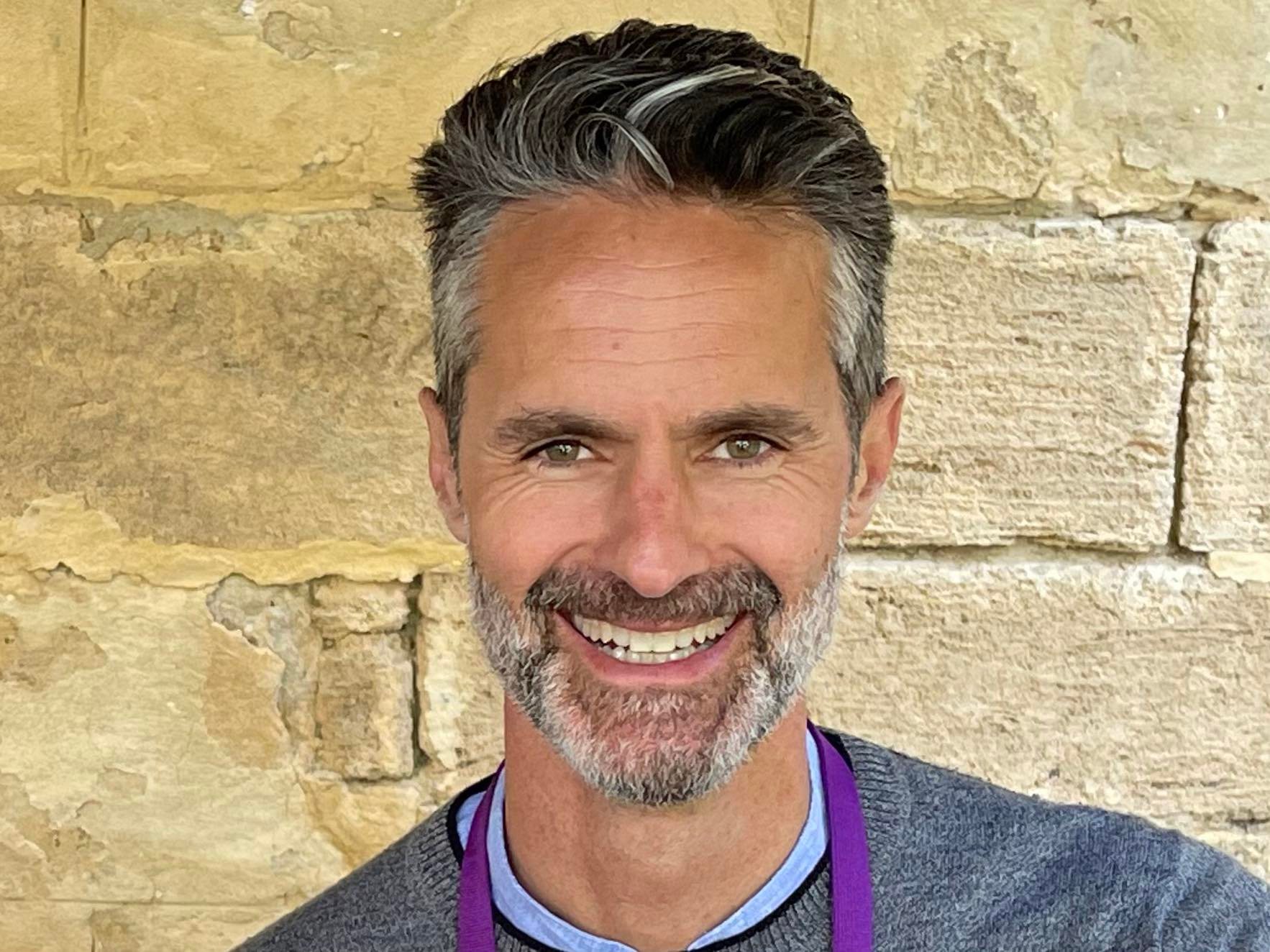
Saharon Rosset is a Professor and Chair in Modern Statistics and Data Science at the Department of Statistics and Operations Research, School of Mathematical Sciences, Tel Aviv University, since 2007. His expertise spans statistical learning theory, machine learning, and computational biology, with a focus on integrating statistical methods into biological and data science applications. Research Interests: Statistical Learning, Computational Biology, Genomics, Data Science Teaching: Statistics of Big Data, Statistical Genetics, Bootstrap Methods, Data Science His recent publications explore diverse applications including ATP production mechanisms, SARS-CoV-2 evolution, gene-environment interactions, and music structure analysis. He employs methodologies from high-dimensional statistics, random effects modeling, and multiple hypothesis testing. Scientific Awards : Best paper award at KDD-2011 KDD Cup 2007 Winner Best application paper award at KDD-02 He has mentored numerous PhD and MSc students, including Oren Yuval, Giora Simchoni, and Rajesh Karmakar. His collaborative work appears in journals like PNAS , Biometrics , and Journal of Machine Learning Research .
C. McCollister Evarts is a Distinguished Professor in the Department of Orthopaedics and Rehabilitation with an extraordinary academic career spanning over six decades since their first publication in 1963. They maintain an active research profile with publications extending into 2025, demonstrating continued professional engagement. Dr. Evarts' research expertise centers on orthopaedic surgery, with a strong focus on hip arthroplasty and replacement procedures. Their work addresses critical issues in pulmonary embolism prevention, venous thrombosis, and prosthesis integration. The research fingerprint shows dominant areas including Total Hip Arthroplasty (100%), Total Hip Replacement (76%), Hip Replacement (71%), Pulmonary Embolism (69%), Ossification (54%), Prosthesis (52%), Venous Thrombosis (51%), and Total Hip procedures (49%). With 113 research outputs accumulating 2759 citations and an h-index of 30, Dr. Evarts has established significant scholarly impact. Their recent publications demonstrate continued relevance in both clinical orthopaedics and healthcare systems analysis, with work contributing to UN Sustainable Development Goals related to health and well-being. Dr. Evarts has secured substantial research funding through 8 major projects including EXTRAMURAL RESEARCH FACILITIES CONSTRUCTION (2000-2004), General Clinical Research Center (1995-2007), and multiple instrumentation grants from the National Institutes of Health. These projects demonstrate their ability to lead large-scale research initiatives with funding from the National Center for Research Resources, National Heart, Lung, and Blood Institute, and National Cancer Institute. Key research contributions include: Pioneering work on pulmonary embolism prevention in orthopaedic patients Analysis of selection bias in orthopaedic research Development of conceptual frameworks for academic health center governance Investigation of patient perspectives in clinical research Studies on ossification processes in hip replacement procedures
Michael Strøm serves as a Clinical Associate Professor within the Department of Clinical Medicine at the University of Copenhagen's Faculty of Health and Medical Sciences. His institutional affiliation combines clinical practice at the Capital Region of Denmark (Region Hovedstaden) with academic responsibilities in medical education and research. Dr. Strøm's research program focuses on the critical intersection of surgical simulation and artificial intelligence, specifically targeting endovascular procedures. He pioneers machine learning applications for objective proficiency assessment in aortic repair simulations, addressing fundamental challenges in surgical training standardization. His work bridges computational science with hands-on clinical skills development, emphasizing data-driven evaluation methods that transcend traditional subjective assessments. His 2024 publication in Current Problems in Surgery demonstrates a clear research trajectory toward AI-enhanced surgical education, with growing emphasis on quantitative performance metrics and real-time feedback systems. This work reflects broader trends in medical technology where computational methods increasingly validate clinical competencies. Dr. Strøm actively collaborates with the ENHANCE research consortium on vascular surgery innovation. While specific advising roles aren't detailed in available materials, his research output indicates leadership in interdisciplinary projects merging clinical expertise with engineering solutions. His institutional position suggests integration within both university academic structures and regional hospital training programs.
Iwan Schie serves as Working Group Leader at the Leibniz Institute of Photonic Technology (Leibniz-IPHT) in Jena, Germany, where he leads the Spectroscopy / Imaging Multimodal Instrumentation research group. His work bridges analytical chemistry, biomedical engineering, and clinical applications with a focus on developing Raman spectroscopy-based diagnostic tools. Dr. Schie maintains an active research program with numerous publications in high-impact journals across multiple disciplines. Dr. Schie's research centers on Raman spectroscopy applications in medical diagnostics and environmental monitoring. His work demonstrates particular expertise in developing multimodal imaging systems that combine Raman spectroscopy with complementary techniques like optical coherence tomography and fluorescence imaging. His research spans both fundamental methodological development and clinical translation, with several studies focusing on cancer diagnostics across multiple organ systems including head and neck, bladder, and colon cancers. The environmental applications of his work include microplastic detection and pollen analysis. Analysis of Dr. Schie's publication record reveals a clear trajectory toward clinical implementation of Raman spectroscopy technologies. His recent work increasingly focuses on regulatory-compliant medical device development, with multiple studies conducted in accordance with European Medical Device Regulation standards. The publications demonstrate progression from ex vivo validation studies to in vivo clinical applications, with particular emphasis on workflow integration within surgical settings. His collaborative approach is evident through extensive co-authorship networks spanning physics, engineering, and clinical medicine. Dr. Schie has made significant contributions to advancing Raman spectroscopy methodology, with publications addressing critical challenges in device stability, spectral analysis, and multimodal integration. His work on establishing clinical workflows represents important steps toward routine clinical adoption of these technologies. The practical impact of his research is demonstrated through development of systems like the invaScope Raman endoscopy platform for bladder tumor diagnosis. As Working Group Leader at Leibniz-IPHT, Dr. Schie oversees research activities in spectroscopy and multimodal imaging instrumentation. His team develops advanced optical systems for biomedical applications with particular focus on real-time tissue characterization during surgical procedures. The research environment supports both fundamental methodological development and applied clinical translation, with strong emphasis on regulatory compliance for medical device development.
Christophe Friess is an Associate Professor (Maître de Conférences) at Aix-Marseille University with an HDR qualification, affiliated with the “Instabilités, Turbulence et Couplages” research team at the M2P2 laboratory (a joint unit of AMU, CNRS, and Centrale Marseille). His work focuses on advanced turbulence modeling and computational fluid dynamics for complex flow simulations. His research specializes in hybrid RANS/LES methodologies, particularly addressing the “grey area” problem in Detached-Eddy Simulations through innovative techniques like volume forcing and turbulence injection. He investigates isotropic turbulence characteristics and explores machine learning applications for subgrid stress modeling, with emphasis on improving simulation accuracy for industrial applications in aerospace and energy sectors. Analysis of his 2018-2025 publications reveals consistent advancement in hybrid turbulence modeling, featuring novel forcing methods for isotropic turbulence and neural network applications in homogeneous isotropic turbulence. His work bridges theoretical fluid dynamics with practical computational challenges, demonstrating particular expertise in PANS formulations and DES improvements. As an HDR-qualified researcher, Dr. Friess supervises doctoral candidates within the M2P2 laboratory framework. His team “Instabilités, Turbulence et Couplages” investigates fluid instabilities, turbulence dynamics, and coupled physical phenomena through experimental and computational approaches.
Prakash Nadkarni, MD, is a Lecturer at the Yale School of Public Health , specializing in health informatics, clinical research systems, and public health data science. He holds an MD from Bombay University (1982) and contributes extensively to healthcare financial management, medical imaging, and responsible clinical decision-making. Research Focus: Health informatics, clinical data repositories, electronic health records optimization, and machine learning applications in emergency medicine. Key Publications: 2024 works on financial statements in clinical practice, 2023 articles on clinical research information systems and pediatric sedation, and 2022 studies on tuberculosis diagnostics. Collaborations: Frequent partnerships with Perry Miller, Cynthia Brandt, and Yale colleagues in biostatistics and clinical computing.
Aymeric Becq is an Associate Professor at Sorbonne University and a clinical practitioner in gastroenterology and endoscopy. He works at Henri Mondor Hospital (APHP, University of Paris Est Creteil) and Cochin Hospital (APHP, University of Paris). Since January 2020, he is a PhD student affiliated with the AGATHE Team, INSERM Unit U1150, and the Institute of Intelligent Systems and Robotics (ISIR). University Hospital Practitioner (Gastroenterology, Henri Mondor Hospital) PhD Student (Doctoral School SMAER, ISIR Laboratory) Research Focus: Medical Imaging, Endoscopy, and Gastroenterology His research bridges clinical practice and robotics, focusing on computer-aided detection in endoscopic imaging, 3D biliary reconstruction, and microbiota modulation in hepatocellular carcinoma. Recent work includes optimizing fluoroscopic image analysis and developing AI-driven tools for ERCP procedures. His publications since 2022 highlight trends in AI applications for medical imaging, particularly in guidewire detection, instrument segmentation, and biliary system modeling. Collaborations span INSERM, APHP hospitals, and institutions like Harvard Medical School.
Benedetto Di Paola is an Associate Professor at the University of Palermo , affiliated with the School of Human Sciences and Cultural Heritage . His primary teaching role involves mathematics education for elementary and kindergarten schools, focusing on pedagogical methodologies and didactic implementations. His research interests center on mathematics education, particularly exploring cross-cultural cognitive differences between Chinese and European educational systems. Key areas include: Epistemological foundations of mathematical demonstration Impact of natural language on mathematical reasoning Argumentation processes in multicultural primary schools Role of cultural context in algorithmic thinking Integration of rhythm and movement in mathematical learning His publications (2007-2011) systematically investigate the intersection between: Chinese logographic writing systems and mathematical cognition Fuzzy logic applications in common sense reasoning Comparative analysis of chess/Weich’i strategies Statistical implicational analysis in educational research Historical mathematical texts (e.g., Liu Hui's Nine Chapters)
Hiroaki Masaki is a Professor at the School of Sport and Sciences, specializing in neurocognitive and psychophysiological mechanisms of athletic performance. He earned his Ph.D. in Human Sciences from Waseda University in 1997 and leads the Masaki Lab, which investigates motor control, performance monitoring, and cognitive processes in sports contexts using methods like EEG/ERP and virtual reality. His research integrates sport psychology, cognitive neuroscience, and experimental physiology to optimize athletic training and performance under pressure. Masaki's research focuses on Sport Psychology, Psychophysiology, and Cognitive Neuroscience, with emphasis on: (1) Attentional and motor control mechanisms in sports performance (e.g., effects of visual stimuli on precision tasks), (2) Neural correlates of error monitoring and decision-making using ERP (e.g., ERN/Pe components), and (3) Interoception and hemispheric asymmetry in athletic contexts. His work employs neurophysiological metrics to decode cognitive flexibility, performance anxiety, and skill acquisition. Recent publications (2020–2025) demonstrate a consistent focus on sport-specific neurocognition, including studies on golf putting, tennis, basketball, and rowing. Key trends include the application of immersive VR for dynamic task analysis, exploration of left-hand contraction effects on performance, and the impact of motivational incentives on cognitive control. Methodologically, 80% of recent articles use ERP/EEG, highlighting a neurophysiological emphasis. Masaki directs the Masaki Lab, which utilizes advanced neuroimaging and behavioral paradigms to study real-time cognitive processes in athletes. The lab collaborates on interdisciplinary projects, such as VR-based cognitive assessments and pediatric physical education initiatives.
Allen Clarence Jones is an Associate Professor in the Department of Cultural Studies and Languages at the University of Stavanger (UiS), Faculty of Arts and Education. His academic work focuses on the intersection of creative writing, literary games, and innovative pedagogy. He is actively involved in both research and artistic production, contributing to international conferences and publishing widely on experimental writing and game-based learning. His research interests include: Creative Writing and Experimental Pedagogy Game-Based Learning and Recombinatory Writing Surrealist and Dialogic Composition Digital Composition and Interactive Literature Modernist and Contemporary Literary Analysis Creative Awareness and Divergent Thinking in Education The most recent articles show a strong thematic focus on using games as tools for literary engagement and creativity training. His publications span peer-reviewed conference proceedings, creative fiction, poetry, and pedagogical guides, reflecting a hybrid scholarly-artistic approach. He frequently presents at international venues such as the Ubud Writers Festival, Hemingway Society, and Nordic Association for English Studies, indicating broad academic engagement. Notable scientific awards or honors are not mentioned in the provided text. Allen Clarence Jones has contributed to curriculum development, particularly in the UiS English Lektor Program, and has led creative writing retreats and workshops. While no formal list of advisees is provided, his educational materials suggest mentorship roles in training creative thinking. He is involved in projects like the DEMCI colloquium and Erasmus READY, indicating participation in international educational initiatives. He leads or contributes to creative projects such as the Poetry Planet prototype and the Dylan Thomas Game , which explore digital and interactive forms of literary expression. These initiatives suggest leadership in experimental and technology-mediated literary practices.
Alan Cusack is an Associate Professor at the School of Law, University College Cork , and a member of the Centre for Crime, Justice and Victim Studies . He is a qualified solicitor and holds a PhD , LLM , and BCL from University College Cork, along with a Diploma in Employment Law from University College Dublin. Education PhD in Law (University College Cork, 2017) LLM in Law (University College Cork, 2011) BCL in Law (University College Cork, 2008) Diploma in Employment Law (University College Dublin, 2011) His research focuses on criminal procedure , victimology , disability studies , and criminology , particularly examining how adversarial justice systems accommodate individuals with intellectual disabilities. His work explores procedural fairness, vulnerable witness engagement, and systemic reforms in policing and judicial processes. Recent publications address disability-inclusive policing , accessible legal documentation , and community safety co-response models . He has acted as an expert advisor to government bodies and international organizations. Scientific Awards Faculty of Law PhD Scholarship, University College Cork Gold Medal for Best Letter to the Editor, Cork Online Law Review Irish Research Council Government of Ireland Scholarship PhD Research Training Scheme Scholarship, University College Cork IALT Conference 2014 PhD Scholarship Alan has led policy reform projects with An Garda Síochána and contributed to UN Sustainable Development Goals through disability-inclusive legal frameworks. He practices as a part-time solicitor and serves on editorial and advisory boards for legal journals.
Prof. Dr. Andreas Bulling is Full Professor of Computer Science at the University of Stuttgart , leading the Collaborative Artificial Intelligence research group at the Institute for Visualization and Interactive Systems. He is also a founding director of the Stuttgart ELLIS Unit and serves on multiple prestigious boards including IEEE Transactions on Visualization and Computer Graphics . Education: MSc in Computer Science (KIT), PhD in Information Technology (ETH Zurich) Research Interests: Human-Computer Interaction, Eye Tracking, Wearable Computing, Computer Vision, and Privacy-Preserving AI Scientific Leadership: UbiComp Steering Committee member, ACM ETRA General Chair (2020), and extensive editorial/guest editor roles Key Awards: ERC Starting Grant (2018), Henriette Herz Scout (2024), and multiple best paper awards at CHI, ETRA, and UIST Technical Contributions: Developed datasets (LPW, VisRecall++), created novel methods for gaze estimation, mental face reconstruction, and saliency prediction in visualizations His work bridges AI and Human-Computer Interaction with applications in immersive systems and healthcare technologies.
David Huggins is an Associate Professor at the School of Health Sciences, University of East Anglia, specializing in Operating Department Practice (ODP). With nearly 30 years of experience in operating theatre environments globally, he has held pivotal roles in developing ODP curricula, leading mentorship programs, and bridging academic-practice gaps. Education: Certificate in Education (2001), BA (Hons) in Policy, Planning, and Leadership (2003), and a Master’s in Higher Education Practice (2011). Leadership: Course Director for ODP, Module Leader for mentorship programs, and collaborator in NMC validation processes. His research focuses on mentorship in healthcare education, clinical training optimization, and the integration of educational theory into practice. Recent work emphasizes technology-driven anatomy/physiology teaching and mentorship coaching for nursing education. Collaborations with clinical teams highlight his commitment to real-world application. Publications span ODP practice, airway management, anesthetic agents, and clinical education. Key themes include mentorship frameworks, procedural updates, and learner preparedness. He serves on the editorial board of a professional ODP journal.
Ismail Adelopo is a Professor of Accounting in the Department of Accounting Economics and Finance at Bristol Business School, College of Business and Law, University of the West of England (UWE), Bristol, UK. He joined UWE in August 2013 after previously working as a Lecturer and Senior Lecturer in Accounting and Finance at De Montfort University between 2007 and 2013. At UWE, he serves as the Group Leader for the Governance and Accountability Research Group and teaches accounting and finance modules across various academic levels. Dr. Adelopo holds qualifications including BSc, MSc, ICAN, ACCA, PhD, and SFHEA. His academic foundation combines theoretical knowledge with professional accounting credentials, supporting his dual expertise in both academic research and practical financial applications. Dr. Adelopo's research focuses on corporate governance, corporate disclosure and accountability, firm performance, auditing, and financial reporting, with a growing emphasis on cryptocurrencies, blockchain technology, and forensic accounting. His work demonstrates how governance structures and transparency mechanisms impact organizational performance and financial integrity. Recent publications show a strategic expansion into cryptocurrency research, examining valuation mechanisms, criminogenic features, and relationships with traditional financial markets. Analysis of his publication record reveals a clear research trajectory where he has maintained his core focus on corporate governance while increasingly incorporating cryptocurrency and blockchain technology since approximately 2022. His interdisciplinary approach connects accounting principles with criminology, educational technology, and financial innovation, demonstrating scholarly adaptability to evolving market conditions. Serves on the Editorial Board of several accounting and finance journals Associate Editor with the Journal of Applied Accounting Research Former Accounting and Finance cluster leader in the Bristol Centre for Economics and Finance Convened multiple international and national research conferences Served on numerous scientific committees for academic conferences Dr. Adelopo has supervised numerous master's and doctoral candidates to completion, with many graduates securing academic positions and senior leadership roles. He maintains strong industry connections and has built an extensive global research network. In 2017, he co-produced a research report on Non-Executive Directors' value to SMEs, and in 2020 delivered an invited talk at Guangdong Peizheng College in China. He serves on multiple Faculty and University committees at UWE, contributing to institutional governance and academic direction.
Prof. Dr. Gabriele Margarete Buchholtz holds the Junior Professorship for Social Security Law with a Focus on Digitalization and Migration at the University of Hamburg Faculty of Law . She has been a faculty member since November 2020 and leads research intersecting public law, social law, and digital governance . Education: Studium der Rechtswissenschaften, Bucerius Law School (2006–2011) First State Exam, Hanseatisches Oberlandesgericht (2011) Dr. iur., summa cum laude (2014) Second State Exam (2016) Research Focus: Her work addresses migration law, data protection, AI governance, and social rights in digital contexts . She co-edited Integratives Recht (2021) and Digital Health und Recht (2024), focusing on interdisciplinary legal frameworks. Article Trends: Recent publications examine AI ethics, federated learning in healthcare, data trust models, and European social rights . Collaborative works with computational researchers highlight privacy-preserving technologies and regulatory harmonization . Scientific Awards: Hugo Sinzheimer Dissertationspreis (2015) Kliemt & Vollstädt-Dissertationspreis (2014) Claussen-Simon-Stiftung Auszeichnung (2018) Daimler und Benz Stiftung Fellowship (2019) Konrad-Adenauer-Stiftung Promotionsförderung (2012–2013) Grants & Projects: Co-leader of TreuMed , a research project on data trust models in medical AI (funded by BMAS/FIS) Contributions to EU labor standards and OECD guidelines Labs & Teams: Collaborates with Computational Systems Biology Lab (Prof. Jan Baumbach) Part of interdisciplinary workshops on data certification and privacy labels