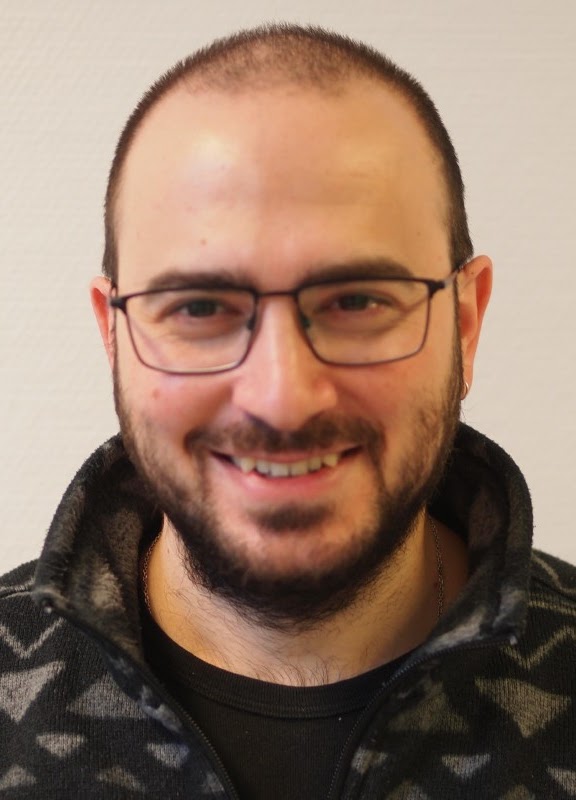
Stephen Alstrup is a Professor in the Algorithms and Complexity section at the Department of Computer Science (DIKU), University of Copenhagen, Faculty of Science. His research bridges theoretical computer science with practical applications in modern computational challenges. His primary research interests include: Algorithm design and analysis Graph algorithms and data structures Big Data processing techniques Streaming algorithms and Internet distribution Theoretical foundations with practical implementations Alstrup's work demonstrates how theoretical algorithm research can lead to real-world applications, as evidenced by his development of Octoshape technology for large-scale Internet streaming. His research spans from fundamental theoretical problems to applications in Big Data, cloud computing, and information retrieval systems. He has published extensively with 93 research outputs including journal articles, conference proceedings, and books. His recent work focuses on graph spanners, semantic hashing, recommendation systems, and universal graph structures, showing continued productivity in theoretical computer science. Alstrup actively engages with industry and media, contributing to discussions about Big Data applications, technology innovation, and how businesses can collaborate with universities to access cutting-edge knowledge and funding opportunities. His work has been featured in 10 media contributions discussing practical applications of algorithms in education, municipal IT projects, and business innovation.
Derek Beach is a Professor at the Department of Political Science, Aarhus University. His expertise lies in advancing process tracing methodology for academic research and policy evaluation, with a focus on European integration processes, voter behavior, and case study methods. He is currently leading a four-year project on Mechanisms and Mechanistic Evidence in the Social Sciences. Research Interests: Beach specializes in methodological development of process tracing, applying it to both academic and policy contexts. His substantive research explores EU crisis negotiations, the role of analogical reasoning in policy analysis, and evidential pluralism in social science research. He has co-authored a textbook on foreign policy analysis and process tracing in Danish. Collaborations & Consultancy: Beach collaborates with the Wellbeing Investments in Schools and Enterprises (WISE) project at the University of Birmingham and has worked with the World Bank's Independent Evaluation Group and the Joint Data Center (World Bank/UNHCR) on policy evaluations. His consultancy work spans UN agencies and global institutions. Teaching: He teaches across all levels (BA to PhD), including courses on Methods, US Presidential Election Simulation Models, and Case-Based Methods. His pedagogical focus aligns with his methodological research, emphasizing process tracing and evaluation techniques. Publications & Contributions: His scholarly work includes foundational texts on process tracing and empirical studies on EU integration. He has contributed to journals like European Journal of Political Research , Synthese , and Sociological Methods & Research , though specific publication years are not listed in the provided data.
Anders Kalsgaard Møller is an Associate Professor in the Department of Culture and Learning at Aalborg University's Faculty of Humanities and Social Sciences. He is actively engaged in research and innovation in learning design, digital technologies, and artificial intelligence in education. His work is centered around the L-ILD (IT and Learning Design), Green Society, and MASSHINE Xlab – Design, Learning and Innovation research environments. His research interests span Learning Design , Computational Thinking , Artificial Intelligence in Education , Human-Robot Interaction , and Environmental Literacy . He investigates how emerging technologies can be integrated into educational practices to enhance collaborative learning, literacy development, and sustainable thinking. His work often involves participatory and co-design methods with educators and children. The recent publications of Anders Kalsgaard Møller reflect a strong trend toward the application of generative AI, robotics, and digital tools in language and primary education. His scholarly output emphasizes interdisciplinary collaboration, technological innovation, and real-world educational impact, particularly in K-12 and higher education contexts. Principal Investigator, 'Using artificial intelligence in English teaching at upper secondary schools' (2023–2026) Co-PI, 'Co-Designing Robot-Assisted Learning for Children' (ongoing) Co-PI, 'Labor market-oriented AI skills at cand.it.' (2024–2026) Co-PI, 'Understanding and fostering future consumers' environmental literacy' (2024–2025) Anders Kalsgaard Møller has been involved in media outreach, including coverage on children's interactions with social robots and discussions on AI in education. He has also contributed to academic leadership through conference organization and editorial roles, such as in the DLI conference series. He is affiliated with key research labs including: L-ILD – IT and Learning Design Green Society MASSHINE Xlab – Design, Learning and Innovation These labs focus on digital innovation, sustainability, and human-centered design in educational contexts.
Noomi Christine Linde Matthiesen is an Associate Professor at the Department of Communication and Psychology, Faculty of Humanities and Social Sciences, Aalborg University. Her research focuses on family life, cultural care practices, and families' interactions with welfare state institutions like daycare and school. She co-leads the Psychology of Culture, Humanity and Education and SSH Children and Youth Research Network groups. Academic Background: M.A. in Psychology, Ph.D. Key Projects: BEST: Best Interests of the Child , TROLD: Wellbeing and Play Participation , and Præstationsfrigørende Rum (Performance-Free Spaces). Her work examines how adults foster children's development, emphasizing trust, emotional labor, and subjectivity. Publications often intersect psychology, education, and cultural studies, addressing parental coaching, leisure time pedagogy, and normative ideals in child protection. Media contributions highlight critiques of performance-driven parenting and solutions for wellbeing. Recent articles (2024–2025) explore situated psychology, trust theory, and leisure pedagogy, with subfields spanning emotional labor, child protection, and cultural adaptation. Collaborations with scholars like S. Brinkmann and T. Szulevicz reflect interdisciplinary engagement.
Stephen Carney is a Professor (MSO) in Educational Studies at Roskilde University's Department of Humanities and Technology, where he has been based for over 20 years. An Australian by birth, he directs his research toward educational policy and comparative education. He serves as a key member of the Learning, Education and Pedagogy (LEAP) Research Center for Problem-Oriented Project Learning and previously served as head of studies for the University's Global Humanities bachelor program from 2018-2024. Carney earned his Doctor of Philosophy in Educational Studies from the University of Oxford in 2001, following a Master of Science in Educational Governance from the same institution in 1993. His academic journey began with a Master of Arts in Interdisciplinary Studies from UNSW Australia in 1990 and a Bachelor of Economics from The Australian National University in 1986. His research focuses on policy issues in higher education and schooling systems globally, with particular emphasis on university governance in Denmark and Europe, and school reform in the global south (primarily Nepal, India and western China). Carney has employed both policy analysis and ethnographic methods in his work. In recent years, he has explored methodological issues in education, particularly performative strategies for presenting schooling experiences. He served as president of the Comparative Education Society in Europe (CESE) from 2016-2022, demonstrating his significant standing in the international academic community. Analysis of Carney's recent publications reveals a consistent focus on comparative education, educational policy in a globalized world, and methodological innovations. His work frequently addresses the intersection of educational policy with cultural contexts, particularly examining how global educational trends are adapted in different national settings. A notable recent trend shows increasing attention to indigenous perspectives, reconciliation processes, and southern epistemologies in educational research. Book of the year (Shortlist): Globalization and Education Special Interest Group, Comparative and International Education Society, US (2022) George Bereday Prize for Most outstanding scholarly article published in the Comparative Education Review (2012) George Bereday Prize for Most outstanding scholarly article published in the Comparative Education Review (2009) Carney has served as principal investigator or participant in numerous research projects, including long-term initiatives on micro-credit financed entrepreneurial activities for women in Tanzania, local responses to global education reforms in Nepali primary schools, and comparative studies across Denmark, China and Zambia. His academic citizenship extends to review panels for new Master's programs and academic appointment committees. As an active researcher, he maintains collaborations across multiple countries and has recently engaged as a visiting researcher at the University of Modena Reggio Emilia.
Nicolai J. Foss is a Professor of Strategy at the Department of Strategy and Innovation, Copenhagen Business School (CBS). He holds additional roles as Honorary Adjunct Professor at the University of Southern Denmark, External Chair of the Danish Institute for Advanced Studies (2020–2025), and Professor II at the Norwegian School of Economics. A Knight of the Order of the Dannebrog, he previously held the Rodolfo Debenedetti Chair of Entrepreneurship at Bocconi University (2016–2019). His academic journey includes degrees from the University of Copenhagen (M.Sc., 1989) and a PhD from CBS (1993). He has held visiting professorships at Warwick, Hong Kong Polytechnic University, and others. Research interests focus on strategic management (resource-based view, microfoundations), organizational design (knowledge processes, open innovation), entrepreneurship (cross-country analyses, strategic entrepreneurship), and social science methodology. He has authored over 266 journal articles, 109 book chapters, and 26 books, with a Google Scholar h-index of 116 and ~60,000 citations. Recognitions include Clarivate’s Highly Cited Researcher status since 2018 and being ranked the 13th most cited living business scholar globally. Professional contributions include founding CBS’s Department of Strategic Management and Globalization (2005), directing World Class Environment programs at CBS, and serving on ERC panels and the Strategic Management Society board. He co-founded influential think tanks like the Danish Research Unit for Industrial Dynamics and CEPOS. His work is featured in outlets like the Wall Street Journal and Forbes , and he has been a columnist for Danish newspapers Børsen and Berlingske .
Jacob Gorm Davidsen is an Associate Professor at Aalborg University's Department of Communication and Psychology, affiliated with The Faculty of Social Sciences and Humanities. He leads the Collaboratory for Human-Centered Immersive Problem-Solving Spaces (CHIPS) and co-founded initiatives like VILA and AVA360VR. His research focuses on leveraging digital technologies, particularly Virtual Reality (VR), to enhance learning, collaboration, and problem-solving in immersive environments. He holds a PhD in Human Centered Communication and Informatics. Key projects include 'En bedre start' (funded by Independent Research Fund Denmark) exploring VR for teacher training and the 360mash project addressing GPU cloud and software anonymization. His work bridges computer science, education, and human-centered design. Main research interests include immersive VR applications, collaborative learning environments, and digital infrastructure for social sciences. His contributions span 105+ publications, with recent emphasis on activity-based VR frameworks and near-future educational technologies. He serves on editorial boards (e.g., European Journal of Engineering Education) and actively reviews manuscripts. Notable software tools developed include DOTE and AVA360VR for qualitative analysis and video collaboration.
Professor Finn Olesen is affiliated with Aalborg University Business School under the Faculty of Social Sciences and Humanities. His research focuses on macroeconomics, post-Keynesian economics, economic methodology, and the history of economic thought. Olesen explores ethical dimensions in economics and investigates pedagogical approaches like problem-based learning. His research interests span macroeconomic theory, economic ethics, crisis management, and innovative teaching methodologies. Olesen's work frequently examines the intersection of economic behavior and moral philosophy, particularly in contexts of global economic instability. Olesen's publications demonstrate a consistent focus on re-evaluating macroeconomic paradigms post-financial crisis, exploring Keynesian solutions to contemporary economic challenges, and advancing pedagogical methods in economics education. His recent work increasingly engages with sustainability and ethical dimensions of economic policy. Awards: Årets underviser på oecon 2020 He supervises doctoral students and leads research projects including 'Critical thinking and discovery based learning' and 'Macroeconomic and ethics'. His work emphasizes pluralistic approaches to economic education and policy analysis.
Georgios Arvanitidis is an Associate Professor at the Technical University of Denmark (DTU) in the Department of Applied Mathematics and Computer Science, specifically within the Section for Cognitive Systems (CogSys). He has established himself as a leading researcher in geometric machine learning, focusing on the application of differential geometry principles to enhance machine learning models. His work bridges theoretical mathematics with practical applications in artificial intelligence, with particular emphasis on understanding the geometric structure of data manifolds and latent spaces. Dr. Arvanitidis completed his educational journey with a Bachelor's degree from the Department of Informatics at the Aristotle University of Thessaloniki, followed by a Master's degree in Computer Science from Saarland University supported by the Max Planck Institute for Informatics. He earned his PhD at DTU's Cognitive Systems section under the supervision of Søren Hauberg, with additional research experience at Philipp Hennig's Probabilistic Numerics group. Prior to his current position as associate professor, he was a PostDoc at the Max Planck Institute for Intelligent Systems working with Bernhard Schölkopf. Dr. Arvanitidis's research primarily focuses on differential geometry in machine learning , where he explores how geometric structures can enhance representation learning and statistical modeling. His work in generative models investigates how learning the geometry of data manifolds can improve deep learning architectures. In the domain of deep learning theory , he examines why deep learning models generalize effectively on unseen data, with particular attention to the curvature properties of loss landscapes. His research in approximate Bayesian inference applies geometric principles to improve uncertainty quantification in neural networks. Through his innovative approaches, Dr. Arvanitidis has established himself as a leading researcher in geometric machine learning, contributing to both theoretical foundations and practical applications across various domains including robotics and life sciences. The publication trends of Dr. Arvanitidis reveal a consistent and evolving focus on geometric approaches to machine learning problems. His recent work (2023-2025) demonstrates increasing sophistication in applying Riemannian geometry to deep learning architectures, with particular emphasis on latent space geometry, optimization on manifolds, and geometric interpretations of neural network behavior. A notable pattern is the progression from foundational work on geometric representations to more applied research in areas like robotics and causal inference. His publications span top-tier conferences including NeurIPS, ICML, ICLR, and AISTATS, reflecting the high impact of his research. The interdisciplinary nature of his work is evident in collaborations across mathematics, computer science, and robotics domains, with recent papers addressing challenges in multimodal sampling, safety guarantees for dynamical systems, and counterfactual explanations. Dr. Arvanitidis has received several notable scientific awards and recognitions: Sapere Aude starting grant from the Independent Research Fund Denmark (DFF) GADL funding i-Rase, Pathfinder, and EIC (European Innovation Council) funding Best reviewer award for NeurIPS 2019 Best reviewer award for NeurIPS 2018 Best student paper award at Robotics: Science and Systems (R:SS) 2021 Dr. Arvanitidis actively mentors PhD students and researchers, currently supervising Alejandro Valverde, Johanna Gegenfurtner, and Albert Kjøller Jacobsen. He has previously co-supervised Alison Pouplin's PhD and worked with research assistant Georgios Pantis. His group receives substantial funding through multiple prestigious grants including the Sapere Aude starting grant from the Independent Research Fund Denmark, as well as European Innovation Council funding. He has been instrumental in creating opportunities for students interested in geometric machine learning, offering BSc and MSc thesis projects focused on generative models, deep learning theory, and optimization techniques. Dr. Arvanitidis also contributes significantly to the academic community as a reviewer for top conferences including ICLR and TMLR, and as an area chair for NeurIPS, ICML, AISTATS, and UAI. He co-organized the Machine Learning Summer School 2020 in Tübingen, further demonstrating his commitment to education and community building. Dr. Arvanitidis leads a vibrant research group focused on geometric machine learning within the Cognitive Systems section at DTU. His team includes multiple PhD students working on cutting-edge research at the intersection of differential geometry and artificial intelligence. The group has developed notable software tools, including the "geometric_ml" GitHub repository with over 70 stars, which contains implementations for applying Riemannian geometry in machine learning. His research has practical applications in robotics, where geometric approaches enable more robust motion planning, as evidenced by his work on "Reactive Motion Generation on Learned Riemannian Manifolds" which received a best student paper award. Additionally, his methodologies have found applications in life sciences, as mentioned in his 2022 AISTATS paper. The collaborative nature of his work is evident through extensive partnerships with researchers at institutions including the Max Planck Institute for Intelligent Systems, University of Cambridge, and various European universities. His recent news items indicate active engagement with the academic community through talks, conference presentations, and ongoing supervision of new PhD students joining his group.
Sadegh Talebi is a Tenure Track Assistant Professor in the Machine Learning Section at the Department of Computer Science, University of Copenhagen . His research focuses on theoretical aspects of reinforcement learning, Markov decision processes, online learning, stochastic multi-armed bandit problems, and resource allocation in networks. Education BSc in Electrical Engineering (minor: Electronics) from Iran University of Science and Technology (IUST) (2004) MSc in Electrical Engineering (minor: Communication Systems) from Sharif University of Technology (2006) PhD in Electrical Engineering from the Department of Automatic Control at KTH Royal Institute of Technology (supervised by Alexandre Proutiere and Mikael Johansson) Research Specializes in theoretical foundations of reinforcement learning and online learning Key contributions in stochastic optimization, MDPs, and bandit algorithms Collaborates on applications in resource allocation and quantum computing Publications include high-impact work on offline RL, differentially private exploration, and scalable MDP solutions in journals like Neural Processing Letters and conferences such as NeurIPS and UAI.
Søren Eilers is a Professor at the Department of Mathematical Sciences, University of Copenhagen, affiliated with both the QA (Analysis & Quantum) and AG (Algebra & Geometry) sections. He holds editorial roles at Journal of Mathematical Analysis and Applications and contributed to Springer's Operator Algebra and Dynamics proceedings. Education : M.S. (1993), PhD (1995) in Mathematics from the University of Copenhagen. Positions : Assistant Professor (1996–1999), Associate Professor (1999–2008), Professor (2008–present). Research Interests : Focus on operator algebras, particularly C*-algebras associated with discrete structures. Active in symbolic dynamics, K-theory, and experimental mathematics. His work bridges algebraic structures and dynamical systems, with notable contributions to the classification of graph C*-algebras and the LEGO counting problem. Recent efforts emphasize computer-aided methods in mathematical research. Key Contributions : Pioneered geometric classification of graph C*-algebras, explored flow equivalence of shift spaces, and authored Introduction to Experimental Mathematics (2017). His research has been supported by grants such as the Villum Fonden's Experimental Mathematics initiative (2012–2016). Teaching & Mentorship : Supervised 28 PhD theses and numerous projects in analysis, discrete mathematics, and experimental mathematics. Taught courses in functional analysis, dynamical systems, and experimental methods. Scientific Leadership : Organized major programs like the 2016 Mittag-Leffler Institute's classification of operator algebras. Served as President of the Danish Mathematical Society (2006–2008) and led NordForsk's Operator Algebras and Dynamics network (2009–2012). International Collaboration : Extensive visiting appointments at institutions like MSRI (Berkeley), Fields Institute (Toronto), and Institut Mittag-Leffler (Stockholm). Maintains global research networks in operator algebras and dynamics.
Andreas Kugi is the Scientific Director at the AIT Austrian Institute of Technology and a full professor of Complex Dynamical Systems at TU Wien (Vienna University of Technology) in the Faculty of Electrical Engineering and Information Technology, Institute of Automation and Control. He has held significant academic and leadership roles across Europe, including professorships at Saarland University and offers from TU Dresden and KIT. His research focuses on the modeling, control, and optimization of complex dynamical systems , with strong applications in mechatronics, robotics, and industrial automation . He has led major research centers such as the Christian Doppler Laboratory for Model-Based Process Control in the Steel Industry and the Center for Vision, Automation & Control at AIT. His work bridges theoretical control design and real-world industrial implementation. The recent publications reflect a consistent focus on nonlinear, hybrid, and distributed parameter systems , with applications in robotics, manufacturing, energy, and process industries. His research integrates advanced control theory with practical engineering challenges, emphasizing real-time optimization, robustness, and system efficiency. Scientific Awards: Mechatronic Systems Outstanding Investigator Award (IFAC, 2022) Goldene Stefan-Ehrenmedaille (OVE, 2023) 16 best paper awards Andreas Kugi has supervised over 50 completed PhD dissertations and has been deeply involved in research leadership, including serving as Editor-in-Chief of Control Engineering Practice (2010–2017) and Vice President of the OVE Austrian Electrotechnical Association (2017–2023). He has secured and led numerous research grants, particularly through industrial collaborations in automation and process control. He leads and contributes to major research initiatives, including the Center for Vision, Automation & Control at AIT and the Christian Doppler Laboratory , fostering interdisciplinary teams focused on industrial digitalization and smart systems.
Kasper Green Larsen is a Professor in the Department of Computer Science at Aarhus University. His research focuses on theoretical computer science, machine learning, algorithms, and data structures. He has made significant contributions to boosting algorithms, PAC learning theory, and computational geometry. His work often bridges algorithm design with complexity theory, addressing challenges in optimization, memory efficiency, and lower bounds analysis. Key research areas include: Algorithmic Learning Theory (e.g., boosting, bagging, and PAC learners) Data Structure Design (e.g., invertible Bloom tables, succinct representations) Computational Complexity (e.g., lower bounds for dynamic and oblivious algorithms) Geometric Algorithms (e.g., hierarchical searching, range queries) Recent publications emphasize foundational advancements in learning theory (e.g., optimal weak-to-strong learning) and data efficiency (e.g., memory-reduced Bloom filters). His work frequently appears in top conferences like IJCAI, ICALP, and SODA, reflecting rigorous theoretical contributions with practical implications.
Maria Hvid Bech Dille is an Assistant Professor in Organization and Learning at Aalborg University (AAU), Copenhagen, and a member of the Institute for Advanced Study in Problem-based Learning (IAS PBL). She holds a PhD in management studies (2021) and a master’s in critical organization studies. Her research focuses on digitalization’s societal impacts, care work dynamics, and interdisciplinary collaboration with practitioners and institutions. Education: PhD: 'Becoming in the middle - towards a new materialist perspective on middle management positions in education' (Aalborg University, 2021) Master’s in critical organization and management studies Research Interests: Explores digital transformation’s role in creating inclusion/exclusion divides, elderly care work valuations, and the intersection of digital care with professional identities. Uses poststructuralist/posthumanist frameworks and feminist ethics of care. Engages in projects like LABCare (elderly care education), Hybrid Learning in Aesthetic Practices, and immigrant inclusion initiatives. Teaching Roles: Bachelor’s program in Communication & Digital Media Master’s programs in Data-Driven Organizational Development and Nordic Master in Visual Studies/Art Education Key Projects: LABCare: Expansive learning environments in elderly care (2023–2028) Inclusion of Adult Immigrants: Sustainable model for societal integration (2022–2023) Hybrid Learning in Aesthetic Practices: Innovating arts education (2022–2025) Labs/Teams: VILD Research Center (Visual Studies & Learning Design) and ILD-LAB (IT & Learning Design).
Matthias Oliver Wilhelm is an Associate Professor in the Department of Mathematics and Computer Science at the University of Southern Denmark, affiliated with the Quantum Mathematics research group. His work focuses on advanced theoretical physics topics including scattering amplitudes in gauge/gravity theories, Feynman integrals, special functions, and applications of machine learning in physics. He has contributed to groundbreaking research at the intersection of quantum field theory and mathematical physics, particularly in understanding gravitational wave phenomena and high-energy particle interactions. Research Interests: His research combines quantum field theory with algebraic geometry and computational methods, exploring topics like elliptic Feynman integrals, post-Minkowskian expansions, and machine learning-driven amplitude calculations. Recent work includes leveraging Calabi-Yau manifolds for gravity-related Feynman integrals and developing transformer-based algorithms for scattering amplitude computations. Awards: He received the Velux Grant - Villum Young Investigator in 2018, recognizing his innovative contributions to theoretical physics. Projects: Leveraging Algebraic Geometry for High-Precision Fundamental Physics (2024-2028, DFF-funded) Thermodynamics of strongly coupled Quantum Field Theory (2019-2027, private foundation-funded) Key Themes in Recent Work: His articles emphasize novel computational techniques (e.g., machine learning for integration-by-parts reduction), formal developments in scattering amplitude theory, and geometric approaches to quantum gravity problems. Notable contributions include classifying Feynman integral geometries for black-hole scattering and advancing elliptic function methodologies in perturbative QFT.