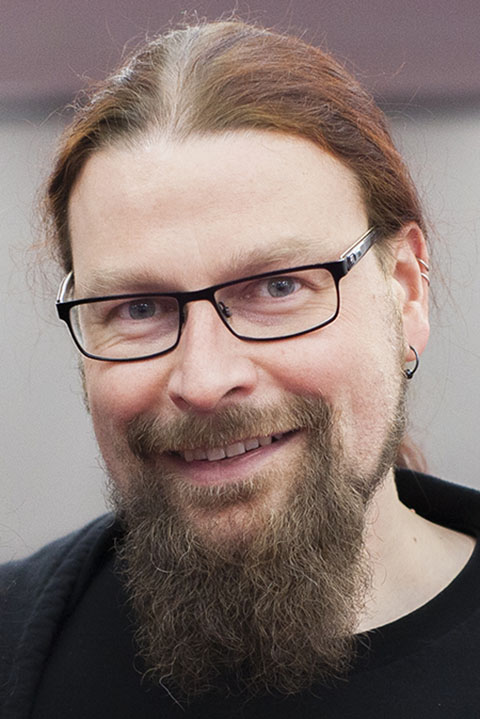
Patrick Rinke serves as an Adjunct Professor in the Department of Applied Physics at Aalto University, Finland. His research bridges theoretical physics, materials science, and computational methodologies with a strong focus on machine learning applications. His computational work spans electronic structure theory, materials design, and atmospheric chemistry. Rinke's research integrates Bayesian optimization, active learning, and high-throughput computational screening to accelerate materials discovery, particularly in hybrid perovskites, catalysts, and biomaterials. Recent work demonstrates machine learning's transformative potential in predicting molecular properties, optimizing materials functionality, and solving complex physical chemistry problems. His scientific contributions have been recognized with multiple awards: Thesis Prize from the Institute of Physics (2003) DFG Research Scholarship (2007-2009) Outstanding Postdoctoral Achievement Award (2009) Outstanding Referee of Physical Review Letters (2014) August-Wilhelm Scheer Visiting Professorship (2017)
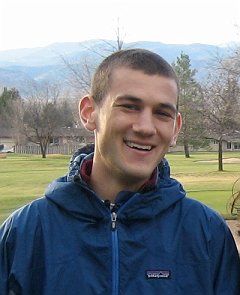
Nate Foster is a Professor of Computer Science at Cornell University and currently serves as the Associate Dean for Research in the Ann S. Bowers College of Computing and Information Science. He is also a Visiting Researcher at Jane Street and served as a Visiting Professor at École Polytechnique Fédérale de Lausanne during the 2023-24 academic year. His research uses ideas from programming languages to solve problems in networking, databases, and security. BA in Computer Science, Williams College (2001) MPhil in History and Philosophy of Science, University of Cambridge (2008, all work completed in 2003) PhD in Computer and Information Science, University of Pennsylvania (2009) Foster's research focuses on developing languages and tools that make it easy for programmers to build secure and reliable systems. His current work centers on the design and implementation of languages and tools for programmable networks, particularly using the P4 language. His past work includes bidirectional languages (also known as 'lenses'), database query languages, data provenance, type systems, mechanized proof, and formal semantics. His research group at Cornell has made significant contributions to network verification, software-defined networking, and formal foundations for programmable data planes. Analysis of Foster's recent publications reveals a strong focus on network verification and programming language foundations for networking. His work consistently applies formal methods to practical networking problems, with a particular emphasis on the NetKAT and P4 languages. Over the past five years, his research has evolved toward more complex network verification techniques, including infinite state verification, active learning of network models, and dependently-typed approaches to network programming. His work bridges theoretical computer science with practical networking systems, making formal methods accessible to network engineers. ACM Fellow (2025) ACM SIGPLAN Robin Milner Award (2023) ACM SIGCOMM Rising Star Award (2018) NSF CAREER Award (2013) Alfred P. Sloan Fellowship (2012) Multiple distinguished paper awards across top conferences including POPL, PLDI, and SIGCOMM Foster has advised numerous PhD and Master's students who have gone on to prominent positions in both industry and academia, with many continuing work in programming languages and networking. He has led multiple significant research grants including an NSF CAREER Award and has been involved in the P4 Language Consortium, serving as Chair of the P4 Language Governing Board. His work has been supported by various organizations including NSF, DARPA, and industry partners like Intel and Jane Street. Foster is also active in the programming languages research community, serving on numerous program committees and as Vice Chair of DARPA's Information Science and Technology (ISAT) study group. Foster leads a vibrant research group at Cornell focused on programming languages for networks, with collaborators from academia and industry. His group has developed several influential tools and frameworks including NetKAT, Petr4, and KATch. They maintain strong connections with the P4 community and work closely with industry partners to ensure their research has practical impact on real-world networking systems.
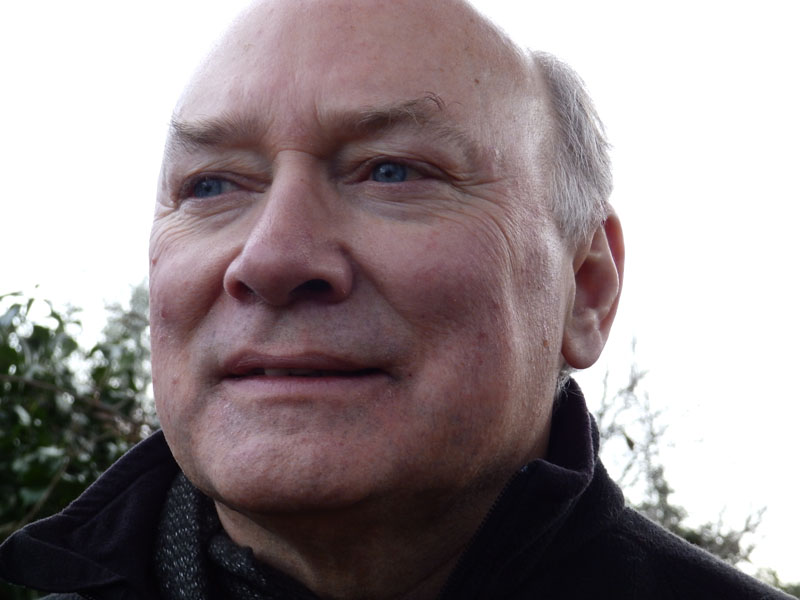
James K. Russell is a Full Professor in Earth, Ocean and Atmospheric Sciences at The University of British Columbia, where he has been faculty since 1999. He directs the Volcanology and Petrology Laboratory and maintains an active research program in volcanology and petrology with significant international collaborations including appointments at LMU Munich, University of Torino, and Monash University. His educational background includes a Ph.D. (1984) and M.Sc. (1980) from the University of Calgary, and a B.Sc.(H) (1976) from the University of Manitoba. He previously worked at Cominco Exploration Ltd in Vernon, British Columbia before joining UBC. Russell's research focuses on understanding magmatic processes through multiple approaches. His primary interests include glaciovolcanism as a tool for paleoclimate reconstruction, predictive modeling of magma transport properties, and high-temperature rock mechanics experiments. His work bridges theoretical modeling with field observations, particularly in the Canadian Cordillera. He has developed influential models for magma viscosity that are widely cited in the volcanology community. His publication record shows consistent high-impact research over several decades, with recent work focusing on ultramafic melt viscosity, kimberlite transport mechanisms, and glaciovolcanic interactions. The research demonstrates a strong emphasis on quantitative approaches combining thermodynamics, rheology, and field-based observations to solve fundamental problems in volcanology. Scientific Awards: 2024 Research Award of the Alexander von Humboldt Foundation, LMU, Munich, Germany 2022 DAAD Research Stay for Visiting Academics Scholarship (3 months) 2019 Visiting Professorship, University Roma Tre 2019 Visiting Fellow at Centre for Advanced Studies, University of Munich 2016 Fellow of Mineralogical Society of America 2013 NSERC Discovery Accelerator Supplement Award 2010 Career Achievement Medal, Volcanology Division, Geological Association of Canada 2008 Peacock Medal, Mineralogical Association of Canada Russell has served in numerous editorial and professional capacities, including as Co-Editor-in-Chief for Journal of Volcanology & Geothermal Research (2016-2022), Associate Editor for multiple prominent journals, and as evaluator for research grants including ERC Consolidator grants and NSERC competitions. He has provided media consultation for National Geographic and Nova/Pioneer Productions. He maintains active laboratory facilities for volcanology and petrology research at UBC, with equipment for high-temperature experiments and magma rheology studies. His research group collaborates internationally with institutions in Germany, Italy, and Australia, reflecting his extensive network built through sabbatical visits and visiting professorships.
Dr. Bisan Alsalibi is a Lecturer at the School of Information Technology, Monash University (Malaysia campus). She holds a PhD (2017) and MSc (2013) in computer science from Universiti Sains Malaysia, specializing in Artificial Intelligence. Previously, she served as Senior Lecturer at Taylor's University (2022–2023) and Teaching Fellow at Universiti Sains Malaysia (2018–2020). Education: PhD in Computer Vision and Optimization (2014–2017), Universiti Sains Malaysia MSc in Artificial Intelligence (2011–2013), Universiti Sains Malaysia Research focuses on AI-driven solutions in feature selection, bio-inspired optimization techniques, and computer vision applications. Her work bridges membrane computing and real-world problem-solving, including privacy-preserving recommender systems for social networks. She currently supervises PhD students exploring bio-inspired algorithms for complex challenges. Advising & Grants: Acknowledged PhD project areas: Bio-inspired optimization techniques and evolutionary machine learning
Sara Stymne is a Senior Lecturer in Computational Linguistics at the Department of Linguistics and Philology, Uppsala University, where she has been working since 2012. She initially joined as a post-doc (2012-2015), then worked as a researcher (2015-2017), and served as an assistant professor (2017-2023) before her current position as Senior Lecturer. Prior to Uppsala, she was a researcher at Linköping University's Department of Computer and Information Science. Dr. Stymne earned her PhD in Computational Linguistics from Linköping University in 2012 with the thesis 'Text Harmonization Strategies for Phrase-Based Statistical Machine Translation,' following a Licentiate degree in Computational Linguistics (2009) and a Master's degree in Cognitive Science (2006), both also from Linköping University. During her doctoral studies, she spent the autumn of 2010 and spring of 2009 at Xerox Research Centre Europe in Grenoble, France. Her primary research interests focus on cross-lingual natural language processing and digital humanities, with particular emphasis on multilingual dependency parsing. Dr. Stymne is passionate about applying computational linguistics to solve research questions in other fields, including language history, literary analysis, and political science. Her earlier work concentrated on machine translation, with specific interests in discourse-aware translation, compound processing, and error analysis. She has made significant contributions to the development of language technology tools for analyzing dialogue, narrative, and stylistic features in literature. Analysis of Dr. Stymne's recent publications reveals a strong focus on cross-lingual and cross-domain natural language processing. Her work spans multiple subfields including dependency parsing across genres and topics, discourse relation analysis in low-resource languages like Egyptian Arabic, direct speech identification in Swedish literature, and causality detection in governmental documents. A notable trend is her application of NLP techniques to digital humanities problems, particularly in analyzing literary texts and historical language change. Her research often involves creating and utilizing specialized datasets for specific linguistic phenomena across multiple languages. Dr. Stymne actively supervises graduate students, having guided numerous master's and bachelor's theses on topics ranging from speech recognition to multilingual parsing and causality detection. She leads or participates in several research projects including 'Fictional prose and language change' (funded by VR, 2021-2023) and 'Enabling climate-resilient development' (funded by Marianne and Marcus Wallenberg Foundation, 2023-2027), demonstrating her commitment to interdisciplinary research with practical applications. Her work has resulted in several notable software resources including uuPronPred for cross-lingual pronoun prediction, uuparser for dependency parsing, and Docent for document-level machine translation. Within the Computational Linguistics and Language Technology group at Uppsala University, Dr. Stymne contributes to multiple research initiatives focused on developing language technology tools for digital humanities applications. Her team works closely with literary scholars and historians to create computational methods for analyzing large corpora of literary texts, particularly focusing on Swedish literature across different historical periods. Her research bridges the gap between theoretical computational linguistics and practical applications in the humanities, creating new methodologies for quantitative analysis of literary and historical texts.
Ceren Budak is an Associate Professor at the University of Michigan School of Information and holds a joint appointment as Associate Professor of Electrical Engineering and Computer Science in the College of Engineering. Her work bridges computer science, statistics, and social sciences through computational social science approaches. Her educational background includes a PhD in Computer Science from the University of California, Santa Barbara (2012) and a Bachelors degree in Computer Science from Bilkent University in Turkey (2007). Prior to joining the University of Michigan faculty, she was a Postdoctoral Researcher at Microsoft Research New York. Professor Budak's research centers on computational social science, with particular emphasis on analyzing large-scale datasets to address questions with social, political, and policy implications. Her work spans several interconnected domains: News Media Production & Consumption (examining bias in news outlets and reader preferences), Social Movements & Media (using social media data to study collective action), Social Networks (understanding information diffusion processes), and Measuring and Promoting the Quality of Online Discussions (developing tools to improve online conversations). She teaches SI 608 (Networks) and SI 618 (Data Manipulation and Analysis) at the School of Information. Her publication record demonstrates consistent contributions to understanding how online information ecosystems operate, with recent work focusing on AI-human collaboration, misinformation dynamics, social movement framing, and the application of computational methods to political communication. Her research shows a clear trajectory from foundational work on social network diffusion to increasingly sophisticated analyses of contemporary information challenges. Among her service activities, she has served as Registration chair for COSN (ACM Conference on Online Social Networks) 2015 and as Program Committee Member for numerous prestigious conferences including WWW, ICWSM, WebSci, AAAI, and others. She has also been involved in organizing the MSR NYC Data Science Seminar Series and instructing the Microsoft Research Data Science Summer School.
Richard E. Mayer is a Distinguished Professor of Psychology at the University of California, Santa Barbara, affiliated with the College of Letters & Science. His work bridges cognition, instruction, and technology to advance understanding of how people learn and how to design effective educational interventions. Research focuses on multimedia learning , computer-supported learning environments , and computer games for learning Current projects examine immersive virtual reality, generative learning strategies, and social cues in online instruction Recipient of top honors: Thorndike Award, Scribner Award, and APA’s Distinguished Contribution Award Principal Investigator on grants from the Office of Naval Research , Institute of Education Sciences , and National Science Foundation He leads the Mayer Lab for Research on Learning and Instruction, which emphasizes learning for transfer —ensuring learners apply knowledge in new contexts. His research has established 12 instructional design principles for online learning environments.
Liming Feng is an Associate Professor at the Department of Industrial and Enterprise Systems Engineering, University of Illinois at Urbana-Champaign, and has served as Director of the Master of Science in Financial Engineering (MSFE) program since 2022. His academic career at the university spans from Assistant Professor (2006-2012) to his current role. He earned his Ph.D. in Industrial Engineering and Management Sciences from Northwestern University (2006), an M.S. in Mathematics from Northwestern University (2000), and a B.S. in Mathematics from Beijing Normal University (1997). Ph.D., Industrial Engineering and Management Sciences, Northwestern University, 2006 M.S., Mathematics, Northwestern University, 2000 B.S., Mathematics, Beijing Normal University, 1997 Feng’s research focuses on Financial Engineering, Stochastic Modeling, and Computational Methods. He has contributed extensively to quantitative finance, particularly in options pricing, portfolio optimization, and market impact models. His work leverages advanced numerical methods, Fourier transforms, and stochastic calculus to solve complex financial problems. The trends in his publications highlight expertise in Levy processes, jump diffusion models, and numerical algorithms for financial derivatives. He has developed innovative techniques for Bermudan options pricing, discretely monitored barrier options, and portfolio deleveraging strategies. His articles often intersect Operations Research with Financial Engineering, emphasizing computational efficiency and mathematical rigor. ISE Faculty Fellow (2025) INFORMS Financial Services Section Best Student Research Paper (2013) First runner-up of the 2012 Morgan Stanley Prize for Excellence in Financial Markets Feng has served on editorial boards for Operations Research Letters and Mathematical Finance . He has been recognized repeatedly for teaching excellence, including the Sharp Outstanding Teaching Award (2011, 2022) and multiple entries in the List of Teachers Ranked as Excellent by Their Students (2007-2024). He currently leads the MSFE program and contributes to curriculum development through courses like IE 522 (Statistical Methods in Finance) and IE 527 (MSFE Professional Development).
Andrew Childs is a Professor at the University of Maryland, affiliated with the Department of Computer Science and the Institute for Advanced Computer Studies (UMIACS). He serves as Director of the NSF Quantum Leap Challenge Institute for Robust Quantum Simulation (RQS) and is a Fellow at the Joint Center for Quantum Information and Computer Science (QuICS). His research focuses on quantum algorithms for simulating physical systems, algebraic problems, and quantum walk protocols, with applications in quantum computing and computational complexity. University of Maryland Institute for Advanced Computer Studies (UMIACS) Joint Center for Quantum Information and Computer Science (QuICS) NSF Quantum Leap Challenge Institute for Robust Quantum Simulation Childs' research spans quantum simulation, quantum Fourier transform, phase estimation, and Hamiltonian dynamics. He has developed techniques to reduce quantum computational resources for simulating quantum systems and explored limitations of quantum computers through hidden subgroup problems and non-unitary dynamics. His publications cover diverse areas including quantum walk optimization, Hamiltonian simulation methods, and applications to cryptography and condensed matter physics. Recent works address spatial search algorithms, product formulas for commutators, and quantum routing protocols. As an educator, Childs has taught courses on quantum algorithms and information processing at both the University of Maryland and University of Waterloo, with lecture notes and materials spanning multiple years. Contact: amchilds@umd.edu | Office: ATL 3359 | Affiliated with University of Maryland's quantum research institutes.
Mark Lewis is the Kennedy Chair in Mathematical Biology at the University of Victoria, holding joint appointments in the Departments of Mathematics and Statistics and Biology. His research focuses on spatial ecology and mathematical modeling, addressing ecological challenges such as animal movement, invasive species, and disease dynamics. Lewis earned his D.Phil. in Mathematical Biology from the University of Oxford and has been elected a Fellow of the Royal Society UK. His work integrates mathematical analysis, field studies, and interdisciplinary approaches to solve ecological problems. Current projects include modeling polar bear populations, cyanobacteria dynamics, and the impact of climate change on wildlife. Lewis supervises students across both UVic and his former University of Alberta lab. Education: D.Phil. in Mathematics (Mathematical Biology), University of Oxford Awards: Royal Society Fellowship, CRM-Fields-PIMS Prize, and Okubo Prize Key Research Areas: Animal movement modeling, aquatic ecology, wildlife disease, and invasive species management Publications highlight his contributions to understanding disease spread, parasite dynamics, and ecological responses to environmental changes. Lewis collaborates widely, applying mathematical tools to real-world conservation and health challenges.
Sebastian Raisch is a Full Professor of Strategic Management at the Geneva School of Economics and Management (GSEM), University of Geneva, where he also serves as Director of the Executive MBA program. He is affiliated with the Institute of Management and holds a Ph.D. from the University of Geneva. His academic work is deeply rooted in understanding how organizations balance stability and change, particularly in the face of digital transformation. Research Interests: His primary areas of expertise include strategic management, organizational ambidexterity, organizational paradox, artificial intelligence in organizations, and digital transformation. His research investigates the dynamics of corporate growth and decline, strategic renewal, and the integration of human and artificial intelligence in organizational decision-making. He is especially interested in how firms navigate tensions between competing demands such as exploration and exploitation, automation and augmentation, and stability and innovation. Publications and Trends: His recent publications (2023–2025) show a strong shift toward the role of artificial intelligence in management, with a focus on hybrid human-AI systems, ethical AI, and the strategic implications of AI adoption. Earlier works center on ambidexterity, paradox theory, and corporate turnaround, establishing him as a leading scholar in these domains. Scientific Awards: Strategic Management Society’s Best PhD Paper Award Emerald Publishing Group’s Citation of Excellence Award Journal of Management’s Scholarly Impact Award Editorial and Professional Service: Sebastian Raisch serves as Associate Editor at the Academy of Management Review and sits on the editorial boards of the Academy of Management Journal and the Strategic Management Journal . He has advised numerous doctoral students and supervised research projects on organizational innovation and digital strategy, though specific names are not listed in the provided materials. He has not received explicit mention of research grants, but his extensive publication record suggests active research funding. Labs and Research Teams: While no formal lab is mentioned, Raisch leads or contributes to research initiatives within the Institute of Management at GSEM, particularly in strategic management and digital innovation. He collaborates with scholars across Europe and the U.S., including notable co-authors like J. Schad, S. Krakowski, and M. Tushman.
Prof. Raffaello D'Andrea is a Full Professor at ETH Zürich's Department of Mechanical and Process Engineering, affiliated with the Institute for Dynamic Systems and Control. His research focuses on bridging digital and physical worlds through robotics, control systems, and autonomous systems. He has pioneered work in aerial robotics, swarm systems, tactile sensing, and soft robotics. His philosophy emphasizes solving 'easy' problems with scalable, robust solutions, prioritizing simplicity and replicability. Key research areas include UAV navigation, distributed control, tactile sensor design, and fault-tolerant systems. He has founded multiple organizations and led roles as CTO/CEO, emphasizing cross-disciplinary innovation. His work has commercial applications in logistics, healthcare, and automation, driven by a belief in technology's role in improving human life. Notable projects include the Cubli robotic cube, aerial vehicle swarms, and optical tactile sensors for robotics. His lab emphasizes collaboration and team leadership, aiming to translate theoretical insights into practical, scalable technologies. Scientific awards: None explicitly listed in the provided texts. Advising and grants: No students listed in the provided texts; grants information not detailed. Labs/Teams: Leads research at ETH Zurich's Institute for Dynamic Systems and Control, collaborating with industry and academic partners globally.
Dr. Yaron Meron is a Lecturer and researcher in design at the University of Sydney's School of Architecture, Design and Planning. He holds a PhD (RMIT, Melbourne) and two Master's degrees (RMIT, Central St Martins). His work bridges academic research and professional practice, focusing on graphic and communication design, socially engaged design, AI integration, and responsible design thinking. Meron’s research explores interdisciplinary challenges, design collaboration, and the societal impact of emerging technologies like AI. He coordinates the Civic & Social Design Research Group. Educations: PhD in Design (RMIT University, Melbourne) MA in Design (RMIT University, Melbourne) MA in Communication Design (Central Saint Martins, London) Research Interests: Graphic design as an interdisciplinary practice Artificial intelligence in design education and practice Media literacy and defamiliarisation techniques Socially engaged design methodologies Design briefs and stakeholder relationships Articles & Trends: Recent publications emphasize AI's role in design education, speculative urban futures, and critical design approaches to media literacy. His work frequently intersects with pedagogy, ethics, and technology’s societal implications. Labs/Teams: Coordinator of the Civic & Social Design Research Group, fostering collaborative projects on responsible design and interdisciplinary innovation.
Professor Scott Sisson is Director of the UNSW Data Science Hub (uDASH) and Professor of Statistics and Data Science at the University of New South Wales, School of Mathematics and Statistics. His research focuses on computational statistics, particularly solving 'intractable' statistical problems through Bayesian methods, big data techniques, simulation algorithms, and extreme value theory with environmental applications. Education includes a PhD in Statistics from Bristol University (2002), MSc in Environmental Statistics from Lancaster University (1997), and BSc in Mathematics and Statistics from Lancaster University (1996). Research interests span: Bayesian statistics and uncertainty quantification Big data analytics and scalable algorithms Machine learning integration with statistical methods Extreme value modeling for climate/environment Computational techniques for intractable problems Recent publications (2022-2025) demonstrate strong emphasis on Bayesian computation, spatiotemporal modeling, and interdisciplinary applications in materials science, oncology, quantum computing, transportation policy, and ecology. Methodological innovations include likelihood-free inference, modular Bayesian analyses, and symbolic data modeling. Awards and honors: 2020 Service Award (Statistical Society of Australia) 2017 ARC Future Fellowship 2015 G. N. Alexander Medal (Engineers Australia) 2011 Moran Medal (Australian Academy of Science) 2010 J.G. Russell Award (Australian Academy of Science) 2010 Queen Elizabeth II Research Fellowship As Director of uDASH, he leads data science initiatives across UNSW. He maintains sustained ARC funding and supervises students in computational statistics, Bayesian methods, extreme value theory, and machine learning. Professional service includes editorial roles for Statistics and Computing and past presidency of Statistical Society of Australia.
Philip Evans serves as Professor in the Department of Wood Science at the University of British Columbia's Faculty of Forestry, holding the British Columbia Leadership Chair in Advanced Forest Products Manufacturing Technology. He maintains an additional affiliation as Honorary Professor in the Department of Materials Physics at The Australian National University, reflecting his international research impact in sustainable forest products. His academic foundation includes a First Class BSc (summa cum laude) and Ph.D. from the University of Wales Bangor, followed by postdoctoral research at Abertay University in Scotland. Career progression led him from Lecturer to Professor and Director of ANU’s Centre for Science & Engineering of Materials before his current UBC appointment. Professor Evans' research integrates molecular-scale wood modification using plasma technology with practical material development. His portfolio addresses critical industrial challenges through plasma-modified wood surfaces for light absorption, X-ray micro-CT/VR systems for wood microstructure analysis, sustainable alternatives to old-growth mahogany in musical instruments, aerospace panel enhancements, and AI-driven detection of illegal timber trade. This dual focus on fundamental science and translational applications drives innovation in replacing non-sustainable materials. His exceptional contributions are recognized by: DOW Chemical Company Distinguished Lecturer Fellow of International Academy of Wood Science Fellow of Institute of Materials, Minerals & Mining Commonwealth Forestry Association Medal (Americas) Japanese Ministry for Science & Technology Research Award Oxford Commonwealth Forestry Bureau Book Prize As director of the Wood Surface Science Lab, he actively collaborates with industry partners to solve complex technical problems in forest products manufacturing, while mentoring junior colleagues through his integrated research-teaching approach. Current projects emphasize sustainable material development and advanced analytical techniques for global forestry challenges.