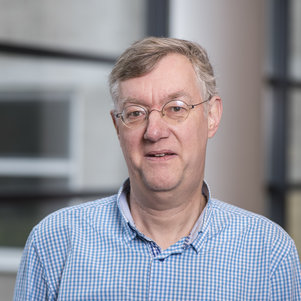
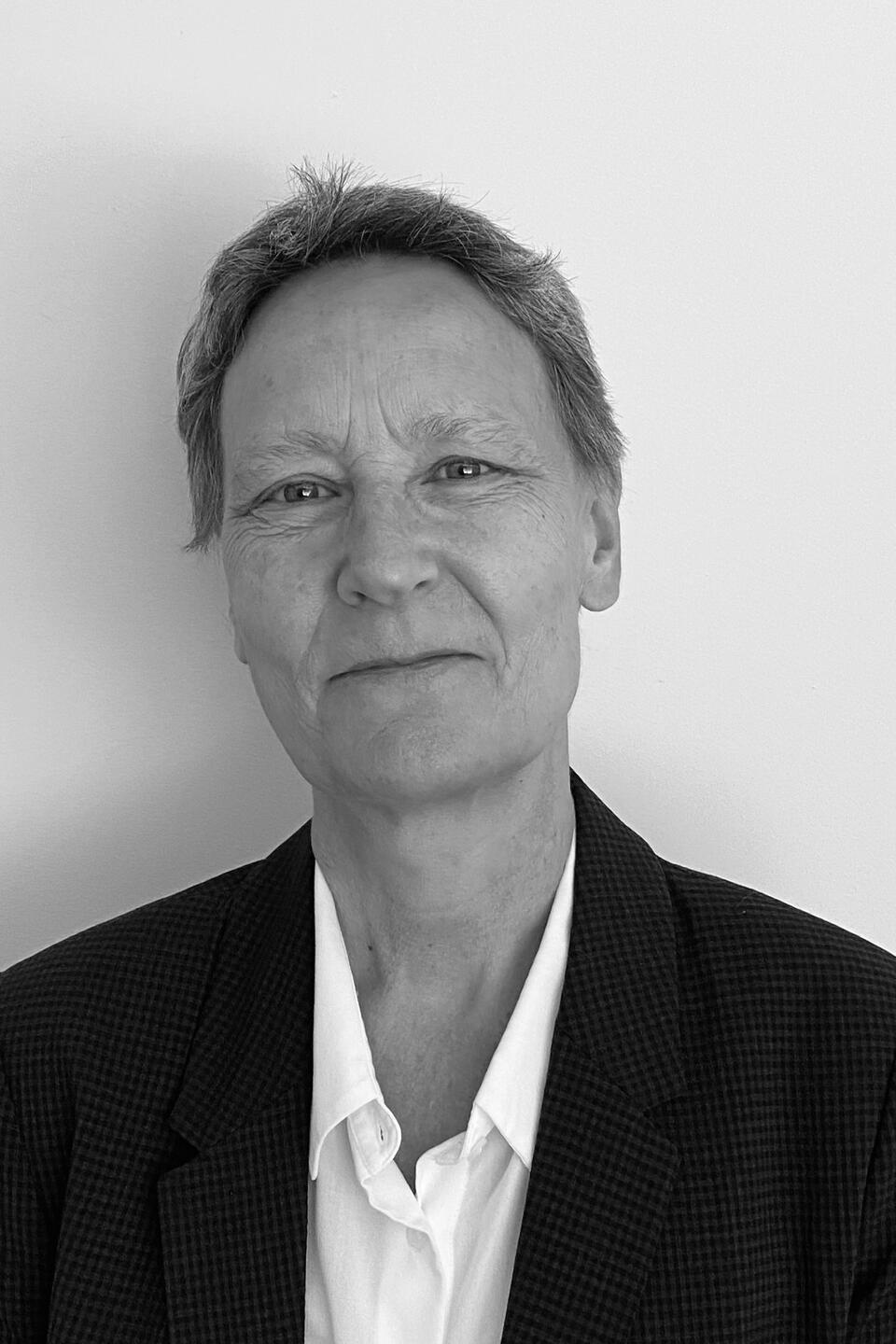
Prof. Hens Runhaar is a Full Professor of Sustainable Food System Governance at Utrecht University's Copernicus Institute of Sustainable Development. His research focuses on reconciling food production with biodiversity recovery, environmental sustainability, and health through innovative governance frameworks. He emphasizes connectivity issues in food systems, such as disconnects between production and environmental conditions, and advocates for transformative practices like agroecology and nature-inclusive agriculture. Key roles include chairing the Board of Examiners for Sustainable Development and membership in Future Food Utrecht. His projects include NWO-funded initiatives like COMBINED (grassland biodiversity) and REWIRE (circular agricultural missions). He actively engages in policy dialogues, such as advising BirdLife Netherlands and contributing to the Dutch Biodiversity Council. Research highlights systemic barriers to sustainability transitions in agriculture, with recent work analyzing dairy farming and farmer collectives. His outreach includes media appearances on nitrogen policy, nature restoration, and sustainable food systems. Professional memberships span international networks like Earth System Governance and the Wageningen School of Social Sciences.
Radu Atanasiu is a Lecturer at the Department of Management and Organisation within the School of Business and Economics at Vrije Universiteit Amsterdam. His research focuses on managerial heuristics, decision-making processes, and organizational behavior. He holds a PhD in Management, as evidenced by his 2023 doctoral thesis titled 'Simple rules made simple: The origins and outcomes of managerial heuristics.' His research interests include the application of heuristics in leadership, the integration of intuition into managerial practices, and the lifecycle of organizational proverbs. He has published extensively in journals such as International Journal of Management Reviews and Journal of Management Studies , with a focus on understanding how CEOs and managers develop and utilize simple rules in complex environments. Dr. Atanasiu's work bridges theoretical frameworks with practical managerial challenges, emphasizing the dynamic processes of heuristic formation and their impact on organizational decision-making. His contributions address topics such as emotional intelligence in leadership, informal communication, and the cultural transmission of managerial proverbs within organizations.
Iryna Susha serves as an Assistant Professor in the Innovation Studies group within the Copernicus Institute of Sustainable Development at Utrecht University's Faculty of Geosciences. Her academic journey includes obtaining a PhD from Orebro University in Sweden, establishing her expertise in digital governance and data collaboration frameworks. Dr. Susha's research focuses on how organizations across different sectors can collaborate and leverage data to address 21st century societal challenges while contributing to sustainability goals. Her work spans digital government, open data initiatives, and data collaboratives for public good, with particular attention to cross-sector partnerships, data governance models, and the practical implementation challenges of data sharing initiatives. She has developed significant expertise in analyzing how data ecosystems can be structured to support societal benefits while navigating complex regulatory and organizational landscapes. Her publication record shows a clear evolution from early work on e-participation and open government data toward more sophisticated frameworks for data collaboratives and digital innovation for sustainability. The research demonstrates consistent engagement with practical implementation challenges while maintaining strong theoretical grounding in governance and organizational theory. Prizes & Grants (1) Dr. Susha actively supervises PhD candidates, currently guiding Dwayne Ansah's research on data donations for social good and Olafur Thorarensen's work on algorithmic decision systems in healthcare. She leads the "Digital Innovation" course where students develop critical understanding of digital innovations' societal and economic impacts. Additionally, she co-leads the Special Interest Group on Digitalization & AI for Sustainability (DAISY), which serves as a hub for interdisciplinary research on sustainable digital transformation. Her research connects with several major projects including the DATA ALLY project and Data Purchasing project, demonstrating practical applications of her theoretical work in real-world contexts. The DAISY group she co-leads provides an important forum for advancing research on sustainable digital innovation across disciplinary boundaries.
Peter A. Lloyd is a Professor of Integrated Design Methodology at the Faculty of Industrial Design Engineering, Delft University of Technology. He is a leading figure in design research, serving as Editor-in-Chief of Design Studies and former Chair of the Design Research Society. His work bridges design theory, ethics, and artificial intelligence. Doctorate in Psychological Investigations of the Conceptual Design Process, University of Sheffield (1994) His research focuses on design thinking, methodology, and the cognitive processes in design. He explores how designers and AI can collaborate, emphasizing ethical considerations and reflective practice. His work contributes to the UN Sustainable Development Goals, particularly in education and responsible innovation. The recent publications highlight a strong trend in integrating AI into design processes, examining designer-AI dialogue, synthetic users, and the role of reflection in design practice. His research spans cognitive science, human-computer interaction, and organizational transformation through creative practices. Editor-in-Chief, Design Studies (2017–present) Chair, Design Research Society (2017–2022) Vice President, IASDR (2021–present) Prof. Lloyd has supervised research students and contributes extensively to editorial and peer-review activities. He has been involved with Delft University of Technology’s Faculty of Industrial Design Engineering since at least 2001 in editorial and academic roles. His work is supported through academic leadership and collaborative research networks. He is actively involved in the Design Research Society and contributes to major conferences such as DRS and IASDR, often in organizational and editorial capacities. His research group or network includes collaborators from various institutions, focusing on interdisciplinary design innovation.
Beate Volker is an Associate Professor at the Faculty of Geosciences , University of Utrecht , specializing in Human Geography and Spatial Planning . Her research focuses on Social Network Analysis , Social Capital , and Personal Network Dynamics , with particular interests in Dutch society, neighborhood effects, and urban sociology. Institutional affiliation: University of Utrecht Academic rank: Associate Professor Department: Human Geography and Spatial Planning Her scholarly work examines how life course events , urban densification , and social stratification shape personal and community-level networks. She investigates network segregation in Chilean and Dutch contexts, prisoner reintegration challenges, and the health impacts of social capital . Her methodological expertise includes field experiments, panel data analysis, and relational data collection. Recent publications highlight trends in acquaintanceship networks in the Netherlands, collective efficacy in neighborhoods, and person-centered care in long-term facilities. She contributes to the Dynamics of Youth and Pathways to Sustainability research programs. As a supervisor and researcher, Volker explores network consequences of entrepreneurship , pet ownership , and romantic relationships . Her work frequently appears in journals like Social Networks , British Journal of Sociology , and Health and Place , with peer-reviewed studies on network homogeneity, tie decay, and expert-driven causal modeling.
Carlijn Bouten is Full Professor of Cell-Matrix Interactions in Cardiovascular Regeneration at Eindhoven University of Technology. She leads the Soft Tissue Engineering & Mechanobiology group, investigating cellular interactions with extracellular environments in tissue growth, adaptation, and regeneration. Her research develops biodegradable heart valve prostheses that enable in vivo tissue regeneration, applying tissue engineering approaches to cardiovascular medicine. Professor Bouten holds an MSc from Vrije Universiteit Amsterdam and a PhD from TU/e. She completed postdoctoral research at Université Laval and University of London before joining TU/e's faculty. She directs the national Gravitation program 'Materials-Driven Regeneration' and received an ERC Advanced Grant for cardiac tissue organization research. Research Focus: Her interdisciplinary program spans: Mechanobiological cues in tissue regeneration Development of living heart valve replacements Advanced biomaterials for cardiovascular applications In vitro models for tissue development Soft robotic systems for cardiac assistance Recent publications demonstrate innovations in biohybrid devices, standardized biomaterial testing, and novel tissue patterning techniques. Her work integrates engineering, materials science, and clinical translation through collaborations with medtech spin-offs. Leadership and Recognition: Fellow of the European Alliance for Medical and Biological Engineering President-elect of the Heart Valve Society Member of AcademiaNet for Outstanding Female Scientists Recipient of NWO VICI grant and Aspasia award She leads multinational consortia in regenerative medicine and teaches courses on heart/blood physiology and regeneration. Her lab develops model systems spanning cellular to tissue levels to quantify mechanobiological processes.
Nicola Ballhausen is an Assistant Professor in the Department of Developmental Psychology at the Tilburg School of Social and Behavioral Sciences, Tilburg University, Netherlands. Her research focuses on cognitive and psychological aspects of aging, particularly prospective memory, executive function, and social influences on cognitive health in older adults. Her research interests include prospective memory , cognitive aging , metacognition , problem-solving in older adults , social cognition , and longitudinal studies of aging . She investigates how factors such as intergenerational contact, sense of purpose, and technology use impact cognitive performance and well-being in later life. Her work integrates experimental, survey-based, and qualitative methods, often in cross-national datasets like the Health and Retirement Study (HRS) and the English Longitudinal Study of Ageing (ELSA). The most recent articles highlight a strong focus on prospective memory across the lifespan , the role of social engagement in cognitive functioning , and designing accessible cognitive interventions for older adults. Her publications span top journals in gerontology, psychology, and cognitive science, reflecting interdisciplinary collaboration and methodological rigor. Dr. Ballhausen contributes to research aligned with the UN Sustainable Development Goals, particularly those related to healthy aging and well-being. She collaborates extensively with researchers across Europe and has contributed to major reference works such as The Oxford Handbook of Human Memory . Her work includes both empirical studies and methodological advancements, such as exploratory structural equation modeling. While no formal students or awards are listed, her role in supervising research and contributing to academic training is implied through her position and course involvement. Dr. Ballhausen is involved in the design and evaluation of web-based cognitive tools, such as the Shared, Web-based, Intelligent Flexible Thinking Training (SWIFT), emphasizing user-centered design and ecological validity. Her work bridges fundamental cognitive research with practical applications for aging populations.
Prof. Dr. Marc de Vries is a Full Professor in the Department of Values, Technology and Innovation at Delft University of Technology (TU Delft), Faculty of Technology, Policy and Management. He also holds affiliate professorships at Eindhoven University of Technology and KTH Royal Institute of Technology, Stockholm. His academic journey began with an M.Sc. in Physics from the Free University Amsterdam (1982) and a Ph.D. in Science Education from Eindhoven University of Technology (1988). M.Sc. in Physics, Free University Amsterdam (1982) Ph.D. in Science Education, Eindhoven University of Technology (1988) His research focuses on the philosophy and ethics of technology , with particular interests in epistemology of technology, ethics of nanotechnology, and utopian thinking in technological development. He is a leading figure in technology and science education , especially in design-based learning, argumentation in science, and values in engineering. His work bridges philosophy, pedagogy, and practical engineering education. His recent publications reflect a strong trend in design education, spatial thinking in children, argumentation in physics, and biomimicry . These works emphasize student-centered learning, cognitive development, and the integration of ethical and philosophical reflection into science and engineering curricula. His editorial role in key journals and co-authorship of foundational textbooks like Philosophy of Technology: An Introduction for Technology and Business Students underscores his influence in the field. While no specific scientific awards are listed, his extensive publication record and leadership roles indicate significant scholarly recognition. Prof. de Vries has supervised numerous students and researchers, though specific names are not listed. He has led major research initiatives in technology education and contributed to national and international curriculum development. His work is supported by academic and educational institutions, and he actively collaborates with scholars across Europe. He is affiliated with the Section Ethics/Philosophy of Technology within his department and has been instrumental in shaping philosophy of technology courses at both bachelor's and master's levels. His research group focuses on values in technological development, design pedagogy, and the integration of philosophical reflection in engineering education.
Dr. Mayke Vereijken is an Assistant Professor at the Faculty of Social and Behavioural Sciences, Utrecht University, specializing in Educational Sciences. Her work bridges educational theory and practice, with a focus on inquiry-based teaching and research integration in higher education. PhD in Medical Education (Leiden University, 2018) MSc in Educational Sciences (Radboud University Nijmegen, 2011) Her research explores interdisciplinary and transdisciplinary approaches to education, particularly how higher education can address complex problems requiring multi-, inter-, or transdisciplinary knowledge. Current work includes projects on the effectiveness of teacher professional development and scholarly teaching. Recent publications address: Transdisciplinary education frameworks Subject matter pedagogy in university teaching Professional collaboration around complex problems Authentic research practices in medical education Research integration in first-year teaching
Juliette Koning serves as Professor of Business in Society and Head of the Organisation, Strategy & Entrepreneurship Department at Maastricht University's School of Business and Economics. With a PhD in Social Anthropology from the University of Amsterdam, she brings interdisciplinary expertise spanning organizational studies, entrepreneurship, and business ethics. Her academic career includes prior appointments at Oxford Brookes University, Vrije Universiteit Amsterdam, Tilburg University, and Wageningen University. Her research centers on two interconnected domains: (1) small business organizations and entrepreneurship in Southeast Asia—particularly focusing on ethnic Chinese owner-managers—and (2) security studies including maritime security in Indonesia and organizational approaches to security across South Africa, the UK, and the Netherlands. Koning employs extensive qualitative methodologies, often incorporating creative and arts-based approaches, with publications in top journals including Organization Studies , Journal of Business Ethics , and Entrepreneurship & Regional Development . Analysis of her recent publications reveals a consistent focus on identity construction within organizational contexts, ethical dimensions of business practices, and the intersection of cultural-religious frameworks with economic activities. Her work demonstrates increasing engagement with security governance and cross-border cooperation, particularly evident in her NWO-funded research on interorganizational crime control. Koning actively contributes to academic discourse as Associate Editor of Human Relations and has secured significant research funding including an NWO SSH Open Competition grant for her project 'Cross-border Interorganizational Cooperation in Crime Control' investigating Euregional police cooperation in the Meuse-Rhine border region. Her methodological expertise in qualitative approaches extends to mentoring researchers through publications on autoethnography and ethnographic practice.
Myriam M.A.H. Cloodt serves as an Associate Professor of Open Innovation and Entrepreneurship at the Department of Innovation, Technology Entrepreneurship & Marketing (ITEM) within the School of Industrial Engineering at Eindhoven University of Technology (TU/e). She is also affiliated with EAISI High Tech Systems as a University Researcher. Her academic career spans over two decades, with a continuous focus on understanding innovation processes in complex business environments. Dr. Cloodt earned her MSc in Business Economics from Maastricht University in 1997. After working as a lecturer for two years, she began her PhD research at the Department of Organization & Strategy, completing her dissertation at METEOR (Maastricht University) on measuring innovative performance of high-tech companies after mergers and acquisitions. She joined Eindhoven University of Technology in July 2004 as a researcher at the School of Technology Management, becoming Assistant Professor in June 2006, and was promoted to Associate Professor of Open Innovation and Entrepreneurship in August 2017. Her research focuses on open innovation, corporate entrepreneurship, and strategic management, with particular interest in corporate venturing, strategic technology alliances, mergers and acquisitions, network analysis, and value constellations within innovation ecosystems. Dr. Cloodt's work bridges academic theory and practical application, as evidenced by her participation in industry projects for companies and innovation ecosystems like the High Tech Campus Eindhoven. Her publications span prestigious journals including Research Policy, Journal of Product Innovation Management, and Technological Forecasting and Social Change, as well as book chapters for Oxford University Press. Analysis of her recent publications reveals a strong trajectory toward circular economy applications, particularly in plastics innovation, alongside continued work on innovation ecosystems, science parks, and military innovation contexts. Her research demonstrates methodological diversity, employing network analysis, case studies, and stated choice experiments to investigate complex innovation phenomena across different sectors and organizational contexts. Best Paper Award - Mature PhD Student at the ESU European University Network on Entrepreneurship Conference (2021) Dr. Cloodt actively supervises graduate students and has contributed to numerous research projects, including C-PlaNeT (Circular Plastics Network for training), SEE-V-Lab, and the Brabant Center of Entrepreneurship. Her professional engagements extend to developing publications for organizations such as Adviesraad voor het Wetenschaps- en Technologiebeleid (AWT) and Het Financieele Dagblad. In teaching, she contributes to the BSc program in Industrial Engineering & Management Science, the MSc program in Innovation Management, and the Certificate program in Technology Entrepreneurship & Management. Her work aligns with UN Sustainable Development Goals, particularly through contributions to circular economy research and sustainable innovation practices. Dr. Cloodt maintains active collaborations with industry partners and participates in significant academic conferences including the Annual World Open Innovation Conference where she serves on program committees.
Benne de Weger is an Associate Professor in the Department of Coding Theory and Cryptology at Eindhoven University of Technology (TU/e). His research focuses on cryptology, information security, computational number theory, and lattice-based cryptography. He holds MSc and PhD degrees in Mathematics from Leiden University. Prior to his academic position at TU/e, he worked in industry roles as a cryptographic software engineer and information security consultant. Research interests include RSA cryptanalysis, hash collision applications, Diophantine equations, and the abc-conjecture. His work bridges theoretical mathematics with applied cryptography, particularly in lattice-based systems and security protocol analysis. He has contributed to over 98 research outputs, including peer-reviewed articles and conference proceedings. Notable recent work involves lattice vector analysis and hybrid algorithms for cryptographic problem-solving. Benne has supervised 45 academic works but no specific student names are listed in the provided text. No scientific awards are explicitly mentioned. His research collaborations span global institutions, focusing on cryptographic systems and number theory applications.
Katrina Heijne is a researcher and educator at the Faculty of Industrial Design Engineering (IDE), Delft University of Technology, where she is affiliated with the Department of Design, Organisation and Strategy and the Creative Processes group. She actively contributes to teaching courses such as Creative Facilitation and Deliberate Creativity, and is involved in the Connected Creativity Minor & Lab. Her research focuses on creative processes, including visual thinking, idea generation techniques, co-design, and group facilitation in design contexts. She explores how structured methodologies can enhance creativity in both individual and collaborative settings, particularly in urban design and educational environments. The recent publications of Katrina Heijne reflect a consistent focus on creativity support tools, ranging from AI as an inspiration source to systematic roadmaps for creative problem solving. Her work bridges design theory and practical facilitation, emphasizing evidence-based approaches to creativity. She was nominated for the TU Delft Education Team Award in 2024 for her contributions to the Connected Creativity initiative. Katrina also serves as an advisor/consultant for SeriousCreativity, applying her academic expertise in real-world innovation settings. She has co-authored multiple publications on creative methodologies and is actively engaged in research projects such as U_CODE - Urban Collective Design Environment, which investigates collaborative urban design processes.
Remco M. Dijkman serves as Full Professor in Information Systems at Eindhoven University of Technology (TU/e), chairing the Information Systems group within the Industrial Engineering and Innovation Sciences school. He additionally holds a Full Professor position at EAISI High Tech Systems and acts as research director for high-tech supply chains at the European Supply Chain Forum—a network of over 50 multinational companies. His research centers on Business Process Management with emphasis on data-driven optimization of business processes. His academic background includes both PhD and Master's degrees in Computer Science from the University of Twente. Publications span Information Systems, Computers in Industry, and Transactions on Software Engineering and Methodology, with over 100 papers and service on the editorial board of Information Systems. He has held visiting positions at New York University, Hasso Plattner Institute, IBM Zurich Research Lab, Humboldt-University Berlin, and Queensland University of Technology. Dijkman's research interests focus on detecting, diagnosing, and predicting optimal execution scenarios in business processes, developing mathematical models for quantitative process analysis , and resource assignment optimization . These are primarily applied in transportation logistics and high-tech supply chains, where he investigates data-driven predictions for transport order assignment and supply chain planning. His work bridges artificial intelligence with practical business applications. Recent publications (2024-2025) reveal concentrated efforts in deep reinforcement learning for resource allocation, process pattern discovery, and software library development (GymPN, SimPN). Key trends include predictive process monitoring for healthcare applications, event data enrichment frameworks, and uncertainty handling in logistics planning—demonstrating strong interdisciplinary integration. Scientific recognition includes: Best Demo Award (2019) Best Reviewer Award (2016) Test of Time Award (2019) He has supervised 150 students, including Lotte Vugs who received the Dow Chemical Best OML Master Thesis Award in 2020. Grant leadership spans eight projects: NXTGEN Smart Industry (2023-2030), CollChain (2023-2029), CERTIF-AI (2020-2025), FENIX (2019-2023), and DynaPlex (2021-2024), focusing on digital twins, federated networks, and AI-driven supply chain solutions. Dijkman directs the Information Systems group at TU/e and leads the European Supply Chain Forum's high-tech supply chain research. His work integrates with semiconductor manufacturing and transportation logistics through collaborations with industry partners, while his 2023 invited talks at Technical University of Munich and Humboldt University Berlin highlight his international engagement.
Tom Verhoeff is an Assistant Professor at the Faculty of Mathematics and Computing Science of Eindhoven University of Technology (TU/e) , working within the Software Engineering & Technology group. His research focuses on Model-Driven Engineering (MDE) , Domain-Specific Languages (DSLs) , and the intersection of mathematics, computing, and the arts . He teaches courses in data analytics, programming, algorithms, theoretical computer science , and logic . Verhoeff earned both his MSc and PhD in Technical Science (Mathematics and Computer Science) from TU/e. He is actively involved in promoting mathematics and informatics through initiatives like the annual Bridges conference , and serves as board member and treasurer of the Dutch Mathematics Olympiad , as well as chair of the Koos Verhoeff MathArt foundation . He has also held roles as guest lecturer in Lithuania and Finals Director for the ACM International Collegiate Programming Contest . Research Interests: Verhoeff’s work spans Model-Driven Engineering , domain-specific language development , and 3D geometric modeling . His scholarship often explores symmetry, recursion, and mathematical visualization , particularly through computational art and algorithmic puzzles . Recent publications highlight 3D rotation methods , knot theory , and mathematical art using lattice paths and geometric transformations . Scientific Awards: ACM ICPC European Founders Award (2004) IOI Distinguished Service Award (2007) Second Place in the 2022 Wolfram Computational Art Contest Notable Collaborations and Affiliations: He is affiliated with the Esprit Working Group on Asynchronous Circuit Design (ACiD-WG) , WIRE (TUE Mathematics Alumni) , ACM (Senior Member) , CSTA , IEEE Computer Society , and Royal Dutch Mathematical Society (KWG) .