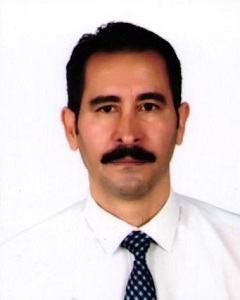
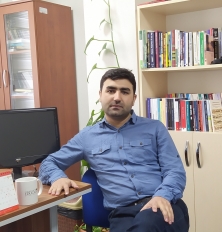
Prof. Selim YAZICI is a Professor at the Department of Business Administration, Faculty of Political Sciences, Istanbul University. He has been actively involved in academic and managerial roles since 1993, including multiple terms as Head of Department and Deputy Head of Department , and serves on ethics committees and academic boards. Education: PhD (1999) and Master's (1994) in Business Administration from Istanbul University; BSc (1992) in Mechanical Engineering from Yildiz Technical University. Research Interests span Entrepreneurship , FinTech , Business Ethics , Organizational Behavior , Project Management , and Healthcare Management , with a focus on cultural and cognitive factors influencing organizational resilience and technological adoption. Recent Publications highlight trends in FinTech ecosystems , organizational governance , and design thinking applications for business models. His studies often integrate cross-sectoral analysis, especially in healthcare and financial services. Thesis Advisory includes mentoring 18 doctoral and 21 non-thesis Master's students on topics ranging from project culture to entrepreneurial potential . He has contributed to Technopark research projects and scientific consultancies for institutions like TARSİM . International Collaborations include Erasmus lecturing at Universität Hamburg (2007) and conference presentations in Turkey, Sweden, and the USA.
Prof. Şule Itır Satoğlu is a faculty member in the Department of Industrial Engineering at Istanbul Technical University, holding the rank of Professor since 2019. She has held multiple administrative roles, including Head of Department (2025–present), Vice Rector (2020–2024), and Vice Dean (2018–2020). Her research focuses on supply chain management, optimization, sustainable operations, and disaster response systems. She has a PhD in Industrial Engineering from Istanbul Technical University (2008), an MSc in Engineering Management (2002), and a BSc in Mechanical Engineering (2000). Her work emphasizes practical applications of optimization techniques in logistics, healthcare, and disaster management. Notable contributions include developing models for blood supply chains under uncertainty, UAV-based waste detection, and sustainable urban transport fleet electrification. She has collaborated on projects funded by public and private sectors, addressing issues like lean manufacturing integration with Industry 4.0 and RFID-enabled maintenance systems. Her publications span over two decades, with recent focus on multi-objective optimization in humanitarian logistics, smart waste collection systems, and energy-efficient drone surveillance. She is a member of the TMMOB Chamber of Mechanical Engineers and actively contributes to national technology initiatives through academic leadership roles.
Tülin Haşlaman is an Associate Professor at the Department of Elementary Education - Primary Education, TED University. She holds roles as a Coordinator and Vice Head of Department. Her teaching portfolio includes courses such as Instructional Technologies, Technology-Enhanced Language Learning, and Micro Teaching, reflecting her expertise in educational technology and pedagogical innovation. Her research focuses on ICT integration in education, self-regulated learning strategies, and teacher development. Notable areas of interest include the use of digital storytelling for computational thinking, infographics in supporting student autonomy, and smartphone addiction among university students. She has also studied the impact of social media platforms like Facebook on teacher training and the integration of ICT into teaching processes. Dr. Haşlaman’s work emphasizes bridging technology with educational practices, particularly in primary education contexts. Her articles highlight themes such as pre-service teacher digital competency, disabled teachers’ technology integration challenges, and peer assessment in online environments. Despite her extensive academic contributions, she has no explicitly listed awards or grants in the provided materials. Her courses over the years span foundational education topics like Learning Environments, Observation in Schools, and Research Methods, demonstrating a commitment to both theoretical and applied aspects of education. While she has not specified any affiliated labs or teams, her teaching and research activities suggest active engagement in educational technology initiatives and teacher professional development programs.
Tuğba KANMAZ is an Assistant Professor at Kırşehir Ahi Evran University, Faculty of Education, Department of Basic Education since 2024. Previously, she held academic positions at Kütahya Dumlupınar University from 2018-2024, including roles as Department Head and Vice Dean . PhD in Preschool Education (Gazi University, 2023) Master's in Preschool Education (Gazi University, 2017) Bachelor's in Primary Education (Muğla Sıtkı Koçman University, 2014) Her research focuses on Preschool Education and Early Childhood Education , with emphasis on Computational Thinking , Creative Drama , and Technology Integration . Her work explores: Robotics and coding education for preschoolers Peer relationships and bullying prevention Movement programs for children with disabilities Parental involvement in digital education 21st-century skills in early childhood Recent publications analyze trends in drama-based pedagogy, coding tools like ScratchJr, and pandemic-induced learning losses. Awards include the 2023 Academic Incentive Award and 2022 Best Oral Presentation at international conferences. Collaborations span institutions including Gazi University and Kafkas University.
Professor BAYRAM ÇETİN is affiliated with Gaziantep University , where he serves in the Faculty of Education within the Department of Educational Sciences , specializing in Measurement and Evaluation in Education . His academic career spans multiple institutions, including Gazi University and Sakarya University. Doctorate in Measurement and Evaluation in Education (2005, Hacettepe University) Master’s in Measurement and Evaluation in Education (2002, Hacettepe University) Licence in Classroom Teaching (1993, Çukurova University) His research focuses on educational measurement , psychometric modeling , statistical analysis in education , and assessment equity . He has developed numerous scales and rubrics for educational evaluation, emphasizing SOLO taxonomy , CHAID analysis , and generalizability theory . Professor Çetin has authored 12 books/chapters, including Research Methods in Education and Measurement and Evaluation in Education , and published over 65 peer-reviewed articles. His recent work explores online formative assessment , ADHD diagnostics , and cross-cultural PISA data . He has supervised 25+ theses, including studies on cyberbullying , metacognition , and test development . He has held administrative roles such as Director of Research and Application Center (2022) and Dean (2020). His projects include international collaborations like Erasmus+ KA201 and national grants on virtual reality in medical education .
Professor Ufuk Karadavut serves at Karabük University Faculty of Medicine, Department of Basic Medical Sciences, where he holds the position of Professor and currently serves as Vice Dean. Previously, he was Dean of the Faculty of Medicine from 2021-2022 and has held multiple leadership roles including Head of Department since 2020. With an extensive publication record of 493 works and significant contributions to both medical and agricultural statistics, his career spans multiple Turkish universities including Ahi Evran University and Bingöl University. PhD, Selçuk University, Institute of Science (2001-2005) Bachelor's Degree, Ankara University, Faculty of Agriculture, Department of Animal Science (1987-1991) Professor Karadavut's research spans biostatistics, medical informatics, and agricultural statistics, with particular expertise in statistical experimental design. His work bridges healthcare applications (medical informatics, clinical data analysis) with agricultural science (crop breeding, animal husbandry). He has developed statistical methodologies applicable across diverse fields, from analyzing palliative care outcomes to optimizing chickpea breeding programs for drought tolerance. His research demonstrates a consistent pattern of applying advanced statistical techniques to solve practical problems in both medical and agricultural contexts. Analysis of his recent publications reveals a strong focus on applying statistical methodologies to address contemporary challenges. In medical informatics, he examines healthcare quality, medical education, and pandemic impacts. In agricultural science, his work centers on crop improvement (particularly chickpeas and other legumes) and animal breeding. His statistical approaches include multivariate analysis, QTL mapping, growth modeling, and machine learning techniques, demonstrating methodological versatility across disciplinary boundaries. While specific awards aren't detailed in the available information, his h-index of 11 (UNIS) and 8 (WoS), along with 583 total citations, indicate significant scholarly impact. His research has attracted funding from major Turkish research bodies including TÜBİTAK and university-supported projects. Professor Karadavut has supervised 13 theses across multiple institutions and taught diverse courses ranging from medical bioinformatics to agricultural statistics. His research portfolio includes 31 projects, with recent work focusing on climate change adaptation in livestock, medical informatics applications, and advanced statistical methodologies for agricultural research. He has collaborated extensively with researchers across multiple Turkish institutions, demonstrating strong interdisciplinary networking capabilities.
Dr. Servet Altan serves as Assistant Professor in the Department of Guidance and Psychological Counseling at MEF University's Faculty of Education in Istanbul, Turkey. Appointed in July 2022, he concurrently holds administrative roles as IBEC Coordinator and Vice Dean of the Faculty since September 2023. His academic foundation includes Master's and Doctorate degrees from Bilkent University, complemented by 15 years of K-12 international program implementation experience (2007-2022). Dr. Altan's research centers on students' motivation and engagement, Habits of Mind frameworks, diversity and inclusion practices, and international education systems. His scholarship appears in premier journals including the Journal of Teacher Education and Teaching and Teacher Education, reflecting his focus on practical applications in educational settings. As an International Baccalaureate Lead Educator since 2016, he actively trains teachers across national and international schools. Analysis of his 2022-2025 publications reveals three dominant research trajectories: (1) mindfulness applications for reducing test anxiety and enhancing academic achievement, (2) Habits of Mind integration in teacher development and emergency remote teaching contexts, and (3) equity-focused investigations into IB teacher preparation and student psychological needs. His work spans diverse educational environments from Turkish continuum schools to Latina/o/x community college settings, consistently addressing motivation, inclusivity, and international frameworks. Dr. Altan maintains active scholarly engagement through regular presentations at AERA and EARLI conferences. While specific student advisement details and grant information remain unreported in available sources, his leadership roles and publication record indicate significant contributions to educational psychology and international teaching practices.
Cafer Erhan Bozdağ is an Assistant Professor at Istanbul Technical University (ITU), affiliated with both the Department of Business Administration and the Department of Industrial Engineering. He holds a PhD in Industrial Engineering from ITU (1994) and has been a lecturer since 1989. His expertise spans operations research, supply chain management, and decision-making systems, with a focus on fuzzy logic applications, simulation modeling, and risk assessment. Education: PhD in Industrial Engineering, ITU (1994) Master's in Industrial Engineering, ITU (1988) Bachelor's in Industrial Engineering, ITU (1984) Research Interests: Dr. Bozdağ's work integrates interdisciplinary approaches to solve complex industrial and business problems. He has pioneered studies in supply chain risk management, agent-based modeling for social behaviors (e.g., organ donation dynamics), and simulation techniques for pedestrian flow optimization (e.g., ITU Science Center design). His fuzzy multi-criteria decision-making frameworks have been applied to new product development risk assessment and job evaluation systems in the metal industry. Projects & Contributions: Lead researcher on projects like the Metal Industry Work Grouping System (MESS) and a Fuzzy Group Decision Making Approach for Supply Chain Risk Assessment (2015–2021). Developed simulation models for microgrid market design, arterial reconstruction, and lean production systems. Advising & Mentoring: Supervised over 20 graduate theses since 2004, covering topics from ATM cash optimization to technology strategy in defense industries. Notable advisees include Zeynep Arslan (Scrum team performance analysis) and Yakup Turgut (machine learning-driven agent-based models). Labs/Teams: Active in ITU's Industrial Engineering and Business Administration research groups, focusing on systems analysis, decision support systems, and applied operations research.
Assoc. Prof. Dr. Umut Asan is an active faculty member in the Department of Industrial Engineering at Istanbul Technical University (ITU), Faculty of Management. He holds the academic rank of Associate Professor and has been affiliated with ITU since 1999, progressing from Research Assistant to his current role. He earned his PhD from Technische Universität Berlin and holds a Master’s and Bachelor’s from ITU in Engineering Management and Industrial Engineering, respectively. PhD: Technische Universität Berlin (2003–2009) MSc: Istanbul Technical University, Engineering Management (1999–2001) BSc: Istanbul Technical University, Industrial Engineering (1995–1999) Dr. Asan's research lies at the intersection of decision science and industrial systems, with a strong emphasis on Multi-Criteria Decision Making (MCDM) , Fuzzy Cognitive Mapping , Scenario Planning , and Digital Twins . His work applies advanced modeling techniques such as Bayesian networks and fuzzy logic to solve complex problems in supply chain resilience, urban mobility, technology adoption, and organizational behavior. His recent publications (2023–2025) reveal a consistent trend toward integrating artificial intelligence and data-driven methods into decision support systems. Topics include electric vehicle adoption in urban logistics, digital twin frameworks for manufacturing, risk analysis in forestry and rail systems, and consumer behavior in digital platforms. These works demonstrate interdisciplinary applications across engineering, business, and social sciences, often using fuzzy and probabilistic models to handle uncertainty. Dr. Asan is actively involved in research leadership, having served as Vice Dean (2018–2023) and currently supervising numerous graduate theses. He is the principal investigator of funded projects, including BAP grants on qualitative cross-impact analysis and consumer cognitive models. Principal Investigator, "A New Approach to Qualitative Cross-Impact Analysis" (BAP Project, 2016–2020) Principal Investigator, "A New Approach to Consumer Causal Chain Models" (BAP Project, 2022–2024) He is a member of several international academic societies, including the International Society on MCDM, ENBIS, and EURO, reflecting his active engagement in the global operations research community. His research has been published in journals such as IEEE Access, European Journal of Forest Engineering, and Decision Science Letters, with a growing citation impact (Scopus h-index: 13). Dr. Asan advises a large cohort of graduate students, both at the Master’s and PhD levels, in areas ranging from risk modeling to digital transformation. His lab or research group focuses on decision support systems and cognitive modeling, supervising theses on FMEA, Bayesian networks, and digital twins. Future work appears to be directed toward enhancing predictive capabilities in industrial and societal systems through hybrid AI models.
Ali Bozkurt is a Professor in Mathematics Education at the Gaziantep Education Faculty , Gaziantep University. His academic career spans over two decades, with previous roles including Associate Professor (2013-2019) and Assistant Professor (2008-2013) at the same institution. He holds a PhD (2007), MS (2001), and BS (1999) in Mathematics Education from Selçuk University. Research Focus: Mathematics education, teacher training, algebraic/geometric reasoning, technology integration, STEM education, and educational activity design. Key Projects: Led TÜBİTAK and higher education institution-funded projects on innovative mathematics pedagogy, technology-enhanced classrooms, and quality of mathematics instruction. Publications include 31 books/chapters and 59 articles, emphasizing cognitive demand in textbooks, ethical decision-making in teaching, and activity evaluation frameworks. His work has been presented at international conferences like ICME-15 and ERME. He collaborates with scholars such as Mehmet Fatih Özmantar and Begüm Özmuşul on algebraic habits and geometric reasoning. Scientific Contributions: Developed the Activity Evaluation and Feedback Tool (AEFT) and analyzed mathematics instruction quality in Turkey and Syria. Advising: Mentors graduate students and pre-service teachers, particularly in algebraic/geometric reasoning and classroom practices.
FATMA FİLİZ TILFARLIOĞLU is a Professor at Gaziantep University's Faculty of Education, Department of Foreign Language Education, specializing in English Language Teaching. With a distinguished academic career spanning over three decades, she has made significant contributions to the field of foreign language education, particularly through her development and research on the Lean Educational Method. Her academic journey began with a PhD from Çukurova University (1993-1996), followed by her appointment as a Research Assistant at Gaziantep University in 1990, progressing through academic ranks to become a full Professor in 2021. Her research interests focus on innovative approaches to language teaching, including the Lean Educational Method, discourse analysis, language learning strategies, self-efficacy in language learning, and teacher education. Professor TILFARLIOĞLU has supervised 38 master's theses and has an extensive publication record with 46 articles, 5 book chapters, and 66 conference papers. Her work demonstrates a consistent focus on improving language teaching methodologies and understanding the psychological factors affecting language learning. Her recent research has centered on innovative teaching methods such as TRIZ and CDIO in language education, analysis of teacher self-efficacy in distance learning environments, and the psychological aspects of language learning including fear of success and rejection sensitivity. Professor TILFARLIOĞLU has also led projects focused on foreign language education in Turkish society, including 'Hayatta Biz de Varız Hep Beraber Elele' and 'BİK PROJESİ - Biliyor musunuz İngilizceden Korkmuyorum.' TESOL U.S.A. Convention (1999) TEFL Summer School (1996) Yurtdışı Yüksek Lisans ve Doktora Bursu from YÜKSEK SEÇİM KURULU BAŞKANLIĞI (1991) Yurtdışı Yüksek Lisans ve Doktora Bursu from MİLLİ EĞİTİM BAKANLIĞI (1990) Throughout her career, Professor TILFARLIOĞLU has held significant administrative roles including Department Head, Vice Dean, and various committee memberships at Gaziantep University. She has taught numerous courses at both undergraduate and graduate levels, focusing on English Language Teaching Methodology, Materials Evaluation, and Contextual Grammar. Her academic leadership extends to her membership in INGED (İngilizce Eğitim Derneği) since 1995.
Mehmet Şükrü BELLİBAŞ is a Professor in the Department of Educational Sciences at Adiyaman University's Faculty of Education. He holds a Ph.D. in Educational Administration K-12 from Michigan State University (2014) and has built an impressive academic career focused on educational leadership and school administration. His research has significantly contributed to understanding leadership practices in educational settings, particularly in Turkey's centralized education system. Dr. BELLİBAŞ completed his academic journey with: Bachelor's degree in Guidance and Psychological Counseling from Istanbul University (2009) Master's degree in Educational Administration K-12 from Michigan State University (2011) Ph.D. in Educational Administration K-12 from Michigan State University (2014) Post-doctoral research in Educational Leadership from Aarhus University (2020) His research interests center around educational leadership models, with particular focus on instructional leadership, distributed leadership, and learning-centered leadership. Dr. BELLİBAŞ investigates how these leadership approaches affect teacher professional development, teacher collaboration, school climate, and ultimately student outcomes. His work often examines the Turkish educational context while making connections to international educational systems, providing valuable cross-cultural perspectives on educational leadership. Analysis of Dr. BELLİBAŞ's recent publications reveals a consistent focus on the relationship between leadership practices and educational outcomes. His work demonstrates sophisticated methodological approaches, including multilevel modeling and cross-national comparisons. A recurring theme is how different leadership styles mediate teacher outcomes such as self-efficacy, professional learning, and commitment. His research increasingly addresses issues of educational equity and the impact of leadership on achievement gaps. Young Academician Encouragement Award (May 2017) from Association of Education Administrators Dr. BELLİBAŞ has secured significant research funding, including a 2.5 million DKK grant from the Carlsberg Foundation for the project "Finding the Missing Link: Exploring the Role of School Leadership in Student Achievement and Well-Being" (2020-2021) and an 85,000 USD grant from the International Baccalaureate Research Department for "Decoding the IB Teacher Professional: A Comparative Study" (2019-2020).
Şahin ORUÇ is an Associate Professor at Yıldız Technical University's Faculty of Education, Department of Social Sciences and Turkish Education since 2016. Previously, he served as Assistant Professor at the same institution from 2007-2016. He has held significant administrative roles including Assistant Secretary General (2016-2018) and Head of Department (2013-2016) at Yıldız Technical University. His educational background includes a Doctorate (2003-2007) and Postgraduate degree (1999-2002) from Gazi University's Faculty of Education, and an undergraduate degree in History Education (1993-1997) from İnönü University. Dr. ORUÇ's research spans multiple areas within educational sciences, with particular emphasis on social studies education , history education , and gifted education . His work frequently explores innovative teaching methodologies, including the use of comics, gamification, and intelligence games in educational contexts. He has published extensively with over 179 publications according to Web of Science metrics. His recent publications reveal a strong focus on interdisciplinary approaches to social studies education, with particular interest in how digital media, historical narratives, and specialized teaching methods can enhance learning outcomes. The research shows consistent attention to both theoretical frameworks and practical classroom applications. International Journal of Field Education (IJOFE) - First Editor (2015-Present) International Journal of Social Science Research - First Editor (2014-Present) Organized multiple international symposiums including INTERNATIONAL SYMPOSIUM OF TEXTBOOKS (DEKUS) and SYMPOSIUM OF MATERIALS IN FIELD EDUCATION (IFEMS) Dr. ORUÇ has supervised 15 graduate theses across various topics in social studies education and has been involved in multiple research projects, including "Zeka ve Akıl Oyunlarının Öğrencilerin Okula İlişkin Tutumlarına Etkisi" (2017-2019) and "Tarih ve Sosyal Bilgiler Ders Kitaplarında Ermeni Meselesi" (2016-2018). He has also conducted professional development workshops on storytelling, intelligence games, and student coaching.
Prof. Dr. Hüseyin Emre Becer is a Professor at the Faculty of Fine Arts , Graphic Design Department , Yeditepe University since 2018. He previously held academic positions at Marmara University (1989–2005), İhsan Doğramacı Bilkent University (1986–1989), and Dokuz Eylül University (1983–1986). Education: Doctorate from Marmara University (1982–1986), Master’s in Graphic Arts (1982–1986), and Undergraduate in Graphic Arts (1976–1980). His research focuses on Fine Arts Core Field , Design , and Graphic Design , with emphasis on typography, visual hierarchy, and historical design principles. His work explores the application of mathematical concepts like the Golden Ratio in graphic design, modernist typography , and interdisciplinary art practices such as collage. Prof. Becer’s recent publications analyze trends in typography , graphic design education , and visual communication , bridging traditional and digital design methodologies. He has contributed to academic discourse on packaging design , advertising strategies , and design pedagogy . Scientific Awards: Birincilik Ödülü (First Prize) - Philatelic Music Circle, İNGİLTERE İkincilik Ödülü (Second Prize) - TÜRKİYE Şeref Mansiyonu (Honorable Mention) - Aydın Doğan Vakfı, TÜRKİYE Özel Ödül (Special Award) - Çankaya Belediyesi, TÜRKİYE He has guided over 20 Master’s and PhD theses, including studies on corporate identity design , digital typography , and political poster analysis . Currently, he teaches courses in Typography , Packaging Design , and Graphic Design Theory , while organizing workshops on visual communication and design education .
Pelin Efilti , Assistant Professor at Istanbul Technical University's College of Architecture, Department of Industrial Product Design, specializes in industrial design theory, product design, and the historical, cultural, and social contexts of design. With a PhD in Industrial Product Design from Istanbul Technical University (2019), she has taught courses such as Project II, Visual Communication II, Design Theories and Methods, and Emotional Design. Her research focuses on empathy in design education, pedagogical roles in design studios, and culturally sensitive design practices. Doktora (PhD), Industrial Product Design, Istanbul Technical University (2019) Yüksek Lisans (MSc), Industrial Product Design, Istanbul Technical University (2016) Lisans (BSc), Industrial Design, Istanbul Technical University (2010) Her recent research explores empathy's role in design learning and teaching, material-driven design for sustainable environments, and collaborative cultures in design research groups. She leads a scientific research project on collaborative culture in design research (2024–2025) and has completed grants on empathic design education frameworks and pedagogical roles of teaching assistants. Her work bridges design methodology with social practices, including pandemic-era domestic cleaning behaviors and menstrual product experiences. Scientific awards include the ITU Publication Award (2023–2025). She has published extensively on design pedagogy, empathic perspective-taking, and material narratives in product design. Her collaborations span Turkey and Finland (Aalto University), and she contributes to design education literature through empirical studies and integrative reviews.