Alexander Schwarzمشاهده پروفایل
عضو هیئت علمی
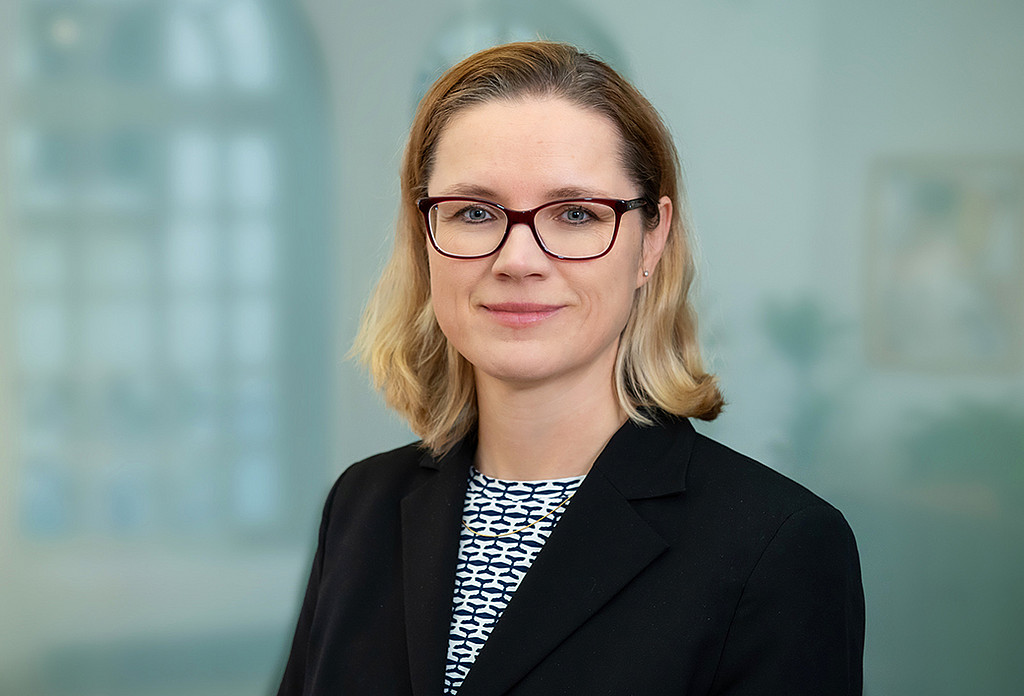
Dr.-Ing. Alexander Schwarz is a Senior Academic Councillor at the Institute of Mechanics, Faculty of Engineering, University of Duisburg-Essen, Germany. He is actively involved in research and teaching in computational mechanics, with a focus on finite element methods, particularly least-squares formulations for solid and fluid mechanics. He has served as Course Director of the International Master's Program in Computational Mechanics since 2011. PhD in Engineering, University of Duisburg-Essen (2009) Diploma in Civil Engineering, University of Essen and University of Adelaide (2004) Research Assistant, Institute of Mechanics (2005–2009) Academic Councillor (2010), Senior Academic Councillor (since 2013) His research interests center on the development and analysis of mixed finite element methods, especially least-squares approaches, applied to problems in solid mechanics (hyperelasticity, elasto-plasticity, finite deformations), fluid dynamics (incompressible Navier-Stokes), fluid-structure interaction, and porous media. His work emphasizes numerical stability, accuracy, and efficient implementation. The recent publications highlight a strong trend in advancing least-squares finite element formulations for both fluid and solid mechanics. His work spans theoretical development, numerical implementation, and comparative studies, with applications in incompressible flow, hyperelasticity, plasticity, and multi-physics problems like FSI and phase change. The use of stress-velocity or stress-displacement formulations is a recurring theme, aiming to improve conservation properties and solution accuracy. No scientific awards are listed in the provided information. Dr. Schwarz has supervised numerous master’s and bachelor’s theses in computational mechanics, particularly on finite element formulations for Navier-Stokes equations, plasticity, and hyperelasticity. His collaborations with prominent researchers like Jörg Schröder, Carina Nisters, and Solveigh Averweg indicate strong integration into an active research group. While no specific grants are mentioned, his sustained publication output and leadership in the master’s program suggest ongoing research funding and academic responsibility. He is a core member of the Institute of Mechanics at the University of Duisburg-Essen, contributing to both research and academic leadership. His team focuses on advanced computational methods in mechanics, with a strong emphasis on finite element technology and its application to complex material and fluid behavior.