Mark J. Bentum is a Full Professor in Radio Science and Dean of the Electrical Engineering Department at Eindhoven University of Technology (TU/e). He leads the radio group at the Netherlands Foundation for Research in Radio Astronomy (ASTRON) and is a key figure in the OLFAR project, developing space-based radio telescopes. His research focuses on low-frequency radio astronomy, antenna systems, and signal processing for deep space observation. Education: MSc in Electrical Engineering (University of Twente, 1991) PhD in Electrical Engineering (University of Twente, 1995) MBA from Nyenrode Business Universiteit (2002) Research Interests: Radio astronomy, particularly low-frequency observations Space-based telescopes (e.g., OLFAR) Antenna design and calibration Signal processing for radio interferometry Projects: Space-based Radio Astronomy (2018–2022): Explored space-based telescopes and ionospheric effects. NESTOR Projects (2017–2022): Focused on wireless systems for biomedical applications and transceiver design. Labs/Teams: EM for Radio Science Lab Center for Wireless Technology Eindhoven Center for Astronomical Instrumentation
Federico Corradi is an Assistant Professor in the Electrical Engineering Department at Eindhoven University of Technology (TU/e), where he leads the Neuromorphic Edge Computing Systems Lab. He also holds the position of EAISI Foundational Assistant Professor at the Eindhoven Artificial Intelligence Systems Institute. His research focuses on neuromorphic computing and engineering, spanning from efficient computational models to novel microelectronic architectures for deep learning and brain-inspired algorithms. Dr. Corradi's academic background includes a Ph.D. in Neuroinformatics from the University of Zurich and an international Ph.D. from the ETH Neuroscience Centre Zurich (2015). Prior to joining TU/e in 2022, he worked at IMEC in the Netherlands (2018-2022) where he started a group focused on neuromorphic IC design. Before that, he was with Inilabs, a spin-off from the Institute of Neuroinformatics, developing event-based cameras and neuromorphic processors (2015-2018). His research interests center around understanding natural neural computation principles to develop energy-efficient sensing and computing technologies. Key areas include: Neuromorphic computing and engineering Spiking neural networks Event-based vision systems Energy-efficient microelectronic architectures Applications in robotics, machine vision, and biomedical signal analysis Dr. Corradi's recent publications demonstrate a strong focus on practical implementations of neuromorphic systems for edge applications. His work shows consistent innovation in translating theoretical neural models into efficient hardware implementations, with particular emphasis on handling temporal data and developing brain-realistic computational models. The research spans multiple domains including radar signal processing, optical computing, and error correction systems. He serves as an active review editor for Frontiers in Neuromorphic Engineering, IEEE, and IOP Science journals, and participates in technical program committees for several machine learning and neuromorphic conferences including ICTOPEN, AICAS, AIAI, ICONS, NEWCAS, DSD, and EUROMICRO. His work has received significant media attention with coverage from multiple news outlets and social media mentions. Dr. Corradi leads the Neuromorphic Edge Computing Systems Lab, which bridges theoretical neuroscience with practical engineering challenges, creating novel solutions for real-world problems. The lab's research has practical applications in robotics, autonomous systems, and biomedical technologies, reflecting his commitment to developing energy-efficient computing solutions that can operate effectively at the edge.
Ayse Kiliç is a Researcher at the Eindhoven School of Education of Eindhoven University of Technology (TU/e) . She holds a PhD from Istanbul Technical University (ITU) in engineering education. Her research focuses on student learning experiences in challenge-based and project-based education, modularization strategies in engineering curricula, and assessment methods in technical education. Education: PhD in Engineering Education, Istanbul Technical University (ITU) Research Interests: Her work spans engineering education innovation, including modular curriculum design, non-destructive testing methodologies, statistical process control in education, and ethical codes in engineering practice. She actively explores how challenge-based learning enhances student engagement and problem-solving skills through interdisciplinary case studies. Advising & Grants: Supervised one academic work (details not specified). No grants explicitly mentioned in the text. Labs/Teams: No specific laboratories or research teams mentioned, but her collaborations include work with TU/e’s education innovation groups and SEFI (European Society for Engineering Education).
Giulia Ferrandi is a Researcher and Guest Researcher at the Department of Mathematics and Computer Science, Eindhoven University of Technology (TU/e). She completed her PhD under the supervision of Prof. Michiel Hochstenbach (TU/e) and Prof. Rosário Oliveira (IST, Lisbon) as part of the European BIGMATH project. Her research focuses on Statistics, Linear Algebra, and Optimization applied to statistical problems, with contributions to gradient methods, trace ratio problems, and Markov chain analysis. She holds a master’s degree from Università degli Studi di Milano (Italy), specializing in Probability and Statistics. Prior to her academic roles, she briefly taught in high school and worked in industry. Research Interests : Her work bridges numerical linear algebra and optimization, with emphasis on: Development and analysis of gradient methods (e.g., limited memory, harmonic frameworks) Applications of Rayleigh quotients in optimization and eigenvalue problems Robust multigroup classification via trace ratio techniques Statistical analysis of Markov chains for farmland transitions and non-stationary processes Publications : Her recent work demonstrates contributions to: Subspace methods for large-scale trace ratio problems Advancements in unconstrained optimization via limited-memory gradient approaches Integration of Rayleigh quotients into gradient-based algorithms Harmonic frameworks for optimizing stepsizes in numerical methods Collaborations & Grants : Her PhD was funded by the EU’s BIGMATH project. Collaborators include Prof. Michiel Hochstenbach (TU/e) and Prof. Nataša Krejić (University of Novi Sad). No explicit advising roles or grants are listed beyond her doctoral funding. Technical Expertise : Expertise in numerical analysis, statistical modeling, and linear algebra applications.
Ruurd Taconis is an Associate Professor and Director of Education at the Eindhoven School of Education, Eindhoven University of Technology . His research focuses on ICT in education, teacher professionalization, cognitive development in STEM, and science identity. He holds an MSc in Physics (Radboud University Nijmegen, 1986) and a PhD in Education and Science Education (TU/e, 1998). Academic Background: Research Assistant, Utrecht University (1987–1989) Physics Teacher, Secondary Education and Fontys University of Applied Sciences (until 1991) Researcher/Teacher Trainer, TU/e (1989–1996) Researcher/Project Leader, Utrecht University (1994–1998) Research Interests: Design-based learning and context-based education Accessibility and motivation in STEM education STEM teacher training and professional development Awards: Best Paper 2010 in Learning Environment Research Honorable Mention at CHI Conference 2019 Visiting Professorships at UTS (2018, 2019) Grants & Projects: PlatooLab Project (2016–2017, Project Member) Labs/Teams: Group Vermunt and Group Van der Veen at TU/e.
DE van Diermen is an Associate Professor in Oral Medicine at the Academic Centre for Dentistry Amsterdam (ACTA). They specialize in dental pharmacology, antithrombotic therapy, and interprofessional education. Current roles include teaching courses like 'De medische complexe patiënt 1' and serving on guideline committees such as the Guideline committee Antithrombotics in Dental Patients. Research focuses on drug-induced oral disorders, hemostasis management in dentistry, and improving educational strategies in health sciences. Education background not explicitly stated, but their work demonstrates advanced expertise in dental medicine and pharmacology. Research interests include clinical applications of antithrombotics, adverse drug reactions in oral tissues, and fostering collaboration among healthcare professionals. Recent publications (2020-2024) emphasize guideline development for dental patients on anticoagulants, drug-induced oral pathologies, and educational methodologies. Active in professional organizations including the Nederlandsch Tandheelkundig Genootschap and KnowVU Knowledge Network. No scientific awards explicitly mentioned. Teaching and advisory roles include educational quality steering groups and curriculum development. Collaborates internationally on topics like interprofessional education and dental pharmacotherapy. No lab/team affiliations explicitly noted, but engaged in multidisciplinary research networks.
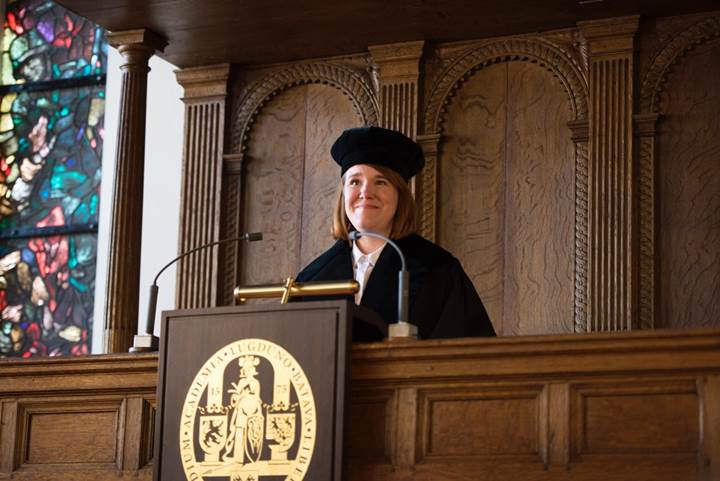
Ionica Smeets is a Professor of Science Communication at Leiden University, affiliated with the Science Institute of Biology Leiden. Her work focuses on improving science-society interactions through evidence-based outreach, public understanding of science, and media engagement. She has authored books and columns on topics ranging from sports chronometry to gender disparities in STEM education. Notably, she delivered an inaugural lecture in 2016 titled Some reflections on the value of science communication , emphasizing the societal role of science communication. Her research interests include citizen science, fair division problems (e.g., chocolate bar partitioning puzzles), and the impact of narratives versus statistics in public discourse. She has supervised multiple PhD candidates and contributed to initiatives like the COVCOM project addressing pandemic communication. In 2024, she received an honorary doctorate from the Open University and donated Iris Medal prize money to students. Dr. Smeets has served on the board of the Leiden Media Fund and regularly appears in TV programs, blogs, and columns to demystify science for general audiences. Her interdisciplinary approach bridges academic research with practical applications in education, policy, and media.
Luis Pedro Silvestrin is a Research Fellow at the Faculty of Science , Vrije Universiteit Amsterdam , specializing in Computer Science . His work bridges theoretical and applied machine learning research. Research Interests : Transfer learning for cross-dataset adaptation Robustness in entropy-based optimization Imbalanced time-series forecasting Predictive maintenance systems Computational modeling for real-world problems Publication Trends : Recent works focus on transfer learning methodologies (41% overlap), deep learning architectures (100% coverage), and applied machine learning for industrial and temporal data challenges. All four publications (2019–2023) emphasize algorithmic innovation for practical datasets, including dimensionality adjustments and entropy-based robustness analysis.
Peer Smets is an Assistant Professor in the Department of Sociology at Vrije Universiteit Amsterdam, affiliated with the Faculty of Social Sciences and Humanities. His work focuses on urban sociology, emphasizing societal problems and policy solutions. He co-leads the Identities, Diversity, and Inclusion (IDI) research group and coordinates the Community Service Learning (CSL) program, linking academic skills with societal impact. Education: PhD in Cultural and Social Anthropology (VU Faculties, 2002), Master in Cultural Anthropology and Development (Vrije Universiteit, 1992). Research interests include housing finance, neighborhood livability, public space, and urban commons. Notable contributions include co-editing volumes on housing stigma, urban renewal, and contested belonging. Grants include funding from the Dutch Ministry of Internal Affairs, World Bank, and projects on storytelling with vulnerable populations. Awards: Sociologist of the Month (July 2020, Current Sociology) and nominee for the Innovation Price for Community Service Learning. Teaching involves qualitative methods at the bachelor level and courses on societal participation at the master level. He supervises theses on participation, housing, and community development. Ancillary activities include editorial roles for Social Inclusion and membership in the International Sociological Association. Key projects include the Nextdoor neighborhood study, evaluating refugee volunteering, and urban commons collaborations in Amsterdam East. Media engagements highlight his expertise on neighborhood evaluations, mental health, and urban policy.
Hanna Westbroek is an Associate Professor at the Teacher Academy LEARN! - Learning sciences, part of the Faculty of Behavioural and Movement Sciences at Vrije Universiteit Amsterdam. Her work focuses on teacher education, curriculum innovation, and bridging theoretical concepts with classroom practice. She is actively involved in research on teacher agency, inclusive education, and practicality studies to enhance educational practices. Her research interests include teaching practices, student learning processes, and the development of professional dialogue frameworks for educators. She has contributed to projects like 'Enhancing Ecological Hierarchical Problem-Solving' and 'Curriculum Development for Science Education.' Westbroek teaches courses such as Didactiek 1 and 2 , emphasizing practical pedagogical strategies. She collaborates internationally and has led multiple research projects addressing science education and teacher professional development. Her work aligns with UN Sustainable Development Goals, particularly in fostering quality education and inclusive practices.
Mirjam Oosterman is an Associate Professor at the Faculty of Behavioural and Movement Sciences, Vrije Universiteit Amsterdam (VU Amsterdam), with affiliations to the departments of Clinical Child and Family Studies, LEARN! (Child rearing), and APH (Mental Health). She specializes in parenting behaviors, child development, maternal mental health, and attachment theory. Her work contributes to UN Sustainable Development Goals related to quality education and good health. Her research focuses on topics such as intergenerational transmission of attachment, maternal stress and trauma, parenting self-efficacy, and the impact of birth experiences on child-parent relationships. Notable projects include the 'Stress- and Smoke Free Start of Life' study, exploring eHealth interventions for maternal stress reduction. She teaches courses like 'Ouderschap, Stress & Ontwikkeling' (Parenting, Stress & Development) and contributes to training programs for professionals assessing parent-child interactions. Oosterman has published over 120 peer-reviewed articles and supervised 11 PhD theses. Her work emphasizes practical tools for clinicians, such as validated rating scales for parental sensitivity. Awards include the 2008 Dissertation Award. She actively collaborates internationally, addressing issues like maternal PTSD, child motor coordination, and the effects of parental trauma on caregiving. Her research also bridges clinical and academic domains, with contributions to policy through initiatives like the EU COST Action 'TREASURE' on maternal perinatal stress. She balances teaching, research, and public engagement, including media contributions on foster care and parenting challenges.
AM Kleiboer serves as Associate Professor in Clinical Psychology at the Faculty of Behavioural and Movement Sciences, Vrije Universiteit Amsterdam, with dual appointments at APH - Mental Health and APH - Personalized Medicine. With 95 research outputs and supervision of 7 PhD theses, Kleiboer maintains an active research profile focusing on digital mental health innovations and evidence-based interventions. Kleiboer's research centers on eMental Health, Low Intensity Treatments, and Trial Methodology, with particular expertise in Cognitive Behavioral Therapy, Depression treatment, and Mental Health Care delivery. The research fingerprint reveals significant contributions to Meta-Analysis (82%), Cognitive Behavioral Therapy (65%), Symptom management (49%), Mental Health (47%), and Mental Health Care (35%). Recent publications demonstrate a clear trajectory toward technology-enhanced mental health interventions, with 2025 publications exploring just-in-time adaptive interventions, reinforcement learning applications for mHealth adherence, and multimodal interpersonal synchrony in therapeutic contexts. The work bridges clinical psychology with artificial intelligence and digital health technologies to personalize mental health care delivery. Kleiboer actively supervises doctoral research with 7 PhD theses completed and participates in significant grant-funded projects including the complex systems approach toward resilient European communities (2023-2027) and multiple e-Mental Health Innovation platforms across Northwest Europe. Current teaching includes courses on Low Intensity Treatments for Common Mental Health Problems and Clinical Conversation Skills.
Overview Martijn Meeter is a Full Professor at Vrije Universiteit Amsterdam (VU), holding dual affiliations within the Faculty of Behavioural and Movement Sciences and the LEARN! Learning Sciences research institute. He also serves as a visiting professor (Gasthoogleraar) at Tallinn Technical University (2022–2025) and advises various organizations including NWO/NRO and iPabo Kenniscentrum. His primary expertise lies at the intersection of cognitive psychology, educational assessment, and learning theories. Research Focus His work emphasizes understanding student retention in higher education, remediation of learning deficits, and computational models of temporal preparation. Key areas include: Educational neuroscience and cognitive modeling (e.g., MTP framework) Prediction of academic success through standardized testing and GPA analysis Policy impacts on special education and autism inclusion Technology-enhanced learning environments Awards & Grants Though no explicit awards are noted, he has secured major grants such as the Effectmeting ADAPT intervention (2025–2027) and Predicting Learning in Special Education (2022–2026). He supervises 20+ PhD theses and leads projects on pandemic-related learning loss and peer feedback mechanisms. Teaching & Outreach He teaches courses on educational data analysis, pedagogy, and innovation in teaching. Media contributions address Dutch education policy, including critiques of temporary teacher hiring and exam weighting. Collaborations Active in interdisciplinary networks, his research spans cognitive neuroscience (eye-tracking, EEG) and educational policy, with global collaborations on autism education and pandemic learning recovery.
Affiliations & Roles Marieke Buil is an Assistant Professor (UD1) at the Department of Clinical-, Neuro- and Developmental Psychology within the Faculty of Behavioural and Movement Sciences at Vrije Universiteit Amsterdam. She also holds an appointment in the APH - Mental Health division. She is a co-promotor for 8 PhD students across multiple institutions. Education PhD in Developmental Psychopathology (VU Amsterdam, 2018) Postdoctoral research at Erasmus University Rotterdam (Pedagogical Sciences) Research Focus Buil’s work centers on social-emotional learning (SEL) , antisocial behavior in youth , and school-based interventions . Key themes include: Peer and teacher-student relationships Longitudinal studies on intervention efficacy Socio-economic inequalities in youth development Notable Projects She leads/co-leads projects like SCCILLS (teacher-coaching for SEL), Girls United (friendship dynamics intervention), and Happy Friends, Positive Minds (depression prevention via E-Mental Health Apps). International collaborations include UNESCO’s ISEE Assessment SDM for global education policy. Awards & Grants SRCD International Travel Awards (2013, 2015) UNESCO-led ISEE Assessment SDM Lead Author Grants for interventions targeting bullying and SEL Labs & Teams Collaborates with UNESCO MGIEP, Rotterdam University of Applied Sciences, Radboud University, and municipalities like Rotterdam and Nijmegen. Her work bridges academia and policy, informing national/international educational strategies.
Prof. Jacqueline van Muijlwijk-Koezen is a Full Professor in the Faculty of Science at Vrije Universiteit Amsterdam, specializing in Chemistry and Pharmaceutical Sciences. She serves as Group Leader for the 'Innovations in Human Health & Life Sciences' chair and Chief Education Officer (CEdO) since September 2023. Her research focuses on educational innovations, didactics in science education, and integrating pharmaceutical sciences/drug discovery into teaching. She leads projects like MolTour (3D/virtual reality chemistry education) and ONCORNET2.0, emphasizing interdisciplinary learning and active teaching methods. Education & Expertise: Her academic work spans science education reform, inquiry-based learning, and scientific perspectivism. She actively collaborates with institutions like the Amsterdam Institute for Molecules, Medicines, and Systems (AIMMS). Ancillary roles include board memberships at Stichting ULLA, Centrum JongerenCommunicatie Chemie, and Theologische Universiteit Kampen. Research Trends: Recent publications explore digital peer feedback platforms, lab module effectiveness, teacher agency, drug inhibitor dynamics, and entrepreneurial self-efficacy in science. Her work bridges educational theory with practical implementation in curricula. Grants & Supervision: Led 5 research projects (e.g., Scheikundige experimenten leren ontwerden, Samenhang tussen scheikunde en biologie). Supervised 3 PhD theses and teaches courses including AIMMS Seminars and Chemistry education modules. Datasets include ecological problem-solving frameworks. Labs & Teams: Core member of AIMMS, involved in cross-disciplinary initiatives combining education technology, pharmaceutical R&D, and molecular medicine systems.