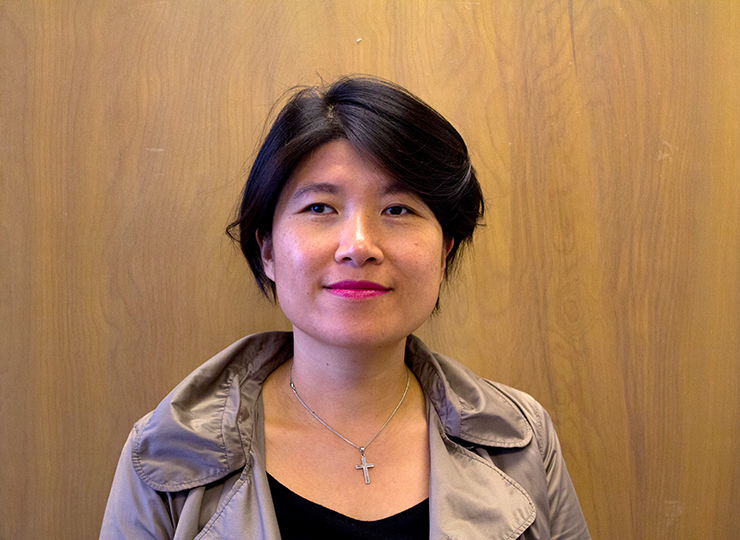
Kelsey Allen is an Assistant Professor in the Department of Computer Science at the University of British Columbia (UBC) and a Senior Research Scientist at DeepMind. Her research bridges cognitive science, machine learning, and robotics, focusing on understanding and replicating human-like problem-solving, tool use, and physical reasoning. She holds a PhD from MIT (2016) under Josh Tenenbaum and a B.Sc. in Physics from UBC (2010). Research Interests : Allen investigates computational mechanisms underlying human complex behaviors, particularly tool use and design. Her work emphasizes endowing machines with flexible problem-solving abilities. Key themes include lifelong learning, embodied cognition, and integrating symbolic and neural approaches. Awards & Recognition Best Paper Award at Robotics: Science and Systems (RSS) 2018 Oral Presentation at Cognitive Science Society 2019 Spotlight at NeurIPS 2018 and ICLR 2019 Key Projects : Includes developing graph network simulators for rigid body dynamics, tools for physical design optimization, and studies on human tool-use learning. Her work often combines empirical experiments with machine learning models to bridge human and artificial intelligence.
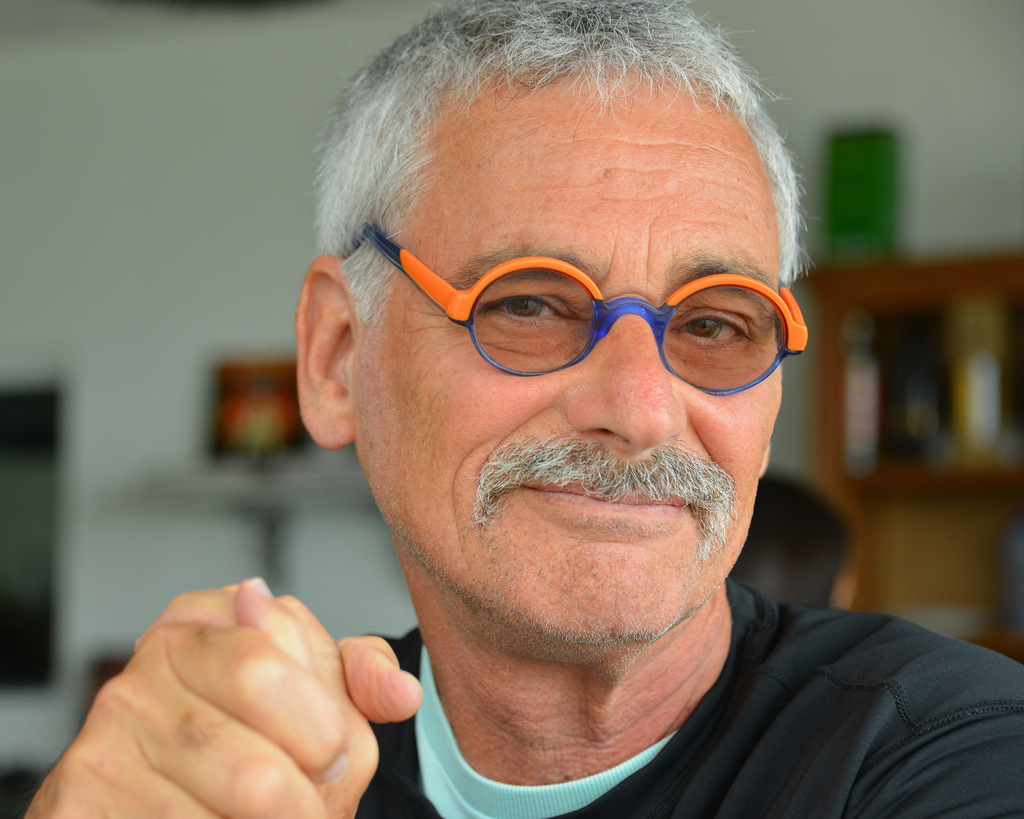
Uri M. Ascher is a Professor in the Department of Computer Science at the University of British Columbia's Faculty of Science. He has established himself as a leading researcher in numerical analysis, scientific computing, and computational methods for differential equations. His work bridges theoretical mathematics with practical applications in computer animation, computational finance, and inverse problems. Ascher's research interests focus on numerical methods for evolutionary differential equations, boundary value problems, differential-algebraic equations, and their applications. His work spans both theoretical developments in numerical analysis and practical implementations in scientific computing. He has made significant contributions to the fields of computer animation through numerical methods for simulating deformable objects and physics-based animation. His publication record shows a consistent trajectory of high-impact research spanning several decades, with recent work focusing on the intersection of numerical methods with machine learning, particularly neural differential equations and data-driven approaches to inverse problems. His research demonstrates a unique ability to connect classical numerical analysis with emerging computational challenges in visual computing and scientific simulation. Fellow of the Royal Society of Canada (FRSC), 2018 SIAM Fellow, 2010 CAIMS Research Prize, 2010 Ascher has supervised numerous graduate students and collaborated extensively with researchers across disciplines. His work on numerical methods for computer animation has led to practical implementations used in graphics applications. He maintains active collaborations with researchers in scientific computing, applied mathematics, and computer graphics. Ascher is also affiliated with the Scientific Computing Laboratory and the Institute for Applied Mathematics at UBC, reflecting the interdisciplinary nature of his work.
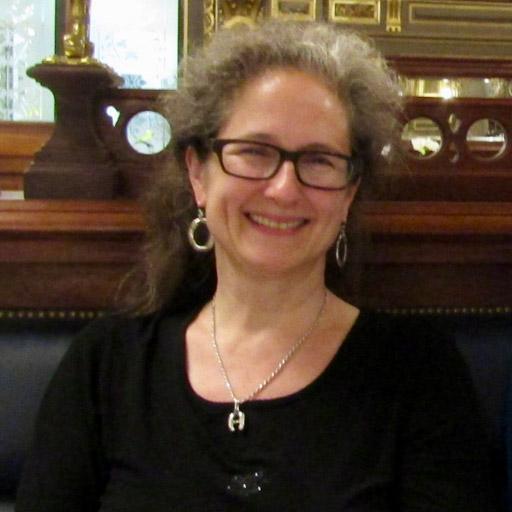
Agnes d'Entremont is a Teaching Professor in Mechanical Engineering and Associate Dean (Equity, Diversity, and Inclusion) at the University of British Columbia (UBC). She holds a B.Eng. from McGill, and M.A.Sc. and Ph.D. from UBC. Her research focuses on equity in engineering education, open educational resources, and biomechanics. She teaches courses such as MECH 221 (Engineering Science), MECH 305/306 (Data Analysis), and APSC 366 (Engineering for Non-Engineers). Education: B.Eng., McGill University M.A.Sc., University of British Columbia Ph.D., University of British Columbia Research interests include equity, diversity, and inclusion in engineering curricula , open educational resources development , and biomechanics applications in medical devices . She leads projects like the Mechanics Map and Mechanics WeBWork Problems to enhance accessibility in STEM education. Her awards include the Killam Teaching Prize (2020) and BCcampus Open Education Award (2021) . She explores topics like STEM outreach impact on marginalized groups and gender parity in engineering programs. Her work emphasizes inclusive pedagogy and policy. Grants and lab affiliations include collaborations across UBC’s Faculty of Applied Science. She advocates for equitable access to research opportunities and mentors initiatives promoting diversity in engineering.
Margarida Carvalho is an Associate Professor in the Department of Computer Science and Operations Research at Université de Montréal, where she holds the FRQ-IVADO Research Chair in Data Science for Combinatorial Game Theory. She is also an Associate Academic Member at Mila (Quebec AI Institute), contributing to their research in AI for Humanity. Her academic journey spans from Portugal to Canada, where she has established herself as a leading researcher at the intersection of operations research and game theory. Carvalho earned her bachelor's and master's degrees in mathematics from the Faculty of Sciences of the University of Porto (FCUP), followed by a PhD in Computer Science from the same institution in 2016. Her doctoral work, which focused on game theory applications for kidney exchange programs, earned her the prestigious 2018 EURO Doctoral Dissertation Award, making her the first Portuguese woman to receive this honor. After completing her PhD, she worked as an IVADO Postdoctoral Fellow at Polytechnique Montréal before joining Université de Montréal as an Assistant Professor in 2018. Her research focuses on combinatorial optimization and algorithmic game theory, with applications spanning healthcare (kidney exchange programs, hospital operations), sustainable development (electric vehicle infrastructure, urban planning), and education (school choice systems). She develops novel mathematical programming approaches to model and solve problems involving multiple decision-makers with potentially conflicting objectives. Her work bridges theoretical advances in optimization with practical implementations that address real-world challenges in resource allocation and decision-making under uncertainty. Notably, her research on fairness in kidney exchange programs has contributed to more equitable organ allocation policies. Her 15 most recent publications reveal a strong trend toward integrating game-theoretic concepts with practical optimization challenges, particularly in healthcare and sustainable infrastructure. She has pioneered approaches that balance utilitarian objectives with fairness considerations, developed novel formulations for bilevel and multilevel optimization problems, and created learning-based frameworks for complex decision environments. Her work consistently demonstrates how mathematical rigor can inform practical policy decisions in critical domains. 2018 EURO Doctoral Dissertation Award for her PhD thesis on game theory applications for kidney exchange programs Mathematical Programming 2024 Meritorious Service Award Teaching Excellence Award from Université de Montréal Supervised student Maria Bazotte receiving the Dupačová-Prékopa Best Student Paper Prize in Stochastic Programming Carvalho actively advises graduate students, with Marylou Fauchard (Master's) and William St-Arnaud (PhD) among her current advisees. Her research is supported by grants from Hydro-Québec, the Natural Sciences and Engineering Research Council of Canada (Discovery grant 2017-06054 and Collaborative Research and Development Grant CRDPJ 536757–19), and FRQ-IVADO. She serves as an associate editor for INFORMS Journal on Computing, OR Spectrum, and Dynamic Games and Applications, and is a founding board member and treasurer of the Bilevel Optimization Society. She teaches courses in Mathematical Programming, Operational Research Models, and Discrete Mathematics at Université de Montréal. Carvalho is affiliated with Mila (Quebec AI Institute), where she contributes to research initiatives focused on AI for Humanity, particularly in the areas of algorithmic fairness and sustainable development. Her FRQ-IVADO Research Chair supports her work on combinatorial game theory applications, and she collaborates with researchers across disciplines through the IVADO research community. She has been instrumental in establishing the Bilevel Optimization Society, creating a dedicated forum for researchers working on hierarchical decision-making problems.
Dr. Sandra Dorman is a Full Professor in the Faculty of Health at Laurentian University and currently serves as the Director of the Centre for Research in Occupational Safety and Health (CROSH). With over 20 years of academic experience, she has established herself as a leading researcher in occupational health and safety, particularly focusing on workplace health promotion and disease prevention. Her academic credentials include: Doctorate (PhD) in Physiology/Pharmacology (2004) from Firestone Respiratory Institute, Faculty of Health, McMaster University Bachelor of Science in Biology (1995) from College of Biological Sciences, University of Guelph Dr. Dorman's research program centers on health promotion and disease prevention in occupational settings, with particular emphasis on creating practical solutions to workplace health challenges. Her work bridges the gap between laboratory research and real-world applications, focusing on participatory, field-based interventions that directly address worker safety concerns. She has authored over 40 papers and secured more than $9 million in research funding throughout her career. Her extensive publication record demonstrates consistent expertise in occupational health, with recent work highlighting trends in heat stress prevention, fatigue management, and respiratory hazards. A significant portion of her research focuses on high-risk occupations like wildland firefighting and mining, where she has developed innovative approaches to protect workers from environmental hazards. Her current projects include evaluating dermal and respiratory hazards in wildland firefighting and testing novel wearable technology for heat stroke prevention. Dr. Dorman has received numerous prestigious awards recognizing her contributions to occupational safety: Top Women in Canadian Occupational Safety Award (2025) Top 10 – Research Innovation Award for the Workplace Simulator (2020) 15 Years of Service Recognition Award – Laurentian University (2018) CROSH Impact Award (2018) Faculty of Health – Excellence in Research Award (2018) Multiple Faculty of Health Top Researcher awards As an active researcher and mentor, Dr. Dorman has secured over $9 million in research funding, supporting her work on developing resource guides for workplace challenges including reproductive health in mining environments and heat stress management. Her leadership of CROSH has positioned her at the forefront of developing practical, evidence-based solutions for workplace health challenges. Dr. Dorman leads a dynamic research team that continues to conduct participatory, field research focused on understanding how to build successful health intervention programs that solve workplace problems and comprehensively protect workers from injuries and illness. Her work has directly contributed to practical tools like the OHCOW Heat Stress Toolkit and resource guides for reproductive health in mining workplaces.
Sebastien Nault serves as a Senior Lecturer at Laurentian University's School of Kinesiology & Health Sciences, based at the B.F. Avery Physical Education Centre in Sudbury, Ontario. His role encompasses teaching, research, and community engagement in outdoor adventure education, with contact via snault@laurentian.ca or 705.675.1151 ext. 1203. His academic credentials include: B.P.H.E. in Outdoor Adventure Leadership, Laurentian University B.Ed., University of Ottawa M.Ed., Hokkaido University, Japan Dr. Nault's research centers on Friluftsliv (Norwegian 'open-air living') as a lifestyle framework linking nature immersion to health benefits. He investigates remote community ecotourism development—particularly in Mongolian case studies—alongside leadership problem-solving in adventure contexts, social dynamics within expedition groups, and caloric expenditure in wilderness settings. His work bridges kinesiology, environmental psychology, and experiential pedagogy. Publications from 2007-2011 reveal consistent themes: Mongolian ecotourism case studies emphasize community participation models, while Friluftsliv research explores social dimensions of nature integration. Climbing pedagogy studies demonstrate innovative experiential teaching methods, collectively advancing adventure education theory and practice. No scientific awards are documented. Student advising, grant funding, laboratory facilities, or research teams are not specified in available materials.
Lei Sun is a Professor in the Department of Statistical Sciences at the Faculty of Arts and Science, University of Toronto. She holds a cross-appointment in the Division of Biostatistics, Dalla Lana School of Public Health. Her research lies at the intersection of statistics and genetics, with a focus on developing robust and scalable methods for analyzing complex human traits. Her educational background includes a B.Sc. in Mathematics from Fudan University and a Ph.D. in Statistics from the University of Chicago (2001). Since then, she has remained at the University of Toronto, contributing significantly to statistical genetics methodology. Lei Sun's research interests include statistical genetics and genomics, multiple hypothesis testing, selective inference, robust association methods, and multivariate analysis. Her work emphasizes open-source implementation and reproducible research, with tools and materials shared via GitHub. She actively develops statistical methodologies to address challenges in genetic studies, particularly in high-dimensional and correlated data settings. The trend in her recent scholarly outputs shows a strong emphasis on education, method dissemination, and open science. Her publications and materials focus on teaching statistical genetics, guiding GWAS practices, and promoting polygenic risk score applications, reflecting both methodological innovation and a commitment to training the next generation of researchers. CRM-SSC Prize in Statistics (2017) NSERC Discovery Accelerator Supplement (2018) Lei Sun has been continuously funded by major Canadian agencies including NSERC and CIHR, supporting her research program in statistical genetics. She mentors students and early-career researchers through direct supervision and leadership in the CANSSI-Ontario STAGE training program. Her grants support the development of novel statistical tools for genetic epidemiology and genomic data analysis. She leads the Statistical Methods for Genetics and Genomics (SMG) seminar series and is involved in the CANSSI-Ontario Strategic Training for Advanced Genetic Epidemiology (STAGE) program, fostering collaborative research and training in statistical genetics across Ontario.
Helena P. Osana is a Professor in the Department of Education at Concordia University and currently serves as a Visiting Professor at the University of Wisconsin-Madison while on sabbatical. She holds the Concordia University Research Chair in Mathematical Cognition and Instruction and focuses on children’s mathematical thinking, instructional interventions, and professional development for teachers. Ph.D. in Educational Psychology (University of Wisconsin-Madison, 1998) M.A. in Mathematics and Science Education (University of British Columbia, 1989) B.Sc. in Mathematics and Statistics (McGill University, 1986) Her research explores how children interpret mathematical representations (e.g., manipulatives, diagrams) and how instructional strategies can enhance conceptual understanding in areas like fractions, place value, and number sense. She emphasizes the role of analogical reasoning, symbolization, and the integration of conceptual and procedural knowledge in learning mathematics. The trends in her recent publications highlight empirical studies on manipulatives, contextual effects on problem-solving, dual representation, and relational thinking in elementary and secondary students. Her work often involves classroom-based interventions and collaborations with teachers to bridge cognitive theory and pedagogical practice. Scientific Awards and Grants : Concordia University Research Chair in Mathematical Cognition and Instruction SSHRC Grant: Fostering conceptual understanding of number and place value with manipulatives SSHRC Grant: Instructional factors affecting integrated mathematical knowledge in second-graders SSHRC Grant: Improving children’s understanding of mathematical equivalence Dr. Osana advises graduate students in the Department of Education and leads the Mathematics Teaching and Learning Lab (MTLL) , which investigates classroom-based strategies to support children’s mathematical thinking from preschool to eighth grade. Her findings inform professional development programs for teachers, particularly in early mathematics education.
Iain Brodie serves as an Academic Associate at Ontario Tech University, teaching in Bachelor of Education (BEd) and Bachelor of Arts (BA) programs. With nearly 35 years of total teaching experience—including 28 years instructing grades 1-8 in Scarborough public schools—he now prepares future educators in foundational coding, mathematics, and innovative instructional methodologies while actively deconstructing outdated pedagogical frameworks. Brodie's work centers on replacing traditional assessment structures with learner-centered approaches aligned with cognitive science. He champions problem-based learning (PBL) and inquiry-based methodologies across educational contexts, emphasizing practical applications in computational thinking and mathematical reasoning. His scholarship prioritizes how students naturally learn over institutional conventions, particularly in K-12 teacher preparation.
Todd Alway serves as an Assistant Professor in the Department of Political Science at McMaster University. His teaching portfolio spans foundational and advanced undergraduate courses including Government, Politics, and Power (POLSCI 1AA3), Politics and Power in a Globalizing World (POLSCI 1AB3), and Statistical Analysis of Primary Data (POLSCI 3NN3), taught continuously from 2017 through 2025. His academic credentials include a Bachelor of Arts (Combined Honours) in History and Political Science from McMaster University, a Master of Arts in Political Science from York University, and a PhD in Political Science from Carleton University. Dr. Alway's research centers on pedagogical innovation in political science education, with emphasis on curriculum design and problem-based learning methodologies. His 2014 presentation 'Improving Instructor and Student Outcomes' demonstrates his commitment to evidence-based teaching practices that enhance critical thinking and engagement in political science classrooms. While his publication record currently features one verified scholarly presentation, his extensive teaching load across diverse political science subfields indicates active contribution to undergraduate education. The VIVO database shows no recorded grants or co-investigator networks beyond a single collaboration with Gregory Flynn. No scientific awards or student mentorship activities are documented in the available institutional records. Information regarding research laboratories or collaborative teams is not provided in the source materials.
Richard S. Sutton is a pioneering researcher and Professor of Computing Science at the University of Alberta, where he serves as Chief Scientific Advisor for the Alberta Machine Intelligence Institute (Amii). He is also a Canada CIFAR AI Chair, Senior Fellow at CIFAR, and Research Scientist at Keen Technologies. Sutton is widely recognized as one of the founders of reinforcement learning, a field in which he continues to lead globally. His work has profoundly shaped modern AI research and applications. Education: B.A., Psychology, Stanford University (1978) M.S., Computer Science, University of Massachusetts (1980) Ph.D., Computer Science, University of Massachusetts (1984) Sutton's research focuses on identifying computational principles underlying intelligence and goal-directed behavior. He emphasizes learning from experience and extending reinforcement learning to create empirically grounded approaches to knowledge representation based on prediction. His work bridges artificial and natural intelligence, exploring how systems can predict and influence the world through learning, perception, action, and cognition. Sutton's research has produced foundational contributions including temporal-difference learning theory, actor-critic algorithms, the Dyna architecture, and Horde architecture. His recent publications reveal a continued focus on reinforcement learning fundamentals while expanding into broader AI applications. The articles show strong emphasis on theoretical foundations, convergence analysis, and practical implementations of reinforcement learning algorithms. There's also evidence of applying these techniques to real-world problems like pandemic forecasting, suggesting growing interest in practical societal applications of his theoretical work. Scientific Awards: 2024 Turing Award (with Andrew Barto) Fellow of the Royal Society (2021) Fellow of the Royal Society of Canada (2016) CAIAC Lifetime Achievement Award (2018) Outstanding Achievement in Research Award, UMass Amherst (2013) Sutton has mentored approximately 60 early-career researchers, including notable figures like David Silver (lead researcher behind AlphaGo), Doina Precup (DeepMind Montreal), Adam White (Amii Fellow), and Cam Linke (CEO of Amii). His Reinforcement Learning & Artificial Intelligence Lab at the University of Alberta has become a global hub for RL research. Sutton is currently collaborating with John Carmack through Keen Technologies to accelerate AGI development, documented in part through 'The Alberta Plan' which outlines his vision for creating long-lived computational agents. Sutton founded the Reinforcement Learning & Artificial Intelligence (RLAI) Lab at the University of Alberta and co-authored the seminal textbook 'Reinforcement Learning: An Introduction' with Andrew Barto. His work has been cited over 130,000 times and featured in major publications including Science, The Economist, New York Times, and Wall Street Journal. He is also known for his 'Tea Time Talks' tradition at Amii, fostering new ideas among researchers and students.
René Mayer is a Full Professor at the Department of Mechanical Engineering, Polytechnique Montréal. With a B.Eng. (1983) and Ph.D. (1989) in mechanical engineering, he has dedicated his career to precision manufacturing, machine tool calibration, and metrology. He directs the Laboratoire de recherche en fabrication virtuelle (LRFV) and co-leads the Groupe de recherche en développement et fabrication des produits (GRDFP) . His research focuses on improving machine tool accuracy through rapid, automated measurement systems. Key areas include volumetric error compensation, thermal distortion modeling, and advanced calibration methods like SAMBA and R-test devices. Collaborations span aerospace, automotive, and biomedical industries, with international academic ties in Sweden, Poland, Germany, Switzerland, and France. Education : B.Eng. and Ph.D. in Mechanical Engineering Expertise : Precision engineering, robotics, artificial vision, finite element modeling Labs : Laboratoire de recherche en fabrication virtuelle, GRDFP Recent publications highlight machine learning applications for error prediction, thermal compensation, and uncertainty quantification in five-axis machining. Scientific honors include Fellowships with CIRP (2022) and IMechE (2012), recognizing his contributions to manufacturing science.
Dr. Immaculate Namukasa is a Professor and Associate Dean of Graduate Education at Western University’s Faculty of Education. With expertise in Mathematics Education, Curriculum and Pedagogy, she has been recognized nationally for her leadership, including the 2025 Angela Hildyard Recognition Award by the Senior Women Academic Administrators of Canada (SWAAC). She has served in key roles such as Distinguished Teaching Fellow at Western’s Centre for Teaching and Learning and has contributed extensively to graduate education, curriculum development, and teacher professional development. Education: B.Sc./ED from Makerere University (Uganda), PhD in Secondary Education and Teaching from the University of Alberta. Leadership: Associate Dean, Graduate Education since July 2021; served on over 20 university and Faculty of Education committees. Her research focuses on Mathematics Teacher Education, integrating technology and computational thinking into mathematics instruction, curriculum and pedagogical reforms, and globalized educational practices. She has developed open-source resources and video materials for K-12 mathematics educators and explores innovative tools like Maker activities and digital apps to enhance learning. Scientific Awards and Honors: Angela Hildyard Recognition Award (2025) Distinguished Teaching Fellow, Western’s Centre for Teaching and Learning (2017-2021) Dr. Namukasa has supervised graduate students in mathematics education and curriculum studies, including Leslie-Ann Purdy (2010) on pre-service teacher education. She actively seeks collaborators for projects like tool-based teaching innovations and computational participation in mathematics education.
Stacey Ageranioti-Bélanger is an Assistant Clinical Professor in the Department of Pediatrics at the Faculty of Medicine, affiliated with CHU Sainte-Justine. She specializes in developmental pediatrics and attention/hyperactivity disorders, contributing to clinical teaching, research collaborations, and professional committee leadership. Education : University of Alberta (medical studies), University of Montreal (pediatrics residency, specialized diploma in pediatric neurology). Professional Memberships : Fellow of the Royal College of Physicians and Surgeons of Canada; member of the Collège des médecins du Québec, Fédération des médecins spécialistes du Québec, and Association des pédiatres du Québec. Her research interests focus on developmental disorders, child psychiatry, and psychopharmacology. She has co-authored publications on topics ranging from ADHD treatment to clinical guidelines for psychiatric medications in children. Since 2010, she has chaired the Mental Health and Developmental Delay Committee of the Canadian Paediatric Society. Dr. Ageranioti-Bélanger actively participates in clinical reasoning workshops and problem-based learning courses for medical residents. She has delivered 10 invited lectures since 2013 and contributed to a published textbook. Her academic collaborations span McGill University, CHU Sainte-Justine, and Université du Québec à Montréal.
Dr. Mayank Singal is a public health and preventive medicine specialist currently serving as the medical lead for enteric, vector-borne and zoonotic diseases at the British Columbia Centre for Disease Control (BCCDC). He holds a faculty position as a Clinical Assistant Professor at the University of British Columbia's School of Population & Public Health, where he contributes to academic training and research in public health. Dr. Singal's research focuses on understanding the epidemiology and transmission of communicable diseases with the aim of developing evidence-informed interventions for disease control. His work spans multiple areas including rabies, COVID-19, mpox, and numerous enteric outbreaks. As medical lead, he directs a multidisciplinary team responsible for public health risk assessment, surveillance system design, and development of provincial guidelines for communicable disease prevention and control. His research publications demonstrate expertise across infectious disease epidemiology, zoonotic diseases, and public health intervention strategies. Recent work includes surveillance studies for Lyme disease in Canada and comprehensive analyses of the mpox outbreak in Canada (2022). His earlier publications reflect broader interests in preventive medicine, including research on multivitamin supplementation and its effects on health outcomes. Dr. Singal has been recognized for his public health contributions, receiving the Premier's Award for Outstanding Service for his role in the emergency response to the 2016 Fort McMurray wildfires. His work bridges clinical medicine and population health, reflecting his commitment to integrating practical clinical experience with public health practice to address emerging health threats. Premier's Award for Outstanding Service (Fort McMurray wildfire response) Dr. Singal completed his undergraduate medical education at McMaster University and residency training at the University of Alberta. With five years of front-line public health experience at Alberta Health Services, he has provided clinical consultations to physicians, contributed to provincial vaccine policy development, and participated in emergency responses. His approach emphasizes experiential learning that integrates clinical medicine with public health practice to address communicable disease challenges.