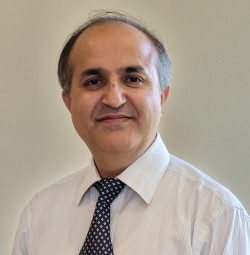
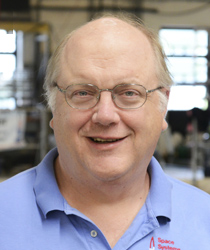
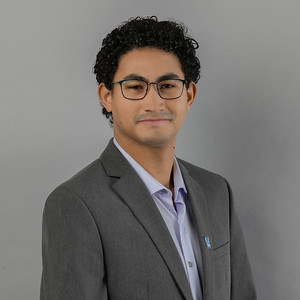
Prof. Michael Gütschow is a Professor at the Pharmaceutical Institute of the University of Bonn. His research focuses on designing tailored inhibitors for proteases involved in cancer, viral infections (e.g., SARS-CoV-2), and developing proteolysis-targeting chimeras (PROTACs) for targeted protein degradation. He leads projects in drug discovery, including antiviral agents and epigenetic therapies. His work spans protease inhibition mechanisms, activity-based probes for enzyme analysis, and novel drug modalities like PROTACs for cyclin-dependent kinases and cereblon. Notable collaborations include studies on CDK6 degraders for multiple myeloma and SARS-CoV-2 main protease inhibitors. Recent publications highlight advancements in histone deacetylase degraders, NLRP3 inflammasome modulation, and USP7-targeting PROTACs. His research bridges biochemistry, medicinal chemistry, and translational medicine, contributing to innovative therapeutic strategies.
Chang Liu is an Assistant Professor at the Department of Economics, Stony Brook University. He specializes in advanced microscopy techniques and nanoscale material characterization, with a focus on plasmonics, 2D materials, and quantum phenomena. His research employs cutting-edge tools like scattering-type scanning near-field optical microscopy (s-SNOM) and terahertz spectroscopy to explore electronic and optical properties at the nanoscale. His work spans interdisciplinary areas including graphene heterostructures, Dirac materials, and phase transitions in correlated oxides. Liu’s contributions include developing novel imaging modalities (e.g., BOSON) and advancing understanding of polaritonic systems. He collaborates with synchrotron facilities like NSLS-II for ultra-high resolution studies. Notable research trends include exploring nanoscale structural phase separations, tunable phonon polaritons in van der Waals heterostructures, and nano-photocurrent dynamics in twisted bilayer systems. His technical innovations, such as machine learning for nano-optical data analysis and cryogenic s-SNOM setups, enhance experimental precision. Liu’s lab is part of the Stony Brook Center for Game Theory, though his direct research themes focus on materials physics. Current projects include roadmap development for 2D material photonics and exploring moiré ferroelectricity in twisted WSe₂ systems. No awards or grants are explicitly listed in the provided materials.
Daniel Demmler is an Assistant Professor at Darmstadt University of Technology's Department of Computer Science, specializing in privacy-preserving protocols and cryptographic systems. His research focuses on practical implementations of secure multi-party computation, homomorphic encryption, and privacy-preserving machine learning frameworks. Dr. Demmler's primary research interests lie in making cryptographic protocols practical for real-world applications. His work spans secure multi-party computation, threshold homomorphic encryption, federated learning security, and defenses against property inference attacks. He has made significant contributions to frameworks like MOTION for mixed-protocol computation and Noah's Ark for threshold-FHE systems. His research bridges theoretical cryptography with practical implementation challenges, focusing on efficiency and real-world applicability. Analysis of his recent publications reveals a strong focus on threshold cryptography and privacy-preserving machine learning. His work shows increasing sophistication in balancing security guarantees with computational efficiency, particularly in distributed settings. The trend indicates growing interest in quantum-resistant cryptographic approaches and defenses against emerging machine learning privacy threats. Best Paper Award at SECRYPT 2021 Distinguished Paper Award at CCS 2018 Dr. Demmler leads the Cryptology and Privacy Research Group at TU Darmstadt, collaborating extensively with international researchers in the field. His team focuses on developing practical implementations of advanced cryptographic protocols that can be deployed in real-world systems while maintaining strong security guarantees. Current projects include threshold homomorphic encryption systems and privacy-preserving machine learning frameworks.
Dr. Santosh Aryal is an Associate Professor in the Department of Pharmaceutical Science and Health Outcomes at the University of Texas at Tyler (UT-Tyler). He holds a Ph.D. in Bionanosystem Engineering from Chonbuk National University, South Korea, and has held prior appointments at institutions including the University of California, San Diego, and Houston Methodist Research Institute. His primary research focuses on nanomedicine, particularly in designing nanoparticle-based systems for targeted drug delivery, photothermal therapy, and imaging applications in cancer and vascular diseases. Dr. Aryal's work emphasizes biomimetic approaches, leveraging extracellular vesicles and bioengineered membranes to enhance therapeutic efficacy and reduce off-target effects. Dr. Aryal's academic journey includes postdoctoral training in nanoengineering and cancer research, followed by six years as an Assistant Professor at Kansas State University. At UT-Tyler, his Aryal Lab develops innovative nanomedicines to address challenges in drug delivery, such as immune system compatibility and tumor targeting. His research is supported by grants from the National Science Foundation (NSF) and National Institutes of Health (NIH). Key research themes include nanoparticle-biomaterial interface studies, paramagnetic imaging agents, and combinatorial drug delivery systems. He has published extensively on topics like liposomal formulations, graphene-based nanocomposites, and enzyme-responsive drug release mechanisms. His work bridges engineering and medicine, aiming to translate nanotechnology into clinical solutions for unmet medical needs. Dr. Aryal's laboratory also explores physiologically based pharmacokinetic modeling to predict nanoparticle behavior in vivo, ensuring safe and effective clinical translation. His contributions to biomimetic nanoparticles and targeted therapies have advanced understanding of nanoparticle-cell interactions and imaging-guided cancer treatments.
Dr. Frederico Martins is a Senior Research Fellow and solid-state physicist specializing in quantum computing with spin qubits. He currently leads the Spin Qubit team at QuantrolOx, a University of Oxford spinout developing machine-learning-based software for quantum processor automation. Previously, he led the Quantum Information team at Hitachi Cambridge Laboratory (University of Cambridge). His work bridges quantum hardware and intelligent software to address scalability and reliability in quantum architectures. Research interests include spin qubit control in semiconductor nanostructures, machine learning integration for device calibration, and overcoming challenges in multi-dot systems such as charge sensing and Pauli spin blockade detection. He focuses on high-fidelity spin manipulation, readout, and scaling to enable robust quantum computing platforms. His articles demonstrate expertise in silicon spin qubits, quantum dot characterization, and noise mitigation. Collaborations with industry and academia aim to advance scalable quantum technologies. Current projects emphasize automating quantum device control through AI-driven algorithms.
Cibran Santamarina Ríos is a Professor in the Department of Particle Physics at the University of Santiago de Compostela, affiliated with the Faculty of Physics and the Galician Institute of High Energy Physics (IGFAE). He earned his PhD in 2001 with a thesis on the detection of Pionium half-life in the DIRAC experiment under Dr. Bernardo Adeva Andany and Dr. Máximo Pló Casasús. His research focuses on high-energy physics, experimental particle physics, and CP violation studies, with contributions to experiments at LHCb and DIRAC. His work spans meson and baryon decay analyses, heavy ion collisions, and rare particle interactions. Key themes include lepton flavor violation, jet substructure, and precision measurements of CP asymmetries. Education: PhD in Physics, University of Santiago de Compostela (2001) Research Interests: Cibran specializes in experimental high-energy physics, particularly in particle detectors and data analysis. His studies explore exotic meson states, jet physics, and fundamental symmetries like CP violation. Recent work includes analyzing baryon decays, charm and beauty quark dynamics, and probing Standard Model limits through rare processes. His collaborations with LHCb and other particle physics groups highlight his role in advancing precision measurements in collider experiments. Articles Trends: The most recent publications emphasize CP violation mechanisms, charmonium spectroscopy, and jet quenching in heavy-ion collisions. He also investigates lepton flavor violation and angular distributions in B-meson decays, contributing to tests of lepton universality. These studies often involve large datasets from the LHC, focusing on both theoretical and experimental advancements. Awards & Grants: No awards explicitly mentioned, though his sustained research output suggests institutional or collaborative grant funding for experimental projects. Labs/Teams: Active in the GAES High Energy Physics Group and collaborates with the LHCb experiment at CERN, contributing to detector development and data analysis frameworks.
Dr. Christopher Kley is a Group Leader at the Fritz Haber Institute of the Max Planck Society, leading the Kley Group within the ISC Department's Interface Science research area. His work focuses on material synthesis and nanoscale understanding of solid-liquid interfaces for catalysis and energy conversion applications. Key research interests include developing advanced catalytic materials and elucidating structure-property relationships using in situ scanning probe microscopy (SPM), particularly atomic force microscopy (AFM) under liquid phase conditions. The group also employs advanced spectroscopic tools to study charge transport phenomena and catalyst degradation mechanisms under reaction conditions. Recent research highlights include investigations into CO2 electroreduction catalyst stability, nanoscale electron transfer at electrochemical interfaces, and operando characterization of catalyst morphology changes. Dr. Kley has published extensively in journals like National Science Review , ACS Applied Materials & Interfaces , and Journal of the American Chemical Society . He actively participates in international conferences, presenting innovations in electrochemical microscopy and catalytic materials design. His team comprises researchers such as Dr. Mael Brule, Dr. Neha Jha, and Dr. Martin Munz, collaborating on projects funded by the Helmholtz Association and Max Planck Society grants. The Kley Group's lab specializes in integrating advanced microscopy with material synthesis to address challenges in renewable energy conversion and sustainable catalysis.
Ichiro Takeuchi is an Affiliate Professor at the University of Maryland, specializing in materials science and engineering with a strong focus on autonomous materials discovery and machine learning integration. He leads research in phase-change materials, elastocaloric cooling systems, and high-throughput experimentation platforms. His work bridges theoretical physics, computational methods, and experimental material synthesis. Key research areas include developing AI-driven tools for materials design, optimizing phase-change-based photonic devices, and advancing sustainable cooling technologies through elastocaloric effects. He pioneers automated platforms like the JARVIS-Leaderboard and SANE optimization frameworks, enabling rapid discovery of novel materials for energy and electronics applications. Takeuchi’s contributions span interdisciplinary collaborations, integrating neutron diffraction, scanning probe microscopy, and multi-modal data analysis. His group’s innovations in reconfigurable photonics and combinatorial library screening have positioned him as a leader in next-generation materials engineering.
David Akin is a Professor and Director of the Space Systems Laboratory at the University of Maryland's A. James Clark School of Engineering, within the Department of Aerospace Engineering. He holds an AIAA Associate Fellow and Distinguished Lecturer title, with professional roles in multiple NASA committees and AIAA technical groups. His research focuses on space systems, EVA robotics, and human factors in exploration, supported by NSF grants and collaborations with NASA programs like ASTEP and RASC-AL. Education: B.S., M.S., Ph.D. in Aeronautics & Astronautics from MIT Research interests include planetary exploration robotics (e.g., BioBot suit), telerobotics, lunar base design, and space utility vehicles. Key projects involve Martian sampling systems, morphing spacesuits, and rover-based EVA support. His work bridges academia and industry through student competitions (e.g., winning RASC-AL awards) and advanced laboratory facilities like the Neutral Buoyancy Research Facility. Recent articles emphasize BioBot mobility systems, lunar habitat logistics, and exoskeleton teleoperation. Awards include AIAA recognition and leadership in NASA's Mars Exploration Program. Labs include the Space Systems Lab and Maryland Robotics Center, advancing technologies for next-generation space missions.
Marie Tahon is a Professor at Le Mans University and Director of the LST (Langage, Signal et Texte) team at LIUM (Laboratoire d'Informatique de l'Université du Maine). Her research spans expressive speech processing with applications in speech synthesis, emotion recognition, and speaker identification, complemented by expertise in musical acoustics for automatic song analysis and organology. Education : Engineering degree from École Centrale de Lyon (2007), M.S. in Acoustics from École Centrale & INSA Lyon (2007), and Ph.D. in Computer Science from University of Paris-Sud (Orsay, 2012). Postdoctoral positions at LIMSI-CNRS (affective computing), LMSSC CNAM (acoustics), and IRISA (Expression team). Research Focus : Tahon's work centers on developing interpretable systems for expressive speech processing. Key contributions include the ALLIES corpus for speech segmentation/diarization and AlloSat for call-center emotion analysis. Her recent publications demonstrate strong emphasis on low-resource speech translation (e.g., Kurdish), speaker verification after resynthesis, and turn-taking analysis in French media using explainable AI techniques. She integrates acoustic and linguistic features for continuous emotion prediction and develops noise-robust models for digital holography. Collaborations & Infrastructure : Leads the COMMUTE and ESPERANTO projects while directing LIUM's LST team. Her work leverages specialized resources like the ALLIES corpus (segmentation, diarization, recognition) and AlloSat (satisfaction/frustration analysis). Current efforts focus on lifelong learning for MOS prediction, multilingual speech translation, and perceptual evaluation of turn-taking phenomena in broadcast media.
Professor Ian Fallis is a Professor of Inorganic Chemistry and Director of Research Innovation at Cardiff University's School of Chemistry. His research spans multiple areas of inorganic and coordination chemistry with applications in sensing, imaging, and catalysis. Professor Fallis's research focuses on the synthesis and coordination chemistry of macrocyclic ligands and polydentate Lewis acids. His work includes systematic syntheses of multi-metal redox active systems, immuno-histochemical imaging applications in clinical pathology, fundamental studies on chiral discrimination in solids and solutions, and the synthesis and properties of surfactants and chiral liquid crystals. His group's primary research theme involves the synthesis, reactivity, and applications of transition metal complexes, with a strong emphasis on multi-step organic and inorganic syntheses. Analysis of Professor Fallis's recent publications reveals a strong focus on luminescent transition metal complexes (particularly Ir(III) and Re(I)), molecular sensors, bioimaging applications, and mechanistic organic chemistry using advanced spectroscopic techniques. His work bridges fundamental inorganic chemistry with practical applications in medical imaging, antimicrobial development, and chemical sensing. Professor Fallis teaches several advanced chemistry courses including Bioinorganic Chemistry, Medicinal Inorganic Chemistry, and Bio-imaging Applications of Coordination Chemistry. He also teaches core modules on the reactivity of elements and research methods.
Professor Michael Manefield is a distinguished academic at the University of New South Wales, holding a position in the School of Civil and Environmental Engineering. With a PhD from UNSW completed in 2000, he has established himself as a leading researcher in environmental microbiology and bioremediation. His international research experience includes positions in Cambridge (UK), Copenhagen (Denmark), Kamaishi (Japan), and Oxford (UK), before returning to UNSW where he has held various prestigious roles including Senior Research Associate in the Centre for Marine BioInnovation and recipient of an ARC Future Fellowship. Professor Manefield's research spans environmental microbiology with a focus on applications in bioremediation and sustainable engineering. His work encompasses bacterial quorum sensing, biofilm formation, organohalide respiration, and microbial processes for contaminated site remediation. He has made significant contributions to the field including the discovery of the first bacterial quorum sensing inhibitors, development of RNA-based stable isotope probing, creation of experimental models for activated sludge floc formation, and identification of novel bacteria capable of degrading chloroform and isoprene. His research bridges fundamental microbial ecology with practical environmental applications. His extensive publication record shows a clear trend toward addressing contemporary environmental challenges, particularly PFAS contamination, heavy metal remediation, and sustainable waste treatment. His recent work demonstrates increasing interdisciplinary collaboration, combining microbiology with chemical engineering, materials science, and analytical chemistry to develop innovative solutions for environmental problems. The research spans from fundamental microbial processes to applied field studies, showing a commitment to translating laboratory findings into practical remediation strategies. August Wilhelm Scheer Visiting Professorship from the Technical University of Munich, Germany (2015) ARC FT2 Future Fellowship (2011-2014) Professor Manefield has graduated over 15 PhD students and acquired more than $20 million in research funding from government and industry sources. He is actively involved in mentoring the next generation of environmental scientists and engineers, with a focus on translating research into practical applications. He founded the Joint Academic Microbiology Seminars (JAMS Inc), which has grown from a Sydney-based initiative to include nodes across Australia and Southeast Asia, demonstrating his commitment to building research communities. Professor Manefield leads a dynamic research team focused on environmental microbiology and bioremediation. His laboratory investigates microbial processes for contaminated site remediation, with particular expertise in organohalide respiration and biofilm dynamics. He is also the founder of Micronovo/Novorem, a bioremediation company that translates academic research into commercial applications. His team maintains active collaborations with government agencies, industry partners, and international research institutions, working on projects ranging from fundamental microbial ecology to field-scale remediation demonstrations.
Christophe Grova is an Associate Professor at the Department of Neurology and Neurosurgery at McGill University , with adjunct status in the Department of Biomedical Engineering . He leads the Multimodal Functional Imaging Laboratory , focusing on integrating EEG, MEG, fMRI, and fNIRS to study brain mechanisms in epilepsy and sleep disorders. Expertise in multimodal neuroimaging techniques Develops advanced source localization algorithms Key applications in epilepsy diagnosis and sleep physiology His research bridges neuroimaging and clinical translation , with a focus on: EEG-fNIRS integration for whole-night sleep monitoring Validation of MEG and fMRI connectomes with intracranial EEG Computational modeling of neuron-astrocyte interactions Development of open-source tools like NIRSTORM The lab collaborates across institutions, including the McConnell Brain Imaging Centre and Concordia University . Current projects emphasize glymphatic system dynamics , epileptogenic zone localization , and neurovascular coupling mechanisms.
Sabrina Pacor is an Associate Professor in Applied Biology (BIO/13) at the University of Trieste , where she teaches Pharmacology in the Pharmacy LM and STB BSc programs. With over 30 years of research experience in experimental oncology and host defense peptides, she has made significant contributions to studying antimicrobial peptides (AMPs) and their interactions with bacterial membranes. Her research focuses on: Direct antimicrobial activity of AMPs against Gram-positive and Gram-negative bacteria Indirect immunomodulatory effects of host defense peptides Development of drug delivery systems using nanomaterials (carbon nanotubes, gold nanoparticles) Mechanistic studies of ruthenium-based antimetastatic drugs She leads extensive cytofluorimetry research using flow cytometry platforms, particularly for evaluating: Cytotoxicity (necrosis/apoptosis, proliferation index) Modulation of host biological responses (chemotaxis, phagocytosis, ROS production) Peptide-bacterial membrane interactions through fluorescent labeling Her recent work demonstrates trends in: Proline-rich antimicrobial peptides against ESKAPE pathogens Hybrid antibiotic design (peptide-aminoglycoside conjugates) Structure-activity relationships in membranolytic peptides Evolutionary insights into defensin and cathelicidin families Prof. Pacor has co-authored over 100 peer-reviewed publications and actively mentors students, having supervised: 70 experimental/thesis reviews for Pharmacy/CTF Master's students 20 Bachelor's degree theses
Daniel R. Nascimento is an Assistant Professor and UMRF Research Professor in the Department of Chemistry at the University of Memphis. He received his PhD in Theoretical Physical Chemistry from Florida State University in 2017 and held postdoctoral positions at Georgia Tech and Pacific Northwest National Laboratory. BS in Chemistry, Federal University of Ouro Preto, Brazil (2013) MS in Chemistry, Florida State University (2015) PhD in Physical Chemistry, Florida State University (2017) His research focuses on quantum mechanical methods for light-matter interactions, particularly in X-ray spectroscopy , time-dependent DFT , and electronic structure theory . The group develops algorithms for core-level spectroscopies and confined environments like optical cavities. Recent publications (2024-2020) highlight his work on metal-ligand covalency , iSPECTRON software , and confined electric field modeling in transition metal complexes. Articles span TD-DFT benchmarks , resonant X-ray scattering , and nonlinear optical response . 2024 CAS Early Career Research Award The Nascimento Lab includes graduate students Sarah Pak, Muhammed Dada, and Nathaniel Gillispie. He has secured NSF CAREER and Collaborative grants for method development in Psi4 and NWChem software. His group collaborates with institutions like Stanford, University of Bologna, and SLAC National Accelerator Laboratory.