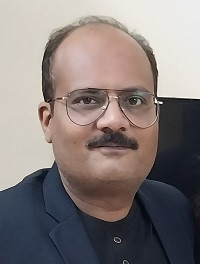
Rajesh M. Hegde is a Professor in the Department of Electrical Engineering at the Indian Institute of Technology Kanpur. He holds a PhD in Computer Science from IIT Madras (2005), an M.E. in Electronics Engineering from Bangalore University (1988), and a B.E. in IT Engineering from Mysore University. His research focuses on Machine Learning , AI , and multimodal systems, with applications in wireless networks, IoT, and speech/audio processing. Specific interests include federated learning, WSN, and information fusion for ASR/VR systems. His lab is located in ACES 203-204. Publications predominantly explore signal processing techniques for multimedia and speech applications, showing consistent focus on feature extraction, multimodal fusion, and real-time system design across 15+ years of research. Awards & Honors: P.K Kelkar Research Fellowship (2009-2013) Undergraduate design mentorship award, UC San Diego ISCA Grant at INTERSPEECH-ICSLP 2004 IBM Best Thesis Award recommendation Teaching excellence commendation
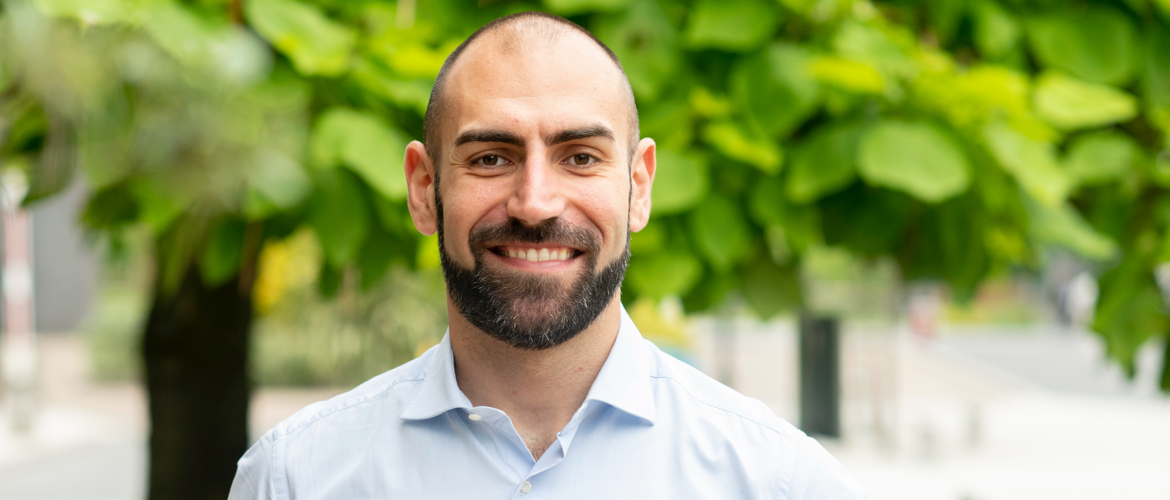
Edward T Crane is a Heilbronn Associate Professor at the School of Mathematics, University of Bristol, specializing in Probability, Analysis and Dynamics within the Pure Mathematics department. His research is affiliated with the Heilbronn Institute for Mathematical Research. Dr. Crane's research interests span multiple areas of mathematics, with particular focus on: Probability theory and stochastic processes Asymptotic analysis Circle mathematics and unit disk problems Riemann surfaces and connected components Polynomial mathematics and edge theory His recent research has focused on stochastic models, branching processes, and large deviation principles. Crane has published in top probability journals including Stochastic Processes and their Applications, Annals of Probability, and Annals of Applied Probability. His work often bridges theoretical mathematics with applications in areas like queueing theory and biological modeling, demonstrating both theoretical depth and practical relevance across multiple domains of mathematical research. Dr. Crane maintains an active research profile with 17 academic publications to date, with his most recent work in 2024 examining the limit point in Jante's law process and establishing its absolutely continuous distribution properties. His professional affiliations include: Heilbronn Institute for Mathematical Research Dr. Crane holds academic qualifications including a B.A. from Cambridge, A.M. from Harvard, and Ph.D. from Cambridge. He can be contacted at Edward.Crane@bristol.ac.uk and maintains an ORCID profile at https://orcid.org/0000-0002-4215-2884.
Dr. Manav R. Bhatnagar serves as a Professor and Brigadier Bhopinder Singh Chair Professor in the Department of Electrical Engineering at Indian Institute of Technology Delhi. He ranks #517 globally in Networking & Telecommunications among the top 2% scientists worldwide according to Stanford University and is a Fellow of INAE, NASI, IET(UK), IETE, and OSI. His academic credentials include a Ph.D. in Signal Processing for Communications from University of Oslo (2008), M.Tech. in Communications Engineering from IIT Delhi (2005), and B.E. in Electronics from North Maharashtra University (1997). He has held visiting appointments at prestigious institutions including Aalto University (Finland), University of Rennes (France), University of Oslo, Indian Institute of Science Bangalore, and University of Minnesota. Dr. Bhatnagar's research spans cutting-edge domains including 5G/6G communication, optical wireless communication, quantum communication, molecular communication, power line communication, and machine learning applications. His work demonstrates significant interdisciplinary connections between communication theory, signal processing, and emerging technologies. His publication record shows a strong focus on wireless and optical communication systems, with recent work addressing challenges in jamming detection, quantum relay systems, IRS-assisted communication, and game-theoretic approaches to resource allocation. His research consistently bridges theoretical foundations with practical applications in next-generation communication systems. NASI-Scopus Young Scientist Award Shri Om Prakash Bhasin Award (2016) Dr. Vikram Sarabhai Research Award (2017) BASIC RESEARCH AWARD of IIT Delhi (2023) Sir Visvesvaraya Young Faculty Research Fellowship (2016) Senior Member of IEEE As an academic advisor, Dr. Bhatnagar has mentored numerous PhD students who have gone on to successful careers at institutions including IIT Jodhpur, IIT Roorkee, Aalto University, and IIT Kanpur. His editorial roles include current Editor of IEEE Transactions on Communications and former Editor of IEEE Transactions on Wireless Communications (2011-2014). His textbook "Telecommunication Switching Systems and Networks" has become a standard reference in the field.
Saleh Javadi is a Senior Lecturer at the Department of Mathematics and Natural Sciences at Blekinge Institute of Technology (BTH) in Karlskrona, Sweden. He is actively engaged in research and teaching within the field of systems engineering. His educational background includes: B.Sc. in Electrical-Control Engineering from Amirkabir University of Technology (2009) M.Sc. in Electrical, Electronic and Systems Engineering from The National University of Malaysia (2013) Ph.D. in Systems Engineering from Blekinge Institute of Technology (BTH) (2021) Saleh Javadi's research focuses on signal processing, machine learning, and computer vision , with applications spanning remote sensing, intelligent transportation systems, and AI-driven industrial optimization. His work bridges theoretical advancements with practical implementations, particularly in SAR imagery analysis, drone-based agricultural monitoring, and traffic surveillance systems. His recent publications demonstrate a strong focus on remote sensing technologies, particularly Synthetic Aperture Radar (SAR) image processing and analysis. There's a clear trend toward applying machine learning techniques to solve complex problems in aerial and satellite imagery, traffic monitoring, and agricultural applications. His research shows interdisciplinary connections between computer vision, signal processing, and practical engineering applications. Saleh Javadi has received significant recognition for his innovative work: Innovator of the Year award (SKAPA – Innovation Prize in Memory of Alfred Nobel) in Blekinge for innovative efforts in optimizing and reducing energy consumption in industries by using artificial intelligence ÅForsk Entrepreneur's prize at the Swedish Innovation Council Day – Swedish Incubators & Science Park's annual conference in May 2019 Dr. Javadi is involved in practical applications of his research through projects such as "Artificiell intelligens AI kan reducera ogräsfrön i utsäde" (ongoing) and "Bekämpa Renkavle med hjälp av drönare och Artificiell Intelligens (AI)" (completed). His work demonstrates a strong commitment to translating academic research into real-world solutions that address industrial and environmental challenges. His research appears to be conducted within a collaborative framework, working with colleagues on drone technology, SAR image analysis, and AI applications across multiple domains including agriculture, maritime monitoring, and transportation systems.
Edgar Weippl is a Professor at the Faculty of Computer Science, University of Vienna, where he serves as Vice Dean and Head of the Research Group Security and Privacy. His work spans cybersecurity, blockchain, and machine learning, with teaching roles in information security and software security courses. Current Positions: Vice Dean (Faculty of Computer Science), Head (Security and Privacy Research Group), Deputy Head (Neuroinformatics & Knowledge Engineering Groups) Research Interests: Cybersecurity, blockchain, IoT security, code obfuscation, privacy technologies, reinforcement learning, and socio-technical systems security Selected Publications: Focus on blockchain privacy, VoWiFi security, code obfuscation, and reinforcement learning applications
Yue Li is the Leonard Case Jr. Professor in the Department of Civil and Environmental Engineering at Case Western Reserve University. He specializes in resilient and sustainable infrastructure systems, focusing on structural reliability, probabilistic design, and climate change adaptation. His research addresses risk assessment for infrastructure under extreme events, including earthquakes, hurricanes, and climate impacts. Education: PhD in Civil Engineering, Georgia Institute of Technology, 2005 Research Interests: Dr. Li’s work integrates advanced statistical methods and data-driven approaches to enhance infrastructure resilience. Key areas include: Probabilistic modeling of structural systems Risk-informed decision-making for multi-hazard mitigation Climate change impacts on material durability and performance Asset management and lifecycle cost analysis Notable Contributions: His recent publications emphasize data-driven resilience metrics for water systems and seismic risk assessment for bridges. He has pioneered frameworks for evaluating infrastructure vulnerability under climate change, including corrosion effects and extreme weather adaptation. Awards: ABSE Outstanding Paper Award (2023) Case School of Engineering Teaching Award (2020) Nomination for John S. Diekhoff Award (2019) Leadership Roles: Dr. Li serves as Section Editor for the ASCE Journal of Structural Engineering and chairs multiple technical committees on safety and reliability. He leads initiatives to standardize multi-hazard design practices and resilience evaluation methodologies.
Dr. Elia Gironacci is a Lecturer and Director of Studies in Civil and Environmental Engineering at the University of Warwick's School of Engineering. He holds a PhD in Computational Mechanics (Warwick, 2018), MSc (2013) and BSc (2010) from the University of Marche, Italy. His research focuses on computational fracture mechanics of quasi-brittle materials and engineering education for apprenticeship programs. Teaching responsibilities include leading modules like ES196 Statics and Structures and ES1A4 for apprentices. He manages the Civil Infrastructure Engineering Degree Apprenticeship program and chairs the University Apprenticeship Tutor Network. His work integrates advanced numerical methods with educational innovation, particularly in STEM induction programs and apprenticeship learning experiences. Key research contributions include stochastic modeling of crack propagation, non-local probabilistic methods, and shale rock fracture mechanics. His work bridges computational mechanics with practical engineering applications, emphasizing dimensionality reduction techniques and material heterogeneity. He actively participates in institutional committees (Education, Health & Safety) and has published in journals like Rock Mechanics and Rock Engineering and International Journal of Mechanical Sciences. His book chapter on STEM induction frameworks highlights his dual focus on research and pedagogy.
Dr. Shakhawat Hossain is a Professor of Statistics at the University of Winnipeg, serving as Chair starting July 2025. He holds adjunct positions at the University of Manitoba and University of Regina. His academic journey includes a PhD from the University of Windsor (2008), postdoctoral training at the University of Alberta's School of Public Health (2008–2010), and prior faculty roles at Alabama A & M University. He specializes in advanced statistical methodologies with applications in health sciences and epidemiology. Dr. Hossain's education includes: Ph.D. in Statistics, University of Windsor M.Sc. in Statistics, University of Alberta M.Sc. in Mathematics, Jahangirnagar University, Bangladesh B.Sc. (Hons.) in Mathematics, Jahangirnagar University, Bangladesh His research focuses on shrinkage estimation techniques , longitudinal data analysis , survival analysis , and health services research . He actively applies these methods to study dengue transmission dynamics, neuroimaging correlates of developmental disorders, and clinical outcomes in pediatric populations. His work bridges theoretical statistical innovation with real-world public health challenges. Dr. Hossain currently holds an NSERC Discovery Grant supporting student research. His 2023-2024 publications emphasize spatial epidemiology, advanced survival models, and dengue fever dynamics. He serves as Associate Editor of the Journal of Statistical Computation and Simulation . His advisory and grant activities include mentoring students in statistical modeling and securing funding for interdisciplinary health projects. While specific lab affiliations are not explicitly stated, his collaborations span departments in statistics, public health, and biomedical sciences.
Prof. Tadeusz Tyszka is a Full Professor and Director of the Center for Economic Psychology and Decision Research (Centrum Psychologii Ekonomicznej i Badań Decyzji ALK) at Kozminski University. His primary research interests include decision-making psychology, economic psychology, and behavioral economics. He has authored numerous books and articles, including Psychologiczne Pułapki Oceniania i Podejmowania Decyzji and Psychologia Zachowań Konsumenckich . He has held leadership roles in international scientific associations, such as the International Association for Research in Economic Psychology and the Division 9 (Economic Psychology) of the International Association of Applied Psychology. His research focuses on cognitive and emotional factors influencing risk perception, decision-making under uncertainty, and consumer behavior. Recent work examines how psychological biases affect choices related to insurance, disaster preparedness, and entrepreneurial risk-taking. Prof. Tyszka’s interdisciplinary approach bridges psychology, economics, and behavioral science to understand human decision processes in complex scenarios. He has contributed to debates on moral judgment, probabilistic reasoning, and the application of psychological principles to policy design. His publications span experimental studies, theoretical analyses, and critiques of literary and historical works through a psychological lens.
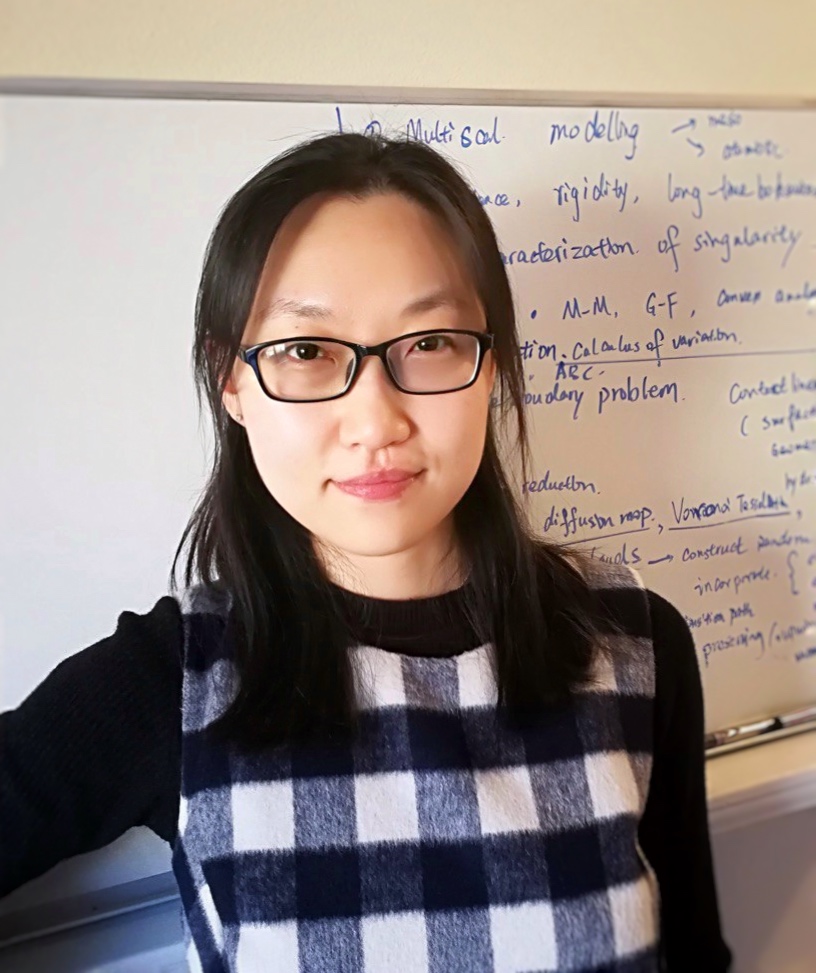
Yuan Gao is an Assistant Professor of Mathematics at Purdue University's Department of Mathematics (College of Science). His research focuses on analysis and computations of PDEs in materials science, biology, and microfluidics, with recent emphasis on optimal control, Hamilton-Jacobi equations, and non-equilibrium chemical reactions. His work is supported by NSF awards DMS-2204288 and DMS-2440651. Previously, he held the William W. Elliott Assistant Research Professor position at Duke University (2019-2021). Research interests include PDE analysis in materials science (crystal growth, dislocation dynamics), numerical methods for interface dynamics, applied stochastic analysis (Langevin dynamics, transition path theory), and mean-field games for fluid systems. He organizes the PSU-Purdue-UMD Joint Seminar on Mathematical Data Science. Key publications span topics like dislocation evolution, Wasserstein gradient flows, and stochastic algorithms for rare events. Awards include NSF CAREER funding recognizing his contributions to mathematical analysis of non-equilibrium systems.
Professor Akram Hourani is a Discipline Leader and Professor in the Department of Electrical & Electronic Engineering at RMIT University's School of Engineering. He holds roles as Program Manager for the Master of Engineering (Telecom & Network Eng.) and Deputy Director of the Centre for Opto-electronic Materials and Sensors (COMAS). Prior to academia, he was an ICT Program Manager in the telecommunications industry, leading projects in satellite and telecommunications infrastructure. His research focuses on advanced signal processing, satellite communications, radar systems (including SAR), neuromorphic hardware, and IoT. He has secured grants from ARC, CRC, government departments, and DSTG, with over 130 publications. His work aligns with UN Sustainable Development Goals 9 (Industry, Innovation & Infrastructure), 11 (Sustainable Cities), and 10 (Reduced Inequalities). Education: PhD in Electronics & Telecommunications (2016, RMIT University) Non-academic roles: R&D Engineering Program Manager at Inteltec Emirates (2006–2013) Key research themes include interference mitigation, 5G/6G networks, neuromorphic sensing, and AI-driven satellite IoT. He is listed in Stanford's top 2% scientists for career-long and single-year impact. His teaching includes courses on satellite communications and wireless sensor networks. Grants & Funding: ARC, CRC, DSTG, and government-funded projects since 2017 Collaborations: CSIRO, industry partners in telecommunications and aerospace His lab focuses on next-generation communication systems, with active projects in mega satellite networks, neuromorphic hardware, and AI for IoT sensing. He supervises PhD/Masters research in areas like satellite connectivity and machine learning applications.
Matthew Jenssen is a Reader in Probability at King's College London and a UKRI Future Leaders Fellow. He holds a BA and MMath from the University of Cambridge (2012–2013) and a PhD from the London School of Economics (supervised by Jozef Skokan and Julia Boettcher). His research focuses on the intersection of combinatorics, statistical physics, and theoretical computer science, particularly on large-scale structure formation in systems with local interactions. Notable contributions include advancements in sphere packing, Ramsey numbers, and random matrix theory. Jenssen has held postdoctoral positions at the University of Oxford and the University of Birmingham before joining King’s in 2023. His research group at King’s explores discrete probability, extremal combinatorics, and algorithms, with applications to statistical physics and high-dimensional geometry. Key achievements include a groundbreaking improvement on sphere packing lower bounds and resolving extremal questions in graph theory. Jenssen’s work often bridges combinatorial theory with computational methods, yielding impactful results in probabilistic combinatorics. Scientific awards include the UKRI Future Leaders Fellowship (2020). His grants include a 2023–2026 project on statistical physics methods in combinatorics and geometry. Jenssen collaborates widely, with notable co-authors including Will Perkins, Jozef Skokan, and Felix Joos. He is actively involved in the Probability Group at King’s and contributes to international conferences and arXiv publications.
Michael Everett is an Assistant Professor at Northeastern University with a joint appointment in the Department of Electrical & Computer Engineering and the Khoury College of Computer Sciences. He directs the Autonomy & Intelligence Laboratory, focusing on certifiable learning machines at the intersection of robotics, deep learning, and control theory. His research emphasizes safety, reliability, and efficiency in robotics applications like off-road navigation and social environments. Education: PhD in Mechanical Engineering, Massachusetts Institute of Technology (2020) SM in Mechanical Engineering, MIT (2017) SB in Mechanical Engineering, MIT (2015) Research Interests: Robotics and motion planning Control theory and neural network verification Reinforcement learning applications Certifiable safety guarantees for autonomous systems Navigation in dynamic/human environments Awards: Runner-Up: Best Paper Award (ICML 2022) Winner: Best Student Paper (IROS 2017/2023) Editors’ Top 5 Published Articles (IEEE Access 2021) Lab & Contributions: The Autonomy & Intelligence Lab develops algorithms for high-speed off-road autonomy, socially aware navigation, and neural feedback verification. His work includes the RAMP planning pipeline and Evora traversability learning framework. He collaborates with Google’s PAIR team on trustworthy AI.
Max Fathi is a Professor of Mathematics at Université Paris Cité, affiliated with the Laboratoire Jacques-Louis Lions (LJLL) and Laboratoire de Probabilités, Statistique et Modélisation (LPSM). He concurrently holds a part-time teaching position at the Department of Mathematics and Applications (DMA) at École Normale Supérieure (ENS). Since 2023, he has been a member of the Institut Universitaire de France (IUF), a prestigious national research fellowship in France. He completed his PhD in 2013 at Université Pierre et Marie Curie under Cédric Villani, followed by a postdoctoral position at the University of California, Berkeley with Lawrence C. Evans and Fraydoun Rezakhanlou. Previously, he was a CNRS researcher at the Institut de Mathématiques de Toulouse before joining Université Paris Cité. His habilitation thesis (2019) focuses on optimal transport applications in analysis and probability. Fathi's research centers on optimal transport theory, particularly its applications to analysis, probability, and statistical physics. Key topics include interacting particle systems, functional inequalities (e.g., Poincaré, log-Sobolev), high-dimensional phenomena, Ricci curvature in discrete/continuous spaces, Stein's method, concentration of measure, and numerical methods for stochastic dynamics. His work is supported by the ANR project 'Conviviality.' He has delivered courses on functional analysis at ENS and participated in summer schools, including an MSRI course on functional inequalities and localization techniques. His teaching materials include lecture notes on optimal transport and stochastic processes. His contributions have been recognized through awards such as the IUF membership. Notable research collaborations include work with Thomas Courtade, Matthias Erbar, and Gabriel Stoltz on topics ranging from stability estimates of inequalities to hypocoercivity and numerical analysis of stochastic systems.
Fabio Pierella is an Associate Professor at the Technical University of Denmark (DTU), affiliated with the Department of Wind and Energy Systems Flows, specializing in Wind Turbine Design Division. His research focuses on offshore wind energy systems, fluid dynamics, and structural engineering. He has contributed to projects like OC6 Phase IV and the DeRisk database, validating numerical models for floating offshore wind structures and extreme wave loads. Key research interests include computational fluid dynamics (CFD), hydrodynamic load modeling, and the design of large-scale floating wind turbines. His work spans numerical simulations, experimental validation, and database development for extreme sea states. Pierella has presented at international conferences on topics like wave-structure interaction and turbine control systems. He received the Best Poster Presentation Award (2024) and contributed to datasets such as the DeRisk Database, which provides critical wave data for offshore wind turbine design. His research emphasizes practical applications, including monopile structural integrity under extreme loads and control strategies for floating platforms. Pierella's activities include conference presentations on ultra-large floating turbines (EMULF2 project) and the impact of wave shape on 15MW turbine loads. His interdisciplinary approach integrates computational models with experimental results to address challenges in offshore renewable energy systems.