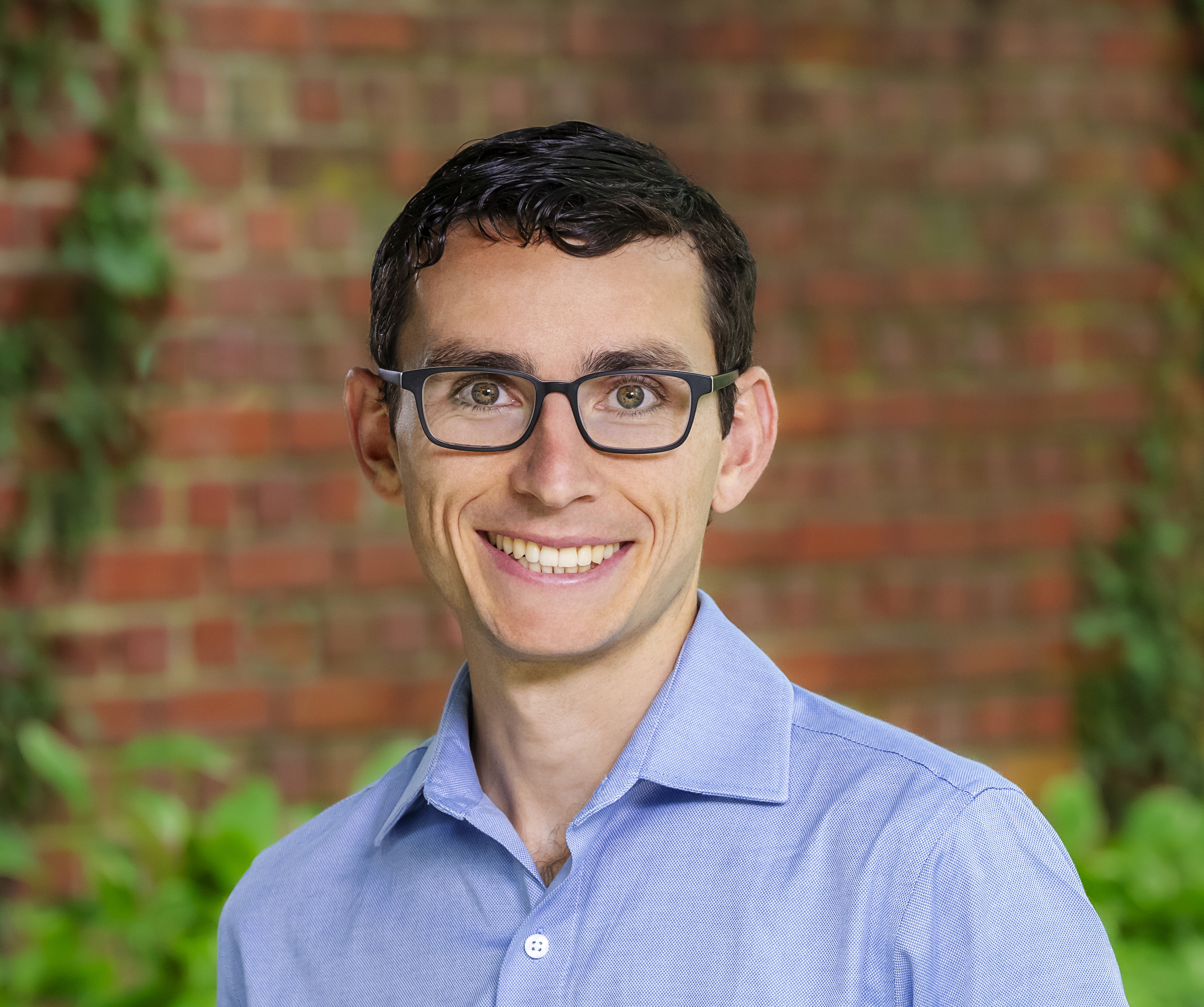
Prof. David Ham is a Professor of Computational Mathematics at the Department of Mathematics, Faculty of Natural Sciences, Imperial College London. His research focuses on high-level abstractions for scientific computation, particularly in geophysical fluids and numerical software. He leads the Firedrake project and co-developed the dolfin-adjoint framework, which received the 2015 Wilkinson Prize for Numerical Software. Ham holds a BSc (Mathematics) and LLB from The Australian National University, and a PhD from TU Delft. His career includes roles as a NERC Independent Research Fellow and Grantham Research Fellow at Imperial College. He is affiliated with the Grantham Institute, Mathematics of Planet Earth, and Software Performance Optimisation groups. His research spans computational science, including finite element methods, adjoint-based inversion, and parallel computing. Recent work emphasizes differentiable programming integration with machine learning and geophysical modeling. Ham has contributed to numerous grants and projects, including EPSRC and NERC-funded initiatives. He leads development of software tools like Firedrake and Thetis, advancing computational methods for oceanography and geodynamics.
Yen-Chi Chen is an Associate Professor in the Department of Statistics at the University of Washington. He also holds positions as a Data Science Fellow at the UW eScience Institute and as a co-investigator and statistician at the National Alzheimer's Coordinating Center. His academic career spans multiple interdisciplinary fields including statistics, data science, and astrostatistics. Chen's educational background includes a Ph.D. from Carnegie Mellon University, where he received prestigious awards including the Umesh K. Gavasakar Thesis Award (2017) and the William S. Dietrich II Presidential Ph.D. Fellowship Award (2015). His research focuses on nonparametric statistics, topological data analysis, missing data methodologies, cluster analysis, manifold learning, and applications in large-scale structure analysis and astrostatistics. Chen has made significant contributions to the development of statistical methods for analyzing cosmic web structures, GPS data, and causal inference with continuous treatments. His work bridges theoretical statistics with practical applications in astronomy, neuroscience, and public health. Analysis of his recent publications reveals a strong emphasis on developing novel statistical frameworks for complex data structures, particularly focusing on density-based methods, manifold learning, and approaches that address challenges in missing data and causal inference without standard assumptions. ASA Noether Early Career Scholar Award, American Statistical Association (2022) CAREER Award, National Science Foundation (2022-2027) Umesh K. Gavasakar Thesis Award, Carnegie Mellon University (2017) William S. Dietrich II Presidential Ph.D. Fellowship Award, Carnegie Mellon University (2015) Chen has advised numerous graduate students across multiple publications, with a focus on developing new statistical methodologies. His research has been supported by major funding agencies including the National Science Foundation and the National Institutes of Health. He is actively involved in several research groups including the UW Geometric Data Analysis Group, the UW Center for Statistics and the Social Sciences, and the National Alzheimer's Coordinating Center.
Christian Wald is a Post-doctoral researcher at Technical University Berlin working under Professor Gabriele Steidl, focusing on generative modeling, flow matching, and stochastic processes in machine learning. His research bridges theoretical probability with practical medical imaging applications, particularly in MRI reconstruction and analysis. He completed his PhD at Humboldt University of Berlin in 2017 with a thesis on p-adic quantum groups. His academic journey transitioned from pure mathematics to interdisciplinary machine learning research, reflecting his versatile expertise. Wald's primary research explores generative models through the lens of optimal transport and flow matching, with significant contributions to Wasserstein geometry and conditional distance metrics. His work frequently integrates stochastic processes to enhance medical image reconstruction, demonstrating strong cross-disciplinary impact in both theoretical machine learning and clinical applications. Recent publications highlight innovations in sliced MMD flows, Bayesian OT methods, and uncertainty-aware medical image analysis. Analysis of his 15 most recent publications (2019-2025) reveals a consistent trajectory toward unifying geometric probability with deep learning. Key themes include flow-based generative modeling for medical time-series data, optimal transport applications in image reconstruction, and novel kernel methods for distribution matching. His work spans both foundational theory (e.g., Fisher-Rao curves) and high-impact medical applications (e.g., coronary calcium scoring). No specific scientific awards are documented in the provided text, though his publications appear in prestigious venues including ICLR, IEEE TMI, and Physics in Medicine & Biology. Wald maintains extensive collaborations with the medical imaging group at Technical University Berlin, particularly with Andreas Kofler and Gabriele Steidl. His co-authored works demonstrate consistent contributions to MRI reconstruction pipelines and segmentation frameworks, though no formal advising roles or grant leadership are indicated. Current projects focus on uncertainty quantification in active learning for medical image segmentation. He operates within Gabriele Steidl's research group at Technical University Berlin, which specializes in mathematical imaging and machine learning. The team combines expertise in optimization, probability theory, and deep learning to solve medical imaging challenges, with Wald contributing core algorithmic innovations in generative modeling and stochastic reconstruction.
Benjamin Eysenbach leads the Princeton Reinforcement Learning Lab, where he designs algorithms that enable artificial intelligence systems to learn intelligent behaviors through trial-and-error, specializing in self-supervised methods that eliminate the need for human labels. He joined Princeton after completing his PhD in machine learning at Carnegie Mellon University under Ruslan Salakhutdinov and Sergey Levine, supported by the NSF Graduate Research Fellowship and Hertz Fellowship. His research bridges fundamental machine learning principles with practical applications in robotics and decision-making systems. Eysenbach's research focuses on developing self-supervised reinforcement learning algorithms that enable autonomous skill acquisition without external rewards. His investigations span contrastive learning methods, temporal abstraction techniques, and scalable architectures for goal-conditioned behaviors. These innovations aim to create more efficient and generalizable learning systems that can discover useful behaviors from unlabeled experience. Eysenbach's publications demonstrate consistent advancement in self-supervised RL methodologies, with recent work focusing increasingly on temporal abstraction and representation learning theory. His research shows progression from foundational contrastive RL frameworks toward more sophisticated analyses of generalization properties and uncertainty quantification. The 2025 works indicate expanding investigation into hierarchical control, probabilistic alignment, and hyper-deep network architectures. Eysenbach has been recognized with prestigious awards including the Hertz Fellowship and NSF Graduate Research Fellowship, supporting his doctoral research in self-supervised RL methodologies. His work has been presented at top machine learning conferences including NeurIPS, ICML, and ICLR. As director of the Princeton Reinforcement Learning Lab, Eysenbach oversees research initiatives in self-supervised RL, including projects on intention-conditioned modeling, horizon generalization, and contrastive learning frameworks. He has secured funding from the Princeton AI Lab to study neural correlates of temporal contrast in decision-making. Eysenbach teaches courses in reinforcement learning and has developed new benchmarks like JaxGCRL to accelerate research in goal-conditioned RL.
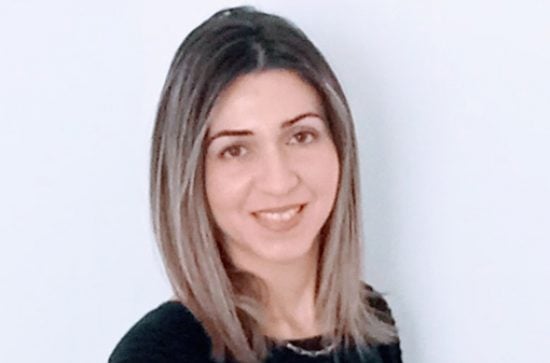
Dr. Galatia Cleanthous is a Lecturer in the Department of Mathematics and Statistics at Maynooth University, Ireland, affiliated with the Faculty of Science & Engineering and the Hamilton Institute. She joined Maynooth in 2020 after postdoctoral positions at Trinity College Dublin, Newcastle University, and University of Cyprus, and holds a PhD in Pure Mathematics from Aristotle University of Thessaloniki (2014). Education PhD in Mathematics, Aristotle University of Thessaloniki, Greece (2014) MSc in Mathematics, Aristotle University of Thessaloniki, Greece Diploma in Mathematics, Aristotle University of Thessaloniki, Greece Research Interests Her research bridges pure and applied mathematics, focusing on Mathematical Analysis , Probability , and Statistics . Specifically, she explores Geometric Analysis , Geometric Function Theory , and Harmonic Analysis on manifolds and metric spaces. In statistics, she works on Nonparametric , Spatial , and Environmental Statistics , developing adaptive estimation techniques and studying Gaussian random fields on spheres and other domains. Publication Trends From 2025 back to 2013, her work has consistently appeared in top journals such as Annals of Statistics , Bernoulli , Journal of Nonparametric Statistics , and Transactions of the American Mathematical Society . A clear trend emerges: early publications concentrate on pure analytic topics like Fourier multipliers and function spaces, while recent outputs integrate these theoretical tools into modern nonparametric statistics, density estimation on manifolds, and stochastic modeling of environmental and seismological data. Scientific Awards Master’s degree ranked first with grade 9.8/10, Aristotle University of Thessaloniki (2011) Diploma ranked first among ~200 students, grade 9.7/10, Aristotle University of Thessaloniki (2009) Undergraduate merit awards for three consecutive academic years (2005-2008), State Scholarship Foundation of Greece National first place in Cypriot high-school mathematics entrance exams (2005), Ministry of Education, Cyprus Advising & Outreach Dr. Cleanthous has supervised BSc and MSc students, including Ultán Doherty (BSc, 1st Class Honors, 2021) and Anush Harish (MSc, 2022). She serves as Chair of the Department PR Committee, Member of the University STEM Promotions Committee, and Member of the departmental Equality, Diversity & Inclusion committee. Beyond campus, she trains young mathematicians at the North Kildare Maths Problem Solving Club and organizes public engagement events for Science Week. Labs & Teams She is associated with the Hamilton Institute at Maynooth University, a multidisciplinary research institute fostering collaboration between mathematics, computer science, and engineering.
Will Perkins is an Associate Professor in the School of Computer Science at Georgia Institute of Technology. Previously, he held faculty positions at the University of Illinois at Chicago, the University of Birmingham (UK), and was an NSF Postdoc at Georgia Tech. He earned his PhD in 2011 from New York University's Courant Institute under Joel Spencer. His research focuses on algorithms, statistical physics, and discrete mathematics, particularly exploring algorithmic tractability of random computational problems, statistical physics spin models, and combinatorial methods derived from algorithmic intuition. Research Interests : Algorithms, statistical physics, combinatorics, phase transitions, random graphs, and Gibbs measures. His work bridges theoretical computer science and statistical mechanics, addressing questions about sampling, phase coexistence, and algorithmic barriers. Recent Activities : Director of the Algorithms and Randomness Center at Georgia Tech, Managing Editor of Combinatorial Theory , and Associate Editor of Random Structures and Algorithms and SIAM Journal on Discrete Mathematics . Upcoming engagements include the Rocky Mountain Summer Workshop (2024), Park City Mathematics Institute (2024), and conferences on Random Structures and Algorithms (2025). Teaching : Courses include Design and Analysis of Algorithms (CS 3510), Advanced Algorithms (CS 4540), and specialized topics like Statistical Physics in Algorithms and Combinatorics (CS 8803). He has taught across institutions, including at the University of Birmingham and University of Illinois at Chicago. Key Contributions : His work on phase transitions in combinatorial structures, algorithmic sampling in statistical physics models, and rigorous analysis of Gibbs measures has been published in top venues like FOCS, STOC, and Communications in Mathematical Physics. Notable results include hardness of sampling for anti-ferromagnetic Ising models and novel contour methods for Pirogov-Sinai theory.
Jaouad Mourtada is an Assistant Professor in the Department of Statistics at ENSAE/CREST, École Nationale de la Statistique et de l'Administration Économique since September 2020. Previously, he was a postdoctoral researcher at the Laboratory for Computational and Statistical Learning at the University of Genoa (2019-2020). He completed his PhD in Statistics at École Polytechnique under the supervision of Stéphane Gaïffas and Erwan Scornet. His educational background includes a Master's degree in Mathematics with specialization in Probability and Random Models (2016), a Master's degree in Fundamental Mathematics (2015), and a Bachelor's degree in Mathematics from Pierre and Marie Curie University and École Normale Supérieure (2013). Dr. Mourtada's research focuses on the intersection of statistics and learning theory, with particular interest in high-dimensional statistics, online learning, and density estimation. His work explores the complexity of prediction and estimation problems through rigorous theoretical analysis. His research spans statistical learning theory, robust statistics, and the theoretical foundations of machine learning algorithms. His publication record since 2017 demonstrates consistent contributions to top-tier venues in statistics and machine learning, with recent work focusing on universal coding, aggregation methods, robust regression, and the theoretical analysis of kernel methods and random forests. His research shows a progression from online learning and expert aggregation to more complex statistical learning problems involving high-dimensional data and model misspecification. He teaches courses including Statistical Learning Theory for Master 2 Data Science students and Probability Theory at ENSAE. His teaching spans theoretical foundations of machine learning and core probability concepts for advanced statistics students.
Glaucio H. Paulino holds the Margareta Engman Augustine Professorship in Civil and Environmental Engineering at Princeton University, where he also serves as a Professor at the Princeton Institute for the Science and Technology of Materials (PRISM). His work bridges computational mechanics, topology optimization, and materials science. Paulino leads a research group focused on advancing structural design methodologies, fracture mechanics, and functionally graded materials. His team has pioneered polygonal finite elements and multiresolution topology optimization techniques, addressing challenges in mesh bias and computational efficiency. He has published over 240 peer-reviewed articles and mentored 19 PhD and 11 MS students. Notable contributions include the PPR cohesive model for fracture analysis and adaptive mesh refinement for dynamic simulations. Paulino's research extends to practical applications such as high-rise building design and sustainable construction materials. Awards include election to the European Academy of Sciences and Arts and ASME’s Melville Medal. Current projects involve functionally graded cement-based materials, extrusion processing, and digital image correlation for material characterization. His lab collaborates with industry partners like Skidmore, Owings & Merrill LLP to translate topology optimization into real-world engineering solutions. Paulino’s interdisciplinary approach integrates computational modeling with experimental validation, fostering innovations in civil infrastructure resilience.
Pascal Vincent is an Associate Professor at the Department of Computer Science and Operational Research , University of Montreal, and a key member of the Montreal Institute for Learning Algorithms (MILA) . He holds a PhD in Computer Science from the University of Montreal and has been pivotal in advancing machine learning and artificial perception. Education: PhD in Computer Science (University of Montreal, 2003) His research spans machine learning , deep learning , representation learning , and neural networks , focusing on unsupervised methods and geometrically inspired algorithms. He explores how intelligent systems can autonomously build meaningful representations from raw data, driven by principles like the manifold hypothesis . Key projects include generative stochastic networks , contractive autoencoders , and high-dimensional sequence transduction . His work has resulted in 15+ recent publications in top venues like NIPS, ICML, and CVPR. Scientific Awards : Best student-paper award at ICML 2012 Honorable mention at NIPS 2011 Funded by FCI, FRQNT, CRSNG, CIFAR, and IBM Pascal has supervised 15+ doctoral and Master’s students , including Florian Bordes, Tom Bosc, and Nicolas Boulanger-Lewandowski, across topics like representation learning and generative models . He is also a co-founder of the UNIQUE (Union Neurosciences & Intelligence Artificielle Québec) research consortium.
Long Nguyen is a Professor of Statistics at the University of Michigan, Ann Arbor, with a courtesy appointment in Electrical Engineering and Computer Science. He is affiliated with the Michigan Institute for Data Science (MIDAS) and the Vietnam Institute for Advanced Study in Mathematics (VIASM). His research focuses on Bayesian nonparametrics, optimal transport, machine learning, and spatiotemporal data analysis. Nguyen holds a PhD in Computer Science from UC Berkeley and has held postdoctoral positions at Duke University and the Statistical and Applied Mathematical Institute. Education: B.Sc. in Computer Science from Pohang University of Science and Technology; M.Sc. in Mathematics from Arizona State University; Ph.D. in Computer Science from UC Berkeley (2007). Research Interests: Bayesian nonparametric methods, optimal transport theory, statistical inference for complex models, and applications in spatiotemporal data, functional data analysis, and hierarchical modeling. He emphasizes developing scalable algorithms and geometric approaches for statistical learning. Editorial Roles : Annals of Statistics Journal of Machine Learning Research SIAM Journal on Mathematics of Data Science Bayesian Analysis Awards : IMS Fellow, ASA Fellow NSF CAREER Award IEEE Signal Processing Young Author Award L. J. Savage Dissertation Award (via student Aritra Guha) Advising & Collaborations : Guided over 20 PhD students and postdocs, many now in academia and industry. Collaborates on projects in AI ethics, music theory, and environmental data science. Active in organizing summer schools in Vietnam on Bayesian statistics and machine learning. Labs & Teams : Co-leads the Statistical Machine Learning reading group at U-M and collaborates with the VIASM on advanced mathematical research in Hanoi.
Dr. Sameer Mulani is an Associate Professor, Associate Department Head, and Director of Graduate Programs in the Department of Aerospace Engineering and Mechanics at the University of Alabama's College of Engineering. He leads the Stochastic Mechanics and Multi-Disciplinary Optimization Laboratory (SMO Lab) and is an integral part of the Remote Sensing Center and Alabama Materials Institute. Dr. Mulani's research spans uncertainty quantification, random vibrations, multi-disciplinary optimization, and composite structures' multi-scale analysis and design. His work combines computational methods with machine learning to develop innovative solutions for aerospace engineering challenges. He has made significant contributions to self-healing composite materials, uncertainty quantification techniques, and optimization of composite structures. His research group has published extensively on topics including polynomial chaos expansion for uncertainty quantification, self-healing composites, stochastic buckling analysis, and machine learning applications in structural mechanics. The publications demonstrate a strong trend toward integrating probabilistic methods with traditional engineering analysis to improve reliability and safety of aerospace structures. AIAA Associate Fellow, Class of 2025 2025 Department of the Air Force Summer Faculty Fellowship Program 2024 Department of the Air Force Summer Faculty Fellowship Program MSC Software Contest Winner (2011) Night on the Town: General Electric Award (2007) DAAD Fellowship (1999-2000) Dr. Mulani has advised numerous graduate students who have gone on to successful careers at institutions including Los Alamos National Laboratory, Cirrus Aircraft, L3Harris, and Lockheed-Martin. His lab collaborates with various research centers including the Remote Sensing Center where they work on antenna design, manufacturing, and integration for aircraft systems. The SMO Lab utilizes advanced software including MSC NASTRAN/PATRAN, ANSYS Mechanical/FLUENT, ABAQUS, SOLIDWORKS, and CATIA for their simulations and analyses.
Aryeh Kontorovich is a Professor in the Computer Science Department at Ben-Gurion University. His research primarily focuses on theoretical machine learning, with expertise in probability, statistics, Markov chains, and metric spaces. His research interests span theoretical machine learning, with particular emphasis on: Probability theory and concentration inequalities Statistical learning theory Markov chains and mixing time estimation Metric space learning Kernel methods Sample compression schemes Professor Kontorovich's recent publications (2021-2025) demonstrate a continued focus on theoretical foundations of machine learning. His work shows strong trends in statistical estimation for Markov processes, distribution learning, metric space analysis, and sample compression. Many papers explore the intersection of probability theory and machine learning, particularly examining concentration inequalities, minimax optimality, and theoretical guarantees for learning algorithms. His research consistently bridges abstract mathematical theory with practical machine learning applications. Scientific awards and recognitions: Distinguished contribution award at MLG 2007 for "A Universal Kernel for Learning Regular Languages" Professor Kontorovich has advised numerous students and collaborated extensively with researchers in theoretical machine learning. His work spans both theoretical foundations and practical applications, with significant contributions to understanding the mathematical limits of learning algorithms. While specific grant information isn't provided in the source material, his extensive publication record in top venues suggests successful funding for his research programs. He maintains active collaborations with researchers worldwide, including prominent names like L. Gottlieb, D. Berend, and S. Hanneke.
Ben Goddard is a Professor in the School of Mathematics at the University of Edinburgh. His work bridges applied mathematics with real-world scientific challenges, emphasizing interdisciplinary collaboration across engineering, biology, chemistry, and physics. He earned his PhD at the University of Warwick, later completing his final year at TU Munich following his advisor. His research focuses on mathematical modeling, numerical methods, and asymptotic analysis applied to problems such as quantum chemistry, fluid dynamics, and biological systems. Education: Bachelor’s degree in Mathematics (undergraduate details unspecified) PhD in Mathematical Quantum Chemistry (University of Warwick/TU Munich) Research interests include: Dynamic density functional theory (DFT) for complex fluids and nanoparticles Interfacial phenomena and contact line dynamics Numerical optimization and pseudospectral methods Biological systems modeling (e.g., RNA transcription mechanics) Recent work explores applications like ouzo phase behavior, aerosol droplet stability, and opinion dynamics in social networks. His collaborations span diverse fields, including experimental biology at the Welcome Centre for Cell Biology. He advocates for mathematicians’ role in interdisciplinary problem-solving, emphasizing clear communication and adaptability. Advising and grants: While specific grant details are not listed, his projects reflect significant funding and team-based research. He actively promotes STEM engagement through activities like designing math-themed escape rooms with his spouse, a statistician. Labs/Teams: Collaborates extensively with Edinburgh’s Schools of Engineering, Biology, and Informatics, though no specific lab names are mentioned.
Jason R. Green is a Professor in the Department of Chemistry at the University of Massachusetts Boston. With a PhD from Purdue University (2007) and postdoctoral experience at the Universities of Chicago, Cambridge, and Northwestern University, his research bridges theoretical chemistry, physics, and data science to explore nonequilibrium systems. His work focuses on transforming chemical energy into dynamically functional materials through interdisciplinary approaches. Education: B.S., Case Western Reserve University (cum laude, 2002) Ph.D., Purdue University (2007) with NASA Graduate Fellowship NSF Postdoctoral Fellow at University of Chicago and University of Cambridge Research Interests: Theoretical chemical physics Nonequilibrium statistical mechanics Data science applications in chemical systems His recent publications analyze electrochemical material dynamics (ACS Nano 2024), chemically driven self-assembly (Chemical Science 2024), and thermodynamic speed limits across disciplines (Nature Physics 2020, Physical Review X 2022). He has received prestigious fellowships including NASA's Graduate Student Researchers Program and NSF Postdoctoral Fellowship. The Green Research Group at UMB applies theory, computation, and data science to understand energy transformation in synthetic and biological materials.
Linan Chen is an Associate Professor in the Department of Mathematics and Statistics at McGill University since 2014, following a postdoctoral position at the same institution (2011–2014). He holds a Ph.D. from MIT (2011, supervised by Daniel Stroock) and a B.Sc. from Tsinghua University (2006). His research focuses on probability theory and its intersections with analysis and geometry, including partial differential equations, functional analysis, Gaussian measures, and random geometry. He is affiliated with the Probability Lab of the Centre de Recherches Mathématiques (CRM) and the CNRS-Unite Mixte Internationale (CNRS-UMI) since 2014. Chen teaches advanced probability courses such as Honours Probability (Math 356) and Advanced Probability Theory I/II (Math 587/589), alongside special topics courses like Topics in Geometry and Topology (Math 599). He has advised students including Leila Sloman, Reinhold Willcox, Ulysse Blau, and Olivier Nadeau-Chamard through independent study programs. His research explores cutting-edge topics in probability, including Gaussian free fields, degenerate diffusion equations, and asymptotic properties of geometric stochastic structures. Recent work addresses high-dimensional phenomena, stochastic processes in geometry, and applications in mathematical physics. Chen’s contributions span theoretical advancements and methodological innovations, with publications in journals such as the Journal of Theoretical Probability, Annales Henri Poincaré, and SIAM Journal on Mathematical Analysis.