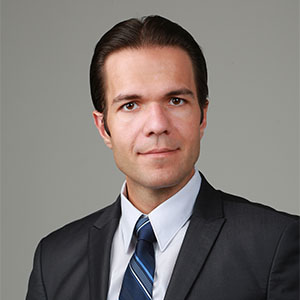
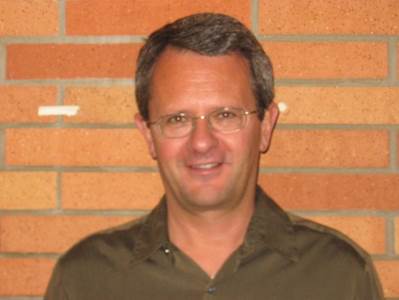
Stephen B. Pope is the Sibley College Professor of Mechanical Engineering at Cornell University. His academic journey began at Imperial College London, where he earned a B.Sc. (1971), M.Sc. (1972), and Ph.D. (1976), followed by a D.Sc. from the University of London in 1986. His research focuses on turbulent flows and turbulent combustion , with pioneering work in probability density function (PDF) models for reactive flows. He has advanced statistical modeling, direct numerical simulations, and combustion chemistry methodologies, including dimension-reduction techniques for combustion chemistry. Key publication: Turbulent Flows (2000 textbook) Recent work includes studies on turbulent mixing, three-stream jets, and LES/PDF modeling of hydrogen flames Scientific accolades include: Zeldovich Gold Medal (Combustion Institute) Fluid Dynamics Prize (American Physical Society) 2012 Propellants and Combustion Award (AIAA) 2008 Excellence in Teaching Award (Cornell College of Engineering) He has held leadership roles including Chair of the APS Division of Fluid Dynamics (2006-07) and Program Co-Chair of the 31st International Combustion Symposium (2006).
Mario Annunziato is a Researcher in Mathematics at the Department of Physics, University of Salerno, since 2004. His work focuses on numerical methods for stochastic processes and optimal control. Institution: University of Salerno Department: Department of Physics Academic Rank: Researcher Research Interests include numerical solutions of PDEs and integral equations for stochastic processes, probability density function optimization, and modeling random phenomena. His work addresses positivity, monotonicity, and conservation in discrete PDFs. Article Trends span stochastic control frameworks, computational finance, biophysics applications, and numerical methods for jump-diffusion processes. Key topics involve Fokker-Planck equations, Hamilton-Jacobi-Bellman formulations, and splitting methods. Advising and Grants include teaching Numerical Analysis until 2013 and securing funding from the University of Salerno's FARB program, INdAM-GNCS, and the European Science Foundation's OPTPDE grants. He participated in the STRIKE Marie Curie ITN network. Labs & Teams : Collaborated with Prof. Alfio Borzì at Würzburg University and contributed to open-source tools like MATLAB Central File Exchange for PDP solvers.
W. Kendal Bushe is an Associate Professor at the Faculty of Applied Science , University of British Columbia , within the Department of Mechanical Engineering . His research focuses on turbulent combustion, numerical simulation, and computational fluid dynamics (CFD) with applications to internal combustion engines and thermal power generation. Developed the Conditional Source-term Estimation (CSE) method for turbulent combustion modeling. Conducted experimental studies on methane/natural gas ignition in engines. Expertise in Reynolds-Averaged Navier-Stokes (RANS) and Large Eddy Simulation (LES) for reacting flows. Current projects involve autoignition modeling in HCCI engines using Stochastic Particle Models . Teaching Activities : Courses on heat transfer, energy conversion systems, computational fluid dynamics, combustion, and turbulent shear flows. Scientific Recognition : Fellow of the Combustion Institute.
Ivana Komunjer is a Professor of Economics at Georgetown University's Department of Economics. Her research focuses on econometric theory, financial economics, and macroeconomics, with a particular emphasis on asymmetric power distribution (APD) models and their applications to risk measurement. She has developed widely used MATLAB tools for APD density functions, including pdf, cdf, quantile, and random number generators. Her work also addresses dynamic stochastic general equilibrium (DSGE) models, nonlinear filtering, and quantile methods in economic forecasting. Komunjer teaches advanced courses such as Macroeconometrics and Theory of Financial Markets. Her contributions span theoretical econometrics, financial modeling, and policy analysis, with a strong emphasis on methodological innovation.
Haifeng Wang is an Associate Professor at Purdue University's School of Aeronautics and Astronautics, specializing in turbulence and combustion modeling. His work focuses on fluid mechanics, multi-phase flows, propulsion systems, and machine learning applications in combustion. He leads the Combustion Energy and Propulsion Lab and has contributed to over 50 peer-reviewed articles since 2012. Key achievements include: Development of advanced flamelet models for turbulent combustion simulation Pioneering studies on differential molecular diffusion effects in turbulent flames Investigations into combustion instabilities in rocket and turbine combustors His research integrates experimental validation with high-fidelity numerical methods like LES/PDF and Eulerian Monte Carlo fields. Awards include the 2014 American Chemical Society Doctoral New Investigator Award and 2012 Bernard Lewis Fellowship. He holds a PhD in Mechanical Engineering from Cornell University (2011).
Professor Peter Teunissen is an Adjunct Professor at the School of Earth and Planetary Sciences within the Faculty of Science and Engineering at Curtin University. His research focuses on satellite navigation, geodesy, and advanced positioning techniques, with a particular emphasis on Global Navigation Satellite Systems (GNSS). He has made significant contributions to integer ambiguity resolution, Real-Time Kinematic (RTK) positioning, PPP-RTK methods, and the development of algorithms for high-precision positioning systems. Key research interests include the theoretical foundations of GNSS, ambiguity resolution techniques, signal processing, and the application of these technologies in automated systems and deformation monitoring. His work often addresses challenges such as ionospheric delay correction, robustness in constrained environments, and the integration of multi-GNSS signals. Teunissen’s publications span a wide array of topics, from theoretical advancements in mixed-integer estimation to practical applications in autonomous vehicle positioning and low-cost receiver systems. His collaborative efforts with global institutions reflect his leadership in advancing GNSS technology and its interdisciplinary applications.
Professor Gustaaf Jacobs is a Full Professor in the Department of Aerospace Engineering at San Diego State University (SDSU), within the College of Engineering. He holds a M.Sc. in Aerospace Engineering from Delft University of Technology (1998) and a Ph.D. in Mechanical Engineering from the University of Illinois at Chicago (2003). His research focuses on computational multiphase and multi-scale flow physics, particularly in particle-laden flows, flow separation in complex geometries, and plasma-based flow control for applications in combustion optimization and drag reduction. Jacobs has received the AFOSR Young Investigator Award (2009) and became an Associate Fellow of AIAA (2013). His academic journey includes roles as a Visiting Assistant Professor at Brown University (2003–2006) and Postdoctoral Fellow at MIT (2003–2006). At SDSU, he advanced from Assistant Professor (2006) to Associate Professor (2010) before becoming Full Professor in 2013. Research interests span high-order numerical methods, shock wave interactions, and aerodynamic design, with a strong emphasis on experimental validation and computational modeling. Jacobs’ recent work includes studies on synthetic surface generation for additive manufacturing, turbulence transition on airfoils, and stochastic modeling of particle dynamics. His contributions address challenges in fluid-structure interactions, flow control, and predictive simulation techniques for aerospace systems. He collaborates on projects involving high-fidelity CFD, experimental aerodynamics, and data-driven modeling to advance engineering applications.
Michael Stoellinger is an Associate Professor in the Department of Mechanical Engineering at the University of Wyoming, within the College of Engineering and Physical Sciences. His research focuses on advanced computational modeling of turbulent and reactive flows, with applications in combustion and wind energy systems. Research Interests: His work spans modeling and simulation of turbulent and reactive flows , particularly using probability density function (PDF) models integrated with Reynolds-Averaged Navier-Stokes (RANS) and Large Eddy Simulation (LES) methods. He investigates radiative heat transfer coupling, premixed and flameless combustion , oxy-fuel combustion of alternative fuels , coal combustion and gasification , and soot formation . A significant focus is on hybrid LES/RANS methods applied to wind turbine blade performance prediction . These models are implemented in both in-house codes and the open-source CFD platform OpenFOAM. The trend in his publications from 2008 to 2013 shows a consistent development of unified and hybrid turbulence models, advancing from fundamental PDF modeling of premixed flames to complex applications in coal combustion and atmospheric boundary layers. His work bridges theoretical model development with practical implementation in aerospace and energy systems. Education: Ph.D. in Mathematics, University of Wyoming, 2010 M.S. in Mechanical Engineering, Technical University of Munich, 2005 Professional Experience: Assistant Professor, Mechanical Engineering, University of Wyoming, 2012–present Postdoctoral Researcher, Applied Science, Delft University of Technology, 2010–2012 Graduate Research Assistant, Mathematics, University of Wyoming, 2005–2010 Graduate Research Assistant, Technical University of Munich, 2001–2004 Dr. Stoellinger has not been mentioned as receiving any scientific awards in the provided text. He advises graduate students in mechanical engineering and combustion research, though specific names are not listed. His work is supported through academic research grants typical of computational mechanics and energy research, though specific grants are not detailed. He leads or contributes to a research group focused on computational fluid dynamics and combustion modeling, utilizing high-performance computing and simulation tools.
Dr. Pavel Popov is an Associate Professor in the Department of Aerospace Engineering at San Diego State University (SDSU), part of the College of Engineering. He is affiliated with the Academic Affairs division and holds the primary email ppopov@sdsu.edu. His research focuses on computational combustion and aerospace propulsion, with a particular emphasis on combustion instability, stochastic modeling, and high-performance computing. Education: PhD in Aerospace Engineering - Cornell University (2013) MS in Aerospace Engineering - Cornell University (2010) BS in Mechanical Engineering - Cornell University (2007) Research Interests: His work spans combustion instability in aerospace engines, plasma-combustion interactions , and the development of computational algorithms for simulating complex flow phenomena. Notable contributions include particle/finite volume codes for turbulent combustion, reduced-order methods for rocket engine instability simulations, and high-order finite difference methods for plasma-combustion interactions. Publications highlight: His research trends include machine learning for ignition prediction, longitudinal/transverse rocket engine instability analysis, and numerical studies on spray atomization and multiphase flows. These contributions underscore his expertise in both theoretical combustion dynamics and applied propulsion systems. Awards and Honors: APSDFD Gallery of Fluid Motion Poster Award (2016) AFOSR grant FA9550-12-1-0156 (2015) Cornell Fluid Dynamics Seminar Jayesh Prize (2011) Advising and Grants: Dr. Popov has advised students on rocket engine instability and combustion modeling. His grants include AFOSR funding for propulsion systems research. His work frequently integrates numerical methods with experimental validation.
Ana Navarro Quiles is an Associate Professor in the Department of Statistics and Operations Research at the Faculty of Mathematics, University of Valencia, Spain. She is a member of the PROMEDyA research group, focusing on prediction and optimization under uncertainty using dynamic stochastic models. PhD : Universitat Politècnica de València, 2018 Thesis : Computational Methods for Random Differential Equations: Theory and Applications Supervisors : Dr. Juan Carlos Cortés López, Dr. Rafael Villanueva Micó, Dr. María Dolores Roselló Ferragud Her research centers on probabilistic solutions of random differential equations, uncertainty quantification in biological and epidemiological models, and stochastic control systems. She employs advanced techniques such as the Random Variable Transformation (RVT) method and Karhunen-Loève expansion to analyze systems with random parameters. Her work bridges theoretical mathematics with real-world applications in public health, chemistry, and engineering. She has published extensively in journals like Journal of Computational and Applied Mathematics and Chaos, Solitons & Fractals . The recent publications reveal a strong trend toward modeling complex dynamical systems under full parametric uncertainty, particularly in biological growth (Gompertz, logistic) and disease spread (SIR-type models). Her methodological focus lies in deriving complete probabilistic solutions using transformation techniques and functional expansions, moving beyond mean-value approximations to capture full distributional behavior. No scientific awards are mentioned in the provided texts. Ana Navarro Quiles collaborates extensively with researchers from the Universitat Politècnica de València and other institutions. While no specific grants are listed, her sustained output suggests active funding support. She has not been explicitly mentioned as an advisor to students in the provided material, but her role in a PhD thesis as a supervisor's co-supervisee indicates strong mentoring experience. She is affiliated with the PROMEDyA research group (Prediction and Optimization under uncertainty: dynamic stochastic models and applications), which conducts interdisciplinary research on modeling uncertain dynamical systems with applications in science and engineering.
Blakesley Burkhart is an associate professor with tenure at Rutgers University in the Physics and Astronomy Department, and an associate research scientist at the Simons Foundation Flatiron Institute’s Center for Computational Astrophysics. His research focuses on magnetic turbulence across cosmic scales, including star formation in molecular clouds, galaxy evolution, and intergalactic medium dynamics. He has been recognized with prestigious awards such as the 2022 APS Maria Goeppert Mayer Award and the 2020 Packard Fellowship. Research interests include diagnosing turbulence in the interstellar medium (ISM), the role of magnetic fields in star-forming regions, and studying the Lyman-alpha forest to probe galaxy cluster environments. His work also explores UV missions like Hyperion to measure H₂ fluorescence in star-forming regions. Collaborative projects include the Supersonic Project , investigating star cluster formation in dark matter-free environments. Awards: 2023-24 Board of Trustees Fellowship, 2022 APS Award, 2021 Sloan Fellowship, 2020 Packard Fellowship. Grants: NSF-BSF funding for turbulence modeling with machine learning. Labs/Teams: Center for Computational Astrophysics (Flatiron Institute), collaborations on the Eos molecular cloud discovery and Hyperion mission.
Professor Stefan Heinz is an academic at the University of Wyoming , affiliated with the School of Computing as an Adjunct Professor. He holds a Ph.D. in Physics from the Heinrich-Hertz Institute, Berlin (1990) and an M.Sc. in Physics from Humboldt-Universitaet zu Berlin (1986). Research Interests: Mathematical Modeling Multiscale Processes Stochastic Analysis Monte Carlo Simulations Computational Fluid Dynamics Turbulence, Combustion, and Multiphase Flows His recent publications focus on hybrid turbulence modeling , machine learning applications for fluid dynamics , and physically consistent simulation methods , particularly for separated flows and atmospheric systems . Key keywords from his work include: Hybrid RANS-LES , Continuous Eddy Simulation , Probability Density Functions , Dynamic LES , von Kármán Constant , and Stochastic Micro-Mixing . Scientific Awards include: 2022 Adjunct Professor, University of Wyoming School of Computing 2022 Finalist for Provost Term Professorship 2015 Associate Fellow, American Institute of Aeronautics and Astronautics (AIAA) 2011 Outstanding Dissertation Supervision Award 2008 Extraordinary Merit in Research He has taught advanced courses in Stochastic Modeling (MATH 5490) and Mathematical Modeling (MATH 4300) since 2004. He organized the 2014 RMMC Summer School and led workshops on the 100 Years of Fokker-Planck Equation (2017) and Turbulence Benchmarking (2019).
Prof. Dr. Cora Uhlemann is a faculty member at the University of Bielefeld within the Faculty of Physics . She is also affiliated with the Bielefeld Graduate School in Theoretical Sciences as a Deputy Director and part of the Astroparticles and Cosmology Group . Her research focuses on advanced cosmological modeling, including weak lensing statistics, dark matter dynamics, and modified gravity theories. She contributes significantly to the CosmoVerse White Paper and Euclid mission initiatives, developing innovative mathematical frameworks for analyzing cosmic structures and gravitational probes. Key trends in her publications highlight applications of probability distribution functions (PDFs), large deviation theory, and quantum-inspired methods to cosmology. She leads efforts to improve cosmological parameter estimation through higher-order statistics and systematics mitigation in surveys. Uhlemann is actively involved in interdisciplinary research through Bielefeld’s CRIStal portal and collaborates with institutions like the Center for Cognitive Interaction Technology (CITEC) and Bielefeld Center for Data Science (BiCDaS) .
Professor Takeshi Watanabe serves in the Department of Applied Physics at Nagoya Institute of Technology's Graduate School of Engineering. Specializing in fluid dynamics and turbulence theory, his research bridges fundamental physics with atmospheric and industrial applications. Education: Doctor of Science (2000.03, Kyushu University) Master of Science (1997.03, Kyushu University) Bachelor's Degree (1995.03, Tokyo University of Science, Faculty of Science, Department of Applied Physics) Watanabe's research focuses on turbulent flows , particularly particle-laden turbulence, cloud microphysics, and passive scalar transport. His work employs advanced computational techniques including direct numerical simulation (DNS) to investigate phenomena like energy dissipation statistics, vortex dynamics, and polymer scission in turbulent environments. Key contributions include modeling turbulence modulation by particles and supersaturation spectra in cloud systems. His publication record demonstrates consistent high-impact contributions to fluid mechanics, with recent articles in Physical Review Fluids and Journal of Fluid Mechanics addressing fundamental turbulence characteristics across diverse applications from atmospheric science to industrial fluid systems. Awards: Fellow Member Certification (Japan Society of Fluid Mechanics, 2023) HPCI Outstanding Research Achievement Award (RIST, 2021) Japan Fluid Mechanics Society Central Chapter Outstanding Presentation Award (2004) As Principal Investigator for multiple competitive grants including JSPS Kakenhi projects (totaling over ¥48 million), Watanabe leads collaborative research on cloud turbulence and particle-fluid interactions. His advisory role extends to high school outreach programs at Nagoya Institute of Technology, demonstrating commitment to science education. Watanabe actively contributes to academic governance as理事 (Board Member) of the Japan Society of Fluid Mechanics and strategic committee member at the National Institute for Fusion Science, where his expertise in turbulence informs plasma simulation research.