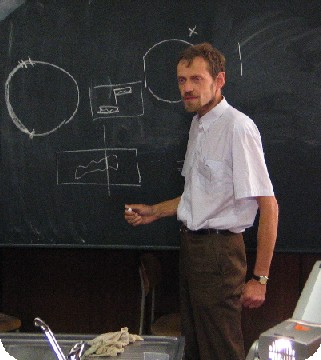
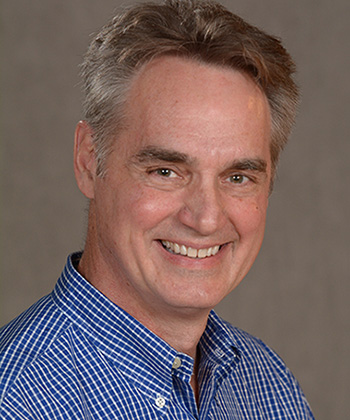
Gregory Wheeler is a Professor of Philosophy and Computer Science at the Frankfurt School of Finance and Management, where he serves as Head of the Computational Science & Philosophy Department and Academic Director of the Master of Applied Data Science program. He received a joint PhD in Philosophy and Computer Science from the University of Rochester in 2002 and has held faculty positions at LMU Munich, Carnegie Mellon University, and Nova University Lisbon, with visiting roles at TU Dresden AI Institute and Max Planck Institute for Human Cognition in Berlin. His research focuses on Formal Epistemology , Bayesian Statistics , and Machine Learning , particularly Imprecise Probability Theory and Probabilistic Models of Coherence . His recent work explores intersections between logic, probability, and computational methods in philosophical inquiry. From his publications, key trends emerge in Uncertainty Quantification , Probabilistic Reasoning , and AI Applications across philosophy and statistics. Topics include peer disagreement resolution, causal modeling, and foundational issues in imprecise probability. Gregory co-founded Exaloan AG in 2019, serving as CTO and Head of AI & Machine Learning. He has contributed to academic leadership through editorial roles and organizing symposia, including the International Symposium on Imprecise Probabilities.
Wenlong Mou is an Assistant Professor at the University of Toronto's Department of Statistical Sciences, with additional affiliation at the Vector Institute for AI. His research develops optimal statistical methods and efficient algorithms for data-driven decision-making, focusing on reinforcement learning, stochastic approximation, and causal estimation. He teaches advanced courses in theoretical statistics (STA3000) and stochastic processes (STA447/2006). Education: Ph.D. in EECS, University of California, Berkeley (2023) B.Sc. in Computer Science and Economics, Peking University Research Focus: Mou's work bridges statistical theory with machine learning practice. Key areas include: Theoretical foundations of reinforcement learning (e.g., Bellman equations, continuous-time systems) Efficient algorithms for semi-parametric estimation and debiasing Non-asymptotic analysis of stochastic optimization and MCMC methods High-dimensional statistical inference and causal modeling Publication Trends: Recent articles (2023–2025) emphasize reinforcement learning theory (policy evaluation, adaptive interpolation), causal inference (debiased estimators, propensity scores), and statistical computing (diffusion processes, Langevin algorithms). Methodological rigor and non-asymptotic guarantees characterize his work. Awards: INFORMS APS Student Paper Competition Finalist (2022) Advising and Labs: Actively recruiting PhD students with backgrounds in mathematics or deep learning. Students access GPU clusters via the Vector Institute. Grants unspecified in sources.
David Renfrew is an Associate Professor in the Department of Mathematics and Statistics at SUNY Binghamton. His research focuses on probability theory, random matrix theory, and their applications to mathematical physics and biological systems. Primary research areas: Probability, Random Matrix Theory, Mathematical Physics Special interest in non-Hermitian matrices and free probability interplay Current work explores dynamics of coupled systems and spectral properties of structured matrices Recent publications analyze singularity degrees of random matrices (2025), fractional free convolutions (2024), and universality phenomena in elliptic random matrices (2023). His methodological work bridges abstract probability theory with concrete applications in network dynamics and differential equations.
Gee Y. Lee is an Associate Professor with Tenure in the Department of Statistics and Probability and the Department of Mathematics at Michigan State University. Lee holds a PhD from the University of Wisconsin-Madison and is an Associate of the Society of Actuaries (ASA). Their research focuses on applying advanced statistical and machine learning methods to solve complex problems in actuarial science and insurance. Dr. Lee's educational background includes: PhD from the University of Wisconsin-Madison Associate (ASA) designation from the Society of Actuaries Dr. Lee's research spans several critical areas in modern actuarial science. Their primary focus includes insurance loss modeling for rate-making and loss reserving applications, optimization of multivariate insurance coverage, and dependence modeling. A significant portion of their recent work applies machine learning methods, particularly deep neural networks, to traditional actuarial problems. They are also pioneering research in analyzing unstructured data for insurance applications, which represents an emerging frontier in the field. Their work bridges theoretical statistical methods with practical insurance industry needs. Dr. Lee's publication record demonstrates a clear evolution from traditional actuarial methods toward more sophisticated and interdisciplinary approaches. Early work focused on fundamental aspects of insurance pricing and modeling, while more recent publications incorporate machine learning techniques, natural language processing, and advanced optimization methods. A notable trend is the increasing integration of unstructured data analysis into actuarial science, reflecting broader industry shifts. Their research consistently addresses both theoretical advancements and practical applications in insurance risk assessment and management. While specific awards aren't detailed in the available information, Dr. Lee's recognition includes: Associate (ASA) designation from the Society of Actuaries Michigan State University recognized by the Society of Actuaries as granting MS and PhD degrees focused on actuarial science (as of 2023) Dr. Lee actively mentors students at multiple levels, supervising undergraduate research through REU programs, directed studies (STT 490, MTH 490, MTH 491B), and graduate research for MS and PhD candidates. They have advised numerous students who have presented at UURAF (Undergraduate Research Assistant Fellowship) conferences. For graduate students, Dr. Lee supports research leading to MS degrees in Statistics, Applied Statistics, and Industrial Mathematics with actuarial science focus, as well as PhD dissertations in Statistics. Beyond direct student supervision, Dr. Lee has organized significant academic events including the Simon Conference for Young Researchers in Risk Management and Insurance (2019, 2023) and contributed to other workshops, demonstrating leadership in the actuarial research community. While specific lab names aren't mentioned, Dr. Lee appears to lead a research group focused on actuarial science and insurance analytics at Michigan State University. Their collaborative work with researchers like Scott Manski, Taps Maiti, Peng Shi, and others suggests an active research team working at the intersection of statistics, machine learning, and actuarial applications. The research group seems particularly focused on bridging traditional actuarial methods with modern data science techniques.
Yao Li is an Associate Professor in the Department of Mathematics and Statistics at the University of Massachusetts Amherst. He holds a Ph.D. in Mathematics from Georgia Institute of Technology (2012) and previously served as a Courant Instructor at New York University’s Courant Institute. His research focuses on applied probability, dynamical systems, numerical analysis, and their intersections with machine learning, neuroscience, and statistical mechanics. He has contributed to understanding stochastic dynamics, invariant measures, and the mathematical foundations of machine learning. His work bridges theoretical mathematics with interdisciplinary applications in biology, physics, and engineering. Education : Ph.D. in Mathematics, Georgia Institute of Technology, 2012 Courant Instructor, Courant Institute of Mathematical Sciences, New York University Research Interests : Dr. Li’s research spans applied probability, dynamical systems, and numerical analysis. Key areas include: Machine learning and data-driven computational methods Neuroscience modeling (spiking neural networks, cortical processing) Nonequilibrium statistical mechanics (thermodynamic laws, energy exchange models) Stochastic processes and their ergodic properties His work emphasizes rigorous mathematical analysis combined with numerical simulations, addressing challenges in high-dimensional stochastic systems. Teaching & Advising : He teaches advanced courses such as Numerical Analysis, Applied Math Project Seminar, and Statistics. While specific student advisees are not listed, his research group likely engages graduate students in interdisciplinary projects. His courses integrate theoretical concepts with real-world applications, reflecting his research focus on computational and applied methods. Labs/Teams : Dr. Li’s research is conducted within the Department of Mathematics and Statistics at UMass Amherst, collaborating with institutions like the Courant Institute and Georgia Tech. His work often involves interdisciplinary teams addressing problems at the intersection of mathematics, physics, and biology.
Leonard Wesley is an Associate Professor in the Department of Computer Science at the College Of Science, San Jose State University. His research spans interdisciplinary domains at the intersection of Bioinformatics , Computational Biology , and Machine Learning , with specific applications in Pharmaceutical Drug Discovery , Genomic Data Analysis , and Autonomous Robotics . Education: Ph.D. in Computer Science, University of Massachusetts M.S. in Computer Science, University of Massachusetts B.A. in Physics and Math, Northeastern University Research Interests include Approximate Reasoning (probabilistic, evidential, and fuzzy logic), Agent-Oriented Systems , and Sensor Fusion . His work applies these methodologies to Drug Portfolio Management , Protein Structure Scoring , and Medical Diagnostics . Publication Trends show a consistent focus on Computational Biology , Robotics , and Uncertainty Quantification over four decades. Early work in Computer Vision evolved into modern applications in Pharmaceutical Analytics and AI in Aerospace . Key Projects include SVM-based drug affinity prediction, evidence-driven decision support systems for biopharma, and real-time agent development frameworks like ROADS. He has contributed to CFD code control and Mobile Network Congestion solutions. Collaborations with institutions like NASA, Los Alamos National Laboratory, and international conferences (WMSCI, ICINCO, AIAA) highlight his cross-disciplinary impact. His teaching includes Artificial Intelligence and Bioinformatics courses.
Shui Feng is a Professor in the Department of Mathematics and Statistics at McMaster University. His research focuses on stochastic processes and their applications in ecology, finance, population genetics, and statistical physics, with current work emphasizing Bayesian non-parametrics and measure-valued processes. He holds a PhD in Math and Stats from Carleton University (1993), an MSc in Mathematics from Beijing Normal University (1987), and a BSc in Mathematics from Beijing Normal University (1984). Research interests include stochastic processes, probability theory, and stochastic models (queueing, simulation). He has published extensively on topics such as Poisson-Dirichlet distributions, large deviation principles, and applications in population genetics and finance. Teaching responsibilities include advanced courses like Stochastic Processes (STATS 3U03), Intermediate Probability Theory (STATS 4D03/6D03), and Graduate Level Topics in Statistics (STATS 5GT3). Recent publications (2015–2025) explore theoretical advancements in stochastic models and their real-world applications.
Elchanan Mossel is a Professor of Mathematics at the Massachusetts Institute of Technology (MIT), with a joint appointment at the Institute for Data, Systems, and Society (IDSS). His research focuses on probability, combinatorics, statistical inference, and their applications to computer science and social choice theory. He earned his B.Sc. from the Open University of Israel, and both his M.Sc. (1997) and Ph.D. (2000) in Mathematics from the Hebrew University of Jerusalem. Before joining MIT in 2016, he was a faculty member at UC Berkeley and held visiting positions at the Weizmann Institute and the Wharton School of the University of Pennsylvania. Mossel's work bridges theoretical foundations and applied problems, including computational complexity, randomized algorithms, Markov random fields, and evolutionary biology. He has made significant contributions to the theory of social choice, game theory, and the mathematical underpinnings of machine learning. Notable achievements include resolving the Majority Is Stablest conjecture and advancing phylogenetic reconstruction methods. His awards include the Sloan Fellowship and Miller Fellowship. He has mentored numerous graduate students, including Sebastien Roch, Allan Sly, and Miklos Racz, and has held editorial roles in journals like the Electronic Journal of Probability . Mossel's teaching spans topics from introductory probability to advanced courses on social networks and game theory.
Hugo Duminil-Copin is a renowned mathematician holding half-time appointments as Professor at the Institut des Hautes Études Scientifiques (IHÉS) and the Université de Genève . He has been recognized with prestigious awards, including the Fields Medal (2022) and the New Horizons Prize in Mathematics (2017) . His research focuses on probability theory and statistical mechanics, particularly phase transitions, percolation, and critical phenomena. Education: He earned his Ph.D. in Mathematics from the University of Geneva in 2012. Key academic milestones include a Full Professorship at IHÉS from 2015 and prior roles as Assistant and Associate Professor at Geneva. Research: Duminil-Copin explores foundational questions in statistical physics, such as the rigorous analysis of lattice models and phase transitions in dimensions three and four. His work bridges probability, combinatorics, and mathematical physics, with notable contributions to percolation theory and the Ising model. Awards: Beyond the Fields Medal, he has received the EMS Prize (2016), the Loeve Prize (2017), and an ERC Consolidator Grant (CRIBLAM, 2018–2023). Grants & Leadership: He led the ERC-funded CRIBLAM project, investigating random-cluster models and related topics. His collaborations span global institutions, emphasizing interdisciplinary approaches to complex systems.
Arne Feddersen is a Professor at the Department of Business and Sustainability within the University of Southern Denmark . His academic work spans Sports Economics , Applied Regional and Urban Economics , and Media Economics , with a focus on empirical analyses of sports events, betting markets, and regional development. He holds a Dr. rer. pol. degree (Doctor of Economics) and maintains an ORCID profile (0000-0001-8935-4021). Research highlights include: Economic impacts of Formula One, Tour de France, and Olympic Games Competitive balance dynamics in professional sports Sentiment bias in betting markets (NBA, NFL, European football) Agglomeration effects from transport infrastructure Media demand analysis for sports broadcasts Recent work analyzes event hosting valuation , gambling market anomalies , and sports regulation frameworks . He serves on editorial boards and departmental councils while supervising courses in sports economics and management.
Peter Grünwald is full professor of Statistical Learning at Leiden University's Mathematical Institute and senior researcher in the Machine Learning group at CWI (Centrum Wiskunde & Informatica) in Amsterdam. His pioneering work on e-values establishes a transformative framework for statistical inference that overcomes critical limitations of classical p-values, enabling flexible experimental designs while maintaining rigorous error control. His research centers on e-values and e-processes as a unifying paradigm between Bayesian and frequentist statistics, with core innovations in safe testing, anytime-valid inference, and optional continuation. These methods allow researchers to gather additional data after initial analysis without inflating Type I errors and to determine significance levels post-hoc—addressing longstanding rigidity in Neyman-Pearson hypothesis testing. His publication trajectory reveals rapid adoption of e-values across disciplines: from foundational theory in PNAS and JRSSB to clinical applications in survival analysis (NEJSDS) and epidemiology (medrxiv meta-analysis). The 2022–2024 publications demonstrate methodological maturation, with implementations in R (safestats package) and growing use in social sciences (PsyArXiv) and causal inference (JASA). Scientific recognition includes: ERC Advanced Grant (2024) for developing flexible statistical inference theory via e-values His ERC-funded project drives current research, while his internship policy restricts non-Dutch master’s/bachelor’s students but welcomes advanced international PhD candidates. Collaborative work spans statisticians (Ly, de Heide, Koolen), machine learning researchers (Ramdas, Shafer), and medical scientists (van Werkhoven). As core member of CWI's Machine Learning group, he advances theoretical foundations with practical impact—evidenced by the first live deployment of e-values in a BCG vaccine meta-analysis. His work redefines statistical practice for adaptive data collection in clinical trials, AI, and social science research.
Jan Rataj is a Professor at the Faculty of Mathematics and Physics , Charles University , specializing in Integral Geometry , Geometric Measure Theory , and Stochastic Geometry . He has been affiliated with Charles University since 1991 and has held visiting positions at universities in Jena, Karlsruhe, Ulm, and Aarhus. Research interests focus on geometric probability, convex geometry, and measure theory Teaches courses on Measure and Integration Theory , Geometry , and advanced topics in geometric measure theory Scientific contributions include coauthoring 2 monographs and ~50 research papers. His work explores: Random measurable sets and perimeter analysis Stochastic modeling of microstructures Geometric functionals and invariants Applications to spatial statistics and probability theory He supervises PhD students and leads the Seminar of Stochastic Geometry , which examines topics like: Max-stable random fields Convex body reconstruction Point process analysis
Song Liu serves as Associate Professor in Data Sciences and AI within the School of Mathematics at the University of Bristol. His academic journey spans multiple continents with a BEng from Suzhou University, MSc from Bristol, and Doctor of Engineering from Tokyo Tech. Current research focuses integrate mathematical foundations with practical AI applications across engineering domains. His educational background demonstrates international expertise: BEng: Suzhou University MSc: University of Bristol Doctor of Engineering: Tokyo Tech Research centers on exponential family manifolds and graphical models , with significant contributions to score matching techniques for missing data and generative modeling. His work bridges theoretical statistics with real-world applications in structural health monitoring and power electronics, particularly through transfer learning frameworks for magnetic core loss prediction. Recent publications reveal increasing focus on Wasserstein gradient flows and differential parameter inference in high-dimensional spaces. Liu's publication trajectory shows consistent innovation in density estimation and generative modeling, with recent work (2023-2025) emphasizing practical implementations in engineering contexts. Key themes include score-based diffusion models, manifold learning applications, and novel approaches to divergence minimization using velocity fields and optimal transport theory. Award recognition includes: Outstanding Paper at ICML2025 3rd Place in MagNet Challenge 2023 (Outstanding Performance Award) Grant leadership includes the 2023-2024 project Using Machine Learning to Correct Probe Skew in High-frequency Electrical Loss Measurements as Co-Investigator, and the 2019 Joint Workshop Between JGI and ISM as Principal Investigator. His academic service extends to hosting international researchers like Ayaka Sakata (2023) and receiving competitive fellowships for boundary example simulation (2018-2020). While no formal lab structure is specified, his collaborative network spans electrical engineering (magnetic core loss projects) and structural analysis (offshore wind foundation monitoring).
Sam Power is a Lecturer in the School of Mathematics at the University of Bristol . He holds a PhD in Mathematics from the University of Cambridge (awarded January 2021) and an MMath. His research focuses on computational statistics, Monte Carlo methods, and probabilistic modeling. Education PhD, University of Cambridge (30 Aug 2016 – 30 Jan 2021) MMath, University of Cambridge Research Interests Dr Power’s work lies at the intersection of probability theory , statistics , and machine learning . He investigates advanced Monte Carlo techniques including Markov Chain Monte Carlo (MCMC), particle methods, and piecewise-deterministic Markov processes. His recent projects explore convergence guarantees via functional inequalities such as Poincaré and log-Sobolev inequalities, state-space models for online learning, and uncertainty quantification. Publication Trends Across 20+ publications (2019–2025), Power has consistently advanced theoretical understanding and practical performance of sampling algorithms. Key themes include error bounds for particle and gradient-based methods, weak Poincaré inequalities, and applications in machine-learning systems such as online skill rating and Bayesian active learning. Scientific Awards No awards explicitly listed in the provided material. Students & Grants No explicit information on supervised students or funded grants is present. Labs & Teams Dr Power is affiliated with the School of Mathematics at Bristol; no specific laboratory or research group name is provided.
Edwin F. Meyer serves as Associate Professor of Physics at Baldwin Wallace University, holding a Ph.D. from Case Western Reserve University. He teaches core physics courses including General Physics (PHY-131/132), Theoretical Physics (PHY-341), and Advanced Mechanics (PHY-331), alongside specialized problem-solving courses for honors and business students. Education: Ph.D. from Case Western Reserve University Research Interests: Dr. Meyer specializes in theoretical physics with interdisciplinary applications in complex problem solving. His work integrates operations research, probability theory, and geometric/topological analysis to develop educational frameworks for tackling multifaceted challenges. The Gedanken Institute exemplifies his focus on mental stamina development through game strategy, risk management, and pattern recognition in non-routine problem spaces. Scientific Awards: No awards or fellowships were documented in the provided materials. Advising and Grants: As director of the Summer Gedanken Institute for Problem Solving, he mentors 12-17 year olds in advanced problem-solving methodologies. The program emphasizes consensus building and social capital development through operations research, probability, and topology applications. His business-oriented problem-solving course (BUS-665) extends this methodology to commercial contexts. Labs and Teams: The Gedanken Institute constitutes his primary operational team, employing a pedagogy centered on pre-solving processes including problem architecture analysis, information inventory, and solution-space exploration across disciplines like risk management and logic.