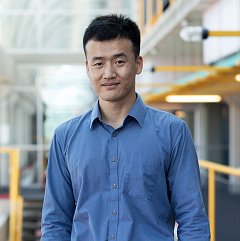
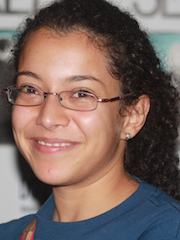
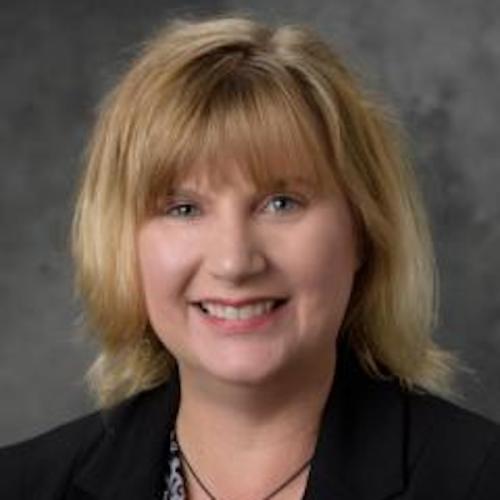
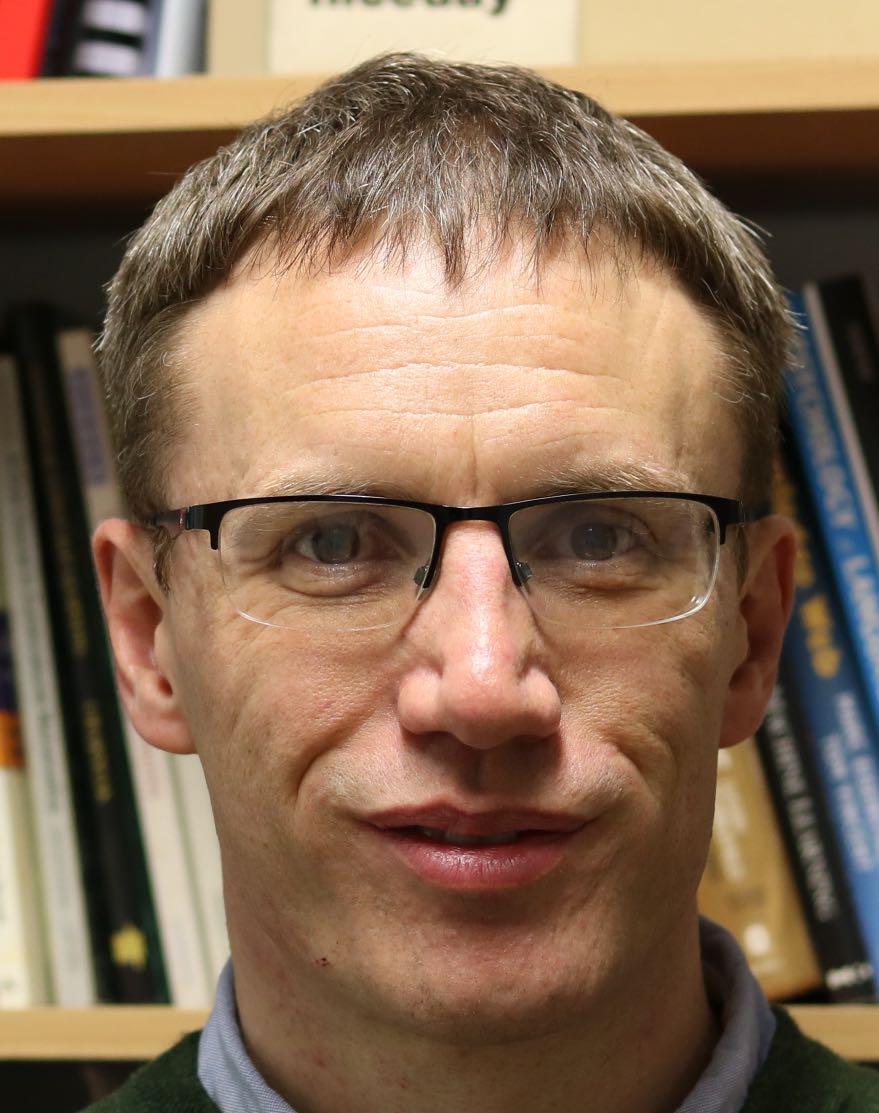
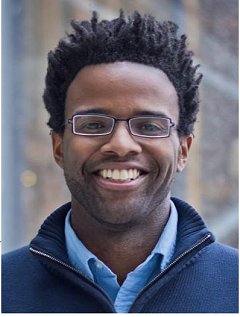
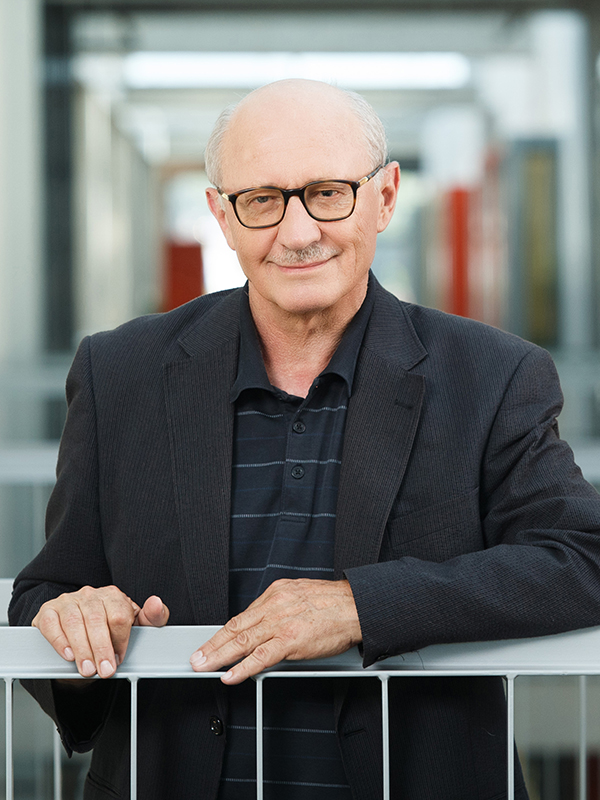
Chengnian Sun is an Associate Professor at the Cheriton School of Computer Science , University of Waterloo, Canada. His research focuses on software engineering and programming languages with an emphasis on software reliability and programming productivity. Education : Ph.D. in Computer Science from National University of Singapore (2013) His work spans compiler testing (EMI, Dfusor, Kitten), program reduction (Perses, Vulcan, PPR), Android testing, and DNN testing. He has received multiple grants including Google Research Scholar Program (2025) and NSERC Discovery Grants (2024-2029). His recent publications focus on LLM-based compiler testing, weighted delta debugging, and ransomware resilience. Scientific Awards : Most Influential Paper Award at SANER (2022) NUS Research Scholarship (2008-2012) ACM SIGSOFT Distinguished Paper Award at ASE (2012) IBM Cup Campus Innovation Contest First Prize (2005) He advises Ph.D. and MMath students in software engineering, compiler testing, and program analysis, including several who have contributed to top-tier conferences like ICSE, ISSTA, and ASPLOS. His service includes program committee roles in ICSE, OOPSLA, and ISSTA.
Thomas Weber is a Full Professor at the École Polytechnique Fédérale de Lausanne (EPFL) , holding the Chair of Operations, Economics, and Strategy (OES) within the College of Management (CDM) . He serves as Director of the Doctoral Program in Management of Technology and contributes to academic governance through roles in committees such as the CDM Academic Evaluation Committee. PhD Students: Zhang Ru, Han Jun, Mark Michael, Razeghian Jahromi Maryam Email: thomas.weber@epfl.ch His research spans behavioral economics, risk analysis, and optimization in dynamic systems, with a focus on sharing economy applications, inventory management, and cryptocurrency market dynamics. Recent publications address robust decision-making frameworks, self-exciting point processes, and economic implications of information endogeneity. Key teaching activities include: Information: Strategy & Economics Innovation & Entrepreneurship in Engineering Microeconomics
Dr. Marcel Celaya serves as a Lecturer in Operational Research at Cardiff University's School of Mathematics. His academic position places him within one of the UK's leading mathematics departments, contributing to both teaching and research in theoretical optimization. Dr. Celaya's research program centers on the theoretical foundations of integer programming and combinatorial optimization: Proximity and sparsity properties in integer optimization Structural analysis of mathematical programming problems Connections between optimization and algebraic structures Computational geometry aspects of discrete optimization Matroid theory applications in optimization His publication record reveals a strong focus on theoretical aspects of integer programming, with particular attention to proximity bounds and sparsity properties. The research often involves international collaborations with optimization experts across European institutions, as evidenced by co-authorships with researchers from various universities. Dr. Celaya regularly contributes to the International Conference on Integer Programming and Combinatorial Optimization (IPCO), a premier venue in the field. While specific teaching responsibilities aren't detailed in the available information, his position as Lecturer suggests active involvement in undergraduate and potentially graduate instruction within the mathematics curriculum at Cardiff University. His specialization in Operational Research indicates contributions to programs requiring advanced optimization methods and mathematical modeling.
Benjamin Gregoire is a Researcher at INRIA Sophia Antipolis , affiliated with the Marelle Team . His work focuses on compilers , formal verification , cryptography , proof assistants , and type theory . Education : PhD in Computer Science, Université Paris 7 (2003) Research Interests : Dr. Gregoire specializes in formal verification of cryptographic systems, compiler design for security-critical applications, type-based termination, and proof assistants like Coq. His projects include the INRIA-Microsoft Research Joint Lab , ANR Scalp (Security of Cryptographic Algorithms with Probabilities), and ANR DeCert (Certified Decision Procedures). He led the Mobius project (IP FET) and contributed to Java security validation via the JACK tool . Scientific Awards : He received the Best Paper Award at CRYPTO 2011 for 'Computer-Aided Security Proofs for the Working Cryptographer.' Advising & Collaborations : Dr. Gregoire has advised PhD students Michael Armand , Julien Charles , Sylvain Heraud , and Jorge-Luis Sacchini , with former advisee Cesar Kunz . He collaborates with teams including Marelle and INRIA-Microsoft Research .
Christine Rizkallah is a Senior Lecturer in the School of Computing and Information Systems at the University of Melbourne, Australia. She joined the university in December 2021 after serving as a Lecturer at the University of New South Wales (UNSW) from April 2018 to December 2021. Her research focuses on interactive theorem proving, formal verification, programming languages, and systems, with an emphasis on building practical tools for high-assurance software development. She leads a research group working on the Cogent and Dargent languages, aiming to reduce the burden of formal verification in systems programming. Education: PhD in Computer Science, Universität des Saarlandes and Max-Planck-Institut für Informatik, Germany (2015), thesis: Verification of Program Computations , supervised by Prof. Dr. Kurt Mehlhorn. MSc in Computer Science, Universität des Saarlandes, Germany (2009), thesis: Proof Representations for Higher Order Logic , supervised by Prof. Dr. Gert Smolka and Dr. Chad E. Brown. BSc in Computer Science, German University in Cairo, Egypt (2007), thesis: X2-Planner: A Hierarchical Task Network Planner for Real Time Gaming Applications , supervised by Prof. Dr. Slim Abdennadher and Dr. Thorsten Maier. Her research interests lie at the intersection of programming languages and formal methods. She develops domain-specific languages with strong type systems and verified compilers to enable trustworthy software systems. Her work spans algorithms, logic, security, and social choice theory, reflecting a strong interdisciplinary approach. She has published extensively in top venues such as POPL, ICFP, ASPLOS, JAR, and PACMPL, with a focus on certifying compilation, refinement verification, and mechanized reasoning. Her recent publications reveal a consistent focus on formal verification of systems software, particularly through the Cogent language and its ecosystem. Key themes include verified data layout refinement (Dargent), property-based testing, termination analysis, cost modeling, and integration with foreign functions. Her work combines theoretical rigor with practical implementation, often involving mechanized proofs in Isabelle/HOL and Coq. Scientific Awards and Recognition: Distinguished Artefact Award at SLE'22 (awarded to Zilin Chen for work under her supervision). First Prize, SPLASH'22 Student Research Competition (undergraduate), won by Raphael Douglas Giles. Second Prize, ACM-wide Student Research Competition (undergraduate, 2023), won by Raphael Douglas Giles. She has supervised numerous PhD, Masters, and Honours students, many of whom have continued in academia or industry research roles. She has received research funding through institutional support and collaborative grants, though specific grants are not detailed in the provided text. She is actively involved in the programming languages community, serving on program committees for POPL, ICFP, CPP, PLDI, and others, and holding leadership roles such as Program Chair for FUNARCH'25 and Diversity and Inclusion Co-Chair for PLDI'25. She teaches core courses including Declarative Programming and Models of Computation at the University of Melbourne. She leads a vibrant research team and collaborates widely across institutions including UNSW, University of Pennsylvania, and international partners. Her lab focuses on building verified systems using functional programming and formal methods, with strong ties to the DeepSpec project and the Isabelle/HOL community.
V. Arvind is a Professor in the Theoretical Computer Science faculty at the Institute of Mathematical Sciences (IMSc) , Chennai. His research is centered on computational complexity theory, with a focus on structural complexity, randomized and algebraic computation, and quantum information and computation. He explores the deep connections between theoretical computer science and mathematics. Institution: Institute of Mathematical Sciences (IMSc), Chennai School: Theoretical Computer Science Academic Rank: Professor Arvind's research interests include computational complexity, structural complexity theory, algebraic computation, derandomization, and quantum computing. He is particularly interested in the interplay between mathematical structures and computation. His work often bridges theoretical computer science with algebra, combinatorics, and logic. His recent publications, primarily expository articles in the EATCS Bulletin’s Computational Complexity Column, cover a wide range of topics such as robust oracle machines, the Alon-Roichman theorem, noncommutative arithmetic circuits, graph isomorphism, and quantum computation. These works reflect trends in foundational complexity theory, algebraic methods in computation, and the exploration of quantum models. The articles emphasize structural insights, lower bounds, and connections to mathematical disciplines. Professional Service and Editorial Roles: Associate Editor, ACM Transactions on Computation Theory Editor, EATCS Computational Complexity Column (since June 2011) Editorial Board Member, International Journal of Computer Mathematics (2009–2013) Co-organizer, ICM Satellite Conference on Algebraic and Probabilistic Aspects of Combinatorics and Computing Program Committee Member for WALCOM 2014, STACS 2012, COCOON 2009, FSTTCS (multiple years, including chair roles), CCC 2006, INDOCRYPT (2002, 2005), and others Teaching: Arvind has taught advanced courses including Computational Complexity, Algorithms, Algebra and Computation, and Discrete Mathematics, often based on foundational texts and notes from leading experts. Lecture notes from his courses have been compiled by students and collaborators. Collaborations: He has an extensive list of co-authors, including prominent researchers such as Manindra Agrawal, Eric Allender, Johannes Köbler, Meena Mahajan, Jacobo Torán, and Ramprasad Saptharishi, indicating strong collaborative research networks in complexity theory and algorithms.
André Brodtkorb is a Professor and Head of the Department of Information Technology at Oslo Metropolitan University. His research spans applied mathematics, numerical analysis, and computational science, focusing on physics simulations and GPU computing. He advocates for open and reproducible research and is actively involved in education and societal engagement through the Academy of Young Researchers (2024-2028). Research Interests: His work integrates applied mathematics and computer science to develop high-performance simulations for environmental phenomena, including ocean currents, volcanic ash dispersion, and coastal flooding. He specializes in GPU-accelerated parallel computing, finite-volume methods, and Python-based scientific programming. Publication Trends: Recent articles highlight advancements in GPU computing efficiency, ocean modeling, and inverse ash transport modeling for volcanic plume forecasting. His research bridges computational methods with real-world environmental challenges. Scientific Awards: Member of the Academy of Young Researchers (2024-2028) Contact Information: Office: Pilestredet 35, 0166 Oslo Phone: +47 456 19 070 (Mobile), +47 672 35 924 (Office) Email: andre.brodtkorb@oslomet.no
Tracy Yother serves as Assistant Professor in Aeronautical Engineering Technology (AET) within Purdue University's School of Aviation and Transportation Technology. With over 18 years of industry experience at Boeing, McDonnell Douglas, and Pratt & Whitney spanning product support, program management, and business development, she teaches undergraduate Powerplant Systems courses and graduate-level aviation leadership/process improvement curricula while maintaining active FAA Airframe and Powerplant certification. Her academic credentials include: Ph.D. in Career and Technical Education from Purdue University M.S. in Technology, Aviation Logistics from Purdue University B.S. in Aviation Technology from Purdue University Dr. Yother's research pioneers the integration of emerging technologies into aviation maintenance education, with dual focus on faculty credentialing challenges and AI-driven maintenance solutions. She leads NIST-funded development of electric propulsion standards curriculum while advancing natural language processing applications for maintenance record analysis and defect detection through API integration. Her work bridges industry standards with academic training requirements for next-generation aviation technicians. Recent publications reveal strong thematic continuity in aviation education innovation, particularly addressing workforce development for electric propulsion systems and AI-enhanced maintenance practices. Her scholarship consistently connects curriculum design with industry consensus standards while expanding into diversity initiatives and sustainable maintenance technologies. Recognition includes: February 2021: School of Aviation and Transportation Technology’s Outstanding Faculty in Learning Award Dr. Yother directs NIST Standards Curricula Development Program funding for electric propulsion aviation standards while maintaining active leadership in professional communities. As ASEE Aerospace Division Chair and member of UAA Maintenance Division and Aviation Technician Education Council, she shapes national conversations on aviation maintenance education standards and workforce development strategies. Her research directly informs Purdue's aviation technology programs through industry partnerships, with current focus on developing training frameworks for high-voltage aircraft systems and AI-assisted maintenance protocols that address emerging industry challenges.
Mark Stevenson is a Senior Lecturer in the School of Computer Science at the University of Sheffield, UK. He leads undergraduate programs and serves as a key member of the Natural Language Processing research group , focusing on knowledge extraction from text and user information access solutions. Research Interests : Natural Language Processing Information Retrieval Machine Learning Biomedical Text Disambiguation Lexical Semantics Exploratory Search Systems Scientific Awards : EPSRC Advanced Research Fellowship (2006-2011) Best Paper Award at CLEF 2004 Grants & Projects : He has secured significant funding including the EU FP7 PATHS project (£709,407), EPSRC grants for biomedical disambiguation (£239,920) and Lexical Adaptation (£30,000), and NIHR funding for public health research access systems.
Michael Carbin is an Associate Professor at MIT in the Department of Electrical Engineering and Computer Science (EECS), where he leads the Programming Systems Group at the Computer Science and Artificial Intelligence Laboratory (CSAIL). His research centers on developing programming systems that handle uncertainty through probabilistic programming, quantum computing, and neural networks. Carbin's work spans programming languages, systems, and machine learning, with themes including uncertainty management, efficiency optimization, and formal verification. His publications demonstrate a strong focus on probabilistic inference methods, neural network optimization, and quantum programming frameworks. Awards and Honors: Sloan Research Fellowship (2020) Multiple Best Paper Awards (OOPSLA 2013, 2014; ICLR 2019) NSF CAREER Award (2018) Google Faculty Research Award (2018) As the head of the Programming Systems Group, he advises 10+ graduate students and postdocs, focusing on cutting-edge systems research. He has secured grants including Facebook Research Awards and NSF funding.
Desi R. Ivanova is a research fellow at the University of Oxford's Department of Statistics under the Florence Nightingale Bicentennial Fellowship. Her work bridges probabilistic machine learning, Bayesian experimental design, and LLM evaluation frameworks. She holds a DPhil in Statistics from Oxford's StatML CDT program (2020-2024) and an MMORSE in Mathematics from University of Warwick (2011-2016) with Erasmus exchange at LMU Munich. Research spans causal machine learning and uncertainty quantification Developed CO-BED and Step-DAD frameworks Focus on LLM evaluation methodology and calibration Expert in real-time adaptive experimental systems Her publications demonstrate expertise in Bayesian self-consistency methods, neural data compression, and privacy-preserving dataset merging. Key contributions include improving amortized inference efficiency and developing gradient-based causal experimental designs. Current work emphasizes rigorous statistical evaluation of language models, advocating for appropriate uncertainty quantification when analyzing performance across small datasets. She critiques CLT-based methods for LLM evaluation and proposes more robust frequentist and Bayesian alternatives.
Dr. Krysia Broda is an Honorary Senior Lecturer in the Department of Computing at Imperial College London's Faculty of Engineering. She directs the HiPEDS CDT Programme and coordinates the PhD Teaching Scholarship Programme, actively supervising doctoral candidates. Her office is located at 180 Queen’s Gate, London SW7 2BZ, U.K., and she can be contacted via phone (+44 20 7594 8426) or email. Her research bridges logic programming , automated reasoning , and neural-symbolic integration , with applications in computational biology and multi-agent systems. Key focus areas include: Abductive/Inductive Logic Programming Answer Set Programming (ASP) for knowledge representation Probabilistic reasoning in biological networks Teleo-reactive agent policies Her publications emphasize logic-based methods in AI, spanning theoretical foundations and real-world applications like gene regulation analysis and legal case inference. Recent work shows a trend toward integrating probabilistic models with symbolic AI for complex system validation. She leads the Structured and Probabilistic Intelligent Knowledge Engineering (SPIKE) group and collaborates with the Machine Learning Group. Current projects involve distributed abductive reasoning and ASP-based theory refinement.
Martin Eigel is a Researcher at the Weierstrass Institute for Applied Analysis and Stochastics (WIAS) , specializing in numerical methods for stochastic partial differential equations, uncertainty quantification, and machine learning applications in computational mathematics. His work bridges tensor networks, Bayesian inversion, and quantum simulations. Research Interests : Adaptive stochastic Galerkin finite element methods Low-rank tensor approximations for high-dimensional problems Machine learning integration with PDE solvers Quantum circuit simulation techniques Bayesian inverse problems and error control Key Article Trends : His recent publications focus on merging deep learning architectures (e.g., ResNet, CNNs) with stochastic and tensor-based numerical methods for solving parametric PDEs, Bayesian inversion, and quantum systems. Topics include Hamilton-Jacobi-Bellman equations, Langevin dynamics, and risk-averse optimization under uncertainty.
Dr. Angela Meyer is an Assistant Professor of Energy Meteorology and Artificial Intelligence at TU Delft, Faculty of Civil Engineering and Geosciences, Department of Geoscience and Remote Sensing since October 2023. She concurrently leads the Energy Weather & AI Lab at the Bern University of Applied Sciences (BFH), School of Engineering and Computer Science. She earned her PhD in atmospheric physics from ETH Zurich (2015) and a master’s degree in mathematics from the University of Cambridge (2009). Research Focus: Intersection of data science, atmospheric science, and renewable energy applications. Machine learning for solar and wind energy forecasting. Federated learning for privacy-preserving wind turbine condition monitoring. Satellite-based solar radiation retrieval and bias correction. Probabilistic intraday and sub-seasonal forecasting. Her research is supported by major grants from the Swiss National Science Foundation (SNSF) and Innosuisse , and she is a project partner in the Horizon Europe UrbanAIR initiative. Scientific Contributions: Over 40 peer-reviewed publications since 2015 in journals such as Applied Energy , Solar Energy , Energy and AI , and Journal of Climate . Key publications include advances in deep generative models for solar forecasting, federated learning in renewable energy, and AI-based satellite retrieval of solar radiation. Active reviewer for Applied Energy , Energies , and program committee member for ECML PKDD and LOD conferences. Research Team & Supervision: Dr. Meyer currently supervises six PhD candidates and six postdoctoral researchers across her labs at TU Delft and BFH. Her group focuses on AI-driven solutions for renewable energy reliability and resilience. Laboratories & Collaborations: Energy Weather & AI Lab – Bern University of Applied Sciences. GRS Lab – TU Delft, Department of Geoscience and Remote Sensing. Active collaborations with ETH Zurich, Siemens Smart Infrastructure, Hexagon AB, and NVIDIA. For more information, visit her personal website or ResearchGate profile .
Ivan Bratko is a Professor of Computer Science at the University of Ljubljana's Faculty of Computer and Information Science. He founded the Artificial Intelligence Laboratory in 1985 and served as its head until 2017, remaining an active member. Until 2002, he also directed the AI group at the Jožef Stefan Institute. His academic journey includes B.Sc., M.Sc., and Ph.D. degrees in electrical engineering and computer science, all from the University of Ljubljana. Bratko's research spans machine learning, knowledge-based systems, qualitative modeling, intelligent robotics, heuristic programming, and computer chess. His work focuses on learning from noisy data, combining learning with qualitative reasoning, constructive induction, Inductive Logic Programming, and applications in medicine and dynamic system control. He has authored over 200 scientific papers and influential books including Prolog Programming for Artificial Intelligence (third edition, 2001), KARDIO: A Study in Deep and Qualitative Knowledge for Expert Systems (MIT Press, 1989), and Machine Learning and Data Mining: Methods and Applications (Wiley, 1998). His publication portfolio demonstrates consistent contributions to AI, with recent work emphasizing argument-based machine learning, qualitative modeling applications, and medical AI systems. These publications reveal strong interdisciplinary connections between theoretical AI and practical applications in environmental science, healthcare, and robotics. Fellow of the European Coordinating Committee for Artificial Intelligence (ECCAI) Member of the Slovene Academy of Arts and Sciences (SAZU) Former editorial board member of Artificial Intelligence , Machine Learning , Journal of AI Research , and other leading journals Co-founder and first chairman of the Slovenian AI Society (SLAIS) Bratko has secured numerous research projects including ARRS programs on artificial intelligence (2009-2020), the PARKINSCHECK project for Parkinson's disease detection, and European projects like X-MEDIA and XPERO. His laboratory serves as the central hub for AI research at the University of Ljubljana, fostering collaborations across medical, environmental, and industrial domains. He has mentored numerous researchers and maintained active collaborations through visiting positions at institutions including Edinburgh University, University of New South Wales, and Delft University of Technology.