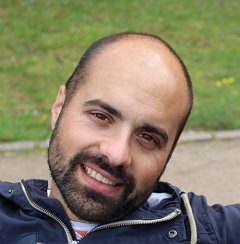
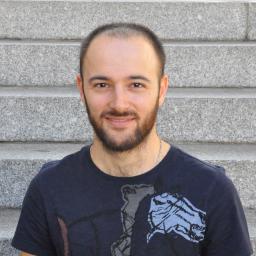
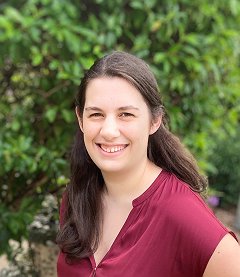
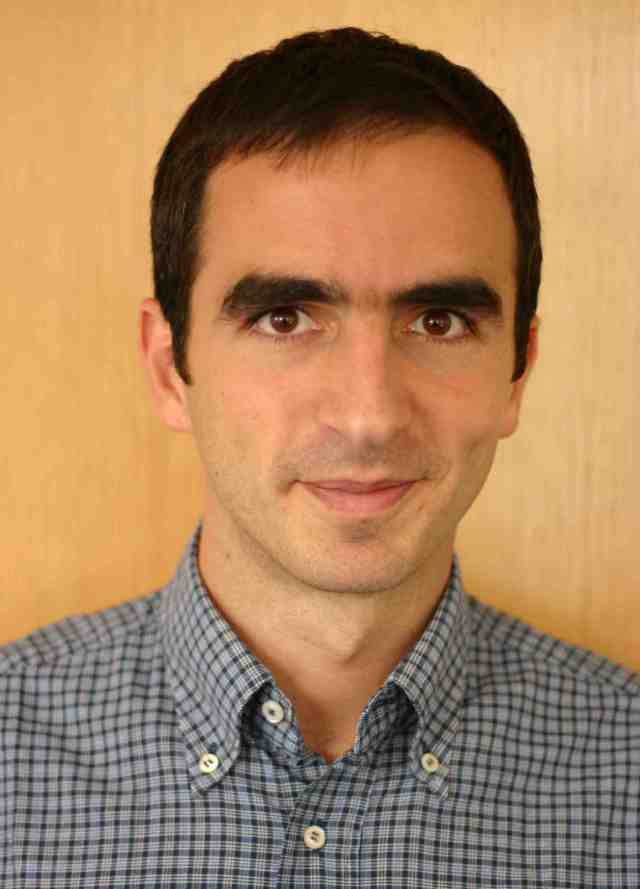
Johannes Hölzl is a researcher affiliated with Vrije Universiteit Amsterdam . His work focuses on Formal Methods and Interactive Theorem Proving , with a strong emphasis on formal verification of probabilistic systems and programming language design. His recent publications include: Markov Processes in Isabelle/HOL (2017) Fixed Points for Markov Decision Processes (2016) A Verified Compiler for Probability Density Functions (2015) These works bridge theoretical computer science, mathematics, and probability theory, showcasing his expertise in developing formally verified tools for mathematical modeling and programming. He has served as a committee member for the CPP 2019 track at POPL, and has previously contributed to co-located workshops such as LAFI and ESOP. His research is disseminated through formal verification frameworks and theorem proving systems like Isabelle/HOL.
Axel Parmentier is a Lecturer and researcher at the École Nationale des Ponts et Chaussées, where he founded the AI for Air Transport industry research chair with Air France. His work focuses on the intersection of operations research and machine learning, particularly in data-driven combinatorial optimization and stochastic optimization, with industrial applications in air transportation, supply chain, and predictive maintenance. He holds a Ph.D. and has been recognized with awards including the AMIES Dissertation Award (2017) for applied mathematics with industrial impact and the Robert Faure Prize (under 35) from ROADEF. His research also includes contributions to structured reinforcement learning, optimization layers in machine learning, and explainable AI for operational decisions. Awards: AMIES Dissertation Award, Robert Faure Prize Labs/Teams: CERMICS laboratory, AI for Air Transport Chair (collaboration with Air France) Grants/Projects: Continent-scale inventory routing solutions, Renault’s logistics optimization His advising includes students like Victor Cohen, whose work on predictive maintenance was featured on France Culture.
Guillaume Tochon is an Assistant Professor at EPITA since 2016 and an Invited Researcher at the Institut de Mécanique Céleste et de Calcul des Éphémérides (IMCCE, Observatoire de Paris) since 2022. He holds a M.Sc. and Ph.D. in electrical engineering and signal/image processing from Grenoble Institute of Technology and Université Grenoble Alpes, with postdoctoral experience at Carnegie Institution for Science and UCLA. His research focuses on mathematical morphology, statistical signal processing, and machine/deep learning, applied to space imagery (e.g., astrometry) and satellite data analysis. He leads projects on morphological neural networks, Sentinel-2 time series dynamics, and meteor/satellite detection using 1-second exposure imagery. Education: M.Sc. in Electrical Engineering, Grenoble Institute of Technology (2012) Ph.D. in Signal and Image Processing, Université Grenoble Alpes (2015) Visiting Scholar, UCLA Department of Mathematics (2013) Research Interests: Combines mathematical morphology with machine learning to address challenges in remote sensing and space imagery. Key areas include hierarchical representations, noise analysis, and applications in astrometry and hyperspectral unmixing. Current projects involve neural Koopman operators for forecasting, Sentinel-2 time-series assimilation, and meteor detection in night-sky imagery. Teaching: At EPITA, he teaches Mathematics for Signal Processing, Data Compression, Image Processing, Convex Optimization, Machine Learning, and Constrained Optimization across undergraduate and graduate levels. Collaborations: Works with researchers at IMCCE (e.g., V. Lainey, J. Vaubaillon), IMT-Atlantique, and Grenoble-INP. Supervises PhD students in topics such as noise estimation, spectral dynamics, and Cassini image analysis. Labs/Teams: Active in EPITA Research Laboratory's Image Processing and Pattern Recognition team and IMCCE's PEGASE team.
Chelsea Edmonds is a Postdoctoral Research Associate in the Department of Computer Science at the University of Sheffield, soon to begin as a Lecturer at the University of Western Australia in November 2025. She works on the COVERT grant EPSRC project investigating formal verification and security of concurrent programs, collaborating with Dr. Andrei Popescu and Prof. John Derrick. Her research interests focus on formalised mathematics , proof assistants (particularly Isabelle/HOL), and formal methods for security and concurrency . She develops modular libraries for formalised mathematics in combinatorics, aiming to mirror human intuitive proof techniques in formal environments. Her recent publications demonstrate expertise in applying probabilistic methods to combinatorial structures and formalising complex mathematical theorems. She has contributed significantly to the formal verification community through her work on the Lovász Local Lemma and the Balog–Szemerédi–Gowers Theorem. British Federation of Women Graduates Academic Award Distinguished Paper Award for Formal Probabilistic Methods for Combinatorial Structures using the Lovász Local Lemma Top 10% of accepted papers award As an Associate Fellow with AdvanceHE, Edmonds is a passionate educator involved in STEM outreach and gender diversity initiatives for Women in STEM. She will be lecturing at the ANU Logic Summer School in December 2025 and the Midlands Graduate School. Her research on the COVERT project aims to develop verification tools for reasoning about security of programs on advanced architectures.
Giovanni Neglia is a Research Director (DR2) at Inria, affiliated with the NEO team and the 3IA Côte d'Azur Chair, focusing on performance evaluation of distributed systems, cache networks, and large-scale machine learning. He is based in Sophia Antipolis, France. Inria, Sophia Antipolis NEO Team 3IA Côte d'Azur Chair His research interests center on distributed systems, leveraging mathematical tools such as Markov processes, control theory, fluid models, and game theory. Key areas include caching policies, distributed optimization for machine learning, and performance modeling of networks. He has previously worked on P2P networks, delay tolerant networks, smart grids, and complex networks. Recent publications demonstrate a strong focus on similarity caching, federated learning, and distributed optimization. Trends include developing online learning algorithms for caching, improving privacy and efficiency in federated systems, and optimizing content delivery in 5G and small cell networks. Best paper award at ITC-33 IEEE Infocom Distinguished TPC member (2017, 2018, 2022) Best paper award at ITC28 2016 Best paper award at IEEE Online Greencomm 2014 Best paper award at IEEE Infocom NetSciCom 2014 Best paper award at IEEE VTC2013-Spring Best student paper award at VALUETOOLS 2012 Best paper award at BIONETICS 2007 Giovanni Neglia leads the Fed-Malin Inria challenge on federated machine learning and has secured grants including a 3IA Côte d'Azur chair for PERUSALS (Pervasive Sustainable Learning Systems). He advises PhD students such as Othmane Marfoq and Chuan Xu, and collaborates with Accenture Labs, SAP, and Nokia Bell Labs. He has organized winter schools and tutorials on complex networks and similarity caching. He leads the NEO team and previously led the Maestro team. He is involved in the joint Brazilian-French research team Thanes on network science and has served on numerous technical program committees for major conferences including IEEE Infocom, INFOCOM, and SIGMETRICS.
Ugo Dal Lago is a Professor of Computer Science at the University of Bologna since November 2015 and maintains a dual affiliation with INRIA Sophia Antipolis. His academic career demonstrates extensive involvement with top-tier conferences including POPL, ICFP, ESOP, and ETAPS where he has served both as author and committee member. His research focuses on theoretical computer science with particular emphasis on programming language theory and quantitative aspects of computation. Dal Lago's work explores computational models beyond classical paradigms, including randomized, Bayesian, and quantum computing approaches. His contributions span from foundational complexity analysis techniques for functional programs to cutting-edge research in quantum programming languages. Analysis of his publication record (2022-2025) reveals three dominant research trajectories: quantum computing (with focus on circuit analysis and resource estimation), probabilistic computation (particularly on program equivalence and termination properties), and advanced type systems (intersection types, effect systems, and coeffect systems). His work consistently bridges theoretical foundations with practical applications, especially in emerging computational paradigms. Quantum Computing: Multiple publications on quantum circuit analysis, resource estimation, and multiparty protocols Probabilistic Programming: Research on almost-sure termination, expected cost analysis, and program equivalence Type Theory: Development of intersection types and effect systems for program verification Formal Methods: Application of Floyd-Hoare logic to quantum program verification Cryptography: Work on computational indistinguishability and logical relations for security proofs Dal Lago serves on steering committees for major conferences including DICE-FOPARA and ETAPS, and has been a program committee member for POPL, ICFP, and ESOP. His research demonstrates increasing focus on quantum information processing, with quantum-related publications comprising over 40% of his output in the most recent two years.
Nada Amin is an Assistant Professor of Computer Science at Harvard University's John A. Paulson School of Engineering and Applied Sciences (SEAS). She previously served as a University Lecturer in Programming Languages at the University of Cambridge and was a key contributor to the Scala programming language at EPFL during her PhD. Her research at the Metareflection Lab focuses on neurosymbolic systems that integrate programming languages (PL) and artificial intelligence (AI) to enable correct-by-construction software in domains like program synthesis and precision medicine. Her work emphasizes three pillars: Safer systems via formal verification and type theory; Faster development through generative programming and multi-stage interpreters; Easier access by bridging neural (learnable) and symbolic (interpretable) representations. She has contributed to the POPL, ICFP, PLDI, and OOPSLA conferences, with recent work on Dafny proof assistants and Persimmon's polymorphism techniques. Scientific awards include: Fellow of Jesus College (Cambridge, 2017-2019); Michigan Cambridge Research Initiative Grant (2018); Teaching Assistant Team Award (EPFL, 2015); 6.170 Letter of Commendation (MIT, 2005); ArsDigita Prize Finalist (1999). She has advised committees at ICFP, PLDI, POPL, and SPLASH , and taught courses like Neurosymbolic Programming (2025) and Advanced Semantics of Programming Languages (2022). Her lab explores language design through projects like Persimmon , LURK , and DafnyBench .
Gwen Salaün is a Professor of Computer Science at Université Grenoble Alpes, affiliated with the CONVECS and LIG research groups, and Inria Grenoble. She holds a PhD (2003) and HDR in Computer Science. Her research spans formal methods, specification languages, automated verification, concurrent systems, and component/service-based architectures. She contributes to industrial applications, particularly in BPMN processes, IEC 61499, and IoT systems. Recent publications focus on probabilistic model checking, runtime enforcement, resource isolation testing, and automated refactoring of business processes, reflecting collaborations across Europe and funded by Région Auvergne-Rhône-Alpes. She supervises PhD students Ahang Zuo, Philippe Ledent, and Irman Faqrizal, and participates in committees like SAC'25 and FormaliSE'25. Her work emphasizes rigorous modeling, verification, and tool development for complex systems.
Louis Jachiet is an Assistant Professor in Computer Science at Télécom Paris, affiliated with the Data, Intelligence and Graphs (DIG) team within the Information Processing and Communication Laboratory (LTCI) and the Computer Sciences and Networks (Infres) department. His research focuses on algorithms, databases, programming languages, and logic. His work spans query optimization distributed SPARQL evaluation graph algorithms formal language theory program synthesis data provenance with a strong emphasis on bridging theoretical and applied research. Analysis of his publications reveals expertise in database systems graph processing automata theory query enumeration SPARQL optimization probabilistic databases across both theoretical and practical applications.
Rémi Venant serves as an Associate Professor of Computer Science at the University of Le Mans , where he teaches software engineering and web development at the University Institute of Technology of Laval . Affiliated with the IEIAH research group , his work bridges academic instruction and cutting-edge research in educational technology. His research centers on Technology Enhanced Learning , with three core pillars: Learning Analytics : Applying machine learning/deep learning to decode teaching/learning dynamics Collaborative Learning Enhancement : Developing AI-driven tools to foster cooperative educational experiences Pedagogical Engineering : Supporting the design and re-engineering of instructional activities He pioneered Lab4CE , a cloud-based environment delivering analytics and AI tools for computer science practical work, significantly improving student engagement and outcomes. His methodology emphasizes user-centered design for educational technology. Analysis of his 2023-2025 publications reveals a dominant trend at the intersection of language learning and AI . Key patterns include explainable AI systems for teacher support, learning analytics applications in Computer Assisted Language Learning (CALL), and computational linguistics approaches to language proficiency assessment. His work consistently demonstrates interdisciplinary collaboration between computer scientists and linguists. No scientific awards or fellowships are documented in the source material. Rémi Venant actively mentors through project-based supervision but no formal doctoral advisees are listed. His research is frequently funded through institutional collaborations though specific grants aren't detailed. He maintains strong partnerships with the Analytics for Language Learning (A4LL) initiative and Moodle ecosystem integrators. He leads development of the Lab4CE platform within the IEIAH group and co-develops the A4LL architecture with linguists at Université Paris Cité. His teams specialize in creating interoperable educational systems that merge corpus linguistics with learning analytics, particularly for second-language acquisition contexts.
Fabien TEYTAUD is a Maître de Conférences (Associate Professor) with Habilitation à Diriger des Recherches (HDR) in computer science, indicating his qualification to supervise PhD students within the French academic system. His research spans multiple interconnected domains within artificial intelligence and computational optimization. Dr. TEYTAUD's primary research interests include: Evolutionary algorithms and black-box optimization techniques Monte Carlo Tree Search and game AI applications Deep learning architectures, particularly Generative Adversarial Networks Multi-objective and multi-modal optimization approaches Applications of machine learning in agriculture and computer graphics His recent publications demonstrate a strong focus on improving optimization techniques through novel approaches that combine evolutionary algorithms with Bayesian methods, bandit algorithms, and deep learning architectures. He has made significant contributions to noise characterization in Monte Carlo rendering, hyperparameter optimization, and diverse image generation. Dr. TEYTAUD has an extensive publication record in top-tier conferences including GECCO, ICMLA, PPSN, and IEEE CEC, with consistent contributions from 2014 through 2022. His collaborative work spans multiple French institutions and international research teams, reflecting his active engagement in the global optimization and AI research community.
Benjamin Negrevergne is an Associate Professor at the LAMSADE laboratory within Paris Dauphine University (PSL Research University), actively engaged in Machine Learning research. He co-leads the MILES research team and serves as co-director of the IASD Master's Program in AI and Data Science. He also contributes to PSL's computer science graduate program and is launching Nautia, a startup focused on reinforcement learning for sailing automation. His research spans Generative Modeling, Adversarial Machine Learning, and Constraint Programming, with over 15 recent publications in top conferences (NeurIPS, ICML, ACL). He has advised notable Ph.D. students including Alexandre Araujo (postdoc at NYU), Boris Doux (AWS), Alexandre Vérine (École Normale), Lucas Gnecco (ANR project DELCO), and Kunhao Zheng (Meta/FAIR). Key article trends include improving language model diversity, adversarial robustness, diffusion model optimization, and precision-recall metrics for generative systems. His work often combines theoretical rigor with practical applications in cybersecurity, game AI, and parallel computing. Benjamin holds a Ph.D. from the University of Grenoble (2011) with a thesis on parallel pattern mining algorithms. He collaborates with researchers like Yann Chevaleyre, Gabriel Synnaeve, and Tristan Cazenave, with publications in journals such as DMKD and KAIS.
Ange Valli is a PhD candidate in Applied Mathematics at Université Paris-Saclay, hosted at Laboratoire des Signaux et Systèmes (L2S) at CentraleSupélec under Professors Abdel Lisser and Sihem Tebbani. He concurrently serves as a part-time teaching assistant in operations research, game theory, and C++ programming at Université Paris-Saclay. His academic journey includes a Diplôme d'Ingénieur (ENSTA, 2021) specializing in artificial intelligence and an M.Sc. in Mathematics for Finance and Data (Université Gustave Eiffel & UPEC, 2022). Research interests focus on optimal control, machine learning applications, chance constraints, and quantitative finance. His work addresses trajectory planning under uncertainty for autonomous systems, integrating stochastic optimization and neural networks. Publications emphasize continuous-time control frameworks with probabilistic safeguards. Professional experience includes a role as a Quantitative Analyst at BNP Paribas in the Equity Derivatives Quantitative Research department. No scientific awards are explicitly noted, though his research actively contributes to interdisciplinary fields at the lab. Advising and grant details remain unspecified in the provided texts. Laboratory affiliations include the Signals and Systems Laboratory (L2S), where he collaborates on projects blending control theory with financial and engineering applications.
Abdel Lisser is a Professor at CentraleSupélec, affiliated with the Laboratory of Signals and Systems (L2S). His research focuses on stochastic optimization, distributionally robust optimization, and game theory with applications in control systems, networks, and autonomous systems. He has made significant contributions to chance-constrained programming, Markov decision processes, and neurodynamic optimization. His work bridges mathematical foundations with practical applications in energy management, telecommunications, and machine learning. Notable recent research includes the development of physics-informed neural networks for solving nonlinear optimization problems and stochastic trajectory planning for autonomous vehicles. Lisser collaborates internationally, with publications in top journals such as *Journal of Optimization Theory and Applications* and *IEEE Transactions on Neural Networks and Learning Systems*. He advises on projects involving robust control and decision-making under uncertainty. His laboratory, L2S, is a leading center for systems analysis and optimization at Paris-Saclay.
Ignacio Quintero is a CNRS Research Scientist at the Institut de Biologie de l'École Normale Supérieure (IBENS), part of Paris Sciences et Lettres University. His work focuses on evolutionary processes underlying biodiversity patterns through advanced computational modeling. His research interests include: Phylogenetic probabilistic modeling of diversification Bayesian inference in evolutionary biology Stochastic processes in biogeography and trait evolution Development of open-source tools using Julia and R His recent publications demonstrate significant contributions to understanding mammalian radiation dynamics and phylogenetic comparative methods, with a strong emphasis on computational innovation. Key trends show integration of fossil data with molecular phylogenies and development of scalable Bayesian frameworks for macroevolutionary analysis. Scientific recognition includes: Marie-Curie Fellowship for postdoctoral research Quintero actively supervises PhD candidates and develops educational resources, including specialized workshops on probabilistic phylogenetic methods. His laboratory work centers on building computational pipelines for analyzing large-scale biodiversity datasets using Julia-based open-source software. Current research explores spatial diversification dynamics and the impact of historical biogeography on modern biodiversity gradients.