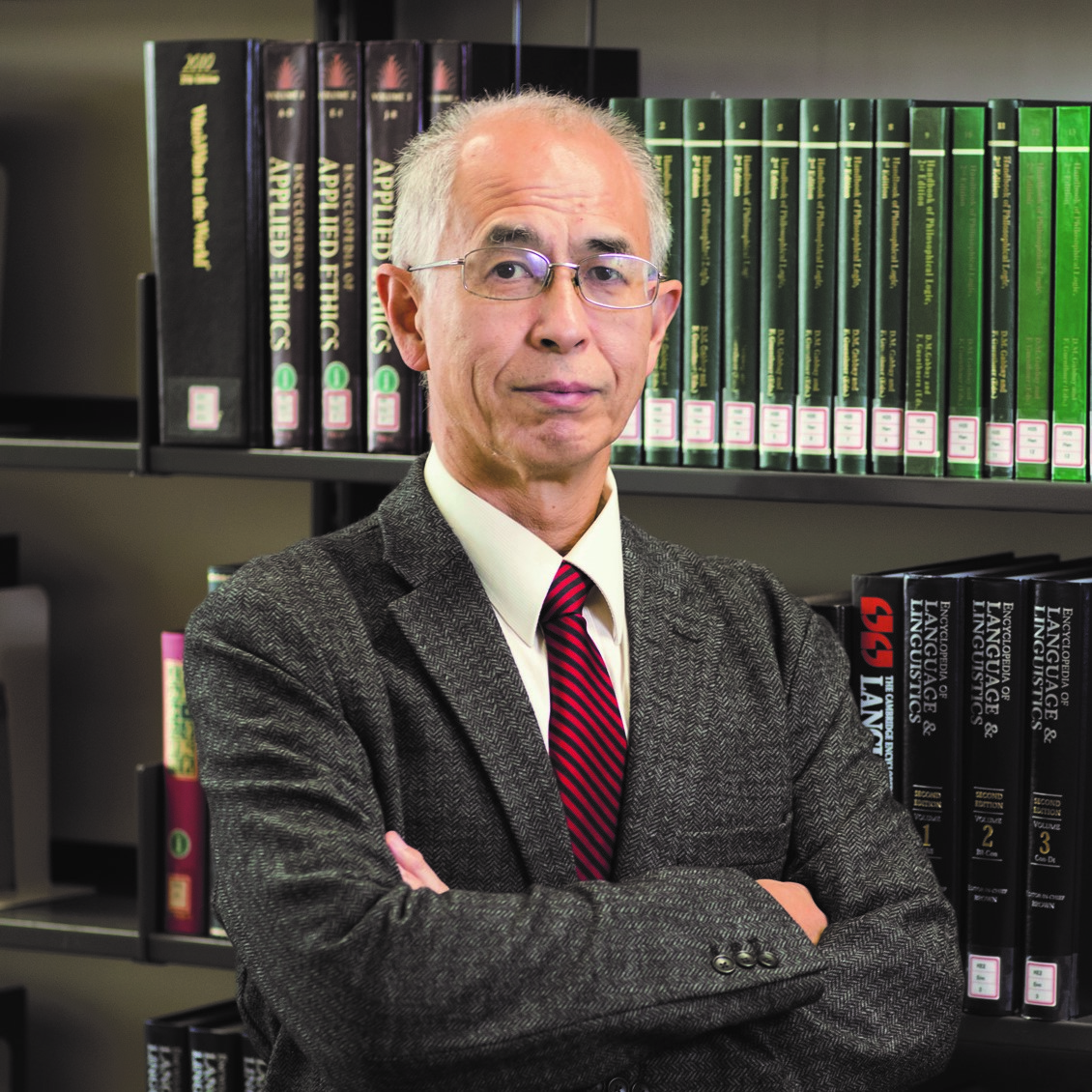
Deepak Garg is a researcher at the Max Planck Institute for Software Systems (MPI-SWS) in Germany. His work primarily focuses on secure compilation , type theory , and formal verification of software systems. Conference Roles: He has served as an author and committee member in premier programming language conferences such as POPL , PLDI , ICFP , and ESOP since 2015. Research Interests include: Secure compilation techniques for hyperproperty preservation. Modal and refined type theories for cost analysis and concurrency. Formal verification of C code and probabilistic programs. Compiler correctness and decentralized multi-language verification. Contributions span foundational research in programming languages, with a focus on security, complexity, and concurrency. His work has been published in tracks like PriSC , OOPSLA , and ESOP , addressing topics such as data-flow back-translation and robust property preservation.
Yasmina Abdeddaïm is an Associate Professor at Université Gustave Eiffel and affiliated with ESIEE Paris. She works within the Laboratoire d'Informatique Gaspard-Monge (Softwares, Networks and Real-time team) and serves as Head of the Master in Artificial Intelligence and Cybersecurity (AIC) program. Her research focuses on real-time systems, critical systems, and scheduling algorithms. University: Université Gustave Eiffel Role: Head of Master AIC program Laboratory: Laboratoire d'Informatique Gaspard-Monge Team: Softwares, Networks and Real-time Her research spans real-time systems , mixed-criticality scheduling , energy-harvesting systems , and probabilistic schedulability . Recent publications analyze compilation optimization impacts on timing variability and propose new models for real-time deep neural networks over GPUs. She employs formal methods like timed automata for scheduling verification. Her teaching includes courses on Real-time Systems , Model Checking , Critical Application Development , and Artificial Intelligence . She is based at Cité Descartes, Champs-sur-Marne, France, with office contact details provided.
Peter Tankov is a Professor of Quantitative Finance at ENSAE (the French national school for statistics and economic administration), part of the Institute Polytechnique de Paris. He is also a researcher at CREST and member of the FIME Laboratory. His academic career includes previous positions at Paris-Cité University and Ecole Polytechnique. Dr. Tankov specializes in applied probability and stochastic processes, with current research interests spanning quantitative finance, energy finance, green finance, sustainable finance, and mean field games applications to economics. His work bridges mathematical rigor with practical financial applications, particularly in the context of climate change and environmental transition. His research output shows a clear trend toward climate-related finance, with recent publications focusing on carbon pricing, transition risk modeling, energy market dynamics, and sustainable investment strategies. The articles demonstrate a strong interdisciplinary approach combining mathematical finance, game theory, and climate science to address pressing environmental finance challenges. 2016 Best Young Researcher in Finance award of the Europlace Institute of Finance 2024 Louis Bachelier award of London Mathematical Society, Natixis Foundation and SMAI Professor Tankov serves as scientific director of the Green and Sustainable Finance program at Louis Bachelier Institute and is a member of editorial boards for top quantitative finance journals including Mathematical Finance and Finance and Stochastics. He is currently guest editing a Special Issue on Climate and Nature Risk in Mathematical Finance. His teaching includes courses on green finance, energy risk management, and financial derivatives.
Anis Matoussi is a Professor of Applied Mathematics at Le Mans University and serves as the Director of the Institut du Risque et de l'Assurance du Mans. He coordinates the master's program in Actuarial Science and leads multiple research initiatives, including ANR DREAMeS (2021-2025) and ITCA (Groupama, Fondation du Risque). Role: Professor, Applied Mathematics Institution: Le Mans University Research Leadership: Director of Institut du Risque et de l'Assurance, Head of Master Actuarial Science His research focuses on stochastic control, backward stochastic differential equations (BSDEs), and their applications in finance, insurance, and energy systems. He has developed numerical methods for second-order BSDEs and studied stochastic nonlinear PDEs, maximum principles for SPDEs, and extended mean field control models. Recent projects include the application of deep learning to forward utilities via ergodic BSDEs and multivariate risk measures. Matoussi has supervised numerous PhD students, including current advisees Zakaria Bensa (industrial thesis with Natixis) and Lucas Da Silva (co-supervised with Caroline Hillairet). Former students like Achraf Tamtalini (Bank of America) and Jing Zhang (Fudan University) hold prominent positions globally. His work includes collaborations on smart grids, control of electrical systems, and robust utility maximization under uncertainty. Publications span journals in applied mathematics, optimization, probability, and financial mathematics, with recent emphasis on numerical schemes and probabilistic representations.
Yassine Lakhnech is a Professor at the University Joseph Fourier (Grenoble 1), leading the 'Distributed and Complex Systems' research team within the VERIMAG laboratory. His work focuses on computer security, cryptography, formal verification, and programming language semantics. He has been actively involved in coordinating major interdisciplinary research initiatives like the PERSYVAL-lab, which addresses cyber-physical systems (CPS) challenges. His research bridges computational and formal approaches, with contributions to cryptographic protocol analysis, information flow control, and automated theorem proving. Key projects include the development of tools like HERMES for cryptographic protocol verification and involvement in ANR-funded projects such as Verso, PROSE, and AVOTE. He has also organized international conferences and workshops, including the Canada-France MITACS Workshop on Foundations & Practice of Security and the Eighth ACM/IEEE International Conference on Formal Methods and Models for Codesign. His publications span over 147 papers, with an h-index of 25 and g-index of 42, reflecting significant contributions to formal methods, security protocols, and hybrid systems. Despite his role as Vice President of Research, he maintains active scientific productivity, emphasizing the integration of theoretical and practical advancements in CPS and security.
Mario Alviano is a Full Professor in Computer Science (INF/01) at the University of Calabria, Department of Mathematics and Computer Science. He leads the LAIA lab (Laboratorio di Applicazioni dell'Intelligenza Artificiale) and serves as co-PI in the PRIN project PRODE ('Probabilistic Declarative Process Mining'). Current projects: FAIR ('Future AI Research'), Tech4You ('Technologies for climate change adaptation'), SERICS ('SEcurity and RIghts in the CyberSpace'), CAL.HUB.RIA , RADIOAMICA , and STROKE 5.0 His research focuses on Answer Set Programming (ASP), particularly in optimization, nonmonotonic reasoning, and applications to logistics, healthcare, and cybersecurity. He has authored over 120 publications in top venues like AIJ, AAAI, and IJCAI. Recent academic contributions includes work on: Temporal Many-valued Conditional Logics Weighted Knowledge Bases with Typicality Explainable AI via xASP and ASP Chef Defeasible Reasoning Scalability Notable awards: Artificial Intelligence Award 'Marco Somalvico' (2017) ICLP Best Paper Awards (2015, 2016) LPNMR Best Paper Award (2022) CILC Best Paper Award (2023)
Sylvain Arlot is a Professor at the Mathematics Department of Université Paris-Saclay, affiliated with the Probability and Statistics team at Laboratoire de Mathématiques d'Orsay. He leads the Celeste INRIA Saclay project-team and is a junior member of the Institut Universitaire de France (IUF) since 2020. His research focuses on statistical learning theory, non-parametric methods, model selection, and change-point detection. Arlot has contributed to foundational work on cross-validation, penalization techniques, and random forests. He co-organizes the Séminaire Palaisien and serves as an associate editor for the Annales de l'Institut Henri Poincaré B. Education: PhD in Mathematics from Université Paris-Sud (2007), HDR (Habilitation) from Université Paris Diderot (2014). Research Interests: Core areas include statistical learning theory, resampling methods (e.g., cross-validation and bootstrap), and applications in high-dimensional data analysis. His work bridges theoretical guarantees with practical algorithm design, emphasizing data-driven model selection and robust estimation techniques. Grants & Projects: Leads the PEPR IA Project Causali-t-AI (2023–2028) and was a member of the ANR Fast-Big project (2018–2023). He coordinates the math-AI program under Labex Mathématique Hadamard. Awards: Junior IUF membership (2020–2025). Labs/Teams: Heads the Celeste team at INRIA Saclay, collaborating on statistical machine learning and data science challenges.
Simon Lacoste-Julien is an Associate Professor at Université de Montréal, affiliated with the Department of Computer Science and Operations Research (DIRO). He also serves as the Associate Scientific Director of Mila – Quebec Institute of Artificial Intelligence and holds the position of Vice President Lab Director at Samsung SAIT AI Lab Montreal (SAIL). His research focuses on machine learning, optimization, and their applications in areas like deep learning, generative models, causality, and computer vision. Lacoste-Julien has held academic positions at INRIA in Paris and has a PhD from UC Berkeley, with postdoctoral work at the University of Cambridge. He teaches advanced graduate courses on probabilistic graphical models and structured prediction. His work includes contributions to optimization algorithms (e.g., Frank-Wolfe methods), causal discovery, and generative models. Lacoste-Julien has supervised numerous students and postdocs, and his awards include being a CIFAR Fellow and Canada CIFAR AI Chair. His research spans theoretical foundations and practical applications, with a strong emphasis on scalable and efficient machine learning techniques.
Pierre Jourlin is a Professor at Avignon University, specializing in Computer Science and Artificial Intelligence. He actively contributes to academic events such as workshops on programming education and AI ethics. His research focuses on areas like natural language processing, machine learning, and the societal impact of AI. Jourlin has organized events like a programming workshop for high school students (2022) and authored numerous articles on topics ranging from rule-based event extraction to generative AI in creative writing. His academic contributions include work on semantic disambiguation, medical literature tools (SIMI), and foundational studies in speech recognition and multimedia retrieval. He critiques AI limitations, emphasizing the importance of human oversight in code generation and advocating for accessible education to counteract underfunding in public schools. Jourlin's recent publications (2024–2025) address AI's role in creative fields and the evolution of programming languages. His work often bridges technical innovation with ethical considerations, as seen in his analysis of code-producing AI tools like Copilot. He remains an active member of the academic community, blending research with pedagogical outreach.
Ichiro Hasuo is a Professor at the National Institute of Informatics (NII) in Tokyo, Japan, where he serves as Director of the Research Center for Mathematical Trust in Software and Systems. He holds a joint appointment at The Graduate University for Advanced Studies (SOKENDAI). Since 2016, he has been the Research Director of the JST ERATO Metamathematics for Systems Design Project, and founded Imiron Co., Ltd. in 2024. Education: PhD in Computer Science (cum laude) from Radboud University Nijmegen (2008) MSc in Mathematical and Computing Sciences from Tokyo Institute of Technology (2004) BSc in Mathematics from University of Tokyo (2002) His research focuses on foundational aspects of software science, particularly formal verification techniques using mathematical structures from category theory and coalgebra. He develops methods for ensuring reliability in cyber-physical systems and systems incorporating machine learning components. Current work emphasizes logical frameworks for autonomous vehicle safety and mathematical trust in complex systems. Hasuo's publications demonstrate consistent focus on theoretical foundations with practical applications. His recent work spans coalgebraic verification methods, temporal logic for hybrid systems, quantum programming semantics, and applications to autonomous driving systems. Key themes include compositional reasoning, probabilistic modeling, and the integration of discrete and continuous system verification. Awards and Honors: Best Paper Award at ICTAC 2024 Minister of Education, Culture, Sports, Science and Technology Commendation (2024) Distinguished Paper Award at CAV 2023 Outstanding Reviewer Award at EMSOFT 2022 Best Paper Award at ICECCS 2018 Best Paper Award at CONCUR 2014 Hiroshi Fujiwara Encouragement Prize (2012) PhD cum laude (2008) He leads multiple major research grants including: JST ASPIRE (2024-2029) for international collaboration on software trust JST START (2022-2025) for autonomous driving verification JST ERATO Metamathematics for Systems Design (2016-2025) Several JSPS KAKENHI grants As head of the MMM laboratory (Hasuo-Lab) at NII, he supervises PhD students and postdoctoral researchers in formal methods and mathematical systems design.
Ken Satoh is a full Professor at the National Institute of Informatics (NII) and Sokendai (The Graduate University of Advanced Studies), Japan. He leads the Center for Juris-Informatics within the Joint Support-Center for Data Science Research (ROIS-DS). Previously, he worked at Fujitsu (1981-1995) and was an Associate Professor at Hokkaido University until 2001. He holds a law degree from the University of Tokyo (2006-2009) and passed the Japanese bar exam in 2017. Roles: Director of Center for Juris-Informatics, Principal Investigator in multiple AI/Law projects Research Focus: Juris-informatics (merging informatics and law), logical foundations of AI, legal debugging, and compliance mechanisms for AI systems His work bridges AI and legal systems, including developing the PROLEG framework for legal reasoning and organizing international workshops like JURISIN. Key contributions include applying logical inference to detect legal conflicts in algorithmic governance systems and advancing AI ethics through compliance checks with regulations like GDPR. He has authored over 130 publications, including works on legal norm reasoning, multi-agent systems, and formal methods in law. His research group collaborates globally, hosting competitions like COLIEE to advance legal AI technologies.
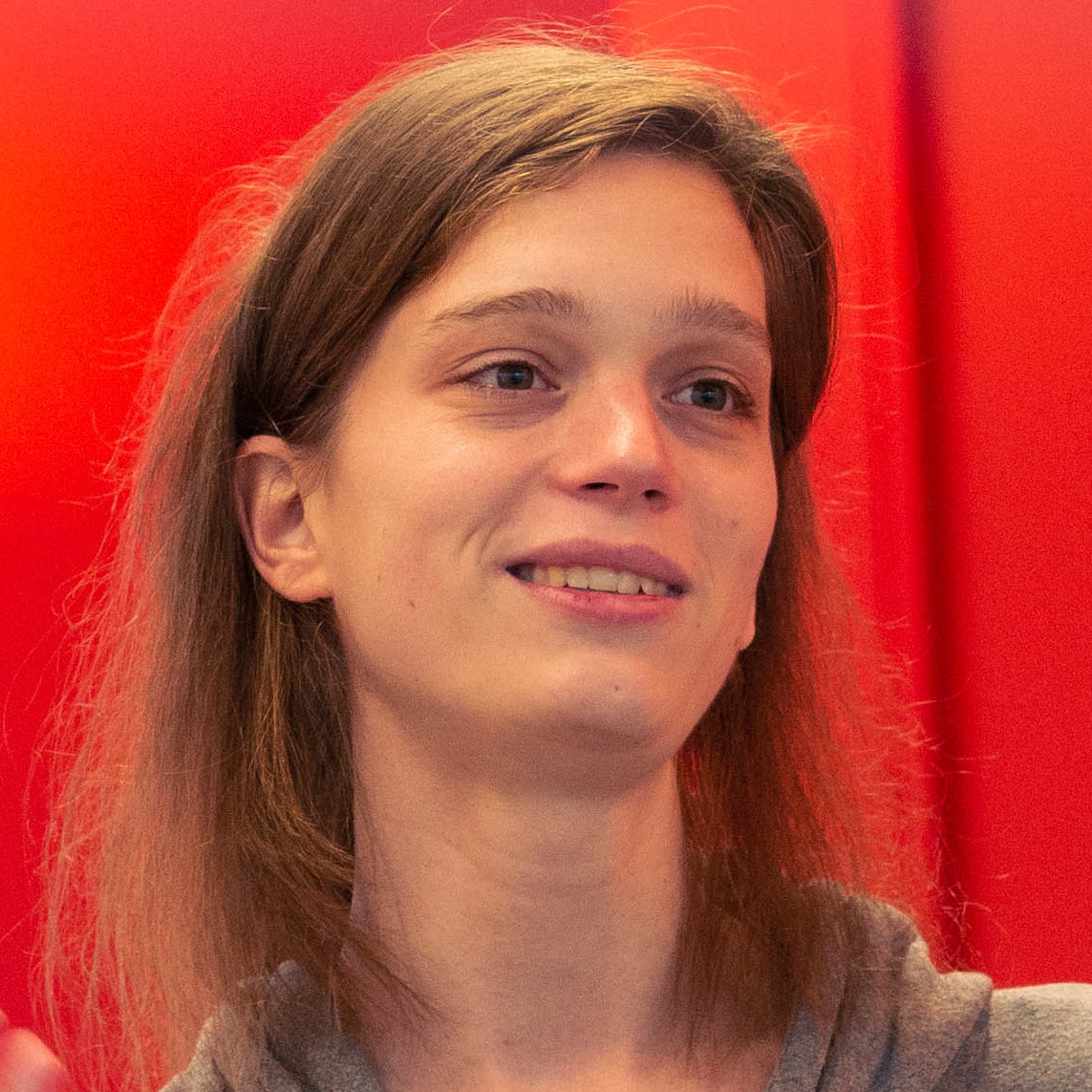
Sophie Huiberts is a CNRS researcher at LIMOS, Clermont Auvergne University in Clermont-Ferrand since fall 2023. Previously, she was a Simons Junior Fellow at Columbia University in New York City, hosted by Tim Roughgarden. She completed her PhD research at Centrum Wiskunde & Informatica in Amsterdam under Daniel Dadush and received her doctorate in 2022 from Utrecht University. Dr. Huiberts specializes in theoretical aspects of mathematical optimization, particularly focusing on the gap between practical performance and theoretical predictions of linear programming algorithms. Her research examines software implementations like Gurobi, CPLEX, SCIP, and HiGHS to understand why these algorithms perform better in practice than worst-case analysis would suggest. She has made significant contributions to smoothed analysis of the simplex method, establishing both upper and lower bounds on its complexity under perturbations of worst-case inputs. Analysis of her publication record shows consistent focus on bridging theoretical computer science with practical optimization methods. Her work spans linear programming theory, integer programming, combinatorial optimization, and computational geometry, with particular emphasis on understanding the geometric properties of optimization problems and the behavior of algorithms on real-world instances. Simons Junior Fellowship Dr. Huiberts maintains active engagement with the research community through social media platforms including Mastodon and Bluesky, and produces high-quality recordings of her research talks available on YouTube. She has made a conscious decision to stop air travel since 2023 due to climate concerns, demonstrating commitment to sustainable research practices while maintaining scientific connections through digital means. She is affiliated with LIMOS (Laboratoire d'Informatique, de Modélisation et d'Optimisation des Systèmes), a research laboratory at Clermont Auvergne University focused on computer science, modeling, and optimization systems, where she continues her investigations into the theoretical foundations of practical optimization algorithms.
Fabrice Valois is a full professor at INSA Lyon's Department of Telecommunications since September 2008, previously serving as an associate professor from 2000 to 2008. He holds a PhD in Computer Science (2000) from the University of Versailles and a Habilitation à Diriger des Recherches (2007) from the University of Lyon I and INSA Lyon. His research focuses on dynamic, dense, and autonomous wireless networks, including IoT, wireless sensor networks, and self-organizing protocols. He has authored over 110 international publications and four patents. Prof. Valois is a member of the Inria Agora research team and previously co-founded the CITI research lab (2000). He currently leads or participates in multiple research projects, such as the PEPR 5G DONUTS and SCAFcast. His academic roles include vice-head of the Telecommunications Department (since 2023), steering committee member of the GDR CNRS RSD, and president of the scientific council of Labex IMU. He has supervised over 20 PhD students and 40+ R&D master’s interns. Teaching responsibilities include courses on wireless networks, cellular networks, and performance evaluation tools. He has also pioneered international educational initiatives, such as the Special Engineering Program (SPE-T) in China. His research collaborations span institutions worldwide, including École Polytechnique Montréal, Northwestern Polytechnical University, and Thales. Key research themes include LPWAN optimization, LoRaWAN protocols, mobile base station deployment, and energy-efficient networking. Current projects address challenges in space-terrestrial IoT integration, emergency communication systems, and network slicing techniques for IoT.
François Chaumette is a Senior Research Scientist (Directeur de recherche) at Inria, affiliated with IRISA and the Centre Inria de l'Université de Rennes. He has been a key researcher in robotics and computer vision since 1990 and led the Lagadic research team from 2004 to 2017. His research interests are centered on robot vision, particularly visual servoing and active perception . He has made foundational contributions to image-based and position-based visual servoing, and his work integrates control theory, computer vision, and robotics. His research spans applications in mobile robotics, aerial systems, medical robotics, space robotics, and soft object manipulation. The recent publications highlight a consistent focus on visual servoing under complex constraints—such as motion blur, occlusions, and deformations—applied to drones, cable-driven robots, and space systems. There is a strong emphasis on robustness , stability analysis , and hybrid sensing (e.g., vision + proximity, vision + force). His work with the RemoveDebris mission demonstrates real-world impact in space robotics. AFCET/CNRS Prize for best Ph.D. in Automatic Control Best paper awards at RFIA 1996 & 2004 Best paper in IEEE T-RA (2002) Best paper in IEEE RA-L (2019) Best paper in IEEE RAM (2020) IEEE Fellow (2013) He has advised over 30 Ph.D. students, many of whom have become active researchers in robotics. He has served in editorial roles for top journals including IEEE Transactions on Robotics , IEEE Robotics and Automation Letters , and the International Journal of Robotics Research . He was elected to the IEEE RAS Administrative Committee (2016–2018) and served on ERC grant panels for robotics. Chaumette is the main developer of ViSP (Visual Servoing Platform), a widely used C++ library for visual tracking and servoing. His leadership in both theoretical advances and software tools has significantly shaped the visual servoing community.
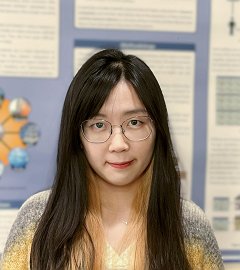
Ningning Xie is a researcher affiliated with the University of Toronto, specializing in functional programming, type systems, and logics. Their work spans applications in compilers, code generation, and machine learning, with a focus on compositional programming and effect handling. Research interests include: Functional programming Type systems Logics Compiler design Multi-stage programming Effect handlers Recent publications demonstrate expertise in type-level programming, staged compilation, and effect systems. Key areas include distributive disjoint polymorphism, parallel algebraic effect handlers, and macro systems for OCaml and Haskell. Their work bridges theoretical formalisms with practical language implementations. Contributions to academic service include organizing and reviewing for conferences like POPL, PLDI, ICFP, and Haskell workshops. Notable roles include Publicity Chair for POPL 2026 and Co-chair for PLMW and Artifact Evaluation committees.