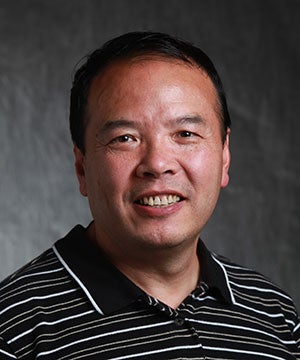
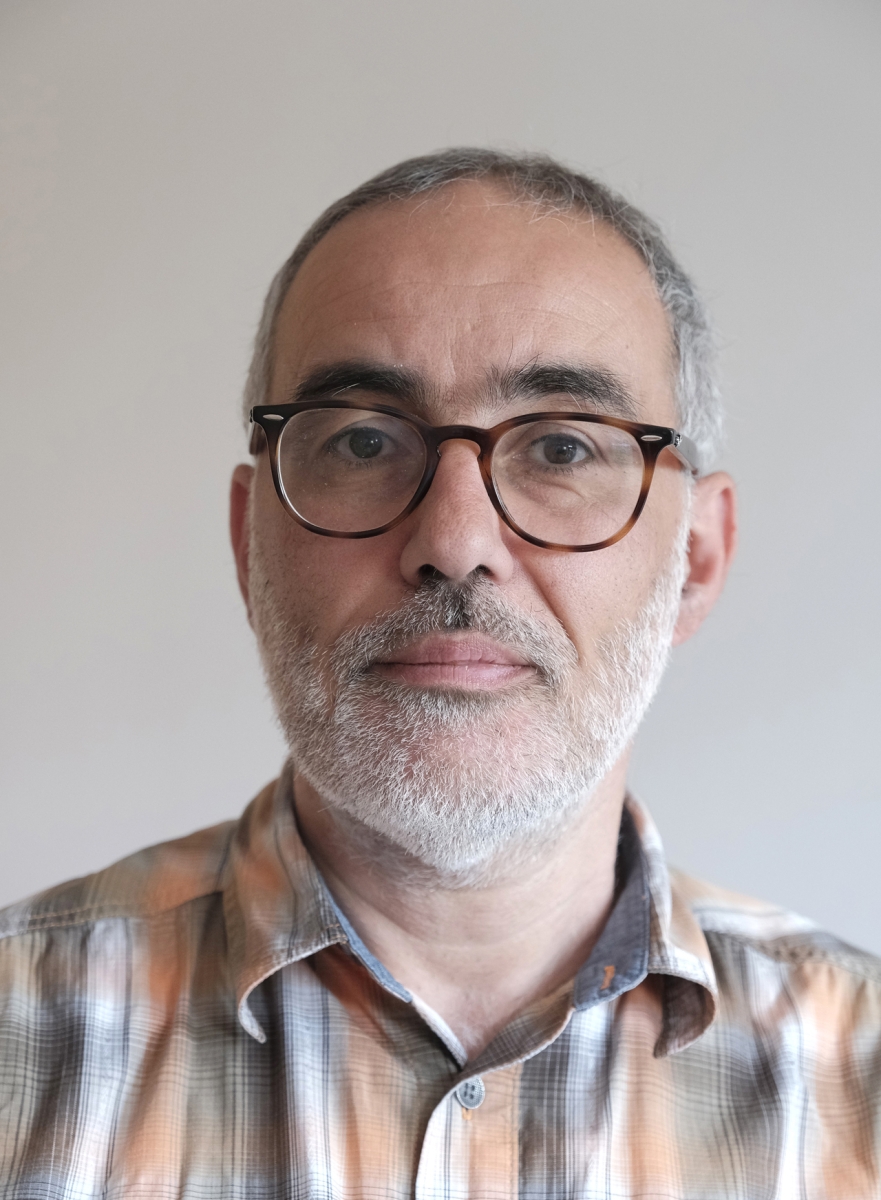
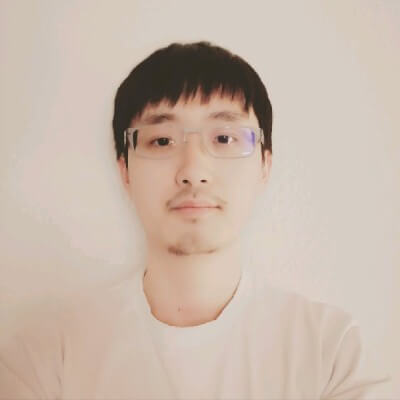
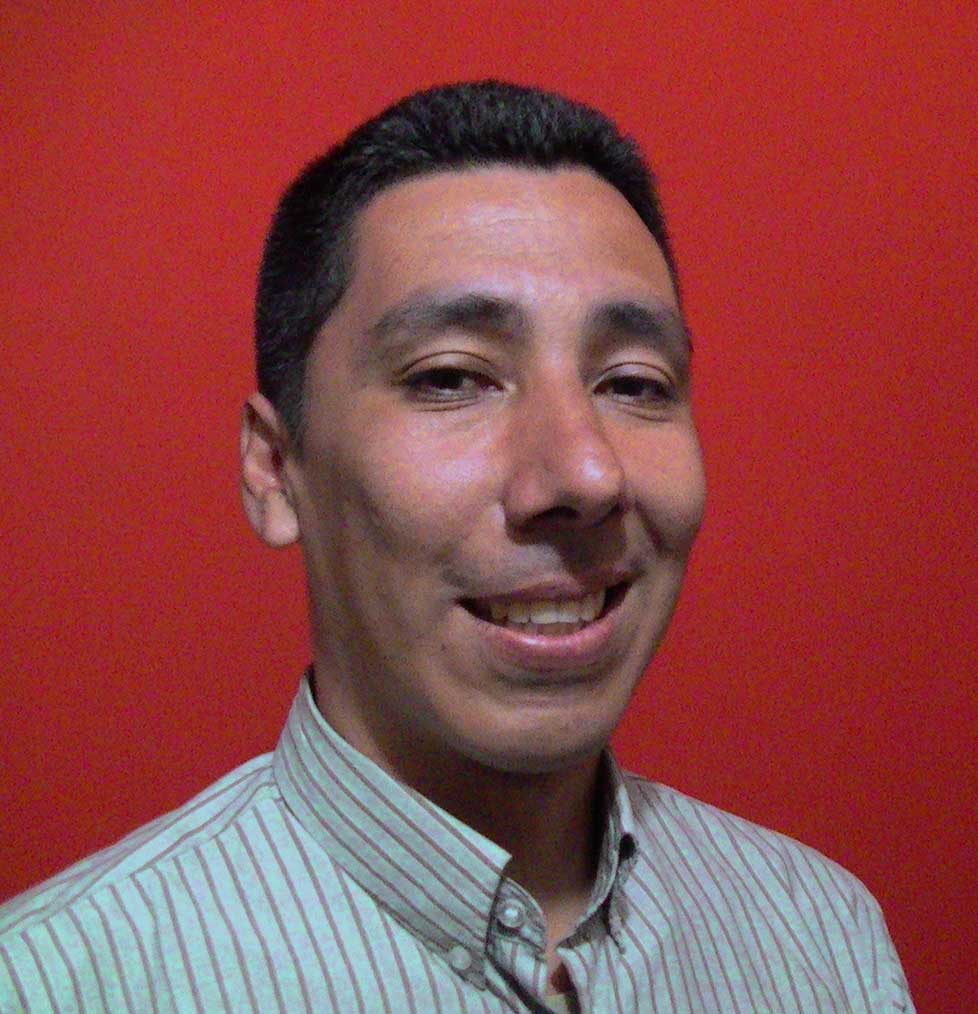
Qiang Ji is a Professor in the Department of Electrical, Computer, and Systems Engineering at Rensselaer Polytechnic Institute (RPI), directing the Intelligent Systems Laboratory (ISL). He holds IEEE and IAPR Fellowships. Dr. Ji's research focuses on AI, computer vision, Bayesian methods, and robotics, with contributions to causal discovery, 3D reconstruction, and Tibetan multi-dialect speech recognition. He previously served as an NSF program director managing machine learning and computer vision initiatives. His academic journey includes positions at the University of Nevada, Reno, and visiting roles at institutions like Carnegie Mellon's Robotics Institute. Education: PhD in Electrical Engineering from the University of Washington. Research interests span machine learning, probabilistic graphical models, and human-computer interaction. Notable contributions include Bayesian adversarial learning, knowledge-augmented deep learning, and physics-aware human motion prediction. His work bridges theoretical advancements with applied systems like gaze estimation and facial action unit detection. Awards: IEEE Fellow (202?), IAPR Fellow (202?). Professional roles include conference committee chairs and editorial board memberships. Key research themes include uncertainty quantification, causal inference, and cross-domain learning challenges.
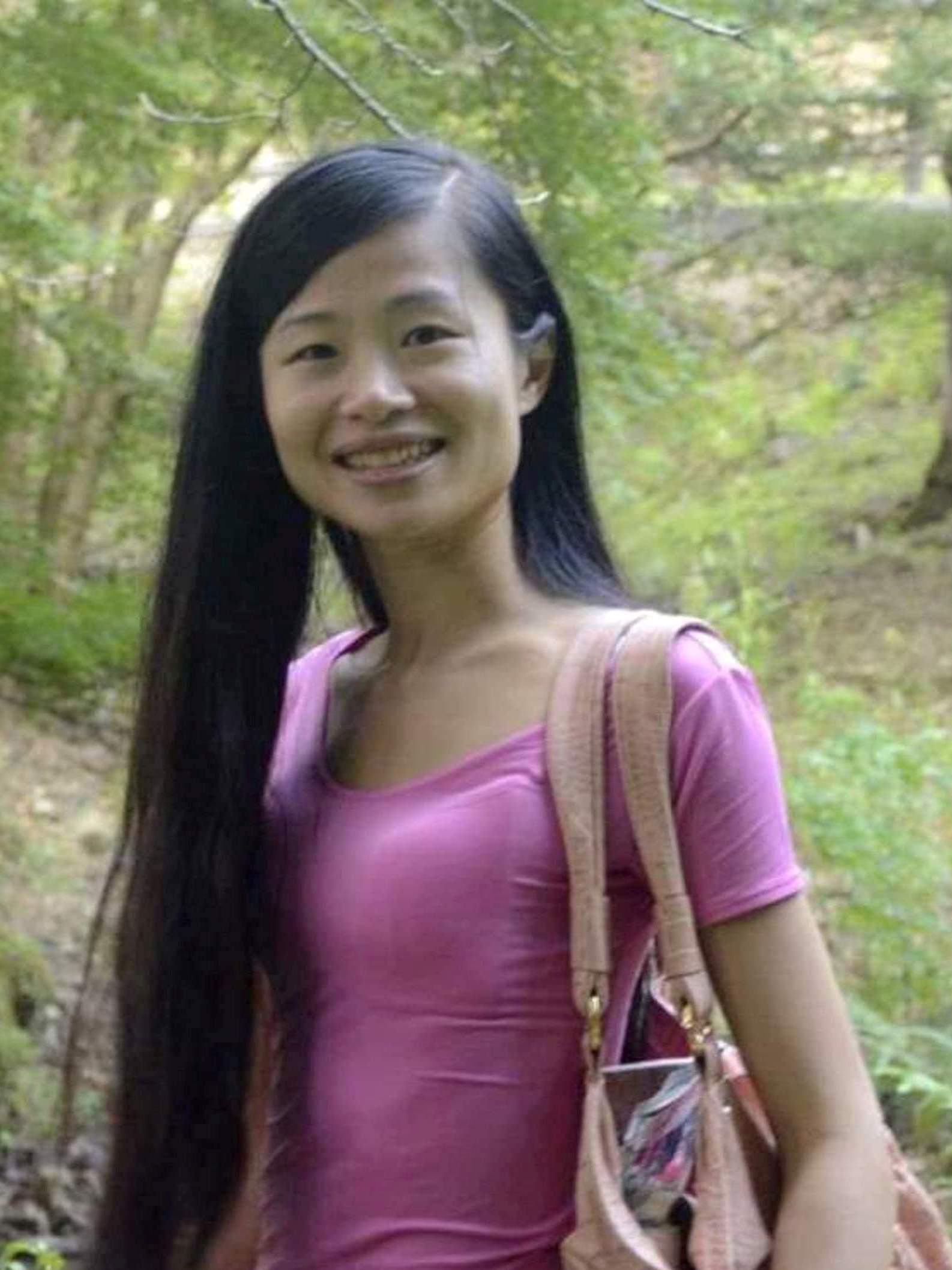
Peiyi Wang is an Assistant Professor at Peking University's School of Electronics Engineering and Computer Science, Institute for Artificial Intelligence. With strong research output spanning both natural language processing and robotics, Wang maintains significant collaborations with Southern University of Science and Technology and National University of Singapore, particularly in soft robotics research with Professor Cecilia Laschi. Additionally, Wang is actively involved with DeepSeek-AI, contributing to several major language model initiatives including DeepSeek-R1 and DeepSeek-V2. Peking University, School of EECS, Institute for Artificial Intelligence (Primary) Southern University of Science and Technology (Collaborative) National University of Singapore (Collaborative) DeepSeek-AI Research Organization Dr. Wang's research spans two primary domains with significant intersection points. In natural language processing, Wang focuses on large language model reasoning capabilities, mathematical verification, uncertainty estimation, and preference alignment. The robotics work centers on soft robotics, particularly origami-inspired designs, strain-based modeling, and control systems for continuum manipulators. These domains converge in Wang's work on vision-language models, embodied AI, and multimodal reasoning systems. Recent work demonstrates particular innovation in mathematical reasoning verification (Math-Shepherd), soft robotic control systems, and red teaming frameworks for language model safety. Wang's publication record shows remarkable productivity, with over 40 publications between 2021-2025 across top-tier venues including ACL, EMNLP, CVPR, and IEEE Transactions on Robotics. The work demonstrates consistent progression from foundational NLP tasks to increasingly sophisticated multimodal and reasoning systems. The most recent publications (2024-2025) show particular emphasis on mathematical reasoning verification, soft robotics control, and language model safety evaluation. While specific awards aren't documented in the provided materials, Wang's work has clearly gained significant recognition through acceptance at top-tier conferences and collaborations with leading researchers in both NLP and robotics fields. Wang's research demonstrates strong interdisciplinary connections, bridging theoretical NLP work with practical robotics applications. The work with DeepSeek-AI suggests active industry collaboration while maintaining strong academic research output. Current research directions appear focused on improving language model reasoning reliability while developing novel soft robotic systems that can interact safely and effectively with complex environments.
Oliver Deussen is a Professor of Visual Computing at the University of Konstanz, recognized by the German Informatics Society (GSI) as a Fellow for his contributions to computer science. His research focuses on visualization, robotics, and environmental modeling, particularly in plant and landscape representation. He has pioneered methods in image manipulation and robotic painting, emphasizing digitalization's societal impacts. His work spans computational biology (e.g., schooling fish behavior) and AI-driven creative technologies. Research Interests: Visualization techniques, swarm behavior analysis, robotic creativity, and interdisciplinary applications of computer science. He explores how computational methods can model natural systems and enhance human-machine interaction. Awards: Fellow of the German Informatics Society (GSI) His research often bridges theory and practice, with contributions to SLAM frameworks, style transfer algorithms, and uncertainty visualization tools. Collaborations in robotics and biology reflect his commitment to applied computational research.
Dr. Sen Wang is an Associate Professor in Robotics and Autonomous Systems at Imperial College London's Department of Electrical and Electronic Engineering, affiliated with I-X (Imperial's AI initiative), the Grantham Institute, and the Robotics Forum. He directs the Sense Robotics Lab and founded the MSc in Artificial Intelligence Applications and Innovation. His research focuses on advancing robotic autonomy through probabilistic and machine learning methods, addressing challenges in unstructured environments such as underwater infrastructure inspection and climate change solutions. Key projects include leading the £18M UKRI ORCA Hub, developing underwater robotics for offshore energy infrastructure inspection, and achieving the first autonomous wind farm foundation inspection at EDF's Blyth site. He holds editorial roles at IEEE Transactions on Robotics and other journals. Research interests span robotics, computer vision, SLAM, and AI applications, with recent work emphasizing underwater systems, sensor fusion, and safety-critical autonomy. His publications bridge theoretical advancements with real-world deployments in marine robotics and environmental monitoring. Awards: 2024 AI Most Influential Scholar Award Honourable Mention Grants: £18M ORCA Hub funding (UKRI) Labs: Sense Robotics Lab, I-X AI Initiative
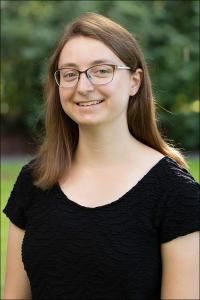
Dr. Frances Yung is a Postdoctoral Researcher at Saarland University's Department of Language Science and Technology within the Department of Computer Science. She has been affiliated with Prof. Vera Demberg's research group since April 2017 and is currently working on the DFG-funded SFB-1102 project "Information Density and Linguistic Encoding," specifically on project B2 "Cognitive modelling of information density for discourse relations." She is pursuing her habilitation, indicating career progression toward a higher academic position in the German university system. Dr. Yung's research focuses on discourse relations at the intersection of NLP, corpus linguistics, and experimental psycholinguistics. Her work explores how information density affects discourse relation marking through cognitive modeling approaches. She has developed expertise in discourse parsing, resource construction, annotation aggregation, and experimental pragmatics, with particular attention to multilingual aspects of discourse phenomena. Her research combines computational modeling with experimental methods to understand how speakers produce and comprehend discourse relations. Analysis of Dr. Yung's recent publications reveals a strong focus on discourse relation resources, particularly multilingual corpora like DiscoGeM 2.0 covering English, German, French, and Czech. Her work increasingly incorporates crowdsourcing methodologies and examines how large language models can be leveraged for discourse annotation tasks. She has made significant contributions to understanding the challenges of implicit discourse relation annotation and the biases introduced by different task designs in crowdsourcing environments. Active reviewer for major computational linguistics conferences (ACL, EMNLP, NAACL, EACL, COLING, IJCNLP) and workshops since 2016 Served as area chair for Sigdial 2024 Regular service on program committees for discourse-related workshops Dr. Yung has supervised multiple Master's theses on topics related to discourse relations, implicit relation identification, and domain adaptation. Her teaching portfolio includes courses on crowdsourcing linguistic annotations, discourse relations from cognitive and NLP perspectives, and recent advances in discourse processing. She has also served as a teaching assistant for data science and AI courses, demonstrating her commitment to interdisciplinary education at the intersection of computer science and linguistics.
Prof. Andreas Farnleitner is a Professor at TU Wien, affiliated with the Environmental Microbiology and Molecular Diagnostics Research Group. His research focuses on microbial water quality, molecular diagnostics, and environmental microbiology. Key areas include PCR-based methods for fecal pollution tracking, antimicrobial resistance in aquatic environments, and climate change impacts on waterborne pathogens. He has contributed to advancements in DNA aptamer technology for rapid water quality monitoring and employs machine learning for predictive modeling in hydrology. His work spans collaborations across Europe, addressing One Health challenges and wastewater-based epidemiology. Recent projects include studies on Vibrio cholerae in Austrian bathing waters and the biostability of drinking water resources. Prof. Farnleitner leads interdisciplinary initiatives to improve water safety and environmental management. Publications highlight his expertise in microbial source tracking, climate change effects on infection risks, and antibiotic resistance patterns. His team develops innovative diagnostic tools and models for environmental monitoring, with applications in both academic and applied settings. Current projects emphasize the integration of molecular biology and engineering to address global water quality challenges.
Dr. Lateef Akanji is a Senior Lecturer in the Department of Petroleum Engineering at the School of Engineering, University of Aberdeen, where he has been contributing since 2014. He previously served as Lecturer and Head of the Petroleum Technology Research Group at the University of Salford, Assistant Professor at King Saud University, and Visiting Lecturer at the University of Leoben. His academic journey includes a PhD from Imperial College London and degrees from the University of Ibadan. University: University of Aberdeen School: School of Engineering Position: Senior Lecturer, Petroleum Engineering Email: l.akanji@abdn.ac.uk Education: PhD, Petroleum Engineering, Imperial College London M.Sc., Petroleum Engineering, University of Ibadan B.Sc. (Honours), Petroleum Engineering, University of Ibadan DIC (Diploma of Imperial College) Research Interests: Dr. Akanji's research centers on multiphase flow in porous and permeable media, with applications in enhanced oil recovery (EOR) in clastic, carbonate, and unconventional shale reservoirs. His work integrates theoretical, experimental, and computational fluid dynamics, utilizing platforms like Python, C++, and Fortran. He is pioneering the application of artificial intelligence in petroleum engineering, particularly in EOR screening and production optimization. His research includes pore-scale modeling, gas-lift systems, and nuclear reactor flow dynamics. Publication Trends: His recent publications (2025–2021) reflect a strong focus on fluid displacement in porous media, shale reservoir characterization, AI applications in energy, and nuclear safety. Notable themes include computational modeling of multiphase flow, biosurfactant EOR, and advanced numerical methods for reservoir simulation. Scientific Awards and Honors: Fellow of the Higher Education Academy (FHEA) Chartered Engineer (CEng) Chartered Petroleum Engineer European Engineer (Eur Ing) Member of the Energy Institute (MEI) Advising and Grants: Dr. Akanji supervises numerous PhD students in areas such as AI-based production optimization, permeability upscaling, and biosurfactant EOR. He leads research funded by PTDF, TETFUND, Sonangol, and Elphinstone, focusing on high-pressure high-temperature flow loops, gas-lift pilot rigs, and neuro-fuzzy screening systems. His collaborative projects involve institutions in the UK, Austria, and Australia. Laboratories and Research Platforms: He contributes to the development of the Complex System Modelling Platform (CSMP++), a C++-based API for simulating multi-physics flow in porous systems, co-developed with ETH Zurich and Montanuniversität Leoben. He also leads a technology innovation platform for EOR, including experimental rigs for biosurfactant screening and gas-lift stability testing.
Robert Berman is a Professor in the Department of Mathematical Sciences at the University of Gothenburg. He is affiliated with the Algebra and Geometry division and can be reached at robertb@chalmers.se. His research focuses on advanced areas of mathematics including algebraic geometry, complex geometry, and geometric analysis, with a particular emphasis on Kähler metrics, Monge-Ampère equations, and probabilistic methods in geometry. His work bridges pure mathematics with applications in theoretical physics and numerical analysis. Key research themes include the study of K-stability in algebraic geometry, the interplay between statistical mechanics and geometric structures, and the analysis of discretized Monge-Ampère equations in optimal transport. Recent publications (2023–2025) address Hölder inequalities in Kähler geometry, Manin-Peyre conjectures, and probabilistic approaches to Kähler-Einstein metrics. Berman collaborates extensively with leading researchers such as Bo Berndtsson and Sébastien Boucksom. His contributions span foundational results in geometric analysis and their implications for birational geometry and arithmetic geometry. No awards or grants are explicitly listed in the provided materials.
Caglar Oskay is an Associate Professor in the Department of Civil and Environmental Engineering at Vanderbilt University, where he has held academic positions since 2006. He specializes in multiscale computational mechanics, materials modeling, and failure analysis of heterogeneous materials. His research integrates advanced numerical methods such as the Extended Finite Element Method (XFEM), reduced-order homogenization, and variational multiscale enrichment to study composite materials, viscoelastic systems, and polycrystalline structures under extreme conditions. Dr. Oskay has been recognized with awards including the Chancellor Faculty Fellow (2016–2018) and ASCE ExCEEd Fellow (2011). Education: PhD (Civil Engineering, Rensselaer Polytechnic Institute, 2003), M.S. (Civil Engineering, Rensselaer Polytechnic Institute, 2000), M.S. (Applied Mathematics, Rensselaer Polytechnic Institute, 2000), B.S. (Civil Engineering, Middle East Technical University, 1998). Research focuses on predictive computational models for material behavior under mechanical, thermal, and chemical loading. Key areas include fatigue life prediction, damage accumulation in composites, and coupled transport-deformation phenomena. Recent work addresses multiscale modeling of nickel-based superalloys, polyurea-coated composites, and energetic materials under dynamic loading. His contributions span 100+ peer-reviewed publications, including seminal studies in International Journal for Multiscale Computational Engineering and Acta Materialia . His articles emphasize multiscale frameworks for heterogeneous materials, with trends in reduced-order methods, uncertainty quantification, and interdisciplinary applications (e.g., biology, energy systems). Awards highlight his educational and technical leadership. Advising and grants include collaborative projects on composite durability and energetic material simulation. Dr. Oskay leads the Multiscale Computational Mechanics Lab (MCML), advancing computational tools for engineering materials research.
Kyla Pohl is a Visiting Assistant Professor of Mathematics at Colby College and an ABD PhD candidate at the University of Oregon, where she is advised by Ben Young. Her academic background includes a Bachelor of Arts degree in Mathematics with a concentration in Japan Studies from St. Olaf College and a Master's degree in Mathematics from the University of Oregon. Her research focuses on algebraic and enumerative combinatorics, with primary emphasis on Jack symmetric functions, hook length formulas, and probabilistic methods. She employs experimental approaches using SageMath and maintains an active GitHub repository showcasing implementations of combinatorial algorithms. Pohl's publications demonstrate expertise in both combinatorics and algebra, with recent work exploring probabilistic aspects of symmetric functions. Her research trajectory shows increasing focus on combinatorial algorithms and computational approaches to partition theory. She contributes to academic service through seminar organization and maintains educational resources including Jupyter notebooks demonstrating Markov Chain Monte Carlo methods. Her teaching experience includes courses in mathematics and mentorship through the Directed Reading Program.
Denis Mestivier serves as a Professor of Bioinformatics at the University of Paris-Est Créteil, where he leads the bioinformatics platform of the Mondor Institute of Biomedical Research (IMRB) under the Faculty of Health. His multidisciplinary expertise bridges computational and biological sciences, with a career-long focus on health-related applications of data-intensive methods. Education: Master's degree in Molecular Genetics PhD in Biomathematics Research Interests: Mestivier develops computational models and bioinformatics pipelines for large-scale biological datasets, specializing in microbiome-cancer interactions and molecular biomarker discovery. His work integrates statistical analysis, metagenomics, and epigenetic modeling to address clinical health problems, particularly in gastrointestinal and liver diseases, through active collaboration with experimental research teams. Publication Trends (2011-2021): His research demonstrates a clear trajectory from metabolic modeling (2011) to translational microbiome studies in colorectal cancer (2019-2021), emphasizing bias mitigation in metagenomics and epigenetic mechanisms linking microbiota to oncogenesis. All works showcase applied bioinformatics in health contexts, with consistent focus on clinical biomarker identification and computational solutions for complex biological systems. Scientific Awards: No awards, fellowships, or medals are documented in the provided text. Teaching and Leadership: Since the 1990s/2000s, Mestivier has pioneered biology-computing curriculum development at the university level, intensifying health-focused teaching after his Faculty of Health appointment. He directs IMRB's bioinformatics platform but specific advising roles or grant funding details are not disclosed. Labs and Teams: As head of IMRB's bioinformatics platform, he oversees computational infrastructure for biomedical research, facilitating cross-disciplinary projects with experimental teams at the Mondor Institute while specializing in health data analysis.
Prof. Dr.-Ing. David E. Rival is a full Professor at the Institute of Fluid Mechanics within the Faculty of Mechanical Engineering at Technische Universität Braunschweig. His research spans interdisciplinary domains at the intersection of experimental fluid dynamics, data assimilation, network science, and bio-inspiration, with applications in renewable energy systems and bio-mimetic engineering. Former Associate Professor at Queen’s University, Canada Doctoral work on dragonfly flight aerodynamics at TU Darmstadt Alexander von Humboldt research fellowship recipient (2020) Postdoctoral associate at MIT studying shape morphing in nature Research chair at University of Calgary on atmospheric sensing His work focuses on unsteady flow phenomena, bio-inspired design, and advanced measurement techniques. Key projects include: Co-chairing NATO AVT task group on flow separation International collaborations with AFOSR, NATO, and ONR Development of cost-effective flow-tracking sensors for natural environments Investigations into shear-thinning suspension dynamics and vortex ring behavior Recent publications demonstrate a strong emphasis on: Large-scale particle tracking with natural light and UAVs Machine learning for sparse data reconstruction in fluid flows Soft coastal protection methods and ecohydraulics Advanced sensing techniques for atmospheric and industrial applications Scientific Awards: 2020: Alexander von Humboldt Research Fellowship Notable research achievements include textbook authorship on Biological and Bio-Inspired Fluid Dynamics (Springer) and media features in The Nature of Things (David Suzuki) and Discovery Channel’s Daily Planet .
Yan Zhang is a scientific leader at Meshcapade and a guest lecturer at ETH Zurich's Computer Vision and Learning Group (VLG). He previously served as a postdoctoral researcher at ETH Zurich (2020-2023) and research intern at Max Planck Institute for Intelligent Systems (2018-2020). His research focuses on generative human foundation models, human motion and behavior synthesis, 3D human perception, and applications in AR/VR, embodied AI, and interactive avatars. He has pioneered methods for scene-conditioned motion generation, contact-aware reconstruction, and egocentric interaction modeling. His recent publications (2025-2020) span Real-time motor models for avatars (PRIMAL, ICCV'25) Diffusion architectures for motion (RoHM, CVPR'24) Scene-population algorithms (Odysseus, CVPR'22) Physics-aware reconstruction (EgoHMR, ICCV'23) Whole-body grasping models (SAGA, ECCV'22) Multi-modal datasets (EgoBody, ECCV'22) Scientific recognition includes the Qualcomm Innovative Fellowship Europe 2023 . He organized workshops at CVPR'25, ECCV'24, and ECCV'22, and served on senior program committees (AAAI'26) and area chairs (CVPR'25). As co-supervisor, he mentored student projects on diffusion-based hand motion capture, 3D pose estimation, body-scene interaction, and mixed reality navigation at ETH Zurich (2020-2023). His work bridges computer vision, machine learning, and computer graphics to advance human-centric AI systems.
Professor Pascal Fua is a distinguished faculty member at EPFL (Swiss Federal Institute of Technology) in the School of Computer and Communication Science. He joined EPFL in 1996 and currently serves as Head of the Computer Vision Laboratory (CVLAB). His extensive research spans multiple cutting-edge areas in computer vision and geometric deep learning, with applications ranging from 3D reconstruction to medical imaging and aerodynamic optimization. Dr. Fua's research interests encompass Computer Vision, 3D Reconstruction, Shape Modeling, Geometric Deep Learning, Medical Image Analysis, Augmented Reality, Motion Recovery, Surface Mesh Processing, and Aerodynamic Shape Optimization. His work demonstrates a remarkable ability to bridge theoretical computer vision with practical applications across diverse domains. His research has evolved from traditional geometric computer vision techniques to incorporating deep learning approaches for 3D modeling, with recent focus on differentiable rendering, implicit surface representations, and applications in medical imaging and engineering design. His publication record shows a consistent trajectory of high-impact research, with recent work focusing on differentiable iso-surface extraction, geometric deep learning for aerodynamic shape optimization, and novel approaches to 3D reconstruction. His work spans both theoretical advances in computer vision algorithms and practical applications in medical imaging, autonomous driving, and computational fluid dynamics. IEEE Fellow Multiple ERC Grants recipient Associate Editor of IEEE Transactions for Pattern Analysis and Machine Intelligence Throughout his career, Professor Fua has mentored numerous PhD students who have gone on to make significant contributions in computer vision and related fields. His laboratory has established collaborations across multiple disciplines, including medical imaging, aerospace engineering, and neuroscience, demonstrating the broad applicability of his research. His current work continues to push the boundaries of geometric deep learning and 3D vision, with particular emphasis on making these techniques more practical and applicable to real-world engineering and medical problems.
Jean F. Honorio Carrillo is an Adjunct Professor at Purdue University's Department of Computer Science and a Senior Lecturer at the University of Melbourne's School of Computing and Information Systems. He specializes in machine learning theory, optimization, and their applications to combinatorial and non-convex problems. His research focuses on developing algorithms with theoretical guarantees for structured prediction, robustness, fairness, and federated learning. He has advised numerous students across multiple institutions and holds adjunct roles at Purdue's Statistics Department and MIT CSAIL. Roles: Senior Lecturer (Melbourne), Adjunct Professor (Purdue), Adjunct at MIT CSAIL Research Areas: ML Theory, Non-Convex Optimization, Fairness, Federated Learning Key contributions include breakthroughs in exact inference for structured prediction, optimization frameworks for NP-hard problems, and theoretical foundations for modern ML challenges. His work has been published in top venues like NeurIPS, ICML, and JMLR. He has secured grants from NSF and industry partners, including a 2021 NSF DMS grant for deep learning research. His students have gone on to postdoctoral roles at NUS and UChicago/CMU.