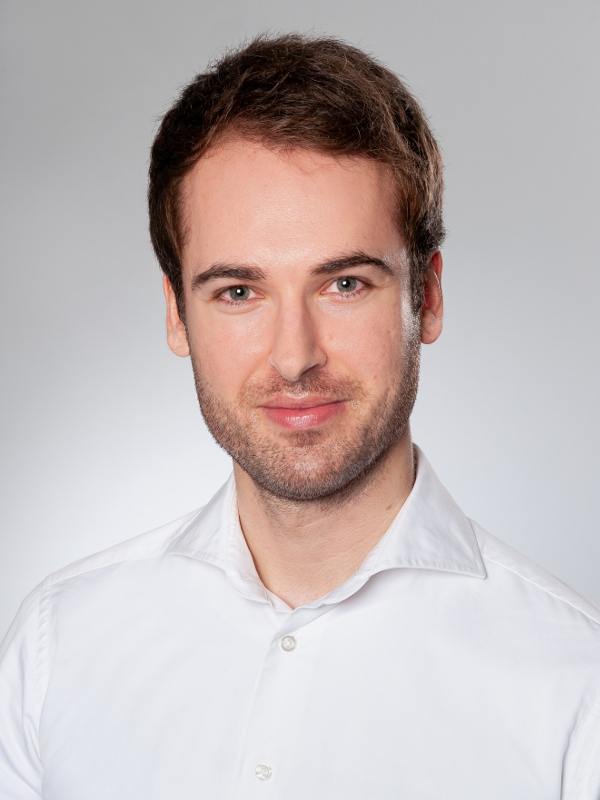
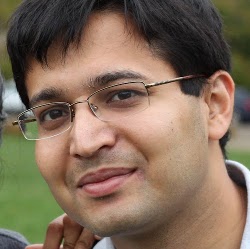
Tom Wehrbein is a PhD researcher at the Institut für Informationsverarbeitung (TNT) at Leibniz University Hannover, specializing in 3D human motion capture and normalizing flows. He earned his M.Sc. in Computer Science from the same institution. Education : M.Sc. in Computer Science (2020), Leibniz University Hannover; B.Sc. in Computer Science (completed before 2017) His research focuses on computer vision, deep learning, and probabilistic modeling for human pose estimation. He has contributed to advancements in 3D human mesh recovery, industrial anomaly detection, and metagenomic analysis. Recent publications highlight his work on cross-scale flows, kinematic alignment, and uncertainty quantification in pose estimation. He interned at Epic Games (2022) working on 3D human pose and shape estimation. Scientific Awards : Preis des Präsidiums (2017), KI Talente 2019 (B.Sc. thesis award) He actively develops open-source tools, including the official implementation of probabilistic 3D human pose estimation models on GitHub. His work integrates interdisciplinary approaches in machine learning, computer vision, and biomedical engineering.
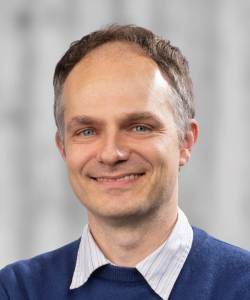
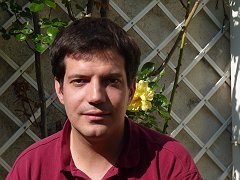
Dr. Stefan Milius is a Senior Lecturer (Akademischer Direktor) at the Chair for Theoretical Computer Science of Friedrich-Alexander University Erlangen-Nuremberg. His academic career spans theoretical computer science with a focus on categorical and algebraic methods applied to computational problems. Dr. Milius's research program centers on coalgebras and their applications in computer science, semantics of iteration and recursion, universal algebra and category theory, and logic and formal verification of systems. His work bridges abstract mathematical theory with practical computational applications, particularly in verification frameworks for software systems. His approach often combines category-theoretic perspectives with concrete computational problems. His publication record demonstrates consistent contributions to theoretical computer science, with recent work exploring stone duality, bialgebraic reasoning frameworks, automata theory with computational effects, and foundational aspects of programming language semantics. He has developed novel approaches to extending classical algebraic language theory to effectful settings and created new frameworks for reasoning about program equivalence in stateful and higher-order languages. Best Theory Paper at FM 2019 for "Generic Partition Refinement and Weighted Tree Automata" EATCS Best Paper Award at MFCS 2017 for "Eilenberg Theorems for Free" CALCO 2015 Best Paper Award for "Syntactic Monoids in a Category" Ackermann Award 2006 for PhD thesis Braunschweig Preis für hervorragende Leistungen im Studium, 2000 Dr. Milius has held significant editorial responsibilities including Editor-in-Chief of Logical Methods in Computer Science since 2020 and membership on the editorial boards of Applied Categorical Structures and TheoretiCS. He actively contributes to the theoretical computer science community through conference organization, serving as PC co-chair for FoSSaCS 2026 and MFPS 2025, and as a program committee member for numerous top-tier conferences including LICS, MFPS, and CALCO. Earlier in his career, he contributed to practical software development through projects like Alan, a Turing machine simulator developed during a 1997 software engineering practicum, and the VerSyKo project on verification of synchronous software components at TU Braunschweig (2011-2012).
Thomas Brox is a Professor for Pattern Recognition and Image Processing at the University of Freiburg , where he has headed the Computer Vision Group since 2010. He holds a PhD in computer science from Saarland University (2005) and has held postdoctoral positions at UC Berkeley, TU Dresden, and University of Bonn. Research Interests Education Publications & Awards Teaching & Leadership Roles His research focuses on computer vision and deep learning , particularly visual representation learning , video analysis , and training deep networks without manual supervision . He investigates how deep networks learn capabilities and applies these insights to action-perception cycles in robotics . Recent publications highlight trends in vision-language models , diffusion-based 3D generation , and anomaly detection . His work includes U-Net (seminal biomedical image segmentation) and FlowNet (optical flow estimation). Koenderink Prize (2014) ERC Starting Grant (2011) Longuet-Higgins Best Paper Award (2004) Multiple GCPR/ICCV/CVPR Best Paper Honors He teaches courses in Optimization , Statistical Pattern Recognition , and Computer Vision . He has served as Dean of Studies , Director of Computer Science Department , and will become Dean in 2026. His lab mentors 25+ PhD/MSc students and collaborates with institutions like Amazon (2020-2024).
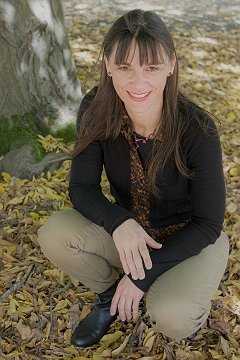
Prof. Bastian Leibe serves as a University Professor at RWTH Aachen University, leading the Computer Vision Group within the Chair of Computer Sciences 8 (Computer Graphics, Computer Vision, and Multimedia). His research focuses on developing computer vision applications for mobile devices, robotic systems, and autonomous vehicles, with strong institutional ties to the Cluster of Excellence "UMIC - Ultra High-Speed Mobile Information and Communication". His core research spans visual object recognition, tracking, self-localization, and 3D reconstruction, with increasing emphasis on integrated solutions for real-world deployment. Recent work demonstrates deep specialization in autonomous driving perception systems, human-robot interaction interfaces, and foundational computer vision methodologies that bridge theoretical advances with practical engineering constraints. Analysis of recent publications reveals dominant trends in LiDAR-based anomaly detection for autonomous systems, efficient 3D scene understanding frameworks, and novel applications of foundation models in robotics. The group consistently contributes to top-tier conferences with innovations in diffusion models, vision transformers, and interactive segmentation techniques that push the boundaries of real-time mobile vision. The Computer Vision Group maintains active educational engagement through specialized lectures and seminars in computer vision and machine learning, while operating from the UMIC Research Centre facility in Aachen with direct industry and academic collaborations in mobile information systems.
Wolfram Wingerath is a Professor for Data Science at the University of Oldenburg (since 2022) and previously served as Head of Data Engineering & Research at Baqend GmbH (2018-2022). He earned his PhD in Computer Science (2019) from the University of Hamburg, focusing on scalable push-based real-time query systems (InvaliDB). His research interests include: Real-time databases and stream processing NoSQL and polystore systems Web performance optimization Probabilistic data management Cloud computing and distributed systems Key publication trends show expertise in real-time data architectures, caching mechanisms, and performance engineering. Notable collaborations include Benjamin Wollmer and Felix Gessert . He has advised 49+ student theses and served on PC committees for ICDE, VLDB, and EDBT. His editorial roles include membership on Datenbank-Spektrum and organizing the BTW 2025 Data Science Challenge .
Marianne Akian is a Researcher at INRIA Saclay – Île-de-France , affiliated with the Tropical team (joint with CMAP, École Polytechnique, IP Paris, and CNRS). Her research spans deterministic and stochastic optimal control, tropical mathematics, idempotent analysis, and nonlinear Perron-Frobenius theory. She has contributed to numerical methods for Hamilton-Jacobi-Bellman equations and mean payoff games. Education: PhD in Mathematics (1990), Université Paris IX-Dauphine Habilitation (HDR) in Mathematics (2007), Université Pierre et Marie Curie Her work integrates max-plus/tropical algebra with applications in portfolio optimization, dynamic programming, and epidemiological modeling. Recent articles focus on accelerating value iteration algorithms, tropical convexity, and entropy games. Scientific awards are not explicitly mentioned in the provided texts. She collaborates extensively with researchers like Stéphane Gaubert, Marouen B for Stochastic Control, and others in applied mathematics. Lab/Team: Tropical team at INRIA, which bridges tropical mathematics with control theory and optimization.
Jan Křetínský is an Assistant Professor at the Technical University of Munich (TUM) , affiliated with the TUM School of Computation, Information and Technology . His work focuses on formal methods for software reliability, including error detection, correctness proofs, and performance optimization of stochastic and real-time systems. He employs techniques from automata theory, logic, probability theory, and machine learning in his research. Education: Studied computer science, mathematics, philosophy, and linguistics at Masaryk University (Brno, Czech Republic); earned a doctorate (summa cum laude) in 2013 from Masaryk University and TUM. His research emphasizes verification and synthesis of safe controllers, with applications in probabilistic and temporal logic frameworks. Publications highlight intersections of formal methods, machine learning, and stochastic systems. Scientific Awards: IST Fellow (Institute of Science and Technology Austria)
Innocenzo Fulginiti is a researcher at the Technische Universität München (TUM) associated with the Department of Languages and Description Structures in Informatics. He contributes to the Munich Quantum Valley (MQV) initiative, focusing on quantum computing ecosystem development. Research Interests: Compile-time optimization of quantum circuits, quantum programming language design, hardware-specific algorithm mapping, and quantum tool development. Teaching: Involved in courses like Functional Programming and Verification and Quantum Computing at Compile Time from Winter Semester 2021/22 to Summer Semester 2024/25. Publications: Key works include probabilistic circuit modeling for quantum computing and logic synthesis techniques for autosymmetric functions. Contact: innocenzo.fulginiti@tum.de
Thomas Vogel is a postdoctoral researcher at the Software Engineering Group within the Institute of Computer Science at Humboldt-Universität zu Berlin . From October 2021 to September 2022, he served as a stand-in professor for Empirical Software Engineering at Paderborn University. He earned his Ph.D. summa cum laude in 2018 from the University of Potsdam under the Hasso Plattner Institute, specializing in model-driven engineering of self-adaptive systems. He graduated with distinction in Information Systems from the University of Bamberg .
Professor Benedikt Kriegesmann is a faculty member at the Structural Mechanics in Lightweight Construction Institute at Hamburg University of Technology (TUHH). His research focuses on structural mechanics of composite materials, with particular expertise in topology optimization, robust design, probabilistic analysis, and buckling problems. He has made significant contributions to the field of lightweight composite structures, especially in the context of aerospace applications. His research interests include: Structural Mechanics of Fiber Composite Structures Topology and Robustness Optimization Probabilistic Analysis Methods Buckling Analysis of Cylindrical Shells Lightweight Construction Techniques Uncertainty Quantification in Structural Design Kriegesmann's publication record shows a strong focus on developing advanced computational methods for structural optimization under uncertainty. His recent work (2023-2025) demonstrates increasing sophistication in handling complex loading conditions, manufacturing variabilities, and multi-material systems. His research has particular relevance to aerospace applications where lightweight structures must meet stringent reliability requirements. His work spans both theoretical developments in optimization algorithms and practical applications to real-world engineering problems, with numerous publications in top journals like Structural and Multidisciplinary Optimization, Thin-Walled Structures, and International Journal for Numerical Methods in Engineering.
Deepak Garg is a tenured faculty member at the Max Planck Institute for Software Systems and an Honorary Professor of Computer Science at Saarland University. His research focuses on programming languages, software security, formal verification, and information flow control. Research Interests: Programming Languages and Type Theory Software Security and Secure Compilation Information Flow Control and Access Control Formal Verification of Low-Level Programs Probabilistic Programming and Security Compiler Correctness and Runtime Systems Scientific Contributions: He has authored over 40 publications with notable awards including the Dr.-Eduard-Martin-Prize for thesis supervision, Distinguished Paper and Distinguished Artifact awards at PLDI 2021, and the Internet Defense Prize for ERIM 2019. His work spans foundational research (e.g., logics for authorization) and practical systems (e.g., Groundhog, RefinedC, ERIM). Advising: Supervised 12 PhD students to completion and currently advising 7 PhD candidates across institutions like Saarland University, MPI-SWS, and Penn State University. His group includes co-advised students with researchers such as Derek Dreyer and Peter Druschel. Service: Active in program committees for top conferences including CSF , LICS , and OOPSLA , with leadership roles in workshops like PLMW and Dagstuhl Seminars on Secure Compilation.
David Monniaux is a senior researcher (directeur de recherche) at CNRS and an adjunct professor at École polytechnique. He works at VERIMAG, a computer science laboratory jointly operated by CNRS and the University of Grenoble. Dr. Monniaux obtained his PhD in 2001 from Université Paris Dauphine under Professor Patrick Cousot, with a dissertation on the static analysis of probabilistic programs by abstract interpretation. He later earned his habilitation in computer science in 2009 from Université Joseph Fourier, Grenoble, and also holds an agrégation in mathematics. Monniaux's research focuses on program verification, with particular emphasis on proving software correctness. His work spans theoretical foundations in computability theory and practical applications in safety-critical systems. He has made significant contributions to abstract interpretation, static analysis, and the verification of numerical properties in programs. His research bridges computer science theory with practical engineering challenges, particularly in the context of critical embedded systems where software failures can have severe consequences. His work connects to diverse fields including game theory, algebra, and convex optimization. His recent publications demonstrate a strong focus on improving the precision and efficiency of static analysis techniques. Key themes include polyhedral approximation, program analysis with local policy iteration, abstraction of arrays and maps, synthesis of ranking functions, and computing worst-case execution times. These works collectively advance the field of program verification by addressing challenges in handling nonlinear constraints, branching, and complex data structures while maintaining computational feasibility. Monniaux has supervised several students including Julien Henry, Alexis Fouilhé, George (Egor) Karpenkov, and Alexandre Maréchal (now at LIP6), with current students Hang Yu and Valentin Touzeau. He has led significant research projects including VERASCO (2012-2015), which aimed at integrating a static analyzer into the CompCert certified compiler, and STATOR (2012-2017), an ERC starting investigator grant exploring advanced techniques for automatic inference of program invariants. At VERIMAG, Monniaux is part of a vibrant research community focused on critical systems. His work connects with broader efforts in formal methods, with applications in aviation, automotive systems, and other safety-critical domains where software reliability is paramount.
Xavier Rival serves as Research Director at INRIA Paris and Director of the Computer Science Department at École Normale Supérieure (ENS) in Paris, which is part of PSL University. He also holds the position of Adjunct Professor at ENS/PSL. Previously from 2012 to 2024, he led the ANTIQUE (ANalyse staTIQUE) research group at INRIA Paris located at ENS Paris. His research focuses on abstract interpretation and software verification through static analysis, with particular emphasis on symbolic abstractions including trace partitioning abstraction, shape analysis, separation logic, and memory abstract domains. He has been instrumental in the design, implementation, and industrial transfer of the Astrée analyzer, a static analysis tool capable of verifying safety properties for industrial-scale safety-critical software. Currently, he leads the MemCAD ERC project aimed at developing a library of abstract domains for describing complex memory states. Rival's publication record demonstrates consistent contributions to the field of programming languages and static analysis, with his most recent work exploring probabilistic program verification, shape analysis for complex data structures, and applications to embedded systems. His research bridges theoretical foundations with practical applications, particularly in safety-critical domains. ERC Starting Grant recipient (MemCAD project) Author of foundational work on Astrée static analyzer Co-author of textbook on Introduction to Static Analysis published by MIT Press Active program committee member for major conferences including POPL, PLDI, and SAS Rival has supervised numerous PhD students throughout his career, including Tie Cheng (now CEO of MatrixLead), Arlen Cox, Huisong Li, and Jiangchao Liu. His laboratory has received research funding from multiple sources including ANR projects (VeriAMOS, VerAsCo, AnaStaSec) and the ERC Starting Grant for MemCAD. The MemCAD project has led to the development of analysis tools applicable to spreadsheet applications through the startup MatrixLead, where Rival serves as Scientific Adviser.
Erika Ábrahám is a Full Professor at RWTH Aachen University , Germany, leading the Theory of Hybrid Systems research group. Her academic journey includes positions as a Junior Professor (2008-2013) and postdoctoral researcher at institutions like Jülich Research Centre and Albert-Ludwigs-University Freiburg. Her research interests span formal methods, SMT solving, hybrid systems verification, and probabilistic systems. She has contributed to symbolic computation, railway timetables, and probabilistic hyperproperties, with recent work focusing on cylindrical algebraic decomposition, conflict-driven search algorithms, and stochastic modeling. Scientific contributions include 15+ articles (2021-2025) on topics like probabilistic hyperproperties , hybrid automata , and symbolic arithmetic , often published in LNCS, Springer, and Elsevier venues. She has collaborated on tools like HyPro and SMT-RAT, and edited proceedings for conferences including NASA Formal Methods and QEST.
Rupak Majumdar is a Scientific Director at the Max Planck Institute for Software Systems (MPI-SWS), with a distinguished career in formal verification, control systems, and programming languages. His research spans reactive, real-time, hybrid, and probabilistic systems, focusing on verification and synthesis problems in distributed and concurrent environments. Majumdar earned his B.Tech. in Computer Science from IIT Kanpur (where he received the President’s Gold Medal) and his Ph.D. from UC Berkeley (awarded the Leon O. Chua Award). His work has been recognized through prestigious honors including an NSF CAREER Award, Sloan Fellowship, ERC Synergy Grant, and Most Influential Paper Awards from PLDI and POPL. Research Areas: Formal Verification, Hybrid Systems, Stochastic Systems, Programming Languages, Automata Theory Leadership: Scientific Director, MPI-SWS; ISEC 2026 PC Chair His publications address critical problems in software verification, with recent work focusing on probabilistic systems, distributed protocol testing, and reinforcement learning for formal methods. Awards and grants reflect his impact on computer science and software engineering. Current students include Mahmoud Salamati, Ashwani Anand, V.R. Sathiyanarayana, and Mohammad Khoshechin, while graduated advisees hold positions at institutions like Amazon, Google, and academic research centers. Scientific Awards: President’s Gold Medal (IIT Kanpur) Leon O. Chua Award (UC Berkeley) NSF CAREER Award Sloan Foundation Fellowship ERC Synergy Award Distinguished Alumnus Award (IIT Kanpur) Most Influential Paper Awards (PLDI, POPL) Best Paper Awards (SIGBED, EAPLS, SIGDA)