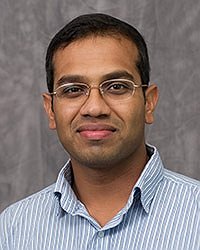
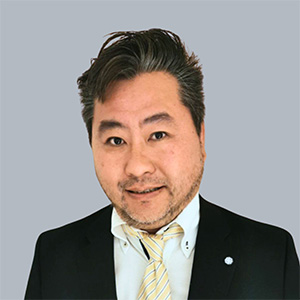
Paul Beame is a Professor and Associate Director for Facilities at the Paul G. Allen School of Computer Science & Engineering (University of Washington). He earned his B.Sc. in Mathematics (1981) , M.Sc. in Computer Science (1982) , and Ph.D. in Computer Science (1987) from the University of Toronto, followed by postdoctoral work at MIT (1986-87). His research spans computational complexity , proof complexity , quantum computing , and formal verification , with applications to databases and AI. Research Interests : Computational complexity theory, proof complexity, SAT-solving, quantum algorithms, time-space tradeoffs, communication complexity, circuit complexity, knowledge representation, probabilistic inference. Recent Publications : Focus on quantum time-space tradeoffs, multiparty communication complexity, formal verification of nonlinear arithmetic, and lower bounds for circuit and proof systems. Articles appear in ACM Transactions on Computation Theory , SIAM Journal on Computing , and conferences like STOC, FOCS, and NeurIPS. Teaching & Service : Active in theoretical computer science education and professional service, including program committee roles and tutorials. Personal : Engages in sports like squash and softball.
Gowtham Kaki is an Assistant Professor in the Department of Computer Science at the University of Colorado Boulder. His research focuses on the intersection of Programming Languages, Formal Methods, and Distributed Systems, with emphasis on automated verification techniques for concurrent and distributed programs. Education: Purdue University (PhD), BITS Pilani (Bachelors) Research Interests: Programming Languages, Formal Methods, Distributed Systems, Security, and AI Teaching: CSCI 3155 (Principles of Programming Languages), CSCI 7000 (Principles of Functional Programming), CSCI 5535 (Foundations of Programming Languages), and CSCI 7000 (Distributed Systems Verification) His work has produced 15 recent publications in verification techniques for distributed systems, including runtime-assisted convergence, CRDTs, and cryptographic secrecy. He has also received multiple awards including Google's PhD Fellowship and BITS Pilani's 30-under-30 recognition. He actively collaborates with the CUPLV research group and serves on program committees for OOPSLA, PLDI, and PaPoC conferences. His GitHub repositories demonstrate technical contributions in OCaml, taint analysis, and Z3 SMT integration.
Georg Böcherer is a Lecturer at the Chair of Communications Engineering at the Technical University of Munich (TUM), under Prof. Gerhard Kramer. He holds a PhD and habilitation in Electrical Engineering. His research focuses on probabilistic shaping, LDPC codes, and fiber-optic communication systems. He has received notable awards including the Bell Labs Prize (2015) and the E-Plus Dissertation Award. Education: MSc from ETH Zürich, PhD from RWTH Aachen University, habilitation at TUM. Research Interests Coded Modulation with Probabilistic Shaping: Overcoming the shaping gap in communication systems. LDPC Codes and Protograph Design: Optimizing low-density parity-check codes for shaped bit-metric decoding. Fiber-Optic Systems: Enhancing spectral efficiency through probabilistic amplitude shaping (PAS) and rate-adaptive coding. Information Theory: Distribution matching, entropy rate analysis, and algorithmic approaches for random process simulation. Key Contributions Developed PAS schemes achieving near-capacity performance, demonstrated experimentally in fiber-optic systems. Co-organized workshops like the Munich Workshop on Coding and Modulation (MCM 2015). Active in teaching courses on channel coding, information theory, and coded modulation. Awards Bell Labs Prize (2015) Best Paper Award, ISWCS 2011 E-Plus Dissertation Award Grants & Collaborations Involved in projects like Probabilistic Amplitude Shaping (PAS) and Constant Composition Distribution Matching . Collaborates with institutions like Bell Labs, UCLA, and TU Munich's LNT communications group.
Andrea M. Tonello is a distinguished academic researcher specializing in Power Line Communications (PLC), Machine Learning, and Signal Processing. His work bridges theoretical advancements with practical applications in communication systems, robotics, and smart grid technologies. He has authored over 200 publications across leading conferences and journals, with a focus on optimizing communication protocols, enhancing system robustness through noise mitigation, and applying AI techniques to solve challenges in wired/wireless networks. Research interests include: 1) Developing advanced PLC frameworks for smart grids and IoT deployments, 2) Designing machine learning algorithms for classification and signal processing under noisy conditions, 3) Investigating control systems for underactuated robotic mechanisms, and 4) Exploring full-duplex communication techniques for improved bandwidth utilization. Recent works emphasize energy-efficient sensor networks for agriculture and topology-aware learning models for PLC quality prediction. His articles consistently address cutting-edge topics like reinforcement learning for system stability, f-divergence based classification methods, and channel modeling innovations. Notable contributions include pioneering work on in-band full-duplex PLC systems and robust neural decoding techniques leveraging mutual information principles. Though no specific grants or advising information is listed here, his prolific collaboration network (evident from co-authorship patterns) indicates active participation in collaborative research initiatives. Laboratory activities focus on experimental validation of communication protocols and algorithmic performance evaluation in real-world scenarios.
Clemens-Konrad Müller is a Doctoral Researcher at the Institute of Communications Engineering , University of Rostock, since 2017. He holds a B.Sc. and M.Sc. in Information Technology with a specialization in Technical Computer Science from the University of Rostock. Education : B.Sc. (2012-2016), M.Sc. (2016-2017), both from University of Rostock. Teaching : Involved in exercises for Error Control Coding and Statistical Signal Processing and Inference. Research Interests include information theory, optimal signal processing, OFDM, and distributed quantization. His work applies the Information Bottleneck Method to address rate constraints in communication systems and explores neural networks for constrained hardware. He has supervised 12 student projects on topics like distributed compression and probabilistic shaping. Publications focus on FFT optimization in OFDM systems and distributed compression techniques. Key contributions involve iterative information bottleneck algorithms and convergence analysis.
Roles & Affiliations Full Professor of Security, Privacy and Identity at Radboud University Nijmegen's Institute for Computing and Information Sciences (since 2002). Affiliated professor in Philosophy (Ethics and Political Philosophy) and Law (Legal History). Member of multiple national cybersecurity councils including the National Cybersecurity Council (2011-2023) and scientific advisor to the Dutch police (since 2023). Education PhD in Theoretical Computer Science (1991), Radboud University MSc in Mathematics and Philosophy, Radboud University Research Focus Pioneering work in privacy-friendly identity management (e.g., IRMA/PubHubs systems), cybersecurity policy, and foundational computer science areas like coalgebra and quantum computation. Notable achievements include exposing Mifare Classic smartcard vulnerabilities (2008) and developing privacy-by-design frameworks. Awards & Recognition 2021: Stevin Prize (Netherlands' highest science honor) 2012: Officer of the Orange-Nassau Order 2018: Brouwer Award for Science & Society Grants & Leadership Recipient of ERC Advanced Grant (2012-2017) for quantum computation research. Founded Privacy by Design Foundation (non-profit promoting attribute-based authentication). Former chair of Bits of Freedom's advisory board (2012-2017).
Roles & Affiliations: Professor in Dependable Software Engineering at Mälardalen University (MDU), leading the Dependable Software Engineering research group. Former Head of Software Test & Reliability Engineering at Indian Space Research Organization (ISRO), Director of BITS Pilani KK Birla Goa Campus (Mar 2015–Aug 2016), and Visiting Researcher at Ericsson since 2022 (funded by SSF's strategic mobility program). Education: PhD in Computer Science from University of York, UK (1997), focusing on schedulability analysis of fault-tolerant systems (awarded Commonwealth Scholarship). Research Interests: Real-time systems, dependability, software engineering, safety-critical systems, cybersecurity, and industrial IoT. Key focus areas include fault-tolerant scheduling, safety-critical software design, and system-of-systems analysis. Funding & Projects: Led major EU projects (InSecTT, SUCCESS, DAIS, EUROWEB series) and national initiatives. Coordinated large EU educational collaborations with Western Balkans/Asia. Active in projects like FORA fog computing platform and TSN networks. Awards & Recognition: 6 Best Paper Awards, Senior Member of IEEE, and frequent contributor to conference program committees (ETFA, HASE, DATE, etc.). Grants & Labs: Recipient of SSF strategic mobility funding. Research group develops solutions for automotive systems, industrial automation, and safety-critical infrastructure.
Luke Theogarajan is a Professor of Electrical and Computer Engineering at the University of California, Santa Barbara (UCSB). His research focuses on integrating nanoscale sensors with conventional CMOS circuits, developing smart biosensors, and advancing neurotechnology through novel neural activity reporters and CMOS image sensors. He leads the Biomimetic Circuits & Nanosystems Group, exploring interdisciplinary applications in quantum computing, probabilistic hardware, and silicon photonics. Key research areas include: Probabilistic computing architectures and p-bit devices Quantum advantage in combinatorial optimization Photonic interconnects and silicon photonics for data centers Nanofabrication techniques for biosensors and neural interfaces MEMS-based retinal prostheses and neural recording systems His recent publications emphasize CMOS-compatible Ising/Potts annealing systems, high-density silicon photonic interconnects, and microneedle-based glucose sensors. Over 20 years of work includes foundational contributions to CMOS biosensors, optoelectronic oscillators, and wafer-scale integration of memristive memory. Labs/Teams: Biomimetic Circuits & Nanosystems Group (UCSB ECE Department).
Shafi Goldwasser is a prominent computer scientist holding dual appointments as the RSA Professor of Electrical Engineering and Computer Science at the Massachusetts Institute of Technology (MIT) and as a Professor of Computer Science and Applied Mathematics at the Weizmann Institute of Science in Israel. Her groundbreaking work has fundamentally shaped modern cryptography and theoretical computer science, earning her numerous prestigious awards including the ACM A.M. Turing Award in 2012 (shared with Silvio Micali). Dr. Goldwasser received her B.S. in Mathematics from Carnegie Mellon University (1979), followed by an M.S. (1981) and Ph.D. (1984) in Electrical Engineering and Computer Science from the University of California at Berkeley. Her academic career at MIT began with a Bantrel Postdoctoral Fellowship in 1983, followed by positions as Assistant Professor (1983-1987), Associate Professor (1987-1992), and Professor (1992-present). She also serves as Co-Leader of MIT's Cryptography and Information Security Group (1995-present) and has held a parallel appointment at the Weizmann Institute since 1993. Goldwasser's research has revolutionized theoretical computer science and cryptography through several landmark contributions. She pioneered the concept of zero-knowledge proofs, which allow one to prove the validity of a statement without revealing any information beyond the statement's truth. Her work with Micali on probabilistic encryption established the now-standard definitions of security for encryption and digital signatures. Goldwasser also made fundamental contributions to interactive proofs, multi-prover systems, probabilistically checkable proofs (PCPs), and property testing. Her research has not only transformed cryptography into a rigorous mathematical science but has also had profound implications for computational complexity theory. Analysis of her publication record reveals consistent innovation across decades, with major contributions spanning from foundational work in the 1980s (zero-knowledge proofs, probabilistic encryption) through to contemporary research on delegated computation, code obfuscation, and side-channel attack resistance. Her work consistently bridges theoretical computer science and practical cryptographic applications. ACM A.M. Turing Award (2012) ACM Athena Lecturer Award (2008) Two SIGACT Gödel Prizes (1993, 2001) ACM Grace Murray Hopper Award (1996) RSA Award in Mathematics (1998) Franklin Institute Benjamin Franklin Medal (2010) IEEE Emanuel R. Piore Award (2011) Memberships in all three major US National Academies As an advisor, Goldwasser has mentored numerous graduate students, with Johan Håstad being noted as her first exceptional doctoral student. Her research group at MIT has been instrumental in advancing the field of cryptography and theoretical computer science. Recent work has focused on delegated computation, code obfuscation, and protection against side-channel attacks, addressing emerging challenges in cloud computing and information security. Outside of her academic pursuits, Goldwasser is known to practice "Playback Theater," an improvisational interactive group experience, reflecting her interest in creative expression beyond computer science.
Masao Yanagisawa is a Professor at Waseda University's School of Fundamental Science and Engineering, with over 25 years of academic experience since 1998. An IEEE and ACM member, he holds a Doctor of Engineering degree from Waseda University.
Minghao Liu is a Postdoctoral Research Associate in the Department of Computer Science at the University of Oxford, working under the supervision of Prof. Marta Kwiatkowska and previously with Dr. Andrew Cropper. He is affiliated with the Artificial Intelligence and Machine Learning theme and the FAIR project at Oxford. His research integrates symbolic reasoning with machine learning, focusing on automated reasoning, constraint programming, and combinatorial optimization. PhD in Computer Science and Technology, University of Chinese Academy of Sciences (UCAS), 2023 BSc in Computer Science and Technology, Northeast Normal University (NENU), 2017 His research interests span automated reasoning, constraint programming, combinatorial optimization, and the integration of symbolic reasoning with machine learning. He develops novel algorithms for SMT solving, optimization modulo theories, and neural-symbolic systems, often leveraging machine learning to enhance classical reasoning systems. The recent publications show a strong trend in hybrid AI systems, particularly using graph neural networks to solve combinatorial problems like MaxSAT and Pseudo-Boolean Satisfiability. There is also a significant focus on improving solvers for nonlinear arithmetic and modal logics, often guided by reinforcement learning or probabilistic methods. His work bridges formal methods with deep learning, aiming to create more robust and scalable reasoning systems. Notable scientific awards include: ACM SIGSOFT Distinguished Paper Award at ISSTA 2023 Best Student Abstract Honorable Mention Award at AAAI 2023 2nd Place in SMT Competition (Nonlinear Real Arithmetic Track, 2022) Gold Medal in ACM-ICPC Asia Regional (2016) National Scholarship of China (2014) Minghao Liu has been actively involved in academic service and teaching. He has served as a Class Tutor for Logic and Proof and Knowledge Representation and Reasoning, a Practical Demonstrator for Design and Analysis of Algorithms, and a Student Project Supervisor for Group Design Practical at Oxford. He was also a Teaching Assistant for Theoretical Computer Science at UCAS. He has received multiple scholarships and honors, reflecting his academic excellence. His service includes being a PC member for AAAI (2023–2025), ECAI 2024, and ICTAI 2023, and a reviewer for IEEE TNNLS, IEEE TKDE, and CSSE. He is actively involved in research projects such as FAIR and maintains open-source implementations of his work on GitHub, including solvers for MaxSAT, SMT(NRA), and Holey Latin Squares, demonstrating strong software engineering and reproducibility practices.
Mayur Naik is the Misra Family Professor in the Department of Computer and Information Science at the University of Pennsylvania’s School of Engineering and Applied Science. His research lies at the intersection of programming languages and artificial intelligence, with a current focus on neurosymbolic programming, trustworthy AI for healthcare, and AI-enabled software engineering tools. Education & Career: Ph.D. in Computer Science, Stanford University (2008) – advisor Alex Aiken M.S. in Computer Science, Purdue University (2003) – advisor Jens Palsberg B.E. in Computer Science, BITS Pilani (1999) Former faculty at Georgia Institute of Technology and researcher at Intel Labs, Berkeley Research Interests: Naik’s group develops languages, algorithms, and compilers for neurosymbolic programming, an emerging paradigm that unites symbolic reasoning with data-driven learning. Their flagship system is the open-source Scallop language and toolchain, applied to computer vision, cybersecurity, medicine, and bioinformatics. He also investigates AI-assisted programming tools that boost productivity and software quality by marrying traditional program analysis with modern machine learning. Recent Highlights: In 2024 he was named Misra Family Professor; his former student Elizabeth Dinella received the 2025 ACM SIGSOFT Outstanding Dissertation Award; his team released IRIS , an LLM-assisted static analysis framework for security vulnerabilities, and published the first comprehensive book on Neurosymbolic Programming in Scallop . Teaching: He regularly teaches CIS 5470 (Software Analysis) every Fall and CIS 5500 (Database Systems) every Spring, both of which are also delivered in Penn’s MCIT Online and Georgia Tech’s OMSCS programs. Advising & Service: Naik has graduated 8 Ph.D. students and mentored numerous postdocs and undergraduates; many alumni now hold faculty or research positions worldwide. He has served on organizing, program, and steering committees for premier venues such as PLDI, POPL, OOPSLA, SPLASH, ESEC/FSE, ISSTA, SAS, and others.
Pramey Upadhyaya is an Associate Professor in the Elmore Family School of Electrical and Computer Engineering at Purdue University, serving as Area Chair for Microelectronics and Nanotechnology. His research focuses on magnetism, quantum spintronics, and next-generation information processing technologies, including bio-device applications. He holds a B.Tech from IIT Kharagpur (2009), an MS from UCLA (2011), and a Ph.D. from UCLA (2015). His work integrates nanotechnology, quantum sensing, and spin dynamics to advance computing and sensing paradigms. Research interests span antiferromagnetic materials, probabilistic bits (p-bits), and quantum spin defects. His contributions include electrically tunable magnetism and plasmonic-enhanced spin emission. Notable projects include a CAREER grant-funded initiative on spin-magnon hybrid quantum devices (2020). His studies bridge fundamental physics and applied engineering, addressing challenges in neuromorphic computing and topological electronics. Advising and grants highlight collaborative efforts in spintronics and nanotechnology. His lab focuses on device fabrication, quantum metrology, and spin-based information processing. Ongoing work explores magnetic skyrmions, Majorana modes, and ultrafast stochastic systems.
Dong Jin Song is a full Professor at the National University of Singapore's School of Computing, Department of Computer Science. He joined NUS in 1998 and was promoted to Professor in 2016 after serving as Associate Professor (2005) and Assistant Professor. He has held various leadership roles including Deputy Head of CS Department (2023-2024), NUS Senate Member (2020-current), and Assistant Dean (Graduate Office, SoC). PhD, University of Queensland, Australia (1993-1995) BInfTech with First Class Honours, University of Queensland, Australia (1989-1992) - Major in Software Engineering Professor Dong's research spans formal methods, safety and security systems, probabilistic reasoning, sports analytics, and trusted machine learning. He is best known for co-founding the PAT verification system which has attracted thousands of registered users from over 150 countries and won the 20-year ICFEM Most Influential System Award in 2018. He also co-founded 'Silas: Trusted Machine Learning' and the Dependable Intelligence company. His work bridges formal verification with practical applications in security, AI, and even sports analytics where he developed Markov Decision Process models for tennis strategy analysis. His recent publications show a strong trend toward integrating formal methods with modern AI systems, particularly focusing on trustworthy AI, LLM verification, and security applications. The research spans multiple high-impact venues including ICML, NeurIPS, IEEE Transactions, and top security conferences like USENIX Security, reflecting his interdisciplinary approach that combines formal verification with machine learning, security, and practical applications. Professor Dong has received numerous honors including the ACM SIGSOFT Distinguished Paper Award for ICSE 2020, the 20-Year ICFEM Most Influential System Award (2018), and being named a Fellow of the Institute of Engineers Australia (2018). His awards reflect both theoretical contributions to formal methods and practical impact on software engineering. ACM SIGSOFT Distinguished Paper Award for ICSE 2020 NUS Research Recognition Award (2020) Fellow of Institute of Engineers Australia (2018) 20-Year ICFEM Most Influential System Award (2018) Best Paper Award at ICECCS (2015 and 2012) Professor Dong has successfully supervised 33 PhD students, many of whom have become tenured faculty members at leading universities worldwide including The University of Auckland, Aston University, Singapore Management University, and Monash University. His students have gone on to successful careers in both academia and industry at organizations like Google, Apple, HP Research Lab, and IBM. He has served on the editorial boards of prestigious journals including ACM Transactions on Software Engineering and Methodology and has been active in numerous conference organizing committees. Through his research group and commercial ventures (Dependable Intelligence), Professor Dong has built a strong team focused on formal verification, trusted AI systems, and practical applications of model checking. His work has evolved from foundational formal methods research to cutting-edge applications in AI safety and security, maintaining a consistent thread of rigorous verification throughout his career.
Jianming (James) Yang is a Professor in the Faculty of Engineering and Applied Science at Memorial University of Newfoundland. He holds a PhD from Tianjin University and has extensive industry experience as a mechanical design engineer, followed by academic roles at Guilin University of Electronic Technology and University of Shanghai for Science and Technology. His work focuses on mechanical vibration/dynamics, nonlinear random vibration analysis, and fatigue prediction in mechanical systems. Dr. Yang's research emphasizes modeling drillstring dynamics, fatigue control in drilling systems, and random vibration analysis of planetary gear trains in wind turbines. His expertise spans machine design, solid mechanics, and wind turbine simulation. Key contributions include developing empirical models for drilling performance prediction and stochastic linearization techniques for gear dynamics. His academic journey includes post-doctoral studies at Shanghai Jiao Tong University and a career transition from industry to academia in 2003. He has authored numerous publications on mechanical systems, vibration analysis, and renewable energy applications. Notable research trends include advancing predictive models for drilling efficiency, optimizing gear train reliability under random loads, and integrating machine learning for wind turbine performance analysis. Dr. Yang's work bridges theoretical mechanics and practical engineering challenges, contributing to advancements in energy systems and sustainable manufacturing processes.