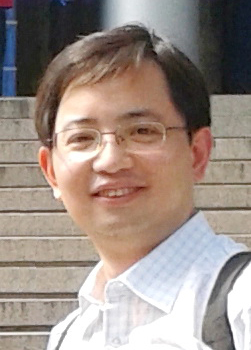
Huamin Qu is a Chair Professor in the Department of Computer Science and Engineering at the Hong Kong University of Science and Technology (HKUST). He serves as the Founding Dean of the Academy of Interdisciplinary Studies (AIS), Founding Head of the Division of Emerging Interdisciplinary Areas (EMIA), and was the Founding Acting Head of Computational Media and Arts (CMA) at HKUST(GZ). Qu directs the VisLab and coordinates the Human-Computer Interaction (HCI) group. He obtained his BS in Mathematics from Xi'an Jiaotong University and MS/PhD in Computer Science from Stony Brook University. Qu's research integrates Data Visualization , Human-Computer Interaction , and Human-Centered AI , with applications in urban informatics, social networks, and explainable AI. His work focuses on developing interactive systems for big data analytics, visual storytelling, and AI-driven decision support. Research extends to multimodal communication, fintech, and augmented reality applications. His publications emphasize visual analytics for complex datasets (mobility, social media, financial), interaction techniques for immersive environments, and AI-enhanced visualization tools. Recent works explore explainable AI interfaces and large-scale data communication frameworks. IEEE Visualization Academy (2020) IEEE VGTC Technical Achievement Award AI 2000 Most Influential Scholar (2019, 2023, 2024) 21 Best Paper/Honorable Mention awards IBM Faculty Award (2009) APICTA Merit Award (2015) Yelp Dataset Grand Prize (2018) Qu has advised 48 PhD graduates (21 now faculty at institutions like UC Davis, University of Minnesota, Texas A&M) and 30 MPhil students. He secured major grants including RGC theme-based projects (digital citizenship, air pollution), UGC AoE (slope safety), and China's 973 Program. As VisLab director, he leads 20+ researchers in visualization/HCI projects adopted by Microsoft, IBM, Huawei, and Tencent.
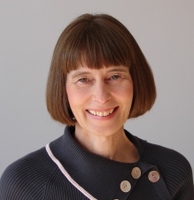
Zhou Zhi-Hua is a Professor at Nanjing University's Department of Computer Science & Technology, serving as Standing Deputy Director of the National Key Lab for Novel Software Technology and Founding Director of LAMDA (Institute of Machine Learning and Data Mining). He holds simultaneous fellowships from ACM, AAAI, AAAS, IEEE, IAPR, IET/IEE, and CCF, reflecting his exceptional contributions to computational intelligence. His educational background includes: B.Sc. in Computer Science from Nanjing University (1996) M.Sc. in Computer Science from Nanjing University (1998) Ph.D. in Computer Science from Nanjing University (2000) Zhou's research pioneers fundamental advances in machine learning theory and applications. His seminal work on ensemble methods established new frameworks for classifier combination, while innovations in multi-label learning and anomaly detection addressed critical challenges in complex data analysis. His research bridges theoretical rigor with practical implementations across diverse domains including biometrics, data mining, and computer vision, resulting in over 150 publications and 18 patents. His textbooks "Ensemble Methods" (2012) and "Machine Learning" (2016) have become standard references in the field. Analysis of his publication trajectory reveals sustained leadership in core machine learning challenges: evolving from neural network ensembles (2002) through semi-supervised learning breakthroughs (2005) to foundational work on multi-instance learning (2012) and theoretical margin analysis (2013). His recent focus demonstrates increasing sophistication in handling complex data structures while maintaining theoretical soundness. His scientific excellence is recognized through: National Natural Science Award of China (2013) PAKDD Distinguished Contribution Award (2016) IEEE ICDM Outstanding Service Award (2016) IEEE CIS Outstanding Early Career Award (2013) Microsoft Professorship Award (2006) Simultaneous fellowships from 7 major international societies Zhou provides extraordinary service to the academic community as Executive Editor-in-Chief of Frontiers of Computer Science and Associate Editor-in-Chief of Science China Information Science. He founded the ACML conference and has chaired premier events including ICDM'16 and PAKDD'14. His leadership extends to serving as General Chair for ICDM'16, Program Chair for IJCAI'15 Machine Learning Track, and Area Chair for multiple top conferences. The available text does not specify student advising details or research grants. He directs LAMDA research group at Nanjing University, which has established itself as a global powerhouse in machine learning research, and contributes significantly to the National Key Lab for Novel Software Technology's mission of developing next-generation intelligent systems.
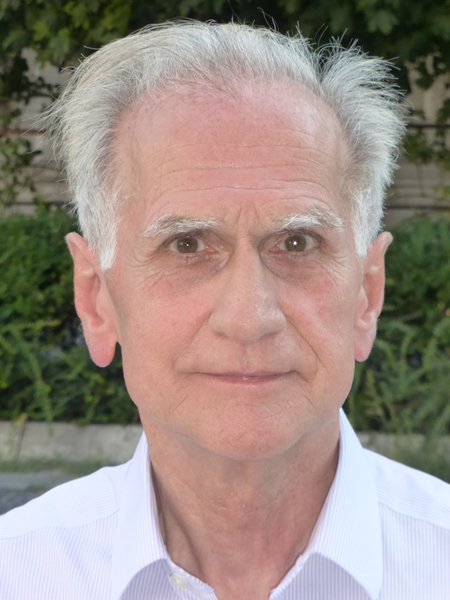
Professor Marta Zofia Kwiatkowska is Professor of Computing Systems and Fellow of Trinity College at the University of Oxford, where she has held a faculty position since 2007. She previously served as Professor of Computer Science at the University of Birmingham (2001–2007), Reader and Lecturer at the University of Birmingham (1994–2001), and Lecturer at the University of Leicester (1986–1994). Her academic career began as Assistant Professor at the Jagiellonian University in Kraków, Poland (1980–1988). Education: BSc/MSc in Computer Science, Jagiellonian University, Kraków MA, University of Oxford PhD, University of Leicester Research Interests: Professor Kwiatkowska spearheaded the development of probabilistic and quantitative verification methods on the international stage. Her work bridges theory and practice through the PRISM model checker—the leading software tool in probabilistic model checking—used worldwide for research and teaching. Application domains include communication and security protocols , nanotechnology designs , power management , ubiquitous computing and systems biology . She investigates automated verification , temporal logics , semantic models for concurrency , real-time systems , and biological process modelling . Current grant funding exceeds £3.7 million from EPSRC, EU and ERC, including the prestigious ERC Advanced Grant VERIWARE. Scientific Awards & Honours: Fellow of the Royal Society Fellow of the ACM Fellow of the European Association for Theoretical Computer Science (EATCS) Fellow of the British Computer Society (BCS) Fellow of the Polish Society of Arts & Sciences Abroad ERC Advanced Grant VERIWARE (€2.046 M, 2010–2015) Top Cited Article Award, Theoretical Computer Science (2005–2010) Best Paper Award, QEST 2006 Doctoral Supervision & Grants: Professor Kwiatkowska actively supervises doctoral students (D.Phil. at Oxford) and post-doctoral researchers. She welcomes applications in areas aligned with her research interests, detailed here . Current students include Charlie Griffin, Daqian Shao, Matthew Yuan and Minghao Liu; past students and researchers number over twenty, many now in faculty or industry leadership roles. Laboratory & Teams: She leads the Oxford Quantitative Verification group within the Department of Computer Science. Ongoing projects include FUN2MODEL, ELSA, FAIR and the flagship PRISM probabilistic model checker. The group maintains strong collaborations with biological, robotics and engineering teams worldwide.
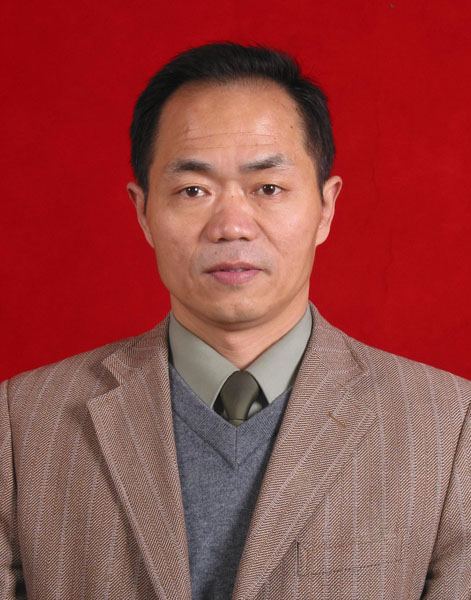
Mark Coeckelbergh is a Professor of Philosophy at the University of Vienna, specializing in the philosophy of technology, AI ethics, and robot ethics. He is affiliated with the Department of Philosophy and the Research Network Data Science at the University of Vienna. In addition to his academic position, Coeckelbergh has held significant roles including Former President of the Society for Philosophy and Technology (SPT) and Member of the European Commission's High-Level Expert Group on Artificial Intelligence (AI HLEG). His research focuses on the ethical, political, and philosophical implications of emerging technologies, particularly artificial intelligence and robotics. Coeckelbergh has published extensively in these areas, authoring influential books such as Robot Ethics (2022), The Political Philosophy of AI (2022), and Why AI Undermines Democracy and What To Do About It . His work explores how AI systems affect democratic processes, human agency, and social relationships. Recent publications demonstrate a strong focus on the relationship between AI, democracy, and ethical governance, examining how AI systems can both threaten and potentially enhance democratic processes through algorithmic transparency and participatory design approaches. Finalist of the World Technology Award 2017 Coeckelbergh teaches various courses including 'Introduction to Philosophy of LLMs,' 'LLMs and the Future of Writing,' 'Ethics and Robotics,' and 'Global Governance of AI.' He has supervised numerous students working on topics related to technology ethics and philosophy. He has been involved in several major research projects including H2020 PERSEO, WWTF Democracy Responsible Entrepreneurship, and FP7 DREAM (Development of Robot-Enhanced therapy for children with Autism spectrum disorders). Coeckelbergh has also announced upcoming guest professorships at the Institute of Philosophy of the Czech Academy of Sciences and Uppsala University, where he will work on environmental and technology ethics projects.
Béla Bollobás is a renowned mathematician affiliated with the University of Memphis as the Jabie Hardin Chair of Excellence in Combinatorics and the University of Cambridge as a Fellow of Trinity College and Honorary Professor at the Centre for Mathematical Sciences. His work spans combinatorics, probability theory, and graph theory, with significant contributions to percolation and random graphs. Dr. Rer. Nat. (Budapest, 1967) Ph.D. (Cambridge, 1972) Sc.D. (Cambridge, 1984) Bollobás pioneered extremal graph theory, random graphs, and probabilistic combinatorics. He introduced novel graph polynomials and advanced bootstrap percolation models, impacting both theoretical mathematics and statistical physics. His research includes inhomogeneous random graphs and cellular automata in random environments. His selected publications reveal a focus on percolation thresholds, graph invariants, and stochastic processes. Notably, he derived sharp thresholds for bootstrap percolation and defined critical probabilities for Voronoi percolation. Senior Whitehead Prize (2007) Fellow of the Royal Society (2011) Foreign Member, Hungarian Academy of Sciences (1990) Foreign Member, Polish Academy of Sciences (2013) Honorary Doctorate, Adam Mickiewicz University (2013) Szechenyi Prize (2017) Bollobás has supervised over 50 Ph.D. students and authored over 450 publications, including 10 books. He co-founded the journal Combinatorics, Probability and Computing and served on eight editorial boards. He organized numerous conferences, including Bill Tutte and Paul Erdős events.
Dr. Quirin Thomas Simon Vogel is a Senior Lecturer at the Department of Statistics, University of Klagenfurt. He previously held postdoctoral positions at the Technical University of Munich, New York University Shanghai, and served as an Interim Professor at Ludwig-Maximilians University of Munich. His research bridges probability theory with statistical mechanics and algorithmic applications. Current role: Senior Lecturer (2025) Previous roles: Postdoc (TUM, NYU Shanghai), Interim Professor (LMU Munich) His research focuses on: Random walks and their geometric/stochastic properties Randomized algorithms with applications in statistical models Quantum-inspired probabilistic systems (e.g. interacting bosonic loop soups) Large deviation theory for complex systems Percolation and phase transitions in particle models The articles reflect trends in probability theory, mathematical physics, and algorithmic applications. Key topics include high-dimensional percolation, Bose gas models, neural network theory, and stochastic geometry. The work combines rigorous mathematical analysis with interdisciplinary applications in physics and computer science. Scientific awards and functions cannot be determined from the provided data, as they describe other researchers. The department's research activities include projects on statistical learning, quantum models, and algorithmic probability, though Vogel's direct involvement in these specific funded projects isn't explicitly stated.
Zeshui Xu is a Full Professor at the Business School of Sichuan University, China, with concurrent roles as Adjunct Professor at multiple prestigious institutions including Nanjing University of Aeronautics and Astronautics and Southeast University. He has held distinguished positions such as Chair Professor at PLA University of Science and Technology and was part of the Cheung Kong Scholars Program. His research focuses on decision-making theory, information fusion, clustering algorithms, and fuzzy systems. He is a highly cited researcher (2014–2021) and holds fellowships from IEEE, RSA, IFSA, and others. Education: M.Sc. in Operations Research and Cybernetics, Qufu Normal University Ph.D. in Management Science, Southeast University Research Contributions: Dr. Xu has authored 18 Springer monographs and 700+ SSCI/SCI papers, achieving over 73,000 citations with an h-index of 138. His work includes groundbreaking contributions to intuitionistic fuzzy aggregation operators, hesitant fuzzy systems, and probabilistic linguistic decision-making frameworks. Awards & Recognition: Member of EASA and IASCYS Fellowships: IEEE, RSA, ORS, AAIA, and others Natural Science Awards (Ministry of Education) State Council Expert with Special Allowance Editorial Roles: Associate Editor/Editorial Board Member for over 30 journals, including IEEE Transactions on Cybernetics and Fuzzy Systems. Invited to 50+ academic conferences.
Georges Gielen is Full Professor in the Department of Electrical Engineering (ESAT) at KU Leuven, Belgium, and part-time Research Director at imec. He has held multiple leadership roles including Chair of ESAT Department (2012-2013, 2020-2024) and Vice-Rector for Science, Engineering & Technology (2013-2017). His academic career spans over 30 years at KU Leuven, progressing from Assistant to Full Professor. His research focuses on analog and mixed-signal integrated circuit design automation , with expertise in CAD tools, design optimization, sensor interfaces, and neuromorphic systems. His work bridges hardware design with machine learning, particularly in hardware-efficient AI implementations and biomedical applications. He has pioneered techniques for automated analog circuit sizing, topology synthesis, and reliability-aware design in nanometer CMOS. Gielen has received numerous accolades including the IEEE CAS Mac Van Valkenburg Award (2015), IEEE CAS Charles Desoer Award (2020), and EDAA Achievement Award (2021). He holds an ERC Advanced Grant AnalogCreate and is an IEEE Fellow since 2002. As a prolific scholar, he has chaired major conferences including DATE (2006), ICCAD (2007), and ESSCIRC (2017). He has graduated over 55 PhD students through the MICAS research group at KU Leuven, currently supervising 13 doctoral candidates. His research team collaborates extensively with imec and industry partners on cutting-edge projects in carbon-aware AI accelerators, uncertainty-aware design, and neuromorphic sensor interfaces.
Ana Sokolova is a Professor in the Department of Computer Science at the University of Salzburg. She is affiliated with the Faculty of Digital and Analytical Sciences and actively contributes to research in theoretical computer science. University: University of Salzburg Faculty: Faculty of Digital and Analytical Sciences Department: Computer Science Email: ana.sokolova@plus.ac.at Her research focuses on probabilistic systems , concurrency theory , convex algebras , and formal verification . This work bridges theoretical foundations with practical applications in distributed computing and programming semantics. Recent publications highlight advancements in trace semantics , determinization , probabilistic anonymity , and coalgebraic modeling . Key trends include the integration of Markov chains , nondeterministic systems , and algebraic structures for formal verification.
Mohamed-Slim Alouini is a Professor of Electrical Engineering and Associate Dean of the Computer, Electrical and Mathematical Science and Engineering (CEMSE) Division at King Abdullah University of Science and Technology (KAUST) in Saudi Arabia. He also serves as the Associate Vice President for Research and holds the UNESCO Chair in Education to Connect the Unconnected. With over 500 journal publications and more than 46,000 citations, he is a world-renowned expert in wireless communications who was elected IEEE Fellow in 2009 at the age of 39. Education: PhD in Electrical Engineering, California Institute of Technology (Caltech), 1998 MS in Electrical Engineering, Georgia Institute of Technology (Georgia Tech), 1995 Diplôme d'Etudes Approfondies (DEA) in Electronics, Université Pierre & Marie Curie (Sorbonne University), 1993 Diplôme d'Ingénieur, École Nationale Supérieure des Télécommunications (Télécom Paris Tech), 1993 Habilitation, Université Pierre & Marie Curie (Sorbonne University), 2003 Dr. Alouini is a world-renowned expert in wireless communication and networking with research interests spanning diversity combining techniques, MIMO systems, multi-hop/cooperative communications, optical wireless systems, cognitive radio, UAV communications, and advanced modulation schemes. His current focus addresses the technical challenges of uneven information and communication technology distribution, particularly targeting rural, low-income, disaster-prone, and hard-to-reach areas through integrated ground-airborne-space networks. His work bridges theoretical foundations with practical implementations to solve real-world connectivity problems. His recent publications (2020-2024) demonstrate a clear research trajectory toward integrated communication networks combining terrestrial, aerial, and space components. There's growing emphasis on UAV communications, satellite systems, optical wireless technologies, and rural connectivity solutions, with increasing integration of machine learning techniques for network optimization. His work shows consistent focus on addressing the digital divide, with several publications specifically targeting 6G challenges for connecting underserved populations and recycling existing infrastructure for enhanced rural connectivity. Scientific Awards: Member of the European Academy of Sciences and Arts (2019) Fellow of the African Academy of Sciences (2018) IEEE Fellow (2009) Abdul Hameed Shoman Award for Arab Researchers (2016) OIC Science & Technology Achievement Award (2017) Multiple recognitions as Highly Cited Researcher NSF CAREER Award (1999) Dr. Alouini has mentored numerous successful students and post-doctoral fellows who have secured positions at top institutions worldwide including Harvard, Caltech, Imperial College, and faculty positions at Korea University, Hanyang University, and universities across the Middle East. His December 2018 PhD graduate Qurrat-Ul-Ain Nadeem received the prestigious Marconi Society Paul Baran Young Scholars award, while post-doctoral fellows have won IEEE ComSoc Young Professionals Best Innovation Award and attended the Lindau Nobel Meeting. His Communication Theory Lab at KAUST drives significant research in wireless communications with funding supporting extensive publication output and innovative projects. Dr. Alouini leads the Communication Theory Lab at KAUST and holds the UNESCO Chair in Education to Connect the Unconnected, focusing specifically on technical solutions for connecting underserved communities. His lab works on integrated ground-airborne-space networks to bridge the digital divide, with particular emphasis on rural, low-income, and hard-to-reach areas. The team develops practical solutions using UAVs, satellite communications, and recycled infrastructure to provide cost-effective connectivity where traditional approaches fail.
Jean Salençon is a prominent academic and researcher in mechanics and civil engineering. He currently holds the position of Senior Fellow at the Institute for Advanced Study, City University of Hong Kong since 2016. Previously, he served as Visiting Distinguished Professor (2014–2016), Chair Professor-at-large (2011–2014), and President of the Académie des sciences (2009–2010). His academic career includes roles as a Professor of Mechanics at the École polytechnique (1982–2005) and Head of the Department of Mechanical and Material Sciences at the École nationale des ponts et chaussées (1980–1985). Salençon’s research focuses on continuum mechanics , soil mechanics , yield design theory , and composite materials . His work bridges theoretical advancements with practical applications in geotechnical engineering and structural analysis. Notable contributions include probabilistic approaches to yield design, stability analysis of earthworks, and macroelement modeling of foundations under seismic loads. Key Awards: Trevithick Prize (1990), Montyon Prize (1978), Member of the Académie des sciences (1988), and multiple honorary memberships in international academies. Leadership Roles: Rector of the CISM (2004–2012), Member of the Bureau IUTAM (2000–2004), and President of the Académie des sciences (2009–2010). Salençon has authored seminal textbooks such as Handbook of Continuum Mechanics (2001) and Yield Design (2013), contributing significantly to global engineering education and research.
Mihyun Kang is a Professor in the Institute of Discrete Mathematics at Graz University of Technology (TU Graz), leading the Combinatorics Group. She holds significant academic positions and has been recognized with a Heisenberg Fellowship (German Research Foundation) and a Friedrich Wilhelm Bessel Research Award (Alexander von Humboldt Foundation). Her research focuses on combinatorics, discrete probability, and algorithms, with a specialization in random graph theory. She contributes to editorial boards, including Random Structures & Algorithms . Her research interests emphasize high-dimensional graphs, percolation processes, and structural properties of random graphs. She explores topics such as phase transitions, graph enumeration, and algorithmic applications in combinatorial problems. Her work bridges theoretical foundations with practical applications in algorithm design and probabilistic modeling. Dr. Kang’s scientific achievements include pioneering studies on hypergraphs, bootstrap percolation, and the evolution of random graph processes. Her recent publications highlight advancements in understanding graph components, connectivity thresholds, and universality phenomena in random structures. She collaborates widely, contributing to conferences and international initiatives like the SFB “Discrete random structures: enumeration and scaling limits.” Her professional activities include advising doctoral students and supervising research projects at TU Graz. She leads the Combinatorics Group, which hosts the Graz Combinatorics Seminar and actively engages in academic outreach. Her contributions extend to textbook authorship, including Diskrete Mathematik für die Informatik , and she maintains an active presence in discrete mathematics education and research.
Efstathia Bura is a Professor heading the Applied Statistics Research Unit (ASTAT) within the Institute of Statistics and Mathematical Methods in Economics at TU Wien's Faculty of Mathematics and Geoinformation. Her research focuses on dimension reduction techniques in regression and classification, high-dimensional statistics, and their applications in biostatistics, econometrics, and legal statistics. She leads projects like ProbInG (WWTF-funded) and the SecInt Doctoral College on statistical verification of cyber-physical systems. Her work integrates advanced statistical methodologies with interdisciplinary applications, emphasizing practical solutions for complex data challenges. Current projects explore probabilistic program analysis, security properties in cyber-physical systems, and dynamic econometric modeling. She collaborates internationally, with notable contributions to statistical theory and applications in law, healthcare, and telecommunications. Key research themes include time-varying regression models, sufficient dimension reduction for mixed predictors, and fusion of statistical methods with machine learning. Her publications bridge theoretical advancements and real-world problem-solving, reflecting her role as a leading academic in modern applied statistics. Her team includes postdocs and assistants working on WWTF and SecInt grants, focusing on probabilistic systems and statistical verification. While no formal student advisees are listed, her collaborative projects engage junior researchers in cutting-edge statistical research.
University of Natural Resources and Life Sciences ViennaAustria
Nikolaus Müllner is a researcher at the Institute of Safety and Risk Sciences at the University of Natural Resources and Life Sciences, Vienna (BOKU). His work centers on nuclear safety, reactor technology, risk assessment, and thermal-hydraulic modeling, particularly for VVER-type reactors. He actively contributes to international nuclear safety discourse through conferences and peer review. His research interests include nuclear reactor safety, severe accident analysis, licensing of small modular reactors, best estimate plus uncertainty (BEPU) methods, and environmental impact assessments in nuclear contexts. He applies simulation tools like RELAP5, MELCOR, and SCDAPSIM to analyze accident scenarios and validate safety systems. His expertise spans both technical and policy aspects of nuclear energy. Müllner has delivered numerous lectures at international conferences such as NURETH, ICONE, and IAEA events, focusing on topics like core damage frequency, station blackout scenarios, and aging management. His recent publications reflect a trend toward integrating technical safety analysis with regulatory and societal considerations, particularly in European contexts. He has served as a reviewer for journals including Energy Strategy Reviews , Progress in Nuclear Energy , and International Journal of Disaster Risk Reduction , contributing to the scientific quality of research in energy and risk domains. Supervision and Community Engagement: Supervised master’s theses on topics such as small modular reactor safety, RELAP5 modeling, and environmental aspects of nuclear licensing. Active in international research networks like INRAG (International Nuclear Risk Assessment Group). Engaged in public knowledge transfer through lectures and media contributions on nuclear policy and safety. Laboratories and Research Groups: While not explicitly tied to a specific lab, his work is closely associated with nuclear simulation and risk assessment frameworks, likely involving collaboration with experimental facilities such as the PSB-VVER test facility. His research is conducted within the interdisciplinary environment of BOKU’s Safety and Risk Sciences department.
Prof. Sara Merino Aceituno is a Professor at the Faculty of Mathematics, University of Vienna, leading research in kinetic theory and its applications to biology, medicine, and social sciences. She holds roles as Vice-Dean of the Faculty and Head of the Institute of Mathematics. Her work bridges mathematical models with experimental data, focusing on emergent phenomena in collective dynamics, opinion formation, and cell behavior. She teaches advanced courses on kinetic theory, biomathematics, and mathematical strategies for learning. Her contributions include modeling cell delamination, nematic alignment, and swarm dynamics through PDEs and probabilistic methods. Collaborations with experimentalists drive her interdisciplinary research. She actively engages in education, advising, and public outreach, including a video series explaining mathematical patterns in nature. Her research emphasizes understanding macroscopic patterns arising from microscopic interactions in complex systems. Education: Holds a PhD in Mathematics, with expertise in kinetic theory and applied partial differential equations. Teaching and leadership roles reflect her commitment to academic excellence and student support. Her work integrates experimental and computational models to study clonal dynamics in tissues and mechanical constraints in epithelial layers. She has authored over 20 papers on topics ranging from active matter to opinion formation networks, contributing to both theoretical advancements and practical applications in biology and social sciences. Research focuses on deriving hydrodynamic and continuum models from particle systems, analyzing stability and bifurcations in collective behavior. Grants and collaborations include the Vienna Biocenter PhD Program and experimental groups in cell biology. Her lab explores how environmental factors influence particle swarms and how mechanical forces shape cell cycles in pseudostratified epithelia.