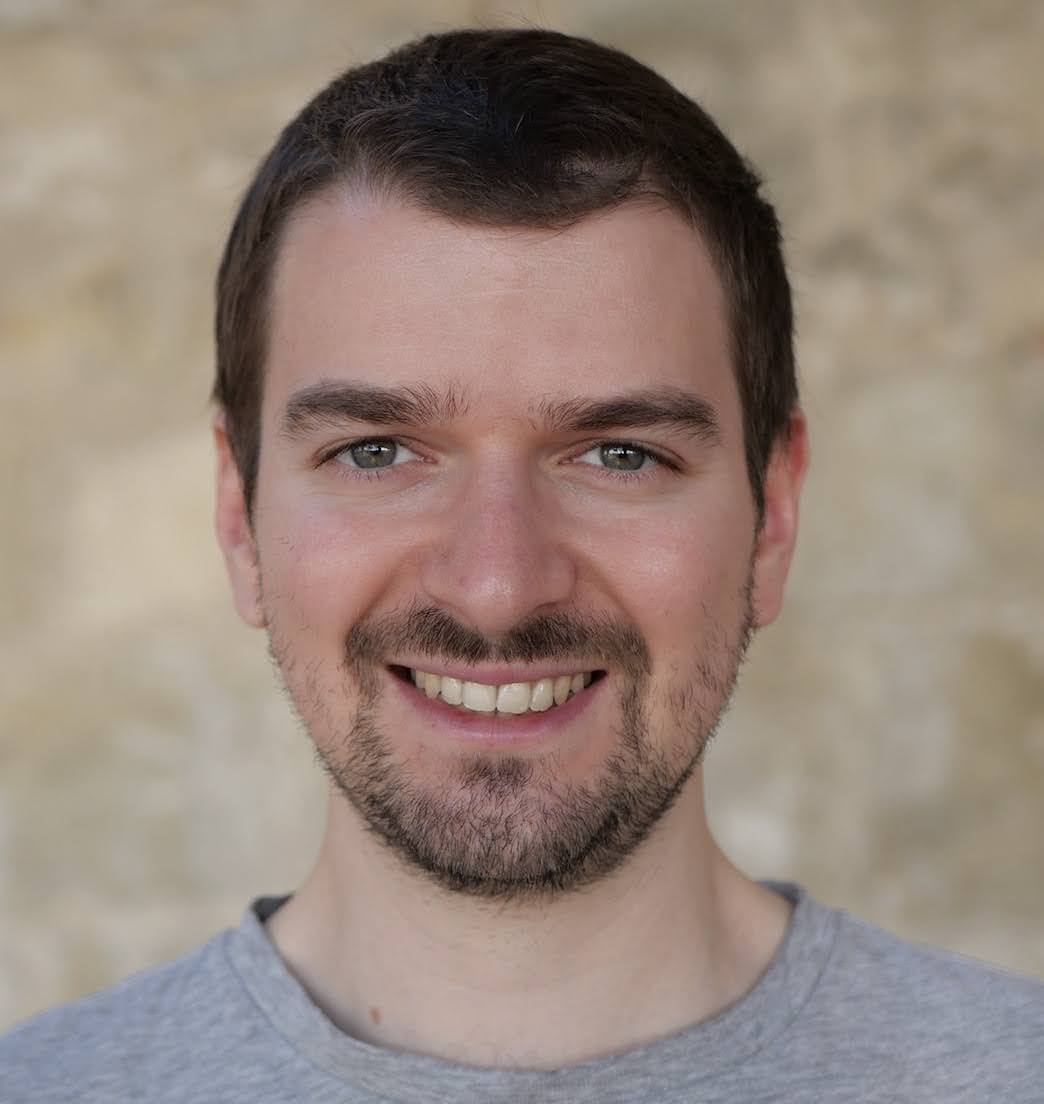
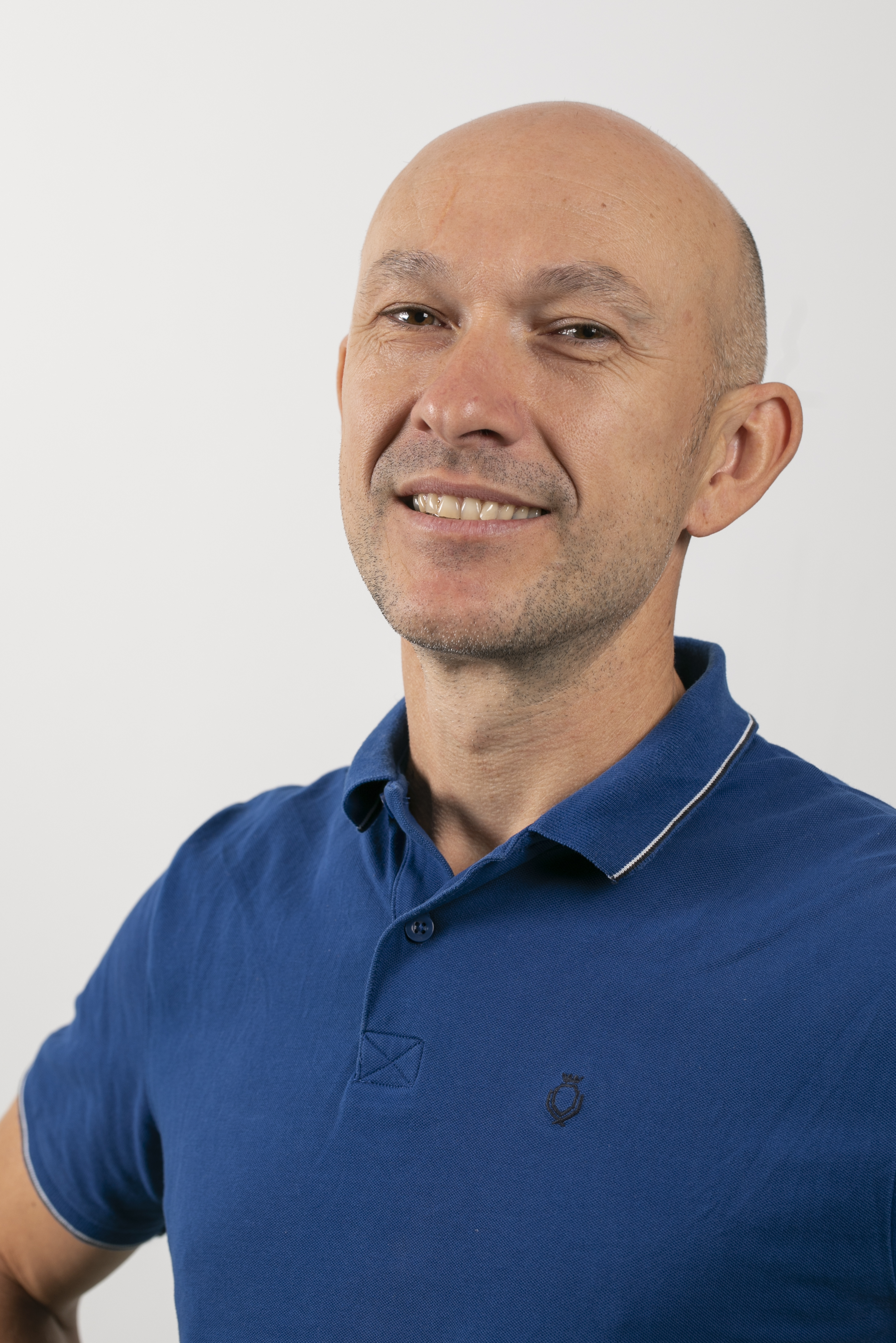
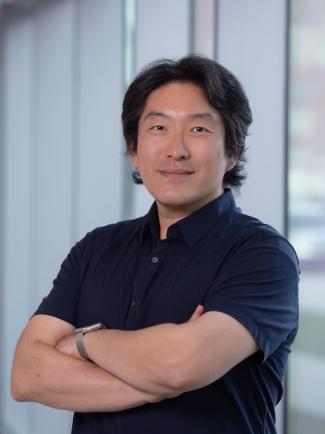
Leonard Berrada is a Research Scientist at DeepMind, focusing on robust and verified AI. He previously completed his DPhil/PhD at the University of Oxford under Andrew Zisserman and M. Pawan Kumar. Education: University of Oxford (DPhil/PhD, supervised by Andrew Zisserman and M. Pawan Kumar) Research Interests: His work spans optimization, deep learning, verification, and privacy-preserving machine learning. Recent publications highlight expertise in federated learning, biomedical image analysis, inverse problems, and tumor growth modeling. Publication Trends: His recent work (2022–2025) focuses on federated learning, biomedical image analysis, and inverse problems in personalized tumor modeling. Earlier contributions (2020–2018) address neural network training, verification, and loss function design. Keywords include Computer Science , Optimization , and Biomedical Engineering . Scientific Awards: Outstanding Reviewer Award at CVPR 2018 Top 10% Reviewer at NeurIPS 2020 Notable Contributions: Funded by Yougov and EPSRC during his PhD, he pioneered methods in neural network verification and federated learning. His thesis was accepted without correction by Andrea Vedaldi and Julien Mairal (2020). He also contributed to Gilbert Strang's book on linear algebra and learning from data.
Dr David Purser is a Lecturer in Computer Science at the University of Liverpool since January 2023 and a member of the Verification research group. His career spans postdoctoral research at the University of Warsaw and the Max Planck Institute for Software Systems, with a PhD from the University of Warwick. Research Interests : Weighted automata Vector addition systems Infinite state systems Formal verification Concurrency theory Key Contributions : Recent publications focus on nondeterminism resolution in systems, decidability problems in automata theory, porous invariants for linear systems, and step-counting in quantitative games. His work bridges computational logic, formal methods, and algorithm design. Teaching & Professional Roles : Co-ordinator for COMP517 Programming Fundamentals, supervisor of undergraduate and postgraduate projects, and co-founder of the Competitive Programming Club. He serves as Managing Editor for TheoretiCS and REF Environment lead in his department.
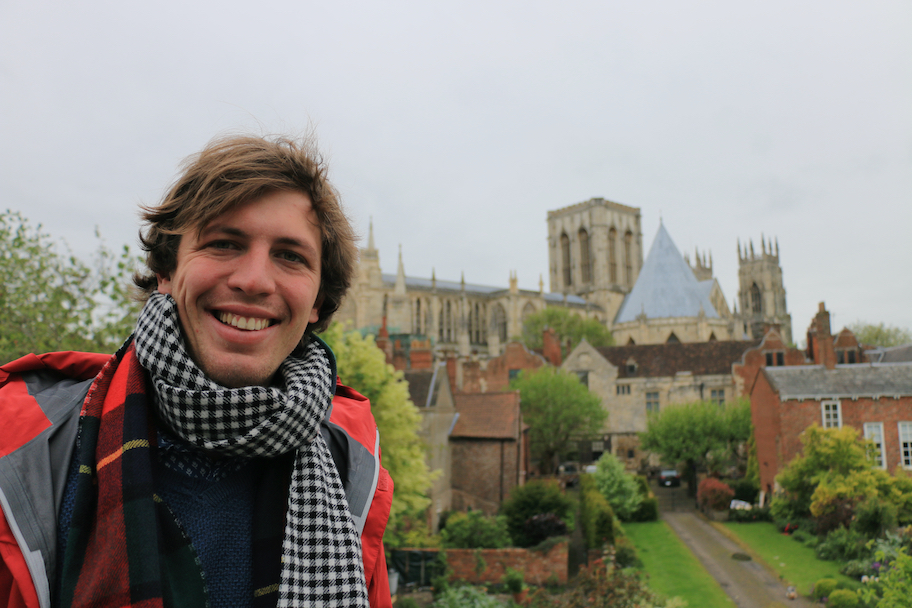
Dr Qiyi Tang is a Lecturer in the Department of Computer Science at the University of Liverpool since November 2022. Prior to this, she held postdoctoral and lecturing roles at the University of Liverpool, University of Oxford, and Imperial College London. PhD in Computer Science from York University, Toronto (2018) MSc in Computer Science from the University of Oxford (2013) Her research focuses on software verification , probabilistic systems , and automata theory , with applications in compiler testing and formal methods. Recent work explores intersections between probabilistic models, machine learning, and optimization algorithms, particularly in model checking and automata minimization. Scientific awards include the Governor General's Academic Gold Medal , Canada's highest student academic honor. She teaches formal methods and contributes to curriculum development in computer science.
David Russell Luke is a Professor of Continuous Optimization at the Institute for Numerical and Applied Mathematics, University of Göttingen, where he also serves as Managing Director of the Institute. He holds editorial positions as Area Editor for the Open Journal of Mathematical Optimization and Associate Editor for multiple prestigious journals including Journal of Optimization Theory and Applications, ESAIM: Control, Optimization and Calculus of Variations, SIAM Journal on Optimization, and Advances in Computational Mathematics. Dr. Luke earned his BSc with honors in Applied Mathematics from the University of California, Berkeley in 1991, followed by an MSc (1997) and PhD (2001) in Applied Mathematics from the University of Washington under James Burke. His academic journey included positions at the University of Göttingen (2001-2003), Simon Fraser University (2002-2004), and University of Delaware (2004-2009) before returning to Göttingen. His research focuses on Continuous Optimization, Variational Analysis, and Inverse Problems , with particular expertise in nonsmooth and nonconvex optimization, phase retrieval, and computational imaging. His work bridges theoretical mathematics with practical applications in photonic imaging, tomography, and adaptive optics. Current research projects include atomic orbital tomography, stochastic computed tomography for X-FEL imaging, probabilistic analysis in fixed point theory, and topological optimization for tree structure analysis. Analysis of his recent publications reveals a strong trend toward computational methods for imaging science, particularly phase retrieval problems, with increasing focus on three-dimensional reconstruction techniques and applications in photoemission orbital tomography. His work consistently integrates theoretical convergence analysis with practical algorithm development, often implemented in the ProxToolbox software framework. NASA/GSFC Graduate Student Research Fellow (1998-2001) Editorial roles with multiple leading optimization journals Principal investigator on numerous DFG-funded research projects Dr. Luke has advised several PhD students including Patrick Neumann and Thao Nguyen. His research has been supported by significant grants from the National Science Foundation, German Research Foundation (including Collaborative Research Center 755, Graduiertenkolleg 2088), Bundesministerium fuer Bildung und Forschung, German Israeli Foundation, and Australian Research Council. He leads the Working Group on Continuous Optimization, Variational Analysis and Inverse Problems at the University of Göttingen, which maintains the ProxToolbox software laboratory for proximal algorithms and optimization methods. The group actively develops computational tools for inverse problems and optimization, with applications ranging from space telescope wavefront reconstruction to atomic-scale imaging. Current projects are organized within the Collaborative Research Center 1456 and Graduiertenkolleg 2088 frameworks, focusing on mathematical modeling of complex imaging scenarios and developing efficient numerical algorithms for large-scale optimization problems.
Gwen Salaün is a Professor of Computer Science at Université Grenoble Alpes, affiliated with the CONVECS and LIG research groups, and Inria Grenoble. She holds a PhD (2003) and HDR in Computer Science. Her research spans formal methods, specification languages, automated verification, concurrent systems, and component/service-based architectures. She contributes to industrial applications, particularly in BPMN processes, IEC 61499, and IoT systems. Recent publications focus on probabilistic model checking, runtime enforcement, resource isolation testing, and automated refactoring of business processes, reflecting collaborations across Europe and funded by Région Auvergne-Rhône-Alpes. She supervises PhD students Ahang Zuo, Philippe Ledent, and Irman Faqrizal, and participates in committees like SAC'25 and FormaliSE'25. Her work emphasizes rigorous modeling, verification, and tool development for complex systems.
Emilio Jesús Gallego Arias is a non-tenured Research Fellow at the French National Center for Scientific Research (CNRS), hosted at the Institute of Fundamental Computer Research (IRIF) of CNRS and University of Paris Cité. He is also a member of the PiCube Inria team. Previously, he held postdoctoral positions at the University of Pennsylvania (2012–2014) and MINES ParisTech (2014–2019). His research spans mechanically-verified functional and logic programming , with a focus on the Coq proof assistant and the Mathematical Components Library . He develops tools like coq-lsp (language-server for Coq IDEs) and jsCoq (web interface), replacing earlier projects like SerAPI . His work bridges programming language theory , digital signal processing , and formal verification , particularly in the ANR FEEVER project for verifying Faust programs. His 15 most recent works (2014–2024) address type systems , differential privacy , and formal verification in domains like audio processing and mechanism design . Publications span journals (e.g., Journal of Privacy and Confidentiality), conferences (ICML, POPL, FARM), and workshops (CoqPL, UITP). He contributes to open-source projects (GitHub), including DFuzz (linear dependent types), DualQuery (privacy algorithms), and RAM (relational machine). He uses formal methods in collaborative development platforms (Gitter, GitLab) and advocates for free software and accessible audio technology .
Kathleen Fisher is an Adjunct Professor in the Computer Science Department at Tufts University and currently serves as the Director of the Information Innovation Office at DARPA. She previously held roles as Professor and Department Chair at Tufts (2016-2021), Program Manager at DARPA, and Principal Member of Technical Staff at AT&T Labs Research. Her academic journey began with a PhD in Computer Science from Stanford University. Kathleen’s research focuses on advancing programming languages through domain-specific languages (DSLs), program synthesis, and formal methods. Her work addresses challenges in ad hoc data management, secure systems, and integrating machine learning with programming language design. Notable projects include the Hancock and PADS systems for data processing, Forest for filestore management, and verified parser generators. She has received prestigious accolades, including ACM Fellow, Hertz Foundation Fellow, and SIGPLAN Distinguished Service Award. Her service includes leadership roles in ACM SIGPLAN, CRA-W, and as General Chair for ICFP 2015. Kathleen has advised PhD student Matt Ahrens and led impactful DARPA programs like HACMS and PPAML. As co-founder of the Programming Language Mentoring Workshop (PLMW), she actively contributes to diversity initiatives in computer science. Her research group, TuPL, explores DSLs, program synthesis, and language-based security, maintaining projects such as Autobahn and PADS.
Woonghee Lee is an Assistant Professor in the Department of Chemistry at the University of Colorado Denver, focusing on computational and experimental methods for protein structure analysis. His group develops high-throughput NMR tools and integrated software platforms. Education: Ph.D. in Biochemistry from University of Wisconsin-Madison (2013) Education: M.S. & B.S. in Biochemistry from Yonsei University (2008 & 2006) His research bridges biomolecular NMR, AI/ML, and big data to advance structural biology, particularly for infectious diseases and protein folding. He created field-standard tools like NMRFAM-SPARKY and PONDEROSA-C/S. Recent publications emphasize automated NMR analysis, protein allostery mapping, and integrative structural biology approaches. Key keywords include structural biology, bioinformatics, and computational methods. Scientific Awards F1000 Prime recognition Lee has taught courses such as Physical Chemistry Laboratory II and directed research projects. He organized workshops on NMR automation and contributed to international training programs.
Francisco Jurado Melguizo is a Professor in the Department of Electrical Engineering at Universidad de Jaén. His research focuses on power systems, renewable energy integration, and optimization algorithms, with over 520 JCR-indexed publications and 260 conference papers. He has led projects funded by Spanish Ministries and the European Commission and authored 8 books. PhD: Universidad Nacional de Educación a Distancia (UNED), 1999 His work spans distributed generation, energy storage, smart grids, and techno-economic analysis, often incorporating AI and metaheuristic optimization techniques. Recent projects include hybrid renewable systems, EV charging infrastructure, and grid resilience under climate uncertainties. He has received recognition as one of the most influential researchers globally by Stanford University and contributes to research groups focused on electrical technology and energy systems.
Jack B. Muir is a Marie Skłodowska-Curie Fellow at the University of Oxford's Department of Earth Sciences and Junior Research Fellow at Wolfson College. His research integrates advanced mathematics with seismology to address inverse problems in Earth imaging and hazard assessment. Education: PhD in Geophysics, Caltech Seismolab (2021) Research focuses on physics-informed neural networks for seismic wavefield simulation (TerraPINN project), nonparametric seismicity rate modeling using deep Gaussian processes, geologically-constrained tomography, and Bayesian methods for wavefield reconstruction. His work targets applications from near-surface structures to Earth's core, emphasizing machine learning acceleration and uncertainty quantification in inverse problems. Recent projects include Distributed Acoustic Sensing (DAS) optimization and seismic swarm analysis. Publication trends (2022-2025) reveal strong emphasis on machine learning integration (PINNs, Gaussian processes) with geophysical inverse problems, particularly for DAS data processing, deep Earth imaging, and probabilistic hazard assessment. Key themes include multi-scale analysis, instrument response calibration, and computational efficiency. Scientific Awards: Marie Skłodowska-Curie Fellowship John Monash Scholarship Junior Research Fellowship at Wolfson College, Oxford Grant-funded projects include TerraPINN for physics-based seismic hazard assessment and collaborations leveraging Caltech's Community Seismic Network. He actively develops open-source tools for core-mantle boundary modeling and DAS data processing. Labs and teams involve Oxford's Seismology group (Tarje Nissen-Meyer), Caltech (Zach Ross), Australian National University (Hrvoje Tkalčić), and JAMSTEC (Satoru Tanaka), with fieldwork utilizing ocean-bottom seismometers and urban sensor networks.
Prof. Dr. Mario Fritz is a Professor at Saarland University and faculty member at CISPA Helmholtz Center for Information Security. He serves as a Fellow at the European Laboratory for Learning and Intelligent Systems (ELLIS). His research focuses on Trustworthy Information Processing at the intersection of AI & Machine Learning with Security & Privacy. Mario Fritz leads numerous significant research initiatives including the European Large Open Multi-Modal Foundation Models for Robust Generalization (ELLIOT), European Lighthouse on Secure and Safe AI (ELSA), and multiple projects on privacy-preserving AI applications in healthcare. His work spans security and privacy aspects of large language models, foundation models, and medical AI applications. He has established himself as a leading researcher in trustworthy AI through his extensive publication record and leadership in major collaborative projects. His recent research (2025 publications) demonstrates a strong focus on the security and safety challenges of large language models, including model stealing attacks, causal reasoning capabilities, sampling methods, and privacy risks. His work bridges theoretical foundations with practical applications across multiple domains, particularly in healthcare and cybersecurity. Mario Fritz actively mentors PhD students and Post-Docs, seeking new researchers to join his group. He has been involved in numerous grants and collaborative projects, including those funded by BMBF and the Helmholtz Association, demonstrating his ability to secure substantial research funding and lead large interdisciplinary teams.
Kimmo Kartasalo is a Senior Research Specialist and Assistant Professor at the Department of Medical Epidemiology and Biostatistics , Karolinska Institutet , Sweden. His research focuses on the intersection of Artificial Intelligence , Bioinformatics , and Medical Imaging , particularly in cancer diagnostics. Current roles: Senior Research Specialist (2024-), Assistant Professor (2024-2030) Supervision: Sol Erika Boman (2023), Kelvin Szolnoky (2022) His work emphasizes deep learning for histopathology analysis, including prostate cancer grading, breast cancer spatial gene expression prediction, and multi-stain whole-slide imaging. He leads projects in 3D tissue reconstruction , virtual reality histology visualization , and AI-assisted diagnostic uncertainty estimation . Collaborations span international institutions and include algorithm benchmarking challenges like PANDA and ACROBAT. Key methodological contributions include physical color calibration for digital pathology scanners, conformal prediction frameworks for diagnostic reliability, and open-source tools like OpenPhi for whole-slide image processing. His publications appear in top journals including Nature Medicine , Cancer Research , and European Urology .
Heather Miller Coyle, Ph.D., serves as Associate Professor in the Forensic Science Department within the Henry C. Lee College of Criminal Justice and Forensic Sciences at the University of New Haven. Her academic appointments span forensic biology, DNA analysis, and botanical evidence applications in criminal investigations. She maintains an active research profile with publications spanning forensic botany, DNA mixture interpretation, and touch DNA analysis. Ph.D. in Plant Biology, University of New Hampshire (1994) M.S. in Plant Science, University of New Hampshire (1989) B.S. in In Vitro Cell Biology, SUNY Plattsburgh (1986) Dr. Miller Coyle's research centers on forensic applications of biological evidence, with particular expertise in DNA for human identification, touch DNA transfer dynamics, DNA mixture interpretation challenges, and botanical evidence analysis. Her work bridges plant biology with forensic science through forensic botany applications, including pollen analysis, seed identification, and plant DNA profiling for criminal casework. She has developed specialized methodologies for botanical evidence collection and interpretation in crime scene contexts. Her publication record shows consistent focus on improving forensic DNA analysis reliability, with recent work examining STR quality control measures, probabilistic genotyping software validation, and haplotype analysis for ancestry determination. The research demonstrates strong interdisciplinary connections between plant biology, molecular genetics, and criminalistics, with practical applications in courtroom testimony preparation and evidence interpretation standards. Dr. Miller Coyle has contributed significantly to forensic education through curriculum development that links laboratory practices to courtroom testimony requirements. Her work includes developing engaging lesson models for biological evidence collection training and classroom resources that prepare students for forensic science careers.
Tianlong Chen is an Assistant Professor in the Department of Computer Science at The University of North Carolina at Chapel Hill , starting in Fall 2024. His research focuses on AI trustworthiness, efficiency, and scientific applications , particularly through sparsity, multimodal learning, and large language model (LLM) innovations. Research Interests include: Sparsity techniques for LLM optimization Multimodal learning and graph neural networks AI safety and privacy preservation Quantum computing applications Biological-informed AI systems Recent Trends in his publications emphasize Mixture-of-Experts (MoE) , LLM safety mechanisms , and lifelong learning architectures . Awards highlight recognition from Amazon, UNC Provost, NAIRR, and AAAI. Scientific Awards : Amazon Research Award (2025) UNC Accelerating AI Awards (2025) NAIRR Pilot Award (2025) CPAL/KAUST Rising Star Awards (2025) AAAI New Faculty Highlights (2025) Advising : Mentors 19 Ph.D. students across UNC Chapel Hill and remote collaborations, focusing on AI4Science, LLMs, and quantum computing. Grants include Cisco Research funding and UNC Provost AI support.
Rémi Venant serves as an Associate Professor of Computer Science at the University of Le Mans , where he teaches software engineering and web development at the University Institute of Technology of Laval . Affiliated with the IEIAH research group , his work bridges academic instruction and cutting-edge research in educational technology. His research centers on Technology Enhanced Learning , with three core pillars: Learning Analytics : Applying machine learning/deep learning to decode teaching/learning dynamics Collaborative Learning Enhancement : Developing AI-driven tools to foster cooperative educational experiences Pedagogical Engineering : Supporting the design and re-engineering of instructional activities He pioneered Lab4CE , a cloud-based environment delivering analytics and AI tools for computer science practical work, significantly improving student engagement and outcomes. His methodology emphasizes user-centered design for educational technology. Analysis of his 2023-2025 publications reveals a dominant trend at the intersection of language learning and AI . Key patterns include explainable AI systems for teacher support, learning analytics applications in Computer Assisted Language Learning (CALL), and computational linguistics approaches to language proficiency assessment. His work consistently demonstrates interdisciplinary collaboration between computer scientists and linguists. No scientific awards or fellowships are documented in the source material. Rémi Venant actively mentors through project-based supervision but no formal doctoral advisees are listed. His research is frequently funded through institutional collaborations though specific grants aren't detailed. He maintains strong partnerships with the Analytics for Language Learning (A4LL) initiative and Moodle ecosystem integrators. He leads development of the Lab4CE platform within the IEIAH group and co-develops the A4LL architecture with linguists at Université Paris Cité. His teams specialize in creating interoperable educational systems that merge corpus linguistics with learning analytics, particularly for second-language acquisition contexts.