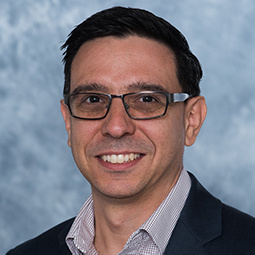
Dr. Rakib Abdur is Associate Professor and Systems Security Group member at Coventry University's Institute for Future Transport and Cities, specializing in formal verification of autonomous systems. Research focuses on modeling and verifying safety/security properties in resource-constrained environments using temporal logics and model-based testing. Holds PhD in Computer Science from University of Nottingham (2011) on verifying resource-bounded agents, with prior positions at University of West of England and University of Nottingham Malaysia Campus. Current work includes developing simulation frameworks for automotive cybersecurity risk assessment and context-aware security models. Leads projects on enhanced intrusion detection systems using meta-heuristic optimization and cybersecurity roadmaps for connected infrastructure. Contributions include formal methods for analyzing qualitative/quantitative properties in safety-critical autonomous systems.
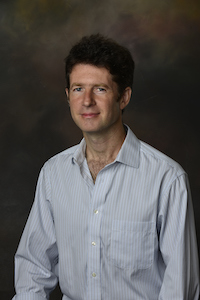
Juan Caicedo serves as Professor and Chair of the Civil and Environmental Engineering Department at the University of South Carolina's Molinaroli College of Engineering and Computing. His research in structural dynamics focuses on vibration-based monitoring for infrastructure and health applications. Education: D.Sc., Washington University in St. Louis M.S., Washington University in St. Louis B.S., Universidad del Valle Research integrates numerical modeling and experimental validation for structural health monitoring, earthquake resilience, and human activity detection. Recent innovations include probabilistic methods for gait analysis using floor vibrations and impact localization algorithms. Publications demonstrate strong industry-academia collaboration, particularly in sustainable structural design and educational initiatives.
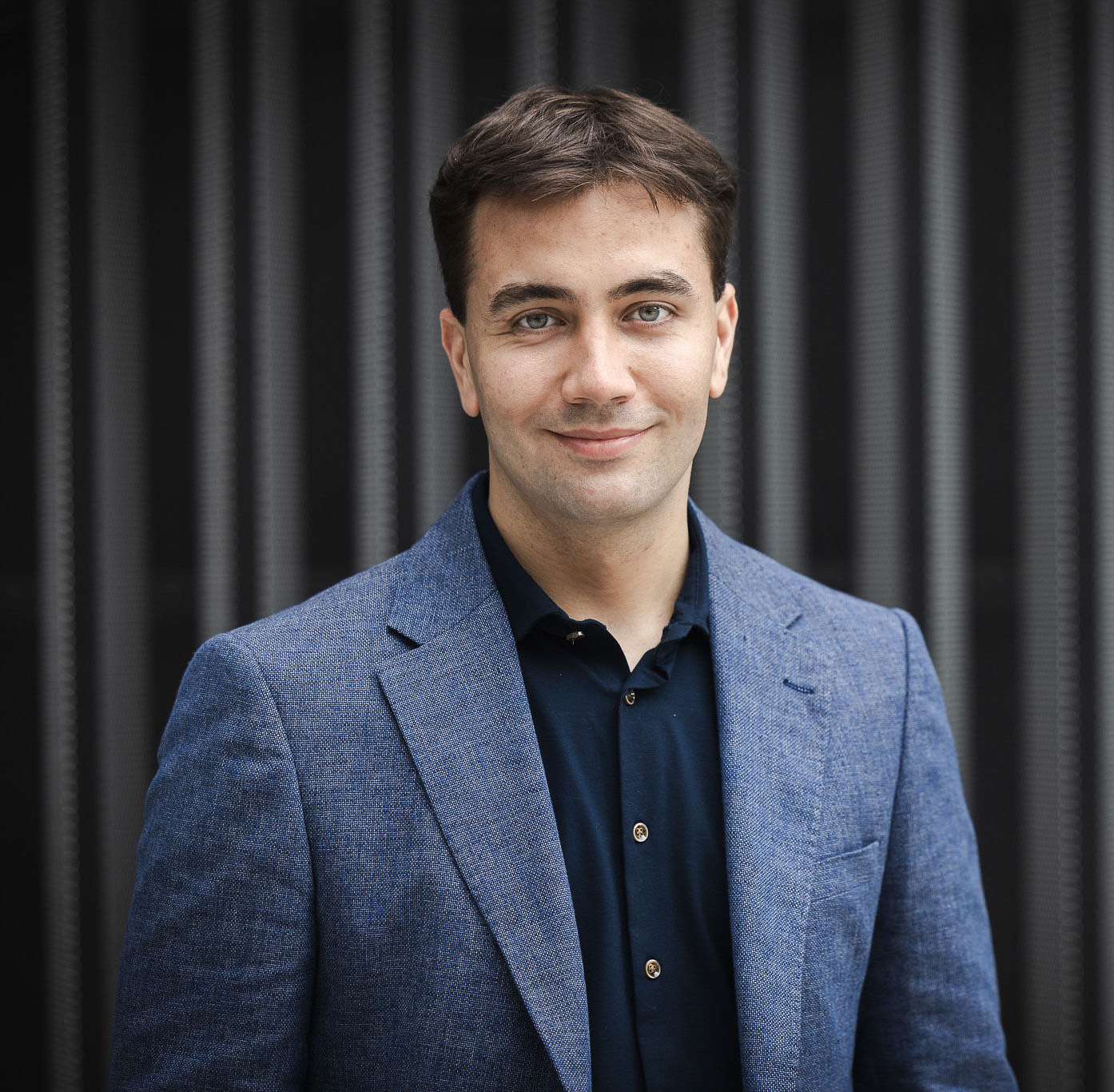
Djordje Zikelic is an Assistant Professor of Computer Science at Singapore Management University's School of Computing and Information Systems. He holds a PhD from the Institute of Science and Technology Austria (ISTA), where he was advised by Krishnendu Chatterjee and Petr Novotný. His research focuses on formal methods for ensuring correctness, safety, and trustworthiness of software and AI systems, with an emphasis on probabilistic systems, program verification, and safe autonomy. He has received awards including the Outstanding PhD Thesis and Outstanding Scientific Achievement awards from ISTA. Education: PhD in Computer Science, ISTA (2023) Bachelor's and Master's in Mathematics, University of Cambridge Research Interests: Formal verification of probabilistic systems Trustworthy AI and neural network certification Runtime monitoring and control synthesis Blockchain protocol analysis Teaching: CS423: Heuristic Search and Optimization (Spring 2025/2024) His recent work includes advancements in supermartingale-based verification, neural controller certification, and automated analysis of blockchain systems. He serves on program committees for top conferences like AAAI, CAV, and IJCAI and actively mentors students in PhD, internship, and visiting roles.
Mark Yampolskiy is an Associate Professor in the Department of Computer Science and Software Engineering at Auburn University's Samuel Ginn College of Engineering. His research focuses on cybersecurity in additive manufacturing (AM), internet of things (IoT), and computer networks. Yampolskiy leads efforts to secure AM processes against cyber-physical attacks, including sabotage and data theft. He has received prestigious awards such as the ASTM International Additive Manufacturing Young Professor Award and led high-profile grants totaling over $685,000. Education: Ph.D. in Computer Science, Ludwig Maximilian University M.S. in Computer Science, Technical University Munich B.S. in Applied Mathematics, Moscow State Institute of Radiotechnics, Electronics and Automation Research Interests: Cybersecurity of digital & additive manufacturing IoT security and network defense Cyber-physical system vulnerabilities 3D printing integrity and sabotage detection Key Contributions: Developed frameworks for AM security awareness and threat modeling Pioneered studies on side-channel attacks in manufacturing Co-organized ASTM AM Security Working Groups and AMSec workshops Advocated for legal standards in AM intellectual property protection Awards: ASTM International Additive Manufacturing Young Professor Award America Makes Award ($260k+ for cybersecurity training) NSF Grant ($425k for sabotage prevention research) Labs/Initiatives: Active in Auburn's National Center for Additive Manufacturing Excellence (NCAME), McCrary Institute for Cyber and Critical Infrastructure Security.
Tegan Brennan is an Assistant Professor at the Department of Computer Science within the Charles V. Schaefer, Jr. School of Engineering and Science at Stevens Institute of Technology. She holds a PhD in Computer Science from the University of California Santa Barbara (2020). Her research focuses on software verification, side-channel analysis, computer security, and program analysis. Prior to academia, she worked as an Applied Scientist at Amazon (2020). Her research interests emphasize securing computational systems through rigorous analysis of timing channels, adaptive neural networks, and compiler-induced vulnerabilities. She has contributed to methods like probabilistic reachability analysis and fuzzing techniques for identifying security flaws. Brennan has received accolades such as the UCSB Outstanding Dissertation Award (2020) and ICSE Student Research Competition Third Place (2020). She actively serves on program committees for IEEE Security and Privacy, CSF, and BAR conferences, reflecting her leadership in the cybersecurity community. Her grants include CRII: SaTC funding for studying timing channels in neural networks. Courses taught include CS284 (multiple semesters), CS516, CS396, and CS810-E, covering software engineering and advanced security topics.
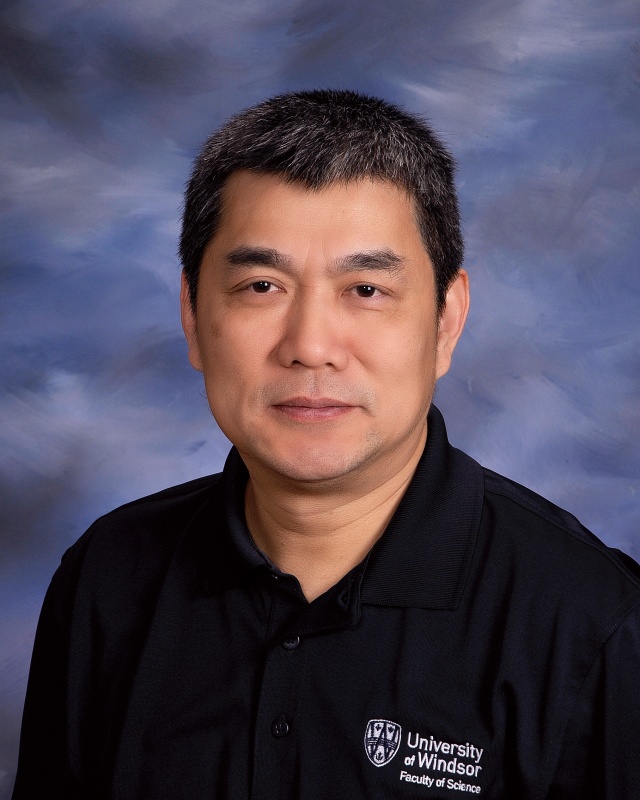
Dr. Dan Wu is an Associate Professor at the School of Computer Science, University of Windsor. His research focuses on uncertain reasoning, machine learning, knowledge representation, and robotics. He holds a PhD from the University of Regina (2003). His work bridges theoretical advancements and practical applications in robotics, traffic systems, and probabilistic inference. Education: PhD in Computer Science, University of Regina, 2003 Research Interests: Machine Learning: Focused on deep learning models for traffic prediction and robotics. Uncertain Reasoning: Developing probabilistic methods for cooperative robotic systems. Robotics: Multi-robot coordination, navigation, and obstacle avoidance. Knowledge Representation: Applications in distributed Bayesian networks and graph-based systems. Publications Trends: Recent work emphasizes urban traffic management (reinforcement learning for signal control), vehicular networks (task offloading in 5G), and privacy-preserving federated learning. Earlier studies addressed multi-robot coverage algorithms and probabilistic localization techniques. Lab/Teams: Active in AI-driven robotics and intelligent transportation systems research, though specific lab names are not explicitly mentioned in the provided texts.
Sheng Xu is a Research Fellow at the Department of Technology and Security, UiT The Arctic University of Norway. His postdoctoral research focuses on designing adaptive learning models for maritime education and training (MET), particularly in Arctic navigation contexts. His work integrates risk assessment methodologies, Bayesian network modeling, and data-driven analytics to enhance operational safety in ice-covered waters. Research interests include autonomous ship systems, collision risk mitigation in ice channels, and the application of probabilistic models to predict navigation hazards. He collaborates on projects analyzing vessel besetting incidents, ice load impacts on offshore structures, and human factors in Arctic navigation decision-making. Publications span 2012–2025, emphasizing statistical analysis of ice-related maritime risks and software risk modeling for autonomous vessels. His studies frequently utilize AIS data, satellite imagery (e.g., Sentinel), and hybrid causal logic frameworks. Key technical contributions include frameworks for failure scenario identification in autonomous ship control systems and reviews comparing risk analysis models in ice-covered regions. His work bridges engineering, environmental science, and policy to address challenges in Arctic shipping.
Paulo Costa is a Professor and Chair of the Department of Cyber Security Engineering at George Mason University's College of Engineering and Computing. He also directs the Center of Excellence in C5I and serves as Vice President for Securing Automation at CyManII. His expertise spans cybersecurity, decision support systems, and probabilistic ontologies. Costa holds a PhD in Information Technology from GMU, with earlier degrees in Systems Engineering and Brazilian Air Force Academy training. Research focuses on Bayesian reasoning applications in cyber-physical systems, information fusion, and semantic technologies. Key projects include PR-OWL (probabilistic ontology language), ADS-Bsec (secure aviation communication), and cybersecurity frameworks for semiconductor manufacturing. He leads the ETUR Working Group on uncertainty reasoning and has pioneered tools like UnBBayes-MEBN for probabilistic reasoning. Grants: Includes $3.9M for cybersecurity scholarships and projects under DOE's Cybersecurity Manufacturing Innovation Institute. Awards: Peggy Brouse Cybersecurity Educator Award, multiple best paper awards, and the Eduardo Gomes Medal. Leadership: IEEE Senior Member, ISIF Board member, and affiliated with Brazilian universities. Teaching includes courses on cybersecurity, probabilistic reasoning, and systems engineering. Advises over 20 PhD students and has mentored teams in national competitions.
Michael Berry is a Professor in the Min H. Kao Department of Electrical Engineering and Computer Science at the University of Tennessee, Knoxville, part of the Tickle College of Engineering. He holds a PhD in Computer Science from the University of Illinois at Urbana-Champaign, an MS in Applied Mathematics from North Carolina State University, and a BS in Mathematics from the University of Georgia. His research focuses on data science, machine learning, text mining, nonnegative matrix factorization, parallel computing, and their applications in biomedical and environmental domains. Notable contributions include work on tensor decomposition for big data analysis, algorithms for text mining, and computational tools like PolyLens and CodeAssessor. Berry's publications emphasize interdisciplinary applications, such as using nonnegative tensor factorization for biomedical literature analysis and developing GPU-accelerated methods for traffic flow analysis. His work spans conferences like the International Conference on Soft Computing in Data Science (SCDS) and journals in computational science. He has contributed to software tools like FutureLens for text visualization and SHEPPACK for interpolation algorithms. His research also addresses environmental challenges via parallel ecosystem modeling and spatial control problems. No scientific awards or grants are explicitly mentioned in the provided text.
Kostas Chatzikokolakis is an Associate Professor at the Department of Informatics and Telecommunications, University of Athens. He is on leave from CNRS and the Inria team Comète at LIX, École Polytechnique. His research focuses on security and privacy, particularly quantitative information flow, location privacy, differential privacy, probabilistic verification, and concurrency theory. Education includes a PhD in Computer Science (2007) from École Polytechnique, Paris, with a thesis on probabilistic and information-theoretic approaches to anonymity. He holds a Master's from University Paris VII and a Bachelor's from the National University of Athens. Research interests span formal methods for privacy, differential privacy mechanisms, and location privacy. Notable contributions include the Geo-Indistinguishability framework and the Location Guard browser extension. He has received the Test of Time Award at CCS 2023, NSA Best Scientific Cybersecurity Paper Award (2015), and the Second SPECIF/Gilles Kahn Prize (2008). Teaching includes courses on privacy technologies, computer security, and data structures. He has supervised numerous PhD students and led projects like LOGIS (JSPS/Inria), REPAS (ANR), and Privacy-Friendly Services (Microsoft). Contributions to open-source software include the Location Guard (60k daily users) and libqif, a C++ toolkit for quantitative information flow analysis.
Martin Wilkes is a Senior Lecturer at the School of Life Sciences , University of Essex. His research focuses on data-driven approaches to understanding and predicting biodiversity change in freshwater and terrestrial ecosystems, with applications in environmental policy and sustainable resource management. Research interests: Ecology, Biodiversity Science, Fisheries, Biogeography, Artificial Intelligence, Species Distribution Modeling Current teaching: Freshwater Ecology, Data Analysis, Coral Reef Research Skills Research Trends : His recent articles emphasize large-scale ecological modeling, sediment stress impacts on aquatic life, cryopreservation techniques in fisheries, and climate change effects on riverine biodiversity. Key subfields include river restoration , functional trait analysis , and ecohydraulics . Supervision : Currently advising PhD and MSc students in environmental and biological sciences. Grants include projects such as Navigating Riverine War Reparations (2025) and MARRK: Aquatic Resources in Kenya (2023).
Cristina Tortora is an Associate Professor in the Department of Mathematics and Statistics at San Jose State University (SJSU), part of the College of Science. Prior to her position at SJSU since 2016, she held post-doctoral fellowships at McMaster University (2014-2015), the University of Guelph (2013), and Stazione Zoologica Anton Dohrn in Naples (2012). She has also been a visiting professor at the University of Naples Catania (Summer 2022 and Fall 2024), University of Naples Federico II (Summers 2021 and 2017), and McEwan University in Alberta, Canada (2019). Additionally, she was a visiting student at CEREMADE Paris Dauphine during her PhD. Her education includes a Ph.D. in Statistics from the University of Naples Federico II (2012), a Master's degree in Statistics (Statistica per le decisione e l’analisi dei sistemi complessi) from the same university (2008), and a Master 2 in Applied Mathematics (Economie quantitative des comportements et des marchés) from Université Lumière Lyon II, France (2009). Cristina’s research interests are centered around cluster analysis , classification , and model-based clustering . She specializes in developing methods for handling mixed-type data , missing values , and outlier detection using advanced statistical models such as generalized hyperbolic distributions and asymmetric Laplace regressions. Her work extends to applied domains, including environmental science (e.g., phytoplankton associations), transportation studies (e.g., cyclist waiting times), and psychology (e.g., emotional reactivity subtypes). She also contributes to software development, notably with the R packages FPDclustering and MixGHD , which implement her clustering algorithms. Her recent publications (2022–2025) reflect a focus on probabilistic distance clustering, mixture models, and algorithm evaluation. These studies explore techniques for addressing data asymmetry, improving outlier detection, and analyzing complex datasets across disciplines. Cristina Tortora has received several notable awards, including the Chikio Hayashi Award for young researchers in 2019 and the SJSU College of Science Award for research and mentoring students in 2024. She has held leadership roles in professional societies, such as serving as President of the San Francisco Bay Area ASA Chapter (2022) and currently as Communication Director . She was also elected as a Director of the Classification Society from 2022 to 2026. In terms of grants and advising, Cristina has collaborated on projects funded by Caltrans, including the evaluation of coordinated ramp metering systems. She leads the RUI-funded research on versatile mixture models for mixed-type data. While specific student names are not listed, her work emphasizes mentoring, as highlighted by the 2024 SJSU award. She advises interdisciplinary teams in environmental science, engineering, and agroecology through collaborative research initiatives. Cristina collaborates with multidisciplinary teams, including psychologists, environmental scientists, engineers, and agroecology experts, but her work is primarily conducted within the Department of Mathematics and Statistics at SJSU. She also maintains active engagement with international academic networks through her visiting roles and professional service.
Cédric Foucault is a Junior Research Fellow at Christ Church College, University of Oxford, affiliated with the Department of Experimental Psychology. His research focuses on computational models of human cognition and decision-making in dynamic environments, leveraging tools from computer science, neuroscience, and machine learning. Prior to academia, he worked as a software engineer at Apple in Silicon Valley, contributing to iOS development. Education: PhD in Cognitive Computational Neuroscience (2023), University of Paris-Saclay/Sorbonne University MSc in Cognitive Neuroscience (2020), École Normale Supérieure de Paris MSc in Computer Science (2014), École Normale Supérieure Paris-Saclay His research integrates fMRI , M/EEG , and Bayesian modeling to study learning under uncertainty, probabilistic inference, and decision-making processes. Collaborations include work with Laurence Hunt’s research group at Oxford. He maintains an active GitHub profile with repositories on neural networks and computational cognitive science. Recent work emphasizes expanding research into broader decision-making domains while continuing to develop computational tools for neuroscience applications.
Kevin Batz is a researcher in computer science at RWTH Aachen University, currently affiliated with University College London. He completed his PhD in December 2024 under Professor Joost-Pieter Katoen, focusing on probabilistic program semantics and verification. His work includes co-developing Weighted Programming, a paradigm for mathematical modeling, and advancing deductive verification techniques for probabilistic systems. Education: PhD in Computer Science (RWTH Aachen University, 2024, summa cum laude). Supervised by Prof. J.-P. Katoen. Research Interests: Probabilistic programming semantics, automated verification, formal methods for heap-manipulating systems, and quantitative separation logic. He has pioneered tools like the deductive verification infrastructure for probabilistic programs and contributed to foundational work on expectation analysis. Awards: ETAPS Doctoral Dissertation Award 2025 Best Paper Award at LOPSTR 2020 Springorum Medal 2019 Teaching & Supervision: Taught courses on probabilistic programming, static analysis, and compiler construction. Supervised multiple thesis projects, including award-winning works on quantitative separation logic and invariant-based strategy synthesis. Labs/Teams: Member of the Software Modeling and Verification Group at RWTH Aachen, contributing to the LuFG i2 research unit.
Raphaël Berthon is a Researcher in the Software Modeling and Verification Group at RWTH Aachen University, led by Professor Joost-Pieter Katoen. His work focuses on Formal Verification, Logic, and Automata Theory, with particular emphasis on combinations of Game Theory, Stochastic Models, Parity Objectives, Temporal Logic, and Imperfect Information. Current research explores strategic ability in stochastic multi-agent systems and objectives in Markov Decision Processes. Education background is not explicitly detailed in the provided texts, but his affiliation with RWTH Aachen University's Department of Computer Science indicates advanced academic qualifications in computer science or related fields. Publications from 2024 highlight contributions to stochastic multi-agent systems and Markov Decision Processes, reflecting his expertise in theoretical computer science and probabilistic systems. No awards or grants are explicitly mentioned in the texts. He is affiliated with the LuFG i2 (Theory of Hybrid Systems) and contributes to the MOVES group's research activities. Contact details include an office at Room 4205, Ahornstraße 55, Aachen.