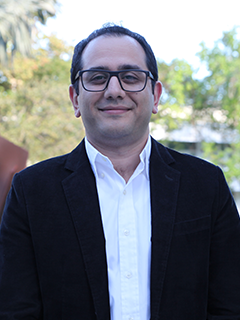
Giulia Fanti is an academic researcher affiliated with Carnegie Mellon University in the Computer Science Department . Her research focuses on privacy-preserving technologies, blockchain systems, and machine learning mechanisms, with significant contributions to federated learning, differential privacy, and cryptocurrency network design. Key Research Areas : Privacy in blockchain, Generative Adversarial Networks (GANs), Federated Learning, Game Theory applications to decentralized systems. Recent Publications : Her work explores liquidity provisioning in decentralized finance, truncated consistency models for image generation, and private data valuation frameworks. She has contributed to venues like NeurIPS, ICLR, and SIGMETRICS, often addressing privacy-utility tradeoffs.
Ulrike Zetsche is a researcher at the Department of Education and Psychology, Clinical Psychology and Psychotherapy, Freie Universität Berlin. Her work focuses on emotional regulation , rumination , affective forecasting , and depression , utilizing experience sampling methods. Key Research Themes Emotion regulation processes in clinical populations Cognitive mechanisms in depression and OCD Development of psychological assessment tools Publication Trends : Over 2007–2024, her studies span OCD neurobiology (2007–2012), inhibition deficits in depression (2007–2012), and daily affect regulation (2018–2024). Recent work integrates ambulatory assessment with mindfulness interventions and cognitive control analysis. Collaborations : Works closely with researchers like P.-C. Bürkner, L. Schulze, and B. Renneberg on clinical trials and meta-analyses. Involved in projects such as PANDA, I-REACH, and Smart-e-Moms.
Dr. Teresa Katthagen serves as a Postdoctoral Research Fellow and Psychologist within the Department of Psychiatry and Neurosciences at Charité – University Medicine Berlin's Campus Charité Mitte. Based in Ward 154T and actively contributing to the Research Group Learning and Cognition, her clinical and research activities center on understanding the pathophysiology of schizophrenia and related psychotic disorders through advanced neuroimaging and computational methodologies. Her research program critically examines the neural substrates of motivation deficits (apathy), reward processing abnormalities, and belief formation in psychosis. Utilizing functional MRI, computational modeling of decision-making, and longitudinal study designs, she investigates how striatal-cerebellar circuits, dopamine signaling, and uncertainty processing contribute to symptom dimensions such as negative symptoms and delusions. This work bridges cognitive neuroscience with clinical psychiatry to identify transdiagnostic mechanisms. Recent publication trends demonstrate a sustained focus on schizophrenia spectrum disorders, particularly the computational and neurobiological basis of apathy and negative symptoms. Her work frequently employs fMRI to study striatal prediction error signaling, cerebellar-ventral tegmental area connectivity, and the impact of stress on cognitive flexibility. A notable emphasis exists on methodological rigor through longitudinal designs, multi-site validation, and reproducibility frameworks. Scientific awards and honors were not documented in the provided materials. Details regarding graduate student mentorship and externally funded research grants are not specified in the available information. As a key member of the Learning and Cognition Research Group, Dr. Katthagen collaborates within a multidisciplinary team that integrates computational psychiatry, cognitive neuroscience, and clinical research. The group maintains strong methodological expertise in fMRI data acquisition and analysis, computational modeling of behavioral tasks, and longitudinal study design to advance mechanistic understanding of psychiatric disorders.
Paavo Salminen is a faculty member in the Mathematics department at the Faculty of Natural Sciences and Engineering. With a prolific publication record spanning from 1990 to 2025, he has established himself as a prominent researcher in probability theory and stochastic processes. His research interests primarily focus on: Brownian Motion and its variants Optimal Stopping problems Diffusion processes and spider processes Excessive functions and Green kernels Theta functions and their probabilistic aspects Markov processes and their applications Salminen's recent work demonstrates a continued focus on theoretical aspects of stochastic processes with applications in mathematical finance and other fields. His publications show consistent contributions to understanding diffusion processes, optimal stopping problems, and the mathematical properties of Brownian motion variants. The research spans both theoretical developments and potential applications in financial mathematics and other domains requiring sophisticated stochastic modeling techniques. His scientific contributions include: 34 publications documented between 2009-2024 Multiple collaborations with international researchers including Christophe Vignat, Ernesto Mordecki, and Pierre Vallois Hosting academic visitors at his institution in 2022 and 2024 Salminen maintains an active research program, with several publications appearing in 2024 and even some listed for 2025, indicating ongoing productive research activities. His work bridges pure probability theory with potential applications in mathematical finance and other fields requiring advanced stochastic modeling techniques.
Evangelos F. Magirou is a Professor of Operations Research at the Department of Informatics, School of Information Sciences and Technology, Athens University of Economics and Business (AUEB), where he has served since 1986. His academic career includes significant administrative roles including Chairman of the Faculty Union at AUEB since 1994, Deputy Chairman of the Department of Informatics since 2003, and Member of the Governing Board of the Public Power Corporation since 2004. His educational background includes: PhD in Decision and Control Sciences, Harvard University (1972-76) MS in Decision and Control Sciences, Harvard University (1971-72) BS in Electrical Engineering, Princeton University (1967-71) Professor Magirou's research spans theoretical and applied operations research with particular emphasis on applications to Greek business environment challenges. His work demonstrates consistent focus on finance, shipping, and production systems, with fundamental contributions to optimization, probabilistic models, and quantitative methods. His research trajectory shows evolution from early theoretical work in control systems and game theory to applied research in shipping economics and financial mathematics, with recent work addressing contemporary challenges including infectious disease response and American option pricing. His publication record reveals a strong interdisciplinary approach, bridging operations research with computer science, economics, and maritime transport. The 15 most recent publications indicate continued research productivity with applications spanning finance (option pricing algorithms), public health (infectious disease response), shipping (vessel positioning), and computer security (spam modeling). Professor Magirou has held numerous leadership positions including: Chairman of the Executive Committee for the MSc Program in Business Mathematics Chairman of the Hellenic Procurement Institute (1994-97) Vice Chairman of the Energy Coordination Committee (1993-95) Member of the National Energy Council's Scientific Secretariat (1977-85) He has been actively involved with professional organizations including INFORMS (Institute for Operations Research and the Management Sciences) and the Technical Chamber of Greece. His teaching responsibilities include courses in Elementary and Intermediate Mathematics of Finance, Operations Research, Game Theory, and Decision Theory, for which he has developed extensive teaching materials available in Greek.
Zimbidis Alexandros serves as Assistant Professor of Stochastic Analysis with applications to Insurance and Finance at the Department of Statistics, School of Information Sciences and Technology, Athens University of Economics and Business (AUEB). He concurrently acts as a consultant for pension funds in both private and public sectors. His academic credentials include: First-class Mathematics degree from University of Athens MSc with distinction in Actuarial Science from City University of London PhD in Actuarial Science from City University of London Dr. Zimbidis specializes in Actuarial Science and Stochastic Analysis applied to insurance and financial systems, with particular expertise in earthquake risk modeling, pension fund sustainability, and competitive insurance market dynamics. His research integrates advanced stochastic processes, control theory, and catastrophe modeling to address solvency requirements and risk assessment challenges. Recent publications (2022-2024) reveal a pronounced focus on fault-specific earthquake risk quantification using neural networks and epidemic-type models, alongside innovations in IFRS17 compliance and pension contribution optimization through H∞-control theory. His work consistently bridges theoretical stochastic analysis with practical regulatory and industry applications. Key recognitions include: Acknowledgment by The Institute of Actuaries of Japan for earthquake risk research Acknowledgment by Institute & Faculty of Actuaries of London for earthquake risk research Dedicated session at Casualty Actuarial Society (CAS) Annual Meetings for insurance pricing research With extensive industry experience as former director of a multinational insurance company and inaugural President of Greece's National Actuarial Authority, Dr. Zimbidis has developed numerous actuarial studies for corporate and social security pension systems. His six university textbooks and journal publications demonstrate significant contributions to actuarial methodology and risk modeling.
Ramin Moghaddass is an Associate Professor in the Department of Industrial Engineering at the University of Miami's College of Engineering. He serves as Director of both the Industrial Research and Assessment Center and the Building Training, Research, and Assessment Center. His work bridges machine learning with industrial engineering to solve complex system monitoring and maintenance challenges. University of Miami, College of Engineering Director, Industrial Research and Assessment Center Director, Building Training, Research, and Assessment Center His research focuses on: Deep state-space modeling for dynamic systems Graph neural networks for smart grid and network anomaly detection Thermal-RGB sensor fusion for manufacturing plant efficiency Image processing for vegetation risk analysis in power networks Bayesian filtering techniques with stochastic neural networks Recent publications highlight trends in sensor-driven system modeling (2025), thermal-RGB fusion for HVAC optimization (2025), anomaly detection in smart grids (2025), and adaptive inspection protocols for large-scale networks (2024). His work combines recurrent neural networks with dynamic Bayesian layers for predictive analytics while exploring graph topology integration. Contact: rxm991@miami.edu | (305) 284-9505
Dr. David S. Biedenharn is an Adjunct Professor at Tulane University's School of Science & Engineering and a Research Hydraulic Engineer with the U.S. Army Engineer Research and Development Center (ERDC). With over 40 years of experience in hydraulics, river engineering, and fluvial geomorphology, he has led numerous projects on the Mississippi River system, including the development of the Sediment Impact Analysis Method (SIAM) model. His work spans flood control design, channel restoration, and sediment management frameworks. BS in Wood Science, Mississippi State University (1978) BS in Civil Engineering, Louisiana Tech University (1979) MS in Civil Engineering, Colorado State University (1983) PhD in Civil Engineering, Colorado State University (1995) Dr. Biedenharn's research focuses on hydraulic engineering , fluvial geomorphology , and sediment transport dynamics . His expertise includes the analysis of large river systems, regional sediment management strategies, and the development of engineering tools for channel stabilization and restoration. Recent work emphasizes probabilistic geomorphic modeling for long-term river evolution. The selected publications reflect his specialization in Mississippi River hydrology , sediment load quantification , and river infrastructure impacts . Key themes include channel geometry trends, bed material analysis, and floodplain management techniques. Dr. Biedenharn has developed and taught training programs on streambank stabilization and channel restoration for the U.S. Army Corps of Engineers. His current role involves mentoring young engineers and scientists at ERDC while advancing innovative geomorphic modeling approaches. He leads a multidisciplinary team at ERDC, focusing on river engineering research and applied geomorphology for national waterway projects. His career includes service as Channel Improvement Coordinator for the Mississippi River Channel Improvement Project, managing an annual $100M+ budget.
Vincenzina Vitale serves as a Tenure-Track Assistant Professor of Statistics within the Department of Social and Economic Sciences at Sapienza University of Rome. Her academic profile centers on advanced statistical methodologies with applications spanning economics, public policy, and sustainability initiatives. She teaches core courses including Statistics and Data Science for Sustainability and Statistical Methods and Models for Economics and Public Policy, maintaining regular office hours on Tuesdays from 12:30 to 14:30 by email appointment. Her research program focuses on multivariate analysis, specializing in innovative fuzzy clustering techniques for complex data structures such as time series, spatial data, and mixed data types. She extensively employs probabilistic graphical models, particularly Bayesian networks, for data integration and modeling challenges. This work bridges theoretical statistics with practical applications in electoral analysis, financial volatility, sports analytics, and public health domains including COVID-19 pandemic response. Analysis of her 15 most recent publications reveals a dominant trend toward developing spatially-aware and robust fuzzy clustering algorithms. These methods increasingly incorporate regularization techniques, entropy principles, and copula models to handle interval-valued data, count data, and tail dependencies. Key application areas include regional competitiveness measurement (NUTS2/NUTS3 frameworks), electoral studies, sports performance analytics, and pandemic modeling, demonstrating consistent contributions to top-tier statistical journals. No scientific awards or fellowships were documented in the available materials. While her publication record indicates significant research productivity, specific details regarding graduate student advising, research grants, or collaborative projects were not explicitly mentioned in the provided texts. Similarly, information about laboratory facilities or dedicated research teams remains undocumented in the current sources.
Professor Efstathios Hadjikonstantinides is affiliated with the University of Piraeus , where he has served in the Department of Statistics and Actuarial Science since 1990. His academic journey began at Aristotle University of Thessaloniki, earning a PhD in Mathematics (1990) and a BSc in Mathematics (1985) , both with Excellent grades. Research Interests His work spans Risk Theory , Bankruptcy Theory , Collective Risk Models , and Reliability Theory , with a focus on stochastic processes and actuarial risk modeling . Recent publications emphasize compound Poisson models , dividend strategies , and Markov-dependent trials , contributing to Risk Management and Insurance Mathematics . Academic Contributions Supervised two PhD students Published 15+ papers in Insurance: Mathematics and Economics , Scandinavian Actuarial Journal , and Journal of Computational and Applied Mathematics Active in national and international conferences (17th European Meeting of Statisticians, Panhellenic Congresses, etc.) Administrative Roles Chairman of Department (2007-2009) Director of Postgraduate Program Actuarial Science & Risk Management (2007-2011) Member of University Senate and Research Committees
Evangelos F. Mageirou serves as Professor of Operations Research at the Department of Informatics, School of Information Sciences and Technology, Athens University of Economics and Business (AUEB), a position held continuously since 1986. Previously, he worked at the Scientific Secretariat of the National Energy Council under Greece's Ministries of Coordination, Industry and Energy from 1977-1986. His academic credentials include: PhD in Decision and Control Sciences, Harvard University (1972-1976), Thesis: 'Topics in the Analysis of Interconnected Systems' MS in Decision and Control Sciences, Harvard University (1971-1972) BS in Electrical Engineering, Princeton University (1967-1971) Mageirou's research centers on Theoretical and Applied Operations Research with significant applications to the Greek business environment, particularly in finance, shipping logistics, and production systems. His foundational work spans optimization theory, probabilistic modeling, and quantitative methods development. The consistent publication record through 2020 demonstrates enduring scholarly productivity in his core domains. Analysis of recent publications reveals three dominant research trajectories: maritime logistics optimization (vessel speed/positioning studies), game-theoretic security applications (spam email modeling), and control theory extensions (policy iteration algorithms). These threads demonstrate methodological continuity from his early work on interconnected systems to contemporary applications in financial mathematics and pandemic response modeling.
Amin Rahimian is an Assistant Professor at the University of Pittsburgh , affiliated with the Swanson School of Engineering and leading the Sociotechnical Systems Research Laboratory . He is also associated with the Intelligent Systems Program and the Institute for Cyber Law, Policy, and Security . PhD in Electrical and Systems Engineering (University of Pennsylvania) Master’s in Statistics (Wharton School) His research spans networks, data, and decision sciences , focusing on robust autonomy , control of large-scale networked systems , satellite constellations , and decision support in mission-critical applications . His work bridges applied probability, statistics, algorithms, and decision/game theory to address challenges in online social networks, public health, e-commerce, cyberinfrastructure, and warfare . Recent publications highlight his expertise in differential privacy, network resilience, and social contagion dynamics. Awards include the Meta Foundational Integrity Research Award (2023) and Pitt Cyber Accelerator Grant (2022) . He has served on program committees for conferences like ACM Economics and Computation and IISE Annual Conference.
Dr. Paolo Palmieri is a Senior Lecturer in Cyber Security at the University College Cork (UCC) , affiliated with the School of Computer Science & IT . He serves as a Funded Investigator in Insight and CONNECT research centers, Supervisor in ADVANCE and AI Centres for Research Training, and co-Investigator in DTIF-Holistics and SFI-Spoke on Blended Autonomous Vehicles . PhD in Cryptography (2013), Université catholique de Louvain Prior positions: Lecturer at Cranfield University and Bournemouth University (UK), Post-Doctoral Researcher at Delft University of Technology (Netherlands) Research spans cryptography, privacy, and security , with focus on: Secure multi-party computation Homomorphic encryption Location privacy mechanisms Spatial Bloom filters Smart city security Blockchain applications in IoT Recent publications highlight advancements in blockchain-based healthcare authentication , privacy-preserving vehicular networks , and homomorphic encryption for sentiment analysis . He chairs Malicious Software and Hardware in Internet of Things (Mal-IoT) and Location Privacy Workshop (LPW) . Active in PhD supervision , he currently advises students in cryptographic protocols for location-based services. Collaborates with Smart City Lab at the University of Bologna and participates in international research networks .
Sukesh Aghara is a Professor and Associate Dean of Graduate Studies and Research at the Francis College of Engineering, University of Massachusetts Lowell, where he directs the Nuclear and Chemical Engineering program and leads the Integrated Nuclear Security and Safeguards Laboratory (INSSL). He also serves as a Nuclear Security Fellow with the Center for Terrorism and Security Studies (CTSS) and co-director of the IAEA-funded Intercontinental Nuclear Institute (INI) for international nuclear training. His educational background includes a Ph.D. in Mechanical Engineering (2003) and M.S. in Mechanical Engineering (2001) with Nuclear and Radiation Engineering focus from the University of Texas at Austin, plus M.S. (1999) and B.A. (1996) in Environmental Engineering from Vanderbilt University. His academic journey reflects a transition from environmental to nuclear engineering specialization. Dr. Aghara's research centers on nuclear nonproliferation, security, and safeguards using experimental and computational approaches. His work characterizes radiation fields, evaluates reactor fuel inventories, and models cyber-physical nuclear systems. Current projects address cybersecurity vulnerabilities in nuclear plants, safeguards inspection effectiveness, and nuclear reactor applications for decarbonization. His laboratory INSSL focuses on practical solutions for global nuclear security challenges through radiation transport modeling and safeguards verification technologies. Analysis of his recent publications reveals a strong trajectory toward securing next-generation nuclear systems, particularly small modular reactors (SMRs). His work integrates cybersecurity with physical safeguards, develops robotic inspection platforms, and applies stochastic modeling for verification. Key themes include optimizing security architectures for advanced reactors while reducing operational costs and enhancing decarbonization potential through nuclear energy. Best Presentation and Paper Award (American Nuclear Society/European Nuclear Society) Outstanding Achievement in Teaching Award (UT Austin) NASA Administrator's Fellow (Cohort 11, 2014) Visiting Scientist at NASA Langley and Oak Ridge National Laboratory President of American Nuclear Society UT Chapter Outstanding Research Award (Roy G. Perry College of Engineering) As Principal Investigator, Dr. Aghara manages multiple federally funded projects including robotic security platforms for nuclear facilities (NNSA/BNL, 2020-present), advanced reactor operational considerations (INL/UTK, 2019-2023), and cybersecurity incident response planning (INL, 2017-2021). His grants consistently address national priorities in nuclear security infrastructure and next-generation reactor safeguards, with a focus on practical implementation and international capacity building through the INI program. The Integrated Nuclear Security and Safeguards Laboratory (INSSL) operates as a multidisciplinary hub collaborating with national laboratories (ORNL, INL), the IAEA, and international partners. It develops radiation detection systems, cybersecurity frameworks, and training protocols while maintaining close ties with the Center for Terrorism and Security Studies (CTSS) for cross-disciplinary threat analysis. Current projects deploy robotic platforms like the Spot robot for automated inspections and model advanced reactor security architectures.
Torsten Reimer is a Professor in the Department of Psychological Sciences at Purdue University's College of Liberal Arts, where he directs the College of Liberal Arts Research Academy (CLARA). He also holds courtesy faculty status in the Brian Lamb School of Communication. Education Ph.D., Free University of Berlin (Germany) M.A., Free University of Berlin (Germany) B.A., University of Tuebingen (Germany) Research Interests focus on AI's role in decision-making, socio-technological contexts, and human-machine interaction. His work spans environments like smart home technology (Alexa), health decisions, and organizational behavior, using experimental and computational methods. Scientific Awards College of Psychology's Award for Excellence in Research (University of Basel) Golden Anniversary Monograph Award (National Communication Association) Dennis Gouran Award (NCA Group Communication Division) Ann and Charles Redding Faculty Scholar Award (Brian Lamb School, 2021-2023) APA Journal Associate Editor (Group Dynamics, 2023) NSF-Funded Research includes projects on smart energy assistants, electric vehicle charging infrastructure, and sociotechnical systems for energy communities, collaborating across Purdue's Engineering, Science, Business, and Health colleges. Labs & Collaborations : Leads the Communication and Cognition Lab, which explores AI, communication, and decision-making. Collaborators include institutions like Max Planck Institute, University of Wisconsin-Madison, and Carnegie Mellon University.