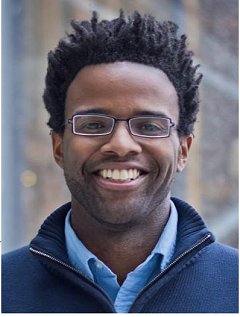
Michael Carbin is an Associate Professor at MIT in the Department of Electrical Engineering and Computer Science (EECS), where he leads the Programming Systems Group at the Computer Science and Artificial Intelligence Laboratory (CSAIL). His research centers on developing programming systems that handle uncertainty through probabilistic programming, quantum computing, and neural networks. Carbin's work spans programming languages, systems, and machine learning, with themes including uncertainty management, efficiency optimization, and formal verification. His publications demonstrate a strong focus on probabilistic inference methods, neural network optimization, and quantum programming frameworks. Awards and Honors: Sloan Research Fellowship (2020) Multiple Best Paper Awards (OOPSLA 2013, 2014; ICLR 2019) NSF CAREER Award (2018) Google Faculty Research Award (2018) As the head of the Programming Systems Group, he advises 10+ graduate students and postdocs, focusing on cutting-edge systems research. He has secured grants including Facebook Research Awards and NSF funding.
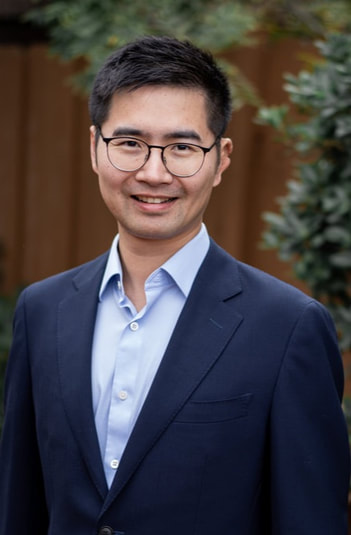
Eddy Keming Chen is an associate professor of philosophy at the University of California, San Diego (UCSD), affiliated with the John Bell Institute for the Foundations of Physics and UCSD's Chinese Studies Program. His work bridges philosophy of physics, metaphysics, and formal epistemology, with a focus on quantum foundations, time asymmetry, and nomic vagueness. He earned a PhD in philosophy (2019) and M.Sc. in mathematical physics (2019) from Rutgers University, alongside a graduate certificate in cognitive science. Research interests include laws of nature, quantum mechanics in time-asymmetric universes, and the metaphysics of the wave function. Notable works include Fundamental Nomic Vagueness (Philosophical Review, 2022) and Quantum Mechanics in a Time-Asymmetric Universe (BJPS Popper Prize, 2021). He is Co-PI of a Templeton grant exploring quantum foundations and has contributed to public philosophy via articles in New Scientist and interviews with the APA Blog. Teaching spans Chinese philosophy, symbolic logic, metaphysics, and philosophy of physics. Grants include UCSD Senate awards (2021–2025) and a $325k subaward from a $2.5M Templeton grant. Awards include the APA Public Philosophy Prize (2024) and Rutgers’ Harvey Waterman Medal (2019). Education: PhD in Philosophy, Rutgers University (2019) M.Sc. in Mathematics (Mathematical Physics), Rutgers (2019) Graduate Certificate in Cognitive Science, Rutgers (2018) B.S. Mathematics & B.A. Philosophy (Highest Honors), Calvin College (2013) His work on quantum foundations has been featured in Nature and Scientific American , with ongoing projects on surreal decision theory and Xunzi's meta-ethics. Current collaborations include a screenplay about time-travel romance inspired by SEP articles.
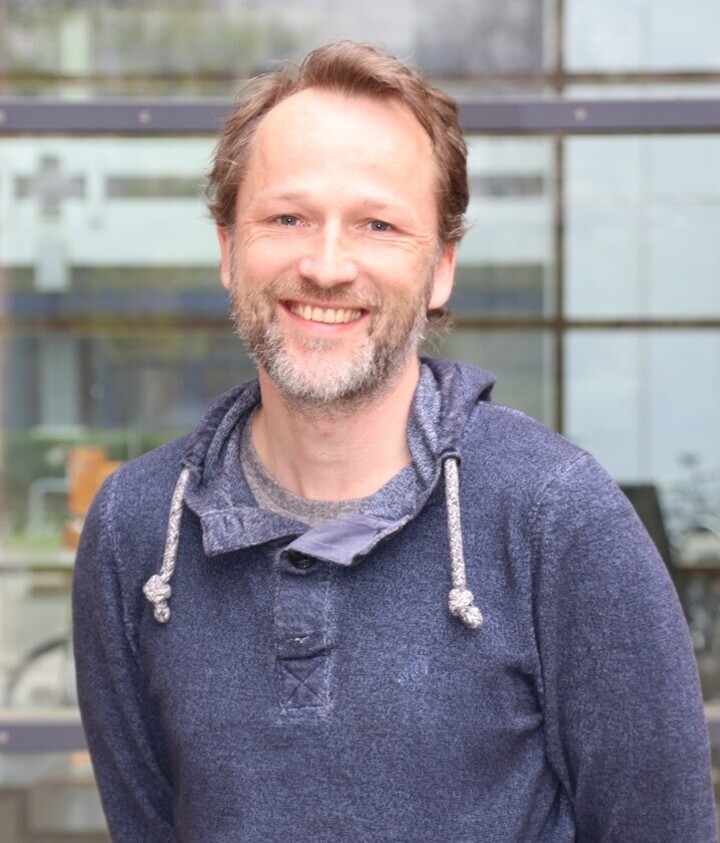
Lorraine Li is an Assistant Professor in the Department of Computer Science at the University of Pittsburgh, affiliated with the Interdisciplinary Science Program (ISP) and the School of Computing and Information. She holds a PhD from the University of Massachusetts Amherst (2022) and conducted postdoctoral research at AI2's Mosaic team. Her work focuses on NLP, machine learning, and socially responsible AI systems. Education: PhD in Computer Science (UMass Amherst, 2022) Research explores evaluation frameworks for commonsense knowledge, model interpretability, and ethical AI applications in domains like education and law. Key interests include probabilistic models, long-tail reasoning, and geographic robustness in LLMs. Recent publications address confirmation bias in reasoning chains (ACL 2025), geographically diverse prompting (CVPR 2024), and uncommon scenario reasoning (NAACL 2024). She co-organized the AAAI 2024 Make symposium and serves on committees for ACL, EMNLP, and NAACL. Grants: Pitt Cyber funding (2024) Lab: Pitt NLP Seminar group
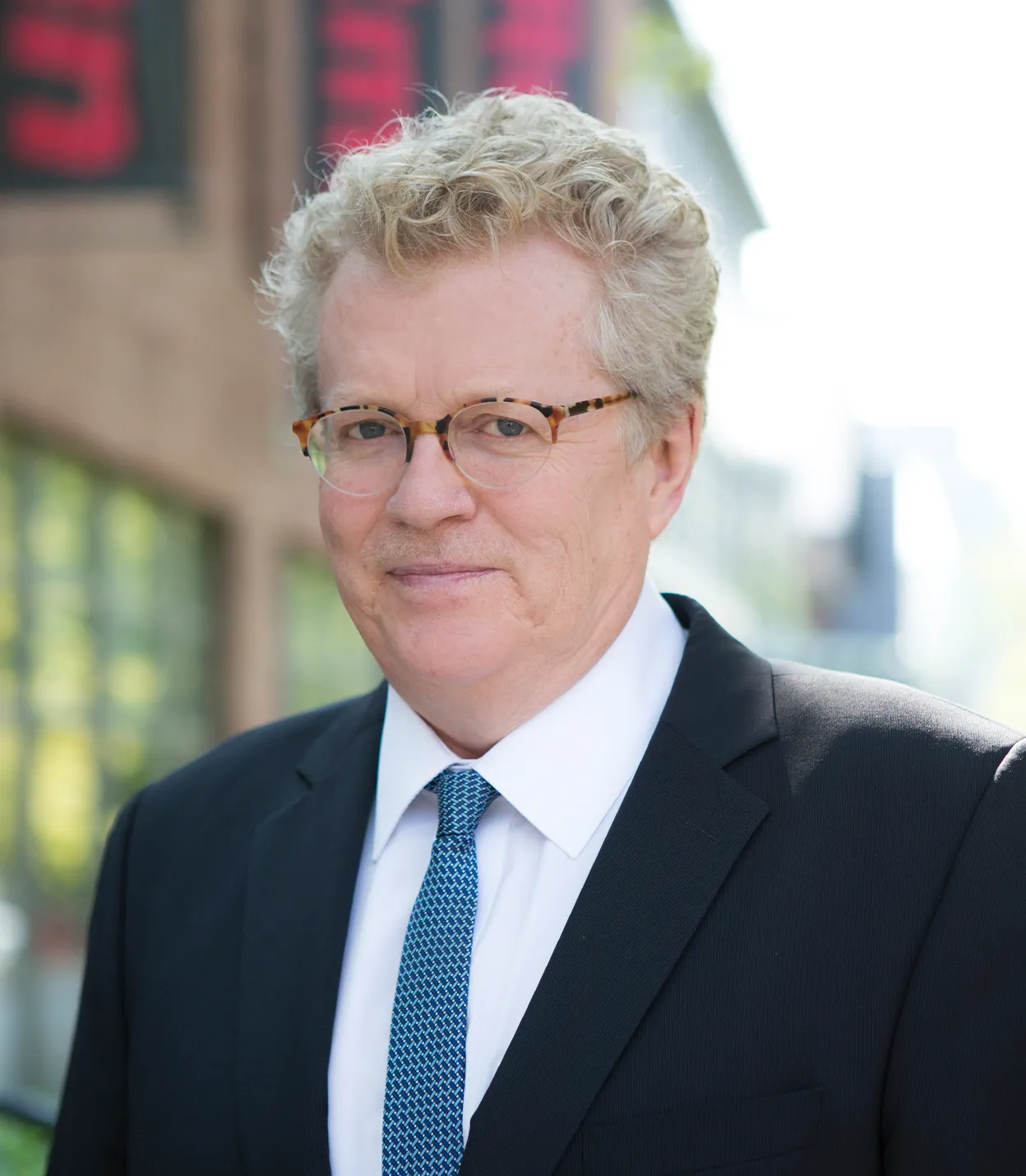
Christian Meilicke is a Researcher at the Data and Web Science Group (DWS) within the School of Business Informatics and Mathematics at the University of Mannheim. His work focuses on artificial intelligence, ontology matching, and knowledge graph completion, with recent contributions to rule-based methods and their applications in business process modeling. He is heavily involved in teaching, coordinating courses such as 'Modeling Business Processes' and 'Artificial Intelligence.' His research interests include the integration of open and structured knowledge, probabilistic reasoning frameworks, and improving the efficiency of knowledge base systems. He has explored topics like inductive logic programming, automated debugging of ontologies, and the use of Markov Logic Networks for root cause analysis in IT systems. In terms of trends, his recent publications emphasize combining symbolic rule-based approaches with machine learning for knowledge graph tasks, such as activity recommendation and link prediction. He also investigates explainability in embeddings and temporal forecasting in knowledge graphs. His work often bridges theoretical advancements with practical applications in business informatics and data integration. No scientific awards have been explicitly mentioned. Christian has advised no formal students listed here but has contributed to teaching and mentoring through his courses and tutorials. His research and teaching are closely tied to the DWS Group, which focuses on data-centric AI and semantic technologies.
Bikramjit Das is an Associate Professor and Associate Head of Pillar (Graduate Programme) at Singapore University of Technology and Design (SUTD). He holds a PhD in Operations Research from Cornell University and prior to SUTD, was a postdoctoral researcher at ETH Zurich’s RiskLab. His research focuses on extreme events analysis using applied probability, optimization, and statistical learning, with applications in finance, telecommunications, federated learning, and climate modeling. He teaches courses in Probability, Stochastic Modeling, and Analytics, and directs the Master of Science in Technology and Design (Data Science) program. Education: PhD in Operations Research (Cornell University), B.Stat & M.Stat (Indian Statistical Institute). Research emphasizes heavy-tailed distributions, risk contagion, and network modeling. Key areas include risk analysis in financial networks, robust optimization under uncertainty, and extreme value theory. His work bridges theoretical probability and real-world applications in data science and public policy. Notable contributions include studies on asymptotic independence in high dimensions, robust newsvendor models, and inference techniques for heavy-tailed data. His articles explore topics ranging from federated learning under noise to climate modeling and congestion phenomena in sparse networks. Collaborations include visiting positions at MIT and the Karlsruhe Institute of Technology. Active in academic leadership, he has contributed to technical reports on healthcare provider choice analysis and probabilistic flood risk assessments for nuclear power plants.
François Chaumette is a Senior Research Scientist (Directeur de recherche) at Inria, affiliated with IRISA and the Centre Inria de l'Université de Rennes. He has been a key researcher in robotics and computer vision since 1990 and led the Lagadic research team from 2004 to 2017. His research interests are centered on robot vision, particularly visual servoing and active perception . He has made foundational contributions to image-based and position-based visual servoing, and his work integrates control theory, computer vision, and robotics. His research spans applications in mobile robotics, aerial systems, medical robotics, space robotics, and soft object manipulation. The recent publications highlight a consistent focus on visual servoing under complex constraints—such as motion blur, occlusions, and deformations—applied to drones, cable-driven robots, and space systems. There is a strong emphasis on robustness , stability analysis , and hybrid sensing (e.g., vision + proximity, vision + force). His work with the RemoveDebris mission demonstrates real-world impact in space robotics. AFCET/CNRS Prize for best Ph.D. in Automatic Control Best paper awards at RFIA 1996 & 2004 Best paper in IEEE T-RA (2002) Best paper in IEEE RA-L (2019) Best paper in IEEE RAM (2020) IEEE Fellow (2013) He has advised over 30 Ph.D. students, many of whom have become active researchers in robotics. He has served in editorial roles for top journals including IEEE Transactions on Robotics , IEEE Robotics and Automation Letters , and the International Journal of Robotics Research . He was elected to the IEEE RAS Administrative Committee (2016–2018) and served on ERC grant panels for robotics. Chaumette is the main developer of ViSP (Visual Servoing Platform), a widely used C++ library for visual tracking and servoing. His leadership in both theoretical advances and software tools has significantly shaped the visual servoing community.
Shibashis Guha is an Associate Professor (Reader) at the School of Technology and Computer Science, Tata Institute of Fundamental Research (TIFR), where he conducts research and teaches in formal methods, logic, automata theory, and verification. His work focuses on reactive controller synthesis, probabilistic systems, timed automata, and the integration of machine learning with formal verification. Institution: Tata Institute of Fundamental Research School: School of Technology and Computer Science Department: Department of Computer Science Academic Rank: Associate Professor His research interests span formal methods, logic in computer science, automata theory, probabilistic systems, algorithmic game theory, and reinforcement learning. He investigates the synthesis of reactive controllers, behavioral equivalences, and the application of learning in verification. His work often intersects with infinite games and descriptive complexity. The recent publications highlight a strong trend in stochastic games, mean-payoff objectives, window properties, probabilistic model checking, and the synthesis of controllers under logical specifications. There is a clear emphasis on bridging formal methods with learning, especially in continuous-time and probabilistic settings. Scientific Awards: Best paper award at MFCS 2021 Guha advises several students and collaborates widely across institutions. His research is funded by the DST-SERB project on zero-sum and nonzero-sum games for controller synthesis. He has served on program committees for major conferences including CAV, ATVA, CONCUR, LICS, and VMCAI, and has organized workshops such as iVerif. He teaches advanced graduate courses like Automata and Computability, Descriptive Complexity, and Automata, Verification, and Infinite Games. He is actively involved in the research community, delivering invited talks at institutions like IST Austria, ENS Paris-Saclay, and Indian Statistical Institute. He also leads seminar series and participates in panels on AI and verification.
Jing Jiang is a prominent researcher at Singapore Management University, specializing in Natural Language Processing (NLP), Computational Linguistics, and Artificial Intelligence. His work spans diverse areas including Vision-Language Models, Machine Translation, Knowledge Graph Reasoning, Sentiment Analysis, and Social Media Discourse Modeling. Key contributions include frameworks for consistent client simulation in mental health counseling and counterfactual contrastive prefix-tuning for many-class classification. He has pioneered methods in zero-shot VQA with interpretable reasoning graphs , cross-lingual understanding with universal syntax , and modularized zero-shot architectures . His research often combines theoretical insights with practical implementations, as seen in works on stereotypical bias in vision-language models (VLStereoSet), tensorized self-attention for dependency modeling, and collaborative relation-augmented attention for knowledge graph completion. Jing Jiang's collaborations span global experts in NLP and AI, with co-authors from institutions like SMU, Waseda University, and Microsoft Research.
Thomas McCurdy is a Professor of Finance at the University of Toronto's Rotman School of Management and holds the Bonham Chair in International Finance. He has a status-only cross-appointment to the Department of Economics. McCurdy founded the Financial Research and Trading Lab in 1999, later expanded as the BMO Financial Group Finance Research and Trading Lab in 2013. His expertise spans asset pricing, capital markets, and simulation-based learning pedagogy. PhD, University of London (LSE) MA, University of British Columbia Honours BA, University of Guelph McCurdy's research focuses on asset pricing, capital markets, and financial institutions. He has pioneered simulation-based learning tools, including co-developing the RIT Market Simulator package with over fifty decision cases used globally. His recent work includes textual analysis of stock return jumps, probabilistic modeling of regime changes during crises, nonlinear pricing kernels for risk, and real-time structural break detection. McCurdy has served as an Associate Editor for the Journal of Financial Econometrics and an Associate Fellow at CIRANO Research Institute. He teaches courses in MBA, Master of Finance, Master of Financial Risk Management, and Commerce programs, emphasizing quantitative modeling and risk-informed decision-making. BMO Financial Group Finance Research and Trading Lab (Founded 1999, Expanded 2013) RIT Market Simulator package co-developer Best Research Paper Award Best Teaching Award
Yannis Dimopoulos is a Professor in the Department of Computer Science at the University of Cyprus. He has previously held research positions at the Max-Planck Institute for Computer Science in Saarbrücken and the University of Freiburg in Germany. He earned his B.Sc. and Ph.D. in Computer Science from the Athens University of Economics and Business. His primary research interests include: Knowledge representation and reasoning Planning Nonmonotonic reasoning Constraint satisfaction Machine learning His recent research, based on publications from 2017 to 2024, focuses on the theoretical and computational aspects of abstract argumentation, particularly control argumentation frameworks, probabilistic extensions, and the integration of argumentation with Boolean networks and negotiation under incomplete information. He has also contributed significantly to Answer Set Programming (ASP) for planning, developing the plasp 3 framework for effective ASP-based planning solutions. His scholarly work appears in top-tier venues such as AAAI, IJCAI, ECAI, KR, AAMAS, and journals like Artificial Intelligence and Autonomous Agents and Multi-Agent Systems. His most frequent collaborators include Pavlos Moraitis, Jean-Guy Mailly, Antonis C. Kakas, and Wolfgang Dvorák. No scientific awards or honors are mentioned in the provided text. Yannis Dimopoulos has advised or collaborated with several researchers, including Jean-Guy Mailly, Pavlos Moraitis, Nabila Hadidi, and Muhammad Adnan Hashmi, though formal student-advisor relationships are not explicitly detailed. His work often involves theoretical and computational modeling, and while specific grants or funding sources are not listed, his sustained publication record suggests active research support. He is actively involved in research teams and collaborations focused on argumentation, multi-agent systems, and automated reasoning, as evidenced by his extensive co-authorship network.
Angelos Alexopoulos is an Assistant Professor at the Department of Economics , Athens University of Economics and Business . He has held Research Associate positions at the University of Cambridge, University College London, and University of Exeter in the UK. PhD: Athens University of Economics and Business Research Focus: Computational Statistics, Econometrics, Bayesian Analysis, Network Modelling Publications span Bayesian inference, epidemic forecasting, machine learning for fraud detection, and econometric methodology. Key journals include Journal of the Royal Statistical Society , Journal of Computational and Graphical Statistics , and Statistics and Computing . 2024: Gaussian invariance in MCMC 2024: Epidemic nowcasting models 2023: VAT fraud detection with ML Awards include certifications in Deep Learning (Coursera), Blockchain (edX), and Object-Oriented R Programming (DataCamp).
Benjamin Gregoire is a Researcher at INRIA Sophia Antipolis , affiliated with the Marelle Team . His work focuses on compilers , formal verification , cryptography , proof assistants , and type theory . Education : PhD in Computer Science, Université Paris 7 (2003) Research Interests : Dr. Gregoire specializes in formal verification of cryptographic systems, compiler design for security-critical applications, type-based termination, and proof assistants like Coq. His projects include the INRIA-Microsoft Research Joint Lab , ANR Scalp (Security of Cryptographic Algorithms with Probabilities), and ANR DeCert (Certified Decision Procedures). He led the Mobius project (IP FET) and contributed to Java security validation via the JACK tool . Scientific Awards : He received the Best Paper Award at CRYPTO 2011 for 'Computer-Aided Security Proofs for the Working Cryptographer.' Advising & Collaborations : Dr. Gregoire has advised PhD students Michael Armand , Julien Charles , Sylvain Heraud , and Jorge-Luis Sacchini , with former advisee Cesar Kunz . He collaborates with teams including Marelle and INRIA-Microsoft Research .
Christine Rizkallah is a Senior Lecturer in the School of Computing and Information Systems at the University of Melbourne, Australia. She joined the university in December 2021 after serving as a Lecturer at the University of New South Wales (UNSW) from April 2018 to December 2021. Her research focuses on interactive theorem proving, formal verification, programming languages, and systems, with an emphasis on building practical tools for high-assurance software development. She leads a research group working on the Cogent and Dargent languages, aiming to reduce the burden of formal verification in systems programming. Education: PhD in Computer Science, Universität des Saarlandes and Max-Planck-Institut für Informatik, Germany (2015), thesis: Verification of Program Computations , supervised by Prof. Dr. Kurt Mehlhorn. MSc in Computer Science, Universität des Saarlandes, Germany (2009), thesis: Proof Representations for Higher Order Logic , supervised by Prof. Dr. Gert Smolka and Dr. Chad E. Brown. BSc in Computer Science, German University in Cairo, Egypt (2007), thesis: X2-Planner: A Hierarchical Task Network Planner for Real Time Gaming Applications , supervised by Prof. Dr. Slim Abdennadher and Dr. Thorsten Maier. Her research interests lie at the intersection of programming languages and formal methods. She develops domain-specific languages with strong type systems and verified compilers to enable trustworthy software systems. Her work spans algorithms, logic, security, and social choice theory, reflecting a strong interdisciplinary approach. She has published extensively in top venues such as POPL, ICFP, ASPLOS, JAR, and PACMPL, with a focus on certifying compilation, refinement verification, and mechanized reasoning. Her recent publications reveal a consistent focus on formal verification of systems software, particularly through the Cogent language and its ecosystem. Key themes include verified data layout refinement (Dargent), property-based testing, termination analysis, cost modeling, and integration with foreign functions. Her work combines theoretical rigor with practical implementation, often involving mechanized proofs in Isabelle/HOL and Coq. Scientific Awards and Recognition: Distinguished Artefact Award at SLE'22 (awarded to Zilin Chen for work under her supervision). First Prize, SPLASH'22 Student Research Competition (undergraduate), won by Raphael Douglas Giles. Second Prize, ACM-wide Student Research Competition (undergraduate, 2023), won by Raphael Douglas Giles. She has supervised numerous PhD, Masters, and Honours students, many of whom have continued in academia or industry research roles. She has received research funding through institutional support and collaborative grants, though specific grants are not detailed in the provided text. She is actively involved in the programming languages community, serving on program committees for POPL, ICFP, CPP, PLDI, and others, and holding leadership roles such as Program Chair for FUNARCH'25 and Diversity and Inclusion Co-Chair for PLDI'25. She teaches core courses including Declarative Programming and Models of Computation at the University of Melbourne. She leads a vibrant research team and collaborates widely across institutions including UNSW, University of Pennsylvania, and international partners. Her lab focuses on building verified systems using functional programming and formal methods, with strong ties to the DeepSpec project and the Isabelle/HOL community.
V. Arvind is a Professor in the Theoretical Computer Science faculty at the Institute of Mathematical Sciences (IMSc) , Chennai. His research is centered on computational complexity theory, with a focus on structural complexity, randomized and algebraic computation, and quantum information and computation. He explores the deep connections between theoretical computer science and mathematics. Institution: Institute of Mathematical Sciences (IMSc), Chennai School: Theoretical Computer Science Academic Rank: Professor Arvind's research interests include computational complexity, structural complexity theory, algebraic computation, derandomization, and quantum computing. He is particularly interested in the interplay between mathematical structures and computation. His work often bridges theoretical computer science with algebra, combinatorics, and logic. His recent publications, primarily expository articles in the EATCS Bulletin’s Computational Complexity Column, cover a wide range of topics such as robust oracle machines, the Alon-Roichman theorem, noncommutative arithmetic circuits, graph isomorphism, and quantum computation. These works reflect trends in foundational complexity theory, algebraic methods in computation, and the exploration of quantum models. The articles emphasize structural insights, lower bounds, and connections to mathematical disciplines. Professional Service and Editorial Roles: Associate Editor, ACM Transactions on Computation Theory Editor, EATCS Computational Complexity Column (since June 2011) Editorial Board Member, International Journal of Computer Mathematics (2009–2013) Co-organizer, ICM Satellite Conference on Algebraic and Probabilistic Aspects of Combinatorics and Computing Program Committee Member for WALCOM 2014, STACS 2012, COCOON 2009, FSTTCS (multiple years, including chair roles), CCC 2006, INDOCRYPT (2002, 2005), and others Teaching: Arvind has taught advanced courses including Computational Complexity, Algorithms, Algebra and Computation, and Discrete Mathematics, often based on foundational texts and notes from leading experts. Lecture notes from his courses have been compiled by students and collaborators. Collaborations: He has an extensive list of co-authors, including prominent researchers such as Manindra Agrawal, Eric Allender, Johannes Köbler, Meena Mahajan, Jacobo Torán, and Ramprasad Saptharishi, indicating strong collaborative research networks in complexity theory and algorithms.
Chengnian Sun is an Associate Professor at the Cheriton School of Computer Science , University of Waterloo, Canada. His research focuses on software engineering and programming languages with an emphasis on software reliability and programming productivity. Education : Ph.D. in Computer Science from National University of Singapore (2013) His work spans compiler testing (EMI, Dfusor, Kitten), program reduction (Perses, Vulcan, PPR), Android testing, and DNN testing. He has received multiple grants including Google Research Scholar Program (2025) and NSERC Discovery Grants (2024-2029). His recent publications focus on LLM-based compiler testing, weighted delta debugging, and ransomware resilience. Scientific Awards : Most Influential Paper Award at SANER (2022) NUS Research Scholarship (2008-2012) ACM SIGSOFT Distinguished Paper Award at ASE (2012) IBM Cup Campus Innovation Contest First Prize (2005) He advises Ph.D. and MMath students in software engineering, compiler testing, and program analysis, including several who have contributed to top-tier conferences like ICSE, ISSTA, and ASPLOS. His service includes program committee roles in ICSE, OOPSLA, and ISSTA.