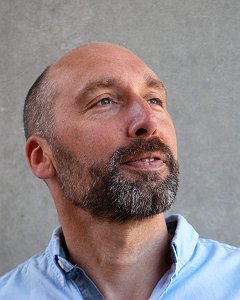
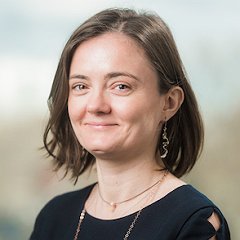
Bas Spitters is an Associate Professor at the Department of Computer Science, Aarhus University, Denmark. He leads the Concordium Blockchain Research Center and the Blockchain workpackage in Digit , and contributes to Aarhus University's Quantum Campus initiative. His research spans Homotopy Type Theory , Formal Verification , and High-assurance cryptographic software . He develops proof assistants like Coq for applications in probabilistic programming , blockchain security , and quantum computing . Recent article trends focus on verified compilation (CertiCoq-Wasm), smart contract certification (ConCert), and applications of HoTT to probabilistic and blockchain systems. Key keywords include Formal Methods , Blockchain , Quantum Computing , and Cubical Type Theory . Scientific awards and grants: AFOSR grant (2018-2021) for Homotopy Type Theory in probabilistic computation Villum Foundation grant (2015-2019) for Guarded Homotopy Type Theory NWO VENI grant (2010-2013) for Reasoning and Computing DIAMANT researcher grant Advising and collaboration: Advised PhD students: Benjamin Salling Hvass, Jakob Botsch Nielsen, Andreas Aagaard Lynge, Soren Eller Thomsen, Martin Bidlingmaier Collaborated on computer-verified exact analysis, smart contracts, and quantum logic Organized workshops: TYPES workshop , HACS , and DMV Mini-Symposium
Francesco Gavazzo is an Assistant Professor at the Department of Mathematics, University of Padua. His research focuses on theoretical computer science, particularly in programming language semantics, computational effects, relational reasoning, and inductive/coinductive methods. PhD in Computer Science and Engineering, with Honor Mention MSc in Logic and Computer Science BA in Philosophy His work bridges formal methods with practical applications in program equivalence, quantitative semantics, and effect systems. Recent contributions include frameworks for effectful program distancing and relational theories of effects. Scientific awards include recognition by the Accademia delle Scienze dell'Istituto di Bologna (Top 10 in Science) and the Best Italian PhD Thesis in Theoretical Computer Science (EATCS Italian Chapter). He serves on program committees for POPL and ICFP.
Hiroshi Unno is a Professor at Tohoku University 's Research Institute of Electrical Communication and a Visiting Professor at the National Institute of Informatics. He has served on program committees for major conferences like POPL , PLDI , ICFP , and CAV . Dr. Unno's research focuses on Programming Languages Software Verification Artificial Intelligence Higher-Order Model Checking Refinement Type Systems Temporal Logic His recent work (2023-2025) includes advancements in algebraic effects , probabilistic program verification , and prophecy-based type systems . Key contributions appear in POPL , PLDI , and ICFP journals. Scientific awards include Distinguished Paper Award at POPL 2024 Distinguished Paper Award at POPL 2023 PPL 2014 Best Paper Award He leads development of tools like RCaml , Thrust , and EffCaml for refinement type checking. Current projects involve Kakenhi grants 20H04162 and 25H00446 . Dr. Unno actively contributes to academic communities through Program Committee roles at AAAI, CAV, and SAS Editorial work for IPSJ Transactions Organizing PPL Summer School (2022)
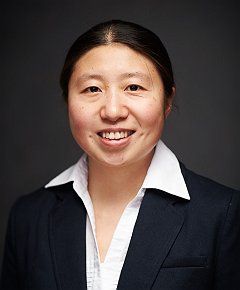
Limin Jia is a Research Professor in the Department of Electrical and Computer Engineering at Carnegie Mellon University, with a courtesy appointment in the Computer Science Department. She is affiliated with CyLab, CMU's security and privacy research institute. She received her PhD in Computer Science from Princeton University and a BE from the University of Science and Technology in China. Her research applies formal techniques to enhance software security, focusing on programming languages and distributed systems. Key interests include: Language-based security mechanisms Formal verification of distributed systems Secure compilation techniques Intermittent computing foundations Her publications demonstrate strong emphasis on security guarantees in programming languages (Rust/WebAssembly), formal methods for intermittent systems, and software supply chain security. Recent works frequently address type systems, compiler verification, and energy-constrained computing. Dr. Jia maintains an extensive advising portfolio with current and former students spanning PhD and Master's programs. She teaches foundational security courses including Browser Security and Introduction to Information Security .
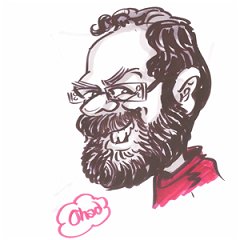
Ohad Kammar is a researcher at the University of Edinburgh , actively contributing to programming language theory, denotational semantics, and algebraic effects. His work bridges theoretical foundations with practical implementations. Research Themes : Type-driven development, concurrency, probabilistic programming, normalization algorithms, and algebraic effects. Conference Involvement : Committee member in Diversity, Equity and Inclusion , Student Research Competition , and LAFI tracks at POPL; program committee roles in ICFP, APLAS, PEPM, and HOPE. Publications : Focus on denotational semantics, effect handlers, relaxed memory concurrency, and dependently-typed probabilistic models.
Alexandra Silva is a Professor of Computer Science in the Department of Computer Science at Cornell University's College of Engineering. She joined Cornell as faculty in 2021 after previously serving as a Royal Society Wolfson Fellow and Professor of Algebra, Semantics, and Computation at University College London. Her research spans programming languages, formal verification, and theoretical computer science, with particular focus on Kleene Algebra with Tests (KAT), probabilistic programming, and automata theory. She has held numerous leadership roles in major programming languages conferences including POPL, PLDI, and ICFP. Dr. Silva completed her PhD at Centrum Wiskunde & Informatica (CWI) in Amsterdam under the supervision of Jan Rutten and Marcello Bonsangue, with her thesis entitled "Kleene coalgebra" defended in December 2010. Prior to her PhD, she was an undergraduate student at University of Minho in Portugal, where she completed a 5-year Mathematics and Computer Science degree in May 2006. Her research focuses on the modular development of specification languages and algorithms for models of computations, often from the unifying perspective offered by coalgebra. She has made significant contributions to Kleene Algebra with Tests, probabilistic programming semantics, network verification, and automata learning. Her work bridges theoretical foundations with practical verification tools, particularly in the domain of Software-Defined Networking where her NetKAT framework has gained significant attention. Analysis of her recent publications reveals a strong trend toward unifying frameworks for program verification, particularly through her development of Outcome Logic which provides foundations for both correctness and incorrectness reasoning. Her work increasingly integrates probabilistic and concurrent aspects of programming languages, with applications to network verification and security. The NetKAT ecosystem remains a central theme, with extensions to infinite state verification, symbolic execution, and learning-based approaches. Distinguished paper award for Guarded Kleene algebra with tests: verification of uninterpreted programs in nearly linear time (POPL 2020) Dr. Silva advises a large research group with numerous PhD students, postdocs, and undergraduate researchers. Her group has produced significant work in programming languages theory, verification, and applications to networking. She has secured substantial research funding through various grants that support her work on formal methods for network verification and probabilistic programming. Her mentoring approach emphasizes both theoretical depth and practical impact, with many of her students moving to prestigious academic and industry positions. Her research group, spanning both Cornell University and University College London, focuses on developing theoretical foundations for programming languages with practical applications in network verification, probabilistic systems, and program analysis. The group maintains active collaborations with researchers at CWI, University of Oxford, and other leading institutions in programming languages and formal methods.