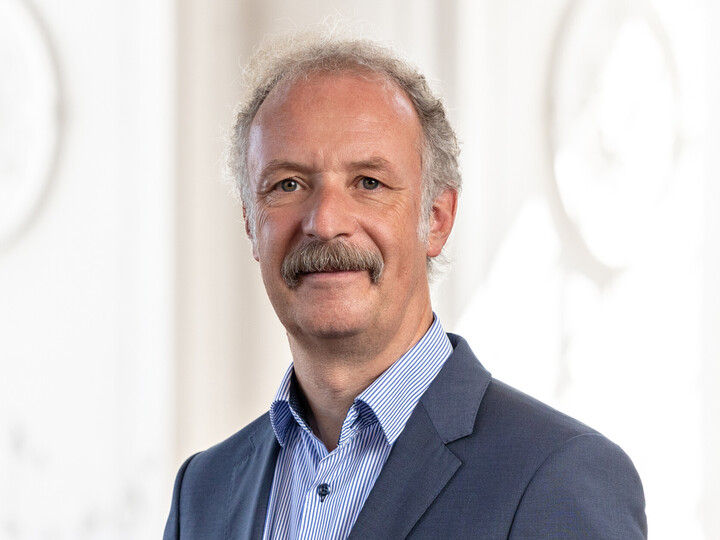
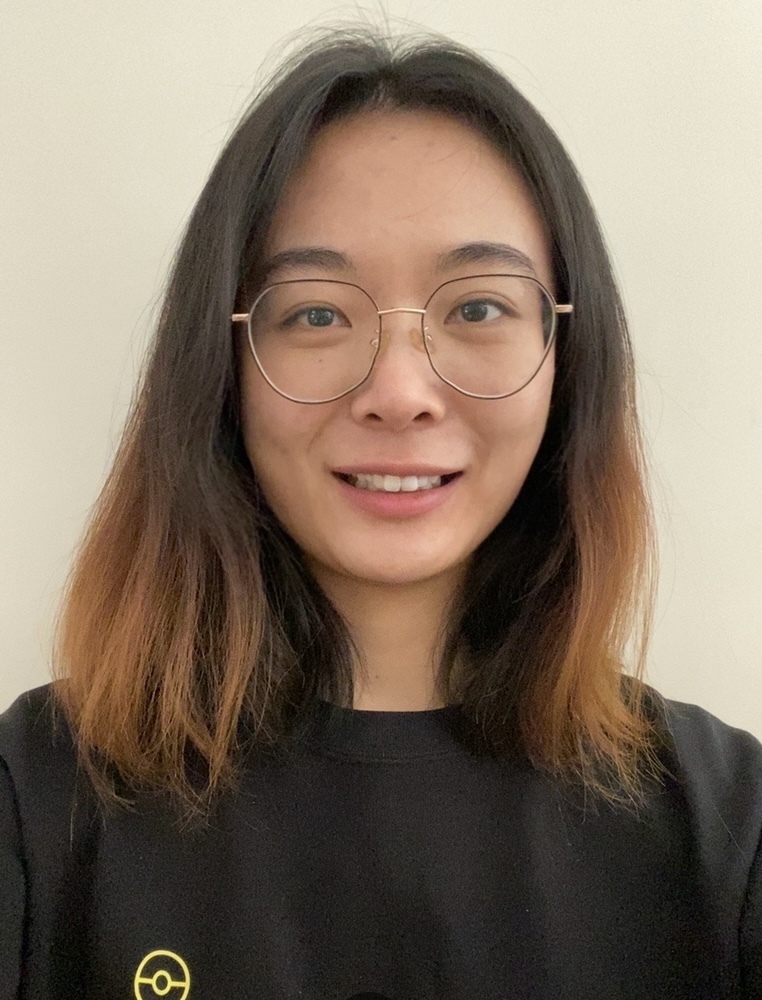
Richard Schulze is a Researcher at the University of Münster, contributing to projects such as SkelCL, PACXX, and dOpenCL. His work focuses on parallel computing, compiler optimization, and auto-tuning frameworks for high-performance and distributed systems. He explores portable code generation for heterogeneous architectures using Multi-Dimensional Homomorphisms (MDH) and develops abstractions for OpenCL/CUDA programming. His research interests include advancing scheduling languages and systematic composition models, alongside probabilistic data linkage techniques. Recent publications emphasize auto-tuning methodologies for Python and interdependent parallel program parameters. Publications since 2018 highlight contributions to portable compiler design, performance optimization, and cross-platform parallelism. No scientific awards are explicitly mentioned. Consultation hours are by appointment, and he is affiliated with the university's computer science research groups.
Thomas Neifer is a Research Associate and PhD student at the Department of Management Sciences at Hochschule Bonn-Rhein-Sieg (H-BRS). He teaches courses including "Data Analytics and Development using Python" (Business Informatics), "Case Studies Data Analytics" (Master's program), and contributes to certificate programs like "Data Strategist" and practical projects such as "Cloud Lab." Location: Sankt Augustin, Room G 123 Email: thomas.neifer@h-brs.de Phone: +49 2241 / 865-9886 His research focuses on data science applications for mobility systems, human-computer interaction, and algorithmic trust-building. He actively contributes to open-source platforms like MIAAS for mobility data analysis and has published on topics ranging from machine learning techniques to digital sovereignty and sustainable consumer technologies. Recent publications reveal a strong emphasis on shared mobility solutions (peer-to-peer carsharing, electric micromobility), data-driven decision-making (regression analysis, Markov chain methods), and user-centered digital systems (recommender systems, voice interfaces). His work often bridges computational methods with real-world business and sustainability challenges. Best Paper Award at ICE-B 2021 Member of People for the Ethical Treatment of Animals (PeTA) since 2023 Thomas collaborates with researchers across Europe on projects like MIAAS, which develops open-source mobility dashboards. His teaching and research integrate practical project work with theoretical advancements in data science and intelligent automation.
Tovi Grossman is a prominent researcher in Human-Computer Interaction, Virtual Reality, and Artificial Intelligence. His work focuses on user interface design, error mediation in immersive environments, and AI-assisted programming education. Research Trends: His recent publications explore multimodal interaction techniques in VR, AI-generated code scaffolding for novices, and mixed reality systems for collaborative tasks. Key themes include: Context-aware interfaces Gaze and gesture input systems LLM integration in educational tools 3D spatial navigation and telepresence Collaborative Work spans institutions and disciplines, with recurring partnerships in VR design, robotics, and educational technology.
Mihaela Curmei is a researcher active in machine learning, recommender systems, and algorithmic fairness, with significant contributions to privacy-preserving methods, behavioral modeling, and optimization. Her collaborative work spans institutions and co-authors like Benjamin Recht, Georgina Hall, and Sarah Dean. Research Themes: Shape-constrained regression using polynomial optimization Privacy in matrix factorization with public features Dynamic preference modeling grounded in psychology Multi-learner systems under participation dynamics Temporal impacts of recommendation algorithms Technical Domains: Sum-of-squares programming Federated and distributed learning Stochastic reachability analysis Gradient flow-based dataset modeling Key Venues: Published in Operations Research , NeurIPS, ICML, RecSys, FAccT, and preprint archives. Her recent work (2023-2025) focuses on temporal effects in recommendations, private computation methods, and equilibrium analysis in multi-agent games. Earlier projects (2017-2021) include search engine indexing techniques (BitFunnel) and foundational studies on offline/online metric correlations in recommendation systems.
Tanya Braun is a Junior Professor in the Institute of Computer Science at the University of Münster, Department of Mathematics and Computer Science. She leads the Data Science research group, focusing on statistical-relational AI, human-aware AI, and text understanding. Her work bridges formal AI methods with real-world applications in healthcare, digital humanities, and public sector systems. Education: Bachelor's and Master's in Computational Informatics, Hamburg University of Technology Doctorate in Computer Science, University of Lübeck (2020), thesis: 'Rescued from a Sea of Queries - Exact Inference in Probabilistic Relational Models' Her research centers on probabilistic inference in relational domains , with a focus on lifted inference techniques that exploit symmetries to scale reasoning. She investigates human-aware AI , particularly how AI systems can reconcile learned models with human expectations to improve explainability and trust. Her work on text understanding addresses challenges in data-scarce settings such as digital humanities, where traditional large language models fail. She has developed methods for identifying and enriching subjective content descriptions, topic modeling in specialized domains, and feedback-driven model improvement. The 15 most recent publications highlight a strong trajectory in lifted inference, model compression, privacy-preserving AI, and explainability . Her work integrates formal AI foundations with practical concerns in high-stakes domains like healthcare. She frequently publishes in top venues such as AAAI, IJCAI, ECAI, and Artificial Intelligence, often in collaboration with Ralf Möller, Marcel Gehrke, and Jan Speller. Scientific Awards: No specific awards listed in the provided text. Tanya Braun actively advises students and leads the HAPPI project, which focuses on human-AI model reconciliation using lifted probabilistic inference. She has supervised multiple theses and mentored researchers including Jan Speller (PostDoc), Nazlı Nur Karabulut, and Sagad Hamid. She has secured funding from the Ministry of Culture and Science of North Rhine-Westphalia for her research. She is deeply involved in academic service: serving as program co-chair for KI 2025, guest-editing special issues in journals like Künstliche Intelligenz and Annals of Mathematics and Artificial Intelligence , and organizing major conferences including ICCS and KR. Labs and Teams: She leads the Data Science Group at the University of Münster, which conducts research in AI, probabilistic modeling, and data science. The group is actively involved in teaching and mentoring students in advanced AI topics.
Daniel Alexander Braun is a Professor conducting cutting-edge interdisciplinary research at the intersection of information theory, decision science, and sensorimotor neuroscience. His work establishes fundamental connections between thermodynamics, bounded rationality, and human cognition through rigorous mathematical modeling. His core research domains include: Bounded Rationality and Decision Theory Information-Theoretic Foundations of Computation Human Sensorimotor Learning and Control Multi-Agent Coordination Systems Machine Learning with Information Constraints Order-Theoretic Approaches to Complexity Thermodynamic Principles in Cognitive Modeling Analysis of his 2021-2025 publications reveals a dominant trajectory where information-theoretic bounded rationality models explain human sensorimotor behavior, with increasing emphasis on multi-agent hierarchical systems. His work uniquely bridges abstract mathematical frameworks (preordered spaces, majorization theory) with empirical neuroscience, while simultaneously advancing machine learning through unsupervised mutual information techniques. The persistent thermodynamics-decision theory nexus across 15+ publications demonstrates theoretical consistency. No scientific awards or honors are documented in the provided materials. While student advising details remain unspecified, his research program demonstrates sustained productivity through continuous publication in high-impact venues. The absence of institutional affiliations in the source text precludes discussion of laboratory structures or grant funding mechanisms, though the volume and mathematical sophistication of his work suggest significant collaborative infrastructure.
Dr. Thomas Noll is an Associate Professor at the Department of Computer Science, RWTH Aachen University. He is a member of the Software Modeling and Verification Group (MOVES) led by Prof. Joost-Pieter Katoen. Research Interests Static Program Analysis for Software Optimization and Verification Compilation of Quantum Software Reliability, Safety, and Security of Hardware/Software Systems Formal Verification of Artificial Neural Networks He has supervised over 30 bachelor's and master's theses at RWTH Aachen University from 2002 to 2024, including topics on probabilistic model checking, neural network verification, and program analysis. His administrative roles include Examination Board membership for Computer Science (since 2012), QVM funds management (since 2024), and student advising across multiple disciplines. He has participated in over 40 program committees and organized 8 conferences/workshops since 2004, focusing on formal verification and software engineering applications.
Professor Moritz Fleischmann serves as Vice President for Sustainability and International Affairs at the University of Mannheim , while holding the Chair of Supply Chain Management in its Business School. With a background in Mathematics, Business, and Economics from Bayreuth, Bordeaux, and Ulm, he earned his PhD in General Management (2000) at Erasmus University Rotterdam, focusing on reverse logistics. Assistant Professor (Quantitative Methods), Erasmus University Rotterdam (until 2004) Associate Professor (Supply Chain Management), Erasmus University Rotterdam (2004–2009) Chair of Supply Chain Management, University of Mannheim (2009–present) Academic Director, ESSEC–Mannheim Modular Executive MBA Program (2011–2019) Interim Acting Dean (2019) and Vice Dean (2019–2020), Mannheim Business School His research spans reverse logistics , sustainable supply chains , inventory control , and dynamic pricing . A pioneer in closed-loop supply chain modeling, he has developed frameworks for recycling credit allocation, attended home delivery optimization, and vendor-managed inventory systems. His work bridges theoretical operations research with practical applications in plastics production, e-commerce, and agrochemical industries. From 2023 to 2024, he led institutional sustainability initiatives and international collaborations. His 15 most recent publications (2025–2020) focus on tackling contemporary challenges like circular economy strategies , crisis logistics , and AI-driven inventory optimization , reflecting his commitment to sustainability and innovation in supply chain operations.
Prof. Dr. Holger Hesse serves as Professor and Head of the Institute of Energy and Drive Technology at Kempten University of Applied Sciences' Faculty of Mechanical Engineering, appointed to the Research Professorship in Smart Energy Systems on September 1, 2022. Previously, he was Deputy Head at the Chair of Electrical Energy Storage Technology at Technical University of Munich (TUM). His educational background includes: PhD in Physics on organic photovoltaics from LMU Munich and University of Wollongong, Australia Research stays at UC Santa Barbara and Cambridge University Hesse's research focuses on energy storage systems with emphasis on: Optimization of battery systems for grid services and EV charging infrastructure Modeling of battery degradation and aging-aware control strategies Carbon footprint analysis of storage applications Economic evaluation in evolving energy markets Machine learning for state estimation and lifetime prediction Analysis of his 2023-2025 publications reveals strong trends toward deep reinforcement learning for energy management, probabilistic aging prediction, and real-time optimization of heterogeneous storage systems. Key developments include thermal-aging integrated control, market-adaptive revenue stacking, and environmental impact quantification through frameworks like Energy System Network. As head of the Institute of Energy and Drive Technology, Hesse leads the Stationary Energy Storage Systems (SES) research group, advising graduate students and collaborating with industry partners on smart energy system development and sustainable mobility solutions.
Hanqi Zhou is a Ph.D. student in the Machine Learning Excellence Cluster at the University of Tübingen and a scholar in the IMPRS-IS program. She is jointly supervised by Dr. Álvaro Tejero-Cantero from the Machine Learning ⇌ Science Colaboratory and Dr. Charley Wu from the Human and Machine Cognition Lab. M.Sc. in Cognitive Systems from Ulm University B.Sc. in Information Science from Southeast University Research Interests : Hanqi’s work focuses on the intersection of human cognition and machine learning . She explores how probabilistic machine learning models can simulate human memory systems, structure learning capabilities, and temporal causality inference mechanisms. This research aims to bridge insights from human learning to inspire advancements in machine intelligence.
Professor Dr. Tom Hanika is affiliated with the University of Hildesheim , working in the Intelligent Information Systems (IIS) division within the Institute of Computer Science. His research bridges formal concept analysis , machine learning , and knowledge representation , focusing on geometric interpretations of data and explainable AI systems. Research Themes: Intrinsic dimensionality, lattice structures, and hybrid human-AI collaboration Teaching: Offers courses in databases, C++ programming, and semantic technologies Contact: Office (SC.C. 2.03), Phone +49 5121 883-40312, Email via contact form Recent publications highlight his work on geometric data analysis and formal context manipulation , including applications in graph neural networks, ordinal pattern recognition, and conceptual lattice visualization. His Collaborative Hybrid Human AI Learning framework demonstrates practical implementations of these theories. Current projects explore dimensionality resilience in machine learning models and topic flow visualization in academic networks, reflecting his dual focus on theoretical foundations and applied knowledge systems.
Oliver Brock is a Professor at the Technische Universität Berlin (TU Berlin) , holding the Alexander von Humboldt Professorship since 2009. His research focuses on algorithmic foundations for robotic agents to perform complex tasks in dynamic and unstructured environments , with cross-disciplinary applications in molecular structural biology (e.g., protein folding, docking). Education: Ph.D. in Computer Science, Stanford University (2000) M.S. in Computer Science, Stanford University (1994) Diploma in Computer Science, TU Berlin (1993) Research Trends: His work spans robotics , motion planning , soft robotics , and machine learning , with recent emphasis on acoustic sensing , adaptive behavior representation , and separating learning from modeling in manipulation tasks. Publications highlight probabilistic methods , human-robot interaction , and biomimetic systems . Scientific Awards: Notable recognitions include the 2016 RSS Best Systems Paper Award , 2015 Amazon Picking Challenge First Place , and the 2006 NSF CAREER Award . Advising & Grants: As a Humboldt Professor, he has led programs like the Science of Intelligence and Cognitive Systems tracks at TU Berlin. Professional service includes editorial roles in Autonomous Robots and International Journal of Robotics and Research . Labs & Teams: He leads the Robotics and Biology Laboratory (RBO) at TU Berlin, focusing on robotic manipulation , sensor design , and biological data integration .
Prof. Niv Buchbinder is a faculty member in the Department of Statistics and Operations Research at the School of Mathematical Sciences, Tel Aviv University. His research centers on algorithmic solutions for combinatorial optimization in offline and online contexts, with significant contributions to primal-dual methodologies and algorithmic game theory. His academic background includes a Ph.D. in Computer Science from the Technion (2008) under Prof. Seffi Naor and an M.Sc. in Computer Science from the Technion (2003) under Prof. Erez Petrank. Key research areas encompass Combinatorial Optimization, Online Algorithms, Algorithmic Game Theory, Primal-Dual Methods, and Submodular Optimization, focusing on competitive analysis for problems like set cover, ad-auctions, and caching. Recent publications (2012-2015) reveal a concentrated effort in submodular optimization and online decision-making, with applications in advertising, resource allocation, and machine learning. These works consistently employ primal-dual frameworks to achieve strong competitive ratios in adversarial settings. Scientific recognition includes: Best Paper Award at ESA 2007 for “Online Primal-Dual Algorithms for Maximizing Ad-Auctions Revenue” Best Paper Award at FOCS 2011 for “A Polylogarithmic Competitive Algorithm for the k-Server Problem” No information is available regarding student advising or research grants. Similarly, details about laboratory facilities, research teams, or future projects are not provided in the source materials.
Alexandra Silva is a Professor of Computer Science at Cornell University with prior affiliations as a Royal Society Wolfson Fellow and Professor of Algebra, Semantics, and Computation at University College London . She leads a research group focusing on the modular development of specification languages and algorithms for models of computation, emphasizing coalgebra as a unifying mathematical framework. Research Interests Her work spans foundational and applied areas in theoretical computer science, including: Coalgebraic methods for formal verification Automata theory and learning algorithms Probabilistic programming and semantics Programming language design (e.g., NetKAT, Kleene Algebra with Tests) Concurrency theory and distributed systems Algebraic structures in computation Recent publications address network verification (StacKAT), symbolic automata learning, probabilistic regular expressions, and outcome logic for correctness/incorrectness reasoning. She is actively involved in organizing academic events like OPLSS 2025 and co-authoring foundational works in Formal Aspects of Computing and Theoretical Computer Science . Scientific Awards Distinguished Paper Award (ACM SIGPLAN POPL, 2020) Best Paper Award (RTA, 2015) She teaches courses on Kleene Algebra with Tests (KAT) and verification at summer schools like Marktoberdorf 2025 , and her research includes collaborations on probabilistic network verification (ProbNV) and stochastic system modeling.
Clélia de Mulatier is an Assistant Professor at the University of Amsterdam , affiliated with both the Institute for Theoretical Physics and the Informatics Institute . She leads research at the intersection of statistical physics, information theory, and computer science , focusing on theoretical and numerical methods for complex systems . Her work spans collaborations with experimentalists in neuroscience and biology , and she actively participates in educational programs across multiple Dutch universities. Research Labs : Computational Soft Matter Lab, Computational Science Lab Affiliations : Dutch Institute for Emergent Phenomena (DIEP), Netherlands Platform Complex Systems (NPCS) Her research develops minimally complex spin models for high-order data analysis , applying exact Bayesian model selection to uncover hidden variable communities in binary datasets. This work has produced open-source tools like MinCompSpin and MinCompSpin_Greedy for different system sizes. Publications demonstrate expertise in tensor networks for dimensional reduction , epidemic modeling , and branching random walks in confined environments . Teaching includes Python programming , complex systems theory , and statistical inference for physics students across multiple institutions. She serves as program committee member for International Conference on Computational Science and organizes academic discussions through initiatives like Behind the CV: story from a Physicist .