Charles Baroud is a Principal Investigator and Researcher at the Institut Pasteur in Paris, France. He leads a multidisciplinary Quantitative Biology Program group integrating microfluidics , mathematical modeling , and biomedical engineering to study biological processes at single-cell resolution. Research Focus: The group develops anchored microfluidic droplet platforms for quantifying antibiotic resistance in monoclonal bacterial populations and analyzing mechanical forces in 3D tumor models . Their work bridges physical sciences with cell biology to address challenges in infectious diseases and cancer. Scientific Contributions: Recent articles highlight probabilistic antibiotic susceptibility curves (2024), APC mutation effects on T cell interactions (2024), and 3D mechanobiology of cell aggregates (2024). The lab actively engages in technology transfer via startup spin-offs and licensing agreements. Laboratory: The BaroudLab combines microfabrication , image analysis , and data science tools. Former members have founded three startup companies and secured faculty positions internationally, demonstrating the lab's impact on both academia and industry.
Laure Petrucci is a Professor at Sorbonne Paris Nord University, affiliated with the Networks and Telecommunications Department and the LoVe (Logic and Verification) team at LIPN (Paris Nord Computer Science Laboratory, CNRS UMR 7030). She also serves as Deputy Scientific Director of CNRS for Normandy. Her research specializes in formal verification of concurrent systems using Petri nets and parameterized models, with a focus on combating state-space explosion through distributed algorithms. Her work spans formal methods , distributed systems , and model checking , emphasizing practical applications in network verification and synthesis. Recent publications explore controller synthesis for timed games, probabilistic model checking, and SMT-based analysis of Petri nets, reflecting a consistent focus on scalable verification techniques. She teaches undergraduate and master's courses in networks, databases, and programming at IUT Villetaneuse (France) and the University of Science and Technology of Hanoi (Vietnam).
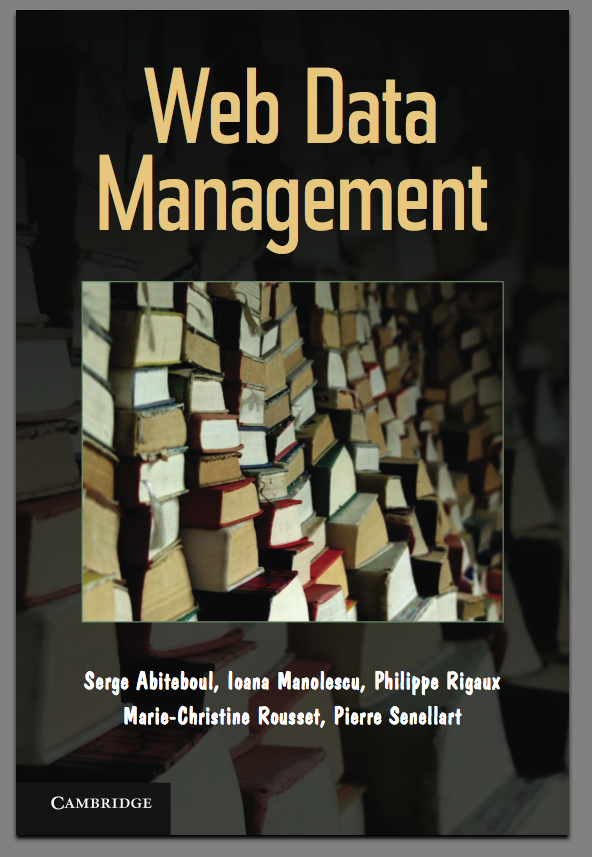
Marie-Christine ROUSSET is a Professor of Computer Science at the University of Grenoble Alpes (UGA) in France, where she is a member of the LIG (Laboratoire d'Informatique de Grenoble) in the SLIDE group. Previously affiliated with Paris-Saclay (LRI), she has established herself as a leading researcher in Knowledge Representation and Information Integration. She holds the distinguished position of Senior member of the Institut Universitaire de France (IUF) (2011-2016, renewed for 2016-2021) and serves as co-responsible for the chair Explainable and Responsible AI within MIAI Grenoble Alpes. Her research focuses on ontology-based data access, logic-based mediation between distributed data sources, query rewriting using views, data linkage, and distributed reasoning for the Semantic Web. She skillfully combines artificial intelligence and database techniques to address complex information integration challenges, with applications spanning biomedical informatics, educational technology, and trustworthy AI. Her work demonstrates consistent innovation from foundational research to practical implementations, as evidenced by her co-authorship of the book 'Web Data Management' published by Cambridge University Press. Professor ROUSSET's recent publications (2019-2022) reveal a growing emphasis on data privacy, RDF graph anonymization, and interactive ontology engineering, while maintaining her strong contributions to semantic web technologies and knowledge representation. Her research shows increasing attention to trustworthy AI concerns, aligning with her leadership roles in relevant projects. Scientific Recognition Senior member of Institut Universitaire de France (IUF) (2011-2016, renewed for 2016-2021) Junior member of Institut Universitaire de France (IUF) from 1997 to 2002 Chevalier de l'Ordre National du Merite (July 11, 2011) EurAI Fellow (nominated ECCAI Fellow in 2005) Best Paper Award at AAAI'96 for 'Verification of Knowledge Bases based on Containment Checking' Professor ROUSSET maintains an active role in the scientific community through editorial work and organizational leadership. She serves on the Editorial Board of Communications of the ACM (CACM) and has held significant roles including PC chair of EGC 2019, Workshops co-Chair of WWW 2018, and Area Chair of IJCAI 2017. Her consistent service on program committees of major international conferences demonstrates her standing in the field. Her laboratory, the SLIDE group within LIG, focuses on semantic web technologies, knowledge representation, and data integration. The group maintains strong connections with the international research community and participates in collaborative projects addressing cutting-edge challenges in artificial intelligence and data management, with particular emphasis on trustworthy and explainable AI systems.
Olivier Serre is a CNRS Research Director working at the Institute for Research in Fundamental Computer Science (IRIF), a joint research unit of CNRS and University of Paris. Since September 2021, he serves as Deputy Scientific Director at the Institute for Information Sciences and Technologies (INS2I) at CNRS. His research focuses on theoretical computer science with particular emphasis on automata theory and formal verification frameworks. Dr. Serre completed his education at ENS Cachan (1999-2003) and earned his PhD in Computer Science from Paris-Diderot University (now University of Paris) in 2004. Following a postdoctoral position at RWTH Aachen, he joined LIAFA (now IRIF) as a research fellow in 2005 and became a CNRS Research Director in 2016. His academic journey reflects deep engagement with foundational theoretical problems and their practical verification applications. His research centers on automata theory and formal languages, with particular expertise in games and logic, infinite structures, and verification of higher-order functional programs. Dr. Serre has made significant contributions to collapsible pushdown systems, recursion schemes, and parity games, bridging theoretical foundations with practical applications in program verification. His work demonstrates exceptional depth in developing decision procedures for complex verification problems previously considered intractable. Dr. Serre's extensive publication record in premier theoretical venues shows consistent contribution to advancing the state of the art. His research trajectory reveals a clear evolution from foundational automata theory toward increasingly sophisticated systems involving higher-order computation and imperfect information, with notable breakthroughs in establishing decidability results for complex verification problems.
Christine Tasson is a Professor of Computer Science at ISAE-SUPAERO in Toulouse, France, where she holds a position in the DISC Department. She maintains an associate affiliation with LIP6 in Paris and was elected junior member of the prestigious Institut Universitaire de France (IUF) in 2021. Her academic credentials include: PhD in Computer Science from Paris Diderot University (2009) HDR (Habilitation à Diriger des Recherches) from University of Paris Cité (2018) Tasson's research program integrates theoretical computer science with critical systems engineering. She investigates Programming Languages through denotational/categorical semantics frameworks, advances Probabilistic programming models, and develops formal methods for Reactive and synchronous systems. Her work provides mathematical foundations for reliable distributed computing in aerospace contexts, emphasizing verifiable system design. Her significant recognition includes: Junior membership in the Institut Universitaire de France (IUF), 2021 Current research is supported by active grants: JCJC ANR project: "Species, Syntax and Semantics Emergence" Mairie de Paris project: "Reactive Systems, Linear logic and Semantics" She leads the "Engineering for Critical Systems" research group within DISC, focusing on systems engineering processes and models for aerospace applications where mathematical rigor meets engineering precision in safety-critical environments.
National School of Arts and Textile IndustriesFrance
Pascal Bruniaux is a Full Professor and Research Supervisor at the École Nationale Supérieure des Arts et Industries Textiles (ENSAIT) in Roubaix, France, where he leads research in textile engineering and human-centered design. His work focuses on the intersection of textile science, digital technologies, and human anatomy, with particular emphasis on creating innovative solutions for garment design and customization. Professor Bruniaux's research spans four major themes: (1) Modeling, simulation and multi-scale perception of textile materials; (2) Modeling of the Human/Clothing/Environment interface; (3) Analysis and classification of typical and atypical human morphologies; and (4) Development of personalized co-creation processes integrating 3D virtual prototyping, human perception, and knowledge. His work bridges the gap between traditional textile manufacturing and cutting-edge digital technologies, with applications ranging from everyday apparel to specialized medical garments and protective clothing. His recent publications demonstrate a strong trend toward integrating artificial intelligence and machine learning with 3D garment design and virtual prototyping. The research spans disciplines including textile engineering, computer science, human factors engineering, and sustainable fashion, with particular emphasis on improving garment fit, comfort, and customization through digital technologies. His work addresses critical challenges in the fashion industry, including reducing waste through virtual prototyping and improving accessibility for people with atypical body morphologies. Professor Bruniaux has received significant recognition for his contributions to the field: 2016 Gratitude Diploma from Gheorghe Asachi Technical University of Iasi for supporting and promoting their interests PEDR Award for PhD students and research supervision, received annually from the French Ministry of National Education since 2021 Throughout his career, Professor Bruniaux has supervised numerous PhD students and led multiple significant research projects funded by various programs including FUI, Erasmus Mundus, and European H2020. His research has been supported by collaborations with institutions across Europe and Asia, demonstrating the international impact of his work. He has also contributed to the development of innovative teaching methods in textile and apparel design, integrating digital tools into the curriculum. As a key member of the GEMTEX laboratory at ENSAIT, Professor Bruniaux leads the Human Centered Design Group, which focuses on developing technologies that place human needs at the center of textile and apparel innovation. The group's work has applications in diverse areas including adaptive clothing for people with physical disabilities, personalized sportswear, and advanced protective garments.
National Graduate School of Mechanics and AerotechnicsFrance
Loïc Adam serves as an Associate Professor in Data Engineering at ISAE-ENSMA since 2024, concurrently holding a lecturer position in Digital Information. Previously, he was an ATER at Université de Technologie de Compiègne (2023-2024) where he taught operational research and data analysis courses. He completed his PhD in Computer Science at UTC in 2023 and currently serves on ENSMA's improvement council and scientific expertise commission (2025-2027). His research spans decision theory under risk and uncertainty, with core expertise in incremental preference elicitation, multicriteria decision-making, and uncertainty modeling through possibility theory and belief functions. He actively investigates information fusion, machine learning applications, and game-theoretic approaches to preference learning, focusing on resolving inconsistent preferences and developing robust decision support frameworks under severe uncertainty. Adam's publication record (2020-2024) reveals consistent contributions at the intersection of artificial intelligence and decision science, particularly in preference modeling and uncertainty quantification. His work demonstrates methodological innovation in applying possibility theory to inconsistency resolution and developing imprecise probabilistic models for label ranking, with publications spanning top venues in AI, fuzzy systems, and decision theory. Scientific Awards: No major awards or fellowships were documented in the source material. He currently supervises M2 intern Aicha AIT HAMMOUCH on auto-detection of erroneous models through personalized data elicitation in uncertain environments. As a member of LIAS Laboratory's Data Engineering team, he collaborates across ENSIP (University of Poitiers) and ISAE-ENSMA sites, contributing to interdisciplinary projects that bridge theoretical decision science with real-world engineering applications in control systems and real-time data processing.
National Graduate School of Mechanics and AerotechnicsFrance
Brice Chardin is an Associate Professor in Data Engineering at ISAE-ENSMA since 2013, affiliated with the LIAS (Laboratoire d'Ingénierie des Applications de la Connaissance et des Systèmes) Data and Model Engineering team. His work bridges academic research and industrial applications, focusing on data management solutions for critical systems. His research spans clustering algorithms under dissimilarity constraints , RDF query relaxation for explaining empty/overabundant results, pattern mining through the RQL language, and energy data management . Key projects include Chronos (a NoSQL system for industrial sensor data) and collaborations with energy companies SRD and Nexeya for predictive consumption analysis. Recent publications (2021-2024) emphasize constrained clustering techniques and cooperative query processing for RDF knowledge bases, revealing a strong trend toward practical solutions for industrial data challenges. His work integrates machine learning with database theory to address real-world data imperfections. PhD in Computer Science from INSA Lyon (2011) Postdoctoral position at LIRIS (2012-2013) on ANR DAG project Specialized in industrial data management since 2011 EDF collaboration Chardin actively supervises academic projects including drone simulation with Ardupilot and Smart Data mining initiatives. His industrial partnerships focus on energy sector applications, particularly predictive analysis for electricity distribution and storage systems. Current work involves developing clustering algorithms with error bounds and query relaxation frameworks for semantic web technologies.