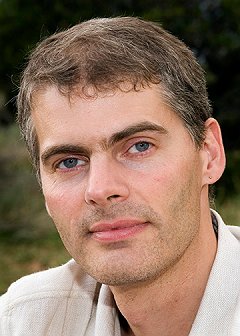
Richard M. Golden is a Professor of Cognitive Science and Participating Faculty in the Erik Jonsson School of Engineering and Computer Science at the University of Texas at Dallas (UTD). He directs the COgnitive INformatics and Statistics (COINS) Lab, focusing on computational psychometrics and statistical machine learning applied to educational technologies. His research integrates cognitive science, machine learning, and usability engineering to improve personalized instruction. He authored the textbook Statistical Machine Learning: A Unified Framework and hosts the Learning Machines 101 podcast. Golden leads UTD's Undergraduate Cognitive Science and Graduate Applied Cognition and Neuroscience programs. Education : Ph.D. in Experimental Psychology (Brown, 1987), M.S. in Electrical Engineering (Brown, 1986), B.S. in Electrical Engineering & Psychology (UC San Diego, 1982). Research : Prior work includes neural network models of text comprehension, model misspecification analysis, and Bayesian inference. Current projects include diagnostic assessment tools and AI-driven educational systems. Awards : Secretary-Treasurer Service Award (2017), IEEE Senior Member (1999), multiple invited speaker roles. Labs/Teams : COINS Lab develops tools like the ARCADE system for automated reading assessment. Collaborates with organizations like the Veteran's Administration and National Science Foundation.
Professor Tony Jebara is a faculty member in the Department of Computer Science at Columbia University, where he chairs the Center on Foundations of Data Science and directs the Columbia Machine Learning Laboratory. His research focuses on machine learning with applications in vision, graphs, and spatio-temporal data. He holds a PhD from MIT (2002) and has advised startups including Sense Networks, Evidation Health, and Agolo. Notable awards include the NSF Career Award (2004), Best Paper at ICML 2009, and recognition as one of Esquire's Best and Brightest (2008). His work has been featured in major media outlets. Jebara's academic contributions span over 100 peer-reviewed papers and a textbook on machine learning. He served as General Chair for ICML 2017 and Program Chair for ICML 2014. His research explores generative and discriminative models, Bayesian inference, and optimization techniques. Current projects include neural ensemble analysis in neuroscience and robust learning algorithms for environmental modeling. Recent publications emphasize scalable methods for collaborative filtering, survival analysis in online experiments, and graphical model applications in neuroscience. His work bridges theoretical advancements with practical systems, including contributions to privacy-preserving algorithms and recommendation systems.
Jean-Cédric Chappelier is a Senior Lecturer and Researcher at École Polytechnique Fédérale de Lausanne (EPFL) in the School of Computer and Communication Sciences. He works in computational linguistics and natural language processing, with a focus on robust parsing techniques, semantic indexing, and clustering algorithms. His research interests span computational linguistics, natural language processing, machine learning, tree substitution grammars, and semantic indexing. His publications from 2000-2006 demonstrate expertise in stochastic parsing, ontology-based indexing, and community structure analysis in complex networks. He has supervised multiple EPFL PhD students including Florian Seydoux and Emmanuel Eckard. Jean-Cédric holds an Ms.Sci. and Ph.D. in Computer Science from École Nationale Supérieure des Télécommunications de Paris. He teaches courses on object-oriented programming, computer systems, and natural language processing at EPFL.
Claus Danielson serves as Assistant Professor in the Department of Mechanical Engineering at the University of New Mexico, specializing in constrained planning, control, and optimization for safety-critical systems. His work bridges theoretical control theory with practical applications across robotics, autonomous vehicles, and energy infrastructure. His academic credentials include: PhD in Mechanical Engineering from University of California, Berkeley MS in Mechanical Engineering from Rensselaer Polytechnic Institute BS in Mechanical Engineering from University of Washington Danielson's research centers on Model Predictive Control (MPC), motion planning, and reference governors. He develops algorithms exploiting structural properties in large-scale systems to ensure safety and robustness. His lab creates provably safe motion planning solutions using invariant set theory and non-convex optimization, with applications spanning autonomous vehicles, spacecraft, HVAC, and energy storage networks. Current projects emphasize data-driven approaches for complex constrained systems. Analysis of his recent publications reveals dominant trends in data-driven invariant set methods (2023-2025), robust adaptive MPC for aerospace applications, and safety-guaranteed motion planning. His work increasingly integrates machine learning with control theory, particularly in randomized path planning and extremum seeking control for energy systems like concentrated solar power and HVAC networks. No scientific awards are documented in the provided materials. Danielson teaches Robot Engineering (ME-482/582) and Introduction to Feedback Control (ME-380/ECE-345), mentoring students in non-convex optimization, dynamic system modeling, and control algorithm design. His research collaborations include the UNM-AFRL Agile Manufacturing Laboratory and New Mexico EPSCoR Smart Grid Center, though specific grant details remain undisclosed. He directs the Model Predictive Control Lab, which focuses on developing motion planning algorithms for robotics and autonomous vehicles. The lab also advances control solutions for photovoltaics, concentrated solar, and smart grid technologies, emphasizing scalable algorithms for large-scale energy systems with multi-timescale dynamics.
Martina Pastorino is a Researcher in the Department of Naval, Electrical, Electronic, and Telecommunications Engineering (DITEN) at the University of Genoa. Her work focuses on integrating machine learning with probabilistic graphical models for advanced remote sensing image analysis , particularly in multiresolution classification using satellite and UAV data. She teaches courses on Machine Learning for Pattern Recognition and Remote Sensing in master’s programs related to Internet and Multimedia Engineering and Energy Engineering . Research Interests : Remote Sensing, Machine Learning, Image Segmentation, Data Fusion, Hyperspectral Imaging, UAV Applications. Key Techniques : CNN-MRF Hybrids, CRFNet, Probabilistic Graphical Modeling, Multiresolution Analysis. Her recent publications explore applications in wildfire mapping , urban land-use analysis , and hyperspectral-panchromatic fusion , with a focus on improving semantic segmentation accuracy through hybrid deep learning frameworks. She is available for office hours on request via email at martina.pastorino@unige.it .
Professor André Niemann at the University of Duisburg-Essen's Institute of Hydraulic Engineering and Water Management is a leading expert in water resources management, focusing on flood protection, dam control systems, and AI-driven hydrological forecasting. His work bridges practical engineering challenges with advanced data science applications. Academic Leadership: Coordinated projects like interSim (interactive simulation for vocational training) and PROWAVE (forecast-based dam control) Research Impact: Pioneered ensemble optimization methods for reservoirs and LSTM models for inflow forecasting Technological Innovation: Developed AI frameworks for sensor data quality control in water management His research addresses critical intersections between hydraulic engineering and climate resilience, with recent projects analyzing flood forecasting systems ( HÜProS ), urban drainage optimization, and sustainable hydropower solutions using legacy mining infrastructure. Collaborations span institutions like Harz Waterworks, Deltares, and international conferences (IAHR, ICOLD, EGU). Publications since 2012 cover topics from underground pumped storage feasibility to real-time control of urban reservoirs, with a growing emphasis on machine learning applications since 2023. He actively engages in fieldwork, including excursions to dams and control centers, and teaches modules ranging from hydromechanics to environmental monitoring.
Ningning Xie is a researcher affiliated with the University of Toronto, specializing in functional programming, type systems, and logics. Their work spans applications in compilers, code generation, and machine learning, with a focus on compositional programming and effect handling. Research interests include: Functional programming Type systems Logics Compiler design Multi-stage programming Effect handlers Recent publications demonstrate expertise in type-level programming, staged compilation, and effect systems. Key areas include distributive disjoint polymorphism, parallel algebraic effect handlers, and macro systems for OCaml and Haskell. Their work bridges theoretical formalisms with practical language implementations. Contributions to academic service include organizing and reviewing for conferences like POPL, PLDI, ICFP, and Haskell workshops. Notable roles include Publicity Chair for POPL 2026 and Co-chair for PLMW and Artifact Evaluation committees.
Dr. Giulio Guerrieri is a lecturer (= associate professor) in computer science at the University of Sussex, UK, and a Maître de Conférences (= associate professor) at Aix-Marseille University, France (currently in voluntary layoff status). His research spans logic, proof-theory, lambda-calculus, type theory, linear logic, abstract machines, and denotational semantics. Education : PhD in Computer Science and Philosophy from Università Roma Tre (Italy) and Université Paris Diderot-Paris 7 (France), supervised by Lorenzo Tortora de Falco and Thomas Ehrhard. Current Roles : Lecturer at University of Sussex; Maître de Conférences at Aix-Marseille University. Past Roles : Senior researcher at Huawei Edinburgh Research Centre; postdoctoral fellow at University of Bath, Università di Bologna, University of Oxford, and others. His research focuses on theoretical computer science, particularly computational calculi and their logical foundations. Recent publications include work on lambda-calculus normalization, quantitative inhabitation, and proof-net confluence. He has taught courses at multiple universities, including Functional Programming (University of Bath), Logic for Computer Science (Università di Bologna), and Programming for Mathematics (Università di Bologna). He has served on program committees for workshops like CSL, FSCD, and FoSSaCS. His lab affiliations include the Laboratoire d'Informatique et Systèmes (LIS) at Aix-Marseille University and the Programming Language team at Huawei Edinburgh Research Centre.
Mohammad Abdollahi Azgomi is a Professor of Computer Engineering at the School of Computer Engineering, Iran University of Science and Technology (IUST), where he has been serving since 2005, progressing from Assistant Professor to Associate Professor and finally to Professor in 2022. He holds multiple significant roles including Director of the Trustworthy Computing Laboratory (TwCL) since 2006, and previously served as Research Deputy of the School of Computer Engineering from 2020-2023. His academic career is complemented by extensive service on editorial boards, scientific committees, and as a PC member for numerous international conferences in security, cryptography, and computer science. Dr. Azgomi earned his Ph.D. in Computer Engineering (Software) from Sharif University of Technology in 2005 with a dissertation on 'High-Level Extensions for Stochastic Activity Networks: Theories, Tools and Applications,' supervised by Prof. Ali Movaghar. He also completed his M.S. (1996, with honors) and B.S. (1991) in Computer Engineering (Software) from the same institution, with his master's thesis focusing on 'Design and Implementation of Security Services for Computer Networks.' His research spans several interconnected domains centered around dependable and secure computing systems. Dr. Azgomi specializes in modeling and simulation techniques, particularly Petri Nets and Stochastic Activity Networks, for quantitative evaluation of system properties. His work significantly contributes to security and privacy frameworks, trust models, and dependable software design. He has pioneered approaches for evaluating cyber-physical systems security through game-theoretic models and developed frameworks for assessing software architecture quality attributes under uncertainty. Analysis of his recent publications reveals a strong research trajectory focusing on computational trust models, malware propagation dynamics in heterogeneous networks, and security evaluation of cyber-physical systems. His work demonstrates consistent application of formal methods like stochastic activity networks and Petri nets to solve complex security and dependability problems. There's a clear progression from foundational modeling techniques to sophisticated applications in cloud computing, web services security, and intrusion-tolerant systems. Best Researcher of the Year, School of Computer Engineering, IUST (2013, 2014, 2016, 2017) Best Paper Award at CSICC'12 for work on symbolic state space generation Best Paper Award at Innovations'09 for security protocol modeling Best Bachelor Thesis Supervisor (2009) Best Lecturer, IT Group, E-Learning Center (2008) Distinguished M.S. Graduate, Sharif University (1996) Dr. Azgomi has supervised an impressive number of doctoral students, with 14 Ph.D. graduates from IUST and 6 from other universities. His current teaching includes graduate courses on Dependable Software Systems and undergraduate Research Methods and Presentation. He serves on the editorial board of the CSI Journal on Computing Science and Information Technology and has been actively involved in numerous international conferences as program committee member and chair. The Trustworthy Computing Laboratory (TwCL), which Dr. Azgomi directs, focuses on rigorous engineering methodologies for evaluating dependability and security in information and communication technologies. The lab conducts research in formal methods, security modeling, dependable systems, and network security, with particular emphasis on Petri nets, stochastic activity networks, and quantitative evaluation techniques for security, privacy, and trust.
Ryan Marcus is an Assistant Professor in the Department of Computer and Information Science at the University of Pennsylvania. His research focuses on integrating machine learning into data management systems to create adaptive tools that optimize hardware utilization, invent novel processing strategies, and interpret user intentions. Currently based in Office 407, Amy Gutmann Hall, he actively explores query optimization, index structures, intelligent clouds, programming language runtimes, program synthesis for data processing, and reinforcement learning applications to systems challenges. Key research themes include machine learning for databases , learned query optimization , intelligent cloud systems , and blockchain adaptability . Scientific achievements include the Best Paper Award at SIGMOD '21 for the Bao system and the development of AutoSteer, a cross-database learned query optimizer. Notable PhD advisees co-advised include Peizhi Wu (with Zack Ives), Jeffrey Tao (with Andrew Head), and Zixuan Yi (with Zack Ives). His recent work, presented at venues like VLDB and SIGMOD, emphasizes scalable LLM-augmented data systems (ScaleLLM), robust cardinality estimation, and adaptive Byzantine fault-tolerant consensus (BFTBrain). For full system evaluations, he created testing environments such as BFTGym. Contact: rcmarcus@seas.upenn.edu
Miroslav Stankovic is a researcher at TU Wien's Research Area Cyber-Physical Systems , focusing on probabilistic programming, invariant synthesis, and moment-based analysis of probabilistic loops. His work bridges theoretical computer science and machine learning, particularly in analyzing Bayesian networks and distribution recovery.
Benjamin C. Pierce is the Henry Salvatori Professor of Computer and Information Science in the School of Engineering and Applied Science at the University of Pennsylvania. As a Fellow of the ACM, he has made significant contributions to programming language theory and formal methods. His academic leadership includes previous editorial roles as co-Editor in Chief of the Journal of Functional Programming and Managing Editor for Logical Methods in Computer Science. His research spans multiple interconnected domains in programming language theory, with particular emphasis on type systems and their applications to security and verification. Pierce's work bridges theoretical foundations with practical implementations, most notably through his development of the Unison file synchronization tool and contributions to the Clowdr virtual conference platform. His research interests form a cohesive trajectory from foundational type theory to applied security and verification techniques. Pierce's scholarly output shows consistent focus on property-based testing, type systems, and formal verification methods. His recent publications demonstrate evolving interests in differential privacy verification, synchronization technologies, and the practical challenges of implementing formal methods in real-world systems. The progression of his work reflects both theoretical depth and practical relevance to software development challenges. Fellow of the ACM Author of influential textbooks Types and Programming Languages and Software Foundations Lead designer of the Unison file synchronizer Co-developer of the Clowdr virtual conference platform Former editorial leadership for multiple prominent programming languages journals As an educator and mentor, Pierce has contributed to the Programming Languages Mentoring Workshop (PLMW) and has served on numerous conference program committees. His academic service extends to SIGPLAN leadership roles including SIGPLAN Vice Chair and Steering Committee membership. His textbook Software Foundations has become a standard resource for teaching formal methods and proof assistants.
Dr. Jonas Biehler is a Research Fellow at the Chair of Numerical Mechanics within the Institute for Computational Mechanics at the Technical University of Munich (TUM). His work focuses on computational methods for biomechanical systems, with expertise in uncertainty quantification, high-performance computing, and machine learning applications in respiratory and cardiovascular modeling. Education: PhD in Mechanical Engineering, Technical University of Munich, 2016 His primary research spans Computational Biomechanics, Computational Solid Mechanics, and Experimental Biomechanics, with specialization in Inverse Problems and Uncertainty Quantification. He integrates High-performance parallel computing with Machine Learning and Bayesian Optimization to advance Respiratory Mechanics and Semantic Segmentation of medical images. His methodologies address complex challenges in patient-specific modeling where experimental validation is constrained. Analysis of his 2021-2025 publications reveals dominant themes in respiratory system modeling (35%), uncertainty quantification frameworks (30%), and cardiovascular biomechanics (25%). Key trends include the development of open-source tools like QUEENS for solver-independent analyses, physics-informed machine learning for drug delivery optimization, and multi-fidelity approaches that reduce computational costs by 40-60% in large-scale simulations. His work increasingly bridges computational models with clinical applications in ARDS and pulmonary fibrosis. No scientific awards were documented in the provided materials. Dr. Biehler has supervised 15+ student projects with emphasis on methodological innovation and experimental validation: Deep Neural Networks as Surrogate Models for Uncertainty Quantification Multi-Level Monte Carlo Schemes for Uncertainty Quantification Experimental and Numerical Analysis of Nonlinear Anisotropic Polymer Membranes Uncertainty Quantification for Human Respiratory System Models Biaxial Measurement of Porcine Aorta Mechanical Properties He operates within the LNM (Lehrstuhl für Numerische Mechanik) research ecosystem at TUM, which maintains high-performance computing clusters and biomechanics testing facilities. The group collaborates extensively with clinical partners at Klinikum rechts der Isar on translational projects involving abdominal aortic aneurysms and respiratory mechanics, with current efforts focused on integrating real-time patient data into computational frameworks.
Professor Camila Caiado is affiliated with Durham University as a Professor in the Faculty of Science, Department of Mathematical Sciences . Her research spans Bayesian Statistics, Parametric Inference, Information Theory , and Stochastic Processes , with interdisciplinary applications in Health Informatics and Geophysics . Key Research Themes : Uncertainty Quantification, Computational Statistics, Decision Theory, and Applications of Bayesian Methods in Complex Systems Notable Collaborations : Atom Bank, Healthcare Institutions, Petroleum Engineering Projects Recent Publications focus on digital twin banking models , healthcare utilization during pandemics , and geochronological uncertainty analysis . She employs agent-based modeling and machine learning for pandemic planning and medical diagnostics. Academic Leadership : Active in Durham Research Methods Centre and Institute for Data Science. No formal awards or supervisees are explicitly mentioned in available data.
Prof. Dr. André Kuck is a Professor for Quantitative Methods in Finance at the Faculty of Economics of Baden-Württemberg Cooperative State University Villingen-Schwenningen. He also serves as Head of the Center for Emergency-Based Statistics (ZES) since 2017. Current affiliation: Baden-Württemberg Cooperative State University Villingen-Schwenningen Academic focus: Quantitative Finance, Risk Management, Emergent Law-Based Statistics Email: andre.kuck@dhbw.de Research Interests: Emergent law-based statistical modeling Credit risk analysis Macroeconomic risk factors Structural adjustment programs in Sub-Saharan Africa Big data applications in finance Philosophy of science in economic modeling Publication Trends: Recent work focuses on emergent deterministic laws as alternatives to probabilistic statistics, predictive modeling for financial systems, and macroeconomic risk analysis. He has developed simulation tools like MESOSIM and contributed to empirical macroeconomics research. Education & Career: Studied economics (statistics/econometrics focus) and philosophy/psychology/sociology at the University of Münster (1985-1992). Held academic and consulting roles across Germany, including leadership positions at Gerhard Mercator University and international consulting projects on credit risk.