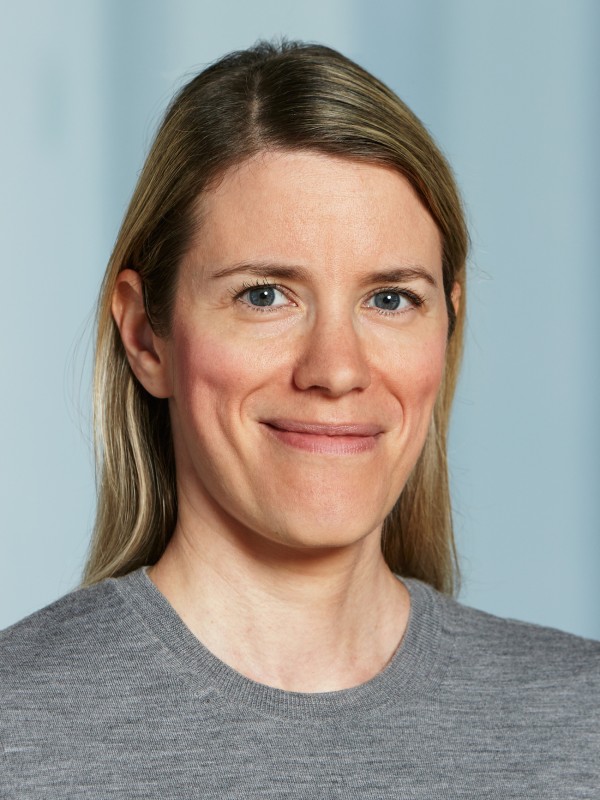
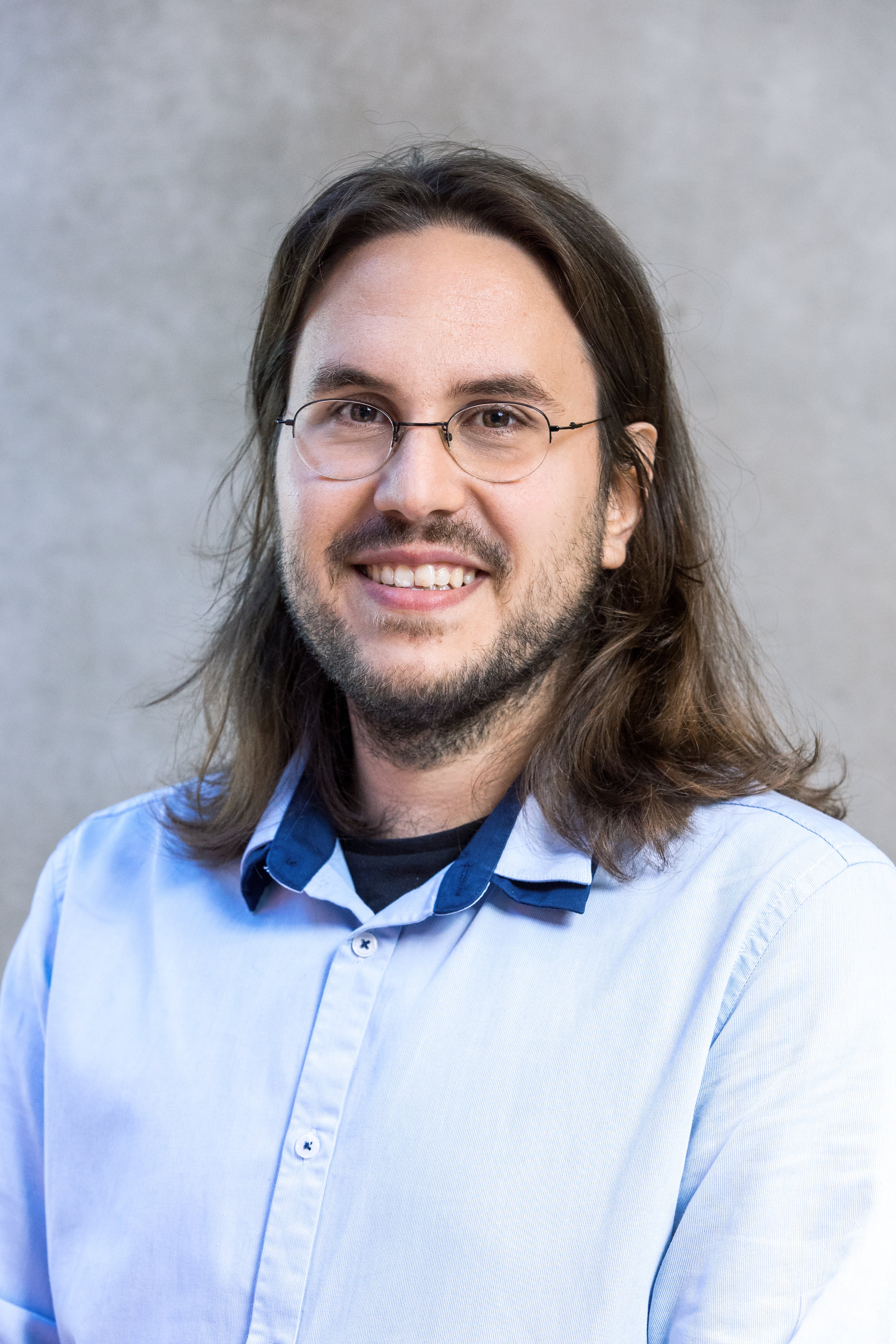
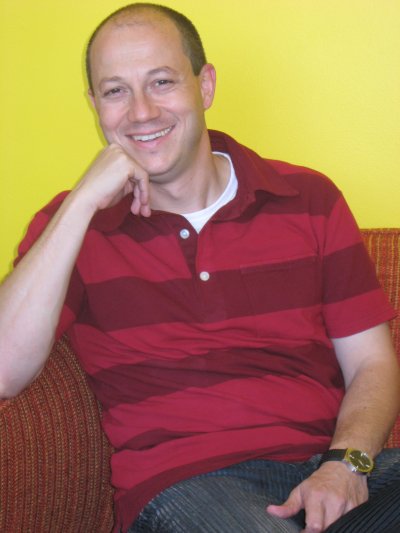
Prof. Olga Sorkine Hornung is a Full Professor of Computer Science at ETH Zürich, leading the Interactive Geometry Lab. She holds a BSc and PhD from Tel Aviv University (2000 and 2006) and conducted postdoctoral research at Technical University Berlin. Her research focuses on computer graphics, geometric modeling, and geometry processing, with applications in shape editing, digital fabrication, and animation. She has received numerous accolades, including the ACM Fellowship (2020), ERC Consolidator Grant (2020), and the Golden Owl Teaching Award (2021). Her work bridges theoretical foundations and practical algorithms, addressing challenges in parameterization, surface compression, and interactive design tools. Her research interests span: Computer Graphics & Visualization Geometric Modeling & Processing 3D Content Creation & Digital Fabrication Garment Design & Simulation Human Motion Analysis & Animation Awards and grants include: 2024: Best Paper Honorable Mention (EUROGRAPHICS) 2023: Member of Swiss Academy of Engineering Sciences (SATW) 2020: ERC Consolidator Grant 2017: Rössler Prize (ETH Zurich) Her lab focuses on developing novel methods for interactive geometry processing, with recent advancements in garment modeling (e.g., AIpparel, Rags2Riches) and motion retargeting systems like WalkTheDog. She actively collaborates on interdisciplinary projects, including biomedical applications and sustainable fashion technology.
Christophe Ancey is an Associate Professor at the École Polytechnique Fédérale de Lausanne (EPFL), where he serves in the School of Architecture, Civil and Environmental Engineering (ENAC), specifically in the Institute of Civil Engineering (IIC) and the Environmental Hydraulics Laboratory (LHE). He also holds teaching appointments in SGC-Teaching and EDME-Teaching departments at EPFL. His office is located at GC A1 401, Station 18, 1015 Lausanne, Switzerland. Dr. Ancey holds both a PhD and engineering degree from Ecole Centrale de Paris and Grenoble National Polytechnic Institute. After completing his doctoral work (1994-1997) on rheology of granular flows under Pierre Evesque, he worked as a researcher at Cemagref before joining EPFL in 2004. He directs the Environmental Hydraulics Laboratory and serves as associate editor for Water Resources Research, a leading journal in hydrology. Dr. Ancey's research spans fluid dynamics, rheology, and hydraulics with emphasis on geophysical flows and natural hazards. His work focuses on three interconnected themes: rheology of concentrated suspensions (particularly granular flows in avalanches and mudflows), inverse problems in rheology (determining microscopic behavior from macroscopic measurements), and particle entrainment in turbulent suspensions (erosion and sediment transport processes). His recent publications (2022-2025) demonstrate continued innovation in sediment transport modeling, experimental techniques like PIV for complex flows, and integration of machine learning approaches. The research shows progression from fundamental fluid mechanics to practical applications in natural hazard assessment and river engineering, with particular attention to granular segregation, avalanche-obstacle interactions, and river morphodynamics. Associate Editor, Water Resources Research Co-founder of Toraval, an engineering consulting firm specializing in avalanche risk management Dr. Ancey teaches courses on Fluid Mechanics, Flood and Dam Break Waves, Hydrological Risks and Structures, and Similarity and Transport Phenomena in Fluids. He has supervised numerous PhD students whose work spans environmental hydraulics, granular flows, and sediment transport, with current students including Chen Yanan, Farazande Sofi, and Giboulot Axel Loïc among others.
Raquel Urtasun is a Full Professor in the Department of Computer Science at the University of Toronto and a co-founder of the Vector Institute for AI. She is also the Founder and CEO of Waabi, an autonomous vehicle company. Previously, she was Chief Scientist and Head of R&D at Uber ATG (2017–2021) and held faculty positions at the Toyota Technological Institute at Chicago (TTIC) and as a visiting professor at ETH Zurich. Her research spans machine learning, computer vision, robotics, and AI with a strong focus on autonomous driving and 3D perception. Education: Bachelor's degree, Universidad Pública de Navarra, 2000 Ph.D., Computer Science, École Polytechnique Fédérale de Lausanne (EPFL), 2006 Postdoctoral studies, MIT and UC Berkeley Raquel Urtasun's research focuses on developing AI systems for self-driving cars, emphasizing efficient perception using minimal sensors. Her work includes 3D scene understanding, stereo vision, optical flow, semantic segmentation, and object detection. She has developed the KITTI benchmark suite, widely used in autonomous driving research. Her lab is an NVIDIA NVAIL lab, reflecting its leadership in AI innovation. Her recent publications show a consistent trend in deep learning for visual perception, particularly in stereo matching, optical flow, 3D object detection, and semantic segmentation. These works integrate deep neural networks with structured models like CRFs and MRFs, pushing the boundaries of accuracy and efficiency in scene understanding for autonomous systems. Scientific Awards: NSERC E.W.R. Steacie Fellowship NVIDIA Pioneers of AI Award Google Faculty Research Awards (multiple) Amazon Faculty Research Award Connaught New Researcher Award Fallona Family Research Award Best Paper Runner Up at CVPR 2013 and 2017 UPNA Alumni Award Chatelaine 2018 Woman of the Year Adweek 2018 Toronto's Top Influencers Urtasun has advised numerous PhD and Master’s students, many of whom now hold faculty or research scientist positions at institutions like UIUC, NYU, UBC, MIT, and companies including Google, Amazon, NVIDIA, and Apple. She has secured significant research grants from NSERC, Google, Amazon, and NVIDIA. Her leadership extends to organizing workshops and serving as Area Chair and Program Chair at top conferences like CVPR, ICML, and NeurIPS. Labs and Teams: She leads a research group at the University of Toronto focused on AI for autonomous systems. Her team has been recognized as an NVIDIA NVAIL lab, and she continues to mentor students and postdocs working on cutting-edge problems in robotics and machine learning, both at UofT and through her company Waabi.
Giancarlo Ferrari Trecate is an Adjunct Professor at the Swiss Federal Institute of Technology Lausanne (EPFL) , affiliated with the School of Engineering and the SCI-STI-GFT department. He is also involved in teaching and research through the STI-SGM and EDRS-ENS programs. Research Interests : Automatic control, state estimation, system identification, machine learning, distributed control, hybrid systems, microgrids, biochemical networks, voltage and frequency stabilization in AC/DC microgrids. Publications Trends : His recent work focuses on integrating Neural ODEs and Hamiltonian structures for stable control systems, regret minimization in distributed control, and robust state estimation under uncertainty. Applications include autonomous mobility-on-demand , power grid optimization , and secure microgrid control against cyber-attacks. Scientific Awards : No specific awards mentioned in the provided data. Teaching & Advising : He supervises PhD students in mechanical engineering and teaches courses on Multivariable control and Networked control systems . His lab, DECODE , specializes in Dependable Control and Decision systems.
Sebastijan Dumancic is an Assistant Professor at Delft University of Technology, focusing on neuro-symbolic AI through program synthesis and probabilistic programming. He leads the RAIL lab and collaborates with institutions like Harvard, MIT, and CNRS. His research bridges symbolic AI and machine learning, applying program synthesis to scientific discovery, transportation, and robotics. He holds an FWO-funded PhD from KU Leuven and has participated in initiatives like ELLIS and the Symbolic Computation and Machine Learning Initiative. Program synthesis Probabilistic programming Neuro-symbolic AI Constraint-based learning His recent articles highlight advancements in program synthesis, neuro-symbolic integration, and constraint satisfaction. Projects like Find2Fix and Intelligent Greenhouse Horticulture (funded by NWO) demonstrate practical applications. ELLIS Membership University Teaching Qualification He supervises numerous MSc and PhD students in projects involving logic programming, program synthesis, and probabilistic modeling. Active in workshops and symposia, he contributes to neuro-symbolic AI and scientific discovery.
Benny Sudakov is a Professor of Mathematics at ETH Zurich, where he conducts research in combinatorics. He has previously held positions at UCLA, Princeton University, and the Institute for Advanced Study. His work is supported by the SNSF grant 200021_196965. Research Interests: His primary research areas include Extremal Graph and Hypergraph Theory, Ramsey Theory, Random Structures, and the application of Algebraic and Probabilistic Methods in Combinatorics, with strong connections to Theoretical Computer Science. He investigates fundamental structural properties of discrete systems, such as the existence of regular subgraphs, extremal configurations, and the behavior of random combinatorial objects. The recent popular science articles on his work highlight a consistent trend of solving long-standing open problems in extremal combinatorics using sophisticated probabilistic and algebraic techniques. His research spans topics like equiangular lines, graph decompositions, and the emergence of cycles in sparse graphs, demonstrating a deep focus on the interplay between structure and randomness. Scientific Awards: No specific awards are mentioned in the provided text. Advising and Grants: He has advised numerous Ph.D. students, many of whom have gone on to become professors at top universities (e.g., Oxford, Stanford, CMU, ETH, Princeton). His research is currently funded by the Swiss National Science Foundation (SNSF). He has organized workshops and seminars, such as the Theory of Combinatorial Algorithms Mittagsseminar at ETH and a workshop at UCLA on Extremal and Probabilistic Combinatorics. Labs and Teams: He is a key member of the combinatorics group at ETH Zurich and co-organizes the Theory of Combinatorial Algorithms Mittagsseminar, a central forum for research discussions in discrete mathematics at the institution.
Federica Sandrone is a Lecturer at the School of Architecture, Civil and Environmental Engineering (ENAC) at École Polytechnique Fédérale de Lausanne (EPFL), where she also serves as a Scientist at the Laboratory of Experimental Rock Mechanics (LEMR) within the Institute of Civil Engineering. Her academic career spans over 15 years with continuous contributions to tunnel engineering and rock mechanics research. Her research focuses on the intersection of rock mechanics and tunnel engineering, with particular expertise in tunnel pathology analysis, TBM performance in challenging geological conditions, and long-term tunnel behavior. Sandrone's work bridges theoretical analysis with practical engineering applications, addressing real-world problems in tunnel infrastructure management and maintenance. Her research methodology combines field investigations, laboratory testing, and numerical modeling to understand complex geomechanical behaviors. Analysis of her recent publications reveals a consistent focus on tunnel inspection methodologies, TBM performance prediction in difficult ground conditions, and the long-term behavior of tunnel structures. Her work has evolved from fundamental tunnel pathology studies to more advanced applications involving GIS integration, probabilistic modeling, and modern inspection techniques including laser scanning and image analysis. Engineer at SBB-Infrastructure (2008-present) responsible for Tunnels Management and Maintenance Assistant for Tunnel Engineering courses (2007-present) PhD supervision including Erika Paltrinieri's 2015 thesis on TBM performance Development of tunnel inspection methodologies and condition assessment procedures Her teaching activities include courses in Rock Mechanics and Underground Construction, where students learn about the mechanical behavior of rock materials, tunnel excavation and support design, planning and management of underground works, and risk assessment in tunnel construction.
Stéphane Commend is an Associate HES Professor at the Fribourg School of Engineering and Architecture (HEIA-FR) under HES-SO Valais-Wallis. He also holds a lecturer role at the School of Engineering and Management of the Canton of Vaud. His primary research focuses on geotechnics, numerical simulations, and probabilistic modeling applied to infrastructure projects like tunneling and deep excavations. Education and affiliations include roles across multiple HES-SO institutions, with a strong emphasis on integrating advanced computational methods into geotechnical engineering. Notable projects include the Grand Paris Express tunnel project, Bayesian inference for wood constitutive modeling, and probabilistic risk analysis for urban construction. Research interests span soil-structure interaction, finite element modeling, and uncertainty quantification. Recent work emphasizes Bayesian methods for parameter calibration, machine learning in excavation design, and natural hazard vulnerability assessment. Key contributions include frameworks linking ZSOIL and UQLab for reliability analysis, and prototypes like SLIDE-PM for mudflow impact modeling. Current projects (e.g., iBAG and OptiSoil) focus on optimizing construction methods using AI and data-driven approaches. He leads collaborative teams across HES-SO institutes and academic partners like EPFL and CETU. Key Projects: iBAG Project (2022–2025): Bayesian methods in geotechnics OptiSoil (2019–2025): Machine learning for excavation design TULIP Project: TBM-pile interaction probabilistic analysis
Professor Pascal Fua is a distinguished faculty member at EPFL (Swiss Federal Institute of Technology) in the School of Computer and Communication Science. He joined EPFL in 1996 and currently serves as Head of the Computer Vision Laboratory (CVLAB). His extensive research spans multiple cutting-edge areas in computer vision and geometric deep learning, with applications ranging from 3D reconstruction to medical imaging and aerodynamic optimization. Dr. Fua's research interests encompass Computer Vision, 3D Reconstruction, Shape Modeling, Geometric Deep Learning, Medical Image Analysis, Augmented Reality, Motion Recovery, Surface Mesh Processing, and Aerodynamic Shape Optimization. His work demonstrates a remarkable ability to bridge theoretical computer vision with practical applications across diverse domains. His research has evolved from traditional geometric computer vision techniques to incorporating deep learning approaches for 3D modeling, with recent focus on differentiable rendering, implicit surface representations, and applications in medical imaging and engineering design. His publication record shows a consistent trajectory of high-impact research, with recent work focusing on differentiable iso-surface extraction, geometric deep learning for aerodynamic shape optimization, and novel approaches to 3D reconstruction. His work spans both theoretical advances in computer vision algorithms and practical applications in medical imaging, autonomous driving, and computational fluid dynamics. IEEE Fellow Multiple ERC Grants recipient Associate Editor of IEEE Transactions for Pattern Analysis and Machine Intelligence Throughout his career, Professor Fua has mentored numerous PhD students who have gone on to make significant contributions in computer vision and related fields. His laboratory has established collaborations across multiple disciplines, including medical imaging, aerospace engineering, and neuroscience, demonstrating the broad applicability of his research. His current work continues to push the boundaries of geometric deep learning and 3D vision, with particular emphasis on making these techniques more practical and applicable to real-world engineering and medical problems.
Fabio Nobile is a Full Professor at the École Polytechnique Fédérale de Lausanne (EPFL) in the School of Basic Sciences (SB), Department of Mathematics (MATH), holding the CADMOS Chair in Scientific Computing and Uncertainty Quantification. He leads the CSQI (Chair of Scientific Computing and Uncertainty Quantification) group. His work focuses on numerical methods for partial differential equations (PDEs), uncertainty quantification, stochastic modeling, and computational fluid dynamics. He is involved in collaborative projects involving fluid-structure interaction, cardiac electro-mechanics, and energy systems. Professor Nobile has extensive teaching experience, including courses on advanced analysis, stochastic simulation, and numerical integration of stochastic differential equations. He supervises numerous PhD students and has contributed to over 200 peer-reviewed publications, covering topics such as low-rank approximation methods, multilevel Monte Carlo techniques, and optimal control under uncertainty. His research emphasizes interdisciplinary applications, including biomedical engineering (e.g., personalized cardiac simulations) and renewable energy (e.g., probabilistic load forecasting). He collaborates with industries and academic institutions globally, advancing computational methodologies for engineering and scientific challenges.
Arnulf Jentzen is a distinguished mathematician holding dual positions as Presidential Chair Professor at the School of Data Science and Shenzhen Research Institute of Big Data at The Chinese University of Hong Kong, Shenzhen, and as Full Professor at the Faculty of Mathematics and Computer Science at the University of Münster, Germany. His research spans multiple institutions with significant contributions across mathematical disciplines. His primary research interests include dynamical systems and gradient flows (particularly geometric properties, domains of attractions, blow-up phenomena), analysis of partial differential equations, stochastic analysis (including stochastic calculus and well-posedness analysis), machine learning (with focus on mathematics for deep learning and stochastic gradient descent methods), and numerical analysis (particularly computational stochastics and computational finance). His work demonstrates a strong interdisciplinary approach bridging pure mathematics with practical computational applications. Jentzen's publication record shows a clear trend toward machine learning applications in solving complex mathematical problems, particularly in overcoming the curse of dimensionality in high-dimensional PDEs through deep neural networks. His research group actively publishes on optimization methods like Adam, convergence analysis, and applications of deep learning to partial differential equations and optimal control problems. ICBS Frontier of Science Award in Mathematics (2024) Fellow, Lamarr Institute (2023) ERC Consolidator Grant (2022) Joseph F. Traub Prize for Achievement in Information-Based Complexity (2022) Felix Klein Prize, European Mathematical Society (EMS) (2020) Professor Jentzen advises numerous PhD students across both institutions and serves on multiple editorial boards including SIAM Journal on Numerical Analysis, Journal of Complexity, and Communications in Computational Physics. His research group at Münster and CUHK-Shenzhen focuses on developing mathematical foundations for machine learning with applications to scientific computing problems. He has received significant research funding including an ERC Consolidator Grant, supporting his interdisciplinary work at the intersection of mathematics and artificial intelligence.
Anastasios Vassilopoulos serves as Head of the Composite Mechanics Group (GR-MeC) and Adjunct Professor at École Polytechnique Fédérale de Lausanne (EPFL), within the School of Architecture, Civil and Environmental Engineering. He directs the Doctoral Program in Civil and Environmental Engineering while maintaining active roles in the Structural Engineering Group and School Council. His research focuses on composite materials for renewable energy infrastructure , particularly wind turbine rotor blades. Key areas include fatigue analysis of adhesively bonded joints, experimental methods for FRP composites under complex loading, and design methodologies for composite structures. His work bridges fundamental mechanics with industrial applications through extensive collaboration with wind energy stakeholders. Analysis of his 15 most recent publications reveals dominant themes in thick adhesive joint mechanics (73% of articles), fatigue/fracture characterization (67%), and machine learning applications (40%). The research consistently targets wind turbine blade challenges, with 87% of articles addressing specific aspects of renewable energy infrastructure. Methodological trends show increasing integration of computational-experimental approaches and AI-driven predictive modeling. Dr. Vassilopoulos has secured 18 major research projects since 2000, primarily funded by Swiss National Science Foundation and international collaborations. Current projects include NSF-funded work on wind turbine blade adhesive joints (2020-2024) and fire-resistant composite bridge decks. His teaching portfolio includes advanced courses on composites design, structural mechanics, and floating offshore renewables. As Doctoral Program Director, he oversees PhD training while personally supervising 17 doctoral students to completion.
Andreas Taras is a Full Professor at ETH Zurich's Department of Civil, Environmental and Geomatic Engineering, where he serves as Deputy Head of the Institute of Structural Engineering. His research focuses on steel and composite structures, structural stability, and fatigue behavior. Key research domains include: innovative steel-concrete-timber composite systems, stability and reliability of metallic structures, fatigue life prediction in bridges, and structural optimization using advanced analysis methods. His work integrates experimental testing with computational approaches to advance sustainable structural design. Recent investigations explore cutting-edge applications like iron-based shape memory alloys in structural glass systems, robotic additive joining for reclaimed steel, and novel hybrid systems combining folded sheet steel with cement-free concrete. Publications demonstrate consistent innovation in structural materials and connection technologies.
PD Dr. Daniel Werner Meyer-Massetti is a Privatdozent (Part-Time Lecturer) at the Department of Mechanical and Process Engineering , ETH Zürich. His research focuses on stochastic methods for fluid dynamics and multiphase transport problems in complex systems. Primary Affiliation: ETH Zürich, Department of Mechanical and Process Engineering Email: meyerda@ethz.ch His work bridges theoretical and applied research in turbulence, porous media, and combustion. Key contributions include: Stochastic particle-based frameworks for fractured subsurface flows Turbulence modulation in droplet-laden flows Uncertainty quantification in heterogeneous reservoirs Computational tools like the Netflow Python library His recent publications demonstrate methodological advancements in: Modeling inertial particle clustering in turbulence Simulating evaporation dynamics in reactive flows Developing non-local transport formulations Quantifying dispersion mechanisms in porous media Validating kinematic turbulence models Creating adaptive simulation strategies He collaborates with research groups including the Coletti Group , Jenny Group , and Supponen Group , while maintaining connections to the Haller Group and Noiray People as a former member.
Masashi Sugiyama is a Professor at the Department of Complexity Science and Engineering, Graduate School of Frontier Sciences, The University of Tokyo, where he has been serving since 2014. He concurrently serves as the Director of the RIKEN Center for Advanced Intelligence Project (AIP) since 2016, leading research groups focused on fundamental AI technologies, AI applications, and social issues of AI. His academic journey began at Tokyo Institute of Technology, where he earned his Bachelor, Master, and Doctor of Engineering degrees in Computer Science in 1997, 1999, and 2001 respectively, before becoming an Assistant Professor and later Associate Professor at the same institution. Sugiyama's research primarily focuses on statistical machine learning, with particular expertise in weakly supervised learning, learning from noisy supervision, and learning under distribution shift. His work has established important theoretical frameworks for density ratio estimation, covariate shift adaptation, and non-stationary environments. He has developed numerous practical algorithms including KLIEP (Kullback-Leibler importance estimation procedure), uLSIF (unconstrained least-squares importance fitting), and LSDD (least-squares density difference), which have become standard tools in the machine learning community. Analysis of his recent publications reveals a strong emphasis on reliable and robust machine learning techniques that can handle imperfect supervision and data distribution changes. His work spans theoretical foundations, algorithm development, and practical applications across various domains including bioinformatics, anomaly detection, and dimensionality reduction. The recurring themes in his research include direct density ratio estimation methods, importance weighting techniques, and mutual information-based approaches for various machine learning tasks. Award for Science and Technology from the Japanese Minister of Education, Culture, Sports, Science and Technology (2022) Japan Academy Medal (2017) Japan Society for the Promotion of Science Award (2017) Faculty Award from IBM (2007) Nagao Special Researcher Award from the Information Processing Society of Japan (2011) Young Scientists' Prize for the Commendation for Science and Technology by the Minister of Education, Culture, Sports, Science and Technology Japan (2014) Sugiyama has served as program co-chair for major machine learning conferences including NeurIPS 2015, AISTATS 2019, and ACML 2010 and 2020. He has received prestigious fellowships including the Alexander von Humboldt Foundation Research Fellowship (2003-2004) and the European Commission Program Erasmus Mundus Scholarship (2006). He is the (co-)author of influential machine learning monographs including Machine Learning in Non-Stationary Environments (MIT Press, 2012), Density Ratio Estimation in Machine Learning (Cambridge University Press, 2012), Statistical Reinforcement Learning (Chapman & Hall, 2015), and Machine Learning from Weak Supervision (MIT Press, 2022). At RIKEN AIP, Sugiyama leads research initiatives focused on developing robust AI systems that can operate reliably in real-world conditions with imperfect data. His laboratory maintains an active software development effort, providing open-source implementations of many of his research contributions, which has significantly influenced both academic research and practical applications of machine learning.