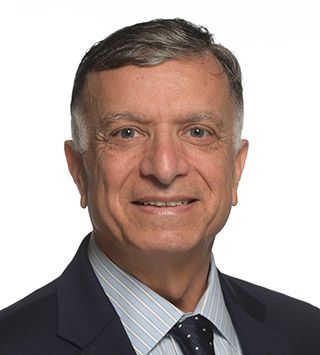
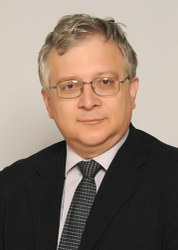
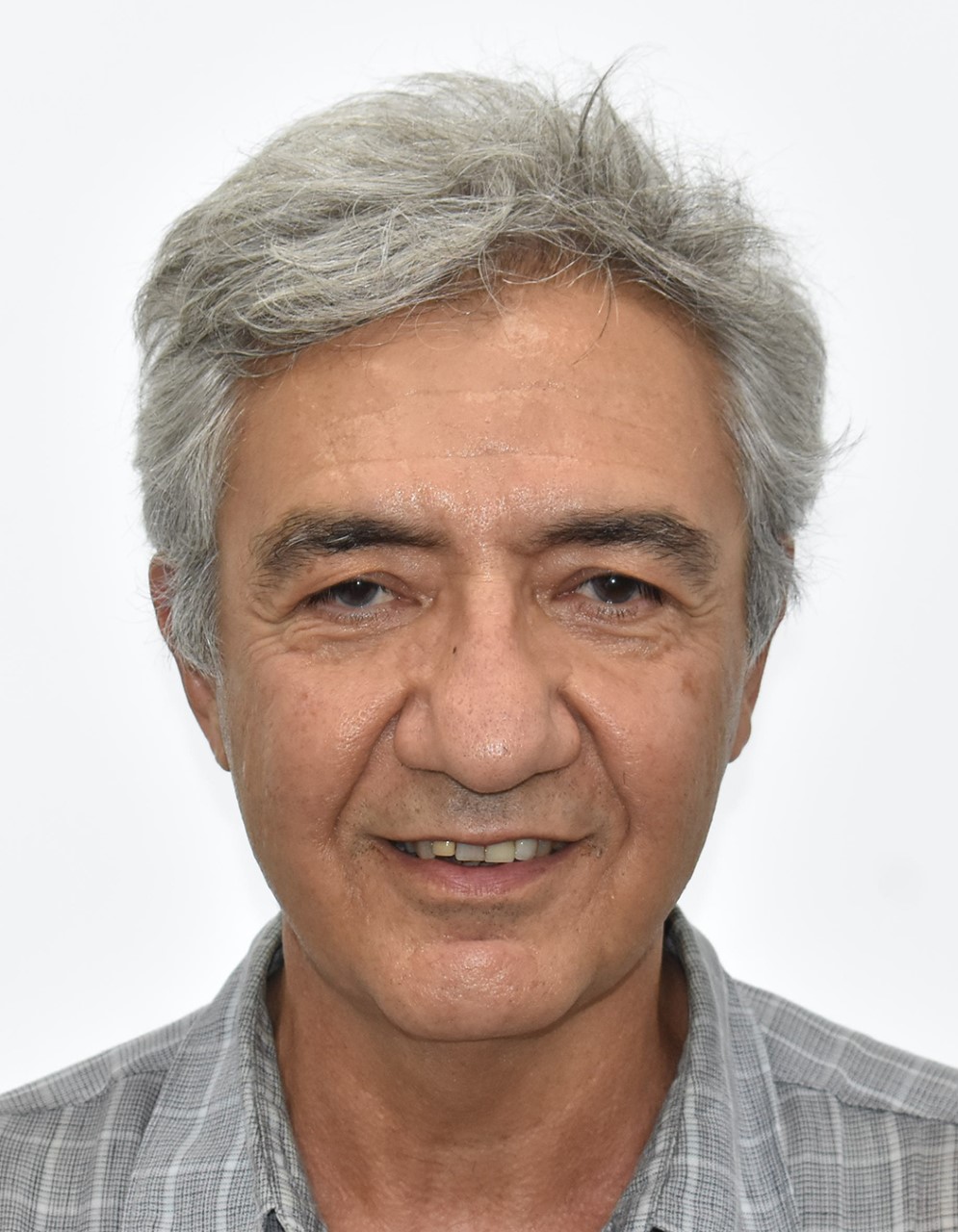
Chin Ho Lee is an Assistant Professor at the Computer Science Department of North Carolina State University. He previously held postdoctoral positions at Harvard University (2021–2023) and Columbia University (2019–2021). His academic journey includes a PhD from Northeastern University, along with a Master's and Bachelor's degree from The Chinese University of Hong Kong (CUHK). Education PhD, Northeastern University MS and BS, The Chinese University of Hong Kong (CUHK) His research focuses on theoretical computer science, particularly randomness in computation, pseudorandomness, analysis of Boolean functions, and trace reconstruction. These areas explore foundational aspects of computation with probabilistic methods and data reconstruction challenges. Chin Ho Lee has no explicitly mentioned scientific awards, grants, or student advisees in the provided information. There are no details about laboratory affiliations or collaborative teams.
Professor Ron Van der Meyden is a faculty member at the School of Computer Science and Engineering at the University of New South Wales, Sydney. His work focuses on the intersection of logic, security, and distributed systems, with particular expertise in blockchain technology and smart contracts. He leads the UNSW Interest Group in Blockchain, Smart Contracts and Cryptocurrency and organizes related seminar series. Professor Van der Meyden's research spans formal methods, computer security, and distributed systems. His work on epistemic logic has been influential in understanding knowledge-based systems and security protocols. He has made significant contributions to the formal verification of blockchain protocols and smart contracts, bringing rigorous mathematical approaches to these emerging technologies. His recent work explores the application of knowledge-based reasoning to consensus protocols and intersection management in autonomous systems. ACM Distinguished Scientist, 2009 As an advisor, Professor Van der Meyden has mentored numerous PhD and Masters students who have gone on to successful careers in academia and industry. His research is supported by grants including Australia's Economic Accelerator Grant for developing a commercial version of a software model checker and an AFOSR/DST Australia grant for verification and synthesis of fault-tolerant autonomous systems. He has received multiple ARC Discovery and Linkage grants over the years. Professor Van der Meyden leads the UNSW Interest Group in Blockchain, Smart Contracts and Cryptocurrency, fostering interdisciplinary research in this area. He has played key roles in major research centers including Smart Internet CRC and National ICT Australia (NICTA), where he established and led the Formal Methods program. His work on the formal verification of the seL4 microkernel and the Goanna static analysis tool has had significant practical impact.
Eduard Kamburjan is a Researcher at the University of Oslo , affiliated with the Reliable Systems (PSY) and Data and Knowledge Systems (DKM) research groups. His work bridges formal methods , digital twin engineering , and knowledge graph applications . Research interests include: Formal verification of hybrid systems using deductive methods Digital twin architecture with compositional correctness guarantees Semantic lifting and ontology-driven modeling for complex systems Concurrency analysis and non-determinism in program verification Interactive visualization as serious games for formal methods His 2024-2023 publications demonstrate expertise in digital twin reconfiguration , semantic interoperability , and knowledge-based runtime enforcement . Key contributions include Crowbar for active object verification and ABS simulator toolchain for model-driven engineering. Collaborations span institutions like Springer , ACM , and IEEE , with work featured in Lecture Notes in Computer Science (LNCS) , Software and Systems Modeling (SoSyM) , and Science of Computer Programming . His research integrates RDF data management , behavioral contracts , and modular analysis for distributed systems.
Raghavendra Selvan, an Assistant Professor (Tenure Track) at the University of Copenhagen, holds joint appointments in the Machine Learning Section (Department of Computer Science), Kiehn Lab (Department of Neuroscience), and the Data Science Laboratory. His academic journey includes a PhD in Medical Image Analysis (2018), MSc in Communication Engineering (2015), and BSc in Electronics and Communication Engineering (2009). PhD - Medical Image Analysis, University of Copenhagen (2018) MSc - Communication Engineering, Chalmers University (2015) BSc - Electronics and Communication Engineering, BMS Institute of Technology, India (2009) His research focuses on Bayesian Machine Learning with emphasis on Medical Image Analysis, Graph-based Learning, Tensor Networks, Approximate Inference, and Multi-Object Tracking Theory. Recent publications highlight his contributions to environmentally sustainable AI practices, efficient deep learning in medical imaging, and novel applications of tensor networks. Key research areas: Green AI and Environmental Sustainability Medical Image Analysis Graph Neural Networks Crystal Structure Prediction Model Compression Materials Science Applications
Christian Hirsch is an Associate Professor for Data Science and Statistics at Aarhus University, where he studies random networks motivated from biology and health sciences through techniques from topological data analysis and stochastic geometry. He is a member of the Stochastics group at the Department of Mathematics and holds additional affiliations as an Associate Fellow of the Aarhus Institute for Advanced Studies, and with the AU DIGIT Centre and the AU Quantum Campus. Current Position: Associate Professor for Data Science and Statistics, Aarhus University Previous Positions: Assistant Professor at University of Groningen and University of Mannheim Postdoctoral Experience: Aalborg University, LMU Munich, WIAS Berlin Education: PhD from Ulm University Christian Hirsch's research focuses on the statistical foundations of topological data analysis, large deviations theory in stochastic geometry, and percolation theory of spatial random networks. His work bridges theoretical mathematics with practical applications in data science, particularly in analyzing complex structures through topological methods. He investigates how topological features form and disappear in growing data structures, developing statistical tests to determine whether observed patterns are significant or merely random occurrences. His recent publications reveal a strong trend toward applying topological data analysis to increasingly complex structures, with significant focus on statistical validation of topological features. Hirsch has made substantial contributions to understanding the probabilistic behavior of persistent homology, developing functional central limit theorems and large deviation principles for topological functionals. His work spans theoretical foundations in stochastic geometry while finding applications in materials science, neural networks, and wireless communication systems. As an educator, Hirsch teaches graduate courses including Topological Data Analysis, Stochastic Geometry, Monte Carlo Simulation, Markov Decision Processes, Probability Theory, and Stochastic Processes. He has supervised numerous PhD, MSc, and BSc students, with several of his former students securing academic positions at institutions like University of Leiden, Tokyo Institute of Technology, and Budapest University of Technology. Hirsch leads a research group within the Stochastics group at Aarhus University, collaborating extensively with researchers across Europe and North America. His work demonstrates how topological methods can provide rigorous statistical insights into complex data structures, making significant contributions to both theoretical mathematics and practical data analysis techniques.
Marcus Gerhold is an Assistant Professor in the Formal Methods and Tools group at the University of Twente's Faculty of Electrical Engineering, Mathematics and Computer Science. His research focuses on model-based testing for software reliability in critical infrastructures, particularly railway systems, alongside significant contributions to game design and programming language analysis. His educational background includes: PhD in Computer Science from University of Twente (2018): Choice and Chance: Model-based Testing of Stochastic Behaviour MSc in Mathematics from Friedrich Schiller Universität Jena (2013): Embeddings of Weighted Morrey Spaces BSc in Mathematics from Friedrich Schiller Universität Jena (2011): Entropy-, Approximation- and Kolmogorov Numbers on Quasi-Banach Spaces Gerhold's research integrates theoretical model-based testing with practical critical infrastructure applications . His work on railway conformance testing addresses EULYNX controller validation, while his game design research explores affective mirroring in NPCs and procedural dungeon generation. The code modernity analysis stream leverages static analysis to quantify legacy code evolution across languages like Python and PHP, revealing version identification challenges through deep learning. Publication trends show consistent focus on model-based testing methodologies (40%), railway safety applications (25%), and innovative game design/code analysis (35%). Recent work increasingly incorporates AI/ML techniques for UML assessment and Python version identification, while maintaining rigorous formal methods foundations. He actively mentors 63 students across all academic levels and contributes to major research initiatives: STORM_SAFE (ERDF, 2024): Daily Supervisor for WP1/WP2 on software reliability for critical infrastructures ZORRO (KIC grant, 2023): Daily Supervisor for WP4 on zero downtime in cyber-physical systems MISSION (MSCA RISE, 2021-2025): Interim coordinator (early 2024) for space systems modeling As part of the Formal Methods and Tools research group, Gerhold participates in European collaborations while serving on SAC-SVT 2024 and FormaliSE 2023 program committees.
Marian Verhelst is a Professor at KU Leuven's Faculty of Engineering Science, renowned for her research in hardware-efficient computing and dedication to STEM education. Her work spans hardware acceleration for machine learning, edge AI, and in-memory computing, with a focus on energy optimization and algorithm-hardware co-design. Her research interests include: Designing flexible hardware for ultra-low-power edge AI systems Optimizing sparsity-aware architectures for deep learning workloads Advancing chiplet-based and 3D memory technologies Co-designing algorithms and hardware for probabilistic AI Pioneering STEM outreach through KU Leuven InnovationLab Recent publications (2023–2025) demonstrate strong trends in: Hardware-software co-optimization for edge ML systems Efficient data movement in heterogeneous accelerators Low-precision and sparse computation techniques RISC-V based customizable SoCs Sustainable AI accelerator design Awards & Honors: Young Academy of Europe Award (2021) for science communication and STEM advocacy She leads significant educational initiatives, including the KU Leuven InnovationLab which has engaged 150 schools and 13,000 students since 2014. The program develops hands-on STEM projects (e.g., AI-powered wheelchairs, sustainable energy systems) and provides teacher training to inspire youth in engineering.
Rom Langerak is an Associate Professor at the University of Twente , affiliated with the Digital Society Institute and the Formal Methods and Tools department. His research bridges computer science and medical applications , focusing on timed automata modeling for healthcare diagnostics and treatment optimization. Key research areas: Formal Methods , Medical Informatics , Bioengineering , and Software Applications . Recent work includes modeling sleep apnea diagnostics , cartilage regeneration , and cancer immunotherapy adverse events , emphasizing interdisciplinary collaboration between computational and biomedical domains. His publications highlight hybrid modeling techniques and in silico validation frameworks. Notable contributions: Timed Automata for Healthcare , True Concurrency in Verification , and Computational Biology .
Willem Jonker is a Full Professor at the Digital Society Institute, specializing in Semantics, Cybersecurity & Services. His research focuses on encryption schemes, access control, and privacy-preserving technologies. He has contributed to over 120 publications, with recent work addressing CVE-to-CWE mapping, anomaly detection in network traffic, and functional encryption systems. His expertise aligns with UN Sustainable Development Goals related to secure digital systems and privacy. Jonker has supervised 10 students and actively participates in academic conferences, presenting on topics like secure data management and cryptographic protocols. Research interests include cryptographic protocols, secure data management, and cybersecurity solutions. Notable projects involve developing methods for detecting covert channels, enhancing data privacy in healthcare, and improving secure search over encrypted data. He has also contributed to standards in digital rights management and forensic image recognition.
Alexander Rodríguez is an Assistant Professor in the Department of Computer Science and Engineering at the University of Michigan. His research focuses on advancing AI methods for modeling complex spatiotemporal dynamics, particularly in applications related to population health and community resilience. He specializes in machine learning, time series analysis, uncertainty quantification, and multi-agent systems, with an emphasis on scientific modeling and data-driven decision-making. Recent contributions include keynote talks at AAMAS 2025 (Autonomous Agents for Social Good workshop), presentations at the US National Academies Symposium, and invited talks at AAAI 2025 on topics like knowledge-guided machine learning and public health prediction. He co-organizes AAMAS 2025 as sponsorship co-chair and leads initiatives in AI for science and epidemic forecasting. His publications emphasize neural networks for time series forecasting, biomedical foundation models, and epidemic surveillance systems. Notable work includes 'Neural Conformal Control for Time Series Forecasting' (AAAI 2025) and 'Deepcovid: An operational deep learning-driven framework for explainable real-time forecasting' (2021). No scientific awards explicitly listed in available texts. His research group actively collaborates on grants related to AI applications in public health and infrastructure resilience, with a focus on data-centric methodologies and multi-agent systems.
Jamshid Mohammadi is the Interim Provost and Professor of Civil and Architectural Engineering at Illinois Institute of Technology (IIT), within the Armour College of Engineering. He holds a Ph.D. in Civil Engineering (Structural Engineering) from the University of Illinois at Urbana-Champaign. His research focuses on structural integrity, seismic damage analysis, bridge performance, and risk assessment in transportation systems. Research Projects: He leads studies on bridge fatigue, seismic vulnerability, structural health monitoring, and disaster resilience. Notable projects include investigating horizontally curved bridges, seismic damage to skewed bridges, and probabilistic models for fatigue failure in metals. His work often involves collaborations with institutions like NASA and the Illinois Department of Transportation. Publications & Books: Mohammadi has authored over 150 peer-reviewed articles and two influential books: Systems Engineering, with Economics, Probability and Statistics and NDT Methods Applied to Fatigue Reliability Assessment of Structures . His work bridges theoretical models with practical engineering solutions. Expertise: His expertise spans system reliability, highway bridge analysis, and probabilistic methodologies for infrastructure assessment. He advises on temporary structure design, post-disaster risk mitigation, and lifecycle cost optimization. Grants & Recognition: His projects are funded by federal and state agencies. While no specific awards are listed, his extensive publications and leadership roles highlight his impact in civil engineering education and practice.
Assoc. Prof. Iliev Atanas is affiliated with the Faculty of Electrical Engineering and Information Technologies (FEIT) at the Ss. Cyril and Methodius University of Skopje. He holds the position of Associate Professor at the Institute for Power Plants and Switchgear. His academic journey includes a PhD (2003), MSc (1993), and BSc (1987) in Electrical Engineering from FEIT. His work experience spans over three decades, starting as a Junior Assistant (1987–1994), progressing to Assistant Professor (1994–2008), and attaining his current rank in 2008. His research focuses on optimizing power systems through advanced algorithms, particularly genetic algorithms applied to unit commitment, hydrothermal scheduling, and microgrid management. Key areas include renewable energy integration, grid reliability, and security-constrained optimization. He has contributed to over 50 publications addressing topics like dynamic programming for hybrid power systems, fuzzy logic for hydroelectric project evaluation, and reliability modeling of substations under distributed generation uncertainty. Notable contributions include developing novel self-adaptive genetic algorithms for short-term scheduling and energy management in hybrid systems. His work bridges theoretical optimization with practical grid challenges, emphasizing sustainability and resilience in power infrastructure.
Juan Felipe Carrasquilla Álvarez is an Assistant Professor in the Department of Physics at the University of Toronto. His research focuses on the intersection of condensed matter physics, quantum computing, and machine learning, emphasizing quantum many-body systems, quantum device validation, and phase identification. He holds affiliations with the Acceleration Consortium and the Centre for Quantum Information and Quantum Control at the University of Toronto, and is a Perimeter Institute Visiting Fellow. Education: PhD in Physics from SISSA (Italy), followed by postdoctoral fellowships at Georgetown University (2011-2013), the Perimeter Institute (2013-2016), and a stint as a Research Scientist at D-Wave Systems Inc. Earlier, he completed the Abdus Salam ICTP Diploma Programme (2005-2006). Research interests span quantum Monte Carlo simulations, machine learning-driven analysis of quantum systems, and applications to quantum computing validation. His work bridges theoretical physics with computational methods, addressing challenges in both classical and quantum computing paradigms. Notable contributions include developing neural network architectures for quantum state reconstruction, error mitigation in quantum simulations, and optimal control strategies for quantum thermal machines. His publications explore topics like topological order detection, shadow tomography, and hybrid quantum-classical algorithms. Awards/Fellowships: Perimeter Institute Postdoctoral Fellowship (2013-2016), Georgetown University Postdoctoral Fellowship (2011-2013), SISSA PhD Fellowship (2006-2010), and Abdus Salam ICTP Diploma Programme Fellowship (2005-2006). Advising/Grants: No formal advisee list provided. Active in interdisciplinary collaborations through affiliations with major quantum research consortia and institutions. Lab/Teams: Part of the Acceleration Consortium and the Centre for Quantum Information and Quantum Control, contributing to cutting-edge quantum computing and machine learning research.
Abbas Edalat is a Professor of Computer Science and Mathematics at Imperial College London, and an Adjunct Professor at the Institute for Research in Fundamental Sciences, Tehran. He leads two research groups: Algorithmic Human Development and Continuous Data-Types and Exact Computation. His work spans computational mathematics, psychotherapy models, and exact real-number computation. Notably, he received the LICS 2017 Test-of-Time Award for foundational contributions to logic in computer science. Research interests include self-attachment psychotherapy, computational differential calculus, topology, and bisimulation in probabilistic systems. He has pioneered exact computation frameworks for real numbers, geometry, and dynamical systems, with applications in neuroscience and artificial intelligence. Professional activities include keynote talks at conferences like IJCNN and workshops on psychotherapy in Iran and the UK. Teaching includes advanced courses on dynamical systems, quantum computing, and computational techniques. He advises PhD students globally and chairs initiatives like the Science and Arts Foundation to expand educational access in developing nations. His interdisciplinary work bridges mathematics, computer science, and clinical psychology.
Prof. Donat Fäh is a faculty member at ETH Zurich's Institute of Geophysics, part of the Swiss Seismological Service (SED). His work focuses on advancing seismic hazard assessment and site response modeling in Switzerland and beyond. He leads interdisciplinary projects integrating geophysical surveys, machine learning, and empirical data to refine risk models for urban areas like Basel and Lucerne. Key contributions include developing the ERM-CH23 national earthquake risk framework and improving methodologies for nonlinear soil behavior analysis using KiK-net data from Japan. His research emphasizes high-resolution amplification mapping, subsurface characterization via ambient vibrations, and understanding glacial and subaqueous slope dynamics. Research interests span seismic site effects, soil mechanics, landslide stability monitoring, and the application of advanced geophysical inversion techniques. He collaborates internationally to enhance earthquake risk communication and building code compliance, particularly in low seismicity regions. Current efforts include refining 3D geophysical models for urban settings and exploring Bayesian methods for subsurface structure identification. His work bridges fundamental geophysical research with practical engineering solutions for infrastructure resilience. Advising and grants: No formal advisees or grant details are explicitly listed in the provided texts. His collaborative projects, however, suggest involvement in large-scale initiatives such as URBASIS and the Swiss strong-motion network modernization. Labs and teams: Prof. Fäh is affiliated with the Swiss Seismological Service (SED) and actively contributes to ETH Zurich’s seismic monitoring infrastructure. His team collaborates with institutions in Japan (KiK-net network) and applies cutting-edge geophysical techniques to study subglacial environments and lakebed geotechnics.