Ioana Popescu is a prominent hydroinformatics researcher affiliated with the IHE Delft Institute for Water Education , where she has worked since 2001. Previously, she served as an Associate Professor at the Faculty of Hydrotechnics, Timisoara, Romania (1990-1999), and a postdoc researcher at the National Research Council of Canada (2000).
Ruud J.G. van Sloun is an Associate Professor in the Signal Processing Systems group within the Department of Electrical Engineering at Eindhoven University of Technology (TU/e). His research focuses on advanced sensing and signal processing algorithms, particularly deep learning methods for medical imaging applications such as ultrasound and MRI, as well as automotive radar. He holds a MSc and PhD in Electrical Engineering from TU/e, both awarded cum laude. He is affiliated with the Eindhoven MedTech Innovation Center and EAISI Health, collaborating with industry partners like Philips Research and Onera. Education: MSc (2014, cum laude) and PhD (2018, cum laude) in Electrical Engineering from TU/e. Research interests include deep learning for image reconstruction, probabilistic signal processing, and model-based approaches. His work contributes to UN Sustainable Development Goals related to healthcare innovation. Notable grants include ERC Starting Grant, NWO VIDI, and Google Faculty Research Award. He has supervised 17 research projects and authored over 200 publications.
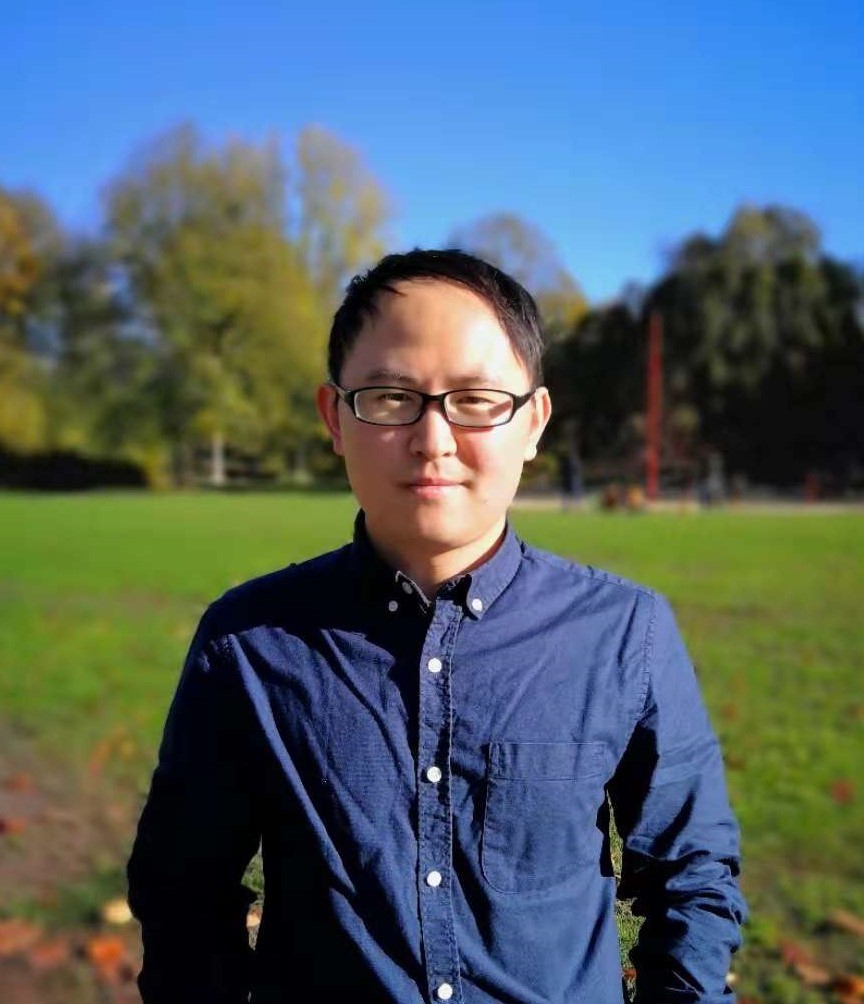
Xiaodong Cheng is an Assistant Professor at the Mathematical and Statistical Methods (Biometris) group in the Department of Plant Science at Wageningen University & Research. His research focuses on control systems, optimization, and machine learning, with applications in agricultural and energy systems. He holds a Ph.D. (cum laude) from the University of Groningen, under Prof. Jacquelien Scherpen, and prior roles include Research Associate at the University of Cambridge and Postdoctoral Researcher at Eindhoven University of Technology. Education: B.S. and M.E. from Northwestern Polytechnical University, China (2011, 2014) Ph.D. (cum laude) in Engineering from the University of Groningen, Netherlands (2018) Research Interests: Data-driven modeling, dimensionality reduction, learning-based control, system identification, and applications in agriculture and energy. He emphasizes practical implementations through tools like SYSDYNET and Bayesian neural ODEs for greenhouse systems. Key Contributions: His work spans model reduction for network systems, fault-tolerant control, and stochastic MPC for greenhouse production. Recent trends in his publications highlight advancements in resilient microgrid control, precision agriculture via drone-based sensing, and Bayesian methods for dynamic systems. Awards: Automatica Paper Prize Award (2017–2019) IEEE Transactions on Control Systems Technology Outstanding Paper Award (2020) Labs/Teams: Leads the Biometris group's efforts in integrating control theory and machine learning for sustainable systems. His work often collaborates with agricultural and energy sector stakeholders for real-world impact.
Bert Zwart is a Professor and Scientific Staff Member at Centrum Wiskunde & Informatica (CWI) in Amsterdam, where he leads the Stochastics group. He also holds a professorship by special appointment at Technische Universiteit Eindhoven (TU/e). His research spans applied probability, stochastic processes, queueing theory, and operations research, with applications in power systems, supply chains, and risk modeling. His research interests focus on extreme value theory , large deviations , asymptotic analysis of stochastic systems , and random graphs . He develops theoretical tools to analyze rare events and performance limits in complex systems such as fork-join queues, power grids, and stochastic networks. His work combines deep probabilistic insights with practical applications in engineering and operations management. Recent publications (2023–2025) reveal a strong focus on tail behavior in queueing systems, large deviations in heavy-tailed processes, and optimization in power networks. The articles span high-impact journals like Mathematics of Operations Research , Queueing Systems , and Random Structures & Algorithms , indicating sustained leadership in applied probability and stochastic modeling. His scientific awards include: Erlang Prize (2008) Dantzig Prize (2015) Best publication award, INFORMS Revenue Management & Pricing (2016) IBM Faculty Award (2008) ASML Prize (2002) Gijs de Leve Prize (2002) Applied Probability Trust Award (2001) Best paper, Performance conferentie, Namen, Belgium (2010) Zwart has secured significant research funding, including a Vici grant from NWO on rare events, multiple NWO TOP and STAR cluster grants, and funding for PhD positions and postdocs. He has advised numerous students (though not explicitly listed here) and collaborates widely with researchers such as Maria Vlasiou, Remco van der Hofstad, and Onno Boxma. He is actively involved in teaching, offering advanced courses like Stochastic Decision Theory and Asymptotic Methods in Queueing Theory . He leads the Stochastics group at CWI, a leading research unit in probability and operations research.
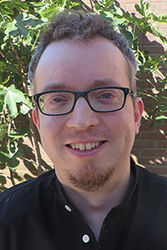
Wouter Kouw is an Assistant Professor at the Electrical Engineering department of Eindhoven University of Technology (TU/e) , leading the Bayesian Intelligent Autonomous Systems lab. With a dual PhD in Computer Science (2018, TU Delft) and MSc in Neuroscience (2013, Maastricht University) , he bridges neurobiology and artificial intelligence through variational Bayesian inference and active inference frameworks. Research Focus : Probabilistic machine learning systems using message passing algorithms on factor graphs , applied to mobile robotics and adaptive control Key Projects : CONTACT-AI (contact-rich robot navigation), FEP-walker (active inference-based locomotion), and BayesBrain (hybrid neuro-in-silico computing) His work spans nonlinear system identification , uncertainty quantification , and sensor modeling , with recent publications in IEEE Transactions , Entropy , and Communications in Computer and Information Science . Awards include the Niels Stensen Fellowship (2017) and TU/e Team Science Award nomination (2023) . Collaborations extend to institutions in Germany, USA, and Denmark, with teaching responsibilities in Bayesian Machine Learning and Neuro Computation .
Peter Grünwald is a Full Professor of Statistical Learning at Leiden University's Mathematical Institute and heads the Machine Learning group at CWI (Centrum Wiskunde & Informatica) in Amsterdam. He serves as President of the Association for Computational Learning and has held editorial roles at Foundations and Trends in Machine Learning. His research bridges machine learning theory and statistical methodology. Research Interests Safe Learning: Ensuring robustness in statistical inference and machine learning Safe Probability: Developing probability frameworks for partial domain modeling Replicability Crisis Mitigation: Addressing statistical misinterpretations in applied sciences Learning Bounds: Quantifying data requirements for reliable conclusions MDL Principle: Advancing Minimum Description Length methodology PAC-Bayesian Methods: Bridging frequentist and Bayesian paradigms Scientific Awards Van Dantzig Prize (2010) - Highest Dutch award in statistics IMS Fellow - Recognition from the Institute of Mathematical Statistics Grants NWO TOP-1 Grant (2016) NWO VICI Grant (2010) NWO VIDI Grant (2005)
Max Hinne is an assistant professor at the Department of Artificial Intelligence, Radboud University, Nijmegen, The Netherlands, where he leads the Uncertainty in Complex Systems research group. His work bridges artificial intelligence, neuroscience, and statistics through advanced Bayesian methodologies. Dr. Hinne's research focuses on Bayesian modeling of brain networks using neuroimaging data. His primary interests include: Bayesian nonparametric models, particularly Gaussian processes Structural and functional brain connectivity analysis Predictive modeling of neural systems Causal inference frameworks Uncertainty quantification in complex systems Development of computational tools for neuroscience His approach emphasizes how probabilistic methods can address uncertainty in complex biological systems while providing interpretable models of brain function. Analysis of Dr. Hinne's publication trajectory reveals a consistent focus on Bayesian methods applied to increasingly diverse domains. Starting with foundational work in brain connectomics, his research has expanded to include applications in developmental psychology, medical genetics, and educational technology. His most recent work demonstrates sophisticated integration of nonparametric Bayesian methods with domain-specific challenges, particularly in handling uncertainty in complex, high-dimensional data across multiple scientific fields. Dr. Hinne actively mentors students and invites master's thesis projects focused on Bayesian nonparametric methods for neuroimaging data. He has developed several software tools including the Bayesian Connectomics Toolbox (BaCon), latent space modeling code, and GP CaKe for causal inference. His research group maintains strong connections with the Donders Institute for Brain, Cognition and Behaviour, facilitating interdisciplinary collaborations between statisticians, neuroscientists, and domain experts.
Anouk Waeijen-van Diepen is a PhD candidate at the Biomedical Diagnostics Lab within the Signal Processing Systems group at Eindhoven University of Technology (TU/e), focusing on integrating machine learning with mechanical ventilation systems. Her work aims to address patient-ventilator asynchrony through advanced algorithms and simulated clinical data . Education : MSc in Electrical Engineering (2017, TU/e) BSc in Bioinformatics/Biostatistics (2014, TU/e) Pre-Master in Electrical Engineering (2015, TU/e) Her research spans biomedical signal processing , machine learning applications in healthcare, and ventilator system optimization . She specializes in asynchrony detection using clinical and simulated data , with a focus on intensive care unit (ICU) environments. Key trends in her publications include adversarial learning for waveform generation, model-based approaches for patient effort estimation, and automated detection algorithms validated through peer-reviewed journals like Computer Methods and Programs in Biomedicine and Heliyon . She has contributed to IEEE symposia and European Signal Processing Conferences . Projects include: STW Zero 15-06 P2 (2017–2024): Autonomous Acoustic Systems Smart Monitoring (2015–2020): Real-time healthcare data analysis
Wiebke Jäger is an Assistant Professor at the Department of Water and Climate Risk, Institute for Environmental Studies (IVM) at Vrije Universiteit Amsterdam. She specializes in natural hazard risk analysis using advanced statistical methods. Her research focuses on multi-hazards, compound events, and uncertainty analysis in environmental systems. Education: PhD in Hydraulic Engineering, TU Delft (2018) MSc in Applied Mathematics, TU Delft (2013) MSc in Engineering and Policy Analysis, TU Delft (2013) BSc in Mechanical Engineering, ETH Zürich (2010) Research Interests: Her work integrates probabilistic risk analysis with multivariate statistical techniques to assess complex interactions between physical and societal risk factors. Key areas include extreme value analysis, time series modeling of coastal hazards, and Bayesian network approaches for decision support systems. Publications: Recent work emphasizes open-source tools like VineCopulas for copula modeling and applications in coastal risk reduction. Her articles span topics from wave parameter simulation to multi-hazard dynamics under climate change. Labs/Teams: She leads the MYRIAD-EU project’s work package on risk driver dynamics and contributes to the development of the VineCopulas Python package.
Dr. Fleur Bouwer is an Assistant Professor at the Cognitive Psychology Unit of Leiden University, affiliated with the Music Cognition Group and Amsterdam Music Lab. Her research focuses on rhythm perception and its neural mechanisms, combining cognitive neuroscience approaches with behavioral studies. She holds an NWO Veni Grant for investigating temporal expectations in rhythm and has received awards such as the Distinguished Women Scientists Fund and ABC Talent Grant for postdoctoral work. Her work spans cross-species comparisons (e.g., rhesus monkeys) and developmental studies (e.g., newborns). She collaborates widely, including with Prof. Henkjan Honing and Dr. Heleen Slagter, and actively engages in public science communication through lectures and media appearances. Key Roles: Assistant Professor (Leiden University), Postdoctoral Researcher (University of Amsterdam), Affiliate Researcher (Music Cognition Group) Education: PhD in Cognitive Neuroscience (likely from University of Amsterdam, based on collaborations) Grants: NWO Veni (2020), Distinguished Women Scientists Fund (2017), ABC Talent Grant (2016) Public Engagement: NEMO lectures, Atlas TV features, Volkskrant articles, and science communication projects like Toontjehoger Her research explores beat perception, rhythmic entrainment, and the interplay between attention and memory-based expectations. She uses EEG, ERP, and behavioral paradigms to study how rhythmic patterns are processed in the brain, with implications for music therapy and clinical applications (e.g., Parkinson’s disease). Her publications emphasize methodological rigor in cross-species research and highlight differences between beat-based and pattern-based temporal expectations. Recent work includes updated reviews on ERP methods for studying rhythm perception across species and collaborations on rhythmic complexity influenced by musical training. Awards: NWO Veni Grant, Distinguished Women Scientists Fund, ABC Talent Grant Labs/Teams: Cognitive Psychology Unit (Leiden), Cognition & Plasticity Lab (UvA), Music Cognition Group
Wilfried van Sark is a Professor of Solar Energy Integration at the Copernicus Institute of Sustainable Development, Utrecht University. He specializes in photovoltaics, smart grids, and renewable energy systems. With over 35 years of experience, his research focuses on solar energy integration, including building-integrated photovoltaics, offshore floating PV systems, and smart grid technologies. Education: M.Sc. in Experimental Physics (1985), Utrecht University Ph.D. in III-V Solar Cell Development (Nijmegen University) Research Interests: Photovoltaic module performance and life cycle analysis Solar forecasting and energy yield optimization Offshore and floating solar systems Smart grid integration and electric mobility Publications & Roles: Over 200 peer-reviewed publications and four co-edited books Associate Editor of Solar Energy and Frontiers in Energy Research Member of IEEE, ISES, and organizing committees for global PV conferences Key Contributions: Pioneered research on offshore floating PV systems Developed spectral shifting processes for next-gen photovoltaics Advocated for data-driven solar energy policy and grid management
Benjamin Bewersdorf is the Academic Director of Education and Lecturer at University College Groningen, part of the University of Groningen. He holds a PhD in formal epistemology from the University of Konstanz and has held postdoctoral positions at the University of Konstanz and the University of Groningen's Faculty of Philosophy. His research focuses on epistemic justification, Bayesian epistemology, and interdisciplinary philosophy. He teaches courses in Philosophy of Science, Decision Making, and innovative pedagogical methods. Awards include a 2017 teaching innovation fellowship. He has led academic guidance and teaching communities, including roles at the Teaching Academy. His recent work explores art-philosophy intersections, co-authored with students. He is affiliated with the University College Groningen and has published widely in philosophy and education. Research interests span formal epistemology, decision theory, and teaching innovation. His publications include peer-reviewed chapters and articles in journals like Synthese . He emphasizes interdisciplinary approaches, blending philosophy with psychology and economics in teaching. Recent work includes exploring art as evidence in philosophical inquiry.
Dr. Jelle Zuidema is Associate Professor in Natural Language Processing, Explainable AI and Cognitive Modelling at the Institute for Logic, Language and Computation (ILLC) of the University of Amsterdam, with primary affiliation in the Natural Language Processing research group and secondary affiliation in Language & Music Cognition. He directs the Cognition, Language and Computation lab (CLC-lab) within the Faculty of Science. His research bridges artificial intelligence, cognitive science and linguistics with focus on interpretable deep learning models for text and sound. He pioneered techniques including diagnostic classification (probing), attention rollout, TreeLSTM, and masked language modeling. His work addresses fundamental questions about hierarchical compositionality in language and how neural networks can represent linguistic structure. Analysis of his publication record reveals consistent innovation in neural network interpretability methods, with recent work focusing on bias detection in language models and attention flow quantification. His research trajectory shows evolution from foundational neural parsing work to current emphasis on explainable AI and cognitive plausibility of deep learning models. Dr. Zuidema actively supervises PhD and MSc students while teaching courses including Evolution of Language and Music, Foundations of Neural and Cognitive Modelling, and Interpretability & Explainability in AI. He coordinates the Cognitive Science track in the Brain & Cognitive Sciences master's program. He directs the CLC-lab which pursues both hypothesis-driven methods (diagnostic classifiers, representational similarity analysis) and data-driven methods (layer-wise relevance propagation, contextual decomposition) for neural network interpretation. The lab's InDeep project focuses on interpreting deep learning models for text and sound processing.
Matthijs van Leeuwen is an Associate Professor and Director of Education at the Leiden Institute of Advanced Computer Science (LIACS), Leiden University. He leads the Explanatory Data Analysis group and is affiliated with the university-wide SAILS AI research program. Academic rank: Associate Professor Institution: Leiden University Research group: Explanatory Data Analysis University affiliation: SAILS AI research program His research focuses on exploratory data mining with emphasis on explainability for domain experts. Key areas include pattern discovery, anomaly detection, and human-in-the-loop systems. He applies information-theoretic concepts like Minimum Description Length (MDL) and develops interactive methods for real-world applications in life sciences, social sciences, manufacturing, and healthcare. Recent publications demonstrate his work in explainable AI through diverse subgroup discovery, graph anomaly detection, and medical data analysis. Notable contributions include synthetic health record generation, wearable sensor data interpretation, and hemoglobin deferral prediction models. Scientific Awards : Senior Teaching Qualification (SKO) certificate (2022) As Director of Education for LIACS' Master's programs, he plays a leadership role in academic training while maintaining active research partnerships across multiple domains including manufacturing, aviation, and medical informatics.
Johannes Hölzl is a Post-doctoral Researcher in the Faculty of Science , specifically within the Department of Computer Science at Vrije Universiteit Amsterdam . He works in the Section of Theoretical Computer Science , focusing on formal verification and probabilistic systems. His research integrates higher-order logic with programming languages to model and verify complex computational processes. Position: Post-doctoral Researcher Institution: Vrije Universiteit Amsterdam Department: Computer Science Section: Theoretical Computer Science Hölzl's research spans formal verification, probabilistic programming, and concurrency. He has contributed extensively to the Isabelle/HOL proof assistant, formalizing mathematical structures like measure theory, Markov chains, and timed automata. His work bridges theoretical analysis with practical verification tools, ensuring rigorous proofs in automated reasoning. His publications highlight advancements in probabilistic systems, including formalizing Markov decision processes (2017), verifying compilers for probability density functions (2015), and analyzing expected running times of probabilistic programs (2016). The 2025 article on probabilistic timed automata indicates ongoing exploration of concurrent probabilistic models. Hölzl has no explicitly listed scientific awards in the provided texts. His collaborations with researchers like Tobias Nipkow and Andrei Popescu underscore interdisciplinary efforts in formal methods and security verification. He contributes to the Theoretical Computer Science Section at VU Amsterdam, advancing foundational research in logic-based programming and probabilistic modeling.