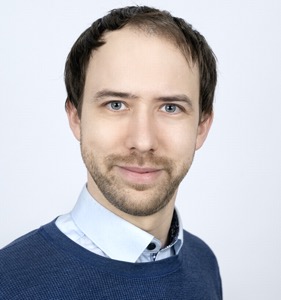
Frank Röttger is an Assistant Professor at Eindhoven University of Technology, specializing in Mathematical Statistics. His primary research focuses on graphical models, multivariate extremes, and statistical inference in high-dimensional settings. Research Interests : Extreme value theory, probabilistic graphical models, causal inference in extremes, and data-driven risk modeling. Awards : NWO Prize (Scientific) - 2024 Organized Activities : Eurandom Workshop on Graph Laplacians, Multivariate Extremes, and Algebraic Statistics (2024) Causality in Extremes Workshop (2024) Courses Taught : Dependence Modeling Foundations of Statistics Mathematical Statistics Contact : Email: f.rottger@tue.nl
Raffaella Mulas is an Assistant Professor in the Department of Mathematics at the Faculty of Science, Vrije Universiteit Amsterdam. She previously served as a Group Leader and Minerva Fast Track Fellow at the Max Planck Institute for Mathematics in the Sciences, where she maintains an ongoing affiliation. Her research lies at the intersection of spectral graph theory, discrete mathematics, and network science. Research Interests: Her work focuses on the spectral theory of graphs and hypergraphs, particularly the properties of discrete Laplacians and non-backtracking operators. She investigates extremal combinatorics problems such as graph coloring and the Turán problem, often applying spectral methods to derive sharp bounds. Her research has strong applications in modeling and analyzing complex networks. Recent Research Trends: Analysis of the 15 most recent publications reveals a consistent focus on spectral characterizations of graphs and hypergraphs, including signed and complex unit hypergraphs. She frequently studies the normalized Laplacian and its extremal eigenvalues, develops non-backtracking operators, and explores measure-theoretic and geometric representations of networks. A strong thread connects spectral bounds to combinatorial invariants like chromatic number. VU Startpremie Grant Elected Member, European Mathematical Society Young Academy (EMYA) Elected Member, Elisabeth-Schiemann-Kolleg, Max Planck Society Minerva Fast Track Fellow, Max Planck Institute Advising and Grants: While no formal students are listed, she is an active researcher with significant grant funding, notably the VU Startpremie Grant. She collaborates internationally and supervises research projects in spectral graph theory and network analysis. Her affiliation with both VU Amsterdam and MPI-MiS enables broad academic mentorship and collaborative supervision. Labs and Research Groups: Raffaella Mulas leads research within the Mathematics Department at VU Amsterdam and is affiliated with the research group at the Max Planck Institute for Mathematics in the Sciences. Her work contributes to advancing theoretical foundations in discrete mathematics with applications in data science and network modeling.
Mitra Nasri is an Assistant Professor at the Eindhoven University of Technology, affiliated with the College of Engineering's Department of Electrical Engineering. She contributes to the High Tech Systems Center and EAISI Foundational, focusing on interconnected resource-aware intelligent systems. Research Focus: Real-Time Systems, Scheduling Algorithms, Embedded Systems, Fault-Tolerant Computing, and Cyber-Physical Systems. Key Contributions: Development of scheduling frameworks for multi-rate task chains, response-time analysis techniques, and containerization strategies for real-time distributed applications. Her recent work includes advancements in weakly-hard timing constraints, parallel global scheduling, and cloud integration for embedded systems. She actively collaborates on projects like SAM-FMS and COMP4DRONES. Scientific Awards: Best Paper Award - RTAS 2022 Best Paper Award - RTNS 2016 Outstanding Paper Awards at RTAS 2017, 2022 and RTSS 2020 She teaches courses in Real-Time Systems, Operating Systems, and Automotive Software, and participates in organizing conferences like Embedded Systems Week and CompSys.
Dr. Matias Valdenegro Toro is an Assistant Professor of Machine Learning at the University of Groningen within the Faculty of Science and Engineering and the Artificial Intelligence department of the Bernoulli Institute. He holds a PhD from Heriot-Watt University (2019) and a Master's in Autonomous Systems from Bonn-Rhein-Sieg University of Applied Sciences (2014). His research focuses on trustworthy machine learning models , particularly in uncertainty quantification , medical AI , and robotics , with applications in computer vision and explainable AI. He teaches courses like Introduction to Machine Learning and Deep Learning at the Bachelor and Master levels. His work emphasizes robustness in AI systems, including uncertainty estimation for medical applications, super-resolution techniques, and neuromorphic robotics. He has published widely on topics like Bayesian neural networks, prompt tuning, and sanity checks for explanations. Notable awards include Best Reviewer at ICML (2024) and Highlighted Reviewer at ICLR (2022). He collaborates with institutions like the German Research Center for Artificial Intelligence and actively contributes to open-source datasets (e.g., the Japanese Uncertain Scenes Dataset ). Key grants and activities include organizing the ENLIGHT BIP Course on Deep Learning for Forestry and teaching at the European Summer School on AI . His research also addresses regulatory challenges like the EU AI Act's implications for uncertainty quantification in general-purpose AI.
Anaïs Couasnon is a PhD researcher at the Department of Water and Climate Risk, Institute for Environmental Studies (IVM), Vrije Universiteit Amsterdam, part of the Faculty of Science. Her research focuses on compound flood risk modeling, probabilistic methods, and global hazard assessment under climate change. She is supervised by Dr. Philip Ward and Dr. Hessel Winsemius as part of a VIDI project. Education: MSc in Hydraulic Engineering (TU Delft, 2017); BSc in Civil Engineering (McGill University, 2010). Research interests include probabilistic modeling, multivariate dependence analysis, flood risk management, and climate impacts on coastal-riverine interactions. She contributes to global datasets like COAST-RP and socio-hydrological benchmarking. Key activities include: Developing frameworks for compound flood risk assessment Modeling extreme sea-level events and storm surges Collaborating on global hazard frameworks and disaster risk reduction strategies Contributions to datasets include: COAST-RP dataset Panta Rhei socio-hydrological benchmark dataset
Herke van Hoof serves as Associate Professor at the University of Amsterdam within the Informatics Institute, where he leads research in the AMLab at Science Park (Lab 42, L4.05). His academic journey spans from AI degrees at Groningen University through doctoral studies at TU Darmstadt under Professor Jan Peters to postdoctoral research at McGill University with Professors Joelle Pineau, Dave Meger, and Gregory Dudek. PhD: TU Darmstadt (2016), supervised by Prof. Jan Peters Postdoc: McGill University, Montreal AI Bachelor & Master: University of Groningen Van Hoof's research focuses on overcoming data inefficiency in reinforcement learning through modular and hierarchical approaches. His work explores how structured representations can enable knowledge transfer between tasks, improve learning efficiency, and facilitate applications in domains with complex state and action spaces. The lab investigates symmetry exploitation in multi-agent systems, gradient estimation techniques for discrete variables, and applications to combinatorial problem solving. His publication record shows consistent contributions to top AI venues including ICML, ICLR, NeurIPS, and JMLR over the past seven years. The research trajectory demonstrates evolution from foundational policy search methods toward increasingly sophisticated modular architectures, with recent emphasis on knowledge-assisted AI for critical infrastructure applications through the AI4REALNET project. Third place in ARC prize (Paper award) Van Hoof actively supervises PhD candidates and postdoctoral researchers, with current projects including human-robot collaboration using brain-computer interfaces (with Maryam Alimardani at VU) and interactive robot learning with flexible human input (through The Hybrid Intelligence Centre). His research receives support from multiple funding initiatives including the AI4REALNET project which focuses on applying AI to critical infrastructure systems. As co-organizer of the BeNeRL 2024 workshop and participant in the AI4REALNET consortium, van Hoof maintains strong connections with the broader European AI research community while directing the AMLab's research on modular reinforcement learning approaches.
Jasper Goseling is an Associate Professor at the Digital Society Institute and affiliated with the Mathematics of Operations Research department. His research spans differential privacy, network coding, optimization, and wireless systems, often bridging theoretical and applied domains. Key research areas: Differential Privacy, Network Coding, Optimization, Wireless Sensor Networks, Machine Learning His recent work focuses on robust optimization techniques for local differential privacy, addressing trade-offs between data utility and privacy preservation. Earlier contributions include studies on energy-efficient data collection in sensor networks, caching strategies in wireless environments, and entropy-based analysis of hydrothermal systems. Article trends reveal a strong emphasis on privacy-preserving algorithms (2022-2024) and historical expertise in network coding, queueing theory, and thermodynamic entropy. His research integrates mathematical rigor with practical applications in wireless communication and data management. Activities include organizing the 45th Symposium on Information Theory and Signal Processing (2025) and leadership roles in the IEEE Benelux Chapter on Information Theory (Chair, 2017; Member, 2012-2017). He also contributed to the 2015 European School of Information Theory.
Michael Hicks is a Professor at Delft University of Technology (TU Delft) in the Civil Engineering & Geosciences school, specializing in Geo-engineering . His research focuses on geotechnical risk assessment, soil variability, and advanced numerical methods like the Material Point Method (MPM) to model slope failures, earthquake simulations, and soil-structure interactions. Editorial board member for Géotechnique , Georisk , and Computers and Geotechnics (2019) Keynote speaker at workshops on slope failure modeling (2018) Active in public engagement about flood risk management (2017–2018) His work addresses challenges in soil heterogeneity, dynamic boundary conditions, and reliability-based design for infrastructure. Notable contributions include developing probabilistic MPM frameworks and machine learning tools for CPT data interpretation, with applications in earthquake resilience and radioactive waste repository safety. Recent publications highlight innovations in 3D slope stability analysis, nonlocal soil deformation modeling, and thermomechanical interface behavior under cyclic loading. Collaborations span academia and industry, focusing on improving numerical accuracy and understanding failure mechanisms in geotechnical systems.
Kyla McConnell is a Postdoctoral Researcher in the Department of Psychology of Language at the Max Planck Institute, where she investigates individual differences in language production and comprehension. Her work involves developing standardized linguistic and cognitive task batteries for English speakers, intended for broader research use. Her research interests lie at the intersection of psycholinguistics and cognitive science, with a strong emphasis on probabilistic language processing , usage-based linguistics , and advanced statistical methods . She explores how individuals differ in their language processing pathways and how these variations interact with general cognitive abilities and processing styles. Ph.D. research conducted in Freiburg, Germany, supervised by Alice Blumenthal-Dramé Undergraduate studies at the University of North Carolina at Chapel Hill Supported by the prestigious German Academic Scholarship Foundation (Studienstiftung) Kyla is actively engaged in promoting open and inclusive science, serving as an Open Science Ambassador and as a member of both the Diversity, Equity and Inclusion (DEI) Committee and the Research Staff Committee at the MPI. Her institutional service reflects a strong commitment to research integrity, transparency, and equitable practices in academic environments. She maintains a public GitHub profile ( kyla-mcconnell/kyla-mcconnell ) where her tools and resources are shared.
Giovanni Sileno is an academic specializing in Artificial Intelligence, Logic Programming, and Knowledge Representation, with teaching appointments at the University of Amsterdam, EPITA Paris, and Université Pierre et Marie Curie. His primary affiliation is with the Informatics Institute at the University of Amsterdam where he serves as a Lecturer. His research interests span multiple domains within computer science, focusing particularly on formal methods for normative systems, agent-based programming, and logic-based knowledge representation. His work bridges theoretical computer science with practical applications in policy modeling, forensic science, and business information systems. Dr. Sileno has developed several notable software projects including AgentScriptCC for single-threaded intentional agents, DCPLschema for normative policy specifications, and libraries for normative primitives in Answer Set Programming. His GitHub activity shows consistent contributions from 2012 through 2025, indicating active engagement in both research and development. His publications reflect a strong focus on formal methods applied to practical problems, with particular emphasis on normative systems, agent architectures, and logic programming applications. The research trajectory shows evolution from foundational topics in logic and numeral systems toward increasingly sophisticated applications in policy modeling and agent-based systems. As an educator, he has taught across multiple institutions and disciplines, covering topics from basic programming paradigms to advanced knowledge representation and formal modeling techniques. His teaching spans undergraduate to master's level courses in information studies, cognitive science, data science, and forensic science.
Caspar A.S. Pouw is a Research Fellow in the Department of Applied Physics and Science Education at Eindhoven University of Technology (TU/e). He holds a dual role as a Postdoc researcher and Data Scientist at ProRail. His work focuses on advancing human crowd flow monitoring, modeling, and nudging technologies, particularly within the HTCrowd project. Pouw’s research integrates fluid dynamics principles to analyze pedestrian behavior in crowded environments, aiming to enhance safety and efficiency in urban spaces. Educated at TU/e, he earned his Master’s in Applied Physics (specializing in Fluids and Flows) and a Bachelor’s in Combustion Science. He has taught courses on sociophysics, covering crowd dynamics analysis, modeling, and nudging strategies. His contributions align with UN Sustainable Development Goals related to safe cities and resilient infrastructure. Recent research emphasizes data-driven modeling of pedestrian dynamics, psychological influences on train boarding efficiency, and real-time monitoring systems. His work bridges physics, computer science, and urban planning, with applications in transportation and public safety. Collaborations include ProRail and interdisciplinary teams at TU/e. Pouw’s datasets and software tools, such as those for pedestrian trajectory analysis, are openly available. His media coverage highlights innovations in crowd management post-COVID-19. Future work involves expanding predictive models for crowd behavior and optimizing transport infrastructure design.
Annette ten Teije is a Full Professor at Vrije Universiteit Amsterdam (VU Amsterdam) with appointments in the Faculty of Science, Artificial Intelligence department, the Network Institute, and the Knowledge Representation and Reasoning research group. Her academic career spans several decades with a strong focus on the intersection of artificial intelligence and healthcare applications. Professor ten Teije's research interests center around Knowledge Representation, particularly in medical contexts. Her work bridges multiple domains including Semantic Web technologies, Ontology development, Neuro-Symbolic AI systems, and Clinical Decision Support. She has made significant contributions to the formalization of clinical guidelines, handling multimorbidity in healthcare systems, and developing design patterns for hybrid AI systems. Her research integrates machine learning with symbolic reasoning to create explainable and reliable AI systems for healthcare applications. Analysis of Professor ten Teije's recent publications reveals a strong trajectory toward neuro-symbolic AI approaches that combine the strengths of neural networks and symbolic reasoning. Her work increasingly focuses on explainability in medical AI systems, with numerous publications on feature selection, interaction detection, and narrative-based understanding. She has developed frameworks for shared understanding in multi-agent systems and created design patterns specifically for medical decision-making contexts. Her research consistently bridges theoretical AI advances with practical healthcare applications. Professor ten Teije has supervised 5 PhD theses as indicated in her academic profile and teaches courses including "AI in Health" and "Machine Learning and Reasoning for Health" for the 2024-2025 academic year. Her academic contributions extend to editorial work, including serving as editor for conference proceedings and special issues on Knowledge Representation for Healthcare Processes.
Karel A. Kroeze is a Researcher at the Behavioural Data Science Institute (BDSI) at the University of Twente, specializing in Instructional Technology. With an h-index of 52, he has established himself as a significant contributor in the fields of adaptive learning systems, educational data mining, and psychometrics. His work bridges computer science, statistics, and educational theory to develop innovative assessment and feedback mechanisms. His educational background includes a Master's degree in Methodology and Statistics for the Behavioural, Biomedical and Social Sciences from Utrecht University (2015) and a Bachelor's degree in European Studies from the University of Twente (2013). This interdisciplinary foundation supports his current research in complex data analysis for educational applications. Kroeze's research focuses on developing adaptive systems for learning environments, particularly in inquiry-based education. His work on automated hypothesis assessment, concept mapping, and computerized adaptive testing demonstrates his commitment to improving educational outcomes through data-driven approaches. He explores how adaptive scaffolds, learner models, and automated feedback can enhance the quality of student inquiry and hypothesis formation in science education. His publication record shows consistent output from 2014 through 2024, with recent work expanding into health economic modeling validation and electoral system analysis. This demonstrates both depth in his core educational technology domain and breadth across applied statistical methods. As evidenced by his numerous datasets on GitHub related to adaptive hypothesis grammars across multiple domains (Electrical Circuits, Supply and Demand, Buoyancy, Photosynthesis, and Heat transfer), Kroeze develops practical tools that parse and assess student hypotheses in various scientific contexts. His research contributes to several UN Sustainable Development Goals, particularly in the area of quality education.
Ioana Popescu is a prominent hydroinformatics researcher affiliated with the IHE Delft Institute for Water Education , where she has worked since 2001. Previously, she served as an Associate Professor at the Faculty of Hydrotechnics, Timisoara, Romania (1990-1999), and a postdoc researcher at the National Research Council of Canada (2000).
Carlos Zednik is an Assistant Professor for Philosophy of Artificial Intelligence at Eindhoven University of Technology , affiliated with the Industrial Engineering and Innovation Sciences department. He leads the Eindhoven Center for Philosophy of AI and participates in the alignAI (ERC) and ROBUST AI (NWO) consortia. His work bridges philosophy with AI and neuroscience, focusing on explainable AI (XAI), mechanistic explanation, and cognitive modeling. Education: BSc in Computer Science and Philosophy, Cornell University MSc in Philosophy of Mind, University of Warwick PhD in Cognitive Science, Indiana University Bloomington Zednik’s research investigates philosophical questions about biological and artificial intelligence, emphasizing: Methodological principles in cognitive psychology and neuroscience Norms and best practices for XAI in machine learning Knowledge representation in transformer models and large neural networks His recent publications explore the integration of cognitive models into XAI, the role of Bayesian reverse-engineering in cognitive science, and the mechanistic explanation of network neuroscience. Zednik also contributes to international standardization efforts through ISO/IEC TS 6254 and DIN SPEC 92001 . Scientific Awards include fellowships from: DAAD Alexander-von-Humboldt Foundation StandICT Fellowship Zednik supervises PhD students Zeynep Kabadere , Michela Ghezzi , Céline Budding , Miriam Gorr , and Hannes Boelsen , while mentoring postdocs Manuel Barbosa de Oliveira and Philippe Verreault-Julien . His teaching spans philosophy of AI, ethics of machine learning, and decision theory, with innovation projects on generative AI in higher education.