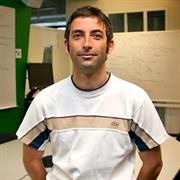
Professor Sebastian Sardina is a Professor in Artificial Intelligence at RMIT University's School of Computing Technologies. He holds a Bachelor's from South National University (Argentina) and a PhD from the University of Toronto (Canada). His research focuses on AI for dynamic systems, including automated planning, knowledge representation, and agent-oriented programming. He has contributed to enhancing agent programming languages with learning capabilities and advanced AI planning techniques. His work frequently appears in top AI venues like IJCAI and AAAI, with notable best paper nominations. Teaching interests include foundational CS courses such as Theory of Computation and Intro to AI. He actively promotes computational thinking through workshops for youth and educators, including roles in Victorian curriculum development (VCE Algorithmics). Supervision projects span hand gesture recognition, autonomous vehicle safety, and goal recognition in path-planning. His research has been presented globally and applied across domains like aviation safety, manufacturing systems, and healthcare. Recent trends in his publications emphasize goal recognition techniques (e.g., process mining applications), agent behavior modeling, and interdisciplinary AI applications in healthcare and automotive engineering. He has collaborated with industry and academic partners internationally, contributing to both theoretical advancements and practical AI solutions. Scientific Recognition: Multiple best paper nominations in AI conferences. Community Engagement: MAV conference presenter, VCAA Algorithmics curriculum panel member (2023). Supervision: Active mentor for 4+ research projects in AI planning and recognition.
Dr. Shan Huang is a Researcher at the School of Engineering, University of Newcastle. She holds a BE in Civil Engineering from Hunan University of Science and Technology, an MS in Road and Railway Engineering from Central South University, and a PhD in Civil Engineering from the University of Newcastle. Her research focuses on computational geomechanics and probabilistic geotechnics, particularly in soft soil consolidation and geotechnical risk assessment. Dr. Huang's work integrates numerical simulation and advanced probabilistic methods, with notable contributions to Bayesian back analysis for settlement prediction and parameter calibration in soft soils. Her research has been published in journals such as Computers and Geotechnics , ASCE Journal of Geotechnical and Geoenvironmental Engineering , and Soils and Foundations . Key projects include the analysis of embankments in Ballina, Australia, where she applied Bayesian methods to predict long-term settlements using monitored data. Her work emphasizes computational efficiency and practical applications in geotechnical engineering.
Soo Wooi King serves as a Senior Teaching Fellow at Monash University Malaysia's School of Information Technology, contributing to both academic instruction and research in information technology systems. His professional profile centers on practical applications of computational methods in security and network optimization. His research spans Machine Learning, Network Security, Wireless Networks, and Natural Language Processing, with emphasis on implementing Naive Bayes classifiers for real-world problem solving. Key application areas include malware detection systems, news credibility assessment tools, and telecommunications network management solutions where algorithmic precision directly impacts operational reliability. Publication trends from 2017-2022 reveal consistent specialization in machine learning deployment across cybersecurity and networking domains. His highly cited 2018 survey on wireless load-balancing (18 Scopus citations) demonstrates significant field impact, while recent malware classification research shows evolving technical sophistication in feature engineering approaches. Work consistently bridges theoretical algorithms with industry-specific implementation challenges.
Wei Liu is an Associate Professor in Machine Learning and Director of the Future Intelligence Research Lab at the University of Technology Sydney's School of Computer Science. He holds a PhD in Machine Learning from the University of Sydney and maintains active roles as a senior IEEE member and area chair for top AI conferences including KDD, AAAI, and ICDM. Education: PhD in Machine Learning, University of Sydney His research focuses on adversarial machine learning, generative AI, cybersecurity, and multimodal learning, with particular emphasis on AI security, robustness of algorithms, and model fairness. Liu's work addresses critical challenges in developing next-generation AI systems that can withstand cyber attacks while maintaining performance with multi-modal data and balanced outcomes despite data imbalances. Analysis of his recent publications reveals a strong trend toward securing large language models against novel attack vectors while advancing multimodal learning techniques. His work spans both theoretical contributions in adversarial frameworks and practical applications in cybersecurity, transportation, and industrial systems. Scientific Awards: 3 Best Paper Awards Most Influential Paper Award at PAKDD Nominee for NSW Premier's Prizes for Early Career Researcher (2017) Liu actively supervises numerous PhD students working on adversarial attacks, robust AI models, and agricultural applications. He has secured substantial funding including ARC Discovery Projects, government grants, and industry partnerships with organizations including Agriwebb, CSIRO Data61, and AVEVA. His Future Intelligence Research Lab specifically targets three emerging challenges: AI security against cyber attacks, robustness with multi-modal data, and model fairness with imbalanced datasets. The Future Intelligence Research Lab produces next-generation AI algorithms addressing AI security vulnerabilities, multi-modal robustness challenges, and fairness issues in real-world deployment scenarios, with multiple representative papers demonstrating practical applications in each domain.
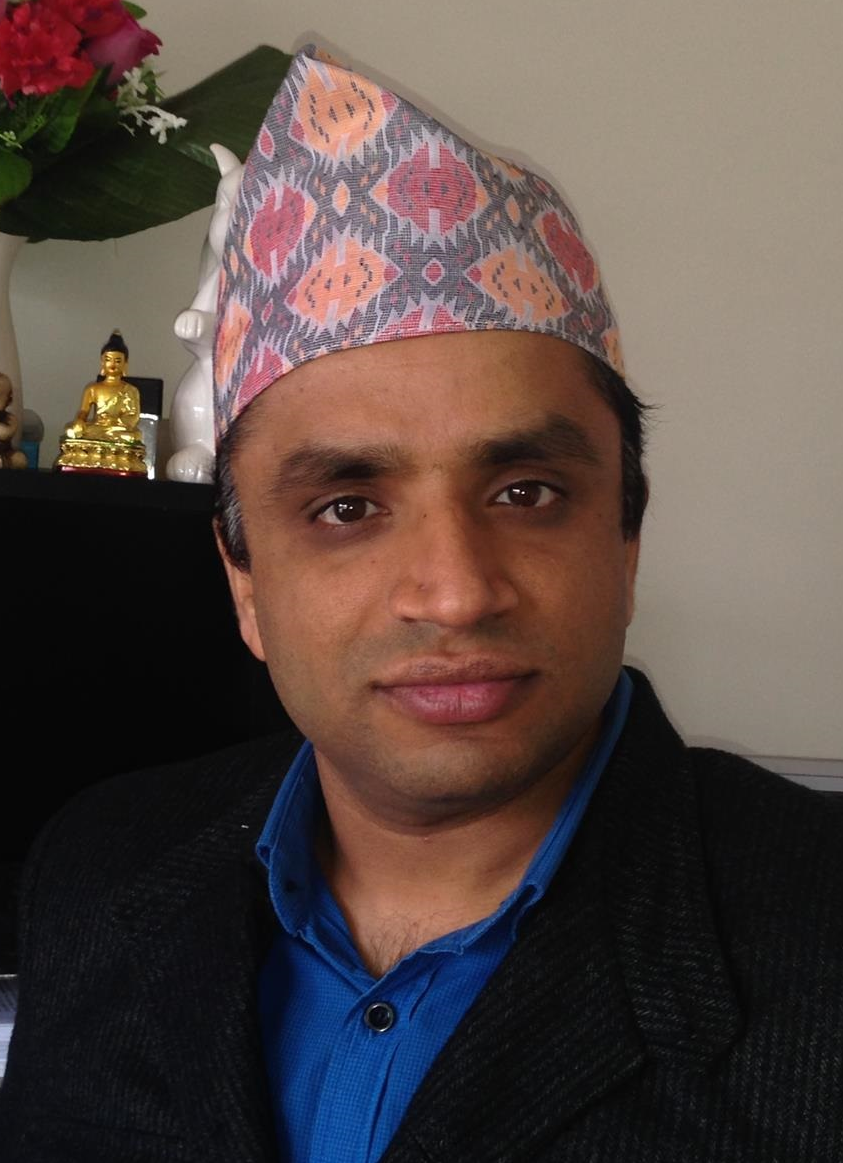
Sunil Aryal is an Associate Professor of Data Science at the School of Information Technology, Faculty of Science Engineering and Built Environment, Deakin University, Australia. He received his PhD and Master by Research degrees from Monash University Australia and has published over 70 papers in top-tier international venues in Artificial Intelligence, Machine Learning and Data Mining. Dr. Aryal's educational background includes: Graduate Certificate of Higher Education Learning and Teaching, Deakin University (2020) PhD in Computer Science, Monash University (2017) Master of Information Technology (Research), Monash University (2012) Master of Information Technology (Coursework), University of Southern Queensland (2008) Bachelor of Information Technology, Purbanchal University, Nepal (2005) His primary research interests focus on making Machine Learning and Data Mining algorithms robust and flexible to handle heterogeneous, noisy and uncertain data in real-world problems. His work spans across several specific areas including anomaly detection, clustering, kernel/similarity-based learning, ensemble methods, learning from limited data, reinforcement learning, natural language processing, and computer vision. Dr. Aryal is particularly interested in applying these techniques to solve challenges in Defence, National Intelligence, Engineering, Manufacturing, Healthcare and Education. Dr. Aryal co-leads the Machine Learning for Decision Support (MLDS) Research Group at Deakin University and has secured over AUD 4.5 million in external research funding. His research is supported by diverse organizations including US and Australia Defence Agencies, the Australian Office of National Intelligence, Worksafe Victoria, the Victorian State Department of Education and Training, the Technology Innovation Institute (TII) UAE, and Table Tennis Australia (TTA). His notable awards include multiple Deakin University research and teaching awards, the Australian Postgraduate Award for his PhD studies, and several student travel awards during his doctoral candidature. Dr. Aryal actively supervises numerous PhD and Master's students and has contributed significantly to teaching in various courses at Deakin University and previously at Federation University. He serves on several university committees and contributes to the research community as a reviewer, program committee member, and editor for various journals and conferences.
Christine Rizkallah is a Senior Lecturer in the School of Computing and Information Systems at the University of Melbourne, Australia. She joined the university in December 2021 after serving as a Lecturer at the University of New South Wales (UNSW) from April 2018 to December 2021. Her research focuses on interactive theorem proving, formal verification, programming languages, and systems, with an emphasis on building practical tools for high-assurance software development. She leads a research group working on the Cogent and Dargent languages, aiming to reduce the burden of formal verification in systems programming. Education: PhD in Computer Science, Universität des Saarlandes and Max-Planck-Institut für Informatik, Germany (2015), thesis: Verification of Program Computations , supervised by Prof. Dr. Kurt Mehlhorn. MSc in Computer Science, Universität des Saarlandes, Germany (2009), thesis: Proof Representations for Higher Order Logic , supervised by Prof. Dr. Gert Smolka and Dr. Chad E. Brown. BSc in Computer Science, German University in Cairo, Egypt (2007), thesis: X2-Planner: A Hierarchical Task Network Planner for Real Time Gaming Applications , supervised by Prof. Dr. Slim Abdennadher and Dr. Thorsten Maier. Her research interests lie at the intersection of programming languages and formal methods. She develops domain-specific languages with strong type systems and verified compilers to enable trustworthy software systems. Her work spans algorithms, logic, security, and social choice theory, reflecting a strong interdisciplinary approach. She has published extensively in top venues such as POPL, ICFP, ASPLOS, JAR, and PACMPL, with a focus on certifying compilation, refinement verification, and mechanized reasoning. Her recent publications reveal a consistent focus on formal verification of systems software, particularly through the Cogent language and its ecosystem. Key themes include verified data layout refinement (Dargent), property-based testing, termination analysis, cost modeling, and integration with foreign functions. Her work combines theoretical rigor with practical implementation, often involving mechanized proofs in Isabelle/HOL and Coq. Scientific Awards and Recognition: Distinguished Artefact Award at SLE'22 (awarded to Zilin Chen for work under her supervision). First Prize, SPLASH'22 Student Research Competition (undergraduate), won by Raphael Douglas Giles. Second Prize, ACM-wide Student Research Competition (undergraduate, 2023), won by Raphael Douglas Giles. She has supervised numerous PhD, Masters, and Honours students, many of whom have continued in academia or industry research roles. She has received research funding through institutional support and collaborative grants, though specific grants are not detailed in the provided text. She is actively involved in the programming languages community, serving on program committees for POPL, ICFP, CPP, PLDI, and others, and holding leadership roles such as Program Chair for FUNARCH'25 and Diversity and Inclusion Co-Chair for PLDI'25. She teaches core courses including Declarative Programming and Models of Computation at the University of Melbourne. She leads a vibrant research team and collaborates widely across institutions including UNSW, University of Pennsylvania, and international partners. Her lab focuses on building verified systems using functional programming and formal methods, with strong ties to the DeepSpec project and the Isabelle/HOL community.
Musa Mammadov is a Senior Lecturer in Data Science at Deakin University's School of Information Technology, part of the Faculty of Science Engineering and Built Environment. His research focuses on data science, machine learning, and computational mathematics with applications in environmental modeling, healthcare analytics, and financial systems. Education: Doctor of Philosophy from University of Ballarat Research Interests: Specializing in numerical and computational mathematics, Mammadov develops advanced machine learning techniques for complex classification problems while exploring optimization methods in mathematical economics. His work spans environmental modeling applications in Sri Lanka's Kalu River Basin, healthcare fraud detection algorithms, and financial market analysis. Scientific Contributions: The recent publications highlight his work in hydrological forecasting using deep learning architectures, anomaly detection in medical billing systems, and probabilistic modeling of financial indices. His methodological contributions include improving Bayesian network classifiers and developing novel dependency estimation techniques. Academic Roles: Mammadov serves as editorial board member for Optimization Letters and Annals of Data Science . He supervises doctoral students in data science projects including health provider billing analysis and satellite downlink scheduling optimization.
Dr. Suman Rakshit is a Senior Lecturer at Curtin University's School of Electrical Engineering, Computing and Mathematical Sciences, with a dual role as a Research Fellow at SAGI-West. His primary research focuses on statistical methodologies for agricultural trials, including spatial variogram modeling and linear mixed models. He has also contributed to genome-wide association studies and developed an R-package for analyzing point patterns on linear networks. Dr. Rakshit holds a PhD in Statistics from Monash University and a Master's from IIT Kanpur. His professional experience includes roles as a Data Scientist at Horizon Power and Prima Consulting. His teaching spans multiple disciplines including Science and Engineering, and he is affiliated with the Office of the Provost. Research interests emphasize spatial statistics, experimental design for on-farm trials, and computational methods. Recent work explores team playing styles in Australian Football using clustering frameworks and addresses spatial dependency in plant pathogens. His publications span agricultural, ecological, and computational topics, with a focus on methodological advancements in spatial analysis.
Tim French is an Associate Professor in the Department of Computer Science and Software Engineering at the University of Western Australia's School of Physics, Maths and Computing. He is affiliated with the UWA Oceans Institute and serves as Regional Contest Director for the South Pacific Programming Contest and Programme Chair for the Australasian Conference on Artificial Intelligence 2022. His research focuses on logic, artificial intelligence, knowledge representation, and reasoning about uncertainty in multi-agent systems, probabilistic reasoning in games, and industrial applications like automated planning and machine learning for complex processes. French holds a PhD in Computer Science (2007) and BSc in Computer and Mathematical Sciences (1999), both from UWA. His expertise spans algorithms, automated reasoning, formal methods in software, and temporal logic verification systems. He has led or contributed to 6 major research projects including the ARC Research Hub for Transforming Energy Infrastructure and the ARC Training Centre for Transforming Maintenance through Data Science. His research outputs include 118 publications covering topics like aleatoric logic for probabilistic reasoning, semantic knowledge extraction from industrial maintenance systems, and deep learning applications in wastewater treatment. He has developed novel methods for knowledge graph construction, state estimation in complex systems, and user interface design informed by work characteristics models. Key grants: 6 active/finished projects totaling $M+ funding Leadership roles: Programming contest director, conference chair Interdisciplinary focus: Combines formal logic with industrial automation challenges French's work contributes to UN Sustainable Development Goals through education and innovation in sustainable industrial processes and environmental systems modeling. His team has developed practical solutions for maintenance procedure digitization, wastewater plant optimization, and robust agent-based systems for uncertain environments.
Luke Fenton-Glynn is a Senior Lecturer in Philosophy at Monash University. His research focuses on philosophy of science, metaphysics, and formal epistemology, with specific interests in causation, laws of nature, probability, peer disagreement, and opinion aggregation. His publications explore foundational questions in formal epistemology and philosophy of science through rigorous theoretical modeling. Research trends show consistent focus on probabilistic reasoning frameworks and their application to philosophical problems of causation and scientific laws.
Gregory Markowsky serves as a Senior Lecturer in the School of Mathematics at Monash University, maintaining an active research profile with continuous publication output through 2025. His academic appointment shows no indication of part-time status, emeritus designation, or former staff classification. His research centers on three interconnected domains: Stochastic processes, particularly planar Brownian motion and random walk theory Complex analysis with applications to probabilistic models Graph theory focusing on algebraic and combinatorial structures These areas converge in his investigation of probabilistic phenomena with geometric interpretations. Recent publication trends reveal sustained productivity with 61 research outputs cataloged, including 4 articles in 2025 alone. His work demonstrates consistent methodological focus on stochastic analysis and combinatorial structures, with increasing cross-disciplinary applications in forensic science and econometrics as evidenced by 2024-2025 publications. Markowsky has secured three significant research projects funded by the Australian Research Council, including: "Planar Brownian motion and complex analysis" (2014-2017) as Primary Chief Investigator "Finite Markov chains in statistical mechanics and combinatorics" (2014-2017) "AMSI Industry Internship: Melbourne Storm" (2013) His ORCID profile (0000-0003-1656-337X) documents extensive scholarly activity with international collaborations. Professional engagement includes contributions toward UN Sustainable Development Goals through mathematical applications, though specific goal alignments aren't detailed in available materials. His email contact Greg.Markowsky@monash.edu remains active with current research dissemination.
Dr. Tafsir Tafsirojjaman is a Senior Lecturer in Civil and Structural Engineering at the University of Adelaide's School of Architecture and Civil Engineering. His research focuses on sustainable construction materials, including FRP composites, concrete, and structural rehabilitation under dynamic loads. He has secured AU$1,207k in grants from ARC, government, and industry partners and supervises multiple PhD/Master’s students. Previously, he worked at the University of Southern Queensland and earned his PhD from Queensland University of Technology (QUT) and BSc from Chittagong University of Engineering & Technology (CUET). His awards include QUT's HDR High Achiever and Outstanding Publication Awards. Research Interests: Sustainable construction materials (FRP composites, concrete, metallic/plastic materials), structural rehabilitation under seismic/impact loads, lunar construction materials, and self-healing concrete technologies. Collaborations with industries and governments drive his work. Awards: QUT HDR High Achiever Award (202X), QUT Outstanding Publication Award (202X), University Merit Scholarship (202X), Engr. Khurshid Anwar Memorial Award (202X). Grants/Funding: AU$1.2 million from ARC, federal government, and industry. Active in supervising postgraduate students and promoting interdisciplinary collaborations. Labs/Teams: Leading research in composite materials and structural engineering at the University of Adelaide, affiliated with the School's advanced materials research group.
Professor Raymond Chambers is a distinguished statistician currently serving as an Honorary Fellow at the School of Mathematics and Applied Statistics, Faculty of Engineering and Information Sciences, University of Wollongong (2022–present). His career spans leadership roles at the University of Southampton (2003–2006 as Director, Southampton Statistical Sciences Research Institute; 1995–2000 as Professor and Head of Department of Social Statistics; 1999–2000 as Leverhulme Professor) and the Australian National University (1989–1995 as Senior Lecturer in Statistics). He completed his PhD in Biostatistics at Johns Hopkins University (1979–1983) and has supervised 9 PhD students in areas like Small Area Estimation , Robust Inference , and Survey Methodology . His research focuses on Sample Survey Design and Analysis , Robust Statistical Methods , Statistical Modelling and Inference , and Analysis of Computer-Linked Data . Recent publications emphasize Small Area Estimation , Probabilistic Data Linkage , and Non-Linear Spatial Models , reflecting his expertise in integrating survey data with advanced statistical techniques. Professor Chambers has received multiple accolades, including Elected Member of the International Statistical Institute Elected Fellow of the American Statistical Association Elected Fellow of the Academy of Social Sciences in Australia Leadership roles as President of the International Association of Survey Statisticians (2011–2013) He has secured significant funding from Australian and international agencies, including Discovery Projects and Linkage International grants, supporting research in Small Group Analysis , Missing Data Handling , and Longitudinal Survey Methodology . His professional contributions include editorial roles at the Journal of the Royal Statistical Society and The Annals of Statistics .
Eduardo Nebot is Emeritus Professor and former Patrick Chair in Automation and Logistics at the University of Sydney, where he founded the Australian Centre for Robotics. His research develops perception and navigation systems for autonomous vehicles, focusing on robust operation in complex environments. Nebot's work enables autonomous systems for mining, transportation, and field robotics applications. Research interests include sensor fusion, cooperative perception, probabilistic tracking, and validation methods for autonomous systems. Current projects investigate V2X-enabled cooperative driving, pedestrian trajectory prediction, and robust localization under environmental changes. Publication trends highlight multi-sensor perception systems, with recent work emphasizing domain adaptation for 3D detection, safety validation frameworks, and human-robot interaction in autonomous driving. Articles consistently address real-world deployment challenges in industrial and urban settings. Fellow of the Australian Academy of Technology and Engineering (2016) Fellow of the IEEE (2016) The Australian Centre for Robotics collaborates with industry partners on autonomous haulage systems and intelligent transportation. Nebot has supervised numerous PhD candidates in robotics and maintains research partnerships with mining and automotive sectors.
Bradley Rava is a Lecturer in Business Analytics at the University of Sydney's Business School. His research focuses on modern statistical methods addressing societal challenges in automated decision-making, particularly in high-risk domains like healthcare and finance. He holds a PhD in Statistics from the University of Southern California, advised by Dr. Gareth James and Dr. Xin Tong, supported by prestigious fellowships including the NSF Graduate Research Fellowship and USC Marshall Fellowship. Education: Ph.D. in Statistics, University of Southern California (2017–2022) B.S. in Applied and Computational Mathematics, University of Southern California (2013–2016) Emerging Scholars Fellowship, Yale University (2016–2017) Research Interests: Empirical Bayes techniques, fairness in machine learning, statistical machine learning, high-dimensional statistics, and uncertainty communication in automated systems. His work emphasizes rigorous control of severe consequences in AI-driven decisions. Awards & Honors: NSF Graduate Research Fellowship USC Marshall Fellowship Correlation-One Southern California Datathon 1st place Sydney Business School Early Career Research Grant Teaching & Grants: Teaches Advanced Applications in Business Analytics and Statistical Learning. Received grants for uncertainty estimation in fair classification and interdisciplinary collaborations with Cornell. Professional Activities: Active in conferences (INFORMS, JSM), invited speaker on fairness in AI, and founder of the LSESU Applicable Maths Society.