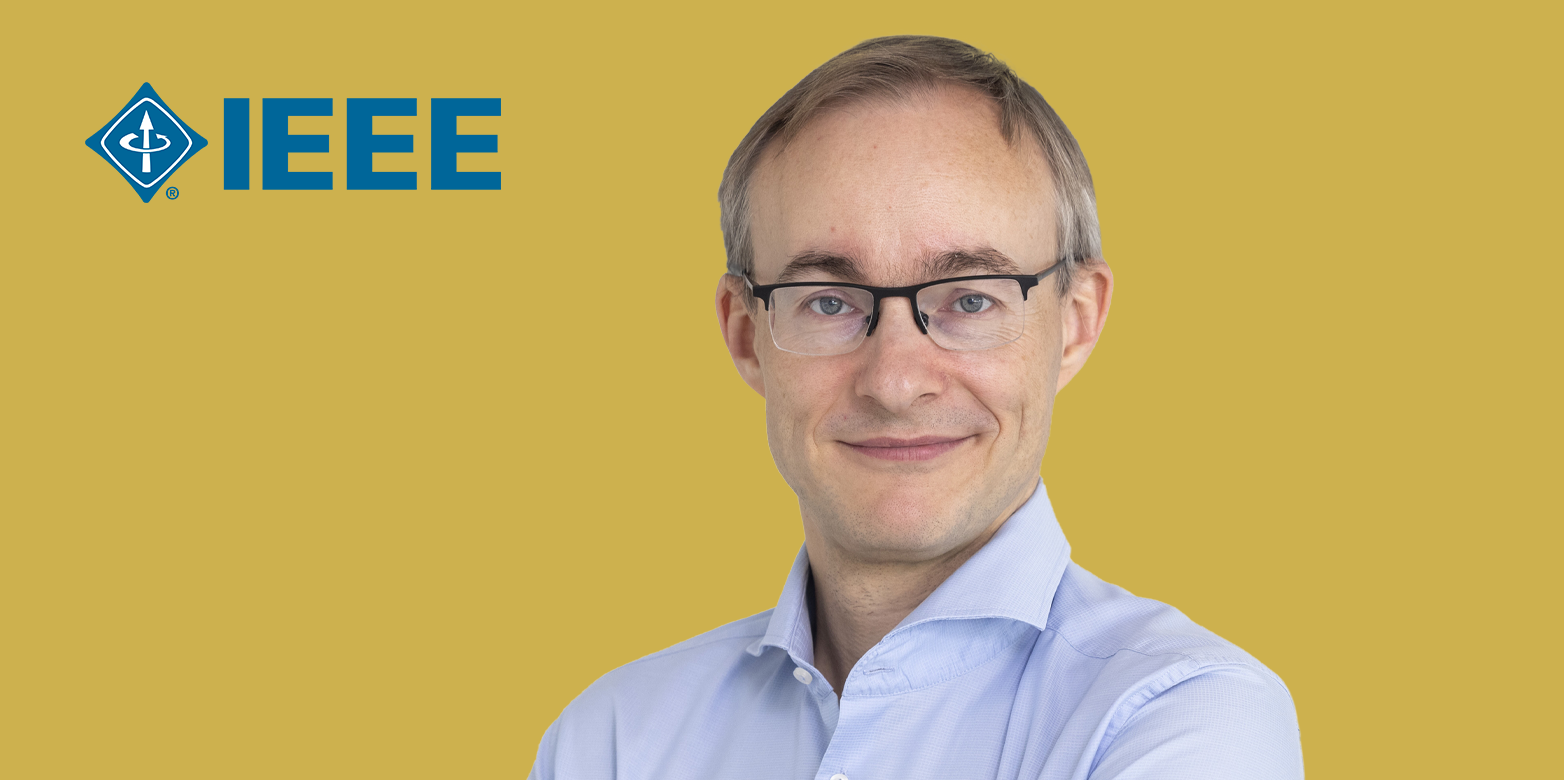
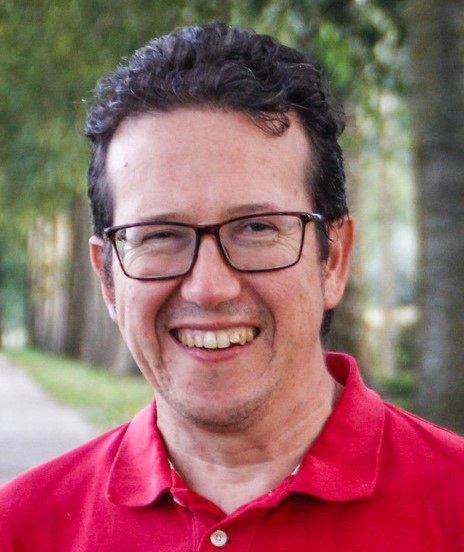
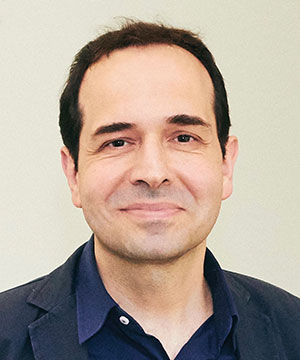
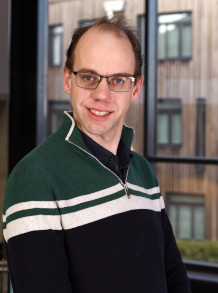
Rayna Dimitrova is a Tenure-track faculty member at the CISPA Helmholtz Center for Information Security in Saarbrücken, Germany. Previously, she held positions as Lecturer (Assistant Professor) at the University of Sheffield and University of Leicester, and postdoctoral roles at the University of Texas at Austin and the Max Planck Institute for Software Systems. She earned her PhD from Saarland University. Her research focuses on formal methods, including verification and synthesis of reactive systems, applications to control and robotics, quantitative analysis of probabilistic systems, and information-flow security. Key interests include strategic synthesis under partial observability, probabilistic uncertainty, and continuous dynamics, with applications to autonomous systems. She has served in numerous prestigious roles, including PC co-chair for VMCAI 2024, HYPER 2023, and SMT 2018. Her awards include the RS3 Best Paper Award (VMCAI 2012) and nominations for ETAPS (TACAS 2015) and EMSOFT (2014) Best Paper Awards. Her research group includes PhD students Rafael Dewes, Philippe Heim, and Saleh Soudijani. She has taught courses on reactive synthesis, program analysis, and decision procedures at multiple institutions, including the University of Sheffield and TU Kaiserslautern.
Andreas Krause is a Professor of Computer Science at ETH Zurich, leading the Learning & Adaptive Systems Group and serving as Chair of the ETH AI Center and Academic Co-Director of the Swiss Data Science Center. He previously held an Assistant Professorship at Caltech. His research focuses on machine learning, Bayesian optimization, reinforcement learning, and AI safety. Key contributions include advancements in active sensing, learning-based control, and probabilistic AI. Affiliations: ETH AI Center, Swiss Data Science Center, Max Planck Institute for Intelligent Systems (Fellow) Education: PhD in Computer Science (Carnegie Mellon University, 2008); Diplom in Computer Science and Mathematics (Technical University of Munich, 2004) His work bridges theory and practice, with applications in robotics, healthcare, and climate science. Notable awards include the IEEE Fellow distinction, Rössler Prize, and multiple ERC grants. Krause actively chairs ICML conferences and contributes to global AI policy through the UN’s High-level Advisory Body on AI. Research Interests: Machine learning fundamentals, adaptive systems, AI safety, and optimization. Recent work explores safe exploration in reinforcement learning, causal modeling, and large-scale generative AI.
Vladimir V. Terzija is a prominent researcher specializing in power systems engineering with a focus on smart grid technologies, synchronized measurement systems, and power system protection. His extensive publication record spans over two decades, demonstrating continuous contributions to the field of electrical power engineering across numerous IEEE journals and conferences. Terzija's research primarily centers on advanced power system monitoring, protection, and control methodologies. His work has significantly contributed to the development of synchronized measurement technology applications, fault analysis algorithms, and state estimation techniques for modern power systems. He has pioneered approaches for wide-area monitoring systems, transmission line fault analysis, and integrating renewable energy resources into power grids while maintaining stability and reliability. His research spans from fundamental power system theory to practical implementations addressing contemporary challenges in grid operation. Analysis of his recent publications reveals a strong focus on integrating artificial intelligence and machine learning techniques into power system applications, particularly for condition monitoring, anomaly detection, and predictive maintenance. His work increasingly addresses challenges posed by the energy transition, including grid stability with high renewable penetration, multi-energy system integration, and advanced control strategies for low-inertia power systems. The interdisciplinary nature of his research connects power engineering with data science, optimization theory, and cybersecurity. Throughout his career, Terzija has collaborated extensively with researchers across Europe and internationally, as evidenced by his numerous co-authored publications with institutions worldwide. His work appears consistently in top-tier IEEE publications, indicating recognition by the power engineering community. While specific awards aren't documented in the available publication records, his sustained research productivity and influence in the field suggest significant professional recognition. Terzija has supervised numerous research projects focused on power system monitoring and control, with particular emphasis on practical implementations that bridge theoretical developments with real-world grid applications. His work on WAMS (Wide Area Monitoring Systems), fault location algorithms, and state estimation techniques has contributed to advancing grid operational capabilities. The research trajectory shows increasing focus on addressing challenges associated with renewable energy integration, grid digitalization, and maintaining stability in modern power systems. His research group appears to focus on developing advanced monitoring and control systems for power networks, with particular expertise in synchrophasor technology applications. The collaborative nature of his work suggests involvement in international research consortia addressing contemporary power system challenges, particularly those related to grid stability in systems with high renewable penetration and the development of intelligent monitoring solutions for power infrastructure.
Chris Cornelis is a full-time Professor in fuzziness and uncertainty modelling at Ghent University's Department of Applied Mathematics, Computer Science and Statistics. His research integrates fuzzy logic and rough set theory to advance machine learning methodologies for complex data analysis. Education: M.Sc. in Computer Science, Ghent University (2000) Ph.D. in Computer Science, Ghent University (2004) Research Focus: Cornelis pioneers fuzzy-rough hybrid systems for uncertainty handling in machine learning. His work spans theoretical foundations (e.g., implication operators, granular approximations) and practical applications including emotion detection, medical diagnosis, and imbalanced data classification. Key innovations include FRNN-OWA classifiers and polar encoding for missing values, demonstrating exceptional versatility in bridging abstract mathematics with real-world AI challenges. Publication Trends: Recent work (2023-2025) reveals intensified exploration of topological data analysis (Mapper-based rough sets), advanced granular computing (disjoint/adjacent fuzzy granules), and ethical AI ("No Imputation Without Representation"). His research shows consistent progression from foundational fuzzy-rough theory toward multi-disciplinary applications while maintaining mathematical rigor, particularly in Choquet integration and quantifier-based frameworks. Scientific Awards: No specific awards were documented in the provided sources. Research Support: Cornelis has secured competitive funding including FWO postdoctoral mandates, a Ramón y Cajal contract at the University of Granada, and an FWO Odysseus Type II project at Ghent University. These grants enabled foundational work in fuzzy-rough set theory and its applications to complex data problems. Research Unit: He leads research within Ghent University's Computational Web Intelligence (CWI) unit, focusing on intelligent data analysis systems that leverage fuzzy-rough methodologies for web-scale information processing.
Glen Chou is an Assistant Professor in the Department of Electrical and Computer Engineering at Georgia Tech. He holds dual B.S. degrees from UC Berkeley (Electrical Engineering & Computer Science and Mechanical Engineering) and M.S./Ph.D. degrees from the University of Michigan (Electrical & Computer Engineering). Prior to Georgia Tech, he was a postdoctoral researcher at MIT CSAIL. Chou directs the Trustworthy Robotics Lab, focusing on algorithms for general-purpose robots and autonomous systems to ensure capability, safety, and resilience in real-world conditions. His research integrates control theory, machine learning, optimization, and formal methods. He emphasizes both theoretical foundations (e.g., proving algorithmic properties) and practical deployment on real robots. Key research areas include trustworthy autonomy, human-robot interaction, and constraint learning from demonstrations. His lab addresses challenges in perception, motion planning, and system reliability through interdisciplinary approaches. Chou has received notable awards including the Robotics: Science & Systems Pioneer (2022), NDSEG Fellowship (2019), and NSF Graduate Fellowship (2019). His work bridges foundational theory with real-world applications, with a focus on safety-critical systems.
Yousra Aafer is an Assistant Professor in the Department of Computer Science at the University of Waterloo. Her research focuses on mobile and smart device security, system security, and software security, particularly in the context of Android and cyber-physical systems. She holds a Ph.D. and M.Eng. from Syracuse University. Education: Ph.D., Syracuse University, United States (2016) M.Eng., Syracuse University, United States (2012) Her research interests include analyzing vulnerabilities in Android systems, binary analysis, IoT security, and fuzzing techniques. She explores methods to enhance security through formalized protocols, probabilistic protection recommendations, and leveraging large language models for vulnerability detection. Her work addresses critical areas such as cross-language buffer overflow detection, residual API audits in custom ROMs, and cyber-physical inconsistency in robotic vehicles. Her recent publications span topics like Android security, binary disassembly (e.g., D-ARM), and IoT security protocols (e.g., ProFactory). She has also contributed to frameworks like Poirot for probabilistic protection recommendations and StochFuzz for efficient binary fuzzing. While no awards are explicitly mentioned, her extensive publication record indicates active recognition in the security research community. She advises on multiple projects but no student names are listed here. Her work often involves collaboration on tools and frameworks for practical security applications.
Mujdat Cetin is a Professor of Electrical and Computer Engineering at the University of Rochester, serving as the Robin and Tim Wentworth Director of the Goergen Institute for Data Science and Director of the New York State Center of Excellence in Data Science. Previously, he held faculty positions at Sabanci University, Istanbul, Turkey, and MIT. He earned his BS from Bogazici University (1993), MS from the University of Salford (1995), and PhD from Boston University (2001). His research focuses on computational imaging, signal processing, and machine learning applications in biomedical imaging, radar systems, and neuroscience. Key areas include uncertainty quantification in imaging, probabilistic methods for image analysis, and brain-computer interfaces. His work bridges electrical engineering, computer science, and biomedical applications. Notable awards include the IEEE Signal Processing Society Best Paper Award and the Turkish Academy of Sciences Distinguished Young Scientist Award. He is an IEEE Fellow and has held editorial roles for journals like IEEE Transactions on Computational Imaging and SIAM Journal on Imaging Sciences. His contributions span conference leadership, including Technical Program Co-chair roles for major signal processing and fusion events. Cetin’s research group has advanced computational sensing, medical imaging algorithms, and EEG-based emotion/motor imagery classification. Ongoing work emphasizes integrating physics-based models with deep learning for robust imaging and signal analysis.
Simon Foster is a Senior Lecturer in the Department of Computer Science at the University of York. His research focuses on formal methods, theorem proving (using tools like Isabelle/HOL and Agda), and the verification of cyber-physical systems. He holds a PhD and MComp from the University of Sheffield. Research Interests: Foster specializes in formal semantics, unifying theories of programming, and functional programming. His work addresses challenges in verifying complex systems, including robotic control software and safety-critical applications. He has contributed to projects like CyPhyAssure and RoboCalc, emphasizing assurance case generation and probabilistic modeling. Recent Work Trends: His recent publications (2022–2025) emphasize scalable verification techniques for cyber-physical systems, probabilistic modeling, and formal verification of robotic systems using Isabelle/HOL. Key themes include hybrid systems theorem proving, assurance case automation, and the integration of formal methods with robotic state machines. Grants & Projects: He led the CyPhyAssure project (2018–2021) and contributed to the H2020 INTO-CPS initiative. His roles include Research Fellowships in safety-critical systems and model-driven architectures. Labs & Teams: Active in the High Integrity Systems group at York, focusing on formal methods for safety-critical systems and collaborative tool development for systems engineering.
Yassine Lakhnech is a Professor at the University Joseph Fourier (Grenoble 1), leading the 'Distributed and Complex Systems' research team within the VERIMAG laboratory. His work focuses on computer security, cryptography, formal verification, and programming language semantics. He has been actively involved in coordinating major interdisciplinary research initiatives like the PERSYVAL-lab, which addresses cyber-physical systems (CPS) challenges. His research bridges computational and formal approaches, with contributions to cryptographic protocol analysis, information flow control, and automated theorem proving. Key projects include the development of tools like HERMES for cryptographic protocol verification and involvement in ANR-funded projects such as Verso, PROSE, and AVOTE. He has also organized international conferences and workshops, including the Canada-France MITACS Workshop on Foundations & Practice of Security and the Eighth ACM/IEEE International Conference on Formal Methods and Models for Codesign. His publications span over 147 papers, with an h-index of 25 and g-index of 42, reflecting significant contributions to formal methods, security protocols, and hybrid systems. Despite his role as Vice President of Research, he maintains active scientific productivity, emphasizing the integration of theoretical and practical advancements in CPS and security.
Fabio Crestani is a Full Professor of Informatics at the Università della Svizzera italiana (USI) since 2007, serving as Pro-rector for Internationalisation since March 2024. He previously held roles at the University of Strathclyde (UK) and conducted sabbaticals at institutions like UC Berkeley and Xerox PARC. His expertise spans Information Retrieval, Text Mining, and Digital Libraries, with over 250 publications and editorial leadership roles, including Editor-in-Chief of Information Processing and Management (2008–2015). Education: PhD and MSc in Computing Science, University of Glasgow (UK) Degree in Statistics, University of Padova (Italy) Research Interests: Advanced information access systems Conversational search and user interaction models Machine learning for text analysis Early risk prediction (e.g., mental health via social media) Grants & Collaborations: Funded by Swiss National Science Foundation, Hasler Stiftung, and EU projects. Collaborations with institutions in UK, Italy, Spain, USA, and Malaysia. Labs & Teams: Lead the Information Retrieval Group at USI, which focuses on distributed IR, personalization, and mobile information access. The group includes 10+ researchers and has produced influential work in top-tier venues like SIGIR and ACL.
Nizar Touzi is a Professor and Chair of the Department of Finance and Risk Engineering at New York University's Tandon School of Engineering since September 2023, with an affiliate appointment at the Courant Institute. He previously held professorships at Ecole Polytechnique (2006-2023), Imperial College London (2005-2006), and CREST (2001-2006), with part-time roles at the latter two institutions. His research focuses on stochastic processes , mathematical finance , stochastic control , and mean field games , with significant contributions to probabilistic numerical methods like Monte Carlo techniques. He has served as Scientific Director of the Risk Foundation (Louis Bachelier Institute) since 2016 and led academic teams at Ecole Polytechnique, including chairing its Department of Applied Mathematics (2014-2017) and directing the Jacques Hadamard Doctoral School (since 2020). Scientific awards include the ERC Advanced Grant (2012), French Academy of Science Bachelier Prize (2012), and the Europlace Institute of Finance's Best Young Researcher in Finance Award (2007).
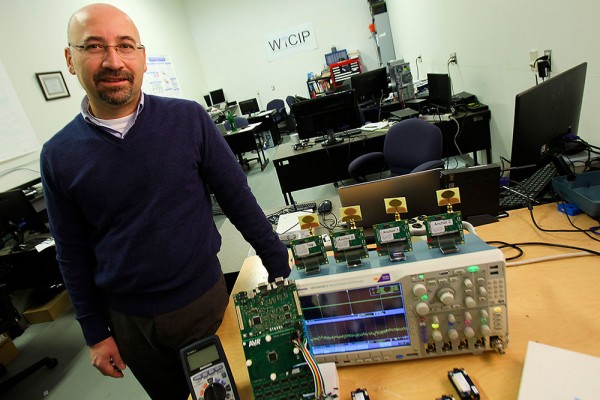
Professor Kemal Tepe is a faculty member in the Faculty of Engineering at the University of Windsor, specializing in wireless communication and information processing. His research focuses on vehicular networks, cognitive radio systems, and smart grid technologies. He leads the Wireless Communication and Information Processing Lab , where he develops solutions for autonomous driving systems, cybersecurity in vehicle-to-infrastructure communication, and spectrum sensing techniques. In 2016, he was awarded the Medal of Excellence by the Faculty of Engineering for his dedication and service. Tepe’s work bridges theoretical advancements and practical applications, addressing challenges in autonomous systems, machine learning for anomaly detection, and IoT security. His contributions include pioneering methods for detecting adversarial behavior in vehicular networks and improving spectrum utilization through probabilistic modeling. Collaborations with industry partners like Ford Motor Company and involvement in initiatives such as the Perspective Magazine automotive research highlight his industry-relevant research. His research interests span a wide range of domains including: Autonomous vehicle safety and communication protocols Cognitive radio networks and spectrum management Machine learning for network security and anomaly detection Wireless sensor networks and energy-efficient protocols Smart grid integration and communication architectures Tepe’s publications emphasize practical implementations, such as real-time routing protocols for wireless sensor networks and hardware designs for cognitive radio systems. His lab’s innovations have been showcased in industry-relevant platforms, demonstrating the real-world impact of his work.
Giulia Pedrielli is an Associate Professor at Arizona State University's School of Computing and Augmented Intelligence, with affiliations as a Senior Global Futures Scientist. She holds a Ph.D., M.Sc., and B.S. in Mechanical and Industrial Engineering from Politecnico di Milano, Italy. Her research focuses on stochastic simulation, optimization, and machine learning applications in biomanufacturing, digital twins, and cyber-physical systems. She has contributed to frameworks for pandemic modeling (PySIRTEM), RNA design, and high-dimensional optimization. Pedrielli has collaborated with institutions like NUS and UC Berkeley, and her work spans biomedical engineering, supply chain resilience, and security of critical infrastructure. Recent articles emphasize co-simulation tools, AI-driven logic translation, and falsification methods for CPS security. Her teaching includes advanced stochastic simulation courses and thesis supervision across multiple disciplines. Education: Ph.D. Mechanical Engineering, Politecnico di Milano, Italy M.Sc. Industrial Engineering, Politecnico di Milano, Italy B.S. Industrial Engineering, Politecnico di Milano, Italy Research interests integrate simulation-based optimization with machine learning, particularly in safety-critical systems like healthcare and smart infrastructure. She develops digital twin methodologies for real-time control under uncertainty, leveraging Gaussian processes and Bayesian approaches. Pedrielli's work bridges theoretical advancements (e.g., BASSO optimization algorithm) with practical applications in biomanufacturing and pandemic response.
Shaun Barker is an Associate Professor in the Department of Earth, Ocean & Atmospheric Sciences at the University of British Columbia. His research focuses on magmatic processes, hydrothermal alteration, and porphyry systems, particularly studying postsubduction magmatism and its economic implications. He supervises postdoctoral researchers such as Maria Alejandra Rodriguez Mustafa and has advised graduate theses on topics like the Dawson Range district's Late Cretaceous magmatism. Research interests include tectonomagmatic frameworks, fluid-rock interaction, and exploration methodologies using geochemical datasets and advanced analytical techniques. His work integrates field observations, geochemical analyses, and isotopic studies to unravel the genesis of ore deposits and geothermal systems. Key contributions include defining trace-element haloes around deposits, developing mineral mapping via µXRF, and applying machine learning to geological modeling. His studies span global regions like the Yukon, British Columbia, Nevada, and Peru, with a focus on Carlin-type gold, porphyry copper, and skarn systems.
Dragan Djurdjanovic is the Accenture Endowed Professor of Manufacturing Systems Engineering at The University of Texas at Austin's Department of Mechanical Engineering. He holds a Ph.D. from the University of Michigan and has expertise in advanced quality control, proactive maintenance, and data analytics in biomedical engineering. His research bridges manufacturing systems, semiconductor processes, and human performance monitoring. Djurdjanovic directed the NSF I-UCRC on Intelligent Maintenance Systems and co-authored over 69 journal papers. Awards include the SME's Outstanding Young Manufacturing Engineer Award and CIRP membership. Education: B.S. Mechanical Eng. & Applied Mathematics (1997), University of Niš, Serbia M.S. Mechanical Eng. (1999), Nanyang Technological University, Singapore M.S. Electrical Eng. (Systems), Ph.D. Mechanical Eng. (2002), University of Michigan Research Focus: Djurdjanovic’s work emphasizes system-level optimization in manufacturing, including virtual metrology for semiconductor processes and predictive maintenance. He applies probabilistic modeling to neuromusculoskeletal systems and integrates IoT in manufacturing metrology. Recent articles address energy-efficient control, fatigue monitoring, and big data analytics in industrial systems. Awards: Fellow of the International Society for Engineering Asset Management 2018 August-Wilhelm Scheer Visiting Professorship Labs/Teams: Associate Director of the NSF Engineering Research Center on Nanomanufacturing (NASCENT) and leader of the Cyber-Physical Manufacturing Metrology Model (CPM3) initiatives.