Asaf Ferber is Associate Professor in Mathematics at University of California, Irvine, School of Physical Sciences. His research spans discrete mathematics including combinatorial games, random graphs, extremal hypergraph theory, and quantum computation. Research explores Hamiltonian cycles in random graphs, structural properties of pseudorandom graphs, and quantum algorithms for combinatorial problems. Recent work develops quantum approaches to graph learning and sparse recovery in random matrices. Awards: NSF CAREER Award Sloan Fellowship Distinguished Early Career Faculty Award for Research Air Force Research Grant NSF-BSF Grant Organizes conferences including SoCalDM Symposium and Desert Discrete Math Workshop, mentoring graduate students through UCI's Probability and Combinatorics Seminar.
Andre Wibisono serves as Assistant Professor in Yale University's Department of Computer Science with a secondary appointment in Statistics & Data Science, joining the faculty in 2021 after postdoctoral research at University of Wisconsin-Madison and Georgia Institute of Technology. His educational background includes: Ph.D. in Computer Science, UC Berkeley M.A. in Statistics, UC Berkeley M.Eng. in Computer Science, MIT S.B. in Mathematics and Computer Science, MIT Wibisono's research focuses on algorithm design for machine learning through optimization, sampling, and game theory , leveraging dynamical systems and information theory to develop accelerated discrete-time algorithms from continuous dynamics. His work provides theoretical foundations for efficient machine learning systems with applications in generative modeling and constrained optimization. Recent publications (2023-2025) demonstrate consistent innovation in Hamiltonian-based optimization , constrained-space sampling , and min-max game convergence , characterized by rigorous mathematical analysis connecting continuous dynamics to discrete algorithms. Key trends include randomized integration for acceleration, phi-divergence convergence guarantees, and symplectic geometry applications to mirror descent. Scientific recognition includes: NSF CAREER Award for developing algorithmic frameworks bridging continuous and discrete dynamics He actively mentors current students (Siddharth Mitra, Kaylee Yang, Jane Lee, Qiang Fu, Peter Wang) and has guided two postdocs to faculty positions. Research is funded through the NSF CAREER award and collaborative CIF grants focused on Hamiltonian dynamics for sampling and optimization. His Yale research group develops theoretical foundations for next-generation machine learning algorithms, emphasizing mathematical rigor in optimization and sampling with applications to generative modeling and constrained inference problems.
Assoc Prof Ying Chen is an Associate Professor at the National University of Singapore , affiliated with the Department of Mathematics, Asian Institute of Digital Finance (as Academic Director of PhD Program in Digital FinTech 2022–2024), Risk Management Institute (2019–2023), Department of Statistics and Data Science (2019–2023), and Department of Economics (2018–2023). She also contributes to NUS Graduate School for Integrative Sciences and Engineering since 2016. Research Interests include: AI forecasting and quantum computing for finance Nonstationary time series and functional data analysis Energy data analytics and precision medicine Network autoregression and spatial-temporal modeling Explainable AI and citation metrics Portfolio liquidation and market-making algorithms Article Trends demonstrate expertise in: Adaptive forecasting for gas flows and electricity prices Blockchain network influence detection Quantum computing applications in finance Functional autoregression with mixed predictors Credit rating fairness and explainability High-resolution implied volatility modeling Scientific Awards include: ISI Elected Member (2016–) International Statistical Institute Council (2023–2027) IASC Scientific Secretary (2017–2019, 2023–2025) Advisory roles for EU FIN-TECH and xAIM projects
François-Xavier Briol is an Associate Professor in the Department of Statistical Science at University College London (UCL). He co-leads the Fundamentals of Statistical Machine Learning research group and holds roles including theme lead for Computational Statistics and Machine Learning (CSML), co-director of the UCL CDT in Data-Intensive Science, and ELLIS scholar. His research focuses on merging scientific models with data through robust statistical and machine learning methods, emphasizing computational efficiency and model misspecification robustness. Education: BSc/MMORSE from the University of Warwick, PhD from the joint Warwick-Oxford CDT in Statistics. Postdoctoral roles at Imperial College London (Mathematics) and University of Cambridge (Engineering), followed by a Group Leader position at The Alan Turing Institute (2020–2023). Research interests include probabilistic numerical methods, Bayesian inference for intractable models, Stein’s method, and kernel-based approaches. His work has been recognized via awards like the AISTATS Best Paper Award and Blackwell-Rosenbluth Award, with funding from EPSRC and Amazon. Advising: Supervised PhD students in areas like Bayesian quadrature, robust inference, and Gaussian processes. Current students focus on topics such as Bayesian filtering and sensitivity analysis. Grants include EPSRC funding and an Amazon Research Award. Labs/Teams: Active in UCL’s ELLIS unit, CSML, and Turing Institute collaborations. Editorships include SIAM/ASA Journal on Uncertainty Quantification and Bayesian Analysis.
John MacLaren Walsh is a Professor in the Department of Electrical and Computer Engineering at Drexel University, where he leads the Adaptive Signal Processing and Information Theory Research Group. He holds BS, MS, and PhD degrees from Cornell University, all completed under Dr. C. Richard Johnson, Jr. His research spans information theory, network coding, distributed computing, and machine learning applications in patent analysis. His work focuses on: Bounding entropic vectors and their impact on communication networks Rate region computation for network coding and distributed storage Information theory for distributed function computation Machine learning-enhanced patent processing systems Publications emphasize entropy geometry, network coding complexity, distributed algorithms, and patent analysis, with consistent themes of optimization and combinatorial methods. Recent work (2016-2019) shows increased focus on probabilistic supports and computational efficiency in network coding. Awards: 2011 NSF CAREER Award for 'Entropy Geometry in Variational Inference Signal Processing' He has advised PhD students on topics like entropy region mapping, network coding, and distributed control. Key grants include NSF CAREER and AFOSR funding for wireless network overhead control. He directs the Adaptive Signal Processing and Information Theory Research Group, which develops algorithms for network coding, distributed storage, and patent analysis systems.
Gil Kalai is a Professor of Mathematics at the Hebrew University of Jerusalem since 1992, where he holds the Henry and Manya Noskwith Chair. He also serves as an Adjunct Professor of Mathematics and Computer Science at Yale University since 2004 in a long-term part-time visiting position. His academic career includes visiting positions at prestigious institutions including MIT, Cornell, IAS Princeton, Berkeley, Bell-labs, IBM, and Microsoft. Professor Kalai's research spans multiple areas within mathematics and theoretical computer science. His work in combinatorics encompasses geometric, probabilistic, and topological approaches. He has made significant contributions to the study of convex sets and polytopes, linear programming, and theoretical computer science. His influential 1988 paper with Kahn and Linial on Boolean functions pioneered applications of Fourier analysis in theoretical computer science. Kalai's research has evolved to include the application of Fourier analysis to thresholds, influences, symmetries, noise, percolation, and social choice. He has developed theories in algebraic shifting and studied face-numbers and other combinatorial invariants of polytopes. His work on the diameter of polytopes and randomized simplex algorithms has been influential in optimization theory. In 1993, his collaboration with Kahn produced a groundbreaking counterexample to Borsuk's Conjecture in 1325 dimensions. Professor Kalai's publications reveal a consistent focus on the intersection of combinatorics, geometry, and theoretical computer science. His work shows a progression from foundational combinatorial geometry to increasingly sophisticated applications of harmonic analysis in discrete mathematics. The recurring themes across his 30+ year career include Boolean functions, polytope theory, and probabilistic methods in combinatorics, demonstrating remarkable coherence in his research trajectory. 2016 European congress of Mathematics, plenary speaker 2013 ERC advanced grant 2012 Rothschild Prize 1994 International Congress of Mathematicians invited section talk, Zurich 1994 Fulkerson Prize 1993 Erdos Prize 1992 Polya Prize Though specific details of his advising are not provided in the source material, Kalai has written over 70 scientific papers and maintains an active research blog entitled "Combinatorics and More." His 2013 ERC advanced grant indicates significant research funding for his work. His extensive collaborations with researchers across multiple institutions suggest a robust research program with numerous PhD students and postdoctoral researchers, though specific names are not mentioned in the provided texts. Professor Kalai maintains active research connections across multiple institutions including Hebrew University, Yale, and various research centers worldwide. His work bridges pure mathematics and theoretical computer science, creating a unique interdisciplinary research environment that influences both fields.
Michael U. Gutmann is a Senior Lecturer in Machine Learning at the School of Informatics, University of Edinburgh, and a member of the Institute for Adaptive and Neural Computation. His research lies at the intersection of machine learning, statistics, and scientific applications, with a focus on developing inference methods for complex and implicit models. Education: PhD in Computational Neuroscience, University of Tokyo MSc in Engineering and Applied Mathematics, Swiss Federal Institute of Technology (ETH) Zurich MSc, Ecole Centrale Paris His primary research interests include Bayesian inference, likelihood-free inference, optimal experimental design, unsupervised learning, and applications in computational biology and neuroscience. He is best known for introducing Noise-Contrastive Estimation (NCE), a foundational technique for training unnormalized statistical models. His recent work spans variational inference, density ratio estimation, flow models for missing data, and AI-driven experimental design in behavioral and biological sciences. His publications, including in NeurIPS , ICML , JMLR , and eLife , demonstrate a strong emphasis on methodological innovation for scientific discovery. He has contributed to open-source tools such as ELFI (Engine for Likelihood-Free Inference) and developed practical implementations of robust inference algorithms. Scientific Awards: No specific awards listed in the provided texts. Michael Gutmann actively supervises students and collaborates with leading researchers in machine learning and computational biology. He has secured research funding from EPSRC and BBSRC for projects in generative modeling and infectious disease epidemiology. He teaches advanced courses such as Probabilistic Modelling and Reasoning and Data Mining, reflecting his deep engagement with both theoretical and applied aspects of machine learning. Labs and Research Groups: Institute for Adaptive and Neural Computation (ANC), University of Edinburgh Former affiliations with Department of Mathematics and Statistics and Department of Computer Science at the University of Helsinki and Aalto University
Paata Ivanisvili is an Associate Professor at the University of California, Irvine (UCI), Department of Mathematics, School of Physical Sciences. His research focuses on Analysis, Probability, Harmonic Analysis, and Functional Analysis, with a particular emphasis on isoperimetric inequalities, functional inequalities, and discrete structures such as the Hamming cube. He has held visiting positions at institutions including the Hausdorff Research Institute for Mathematics and Princeton University. Ivanisvili has organized conferences such as the Dual Trimester Program at the Hausdorff Institute on Boolean Analysis in Computer Science (2024) and annual Summer/Fall Schools since 2021. He earned his PhD in Mathematics from Michigan State University (2015) and a BS from Saint Petersburg State University (2011). His research interests include sharp inequalities in analysis (e.g., Poincaré, Beckner, Ehrhard), hypercontractivity, and applications to discrete mathematics and probability. He has collaborated with prominent mathematicians such as Fedor Nazarov, Alexander Volberg, and Roman Vershynin. Notable awards include the NSF CAREER Award (2021–2025) and Simons Fellowship in Mathematics (2025–2026). Ivanisvili’s recent work explores the interface between harmonic analysis and discrete mathematics, including studies on additive energies, convex hulls of space curves, and learning theory. His articles frequently address foundational questions in geometric functional analysis, often using tools like Bellman functions and optimal control theory. He actively advises PhD students and has mentored visiting researchers at UCI.
Vadim Lozin is a Professor of Mathematics at the University of Warwick, affiliated with the Department of Mathematics within the School of Mathematics. His research interests span graph theory, combinatorics, and discrete mathematics, focusing on areas such as clique-width, Ramsey numbers, and structural graph theory. He has held visiting positions at institutions including the Université Paris-Dauphine, EPFL, and KAUST. Lozin has received several accolades, including the Best Paper Award for 'Linear Ramsey numbers' in 2018 and a 2024 award at the International Symposium on Algorithms and Computation. His work involves collaborations with global researchers and contributions to conferences like IWOCA and WG. Lozin serves on editorial boards for journals such as Discrete Applied Mathematics and Electronic Notes in Discrete Mathematics . His research explores foundational problems in graph theory, with applications in algorithm design and complexity analysis. Lozin’s publications include studies on union-closed sets, functional graph properties, and algorithmic approaches to graph parameters. He has also contributed to books like Words and Graphs , bridging formal language theory with graph structures. His grants focus on clique-width and stability in graphs, reflecting his commitment to advancing theoretical and applied discrete mathematics.
Vladimir Kazeev is an Assistant Professor at the Faculty of Mathematics, University of Vienna , where he has held a faculty position since 2019. He also held previous academic appointments as a Szegő Assistant Professor at Stanford University (2017–2019), a postdoctoral researcher at the University of Geneva (2015–2017), and research positions at ETH Zurich (2011–2015), Russian Academy of Sciences (2008–2011), and Moscow Institute of Physics and Technology (2009). His research focuses on adaptive, data-driven numerical methods for differential equations, nonlinear low-parametric approximation, and numerical linear algebra. His work intersects computational mathematics, tensor methods, and high-dimensional problem-solving, particularly in the context of partial differential equations (PDEs) and stochastic modeling. The 15 most recent publications reveal a strong emphasis on quantized tensor-structured methods for PDEs, low-rank approximations, and high-dimensional numerical analysis. His research spans theoretical advancements in tensor decomposition, practical applications in chemical reaction networks, and novel discretization techniques for multiscale and degenerate diffusion problems. Scientific awards include the prestigious ETH Medal for outstanding doctoral theses (2016) Russian Academy of Sciences Medal for outstanding student works in mathematics (2011) Advising and teaching activities include supervising Jason Zhu (Stanford, 2019) and Simon Etter (ETH Zurich, 2014), as well as teaching advanced courses in tensor methods, numerical analysis, and PDEs at the University of Vienna, Stanford University, and the University of Geneva. His service to the community includes peer review for 15+ journals and co-organizing minisymposia at SIAM meetings.
Aaron Smith is an Associate Professor in the Department of Mathematics and Statistics at the University of Ottawa, affiliated with the Faculty of Science. He holds a PhD from Stanford University. His research focuses on applied probability, computational statistics, Monte Carlo methods, and Markov chains, with an emphasis on advancing theoretical understanding and practical applications of these methodologies. Dr. Smith's work includes contributions to community detection algorithms, Markov chain mixing times, and synthetic health data generation. His recent publications explore topics such as nonstandard Dirichlet form representations, perturbation analysis of MCMC algorithms, and sparse Bayesian multidimensional scaling. He advises students in applied probability and has supervised postdoctoral researchers in related fields. His research interests span a wide range of topics, including stochastic processes, statistical inference, and algorithm design. He is particularly known for his analysis of convergence rates in Markov chains and the development of efficient sampling techniques for complex models. His interdisciplinary work bridges theoretical mathematics and practical computational challenges in data science and healthcare. Dr. Smith collaborates on projects involving synthetic data frameworks for privacy-preserving applications and has contributed to foundational work on mixing times and perturbation effects in stochastic systems.
Professor Alexander Scott is a faculty member at the University of Oxford, holding positions as Professor of Mathematics and Dominic Welsh Tutor in Mathematics at Merton College. His research focuses on combinatorics, probability, algorithms, and graph theory, with a particular interest in the interplay between local and global structures in networks. He has organized the Oxford Combinatorics Seminar and co-founded the online Oxford Discrete Mathematics and Probability Seminar, fostering collaboration in these fields. Professor Scott’s work bridges theoretical foundations with applications in statistical physics and algorithmic design. He has supervised numerous graduate students in combinatorics and regularly teaches undergraduate courses in analysis and discrete mathematics. His contributions include advancements in extremal graph theory, probabilistic methods, and structural combinatorics, with over 150 publications in prestigious journals. He actively organizes academic events such as the annual One-Day Meeting in Combinatorics, hosting speakers from around the world. Despite the absence of explicit awards noted, his prolific research output and academic leadership reflect significant contributions to the field. His current interests continue to explore the Erdős-Hajnal conjecture, induced subgraph densities, and algorithmic challenges in combinatorial structures.
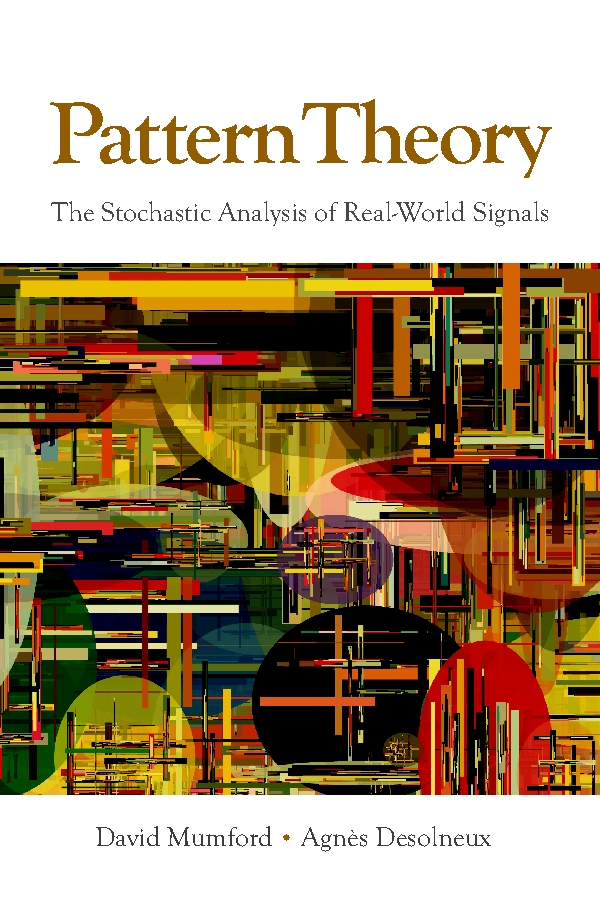
Agnes Desolneux is a CNRS Research Director at the Borelli Centre (formerly CMLA) and a Professor attached to the Mathematics Department at ENS Paris-Saclay. Education: PhD in Applied Mathematics (2000) from ENS Cachan Habilitation in Applied Mathematics (2010) from Université Paris Descartes Her research focuses on image analysis via statistical methods , particularly a contrario approaches, image restoration, texture synthesis, Determinantal Point Processes (DPP), optimal transport, Gaussian mixtures, geometry of random field excursions, shot-noise models, and mathematical modeling of visual perception through Gestalt theory. The articles extracted reflect her expertise in applied mathematics and computer vision , with recent works (2025-2020) on optimal transport algorithms, DPP applications, multiscale texture analysis, and stochastic modeling in medical imaging. Keywords span machine learning, probability theory, medical imaging, and computer vision . She has no listed scientific awards but has authored influential works including the book From Gestalt Theory to Image Analysis: A Probabilistic Approach (Springer, 2008) and Pattern Theory: the stochastic analysis of real-world signals (AK Peters, 2010).
Ben Green is the Waynflete Professor of Pure Mathematics at the University of Oxford and a Fellow of Magdalen College. His work spans additive combinatorics, analytic number theory, harmonic analysis, ergodic theory, discrete geometry, and group theory, with a focus on interdisciplinary approaches. Research Interests: Additive combinatorics and its applications to primes Analytic number theory (prime distribution, L-functions) Harmonic analysis (Fourier methods, spectral theory) Ergodic theory and its combinatorial applications Discrete geometry (ordinary lines, convex structures) Group theory (approximate groups, expansion) Article Trends: His recent work emphasizes multiplicative functions, Ramsey-type problems in number theory, expansion in finite groups, and extremal set theory. Themes include prime gaps, arithmetic progressions, and interactions between analysis and algebra. Scientific Awards: Clay Research Award (2004) Ostrowski Prize (2005) Whitehead Prize (2005) Leverhulme Prize (2007) European Mathematical Society Prize (2008) Royal Society Fellow (2010) Sylvester Medal (2014) Senior Whitehead Prize (2019) Advising: Ben has supervised numerous D.Phil students across additive combinatorics, analytic number theory, and related fields. Past students hold postdoctoral and academic positions globally.
Guillaume Lajoie is an Associate Professor in the Department of Mathematics and Statistics at Université de Montréal and a Core Academic Member of Mila – Quebec Artificial Intelligence Institute. He holds a Canada CIFAR AI Research Chair and a Canada Research Chair in Neural Computation and Interfacing. His research focuses on the intersection of AI and neuroscience, particularly in understanding neural network dynamics and developing brain-machine interfaces for clinical and scientific applications. He is affiliated with the Centre de recherches mathématiques (CRM), the Interdisciplinary Center for Research on the Brain and Learning (CIRCA), and the UNIQUE initiative. Education: PhD in Applied Mathematics from the University of Washington (Seattle), postdoctoral fellowships at the Max Planck Institute for Dynamics and the University of Washington Institute for Neuroengineering. Awards include the FRQS Scholar designation and leadership roles in strategic research initiatives like UNIQUE and CIRCA. Research interests include neural computations, recurrent neural networks, neurotechnology, and responsible AI development. Supervised students include François Paugam (PhD), Giancarlo Kerg (PhD), and others. Key grants include projects on adaptive neuroprosthetics, neural decoding, and Canada Research Chairs funding.