Simon Weber is a researcher affiliated with the ETH Zurich (Department of Computer Science). His work focuses on Unique Sink Orientations (USOs) , a combinatorial abstraction of optimization problems like Linear and Quadratic Programming. Simon's research spans three areas: (1) Structure of USOs and their links to Oriented Matroids; (2) Constructions of high-dimensional USOs to analyze algorithm complexity; and (3) Algorithmic improvements for sink-finding. He also explores topics in graph compression, neural networks, and ∃R-complete problems. Key Publications: PhD thesis on USO reductions, ∃R-completeness in neural training, and USO phase analysis. Scientific Contributions: Advances in USO complexity, FPT algorithms for MaxCut, and recognition of geometric hypergraphs and nerves of convex sets. He has supervised multiple theses at ETH Zurich, including topics on USO visualization, MaxCut algorithms, and necklace splitting. His teaching experience includes being a Head Assistant for courses like Geometry: Combinatorics & Algorithms and Topological Data Analysis . Simon's work has been recognized with Best Paper and Best Student Paper Finalist awards at SC19.
Anastasios Vassilopoulos serves as Head of the Composite Mechanics Group (GR-MeC) and Adjunct Professor at École Polytechnique Fédérale de Lausanne (EPFL), within the School of Architecture, Civil and Environmental Engineering. He directs the Doctoral Program in Civil and Environmental Engineering while maintaining active roles in the Structural Engineering Group and School Council. His research focuses on composite materials for renewable energy infrastructure , particularly wind turbine rotor blades. Key areas include fatigue analysis of adhesively bonded joints, experimental methods for FRP composites under complex loading, and design methodologies for composite structures. His work bridges fundamental mechanics with industrial applications through extensive collaboration with wind energy stakeholders. Analysis of his 15 most recent publications reveals dominant themes in thick adhesive joint mechanics (73% of articles), fatigue/fracture characterization (67%), and machine learning applications (40%). The research consistently targets wind turbine blade challenges, with 87% of articles addressing specific aspects of renewable energy infrastructure. Methodological trends show increasing integration of computational-experimental approaches and AI-driven predictive modeling. Dr. Vassilopoulos has secured 18 major research projects since 2000, primarily funded by Swiss National Science Foundation and international collaborations. Current projects include NSF-funded work on wind turbine blade adhesive joints (2020-2024) and fire-resistant composite bridge decks. His teaching portfolio includes advanced courses on composites design, structural mechanics, and floating offshore renewables. As Doctoral Program Director, he oversees PhD training while personally supervising 17 doctoral students to completion.
Yoav Zemel is a Lecturer at the École polytechnique fédérale de Lausanne (EPFL) , affiliated with the School of Basic Sciences and Department of Mathematics . He specializes in statistical aspects of optimal transport and related geometric methods. B.Sc. Mathematics & Economics, Hebrew University of Jerusalem (summa cum laude, 2010) M.Sc. Applied Mathematics, EPFL (2012) PhD Mathematical Statistics, EPFL (2017), advised by Victor M. Panaretos His research focuses on geometrical statistics , point processes , shape theory , and optimal transportation . Recent work explores covariance operators, Gaussian processes, and stochastic algorithms in Wasserstein spaces. Publications bridge theoretical advancements with applications in ecology, genetics, and machine learning. Scientific awards include the Robert May Prize , Swiss government scholarship , and multiple Hebrew University honors. He has taught courses on probability, statistical machine learning, and optimal transport at EPFL, Göttingen, and Cambridge.
Suryanarayana Sankagiri is a postdoctoral researcher at the École Polytechnique Fédérale de Lausanne (EPFL) in Switzerland, affiliated with the Information and Network Dynamics (INDY1) group under Professor Matthias Grossglauser. Previously, he earned his Ph.D. in Electrical & Computer Engineering (2018-2022) from the University of Illinois at Urbana-Champaign , where he was supervised by Bruce Hajek and participated in the Coordinated Science Lab . He also holds an M.S. in Electrical & Computer Engineering from the University of Illinois (2016-2018) and a B.Tech. in Electrical Engineering from the Indian Institute of Technology Bombay (2012-2016). Education : Ph.D., Electrical & Computer Engineering, University of Illinois (2018-2022) M.S., Electrical & Computer Engineering, University of Illinois (2016-2018) B.Tech., Electrical Engineering, IIT Bombay (2012-2016) Suryanarayana's research focuses on discrete choice models and their application to recommendation systems , with a particular emphasis on learning from choice data and developing novel models for human decision-making. His broader interests include blockchain security under adverse network conditions, network dynamics , probabilistic modeling , and algorithm design . Recent work explores nonconvex matrix factorization and contextual dueling bandits for recommendation systems. His publications span theoretical and applied domains, including high-impact venues like ICML , Stochastic Systems , and IEEE Transactions on Networking . Themes include blockchain efficiency , hidden community detection in preferential attachment graphs, and temporal analysis of Indian classical music. Current projects involve refining recommendation systems through sparse comparison data and designing protocols for resilient blockchain networks. Scientific Awards : zkCapital Paper of the Week (2021) Rambus Fellowship (2021) Mavis Future Faculty Fellowship (2019) List of Teachers Ranked as Excellent (2019) Nomination for IIT Bombay Undergraduate Colloquium (2016) Best Poster Award, IIT Bombay Undergraduate Research Symposium (2013) Suryanarayana has advised no students listed in the provided materials. His work has been supported by fellowships such as the Mavis Future Faculty Fellowship and Rambus Fellowship . He contributes to the INDY1 group at EPFL, which investigates information and network dynamics through interdisciplinary approaches combining probability , network theory , and algorithmic design .
Björn Jensen is a Professor and Co-Head of the AI Robotics Research Lab at Lucerne University of Applied Sciences and Arts (HSLU), specifically within the Lucerne School of Computer Science and Information Technology. He also teaches medical robotics at the University of Bern's Biomedical Engineering Program. His professional background includes roles at the Autonomous Systems Lab at EPFL, Switzerland, and founding the startup Singleton 3D focusing on 3D laser measurement technology. Educational background: MSc in Electrical Engineering (Automation & Image Processing) from TU Darmstadt (1998), followed by a Master's in Industrial Management from the same institution. PhD in human-robot interaction from EPFL (2005), with research stints at Tokyo University (2005) and involvement in projects like Robox@Expo.02 and Smarter-Elrob. Research interests span robotics, human-robot interaction, autonomous systems, medical robotics, and sensor-based navigation. Notable projects include the 'Smart Ennoblement Factory', 'NaviMow' autonomous lawnmower, and 'Bagger Assistenzsysteme'. His work emphasizes real-world applications of robotics in dynamic environments and human-centric systems. Lab leadership includes co-directing the AI Robotics Research Lab, focusing on advancing robotics technologies for practical scenarios. No scientific awards explicitly listed, but contributions to industry-academia collaborations are highlighted through startup ventures and applied research projects.
Christoph Grunau is a Researcher at ETH Zürich's Theoretical Computer Science department, affiliated with the Professorship for Computer Science. His work focuses on distributed computing, parallel algorithms, graph theory, and network decomposition. He has contributed to advancements in scalable MPC (Massively Parallel Computing) algorithms, efficient parallel derandomization techniques, and deterministic network decomposition methods. His research emphasizes algorithmic efficiency, theoretical guarantees, and applications in distributed systems, quantum computing, and dynamic graph problems. Key contributions include work on graph orientation, dynamic coloring algorithms, and clustering techniques such as k-center and k-means++. His publications span topics like shortest path algorithms with negative edge weights, probabilistic methods for algorithm analysis, and distributed symmetry breaking in sparse graphs. Grunau's research bridges foundational theory with practical distributed computing challenges, addressing scalability and efficiency in both classical and emerging computational frameworks.
Bastian Alexander Grossenbacher is a Full Professor of Machine Learning at the University of Fribourg, where he leads the AIDOS Lab within the Department of Informatics, Faculty of Science and Medicine. He holds secondary appointments at the Institute of AI for Health and the Helmholtz Pioneer Campus of Helmholtz Munich. He is also a TUM Junior Fellow and a member of ELLIS and AI-LIFE. He co-directs the Applied Algebraic Topology Research Network (AATRN) and is involved in the Topology, Algebra, and Geometry in Data Science (TAG DS) initiative. His research lies at the intersection of geometry, topology, and machine learning, with a focus on Geometric Deep Learning, Topological Deep Learning, and Topological Data Analysis. He develops novel machine learning methods that use topological and geometric priors to improve model robustness and interpretability, particularly in biomedical applications. His work spans theoretical foundations and practical implementations in areas such as single-cell analysis, medical imaging, and network science. The 15 most recent publications (2023–2025) reveal a strong trend toward integrating algebraic and differential topology into deep learning architectures. Key themes include the use of Euler Characteristic and magnitude transforms, curvature-based analysis of graphs and data, simplicial and manifold-based neural representations, and the application of topological methods to biomedical data. His articles appear in top-tier venues such as Nature Communications, ICML, NeurIPS, ICLR, and IEEE conferences, reflecting both theoretical depth and high-impact applications. ERC Starting Grant Bastian Rieck is actively involved in mentoring and academic leadership. He supervises PhD students and postdoctoral researchers in the AIDOS Lab and is open to new collaborations, particularly with candidates from interdisciplinary backgrounds. He has secured significant research funding, including the ERC Starting Grant, and leads multiple collaborative research initiatives. He emphasizes open science, sharing code, data, and educational materials publicly. He leads the AIDOS Lab, which focuses on advancing machine learning through topological and geometric principles. He is also a co-director of the Applied Algebraic Topology Research Network (AATRN), which hosts a large online seminar series. Additionally, he maintains DONUT, a curated database of non-theoretical applications of topology, and is active in the ELLIS and AI-LIFE networks, fostering international collaboration in AI and health.
Prof. Dr. Bernd Wollscheid is a Lecturer at the Department of Health Sciences and Technology (D-HEST) at ETH Zurich, Switzerland. He leads the Wollscheid Lab and the Proteomics Plattform D-HEST , focusing on decoding the extracellular interactome and the cell surfaceome's nanoscale organization. His work bridges biology, chemistry, medicine, and bioinformatics, developing cutting-edge technologies like LUX-MS and TRICEPS-based LRC to study cellular communication and signaling pathways. Research interests include understanding how the surfaceome influences cellular functions, particularly in disease contexts such as cancer and metabolic disorders. Key projects involve creating resources like the Cell Surface Protein Atlas and PROTTER , tools for visualizing proteoforms and analyzing multi-omics datasets. His lab also explores precision medicine applications, including biomarker discovery and tumor profiling for clinical decision support. Publications highlight advancements in multi-omics integration, drug repurposing, and functional proteomics. The lab collaborates on initiatives like the Swiss Personalized Health Network (SPHN) and the Personalized Health and related Technologies (PHRT) strategic focus area. Funding comes from public grants and strategic partnerships. Recruitment for motivated researchers is ongoing, emphasizing contributions to molecular health and surfaceome research.
Thomas Weber is a Full Professor at the École Polytechnique Fédérale de Lausanne (EPFL) , holding the Chair of Operations, Economics, and Strategy (OES) within the College of Management (CDM) . He serves as Director of the Doctoral Program in Management of Technology and contributes to academic governance through roles in committees such as the CDM Academic Evaluation Committee. PhD Students: Zhang Ru, Han Jun, Mark Michael, Razeghian Jahromi Maryam Email: thomas.weber@epfl.ch His research spans behavioral economics, risk analysis, and optimization in dynamic systems, with a focus on sharing economy applications, inventory management, and cryptocurrency market dynamics. Recent publications address robust decision-making frameworks, self-exciting point processes, and economic implications of information endogeneity. Key teaching activities include: Information: Strategy & Economics Innovation & Entrepreneurship in Engineering Microeconomics
Jean-Cédric Chappelier is a Senior Lecturer and Researcher at École Polytechnique Fédérale de Lausanne (EPFL) in the School of Computer and Communication Sciences. He works in computational linguistics and natural language processing, with a focus on robust parsing techniques, semantic indexing, and clustering algorithms. His research interests span computational linguistics, natural language processing, machine learning, tree substitution grammars, and semantic indexing. His publications from 2000-2006 demonstrate expertise in stochastic parsing, ontology-based indexing, and community structure analysis in complex networks. He has supervised multiple EPFL PhD students including Florian Seydoux and Emmanuel Eckard. Jean-Cédric holds an Ms.Sci. and Ph.D. in Computer Science from École Nationale Supérieure des Télécommunications de Paris. He teaches courses on object-oriented programming, computer systems, and natural language processing at EPFL.
Francesco Leofante is a Research Fellow at Imperial College London , affiliated with the Centre for Explainable AI . His work focuses on Explainable AI (XAI) , particularly counterfactual explanations with formal robustness guarantees against perturbations. Imperial College Research Fellowship DAAD AINet Fellowship (Safety and Security in AI) Imperial PFDC Supporting Research Staff and Students Award 2023 Research Interests center on Explainable AI , emphasizing counterfactual explanations , robustness , model multiplicity , and formal verification in critical systems like energy and aviation. His work bridges AI , formal methods , and human-AI collaboration . Publications include studies on robust counterfactual explanations , parametric ReLUs for verification, and multi-agent systems with formal guarantees. These appear in top venues like AAAI , KR , IJCAI , and AAMAS , often addressing AI safety and trustworthy systems . Scientific Awards include the Imperial PFDC Supporting Research Staff and Students Award 2023 , DAAD AINet Fellowship , and Imperial College Research Fellowship . He also contributes to workshops and program committees at conferences like AAAI, KR, and IJCAI. Future Work includes expanding robust XAI into critical infrastructure systems (energy, aviation) and developing tools like OMTPlan for AI planning and verification .
Philip Neil Garner is a Researcher at the Idiap Research Institute (LIDIAP), affiliated with École Polytechnique Fédérale de Lausanne (EPFL). His current position is listed as "EPFL member Current" with email philip.garner@epfl.ch. He maintains an active research profile with publications spanning from 2013 to 2025. Garner's research focuses on the intersection of physiological auditory modeling and machine learning for speech processing. His work bridges cochlear physiology with automatic speech recognition systems, investigating how biological principles of hearing can inform and improve computational models. Key areas include modeling the cochlea as an active amplifier using Hopf oscillators, exploring neural oscillations in speech perception via spiking neural networks, and developing interpretable affective speech synthesis systems. His research demonstrates consistent interest in creating biologically plausible models that maintain compatibility with modern deep learning frameworks. Analysis of his recent publications reveals a clear trajectory toward integrating physiological auditory models with state-of-the-art speech recognition systems. His work increasingly focuses on creating hybrid models that maintain physiological plausibility while leveraging pre-trained acoustic models. The research shows particular attention to modular approaches that allow different components (cochlear models, neural networks) to interact meaningfully, with emphasis on understanding how end-to-end learning affects physiological interpretations of speech processing. Garner has supervised multiple doctoral students including Louise Coppieters De Gibson, Bastian Schnell, and Sibo Tong, whose theses address cochlear modeling, affective speech synthesis, and multilingual speech recognition respectively. His research has received funding from the Swiss National Science Foundation as indicated in two publications. While specific grants aren't detailed, his work demonstrates consistent collaboration with Hervé Bourlard and Alexandre Bittar across multiple projects. As a core researcher at Idiap Research Institute, Garner works within a multidisciplinary team focused on speech processing and artificial intelligence. His publications indicate collaboration across units including LIDIAP, EDEE, STI, IEL, and LCAV at EPFL, suggesting integration within both the Idiap institute and broader EPFL research ecosystem. His work connects computational neuroscience with practical speech technology applications, positioning him at the intersection of theoretical auditory modeling and applied speech processing.
Dr. Stefano Marelli is a Lecturer at ETH Zürich's Department of Civil, Environmental and Geomatic Engineering, affiliated with the Risk, Safety, and Uncertainty Quantification Chair. He holds a MSc in Physics (University of Milano Bicocca, 2006) and a PhD in Applied and Environmental Geophysics (ETH Zurich, 2011). His research focuses on uncertainty quantification (UQ), surrogate modeling, reliability analysis, and Bayesian inversion, with applications in engineering, astrophysics, and economics. He leads the development of UQLab, a general-purpose UQ software framework, and collaborates on interdisciplinary projects like HIPERWIND. Key research areas include high-dimensional UQ, stochastic simulators, and surrogate modeling for dynamical systems. Recent work emphasizes multifidelity methods, Bayesian tomography, and noise-aware reliability analysis. He teaches structural reliability and risk analysis at ETH and contributes to international UQ training programs. Education: MSc Physics (Milano Bicocca, 2006); PhD in Geophysics (ETH Zurich, 2011) Roles: Senior Scientist (2018–present); Postdoc (2012–2018) Software: UQLab, UQ [py] Lab Collaborations: Cross-disciplinary projects in astrophysics, mechanical engineering, and remote sensing His articles (2020–2025) highlight advancements in surrogate modeling, Bayesian inversion, and UQ applications. Notable contributions include frameworks for noisy data analysis, time-variant reliability, and industrial fragility assessment.
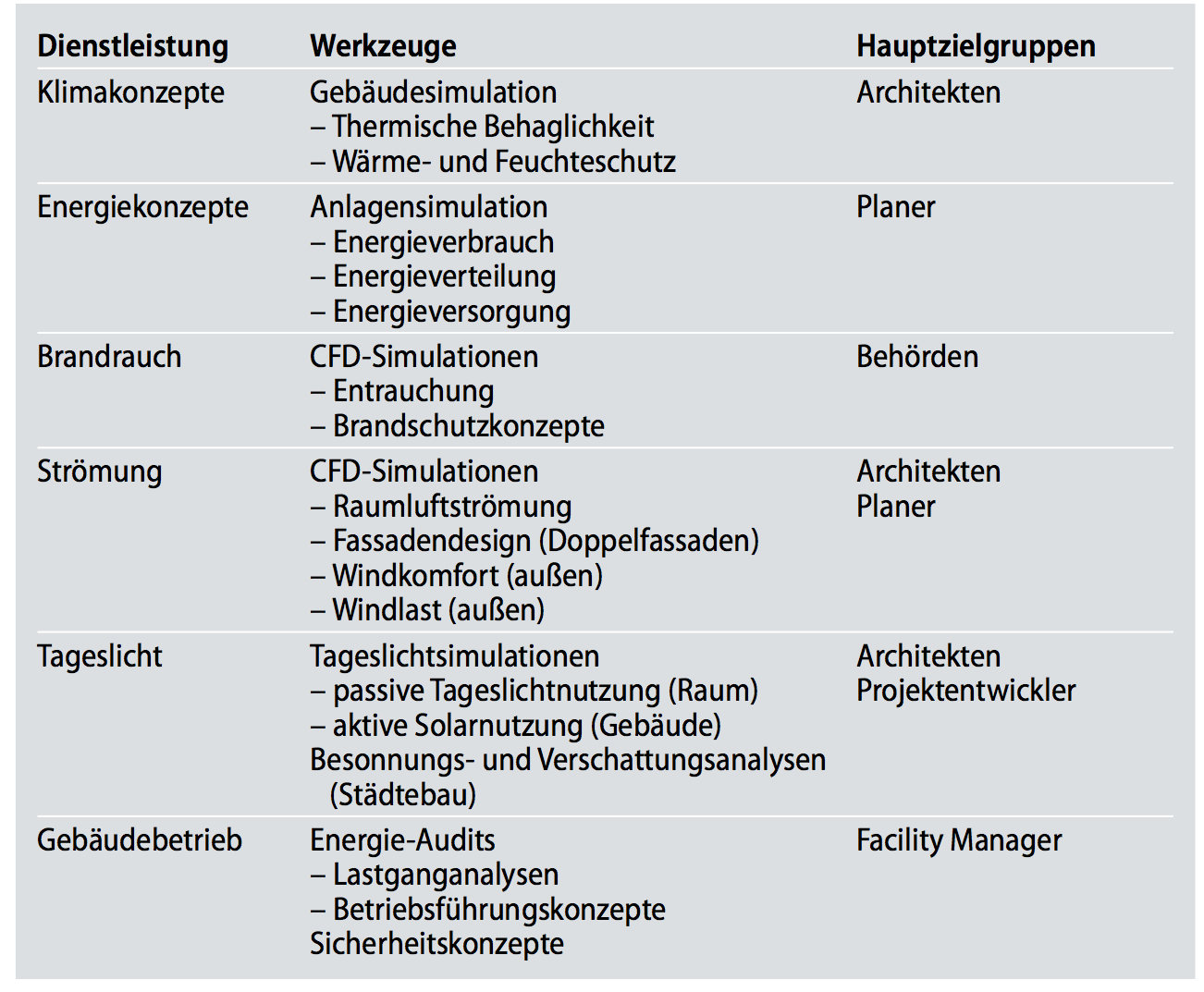
Axel Seerig is Professor of Building Climate and Building Technology at the Department of Technology and Architecture of Lucerne University of Applied Sciences and Arts (HSLU). He works at the Institute of Building Technology and Energy (IGE) and the Center for Integrated Building Technology, where he leads research and teaching in sustainable building concepts. With over 25 years of experience in building simulation and sustainable energy concepts for buildings, areas, and regions, he has established himself as a leading expert in climate-responsive building design. Seerig completed his studies in Process Engineering and earned his PhD in Thermodynamics at the Technical University of Berlin. His academic journey includes leadership roles as program director for Building Technology at the Austrian University of Applied Sciences Burgenland and senior researcher positions at AIT (Austrian Institute of Technology) and AEE-intec. His research focuses on the development of sustainable energy concepts using computer simulations for building climate control. He applies scientific principles of thermodynamics, heat transfer, and fluid mechanics through dynamic simulations in the disciplines of building climatic engineering and building simulation. His work emphasizes maximizing natural resources and user exposure to the outdoors through natural air conditioning, ventilation, and lighting, with human well-being as the central focus of planning. Current research includes energy efficiency in engineering systems for Central Asia, climate change adaptation in building design, and advanced data analysis for building performance assessment. His publication record shows a consistent focus on building energy efficiency, climate-responsive design, and simulation methods. Recent work emphasizes the integration of data analysis techniques like Monte-Carlo methods and artificial neural networks with traditional building simulation approaches. His research addresses critical challenges including climate change impacts on building performance, uncertainty in occupancy patterns, and the development of robust building concepts that maintain performance throughout their lifecycle. Seerig serves as an advisor in the Master of Science program MSE in Building Technologies and for doctoral studies at Middlesex University in London. He has received research funding through projects like SCCER FEEB&D (Swiss Competence Center for Energy Research) and has consulted internationally for the German Society for International Cooperation (GIZ) in Central Asia and Africa. He is an active member of the building science community, serving on the board of the International Building Performance Simulation Association (IBPSA), as a reviewer for the Austrian Research Promotion Agency (FFG), and as a member of professional organizations SIA and VDI. His work connects academic research with practical building projects, including notable collaborations with firms like Gruner AG on buildings such as the Roche OPAL office building, Siemens Headquarters Austria, and the Vienna Central Station.
Dr. Shuting Han leads a Junior Research Group at the University of Zurich under the Helmchen Lab, funded by the SNSF Ambizione Fellowship since 2024. She holds a Research Fellow position focusing on cortical dynamics underlying sensory processing and memory. Her research examines how distributed cortical areas interact during sensory processing and memory formation, utilizing multi-area two-photon calcium imaging, virtual reality behavior paradigms, electrophysiology, and advanced data analysis techniques. Key projects include investigating sensory representation in cortical areas, predictive processing in neural circuits, cortico-cortical interactions, memory consolidation across the neocortex, and developing high-throughput imaging methodologies. Her recent publications demonstrate expertise in cross-modal predictions, cortical microstates during consciousness alterations, and neural ensemble dynamics. She directs research on top-down predictive signals in neocortex and develops tools for volumetric neural imaging. SNSF Ambizione Fellowship Dr. Han mentors PhD students Maï Ly Leclair and Saidong Ma in the Helmchen Lab. Her group develops custom multi-area two-photon microscopes and applies machine learning for neural data analysis, bridging experimental neuroscience with computational approaches to decode cortical information processing.