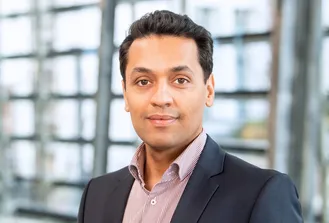
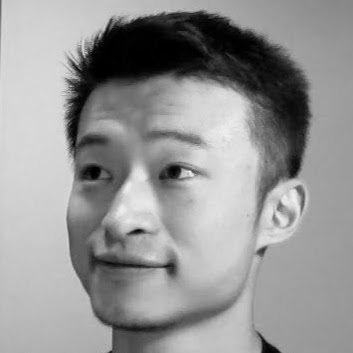
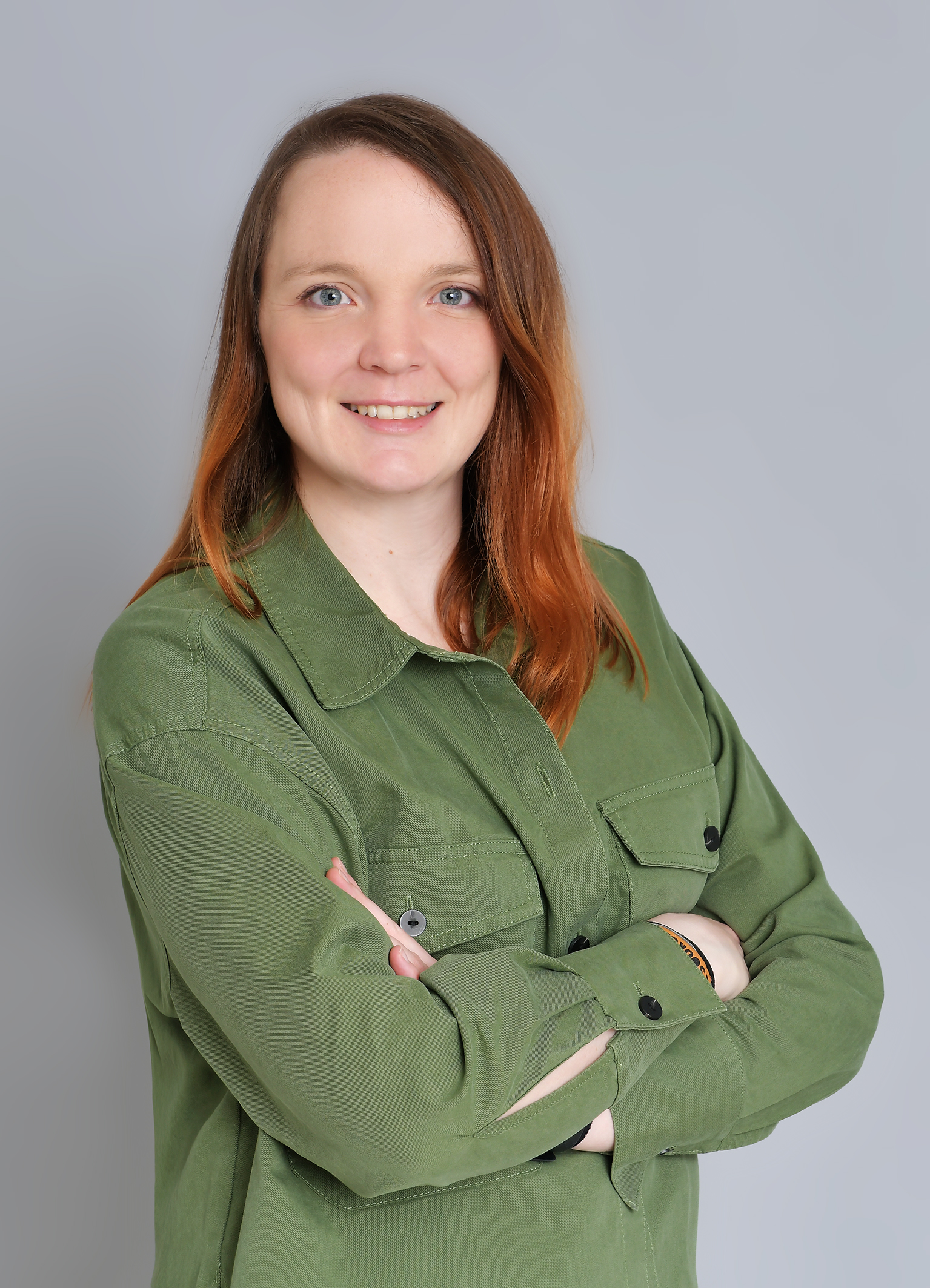
Zhen Liu is an Assistant Professor at the School of Data Science, CUHK-Shenzhen. His research focuses on generative models, 3D representations, and the synergy of spatial and semantic understanding in AI systems. With a PhD from Mila and Université de Montréal, he develops foundational methods for physics simulation, 3D assembly, and semantic reasoning in neural networks. His work bridges machine learning with applications in computer vision and graphics, emphasizing: Generative architectures for 3D content creation Diffusion model alignment techniques Efficient parameter finetuning strategies Dr. Liu mentors students in AI research and contributes to advancing 3D generative modeling paradigms.
Prof. Constantin A. Rothkopf is a W3 Professor at the Department of Psychology, Technische Universität Darmstadt, and a secondary member of the Department of Computer Science. He serves as Founding Director of the Centre for Cognitive Science and founding member of the Hessisches Zentrum für Künstliche Intelligenz (hessian.ai). He is also part of the European Laboratory for Learning and Intelligent Systems (ELLIS) and the DAAD Konrad Zuse Schools of Excellence in Artificial Intelligence (ELIZA). His research focuses on the interplay between perception and action, using computational models and experimental studies in humans. Current work includes eye-tracking studies in naturalistic environments, inverse optimal control models, and developing algorithms for virtual agents. Education: Ph.D. in Neuroscience and Informatics from the University of Rochester, followed by postdoctoral research at Frankfurt Institute for Advanced Studies (FIAS). He has held visiting professorships at Central European University (2017) and Columbia University (2023). Awards include an ERC Consolidator Grant (2022) and SCENE Project Funding (2025). Research Interests: Active vision, decision-making under uncertainty, sensorimotor control, and computational modeling. Key themes include how humans use sensory input to form beliefs, make decisions, and act in dynamic environments. Grants/Awards: ERC Consolidator Grant (2022), SCENE Funding (2025) Labs/Teams: Centre for Cognitive Science, hessian.ai, ELLIS Unit Darmstadt
Ana Filipa Sequeira is a researcher affiliated with INESC TEC, Porto, Portugal, and the University of Porto. Her work spans biometrics, fairness in AI, and explainable artificial intelligence. She has contributed to advancements in face recognition, synthetic data applications, and bias mitigation through techniques like knowledge distillation and model compression. Institution: INESC TEC (Porto, Portugal) Research Themes: Face recognition, fairness, explainability, synthetic data, biometric security Her recent publications focus on addressing demographic biases in face recognition systems, developing privacy-preserving explainable methods, and evaluating synthetic data's impact. She collaborates extensively with researchers like Pedro C. Neto, Jaime S. Cardoso, and Naser Damer. Sequeira has participated in organizing and analyzing competitions such as FRCSyn, BIOSIG, and SYN-MAD, emphasizing robust evaluation frameworks. Her work intersects technical innovation with ethical considerations, advocating for responsible AI applications in biometrics.
Nicole Ludwig serves as a Junior Professor and Principal Investigator of the independent research group "Machine Learning in Sustainable Energy Systems" within the Cluster of Excellence – Machine Learning for Science at the University of Tübingen. Education: PhD in Computer Science, 2020, Karlsruhe Institute of Technology MSc in Information Systems and Network Economics, 2016, University of Freiburg BSc in Economics, 2014, University of Freiburg Ludwig's research focuses on applying machine learning techniques to sustainable energy systems, with particular emphasis on uncertainty quantification and the complex relationships between weather, climate, and energy systems. Her work integrates probabilistic approaches with time series analysis to address challenges in energy forecasting and management under uncertain conditions. She actively contributes to the development of methods for probabilistic forecasting and reinforcement learning applications in energy contexts. Ludwig maintains an active presence in the machine learning research community, with contributions to open-source projects related to energy time series analysis. Her GitHub profile shows engagement with repositories focused on graph convolutional networks and energy time series motif discovery.
Min Peng is a Professor at Wuhan University's School of Computer Science. His research focuses on artificial intelligence, machine learning, natural language processing, and knowledge graphs. He has collaborated extensively with institutions like Hefei University of Technology and the University of Chinese Academy of Sciences. His work bridges theoretical advancements in AI with practical applications in finance, social media analysis, and network optimization. Recent contributions include neural-symbolic reasoning frameworks, contrastive learning for knowledge graphs, and financial benchmarking with large language models. Research interests emphasize scalable machine learning models for complex reasoning tasks, explainable AI, and domain-specific applications in finance and social networks. Over 100 publications span venues like WWW, ACL, and NeurIPS, highlighting interdisciplinary impact. Notable projects include SymAgent (neural-symbolic agent frameworks), PIXIU (financial LLM benchmark), and DTC (commonsense machine comprehension). Key technical trends include integrating large language models with structured data, temporal knowledge graph reasoning, and transfer learning across domains. His work often addresses real-world challenges in data efficiency, interpretability, and cross-domain scalability. Current efforts explore financial LLMs, agent-based reasoning systems, and multimodal applications. While no specific grants or awards are listed in the provided data, his prolific publication record indicates sustained research excellence. Collaboration networks include teams in computer science, electrical engineering, and finance disciplines.
Radu Timofte is an academic researcher specializing in computer vision and image processing. He completed his PhD in 2013 at Katholieke Universiteit Leuven, Belgium, with a thesis on sparse and collaborative representations for computer vision. His work focuses on advancing techniques such as image super-resolution, denoising, object detection, and deep learning-based image restoration. He has collaborated extensively with institutions like ETH Zurich and co-authored seminal papers in top-tier journals and conferences. His research bridges theoretical advancements with practical applications in areas like medical imaging, aerial scene analysis, and real-time visual tracking. Timofte’s contributions include developing efficient deep learning architectures for tasks like lightweight object detection (e.g., CH-YOLO-Lite), diffusion models for image-to-image translation (DiffI2I), and calibration-free raw image denoising. He has also contributed to the development of video restoration transformers (VRT) and frameworks for unsupervised real-time video enhancement. His work often emphasizes practicality and efficiency, addressing challenges such as small object detection in aerial imagery and underwater image super-resolution. Timofte’s collaborations span academia and industry, with notable co-authors including Luc Van Gool (ETH Zurich) and Kai Zhang (Nanjing University of Science and Technology). His research has been published in venues like IEEE Transactions on Pattern Analysis and Machine Intelligence, CVPR, ECCV, and the International Journal of Computer Vision.
Yingfei Xiong is an active Associate Professor at Peking University, China, specializing in software engineering and programming languages. With a consistent research trajectory from 2013 through 2026, Xiong has established themselves as a prominent figure in the software engineering research community, regularly contributing to top-tier conferences including SPLASH, ICSE, ASE, and PLDI. Dr. Xiong's research primarily focuses on program synthesis, automated program repair, and software analysis techniques. Their work bridges theoretical programming language concepts with practical software engineering applications, particularly in developing novel approaches for code generation, bug fixing, and program optimization. The research demonstrates strong interdisciplinary connections between traditional software engineering, programming languages theory, and emerging AI techniques. Analysis of Xiong's publication trends reveals a clear evolution in research focus, beginning with foundational work in API transformations and program adaptation around 2013-2016, shifting toward program repair techniques from 2017-2020, and most recently incorporating machine learning and neural approaches into program synthesis and repair (2021-2026). The work consistently addresses practical challenges in software development while maintaining theoretical rigor, with increasing integration of AI techniques in recent years. Dr. Xiong has served in various leadership roles across the software engineering conference ecosystem, including program committee membership and session chair positions at major conferences. Their extensive service demonstrates recognition by peers as a subject matter expert in software engineering and programming languages research. While specific grant information isn't detailed in the provided text, the sustained publication record suggests successful research funding.
Claire Vernade is a Group Leader at the University of Tübingen within the Cluster of Excellence Machine Learning for Science. She holds an Emmy Noether award (2022) and an ERC Starting Grant (2024) for her projects FoLiReL and ConSequentIAL , focusing on theoretical reinforcement learning and non-stationary environments. Education: PhD from Telecom ParisTech (2017) Post-doctoral researcher at University of Magdeburg (2018) Her research bridges sequential decision making, bandit problems, and reinforcement learning theory. Recent work explores lifelong learning, distributional RL, and game-theoretic approaches to PCA, emphasizing mathematical rigor and algorithmic innovation. Recent publications highlight trends in non-stationary RL , continual learning , and bandit algorithms with complex feedback structures. Key subfields include meta-learning, adaptive control, and theoretical guarantees in dynamic programming. Scientific Awards: Emmy Noether Award (2022) ERC Starting Grant (2024) Outstanding Paper Award & Oral Presentation, ICLR (2021) She mentors PhD and master's students in theoretical machine learning, with current advisees including Nicolas Nguyen, Onno Eberhard, and Ziyad Sheebaelhamd. Her lab actively recruits candidates in bandit algorithms and RL theory through the IMPRS-IS and ELLIS doctoral programs. Claire co-leads diversity initiatives like Tübingen Women in Machine Learning and Women in Learning Theory, advocating for inclusivity in AI research. She has organized workshops at ICML and EWRL, and contributed to union activism in the tech industry.
Prof. Jalal Etesami is an Assistant Professor in the Department of Computer Science at Technical University of Munich (TUM), leading the Decision Sciences & Systems group. He holds a Ph.D. in Industrial and Systems Engineering from the University of Illinois at Urbana-Champaign and was a Postdoctoral Fellow at EPFL in Switzerland. His research focuses on machine learning, causal inference, multi-agent systems, and game theory, with applications to systemic risk modeling and market design. He teaches advanced courses such as Causal Inference in Time Series , Algorithmic Game Theory , and Optimization, Learning, and Market Design . Notable contributions include work on causal structure learning, stochastic optimization, and non-Gaussian causal models. Recent research explores causal effect identification under confounding, neural networks for market analysis, and optimal experiment design. Prof. Etesami’s work appears in top venues like NeurIPS, AAAI, and IEEE journals. He actively contributes to the academic community, organizing seminars and workshops on topics ranging from causal reasoning to computational social choice.
Max Fathi is a Professor of Mathematics at Université Paris Cité, affiliated with the Laboratoire Jacques-Louis Lions (LJLL) and Laboratoire de Probabilités, Statistique et Modélisation (LPSM). He concurrently holds a part-time teaching position at the Department of Mathematics and Applications (DMA) at École Normale Supérieure (ENS). Since 2023, he has been a member of the Institut Universitaire de France (IUF), a prestigious national research fellowship in France. He completed his PhD in 2013 at Université Pierre et Marie Curie under Cédric Villani, followed by a postdoctoral position at the University of California, Berkeley with Lawrence C. Evans and Fraydoun Rezakhanlou. Previously, he was a CNRS researcher at the Institut de Mathématiques de Toulouse before joining Université Paris Cité. His habilitation thesis (2019) focuses on optimal transport applications in analysis and probability. Fathi's research centers on optimal transport theory, particularly its applications to analysis, probability, and statistical physics. Key topics include interacting particle systems, functional inequalities (e.g., Poincaré, log-Sobolev), high-dimensional phenomena, Ricci curvature in discrete/continuous spaces, Stein's method, concentration of measure, and numerical methods for stochastic dynamics. His work is supported by the ANR project 'Conviviality.' He has delivered courses on functional analysis at ENS and participated in summer schools, including an MSRI course on functional inequalities and localization techniques. His teaching materials include lecture notes on optimal transport and stochastic processes. His contributions have been recognized through awards such as the IUF membership. Notable research collaborations include work with Thomas Courtade, Matthias Erbar, and Gabriel Stoltz on topics ranging from stability estimates of inequalities to hypocoercivity and numerical analysis of stochastic systems.
Jia-Jie Zhu is a machine learner and applied mathematician currently serving as head of an independent research group at the Weierstrass Institute for Applied Analysis and Stochastics in Berlin, with an upcoming appointment as tenured associate professor at KTH Royal Institute of Technology in Stockholm. Previously, he conducted postdoctoral research in machine learning at the Max Planck Institute for Intelligent Systems in Tübingen, Germany, following doctoral studies in optimization and numerical analysis at the University of Florida. His research focuses on the mathematical foundations of machine learning and optimization, particularly at the intersection of computational algorithms, dynamical systems, and probability theory. Key areas include: Robust probabilistic machine learning algorithms Kernel methods for distribution manipulation Variational methods for optimization over probability distributions Gradient flows and optimal transport theory Wasserstein and Fisher-Rao geometry Applications in generative modeling and causal inference Dr. Zhu's recent work reveals deep connections between partial differential equations, kernel methods, and machine learning, resulting in theoretically grounded algorithms for handling distribution shifts. His publications demonstrate a consistent trajectory from foundational optimization theory to cutting-edge applications in robust learning and generative modeling, with increasing emphasis on the mathematical structures underlying modern ML systems. He has secured significant research funding, including a DFG Project on 'Optimal Transport and Measure Optimization Foundation for Robust and Causal Machine Learning' within the Priority Program 'Theoretical Foundations of Deep Learning' (SPP 2298), and actively organizes academic events such as the Workshop on Optimal Transport from Theory to Applications (OT-DOM) and upcoming sessions at ICSP 2025 and SwissMAP. As an educator, Dr. Zhu teaches nonparametric statistics at Humboldt University of Berlin and serves as area chair for major conferences including AISTATS 2025. He maintains an active research group with opportunities for master's students, PhD candidates, and postdoctoral researchers interested in the mathematical frontiers of machine learning.
Kihong Heo is an Associate Professor in the School of Computing and Graduate School of Information Security at KAIST (Korea Advanced Institute of Science and Technology) in South Korea. His academic career includes serving as an Assistant Professor at KAIST from 2017-2019 before being promoted to Associate Professor in 2020, following his postdoctoral research at the University of Pennsylvania. He earned both his Ph.D. and B.S. in Computer Science & Engineering from Seoul National University. Dr. Heo's research focuses on developing program reasoning systems for safe and reliable software, with specific interests in AI-based program analysis systems for detecting deep semantic software bugs, general-purpose program simplification systems for secure and efficient software, and scalable program synthesis systems for automatic software generation and repair. His work bridges the gap between programming languages, program analysis, and machine learning techniques to create next-generation programming systems. Analysis of his recent publications reveals a strong trend toward integrating machine learning techniques with traditional program analysis methods, with significant contributions in compiler validation, software security, fault localization, and program debloating. His research has practical impact, with some of his work incorporated into Facebook's Infer static analyzer. ACM SIGSOFT Distinguished Paper Award, FSE 2025 Amazon Research Award, 2024 The Soo-Young Lee Teaching Innovation Award, KAIST, 2024 Prize for Excellence in Teaching, KAIST, 2024 Best Artifact Award, ICSE 2022 ACM SIGPLAN Distinguished Paper Award, PLDI 2019 ACM SIGSOFT Distinguished Paper Award, ICSE 2019 Dr. Heo actively mentors graduate students, currently advising several Ph.D. candidates including Yeonhee Ryou, Taeeun Kim, and Sujin Jang, as well as master's students. He has served on program committees for major software engineering and programming language conferences including PLDI, ICSE, POPL, and SPLASH, demonstrating his active role in the academic community. His laboratory, the Programming Systems Laboratory at KAIST, focuses on creating innovative programming systems that leverage both semantic-based program analysis and AI techniques.
Katharina Eggensperger is an Early Career Research Group Leader at the University of Tübingen , leading the AutoML for Science group within the Cluster of Excellence Machine Learning for Science . She previously completed her Ph.D. at the University of Freiburg under Frank Hutter and Marius Lindauer (2022), and actively contributes to the AutoML community through open-source tool development and competition leadership. Co-developer of AutoML.org tools Faculty member of IMPRS-IS Chair for multiple AutoML workshops/conferences (2019-2025) Her research focuses on automated machine learning (AutoML) with specific attention to: AutoML Systems Hyperparameter Optimization Tabular Machine Learning Scientific Applications of ML She has organized multiple AutoML schools and conferences, including serving as Program Chair for AutoML 2024 and Non-archival Track Chair for AutoML 2025. Her work emphasizes making machine learning accessible through automation while maintaining scientific rigor and interpretability, particularly for tabular data applications. Katharina actively recruits PhD students through IMPRS-IS and collaborates with institutions like the University of Freiburg and Cyber Valley .
Dr. Sinno Jialin Pan is a leading researcher in machine learning and artificial intelligence at Nanyang Technological University, Singapore. His work focuses on domain adaptation, sentiment analysis, and efficient neural network optimization. Key research areas: Machine Learning, Domain Adaptation, Reinforcement Learning, Sentiment Analysis Recent publications demonstrate expertise in time-series classification (2025) using hierarchical domain adaptation, LLM efficiency (2025) through expert pruning, and graph generation (2024) via spectral diffusion. His work spans both theoretical advancements and practical applications in neural architecture optimization and adversarial learning. Scientific contributions include: 2025: Virtual-label hierarchical domain adaptation 2024: Spectral diffusion for graph generation 2024: Multilingual jailbreak analysis in LLMs Current trends show increasing focus on large language model optimization and robust neural architectures , with applications in fault diagnosis, recommender systems, and misinformation detection.
Markus Lange-Hegermann serves as Professor of Mathematics and Data Science at Ostwestfalen-Lippe University of Applied Sciences (TH OWL) since 2018 and holds a board position at the Institute for Industrial Information Technology (inIT). His career bridges academic research and industrial applications, with expertise in translating machine learning theory into practical engineering solutions for automation and manufacturing sectors. His educational foundation includes a Diplom (Master equivalent) in Computer Mathematics from RWTH Aachen University (2004-2008) followed by a Dr. rer. nat. (PhD equivalent) in algorithmic differential algebra (2008-2014). Prior to academia, he gained industry experience at FEV GmbH as an R&D engineer (2014-2017) and P3 automotive GmbH as a Data Science Consultant (2017-2018). Lange-Hegermann's research centers on probabilistic machine learning with distinctive emphasis on physics-informed approaches. He develops Gaussian process methodologies that incorporate differential equations to model time dependencies, uncertainties, and physical constraints in industrial systems. His work enables robust data-based modeling and optimization for cyber-physical systems, with applications spanning predictive maintenance, process control, and quality assurance in manufacturing. Analysis of his 15 most recent publications (2024-2025) reveals consistent innovation in physics-integrated machine learning, particularly using Gaussian processes to solve partial differential equations and optimal control problems. The research demonstrates strong industrial applicability across domains including medical imaging, material science, automotive engineering, and brewing processes, with recurring themes of anomaly detection in time-series data and uncertainty-aware decision making. His scientific contributions have earned significant recognition: Forschungspreis TH OWL (2024) Top reviewer award at NeurIPS (2023) Outstanding reviewer award at NeurIPS (2021) Best poster award at Bosch AI CON (2019) Borchers Plakette for outstanding dissertation (2014) Springorum Denkmünze for outstanding diploma (2009) As chairman of the Data Science study program and vice chairman of undergraduate examination boards, Lange-Hegermann actively shapes academic curricula while supervising graduate theses. His governance roles include serving on professorship search committees at multiple institutions and contributing to examination regulations. He maintains active research funding through collaborations with industrial partners and reviews proposals for initiatives like It's OWL and 3IA Côte d’Azur. Lange-Hegermann leads the Mathematics and Data Sciences research group within inIT, fostering collaboration between theoretical machine learning and industrial automation. He co-founded AICOmmunityOWL and the Informatics Europe working group on Data Analysis and Reporting, while organizing machine learning reading groups and data science hackathons to bridge academic research with industrial problem-solving.