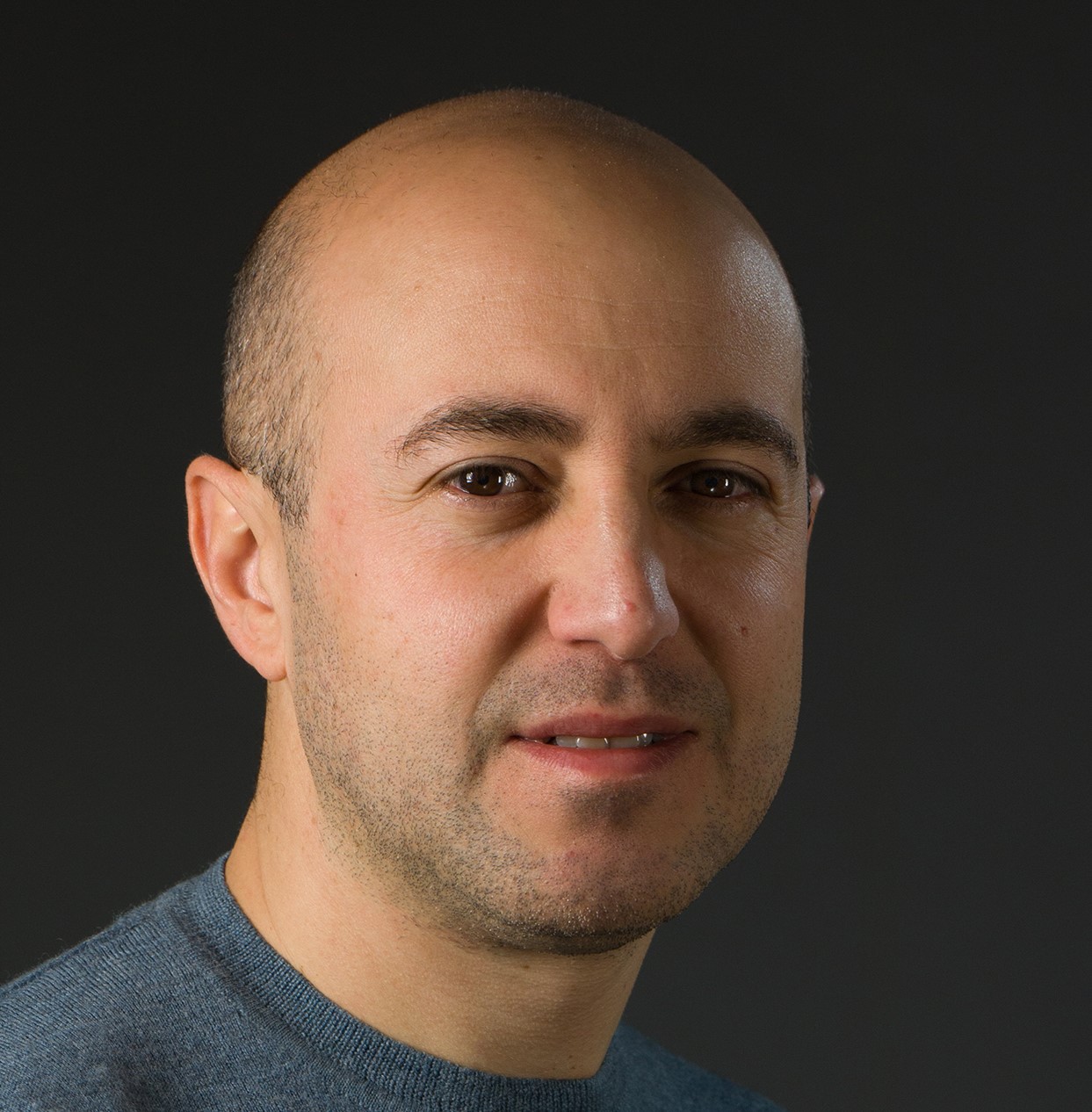
Christian Rupprecht is an Associate Professor at the Department of Computer Science, University of Oxford, specializing in computer vision and machine learning. His research focuses on unsupervised learning, 3D reconstruction, and visual understanding. His work includes contributions to conferences such as GCPR'25, ICCV'25, and CVPR'25, with papers spanning topics like correspondence estimation, animal pose modeling, and synthetic data generation. He leads projects within the prestigious Visual Geometry Group (VGG). Notably, his paper VGGT received the Best Paper Award at CVPR'25. His research integrates deep learning and geometric modeling, emphasizing robustness and generalization in visual systems. Best Paper Award at CVPR'25
Elliot J. Crowley is a Senior Lecturer (Associate Professor) at the School of Engineering, University of Edinburgh, where he co-leads the Bayesian and Neural Systems research group. He serves as Programme Manager for Electronics and Electrical Engineering and has developed a comprehensive machine learning course for 4th year electronic engineering students at the University of Edinburgh. Dr. Crowley's research focuses on simplifying machine learning systems with specific expertise in automated machine learning, low-resource deep learning, and engineering applications of machine learning. His work bridges theoretical advances with practical implementations, particularly in neural architecture search and computer vision applications, with emphasis on making complex ML systems more accessible and efficient. His recent publications demonstrate significant contributions to neural architecture search spaces, training-free instance segmentation, and state space models for visual recognition, appearing in top venues including NeurIPS 2024, BMVC 2024, and AutoML 2025. These works show a consistent focus on developing practical ML solutions that can operate effectively in resource-constrained environments. Selected awards and grants: EPSRC New Investigator Award Investigator on the dAIEdge Horizon Network Co-investigator on the EPSRC AI Hub for Causality in Healthcare AI Dr. Crowley currently supervises several researchers including Postdoc Linus Ericsson and PhD students Miguel Espinosa, Shiwen Qin (with Shay Cohen), and Cameron Barker (with Henry Gouk). His former students include Chenhongyi Yang (now a Research Scientist at Meta) and Jack Turner (now a Software Engineer at Qualcomm). He actively seeks new PhD students with strong research proposals and available funding for UK students through CDTs. His research group, the Bayesian and Neural Systems group, focuses on developing practical machine learning solutions that can be deployed in resource-constrained environments, with particular emphasis on making complex ML systems more accessible to engineers and practitioners.
Alain Durmus is a Professor at École Polytechnique, affiliated with the applied mathematics department (CMAP). His research focuses on computational statistics, machine learning, and stochastic methods, including Monte Carlo algorithms, Bayesian inference, and optimization. He explores topics such as Markov chain Monte Carlo (MCMC), stochastic approximation, and generative models. His work emphasizes theoretical guarantees for algorithms like Langevin Monte Carlo and Hamiltonian Monte Carlo, with applications to high-dimensional Bayesian inference and inverse problems. Key contributions include hypocoercivity analysis of piecewise deterministic MCMC processes, convergence guarantees for stochastic gradient methods, and the development of efficient sampling techniques. He has also contributed to Bayesian imaging and federated learning through works like the QLSD algorithm. Awarded the Best Student Paper Award at ICASSP 2020 for his work on the Sliced-Wasserstein distance. His teaching spans mathematical statistics, stochastic methods, and probability at École Polytechnique and ENS Paris-Saclay. He has also contributed to conferences and workshops on topics ranging from MCMC convergence to optimization in machine learning.
Gianni Franchi is an assistant professor at ENSTA Paris , affiliated with the Computer Science and Systems Engineering Unit (U2IS) . His work focuses on theoretical deep learning , with a strong emphasis on uncertainty quantification, robustness, and explainability in machine learning models. Current affiliation: ENSTA Paris (U2IS) Academic rank: Assistant Professor Key collaborators: David Filliat, Emanuel Aldea, Andrei Bursuc, Antoine Manzanera His research spans uncertainty quantification , explainable AI , and reliable machine learning . He investigates methods like Bayesian neural networks, ensemble approaches, and deterministic uncertainty models. His work also addresses domain adaptation , self-supervised learning , and autonomous systems , particularly in trajectory forecasting and semantic segmentation for autonomous driving. Recent publications analyze probabilistic modeling for robustness, symmetry-aware Bayesian methods , and multi-modal datasets like InfraParis. He develops frameworks like Torch-Uncertainty and benchmarks such as MUAD for uncertainty types in autonomous driving. Key themes: Uncertainty Quantification Deep Learning Theory Autonomous Systems Explainable AI Dataset Creation Bayesian Methods
Andrzej Murawski is a Professor of Computer Science at the University of Oxford and a Tutorial Fellow at Worcester College . His research focuses on the semantics of programming languages and software verification, with applications in automata theory, probabilistic computation, and concurrency. Current affiliations: University of Oxford, SIGLOG Vice-Chair, FoSSaCS Steering Committee Research interests: Game semantics, higher-order recursion, probabilistic systems, differential privacy Recent publications address probabilistic verification, equivalence checking, and game semantics for concurrent systems. He has chaired program committees for conferences such as ESOP and PERR, and his work has earned recognition like the POPL 2025 Distinguished Paper Award . Current students : Benedict Bunting, Haoxuan Yin Past students : Conrad Cotton-Barratt, David Hopkins, Guanyan Li, Dominik Wagner, Fabian Zaiser
Slava Rychkov is a Permanent Professor of Theoretical Physics at the Institut des Hautes Études Scientifiques (IHES), a position he has held since 2017. He specializes in strongly coupled quantum and conformal field theories, with applications across high energy physics, statistical mechanics, and condensed matter physics. His current research focuses on the conformal bootstrap and renormalization group techniques, including both perturbative and nonperturbative methods like tensor network renormalization. Education: Ph.D. in Physics, Princeton University (2002) Master of Science, Moscow Institute of Physics and Technology (1996) Recent research highlights include a groundbreaking connection between Deligne categories and symmetries of probabilistic loop ensembles in statistical physics, and a novel method for analytic continuation of Euclidean CFTs to Lorentzian signature. His work on the 2+ϵ expansion challenges established assumptions about critical exponents in 3D systems. Publications span topics from tensor renormalization group methods to rigorous mathematical approaches in the conformal bootstrap program. Scientific Awards: Jacques Solvay International Chair in Physics (2025) Grand Prix Mergier-Bourdeix, French Academy of Sciences (2019) New Horizons in Physics Prize (2014) As Deputy Director of the Simons Collaboration on the Nonperturbative Bootstrap, Rychkov leads efforts to rigorously analyze conformal field theories. His former advisees include prominent researchers at institutions like EPFL, Princeton, and Università di Genova. Current projects focus on resolving fundamental questions about critical phenomena and phase transitions using advanced mathematical physics tools.
Hugo Paquet is a Researcher at INRIA Paris and a member of the ANTIQUE team at École Normale Supérieure , PSL University. He completed a PhD in Computer Science (2015–2019) at the University of Cambridge under Glynn Winskel , focusing on concurrent game semantics for probabilistic programming. His postdoctoral work includes positions at LIPN, Paris (2022–2024, funded by a Marie Skłodowska-Curie Award) and University of Oxford (2020–2022). He has contributed to conferences including LICS , ESOP , FSCD , and POPL . Education : PhD in Computer Science (University of Cambridge, 2019) Research Interests : Probabilistic programming (semantics, inference algorithms, nonparametric models), categorical semantics (game semantics, concurrency models, adjunctions), combinatorial species, and 2-dimensional categories. Teaching : Category Theory (2023–2024), Bayesian Statistical Probabilistic Programming (2021–2022), Lambda-calculus and Types (2020–2021), and small-group teaching at Cambridge (Logic, Discrete Mathematics, Semantics). Awards : Marie Skłodowska-Curie Award under the Paris Region Fellowship Programme Labs : INRIA Paris, ANTIQUE team (2024–present)
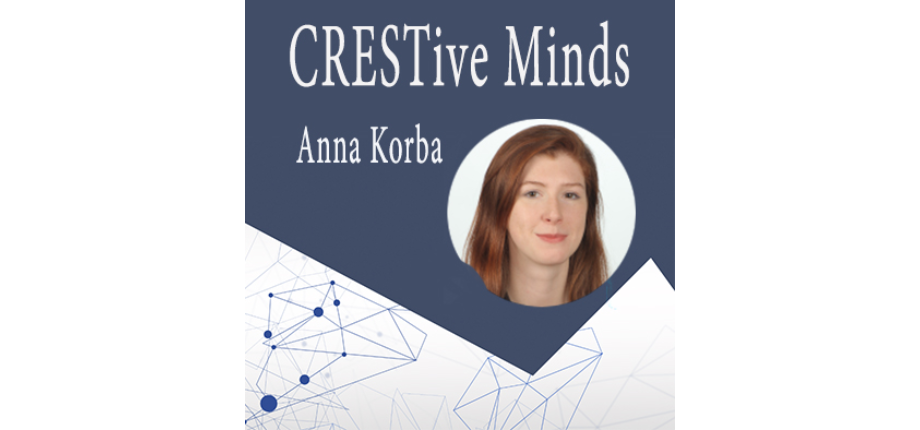
Anna Korba is an Assistant Professor at École Polytechnique, specifically affiliated with ENSAE/CREST in the Statistics Department since September 2020. She is also a co-administrator of the Master Data Science program at École Polytechnique. Her academic journey has positioned her as a leading researcher in machine learning, with particular expertise in kernel methods, optimal transport, and statistical optimization. Dr. Korba received her PhD from Telecom ParisTech in 2018 under the supervision of Prof. Stephan Clémençon. Prior to her current position, she was a postdoctoral researcher at University College London's Gatsby Computational Neuroscience Unit working with Arthur Gretton from December 2018 to August 2020. Her academic foundation includes a Master's degree in Machine Learning and Computer Vision (MVA) from ENS Cachan and ENSAE in 2015. Anna Korba's research primarily focuses on machine learning with emphasis on kernel methods, optimal transport, optimization, particle systems, and preference learning. Her work bridges theoretical statistics with practical machine learning applications, particularly in developing novel sampling and optimization methods. She has made significant contributions to understanding Wasserstein gradient flows, density ratio estimation, and variational inference techniques. Her publication record demonstrates a strong trajectory in top-tier machine learning conferences including ICML, NeurIPS, AISTATS, and ICLR. Her research shows a clear evolution from foundational work on ranking and preference learning during her PhD to more recent contributions in Wasserstein-based optimization, sampling methods, and deep probabilistic modeling. The interdisciplinary nature of her work connects statistics, optimization theory, and practical machine learning applications. Top 10% Oral Presentation at AISTATS 2022 Top 15% Long Oral Presentation at ICML 2021 She actively mentors PhD students and postdoctoral researchers, currently advising seven PhD candidates and having successfully guided several alumni to prestigious positions. Dr. Korba also contributes to the academic community through her role in administering the Master Data Science program and collaborating with researchers across institutions worldwide. As part of the CREST research center, Dr. Korba works within a vibrant team of researchers focused on statistics, machine learning, and their applications to economic and social sciences. Her research group includes current PhD students and postdocs working on various aspects of her research interests, creating a dynamic environment for advancing the field of statistical machine learning.
Yohan PETETIN is an Associate Professor at Telecom SudParis (Institut polytechnique de Paris) in the CITI Department. His research focuses on Bayesian filtering, Monte Carlo methods, hidden Markov models, and multi-object tracking. He has authored over 20 peer-reviewed articles since 2011, with notable contributions in IEEE Transactions on Signal Processing and other top venues. His work bridges statistical signal processing with machine learning applications. PhD: Algorithmes de restauration bayésienne mono- et multi-objets dans des modèles Markoviens (2013, Telecom SudParis) HDR: Generative models for time series data (2023, Institut polytechnique de Paris) Research interests emphasize sequential Monte Carlo algorithms, particle filtering optimizations, and deep learning integration for time-series analysis. Recent work explores expressivity comparisons between recurrent neural networks and hidden Markov models. Teaching includes courses on probabilistic graphical models, Bayesian filtering, and deep learning across undergraduate and graduate programs at Telecom SudParis and affiliated institutions.
Samir Ouchani is a Research Director at the CESI LINEACT laboratory (Aix-en-Provence, France), affiliated with the CESI Engineering School. He holds a PhD in Computer Science from Concordia University (2013) and an HDR (Accreditation to Supervise Research) from CNAM Paris (2022). His research focuses on securing cyber-physical systems (CPS) through formal methods, blockchain, and AI-driven approaches. Key roles include leading projects on resilient CPS architectures, IoT security, and federated learning in industrial contexts. Education: 2022: HDR in Security and Reliability of Smart CPS (CNAM Paris) 2013: PhD in Computer Science (Concordia University, Montreal) 2006: Master in Computer Science (Lorraine University, France) 1997: Engineering Degree in Computer Science (Djillali Liabess University, Algeria) Research Interests: His work emphasizes secure CPS design, including cryptographic protocols for IoT, formal verification frameworks, and AI applications for intrusion detection. He explores blockchain for smart cities, federated learning in distributed systems, and resilience engineering for autonomous vehicles. Recent projects include developing PUF-based authentication protocols and digital twin architectures for resource-constrained systems. Advising & Collaborations: Supervised PhD theses on IoT security (Fahem Zerrouki), smart city formal verification (Walid Miloud Dahmane), and federated learning in industrial CPS (Souhila Bedra Guendouzi). Collaborates with institutions like Blida University (Algeria) and HESAM University. Active in conferences such as CRISIS, ICFNDS, and IEEE WETICE. Labs & Teams: Leads the Engineering and Numerical Tools research team at CESI LINEACT, focusing on model-based design, CPS simulation, and cybersecurity tool development. Engaged in EU-funded projects on Industry 4.0 and smart infrastructure security.
Slim Essid is a Full Professor at Télécom Paris, leading the Audio Data Analysis and Signal Processing (ADASP) group. He holds a Doctorat (Ph.D.) and Habilitation from Université Pierre et Marie Curie (UPMC). With 15+ years of research experience, he has advised 15 PhD graduates and currently co-advises 10 others. His work focuses on machine learning, signal processing, and multimodal systems, publishing over 150 peer-reviewed papers. He serves as a reviewer for top journals/conferences (e.g., IEEE Transactions) and research funding agencies. Education: State Engineering Degree, École Nationale d’Ingénieurs de Tunis (2001) M.Sc. (D.E.A.) in Digital Communication Systems, École Nationale Supérieure des Télécommunications, Paris (2002) Ph.D., Université Pierre et Marie Curie (2005) Habilitation (HDR), UPMC (2015) Research Interests: Multimodal learning, self-supervised representations, audio-visual segmentation, music structure analysis, domain generalization, and speech enhancement. Recent publications highlight innovations like TACO (training-free sound-prompted segmentation) and CLOUDS (domain-generalized semantic segmentation framework using foundation models). His work bridges audio processing with vision and language models, emphasizing unsupervised/zero-shot approaches. Key achievements include state-of-the-art methods in sound event detection, speaker diarization, and music segmentation. He collaborates with 14 post-docs and leads projects funded by French/EU agencies.
Aws Albarghouthi is affiliated with the University of Wisconsin-Madison, USA. He is an active researcher with significant contributions to program synthesis, formal verification, and machine learning. Key roles: Author, Session Chair, Committee Member in conferences like PLDI, POPL, VMCAI, SPLASH, and ICFP. Research spans quantum computing, differential privacy, and static analysis. Research Trends include: Quantum Circuit Compilation and Optimization Probabilistic Verification of Fairness and Privacy Synthesis of Datalog and MapReduce Programs Neural-Augmented Static Analysis Bias Detection in Data Security Robustness in Machine Learning
Mathieu Fontaine is an Associate Professor in Machine Listening at Télécom Paris , affiliated with the LTCI Lab within the IDS Department (Information, Data, Signal). His research focuses on machine listening for speech and audio signal processing. PhD in Informatics (2019), Lorraine University Master in Applied and Fundamental Mathematics (2015), Poitiers University BSc in Fundamental Mathematics (2013), Rennes University Fontaine's research spans speech enhancement , speaker separation , source localization , and music source separation using heavy-tailed probabilistic models and deep Bayesian networks , with applications in augmented reality . He has expertise in Python , signal processing , and machine learning (80% proficiency). His recent publications (2024) include work on diffusion models for speech synthesis , room acoustics estimation from 3D meshes , robust audio scene analysis , and direction-aware speech processing . Earlier publications (2022-2023) explore flow-based NMF , alpha-stable representations , and adaptive beamforming in multiparty environments. Fontaine collaborates with the S2A team and ADASP group at LTCI Lab. His work integrates probabilistic modeling with deep learning to address challenges in real-world audio processing, including reverberation, noise, and complex acoustic environments.
Anis Matoussi is a Professor of Applied Mathematics at Le Mans University and serves as the Director of the Institut du Risque et de l'Assurance du Mans. He coordinates the master's program in Actuarial Science and leads multiple research initiatives, including ANR DREAMeS (2021-2025) and ITCA (Groupama, Fondation du Risque). Role: Professor, Applied Mathematics Institution: Le Mans University Research Leadership: Director of Institut du Risque et de l'Assurance, Head of Master Actuarial Science His research focuses on stochastic control, backward stochastic differential equations (BSDEs), and their applications in finance, insurance, and energy systems. He has developed numerical methods for second-order BSDEs and studied stochastic nonlinear PDEs, maximum principles for SPDEs, and extended mean field control models. Recent projects include the application of deep learning to forward utilities via ergodic BSDEs and multivariate risk measures. Matoussi has supervised numerous PhD students, including current advisees Zakaria Bensa (industrial thesis with Natixis) and Lucas Da Silva (co-supervised with Caroline Hillairet). Former students like Achraf Tamtalini (Bank of America) and Jing Zhang (Fudan University) hold prominent positions globally. His work includes collaborations on smart grids, control of electrical systems, and robust utility maximization under uncertainty. Publications span journals in applied mathematics, optimization, probability, and financial mathematics, with recent emphasis on numerical schemes and probabilistic representations.
Anna Korba is an Assistant Professor at CREST-ENSAE Paris within the Statistics Department. She holds an ENSAE Engineering degree in Data Science and a Master's in Mathematics, Vision & Learning (MVA) from ENSAE Paris. Her career includes a Ph.D. in Machine Learning at Télécom ParisTech, followed by a postdoctoral position at UCL's Gatsby Unit. Her research focuses on sampling techniques, Bayesian inference, optimal transport, and generative modeling, with recent work on constrained sampling and fairness integration. She contributes to collaborative efforts at the intersection of machine learning, dynamical systems, and PDEs. Notably, she co-presented tutorials on Wasserstein gradient flows at ICML 2022. Her work addresses unsolved challenges in sampling efficiency and fairness constraints. She is actively involved in CREST research initiatives and academic mentorship.