Simon Lacoste-Julien is an Associate Professor at Université de Montréal, affiliated with the Department of Computer Science and Operations Research (DIRO). He also serves as the Associate Scientific Director of Mila – Quebec Institute of Artificial Intelligence and holds the position of Vice President Lab Director at Samsung SAIT AI Lab Montreal (SAIL). His research focuses on machine learning, optimization, and their applications in areas like deep learning, generative models, causality, and computer vision. Lacoste-Julien has held academic positions at INRIA in Paris and has a PhD from UC Berkeley, with postdoctoral work at the University of Cambridge. He teaches advanced graduate courses on probabilistic graphical models and structured prediction. His work includes contributions to optimization algorithms (e.g., Frank-Wolfe methods), causal discovery, and generative models. Lacoste-Julien has supervised numerous students and postdocs, and his awards include being a CIFAR Fellow and Canada CIFAR AI Chair. His research spans theoretical foundations and practical applications, with a strong emphasis on scalable and efficient machine learning techniques.
Pierre-Alexandre Mattei is a research scientist at Inria, affiliated with the Maasai team in Sophia Antipolis and the J.A. Dieudonné Laboratory at Université Côte d'Azur. He holds a chair at the 3IA Côte d'Azur institute and has a strong academic background in applied mathematics, having earned his Ph.D. from Université Paris Descartes (now Université Paris Cité) under Charles Bouveyron and Pierre Latouche, followed by a postdoc at the IT University of Copenhagen with Jes Frellsen. Ph.D. in Applied Mathematics, Université Paris Descartes (2017) Postdoctoral Researcher, IT University of Copenhagen His research lies at the intersection of statistical machine learning, generative modeling, and uncertainty quantification, with a focus on hidden variables, missing data, and model interpretability. He has co-organized major workshops such as Artemiss, GenU, SophI.A Summit, and Statlearn, and teaches at the Generative Modeling Summer School (GeMSS). His recent work spans energy-based models, clustering, semi-supervised learning, and medical AI applications. The 15 most recent publications reflect a consistent trend in developing statistically principled methods for generative modeling, with emphasis on likelihood-based inference, missing data, and information-theoretic approaches to clustering and representation learning. His work frequently appears in top venues like NeurIPS, ICML, ICLR, and AISTATS, as well as in journals such as Statistics and Computing and JACC: Advances. Co-organizer, Generative Modeling Summer School (GeMSS) Co-organizer, Workshop on Generative Models and Uncertainty Quantification (GenU) Co-organizer, SophI.A Summit Co-organizer, Statlearn Mattei has advised several PhD students and postdocs, including Raphaël Razafindralambo, Hugo Senetaire, Louis Ohl, Federico Bergamin, and Hugo Schmutz, many of whom have gone on to research positions in Copenhagen, Grenoble, Linköping, and Marseille. He collaborates extensively with researchers across France and Denmark, particularly with Jes Frellsen, Frédéric Precioso, and Charles Bouveyron. He is actively involved in the development of open-source tools and libraries such as the GemClus Python library for discriminative clustering. He is a key member of the Maasai team at Inria Sophia Antipolis, which focuses on models and algorithms for artificial intelligence, and contributes to the broader 3IA Côte d'Azur initiative aimed at advancing AI research through interdisciplinary collaboration.
Ichiro Hasuo is a Professor at the National Institute of Informatics (NII) in Tokyo, Japan, where he serves as Director of the Research Center for Mathematical Trust in Software and Systems. He holds a joint appointment at The Graduate University for Advanced Studies (SOKENDAI). Since 2016, he has been the Research Director of the JST ERATO Metamathematics for Systems Design Project, and founded Imiron Co., Ltd. in 2024. Education: PhD in Computer Science (cum laude) from Radboud University Nijmegen (2008) MSc in Mathematical and Computing Sciences from Tokyo Institute of Technology (2004) BSc in Mathematics from University of Tokyo (2002) His research focuses on foundational aspects of software science, particularly formal verification techniques using mathematical structures from category theory and coalgebra. He develops methods for ensuring reliability in cyber-physical systems and systems incorporating machine learning components. Current work emphasizes logical frameworks for autonomous vehicle safety and mathematical trust in complex systems. Hasuo's publications demonstrate consistent focus on theoretical foundations with practical applications. His recent work spans coalgebraic verification methods, temporal logic for hybrid systems, quantum programming semantics, and applications to autonomous driving systems. Key themes include compositional reasoning, probabilistic modeling, and the integration of discrete and continuous system verification. Awards and Honors: Best Paper Award at ICTAC 2024 Minister of Education, Culture, Sports, Science and Technology Commendation (2024) Distinguished Paper Award at CAV 2023 Outstanding Reviewer Award at EMSOFT 2022 Best Paper Award at ICECCS 2018 Best Paper Award at CONCUR 2014 Hiroshi Fujiwara Encouragement Prize (2012) PhD cum laude (2008) He leads multiple major research grants including: JST ASPIRE (2024-2029) for international collaboration on software trust JST START (2022-2025) for autonomous driving verification JST ERATO Metamathematics for Systems Design (2016-2025) Several JSPS KAKENHI grants As head of the MMM laboratory (Hasuo-Lab) at NII, he supervises PhD students and postdoctoral researchers in formal methods and mathematical systems design.
Mathieu Gaborit is an Associate Professor at Le Mans Université , affiliated with the Institute of Acoustics . His work focuses on advanced modeling techniques for acoustics, particularly in Materials Acoustics and Mechanics of Porous Materials . Acoustic characterization of anisotropic materials Development of hybrid numerical methods (FEM-DG) Integration of reinforcement learning in acoustic simulations Wave propagation in complex media Recent publications explore experimental characterization of equivalent fluids, optimization of finite element models using AI, and reinforcement learning for numerical method parameters. His research bridges computational mechanics with machine learning, emphasizing acoustic metamaterials and thin layer modeling. The work also includes studies on 3D-printed porous structures and uncertainty quantification in acoustic screens. He is active in the Acoustics and Mechanics of Porous Materials research team, contributing to projects on additive manufacturing and wave propagation. His collaborations span institutions like Kungliga Tekniska Högskolan (Sweden) and CNRS.
Yanlei Diao is a Professor of Computer Science at École Polytechnique (France) with a joint appointment at the University of Massachusetts Amherst. She received her PhD from UC Berkeley in 2005. Her research focuses on scalable data systems, particularly in big data analytics, cloud computing optimization, and real-time stream processing. Research Interests: Her work spans cloud infrastructure optimization (UDAO project), explainable anomaly detection in data streams (EXAD), interactive data exploration (AIDEme), genomic data analysis (GESALL), and uncertain data management (CLARO). She leads the CEDAR team at Inria/LIX focusing on cloud-scale data exploration. Awards & Honors: ERC Consolidator Grant (2017-2023) CRA-W Borg Early Career Award (2013) NSF CAREER Award (2008) Keynote speaker at ACM DEBS 2021 and SWIFT 2023 AI Forum Best Paper Award at SIGMOD 2011 ACM SIGMOD Dissertation Honorable Mention (2005) Advising & Leadership: Mentored over 20 PhD students and postdocs, currently supervising 7 researchers. Served as PVLDB PC Co-Chair (2025-2026) and ACM SIGMOD Editor-in-Chief (2014-2019). Leads multiple projects with industry partners including Alibaba Cloud.
Professor Mahdi Mahfouf holds a Chair in the School of Electrical and Electronic Engineering at the University of Sheffield. He has held academic roles since 1997, progressing from Lecturer to Professor in 2005. His research focuses on Fuzzy Logic, Control Systems, and their applications in biomedical and industrial contexts. Mahfouf leads the Intelligent Systems Research Laboratory and has contributed over 370 publications, including influential work on fuzzy modeling and predictive control. Education: Ing.Dipl. (Hons) in Control Systems MPhil in Control Systems (University of Sheffield, 1988) PhD in Control Systems (University of Sheffield, 1991) Research Interests: Fuzzy Logic applications, Artificial Intelligence, Neural Networks, Model-Based Predictive Control, Biomedical Engineering (e.g., ICU Decision Support Systems), and Manufacturing Systems (e.g., granulation processes, surface metrology). Key Achievements: Recipient of the IEE Hartree Premium Award (1992) and MEDIPEX Innovation Award. His work integrates fuzzy logic into real-time systems for aviation, healthcare, and robotics. Grants & Labs: Leads the Intelligent Systems Research Lab. Active in collaborative projects with industry (e.g., pharmaceuticals, aerospace). His research bridges theory and practice, emphasizing data-driven solutions for complex systems.
Sylvain Arlot is a Professor at the Mathematics Department of Université Paris-Saclay, affiliated with the Probability and Statistics team at Laboratoire de Mathématiques d'Orsay. He leads the Celeste INRIA Saclay project-team and is a junior member of the Institut Universitaire de France (IUF) since 2020. His research focuses on statistical learning theory, non-parametric methods, model selection, and change-point detection. Arlot has contributed to foundational work on cross-validation, penalization techniques, and random forests. He co-organizes the Séminaire Palaisien and serves as an associate editor for the Annales de l'Institut Henri Poincaré B. Education: PhD in Mathematics from Université Paris-Sud (2007), HDR (Habilitation) from Université Paris Diderot (2014). Research Interests: Core areas include statistical learning theory, resampling methods (e.g., cross-validation and bootstrap), and applications in high-dimensional data analysis. His work bridges theoretical guarantees with practical algorithm design, emphasizing data-driven model selection and robust estimation techniques. Grants & Projects: Leads the PEPR IA Project Causali-t-AI (2023–2028) and was a member of the ANR Fast-Big project (2018–2023). He coordinates the math-AI program under Labex Mathématique Hadamard. Awards: Junior IUF membership (2020–2025). Labs/Teams: Heads the Celeste team at INRIA Saclay, collaborating on statistical machine learning and data science challenges.
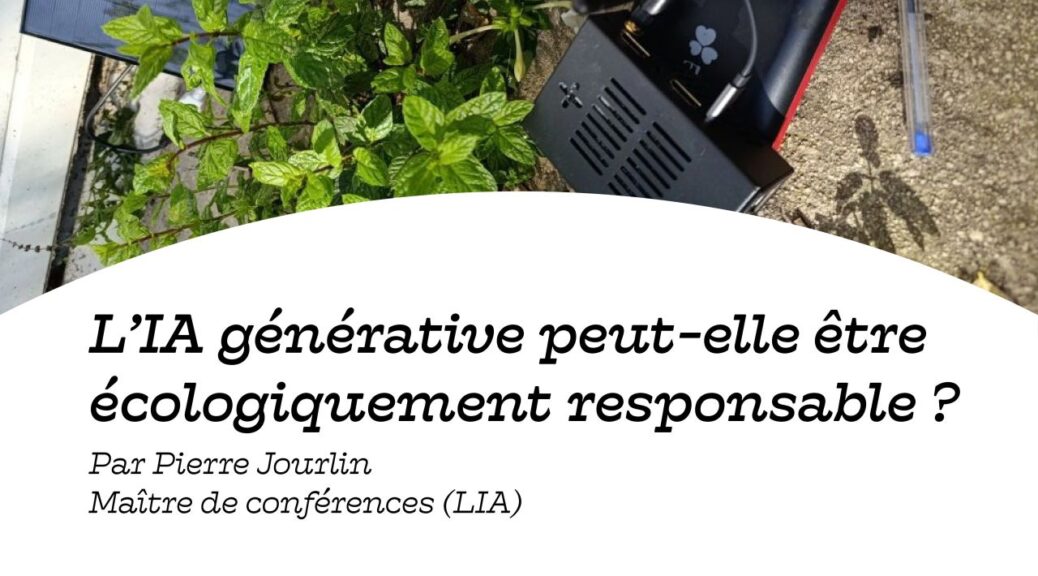
Pierre Jourlin is a Professor at Avignon University, specializing in Computer Science and Artificial Intelligence. He actively contributes to academic events such as workshops on programming education and AI ethics. His research focuses on areas like natural language processing, machine learning, and the societal impact of AI. Jourlin has organized events like a programming workshop for high school students (2022) and authored numerous articles on topics ranging from rule-based event extraction to generative AI in creative writing. His academic contributions include work on semantic disambiguation, medical literature tools (SIMI), and foundational studies in speech recognition and multimedia retrieval. He critiques AI limitations, emphasizing the importance of human oversight in code generation and advocating for accessible education to counteract underfunding in public schools. Jourlin's recent publications (2024–2025) address AI's role in creative fields and the evolution of programming languages. His work often bridges technical innovation with ethical considerations, as seen in his analysis of code-producing AI tools like Copilot. He remains an active member of the academic community, blending research with pedagogical outreach.
Ken Satoh is a full Professor at the National Institute of Informatics (NII) and Sokendai (The Graduate University of Advanced Studies), Japan. He leads the Center for Juris-Informatics within the Joint Support-Center for Data Science Research (ROIS-DS). Previously, he worked at Fujitsu (1981-1995) and was an Associate Professor at Hokkaido University until 2001. He holds a law degree from the University of Tokyo (2006-2009) and passed the Japanese bar exam in 2017. Roles: Director of Center for Juris-Informatics, Principal Investigator in multiple AI/Law projects Research Focus: Juris-informatics (merging informatics and law), logical foundations of AI, legal debugging, and compliance mechanisms for AI systems His work bridges AI and legal systems, including developing the PROLEG framework for legal reasoning and organizing international workshops like JURISIN. Key contributions include applying logical inference to detect legal conflicts in algorithmic governance systems and advancing AI ethics through compliance checks with regulations like GDPR. He has authored over 130 publications, including works on legal norm reasoning, multi-agent systems, and formal methods in law. His research group collaborates globally, hosting competitions like COLIEE to advance legal AI technologies.
Padakandla Arun is a Professor in the Communication Systems department at EURECOM. His research focuses on quantum information theory, network communication, and coding theory, with recent work on multi-terminal quantum channels and machine learning applications in quantum measurement systems. Affiliation: EURECOM - Communication Systems Academic Rank: Professor Research Interests Prof. Padakandla investigates quantum communication protocols, classical-quantum hybrid systems, and structured code design for multi-user channels. His work bridges information theory with quantum mechanics, emphasizing achievable rate regions and measurement simulation techniques. Scientific Contributions Key trends in his publications include: Quantum MAC and interference channel analysis PAC learning frameworks for POVM hypothesis classes Algebraic structures in network information theory Contact Email: Arun.Padakandla@eurecom.fr
Slim Essid is a Full Professor at Télécom Paris and coordinator of the Audio Data Analysis and Signal Processing (ADASP) group. He holds a PhD and HDR from Université Pierre et Marie Curie (UPMC). His research focuses on machine learning, artificial intelligence, and signal processing applied to temporal data analysis, including multiview learning, representation learning, and structured prediction. Applications span music content analysis (MIR), multimodal perception (e.g., EEG data analysis), and human behavior analysis. He has advised 15 PhD students and collaborated on over 14 post-doctoral projects. Education: PhD in Signal Processing, Université Pierre et Marie Curie (2005) Habilitation (HDR), Université Pierre et Marie Curie (2015) M.Sc. in Digital Communication Systems, Télécom ParisTech (2002) Engineer Degree, École Nationale d’Ingénieurs de Tunis (2001) Research interests emphasize multimodal learning, self-supervised representation learning, and audio-visual fusion. Key projects include sound-prompted segmentation, zero-shot audio captioning, and EEG-based auditory attention decoding. Over 150 peer-reviewed publications exist across conferences like NeurIPS, ICML, and journals like IEEE Transactions. Active in reviewing for top-tier venues and advising French/EU research projects. Labs/Teams: Member of the Signal, Statistics and Learning (S2A) research team and the Information Processing and Communication Laboratory (LTCI).
Fabien Moutarde is a Full Professor and Director of the Center for Robotics at MINES ParisTech (PSL University, Paris, France). He holds a PhD in Physics and an Habilitation to Direct Research in Engineering Sciences. Dr. Moutarde coordinates French engineering education at ParisTech_Shanghai (SPEIT) in China. Research Areas Deep Learning & Reinforcement Learning Computer Vision for Intelligent Vehicles Collaborative Robotics Traffic Analysis & Forecasting Human Gesture Recognition Recent Article Trends His work focuses on autonomous driving using Deep Reinforcement Learning, pedestrian trajectory prediction with spatio-temporal attention, and multi-modal localization techniques combining vision with Wi-Fi. Key applications include urban traffic analysis, collaborative robotics, and end-to-end driving systems. Leadership & Teaching Co-created specialized Machine Learning courses Pioneered Deep Reinforcement Learning lectures Led French-Chinese academic coordination Former UML/Java curriculum developer Publications With 28 h-index, his research includes 30+ IEEE/ACM publications on autonomous vehicles, gesture recognition, and traffic mining. Representative conferences: CVPR, NeurIPS, IROS, ITSC.
Alain Cournier is a University Professor at the University of Picardy Jules Verne (UPJV), France, affiliated with the ALCO research unit (UR 4290) focusing on Algorithmic and Complexity. His office is located in room 401 with contact phone 5913. He maintains an active research profile with continuous publications from 1992 through 2024, primarily in distributed computing and theoretical computer science. Professor Cournier's research centers on fault-tolerant distributed algorithms, specializing in self-stabilizing systems for networked environments. His core contributions span leader election protocols, synchronous unison mechanisms, and message forwarding algorithms in directed and undirected topologies. He pioneered work in snap-stabilization and polynomial-time convergence guarantees, with recent focus on directed network challenges. Earlier career phases included modular graph decomposition algorithms (1990s), while 2018-2019 saw exploration of autoencoder neural networks for anomaly detection in connected buildings. Analysis of his 15 most recent publications reveals strong continuity in distributed algorithms research (12/15 papers), with 2023-2024 works exclusively addressing self-stabilization in directed networks using innovative metaphors like Roman infrastructure. The 2018-2019 neural network studies represent a brief interdisciplinary expansion before returning to core theoretical work. His publications consistently appear in premier venues including PODC, ICDCN, and Theoretical Computer Science, often collaborating with Altisen, Defalque, and Devismes. He operates within the ALCO research unit (UR 4290) at UPJV, which serves as the institutional home for his algorithmic complexity research. This unit facilitates collaboration across the French distributed computing community, evidenced by regular AlgoTel conference participation. While specific lab structures aren't documented, his publication patterns indicate sustained theoretical work with periodic applied explorations in cybersecurity contexts.
Ningning Xie is a researcher affiliated with the University of Toronto, specializing in functional programming, type systems, and logics. Their work spans applications in compilers, code generation, and machine learning, with a focus on compositional programming and effect handling. Research interests include: Functional programming Type systems Logics Compiler design Multi-stage programming Effect handlers Recent publications demonstrate expertise in type-level programming, staged compilation, and effect systems. Key areas include distributive disjoint polymorphism, parallel algebraic effect handlers, and macro systems for OCaml and Haskell. Their work bridges theoretical formalisms with practical language implementations. Contributions to academic service include organizing and reviewing for conferences like POPL, PLDI, ICFP, and Haskell workshops. Notable roles include Publicity Chair for POPL 2026 and Co-chair for PLMW and Artifact Evaluation committees.
Dr. Aneesh Subramanian is an Assistant Professor in the Department of Atmospheric and Oceanic Sciences (ATOC) at the University of Colorado Boulder. He also holds visiting positions at the Center for Western Weather and Water Extremes at Scripps Institution of Oceanography, UC San Diego, and as a visiting scholar in the Predictability of Weather and Climate group at the University of Oxford. Additionally, he serves as an international collaborator with the Geophysical Flows Lab at the Indian Institute of Technology Madras. His educational background includes: Ph.D. in Climate Research from Scripps Institution of Oceanography, UC San Diego (2012) M.Sc. (Engineering) from Indian Institute of Science (2006) B.Tech from Indian Institute of Technology (IIT) Madras (2004) Dr. Subramanian's research focuses on weather and climate predictability, with particular emphasis on subseasonal-to-seasonal forecasting. His work spans tropical climate dynamics, atmospheric river prediction, data assimilation techniques, and the application of machine learning to improve earth system models. He investigates coupled ocean-atmosphere processes, particularly related to the Madden-Julian Oscillation and its teleconnections, and develops stochastic parameterization schemes for climate models. Dr. Subramanian's recent publications demonstrate a strong focus on advancing subseasonal-to-seasonal prediction capabilities, particularly for extreme weather events like atmospheric rivers and marine heatwaves. His work increasingly integrates machine learning techniques with traditional physics-based approaches, reflecting a growing trend in the field toward hybrid modeling frameworks. Much of his recent research examines regional climate phenomena in the Indian Ocean, Pacific, and Arabian Sea regions, with applications to monsoon prediction and understanding climate change impacts. Dr. Subramanian has received several notable awards and honors throughout his career: Best Team in visualization of weather forecasts Award, ECMWF Users Meeting (2017) Best Student Presentation Award, WCRP Open Science Conference (2011) Best Teaching Assistant Award, Scripps Institution of Oceanography (2011) SUNNY Scripps-NCAR Graduate Student Fellowship (2009-2011) NCAR ASP Summer Fellowship (2008, 2012) Dr. Subramanian has secured multiple research grants totaling over $3 million from agencies including NOAA, ONR, NASA, and KAUST. Current projects focus on improving understanding of air-sea interaction processes, marine ecosystem drivers in the California Current System, monsoon intra-seasonal oscillations, and marine heatwaves. He actively mentors undergraduate research assistants, graduate students, and postdoctoral scholars through his Climate Processes and Predictability Group at CU Boulder. Dr. Subramanian leads the Climate Processes and Predictability Group at CU Boulder, which focuses on subseasonal predictability, data assimilation, Atmospheric River dynamics, and tropical-extratropical teleconnections. He is also an active participant in several collaborative research initiatives including the Geophysical Flows Lab at IIT Madras and the Center for Western Weather and Water Extremes at Scripps Institution of Oceanography. His work frequently involves international collaborations with researchers from institutions in the UK, Saudi Arabia, and India.