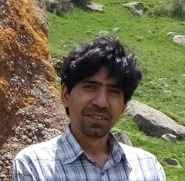
Arslan Masood is a Doctoral Researcher at the Department of Computer Science, School of Science, Aalto University. His research focuses on Probabilistic Machine Learning and its applications in Drug Discovery . University: Aalto University Department: Department of Computer Science Academic Rank: Researcher His work emphasizes data-efficient approaches using BERT-based models and Bayesian active learning , particularly for molecular property prediction and toxicity modeling. Recent publications explore imbalanced data handling in drug safety prediction and deep Bayesian optimization for experimental design.
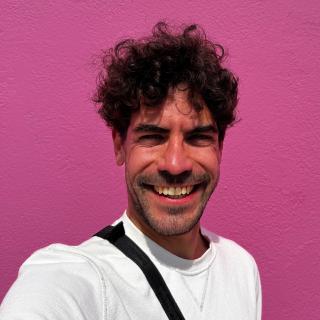
Rui Li is a Doctoral Researcher in the Department of Computer Science at Aalto University, Finland. Their research focuses on Bayesian deep learning, Gaussian processes, and robust machine learning methods. They collaborate closely with Professor Arno Solin and colleagues on problems involving uncertainty quantification, model generalization, and sensor fusion applications in robotics. Recent work highlights advancements in few-shot classification generalization, scalable Bayesian deep learning predictions, and hyperparameter optimization for Gaussian process models. Publications span conferences like WACV, ICLR, ICML, and ICCVW, addressing theoretical and applied challenges in machine learning and computer vision. Rui Li contributes to interdisciplinary research groups tackling problems in semantic segmentation robustness and visual-inertial SLAM optimization. Their collaborative efforts include participation in the Robust Semantic Segmentation UNCV2023 Challenge with a multi-institutional team.
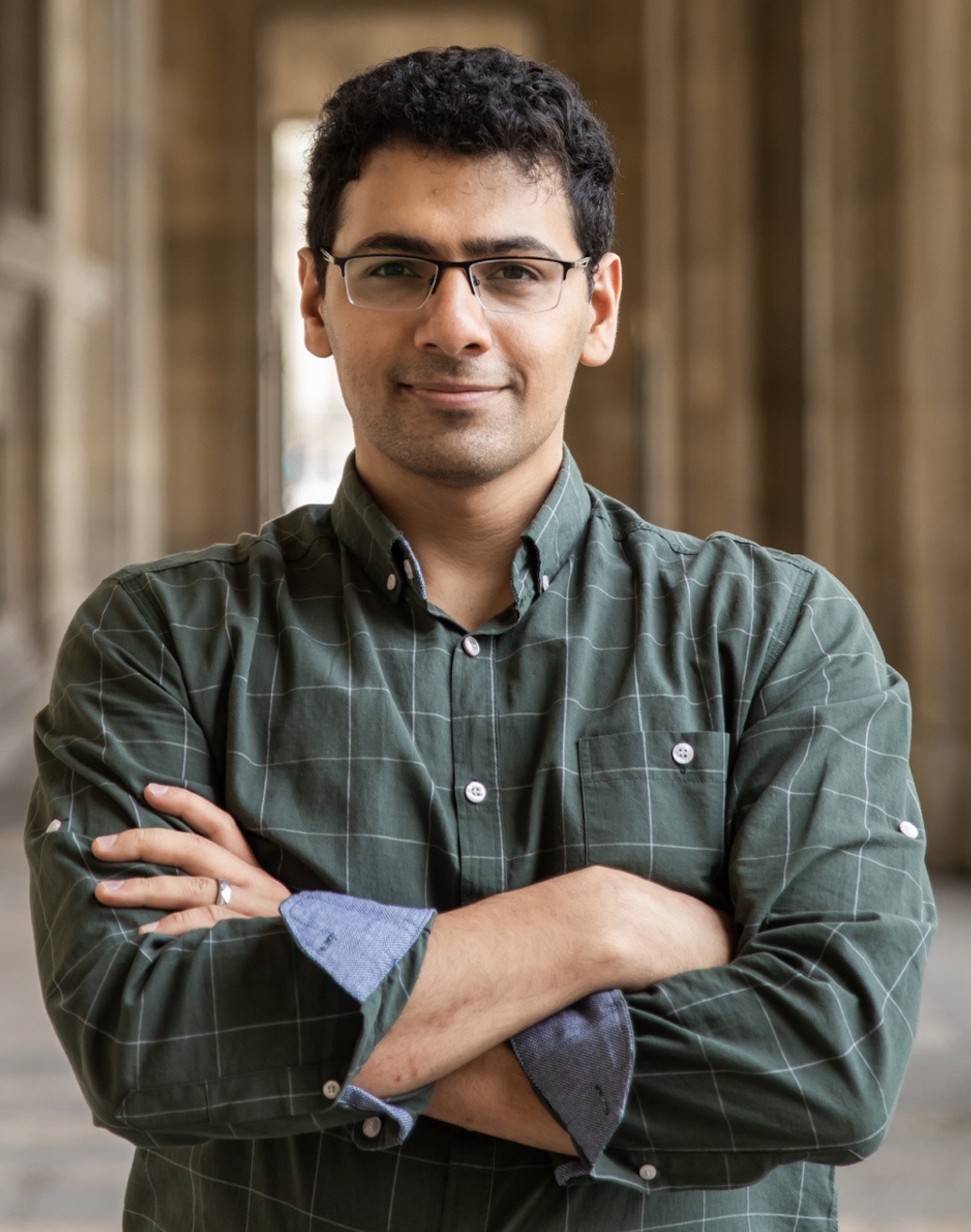
Mohsen Amidzade serves as a Postdoctoral Researcher in the Department of Computer Science at Aalto University, Finland, focusing on advanced optimization and machine learning techniques for next-generation wireless networks. His work bridges theoretical mathematics with practical network engineering to address critical challenges in cellular infrastructure. Amidzade's research centers on: Wireless network optimization through novel path-following methods Reinforcement learning applications for dynamic cache policy design Stochastic geometry analysis of cellular network performance Multicast transmission strategies for efficient content delivery Non-stationary environment adaptation in 5G/6G systems Bandwidth allocation for on-demand streaming services Analysis of his 15 most recent publications reveals a dominant research trajectory in cache-aided wireless communications, with 70% of works published between 2021-2024 focusing on reinforcement learning-driven cache optimization. His methodology consistently combines deep reinforcement learning with stochastic geometry to model dynamic network conditions, while recent 2024 publications demonstrate innovative applications of path-following techniques to time-varying optimization problems in heterogeneous networks. Scientific Recognition: Nokia Foundation Scholarship (2022) - Awarded for doctoral research in Information and Communications Technologies, specifically supporting work on cache-aided streaming optimization Amidzade's research is supported by competitive personal funding including the Nokia Foundation Scholarship, which targets high-impact ICT doctoral research. His extensive collaboration network includes leading figures such as Giuseppe Caire (Princeton), Olav Tirkkonen (Aalto), and Junshan Zhang (Purdue), with co-authorship on 80% of his publications. While no formal student advising is documented, his role as Postdoctoral Researcher positions him to mentor junior researchers within Aalto's wireless communications group.
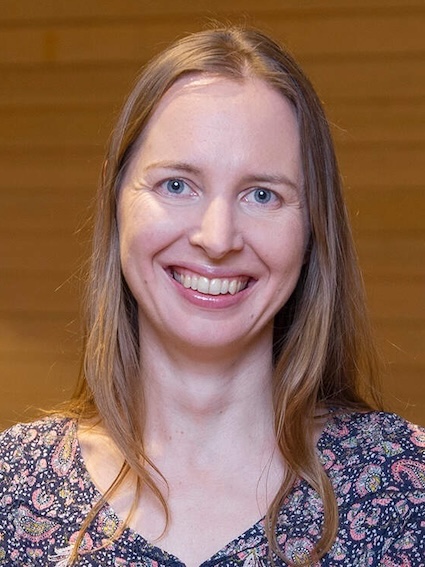
Marcel Wagenländer is a Researcher at Imperial College London , affiliated with the Large-Scale Data & Systems Group (LSDS) . His research focuses on Machine Learning Systems , particularly Distributed Machine Learning , Gaussian Processes , and AI Systems , supervised by Professor Peter Pietzuch and collaborating with Professor Mark van der Wilk. His recent publications span top venues like SOSP 2024, HotCloud 2020, and OSDI 2020, addressing challenges in resource management, distributed training, and probabilistic inference. He also contributes to improving benchmarking for Gaussian Process approximations. Marcel earned his Bachelor of Science and Master of Science in Informatics at the Technical University of Munich and is currently interning at Meta in the AI and Systems Co-Design team.
Sahel Iqbal is a Doctoral Researcher at the Department of Electrical Engineering and Automation , affiliated with the School of Electrical Engineering at Aalto University . His work bridges Machine Learning with Signal Processing and Partial Differential Equations , focusing on applications in froth flotation and dynamical systems . His research spans: Physics-informed machine learning for mineral processing optimization. Probabilistic modeling using particle filters in experimental design. Parallel-in-time solutions for nonlinear PDEs leveraging Gaussian processes. Publications highlight interdisciplinary trends in Machine Learning (2025), Computer Science (2024), and Mathematics (2024), with subtopics including neural networks , dynamical systems , and probabilistic modeling . He is part of the Sensor Informatics and Medical Technology group, contributing to cutting-edge methodologies in signal processing and automation.
Diego Parente Paiva Mesquita serves as a Visitor (Faculty) in the Department of Computer Science under Professor Samuel Kaski's research group. His work bridges theoretical and applied machine learning with emphasis on scalable probabilistic systems. His academic credentials include: Doctor of Technology in Computer Science (awarded December 16, 2021) Bachelor of Computer Science from the Brazilian Ministry of Education (awarded August 23, 2016) Mesquita's research focuses on advancing graph neural networks, Bayesian inference, and incomplete data handling. His fingerprint reveals strong contributions to probabilistic modeling (60% Approximates), random variable analysis (53%), and machine learning systems (50%), with particular innovation in neural network architectures (44%) for complex data structures. Recent publications (2022-2024) demonstrate a cohesive trajectory toward parallelizable machine learning frameworks. Key themes include temporal graph representation learning, embarrassingly parallel Monte Carlo methods, and thin/deep Gaussian process hybrids—addressing critical scalability bottlenecks in probabilistic AI while maintaining theoretical rigor.
Tomi Janhunen is a Professor in Computing Sciences at Tampere University, part of the Faculty of Information Technology and Communication Sciences. His expertise spans Artificial Intelligence, Logic Programming, and Theoretical Computer Science. He actively contributes to academic leadership roles, serving on boards of the Finnish Association of Computer Science and Finnish Artificial Intelligence Society. His research focuses on Answer Set Programming (ASP), probabilistic reasoning systems, explainable AI, and optimization techniques applied to cybersecurity and maintenance scheduling. Key grants include the XAILOG and AI-ROT projects funded by the Research Council of Finland. Notable achievements include three prestigious awards: Best Paper Awards at the European Conference on Logics in AI (2021) and International Conference on Logic Programming (2023), and the Harold Boley award for system description (2022). Dr. Janhunen’s work emphasizes practical applications of declarative programming paradigms. Recent projects include Plingo—a probabilistic ASP system—and cybersecurity compliance frameworks in DevSecOps environments. His contributions bridge theoretical advancements with real-world challenges in AI security and industrial optimization.
Anirudh Jain holds the role of Visitor (Faculty) in the Department of Computer Science at Aalto University, while also serving as a Doctoral Student in the School of Science and a Doctoral Researcher in the Probabilistic Machine Learning group under Professor Samuel Kaski’s professorship. His research focuses on Bayesian methods, generative models, and optimization techniques. Education: Master’s degree in Engineering and Technology from the Indian Institute of Technology (Indian School of Mines), Dhanbad (2019). Research Interests: Probabilistic Machine Learning, Bayesian Inference, Markov Chain Monte Carlo (MCMC), Generative Models, and Parameter Estimation. His work includes developing latent space models for multi-target property prediction and exploring variational inference alternatives to MCMC for parameter estimation. Collaborations: Active in projects like Veturi VL4Pharma (2023–2025), focusing on virtual laboratories for pharmaceutical R&D. Labs/Teams: Affiliated with the Probabilistic Machine Learning group and Professorship Kaski Samuel.
Wenyan Yang is a Researcher affiliated with Aalto University's School of Electrical Engineering, specializing in Computing and Electrical Engineering. They hold a Bachelor of Science (Technology) degree from Sichuan University, earned on 23 Jun 2016. Research Focus: Their work primarily addresses Reinforcement Learning and Imitation Learning , with notable contributions in Hierarchical Reinforcement Learning and Tactile Feedback-based Manipulation . They apply computational methods to robotics, control systems, and machine learning. Publication Trends: From 2018 to 2024, Wenyan Yang produced 11 research outputs spanning Computer Science , Robotics , and Engineering . Key topics include Hierarchical Reinforcement Learning , Tactile Feedback Systems , and Control Algorithm Optimization . Grants: Held a research grant during 07.11.2016 - 31.12.2016.
Florian Adriaens is a Postdoctoral Researcher in the Department of Computer Science at the University of Helsinki, specializing in data mining, graph algorithms, and theoretical computer science with significant contributions to algorithmic fairness and network analysis. His work bridges theoretical foundations and practical applications in complex graph structures. His core research interests include: Data Mining Graph Algorithms Network Analysis Algorithmic Fairness Theoretical Computer Science Adriaens has published 15 peer-reviewed articles from 2017-2025 in top venues including KDD and WWW, demonstrating evolving expertise from foundational graph problems (diameter minimization, signed graph clustering) to cutting-edge hypergraph optimization and fairness-aware diversification. Recent publications (2024-2025) show increased focus on cardinality-constrained hypergraph cuts, multilayer correlation clustering, and fair representative selection, reflecting growing complexity in his research trajectory. His collaborative work includes researchers like Gionis, Tatti, and Wang, indicating strong interdisciplinary connections within the data mining community. Contact: florian.adriaens@helsinki.fi | ORCID
Heikki Mannila is a Professor of Computer Science at Aalto University, with a focus on algorithms for data analysis, data mining, and machine learning. He previously held the title of Academy Professor (2004–2008) and served as Vice President for Research and Education at Aalto University (2009–2012) and President of the Academy of Finland (2012–2022). His research emphasizes the interplay between theoretical computer science and practical applications in fields like environmental science, linguistics, and paleontology. Education: Ph.D. in Computer Science, University of Helsinki, 1985 Research Interests: Algorithmic methods for data analysis and mining Machine learning applications across disciplines Interdisciplinary collaborations in paleontology, linguistics, and environmental science House of AI initiative for AI-driven multidisciplinary research Recent Work: Recent publications explore multilinear transforms, Hadamard decomposition problems, and applications in recommendation systems and environmental data analysis. His work bridges theoretical foundations and real-world problem-solving. Awards: Academy Professor of Finland (2004–2008) Grants & Labs: Initiator of the House of AI at Aalto University Past leadership roles in national research policy and funding Collaborations: Worked with institutions like TU Wien, Max Planck Institute, Microsoft Research, and Nokia Research, emphasizing cross-sectoral innovation.
Dr. Amir-Hossein Karimi is an Assistant Professor in the Department of Electrical and Computer Engineering and Cheriton School of Computer Science at the University of Waterloo, with a cross-appointment and Vector Institute affiliation. He leads the CHARM Lab, focusing on safe human-AI collaboration through causal inference, explainable AI, and neuro-symbolic systems. Prior to academia, he held research roles at DeepMind, Google Brain, and Meta, and industry positions at BlackBerry and Meta (Facebook). Education: Ph.D. in Computer Science, Max Planck Institute & ETH Zürich (2018-2023) M.Math in Computer Science, University of Waterloo (2016-2018) B.A.Sc. in Engineering Science, University of Toronto (2010-2015) Research Interests: The CHARM Lab develops AI systems that integrate metacognitive strategies and causal reasoning to enhance safety, reliability, and human alignment. Key areas include algorithmic recourse, causal explainability, and applications in healthcare, finance, and transportation. Collaborations span social sciences, cognitive science, and reinforcement learning. Recent Trends in Publications: His work emphasizes causal foundations of AI explanations, fairness in recourse mechanisms, and robust system design. Notable contributions include defining algorithmic recourse frameworks and influencing Canada’s automated decision-making policies. Awards: 2024 Igor Ivkovic Teaching Excellence Award 2021 Google PhD Fellowship 2024 ETH Zurich Medal Advising & Grants: Supervises PhD/Master’s/postdoctoral researchers across disciplines. Secured funding from NSERC, CIFAR, Google, and Waterloo.AI. Alumni placements include OpenAI, Microsoft, and Google. CHARM Lab Activities: Hosts interdisciplinary collaborations with experts in human-computer interaction, game theory, and behavioral economics. Develops open-source tools and benchmarks for reproducible research.
Kaie Kubjas is an Associate Professor at Aalto University in the Department of Mathematics and Systems Analysis, School of Science. Since 2024, she has held a tenured position, following a tenure-track role from 2017–2024. She earned her PhD in Mathematics at Freie Universität Berlin (2013) under Professors Christian Haase and Klaus Altmann, with postdoctoral research at institutions including the Max Planck Institute and MIT. Her research focuses on applied nonlinear algebra, algebraic statistics, and their applications in biology (e.g., phylogenetics and 3D genome reconstruction), as well as matrix/tensor decompositions. She has organized major events like the European Women in Mathematics General Meeting 2022 and the 2025 workshop on Algebraic Statistics and Multistate Models. Kubjas serves on editorial boards of journals like SIAM Journal on Applied Algebra and Geometry and Annales Fennici Mathematici . Recent work includes advances in log-concave maximum likelihood estimation, 3D genome reconstruction, and structured matrix decompositions. Her students, such as Olga Kuznetsova (Second Place MEGA 2021 Poster Award winner), have contributed to these areas. She regularly contributes to seminars like the Algebra and Discrete Mathematics at Aalto, fostering interdisciplinary collaboration.
Juha Kontinen is a Professor and Docent in the Department of Mathematics and Statistics at the University of Helsinki. He serves as a Supervisor for the Doctoral Programme in Mathematics and Statistics. His research focuses on mathematical logic, theoretical computer science, computational complexity, and formal methods. Key areas include dependence logic, team semantics, and their applications in areas like database theory and artificial intelligence. He has been actively involved in numerous research projects funded by organizations such as the Magnus Ehrnrooth Foundation and the Academy of Finland. His work spans foundational studies of computational complexity, formal logics for team semantics, and interdisciplinary applications. Recent projects include exploring discrete differential equations for circuit complexity and probabilistic team semantics with Boolean negation. Kontinen has authored/co-authored over 90 publications, including articles in prestigious journals and conference proceedings. His work bridges theoretical foundations with practical computational challenges, addressing topics like neural network training complexity and hyperproperties in temporal logics. He has also contributed to conference organization, peer review, and doctoral supervision, highlighting his role as a leader in the academic community.
Sandor Szedmak serves as a Research Fellow in the Department of Computer Science at Aalto University, Finland, and is affiliated with the Helsinki Institute for Information Technology (HIIT). He operates within Professor Juho Rousu's research group, focusing on interdisciplinary machine learning applications with strong ties to computational biology and bioinformatics. His institutional presence is active, as evidenced by current contact details and ongoing publication output. Dr. Szedmak's research specializes in developing advanced machine learning frameworks for complex biological and educational challenges. His primary interests include drug combination effect prediction, protein function annotation through multi-view learning, strain design optimization using reinforcement learning, and personalized educational systems for computer science students. He pioneers methods in latent tensor reconstruction, scalable variable selection, and kernel generalization, targeting high-dimensional data problems in pharmacology and computational biology. His publication trajectory from 2020-2025 reveals a concentrated effort in bioinformatics applications, with landmark papers in Nature Communications and Bioinformatics on drug combination prediction. The work consistently leverages tensor factorization and multi-view learning to model biological systems, while recent expansions include educational data mining for programming behavior analysis. This demonstrates both methodological consistency in machine learning innovation and strategic domain diversification. No scientific awards or fellowships are documented in the provided materials. While no student advisees or grant details are explicitly listed, Dr. Szedmak's collaborative publication pattern—particularly within the Rousu research group and HIIT—suggests active participation in team-based research initiatives. His work appears funded through institutional channels given the consistent output in computational biology. He operates within the Helsinki Institute for Information Technology (HIIT), a joint research institute of Aalto University and the University of Helsinki, and is embedded in Professor Juho Rousu's research group. This environment facilitates cross-disciplinary collaboration between computer science and life sciences, with infrastructure supporting high-performance computing for large-scale biological data analysis.