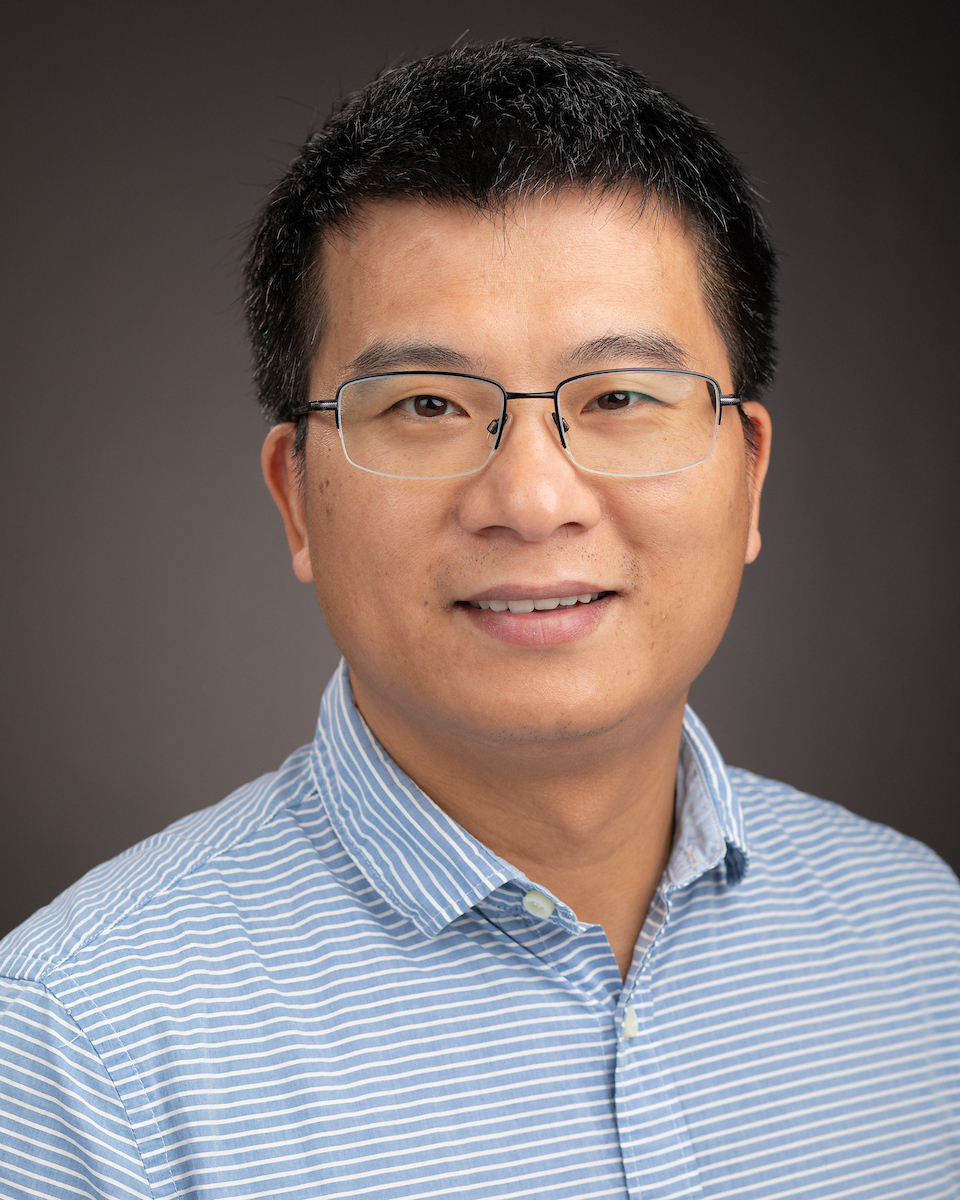
Yong Gao is a Professor of Computer Science, Data Science, and Mathematics at the University of British Columbia (UBC) Okanagan, affiliated with the Irving K. Barber Faculty of Science. He holds a PhD from the University of Alberta and leads research in algorithmic and computational problems in artificial intelligence, network science, and computational biology. His work emphasizes graph theory, probabilistic methods, and applications in social media and biological systems. Educational Background : PhD in Computer Science, University of Alberta Research Interests : Algorithmic foundations of AI and network science Graph-based methods for computational biology and social media analysis Probabilistic modeling of complex systems Awards & Grants : Recipient of multiple NSERC Discovery Grants (2006–2019) UBC Okanagan Startup Grant (2005–2008) Senior Member, Association for the Advancement of AI (AAAI) Professional Roles : Member, Centre for Optimization, Convex Analysis and Nonsmooth Analysis Graduate student supervisor Teaching : Courses in algorithm design, artificial intelligence, discrete mathematics, and network science.
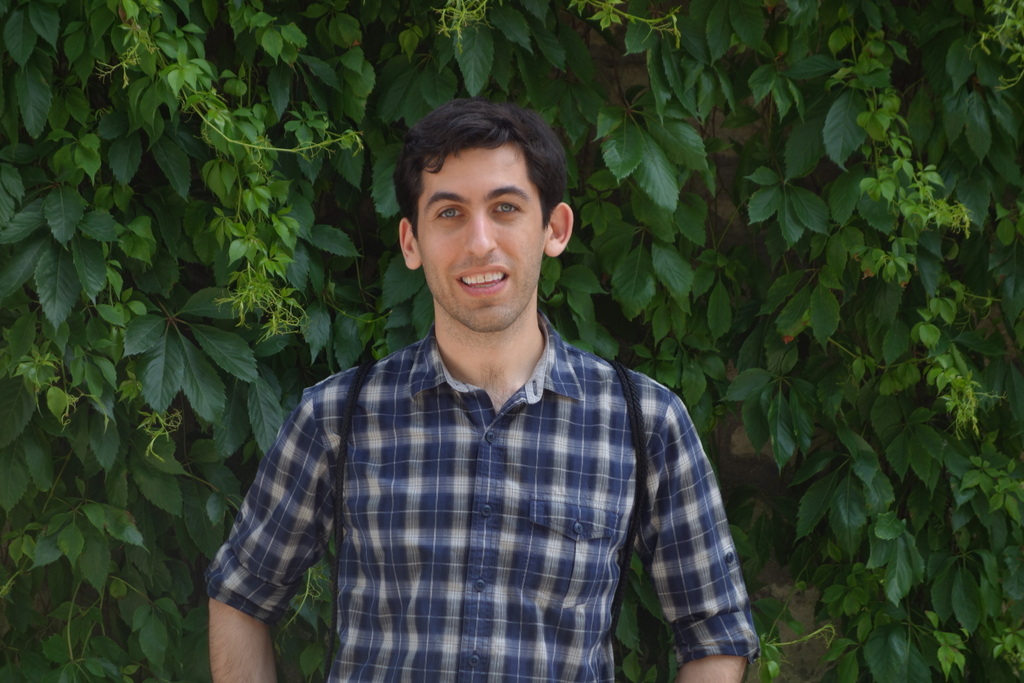
Jiarui Ding is an Assistant Professor in the Department of Computer Science at the University of British Columbia , within the Faculty of Science. His research focuses on the intersection of bioinformatics, computational biology, and machine learning, with an emphasis on single-cell genomics and probabilistic deep learning. Key interests include computational immunology, cancer biology, and the application of AI to biomedical problems like food allergy neuroscience. He is affiliated with the CAIDA: UBC ICICS Centre for Artificial Intelligence Decision-making and Action and the Data Science Institute , indicating strong interdisciplinary engagement. He actively recruits doctoral students for research projects in these areas, with desired start dates year-round. His work bridges computational methods with biological systems, exemplified by publications on single-cell data integration ( e.g. , CellUntangler), generative models for T-cell receptors, and mechanistic studies of immune responses in diseases like eosinophilic esophagitis. His research also addresses challenges in multiomics data analysis and the development of novel algorithms for genomic data interpretation. No awards or grants are explicitly listed in the provided materials, though his involvement in high-impact projects suggests potential external funding. He emphasizes collaboration, stating availability for interdisciplinary projects and undergraduate research mentorship.
Christian Gagné is a Full Professor in the Department of Electrical and Computer Engineering at Laval University and Director of the Institute for Intelligence and Data (IID). He holds a prestigious Canada CIFAR AI Chair and is an Associate Academic Member at Mila – Quebec Artificial Intelligence Institute. His research spans multiple interdisciplinary domains with significant contributions to machine learning and its applications. Dr. Gagné completed his doctorate in electrical engineering at Université Laval in 2005, followed by a postdoctoral fellowship at INRIA Saclay (France) and the University of Lausanne (Switzerland) from 2005-2006. Prior to his academic appointment, he worked as a research associate in an industrial environment between 2006 and 2008. His research interests focus on deep learning and stochastic optimization, with particular emphasis on the robustness and generalization of deep neural networks, neurosymbolic approaches to enhance interpretability, and the development of multimodal foundational models. His work has practical applications across computer vision, super-resolution microscopy, healthcare, transportation, and energy sectors. Dr. Gagné has developed important methodologies in representation learning, meta-learning, transfer learning, and optimization approaches based on probabilistic models and evolutionary algorithms. Recent publications demonstrate a strong focus on improving the robustness of machine learning models, with significant contributions to data augmentation techniques for medical imaging, adversarial attacks on visual object trackers, and test time adaptation methods. His research group has produced influential work at the intersection of theoretical machine learning and practical applications, particularly in medical imaging and computer vision domains. Canada CIFAR AI Chair As an academic advisor, Dr. Gagné has supervised numerous doctoral and master's students including Frédéric Beaupré, Catherine Bouchard, Fatemeh Nourilenjan Nokabadi, Sabyasachi Sahoo, and Adam Tupper. His research is supported through various grants, including his Canada CIFAR AI Chair position and collaborations with multiple research centers. Dr. Gagné is actively involved with several research entities including the Vision and Digital Systems Laboratory (LVSN), the Center for Research in Robotics, Vision and Machine Intelligence (CeRVIM), the Center for Research in Massive Data (CRDM), as well as strategic groups REPARTI and UNIQUE of the FRQNT, the VITAM center of the FRQS, and the International Observatory on the Societal Impacts of AI and Digital Technology (OBVIA).
Bartosz Protas is a Professor in the Department of Mathematics and Statistics at McMaster University , where he served as Director of the School of Computational Science & Engineering (2009-2019) and currently holds the Chair of the Department. His research bridges computational fluid dynamics, optimization theory, and applied mathematics, focusing on extreme behavior in fluid models, vortex dynamics, and electrochemical systems. Research Themes: Finite-time singularity formation in Navier-Stokes/Euler equations, vortex stability analysis via shape calculus, optimal turbulence closures, electrochemical inverse problems with binder migration and dendrite growth, and Riemann-Hilbert applications in fluid mechanics. Collaborations: Kyoto University (Takashi Sakajo), University of Rouen (Ionut Danaila), University of Michigan (Charles Doering), and industrial partners like General Motors. Awards & Invitations: JSPS Visiting Fellow (2017), SHARCNET Chair (2003), and multiple visiting professorships at top European institutions. Advising: Supervised 15+ Ph.D./M.Sc. students including Diego Ayala (recipient of Canadian Applied Mathematics Society's Cecil Graham Award) and Vladislav Bukshtynov. His recent publications analyze lithium plating in batteries, singularities in 3D Euler flows, and Sobolev gradient methods for PDE optimization.
Brian Keng is an Adjunct Professor in Data Science at the Rotman School of Management, University of Toronto, and Senior Director at RBC Borealis, a research center focused on AI solutions for financial services. At Rotman, he contributes to data science education through the Management Data and Analytics Lab and the Master of Management Analytics program. PhD, University of Toronto (Electrical and Computer Engineering) MASc, University of Toronto (Electrical and Computer Engineering) BASc, University of Waterloo (Electrical and Computer Engineering) His research focuses on Bayesian statistics, probabilistic frameworks for deep learning, and AI-driven automated decision making. He has published peer-reviewed work on industrial AI applications and holds multiple patents in AI systems. Prior roles include Chief Data Scientist at Kinaxis Inc. and Rubikloud Technologies Inc., where he led AI development for supply chain solutions.
T. Aaron Gulliver is a Professor at the University of Victoria's Department of Electrical and Computer Engineering, holding the former Canada Research Chair in Advanced Wireless Communications (2007–2021). He earned his BSc and MSc from the University of New Brunswick and a PhD from the University of Victoria. His academic roles include membership in Engineers and Geoscientists BC and fellowships with the Engineering Institute of Canada (2002) and the Canadian Academy of Engineering (2012). His research spans wireless communications, information theory, cryptography, and signal processing, with a focus on error-correcting codes, cognitive radio, and IoT. Notable contributions include work on turbo codes, LDPC codes, and underwater acoustic systems. Gulliver has authored over 1,000 publications and actively contributes to conferences like the IEEE Pacific Rim Conference on Communications. His current teaching includes courses on Information Theory (ECE 515) and Error Control Coding (ECE 405/ECE 511). Awards include the British Columbia Advanced Systems Institute Research Fellowship (2000) and recognition for his work in green communications and network security. His research group explores cutting-edge topics like quantum field coding and AI-driven spectrum sensing.
Dr. Xiaojian Shao is an Adjunct Professor at the Department of Biochemistry, Microbiology and Immunology of the Faculty of Medicine, University of Ottawa, and a Research Officer at the Digital Technologies Research Center, National Research Council of Canada. His research focuses on Bioinformatics, Computational Biology, and Epigenomics , with expertise in Single Cell Genomics, Machine Learning, and Cell/Gene Therapy. University: University of Ottawa School: Faculty of Medicine Department: Department of Biochemistry, Microbiology and Immunology Academic Rank: Adjunct Professor Other Role: Research Officer, NRC Digital Technologies Research Center Emails: xiaojian.shao@nrc-cnrc.gc.ca, xshao2@uOttawa.ca Dr. Shao’s research spans epigenetic mechanisms in diseases, environmental impacts on methylomes, and computational methods for genomic analysis. His work includes: Cross-sectional studies on DDT/DDE exposure and sperm epigenome DNAmethylation changes in rheumatoid arthritis and dementia Development of software tools like DMEAS for methylation analysis Investigations into growth hormone effects and folate metabolism Single-cell sequencing applications in COPD and cancer Recent publications highlight trends in environmental epigenetics, disease biomarkers, and computational methods , including cross-continental studies on toxicology and neurodegenerative diseases. Dr. Shao collaborates with institutions such as the National Research Council of Canada and contributes to journals like Environmental Health Perspectives and Communications Biology .
Robert Gens is a researcher at the University of Washington , affiliated with the College of Engineering and the Department of Computer Science and Engineering . His work focuses on advancing machine learning architectures, particularly Sum-Product Networks (SPNs) , with applications in computer vision and deep learning. Education: S.B. in Electrical Engineering and Computer Science from MIT (2009) , Ph.D. in Computer Science and Engineering from the University of Washington ( 2016 ). His research integrates insights from neuroscience, graphics, and mathematics to develop algorithms capable of modeling infinite visual data as stable concepts. Key contributions include structural learning, discriminative training, and computational efficiency in SPNs. Notable publications span NIPS , ICML , and ICLR venues, with a focus on SPN optimization and compositional modeling. Trends in his work emphasize tractable probabilistic models , neural network efficiency , and cross-disciplinary algorithm design . Awards include the Google PhD Fellowship in Deep Learning and an NIPS 2012 Outstanding Student Paper Award . Current research involves Deep Symmetry Networks at the Seattle Laboratory of Robotics.
Emma Frejinger is a full Professor at the Department of Computer Science and Operations Research, Faculty of Arts and Science, Université de Montréal. She holds the Canada Research Chair in Demand-Driven Optimization of Transport Systems and the CN Chair in Railway Operations Optimization. Her work bridges operations research and statistical learning to solve large-scale transportation challenges. Ph.D. in Mathematics, École Polytechnique Fédérale de Lausanne, Switzerland Her research focuses on transportation network optimization , demand forecasting , and discrete choice modeling . She develops data-driven methodologies for railway operations, EV charging infrastructure, and traffic prediction, emphasizing scalability and real-world applicability. Recent publications highlight trends in integrating machine learning with combinatorial optimization , particularly for MIPs , competitive facility location , and stochastic transport systems . These works span freight logistics , urban mobility , and reinforcement learning applications . Scientific Awards: Two-time INFORMS Transport Science and Logistics Society best Ph.D. thesis award 2017 Grand Prix d'excellence en transport (freight category) She has supervised 21+ graduate students in topics ranging from locomotive routing to electric vehicle adoption , with projects funded by NSERC, FRQ, and industry partners like CN Rail and Purolator. Her lab affiliations include CIRRELT and OPTIM , focusing on simulation and optimization.
Michel C. Desmarais is a Full Professor in the Department of Computer Engineering and Software Engineering at Polytechnique Montréal, where he has been faculty since 2002. With a PhD in Psychology from Université de Montréal, his research bridges artificial intelligence, educational technology, and human-computer interaction. He holds affiliations with IVADO and LAMA-WeST research groups, and has held visiting positions at Sorbonne University, Eindhoven Technical University, and other European institutions. His research focuses on three interconnected pillars: 1) Cognitive modeling and educational data mining , developing algorithms for student knowledge assessment and adaptive learning systems; 2) AI-driven educational tools , including automated grading systems and peer instruction platforms; and 3) Recommendation systems and user modeling , particularly for personalized learning interfaces. His work consistently applies machine learning to solve practical challenges in technology-enhanced education. Analysis of his 150+ publications reveals strong trends in educational NLP (sentence similarity for short-answer grading), generative AI (LLM-generated code validation), and Bayesian modeling (Q-matrix refinement). Recent work increasingly focuses on transformer architectures and real-world educational datasets. He maintains an active supervision record, having graduated 35+ graduate students. Current PhD candidates work on NLP for educational applications (Bakhtiari, Kamdem) and AI for engineering (Wang). His teaching covers user interface design, recommender systems, and intelligent interfaces. Professional service includes editorial leadership (JEDM journal), conference co-chairing (UMAP 2017, EDM founding), and grant review panels for NSERC, MITACS, and EU programs. Industry experience includes prior roles as R&D Director at MVM Inc. and researcher at Montreal Computer Research Center.