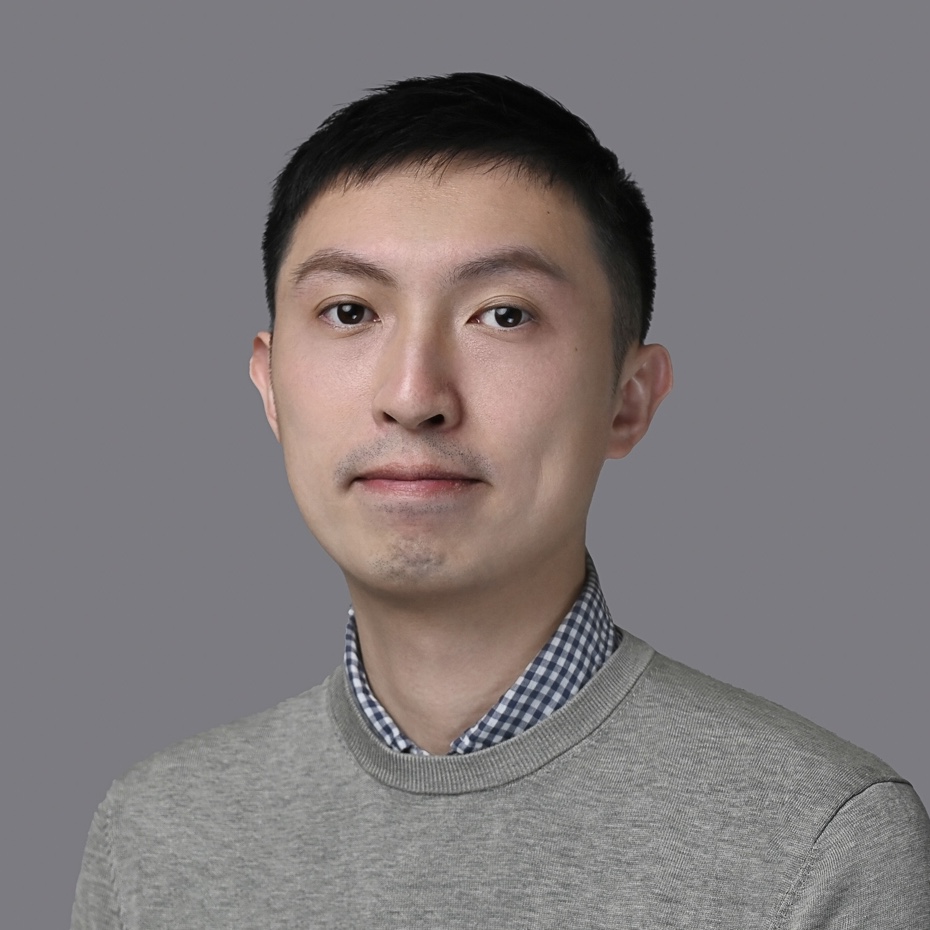
Andrew Zammit Mangion is an Associate Professor at the University of Wollongong , affiliated with the School of Mathematics and Applied Statistics . His research focuses on spatio-temporal statistics, computational methods, and environmental informatics, with applications in climate science and geospatial data analysis. Education : PhD in Statistics (University of Sheffield, 2012), B.Eng. (University of Malta, 2007) Research Themes : Spatio-temporal modeling, Bayesian inversion frameworks (e.g., WOMBAT v2.S), deep learning integration, and statistical software development (e.g., FRK package) Grants & Projects : ARC DECRA Fellow (2018), Chief Investigator on ARC Discovery Project (greenhouse gases), ARC Special Research Initiative (Securing Antarctica's Environmental Future), and ARC Industrial Transformation Hub (TIDE). Collaborations : University of Bristol, University of Edinburgh, ESA CCI, NASA OCO-2 data projects Scientific Awards include the prestigious Australian Research Council Discovery Early Career Researcher Award (DECRA). His work spans Antarctic ice sheet analysis, CO2 flux inversion, and scalable spatial statistical models for environmental monitoring.
Ruben Loaiza-Maya is an Associate Professor (Research) in the Department of Econometrics and Business Statistics at Monash University. He holds a PhD in Econometrics from the University of Melbourne and an undergraduate degree in Economics from Universidad Nacional de Colombia (Medellin). His research focuses on Copula Modelling, Bayesian Estimation Methods, Time Series Analysis, and Macroeconomic/Financial Forecasting. Key contributions include advancements in variational inference, state space models, and robust forecasting techniques under model misspecification. He leads the active project 'Variational Inference for Intractable and Misspecified State Space Models' (2023–2026), funded as a Primary Chief Investigator. His work contributes to UN Sustainable Development Goals through methodological advancements in economic and financial analysis. Recent research emphasizes scalable Bayesian methods, hybrid variational approaches, and efficient computational techniques for high-dimensional models. Publications span prestigious journals like the International Journal of Forecasting, Journal of Econometrics, and Journal of Business and Economic Statistics. Notable collaborations include studies on copula-based time series forecasting and robust approximate Bayesian computation. His work bridges theoretical econometrics with practical applications in risk management and macroeconomic policy.
Tongtong Wu is a Research Fellow in the Department of Data Science & AI at Monash University, actively contributing to cutting-edge research in artificial intelligence and natural language processing. She collaborates with leading researchers such as Gholamreza Haffari and Yuefeng Li on projects involving knowledge extraction, continual learning, and generative modeling. Education: Ph.D. in Artificial Intelligence, Southeast University (Jiangsu, China), awarded December 20, 2023. Thesis: Structured Knowledge Extraction with Limited Data . Her research focuses on developing advanced AI models for structured knowledge extraction, with emphasis on generative event extraction, weakly supervised learning, and continual adaptation of language models. She leverages deep learning and probabilistic methods to improve model robustness and generalization in low-data regimes. The recent publications demonstrate a strong trend toward integrating external knowledge into generative frameworks and advancing weakly supervised techniques for real-world NLP tasks. Her work spans event detection, topic modeling, and socio-cultural norm discovery, often using pretrained language models and mutual information-based regularization. Scientific Awards: No awards listed in the provided text. She is currently a Chief Investigator on the active project Lifelong Version-controlled Code Generation (2025–2026), indicating involvement in grant-funded research. While there is no mention of formal student supervision, her collaborative output suggests integration within a vibrant research team. She is affiliated with a research network focused on AI and data science at Monash, contributing to both journal articles and top-tier conference proceedings.
Professor Guoyin Li is a faculty member at the School of Mathematics & Statistics , University of New South Wales (UNSW Sydney). He holds a Ph.D. from The Chinese University of Hong Kong (2007) and has been at UNSW since 2011, currently serving as Professor and Research Director. Research Interests His work spans optimization , variational analysis , and multilinear algebra , with applications in robust optimization , structural engineering , and machine learning . He specializes in nonconvex nonsmooth optimization , tensor eigenvalue problems , and exact semi-definite programming relaxations . Recent Publications His articles focus on robust optimization for structural design, nonlinear approximation techniques, and conic programming for uncertain data. Key journals include Foundations of Computational Mathematics , Mathematical Programming , and Computer Methods in Applied Mechanics and Engineering . Awards and Grants Fellow of the Australian Mathematical Society (2023) 2022 AustMS Medal 2024 Marguerite Frank Award ARC Discovery Grants (2021-2023, 2025-2027) ARC Research Hub Project (2017-2021) Professional Roles He serves on editorial boards of SIAM Journal on Optimization , Optimization Letters , and Journal of Optimization Theory and Applications , and has delivered plenary lectures at international conferences in Austria, Spain, and Canada.
Professor Javen Qinfeng Shi is a faculty member at the University of Adelaide, holding the position of Professor in the School of Computer and Mathematical Sciences under the Faculty of Sciences, Engineering and Technology. He serves as Founding Director of the Causal AI Group and as one of the directors at the Australian Institute for Machine Learning (AIML), based at the North Terrace campus location. His research centers on causation, artificial intelligence, mind and metaphysics, with Google Scholar rankings placing him 4th globally in causation and 7th in probabilistic graphical models. Shi develops causal AI methods to identify root causes, discover latent variables, eliminate spurious correlations, enhance cross-domain generalization, model intervention consequences, and solve counterfactual queries. His work focuses on optimizing intervention sequences for desired outcomes under resource constraints, applied to material discovery, agriculture, mining, sports, manufacturing, bushfire prediction, healthcare, and education. Professor Shi's industry impact includes the NOBURN bushfire prediction app (released 2023 with 50+ media coverages), energy material discovery via AI catalysts, and smart manufacturing logistics solutions. His work with the Responsible AI Think Tank (2022-2024) and current AI Industry Forum panellist role (2024 onward) demonstrates active contribution to national and state AI ecosystem development. His scientific awards include: 1st place at Open Catalyst Challenge (NeurIPS AI for Science 2023) Winner of AUS/NZ Bushfire Data Quest 2020 Citizen Science Grant 2021 Finalist in SA Department of Energy and Mining Gawler Challenge 2020 (2k+ participants from 100+ countries), recognized for "The most innovative modelling" 2nd place in Explorer Challenge 2019 (1k+ entries from 62 countries) 1st place at SAIC Volkswagen Logistics Innovation Day 2019 Shi is eligible to supervise Masters and PhD students and has secured research funding including the Citizen Science Grant 2021. His industry collaborations span energy, agriculture, mining, and emergency management, translating theoretical causal AI into practical tools like NOBURN. He leads the Causal AI Group at the University of Adelaide and directs research teams at AIML, focusing on causal inference frameworks for distribution shift resilience and intervention optimization. Current projects emphasize bushfire prediction, material science applications, and AI ethics implementation through the AI Industry Forum.
Xiaotian Zheng is an Assistant Professor of Statistics at the University of Georgia. Previously, they were a Postdoctoral Research Fellow with the Australian Research Council Special Research Initiative Securing Antarctica's Environmental Future at the University of Wollongong, working under Professor Noel Cressie and Associate Professor Andrew Zammit-Mangion. They earned their Ph.D. in Statistical Science from the University of California, Santa Cruz, advised by Professors Athanasios Kottas and Bruno Sansó. Their research focuses on developing statistical and machine learning methods for analyzing complex, dependent data, particularly in ecological and environmental contexts. Key areas include spatial/spatio-temporal statistics, probabilistic downscaling, data integration, transfer learning, and statistical deep learning. Xiaotian's publications reflect their work on mixture transition distribution models, nearest-neighbor mixture models, and geostatistical frameworks for discrete-valued processes. These contributions emphasize Bayesian inference, computational efficiency, and real-world applications in environmental science and biodiversity modeling.
Associate Professor David Rye is an Honorary Associate Professor in the School of Aerospace, Mechanical and Mechatronic Engineering at the University of Sydney, affiliated with the Australian Centre for Field Robotics. His research focuses on interdisciplinary robotics, blending engineering, social sciences, and art to explore human-robot interaction, tactile sensing, and autonomous systems. Key areas include social robotics, cooperative robot behavior, and creative robotics design. His work spans theoretical and applied robotics, including studies on robot collaboration dynamics, tactile feedback systems, and robotic excavation. Notable contributions include developing EIT-based sensitive skins for robots and analyzing human comfort in multi-agent interactions. He has led projects such as the Fish-Bird art-robotics collaboration and the experimental human-robot interaction facility funded by ARC grants. Publications highlight advancements in human-robot collaboration ethics, motion planning for social robots, and control systems for autonomous machinery. His interdisciplinary approach bridges robotics engineering with creative arts, fostering innovations in both technical and artistic domains.
Simon David Goldstein is an Associate Professor at the Dianoia Institute of Philosophy within the Faculty of Theology and Philosophy. His research focuses on epistemic logic, formal epistemology, philosophy of language, and AI ethics. He explores topics such as knowledge norms, epistemic modalities, and ethical implications of AI systems. Research Interests: AI Ethics: Examining AI safety, deception, and existential risks Epistemic Logic: Investigating knowledge fragility, contextualism, and modal credence Philosophy of Language: Analyzing dynamic semantics and attitude reports Formal Epistemology: Probability and modal reasoning in epistemic contexts Recent Work Trends: Recent publications emphasize interdisciplinary approaches to AI ethics, integrating technical AI challenges with philosophical frameworks. His work on epistemic modals and contextualism bridges semantics and epistemology. Advising & Grants: No specific grants or advisees listed. Active in collaborative research with institutions like the Dianoia Institute. Labs/Teams: Affiliated with the Dianoia Institute's research groups on ethics and epistemology.
Dr. Jiaojiao Jiang is a Senior Lecturer in the School of Computer Science and Engineering at the University of New South Wales (UNSW). She holds a Ph.D. from Deakin University (Melbourne, Australia) and has published over 45 articles with 1,100+ citations. Her research focuses on AI-driven cybersecurity solutions, particularly misinformation detection and modeling information propagation dynamics. She is affiliated with UNSW's Sydney campus and can be contacted at jiaojiao.jiang@unsw.edu.au . Education: Ph.D., Deakin University, 2010s Research Interests: Artificial Intelligence applications in cybersecurity Misinformation detection and network analysis Machine learning for network security Data privacy in IoT systems Publications span topics like fake news detection via graph neural networks, multiplex network robustness, and cyber threat intelligence frameworks. Her work bridges theoretical network science with practical cybersecurity challenges.
Dr. Xuhui Fan is a Lecturer in Artificial Intelligence at the School of Computing, Macquarie University. He holds a PhD in Computer Science from the University of Technology Sydney (Australia) and a bachelor's degree in Mathematical Statistics from China. Prior to his current role, he worked as a project engineer at Data61 (formerly NICTA), a postdoc fellow at the University of New South Wales, and a lecturer at the University of Newcastle. His research focuses on Bayesian methods, federated learning, temporal point processes, and neural network architectures. He is affiliated with the Data Horizons Research Centre and the Frontier AI Research Centre at Macquarie University. Key research interests include developing interpretable AI models, advancing federated learning for privacy-sensitive applications, and applying Bayesian techniques to complex data analysis. His work bridges theoretical advancements in machine learning with practical applications in areas such as anomaly detection, generative models, and spatio-temporal data analysis. Dr. Fan’s publications span top-tier conferences like NeurIPS, ICML, and IJCAI, covering topics such as diffusion models, nonstationary processes, and scalable relational models. He has contributed to surveys on Bayesian federated learning and developed novel frameworks for dynamic customer segmentation and network sustainability. His research collaborations span institutions in Australia and internationally, reflecting his expertise in interdisciplinary AI applications. Current projects emphasize ethical AI practices, efficient uncertainty quantification, and scalable inference techniques for large-scale datasets.
Corina Pasareanu is an ACM Fellow and IEEE ASE Fellow serving as a Principal Scientist at Carnegie Mellon University's CyLab Security and Privacy Institute and Technical Professional Leader for Data Science at NASA Ames Research Center through KBR. Her work bridges formal methods, software verification, and artificial intelligence to ensure the safety and security of complex systems, particularly autonomous systems and machine learning applications. Dr. Pasareanu received her academic training at: Ph.D. in Computer Science, Kansas State University (2001) M.S. in Computer Science, University Politehcnica of Bucharest (1995) B.S. in Computer Science, University Politehcnica of Bucharest (1994) Her research focuses on developing formal verification techniques that can provide mathematical guarantees about the behavior of complex software systems. She specializes in applying model checking, symbolic execution, and compositional verification methods to challenges in autonomy, security, and AI safety. Her recent work addresses the verification of systems incorporating machine learning components, particularly neural networks used in safety-critical applications like autonomous vehicles. She investigates how to ensure these systems behave correctly even when their perception components have uncertainties or are subject to adversarial attacks. Analysis of her recent publications shows a strong trend toward verifying AI and machine learning systems, particularly focusing on neural networks in autonomous systems. Her work increasingly addresses the challenges of Large Language Models, examining both their vulnerabilities to attacks and methods to defend against them. She also continues to advance traditional software verification techniques while adapting them to modern programming languages and paradigms. Dr. Pasareanu has received numerous prestigious awards recognizing her contributions to the field: ACM Fellow IEEE ASE Fellow ETAPS Test of Time Award (2021) ASE Most Influential Paper Award (2018) ESEC/FSE Test of Time Award (2018) ISSTA Retrospective Impact Paper Award (2018) ACM Impact Paper Award (2010) ICSE 2010 Most Influential Paper Award (2010) As an advisor, Dr. Pasareanu mentors several PhD students and postdoctoral researchers, often in collaboration with other faculty members at CMU. Her students focus on cutting-edge research at the intersection of formal methods and AI safety. Her research is supported by substantial funding from diverse sources including NSF, DARPA, NASA, AWS, and industry partnerships. She leads multiple projects focused on AI security, formal verification of neural networks, and software analysis techniques. Dr. Pasareanu also plays a significant role in the broader research community, serving as Program/General Chair for major conferences including ICSE 2025, and as an associate editor for IEEE TSE and STTT. Dr. Pasareanu leads research teams working on projects like "Trinity: Neurosymbolic Learning and Reasoning" (DARPA) and "HUGS: Human-Guided Software Testing and Analysis" (NSF). Her work often involves interdisciplinary collaboration between computer scientists, formal methods experts, and domain specialists to address complex safety challenges in autonomous systems.
Dr. Xinqun Zhu is an Associate Professor at the University of Technology Sydney (UTS) in the School of Civil and Environmental Engineering . He has held academic positions at Western Sydney University (2016-2017), University of Western Australia (2005-2009), and University of Manchester (2001-2005). His research spans structural health monitoring, steel-concrete composite structures, physics-informed machine learning, and advanced sensor systems.
Dr. Xiaohan Yu is a Lecturer in Artificial Intelligence at Macquarie University's School of Computing, joining in December 2023. Previously, he completed his doctoral studies at Griffith University and served as a Research Fellow at the ARC Research Hub for Driving Farming Productivity. His research focuses on Ultra-Fine-Grained Visual Categorization (Ultra-FGVC), Smart Farming, and Automated Crop Cultivar Identification, with over 70 publications in top-tier venues like ICCV, CVPR, and IEEE Transactions. He holds editorial roles at Pattern Recognition and SN Computer Science , and received the APRS Early Career Award (2022) and ACM MM 2024 Outstanding Area Chair distinction. Education: Completed doctoral studies in Artificial Intelligence at Griffith University, Australia. Research Interests: Ultra-Fine-Grained Visual Categorization (Ultra-FGVC) Smart Farming and Agricultural Robotics Computer Vision Applications in Healthcare (e.g., trachoma detection) Deep Learning, Continual Learning, and Domain Adaptation Key Contributions: Pioneered Ultra-FGVC research, developed frameworks like Mix-ViT and CLE-ViT, and contributed to benchmarking multi-object tracking in farming. His work bridges pattern recognition with real-world applications in agriculture and healthcare. Scientific Awards: Australian Pattern Recognition Society (APRS) Early Career Researcher Award 2022 ACM Multimedia 2024 Outstanding Area Chair Award Advising & Grants: Actively involved in editorial roles (Area Chair for ACM MM, IJCNN) and grant-funded research through ARC hubs. His work is supported by collaborations in agriculture and AI-driven solutions for crop cultivar identification. Labs & Affiliations: Member of Macquarie's Smart Green Cities Research Centre and Frontier AI Research Centre , advancing interdisciplinary AI applications.
Dr. Patrick Filippi is a Lecturer in Precision Crop Management at the School of Life and Environmental Sciences, University of Sydney. He is affiliated with the Precision Agriculture Laboratory and the Sydney Institute of Agriculture. His work focuses on integrating remote sensing, machine learning, and geostatistics to address challenges in precision agriculture, particularly in crop yield modeling, soil mapping, and environmental monitoring. Research interests include precision agriculture technologies, soil science applications, data-driven crop management, and the use of satellite and proximal sensing for agricultural decision-making. He has contributed to projects funded by the Grains Research and Development Corporation (GRDC) and the University of Sydney, focusing on spatial variability in crop production, soil constraints, and machine learning interpretability. Key achievements include developing the LimeSoDa dataset for soil mapping and winning the 2016 CSIRO AgData Challenge Hackathon. His grants span topics like nitrogen fixation mapping in legumes and frost/heat management analytics. Filippi collaborates closely with industry to translate research into practical tools for farmers. Awards: 2nd Place CSIRO AgData Challenge Hackathon (2016) Labs: Precision Agriculture Laboratory (https://precision-agriculture.sydney.edu.au/) Grants: Includes Strategic Partnership Seeding Grants (2024), GRDC-funded projects (2022–2024), and Start-Up Research Funding (2024).
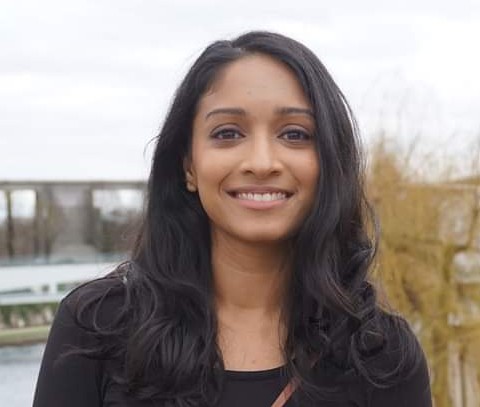
Dr. Sahani Pathiraja is a Lecturer (tenure track assistant professor) at UNSW Sydney , specializing in Data Science . Her research bridges mathematical and statistical foundations with practical applications in environmental and biomedical sciences. Research Focus : Sequential Bayesian inference, Monte Carlo methods, stochastic analysis of non-linear filtering, uncertainty quantification, and real-time parameter estimation. Current Projects : Co-investigator in the ARC Industrial Transformation Training Centre: Data Analytics for Resources and Environment (DARE) and the Next Generation Graduate Program (NGGP) in Sports Data Science and AI . Research Supervision : Dr. Pathiraja supervises PhD students in areas including: Bayesian inference Stochastic differential equations Data assimilation Non-linear filtering Scientific Collaborations : Her work intersects with environmental science, biomedical applications, and machine learning. Projects include stochastic hydrology, SDEs, and operator learning for environmental systems. Contact Information : Email: s.pathiraja@unsw.edu.au Phone: +61 2 8065 0836 Office: Room 2070, Level 2, The Red Centre, UNSW Sydney