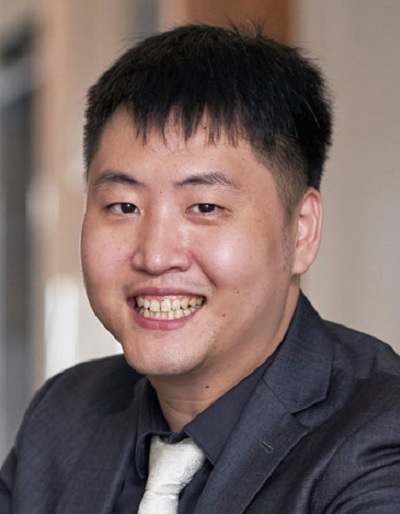
Raghavendra Selvan, an Assistant Professor (Tenure Track) at the University of Copenhagen, holds joint appointments in the Machine Learning Section (Department of Computer Science), Kiehn Lab (Department of Neuroscience), and the Data Science Laboratory. His academic journey includes a PhD in Medical Image Analysis (2018), MSc in Communication Engineering (2015), and BSc in Electronics and Communication Engineering (2009). PhD - Medical Image Analysis, University of Copenhagen (2018) MSc - Communication Engineering, Chalmers University (2015) BSc - Electronics and Communication Engineering, BMS Institute of Technology, India (2009) His research focuses on Bayesian Machine Learning with emphasis on Medical Image Analysis, Graph-based Learning, Tensor Networks, Approximate Inference, and Multi-Object Tracking Theory. Recent publications highlight his contributions to environmentally sustainable AI practices, efficient deep learning in medical imaging, and novel applications of tensor networks. Key research areas: Green AI and Environmental Sustainability Medical Image Analysis Graph Neural Networks Crystal Structure Prediction Model Compression Materials Science Applications
Christian Hirsch is an Associate Professor for Data Science and Statistics at Aarhus University, where he studies random networks motivated from biology and health sciences through techniques from topological data analysis and stochastic geometry. He is a member of the Stochastics group at the Department of Mathematics and holds additional affiliations as an Associate Fellow of the Aarhus Institute for Advanced Studies, and with the AU DIGIT Centre and the AU Quantum Campus. Current Position: Associate Professor for Data Science and Statistics, Aarhus University Previous Positions: Assistant Professor at University of Groningen and University of Mannheim Postdoctoral Experience: Aalborg University, LMU Munich, WIAS Berlin Education: PhD from Ulm University Christian Hirsch's research focuses on the statistical foundations of topological data analysis, large deviations theory in stochastic geometry, and percolation theory of spatial random networks. His work bridges theoretical mathematics with practical applications in data science, particularly in analyzing complex structures through topological methods. He investigates how topological features form and disappear in growing data structures, developing statistical tests to determine whether observed patterns are significant or merely random occurrences. His recent publications reveal a strong trend toward applying topological data analysis to increasingly complex structures, with significant focus on statistical validation of topological features. Hirsch has made substantial contributions to understanding the probabilistic behavior of persistent homology, developing functional central limit theorems and large deviation principles for topological functionals. His work spans theoretical foundations in stochastic geometry while finding applications in materials science, neural networks, and wireless communication systems. As an educator, Hirsch teaches graduate courses including Topological Data Analysis, Stochastic Geometry, Monte Carlo Simulation, Markov Decision Processes, Probability Theory, and Stochastic Processes. He has supervised numerous PhD, MSc, and BSc students, with several of his former students securing academic positions at institutions like University of Leiden, Tokyo Institute of Technology, and Budapest University of Technology. Hirsch leads a research group within the Stochastics group at Aarhus University, collaborating extensively with researchers across Europe and North America. His work demonstrates how topological methods can provide rigorous statistical insights into complex data structures, making significant contributions to both theoretical mathematics and practical data analysis techniques.
Marcus Gerhold is an Assistant Professor in the Formal Methods and Tools group at the University of Twente's Faculty of Electrical Engineering, Mathematics and Computer Science. His research focuses on model-based testing for software reliability in critical infrastructures, particularly railway systems, alongside significant contributions to game design and programming language analysis. His educational background includes: PhD in Computer Science from University of Twente (2018): Choice and Chance: Model-based Testing of Stochastic Behaviour MSc in Mathematics from Friedrich Schiller Universität Jena (2013): Embeddings of Weighted Morrey Spaces BSc in Mathematics from Friedrich Schiller Universität Jena (2011): Entropy-, Approximation- and Kolmogorov Numbers on Quasi-Banach Spaces Gerhold's research integrates theoretical model-based testing with practical critical infrastructure applications . His work on railway conformance testing addresses EULYNX controller validation, while his game design research explores affective mirroring in NPCs and procedural dungeon generation. The code modernity analysis stream leverages static analysis to quantify legacy code evolution across languages like Python and PHP, revealing version identification challenges through deep learning. Publication trends show consistent focus on model-based testing methodologies (40%), railway safety applications (25%), and innovative game design/code analysis (35%). Recent work increasingly incorporates AI/ML techniques for UML assessment and Python version identification, while maintaining rigorous formal methods foundations. He actively mentors 63 students across all academic levels and contributes to major research initiatives: STORM_SAFE (ERDF, 2024): Daily Supervisor for WP1/WP2 on software reliability for critical infrastructures ZORRO (KIC grant, 2023): Daily Supervisor for WP4 on zero downtime in cyber-physical systems MISSION (MSCA RISE, 2021-2025): Interim coordinator (early 2024) for space systems modeling As part of the Formal Methods and Tools research group, Gerhold participates in European collaborations while serving on SAC-SVT 2024 and FormaliSE 2023 program committees.
Katharina Eggensperger is an Early Career Research Group Leader at the University of Tübingen , leading the AutoML for Science group within the Cluster of Excellence Machine Learning for Science . She previously completed her Ph.D. at the University of Freiburg under Frank Hutter and Marius Lindauer (2022), and actively contributes to the AutoML community through open-source tool development and competition leadership. Co-developer of AutoML.org tools Faculty member of IMPRS-IS Chair for multiple AutoML workshops/conferences (2019-2025) Her research focuses on automated machine learning (AutoML) with specific attention to: AutoML Systems Hyperparameter Optimization Tabular Machine Learning Scientific Applications of ML She has organized multiple AutoML schools and conferences, including serving as Program Chair for AutoML 2024 and Non-archival Track Chair for AutoML 2025. Her work emphasizes making machine learning accessible through automation while maintaining scientific rigor and interpretability, particularly for tabular data applications. Katharina actively recruits PhD students through IMPRS-IS and collaborates with institutions like the University of Freiburg and Cyber Valley .
Marian Verhelst is a Professor at KU Leuven's Faculty of Engineering Science, renowned for her research in hardware-efficient computing and dedication to STEM education. Her work spans hardware acceleration for machine learning, edge AI, and in-memory computing, with a focus on energy optimization and algorithm-hardware co-design. Her research interests include: Designing flexible hardware for ultra-low-power edge AI systems Optimizing sparsity-aware architectures for deep learning workloads Advancing chiplet-based and 3D memory technologies Co-designing algorithms and hardware for probabilistic AI Pioneering STEM outreach through KU Leuven InnovationLab Recent publications (2023–2025) demonstrate strong trends in: Hardware-software co-optimization for edge ML systems Efficient data movement in heterogeneous accelerators Low-precision and sparse computation techniques RISC-V based customizable SoCs Sustainable AI accelerator design Awards & Honors: Young Academy of Europe Award (2021) for science communication and STEM advocacy She leads significant educational initiatives, including the KU Leuven InnovationLab which has engaged 150 schools and 13,000 students since 2014. The program develops hands-on STEM projects (e.g., AI-powered wheelchairs, sustainable energy systems) and provides teacher training to inspire youth in engineering.
Gerome Miklau is a Professor of Computer Science at the University of Massachusetts Amherst, affiliated with the Manning College of Information and Computer Sciences (CICS). He leads the DREAM Lab and focuses on privacy, security, and equitable data management, particularly in differential privacy and fair data analysis. His work includes designing algorithms for private data synthesis, privacy-preserving SQL engines, and auditing systems like AuditGuard. He co-founded Tumult Labs to commercialize privacy technology and advised the U.S. Census Bureau on privacy for the 2020 decennial census. Education: Ph.D. in Computer Science from the University of Washington (2005), B.S. in Mathematics and Rhetoric from UC Berkeley (1995). Research Interests: Differential privacy, secure data management, fairness in algorithms, privacy-preserving data synthesis, and forensic database analysis. His lab develops tools like Ektelo and PrivateSQL, addressing challenges in privacy-accurate tradeoffs and scalable private data processing. Awards: 2006 ACM SIGMOD Dissertation Award, 2007 NSF CAREER Award, 2013 ICDT Best Paper Award, and two ACM PODS Test-of-Time Awards (2020 and 2012). Grants & Service: Co-chair of OpenDP Advisory Board, steering committee member for TPDP workshops, and organizer of the 'Data, Responsibly' Dagstuhl workshop. His service includes program committees for SIGMOD, ICML, and FAT*. He teaches courses on databases, privacy, and programming. Labs/Teams: DREAM Lab (Data systems Research for Exploration, Analytics, and Modeling) and collaborations with the Center for Data Science and Cybersecurity Institute at UMass Amherst.
Pierre Baldi is a Distinguished Professor at the University of California, Irvine (UCI), holding appointments in the School of Information and Computer Sciences (ICS), the Institute for Genomics and Bioinformatics (IGB), and the Center for Machine Learning and Intelligent Systems (CML). His research focuses on AI, machine learning, and their applications in natural sciences, including physics, chemistry, and biology. He leads projects on neural networks, probabilistic modeling, and bioinformatics. Key roles include Director of the IGB and AI in Science Institute. Awards include the Dennis Gabor Award and Fellowships from AAAI, AAAS, and IEEE. His work spans interdisciplinary collaborations, such as the DUNE neutrino experiment and AI-driven drug discovery. Teaches courses like Probabilistic Modeling of Biological Data and Neural Networks. Active in conferences, including workshops on deep learning and its implications in science.
Willem Jonker is a Full Professor at the Digital Society Institute, specializing in Semantics, Cybersecurity & Services. His research focuses on encryption schemes, access control, and privacy-preserving technologies. He has contributed to over 120 publications, with recent work addressing CVE-to-CWE mapping, anomaly detection in network traffic, and functional encryption systems. His expertise aligns with UN Sustainable Development Goals related to secure digital systems and privacy. Jonker has supervised 10 students and actively participates in academic conferences, presenting on topics like secure data management and cryptographic protocols. Research interests include cryptographic protocols, secure data management, and cybersecurity solutions. Notable projects involve developing methods for detecting covert channels, enhancing data privacy in healthcare, and improving secure search over encrypted data. He has also contributed to standards in digital rights management and forensic image recognition.
Fotios Petropoulos is a Professor at the University of Bath, holding the Management Chair in Management Science within the School of Management's Information, Decisions & Operations department. He also served as the Spyros Makridakis Chair in Forecasting at the University of Nicosia (2023–2023). His research focuses on time series forecasting, judgmental approaches, and integrating statistical and human judgment in decision-making processes. He has contributed to improving forecasting accuracy through temporal aggregation and hierarchical methods. Petropoulos holds a Doctor of Engineering (2012) and Bachelor of Engineering (2007) from the National Technical University of Athens. Editor of the International Journal of Forecasting (2020–present) Associate Editor of Foresight: The International Journal of Applied Forecasting (2015–2022) Director of the International Institute of Forecasters (2016–2018) His research interests emphasize forecasting processes, model selection, and the role of judgment in statistical models. Key areas include temporal aggregation, forecast reconciliation, and behavioral operations analytics. He has published over 100 peer-reviewed articles, focusing on topics like computational cost optimization, probabilistic forecasting, and scalable reconciliation methods. His work contributes to Sustainable Development Goals related to education and innovation. Recent articles highlight advancements in univariate forecasting efficiency, forecast selection criteria, and dynamic reconciliation. Petropoulos is a member of the Smart Warehousing and Logistics Systems group and actively participates in editorial boards of leading forecasting journals. His academic and professional roles bridge theoretical research and practical applications in operational decision-making.
Alexander Rodríguez is an Assistant Professor in the Department of Computer Science and Engineering at the University of Michigan. His research focuses on advancing AI methods for modeling complex spatiotemporal dynamics, particularly in applications related to population health and community resilience. He specializes in machine learning, time series analysis, uncertainty quantification, and multi-agent systems, with an emphasis on scientific modeling and data-driven decision-making. Recent contributions include keynote talks at AAMAS 2025 (Autonomous Agents for Social Good workshop), presentations at the US National Academies Symposium, and invited talks at AAAI 2025 on topics like knowledge-guided machine learning and public health prediction. He co-organizes AAMAS 2025 as sponsorship co-chair and leads initiatives in AI for science and epidemic forecasting. His publications emphasize neural networks for time series forecasting, biomedical foundation models, and epidemic surveillance systems. Notable work includes 'Neural Conformal Control for Time Series Forecasting' (AAAI 2025) and 'Deepcovid: An operational deep learning-driven framework for explainable real-time forecasting' (2021). No scientific awards explicitly listed in available texts. His research group actively collaborates on grants related to AI applications in public health and infrastructure resilience, with a focus on data-centric methodologies and multi-agent systems.
Schloss Dagstuhl - Leibniz Center for InformaticsGermany
Radu Timofte is an academic researcher specializing in computer vision and image processing. He completed his PhD in 2013 at Katholieke Universiteit Leuven, Belgium, with a thesis on sparse and collaborative representations for computer vision. His work focuses on advancing techniques such as image super-resolution, denoising, object detection, and deep learning-based image restoration. He has collaborated extensively with institutions like ETH Zurich and co-authored seminal papers in top-tier journals and conferences. His research bridges theoretical advancements with practical applications in areas like medical imaging, aerial scene analysis, and real-time visual tracking. Timofte’s contributions include developing efficient deep learning architectures for tasks like lightweight object detection (e.g., CH-YOLO-Lite), diffusion models for image-to-image translation (DiffI2I), and calibration-free raw image denoising. He has also contributed to the development of video restoration transformers (VRT) and frameworks for unsupervised real-time video enhancement. His work often emphasizes practicality and efficiency, addressing challenges such as small object detection in aerial imagery and underwater image super-resolution. Timofte’s collaborations span academia and industry, with notable co-authors including Luc Van Gool (ETH Zurich) and Kai Zhang (Nanjing University of Science and Technology). His research has been published in venues like IEEE Transactions on Pattern Analysis and Machine Intelligence, CVPR, ECCV, and the International Journal of Computer Vision.
Amir Gilad is a Scharf-Ullman endowed Assistant Professor (Senior Lecturer) at the Hebrew University of Jerusalem’s School of Computer Science and Engineering. His research focuses on responsible data science, including causal inference, differential privacy, fairness in data, and tools for data analysis. He holds a Ph.D. in Computer Science from Tel Aviv University, where he was advised by Prof. Daniel Deutch. Prior to this, he was a postdoctoral researcher at Duke University, mentored by Prof. Sudeepa Roy, Prof. Ashwin Machanavajjhala, and Prof. Jun Yang. Education: Ph.D. in Computer Science, Tel Aviv University (Advisor: Daniel Deutch) MSc in Computer Science, Tel Aviv University BSc in Mathematics and Computer Science, Tel Aviv University His research interests span data quality assessment, private and fair data generation, and causal inference applications . He has received notable awards, including the 2024 Alon Scholarship and the 2019 Google Ph.D. Fellowship. Recent Projects: Developing algorithms for data quality repair and assessing bias in datasets Generating differentially private data that satisfies fairness constraints Applying causal inference to enhance data analysis tools Awards and Honors: 2024 Alon Scholarship for Outstanding Faculty Integration 2019 Google Ph.D. Fellowship in Structured Data 2018 SIGMOD Research Highlight Award 2017 VLDB Best Paper Award Teaching: Courses include “Topics in Responsible Data Science” and “Seminar on Causal Inference in Data Analysis” at Hebrew University, and “Extended Introduction to Computer Science” at Tel Aviv University. He has also led workshops on Google Technologies. Labs & Teams: His work is centered around the School of Computer Science and Engineering’s database group, focusing on foundational and applied aspects of privacy-aware data systems.
Jamshid Mohammadi is the Interim Provost and Professor of Civil and Architectural Engineering at Illinois Institute of Technology (IIT), within the Armour College of Engineering. He holds a Ph.D. in Civil Engineering (Structural Engineering) from the University of Illinois at Urbana-Champaign. His research focuses on structural integrity, seismic damage analysis, bridge performance, and risk assessment in transportation systems. Research Projects: He leads studies on bridge fatigue, seismic vulnerability, structural health monitoring, and disaster resilience. Notable projects include investigating horizontally curved bridges, seismic damage to skewed bridges, and probabilistic models for fatigue failure in metals. His work often involves collaborations with institutions like NASA and the Illinois Department of Transportation. Publications & Books: Mohammadi has authored over 150 peer-reviewed articles and two influential books: Systems Engineering, with Economics, Probability and Statistics and NDT Methods Applied to Fatigue Reliability Assessment of Structures . His work bridges theoretical models with practical engineering solutions. Expertise: His expertise spans system reliability, highway bridge analysis, and probabilistic methodologies for infrastructure assessment. He advises on temporary structure design, post-disaster risk mitigation, and lifecycle cost optimization. Grants & Recognition: His projects are funded by federal and state agencies. While no specific awards are listed, his extensive publications and leadership roles highlight his impact in civil engineering education and practice.
University of Maryland, Baltimore CountyUnited States
Dr. Tim Oates is a Professor in the Department of Computer Science and Electrical Engineering at the University of Maryland, Baltimore County . His research spans machine learning, artificial intelligence, and brain-machine interfaces, with a focus on weakly supervised methods, human-in-the-loop reinforcement learning, and grounded policy development for robotics. Ph.D., Computer Science, University of Massachusetts, Amherst, 2000 M.S., Computer Science, University of Massachusetts, Amherst, 1997 B.S., Computer Science and Electrical Engineering, 1989 Current research threads include: Developing non-invasive brain injury severity assessment via medical time series Modeling human brain development through computational frameworks Designing algorithms for autonomous robotic learning Recent publications highlight AI security mechanisms (backdoor detection via tensor decomposition, matrix factorization) Medical applications (3D artery reconstruction, skin lesion diagnosis, EEG denoising) Neuro-symbolic integration (holographic representations, language-guided reinforcement learning) Mathematical reasoning (schema-based problem solving, subitizing algorithms) Contact: oates@cs.umbc.edu | Office: 336 Information Technology and Engineering (ITE) Building
**FENG Mengling** is an Associate Professor at the National University of Singapore (NUS) and holds primary affiliation with the Saw Swee Hock School of Public Health. She serves as the Domain Leader for the Biostatistics, Modelling, AI and Data Analytics (B.MAD) Domain and Director of the AI for Public Health (AI4PH) Program. Her academic credentials include a Senior Post-doc from Harvard-MIT Health Science Technology Division, a PhD from Nanyang Technological University (2009), and a Bachelor's degree (2003) from NTU. Research & Teaching: Her research focuses on causal inference for evidence-based medicine, generative models for medical time-series analysis, and healthcare data analytics. She teaches courses on big data technologies for healthcare problems and healthcare data analytics. Professional Roles & Awards: She has led the Biomedical and Healthcare Analytics Lab at the Institute for Infocomm Research (2014–2015) and currently serves as an Affiliate Scientist at Harvard-MIT. Notable accolades include the MIT Teaching & Learning Laboratory Kaufman Teaching Certificate and recognition as a finalist in MIT’s 2013 Innovation Showcase. Her work has been featured in prominent media outlets like The Straits Times and Channel NewsAsia, highlighting breakthroughs such as AI nurses and Singlish-speaking healthcare assistants. Publications & Impact: Over 50 peer-reviewed publications span AI-driven clinical decision support, medical imaging analysis, and predictive modeling in critical care. Key contributions include frameworks like MedDreamer (reinforcement learning for EHR analysis) and DivScore (LLM-generated text detection). Her research bridges causal inference, generative AI, and scalable healthcare solutions. Labs & Initiatives: As a leader in NUS’s Public Health AI Innovation Center (launching early 2025), she drives initiatives like FxMammo (AI for breast cancer screening) and the Biomedical and Healthcare Analytics Lab. Her work emphasizes ethical AI deployment and cross-disciplinary collaboration in healthcare.