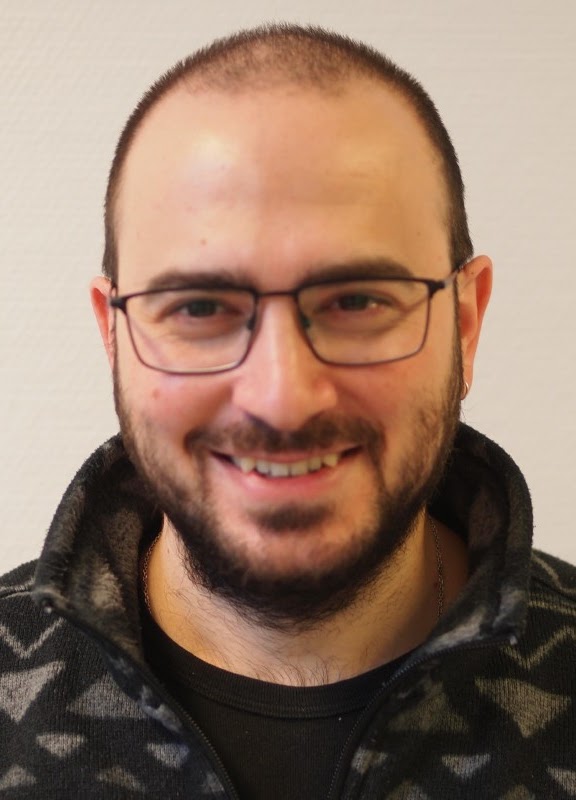
Ole Winther is Professor in High dimensional biological data analysis/Machine learning at the Department of Biology, University of Copenhagen and Professor in Data science and complexity at DTU Compute, Technical University of Denmark. He serves as CRO and co-founder of raffle.ai, CTO and co-founder of FindZebra, Head of ELLIS Unit Copenhagen, and co-PI of the Machine Learning for Life Science Center. His research spans Bioinformatics , Machine Learning , and AI for Science , focusing on applying deep learning to biological sequence analysis, latent variable models, and medical NLP. Winther's work develops predictive and generative models for bioinformatics, with significant contributions to protein localization tools (SignalP, DeepLoc, DeepTMHMM), single-cell genomics, and novel deep learning architectures like variational autoencoders and diffusion models. Analysis of Winther's recent publications (2023-2025) reveals a strong trend toward integrating protein language models with traditional bioinformatics approaches and applying diffusion models to scientific problems. His work bridges theoretical machine learning advancements with practical applications in biology and medicine, particularly in protein sequence analysis, medical search engines, and scientific simulation acceleration. Winther currently supervises a diverse research group including Panagiotis Antoniadis, Rachael M. DeVries, Jun Wang, Beatrix M. G. Nielsen, Felix G. Teufel, Irene R. Rodriguez, Anders Christensen, and Christopher Heje Grønbech. His former students have established successful careers at institutions including Google, Apple, and various startups, with notable alumni like Casper Sønderby (Google Brain) and Søren Sønderby (Apple). He leads significant research initiatives including the ELLIS Unit Copenhagen and the Machine Learning for Life Science Center, while maintaining active industry partnerships through his co-founded companies raffle.ai (enterprise search using NLP) and FindZebra (search engine for rare diseases). His teaching includes Deep Learning courses at both DTU (02456) and University of Copenhagen (NDAK24002U).
Mikkel N. Schmidt is an Associate Professor in the Department of Applied Mathematics and Computer Science at the Technical University of Denmark (DTU). His research focuses on statistical modeling, Bayesian methods, and their applications in science and industry. He has held visiting roles at Columbia University (2007) and Cambridge University (2008-2009). His work integrates probabilistic modeling with computational inference to address complex problems in diverse fields such as molecular discovery, optical communication, and brain connectivity analysis. Education highlights include visiting scholar and postdoctoral experiences at top-tier institutions. Research interests span statistical methodology development, machine learning applications, and interdisciplinary problem-solving. Current projects involve Bayesian neural networks for molecular discovery and federated learning optimization. Advising efforts include supervising multiple PhD students in areas like molecular discovery and denoising diffusion models. Notable collaborations involve work on materials science, quantum communication, and medical signal processing. His contributions bridge theoretical advancements with practical industrial applications, emphasizing interdisciplinary innovation.
Yevgeny Seldin is a Professor in the Department of Computer Science at the University of Copenhagen, specializing in Machine Learning Theory . He leads the Machine Learning Section and is a member of the DeLTA Lab . Education : PhD in Computer Science at The Hebrew University of Jerusalem under supervision of Prof. Naftali Tishby His research focuses on Machine Learning , particularly Online Learning and PAC-Bayesian Analysis , with applications to Bandit Algorithms , Reinforcement Learning , and Information Theory . Recent work includes optimal algorithms for delayed feedback, stochastic-adversarial trade-offs, and feedback graphs. Positions Available : PhD and Postdoc positions in Theoretical Machine Learning or energy sector applications Labs & Collaborations : Head of Machine Learning Section Member of DeLTA Lab
Niels Richard Hansen is a Professor at the Department of Mathematical Sciences , University of Copenhagen, leading research at the intersection of Artificial Intelligence and Statistics . He co-founded the Copenhagen Causality Lab and focuses on automating causal explanation discovery from data using Bayesian networks, stochastic processes, predictive models, and machine learning. His work emphasizes creating interpretable and robust AI systems capable of generalizing across domains. His research has produced over 56 publications spanning causal inference , graphical modeling , stochastic processes , and machine learning . Recent work includes: Predictive and causal learning (2018 keynote) High-dimensional regression solutions (2016 lecture) Interdisciplinary applications in actuarial science , environmental statistics , and neuroscience He actively contributes to scientific communication through media appearances and public explanations of statistical concepts, including analyses of: Gaussian correlation inequality proofs Daylight saving time and blood clots Mathematical approaches to lotteries Climate change vs lunar effects
Rasmus Pagh is a Professor at the Department of Computer Science, University of Copenhagen, specializing in algorithms and complexity. His career includes a 2002 PhD from Aarhus University under Peter Bro Miltersen and a tenure at IT University of Copenhagen until 2020. He leads theoretical research with practical applications in big data, databases, and modern computer architecture parallelism. His research interests span algorithms, data structures, and privacy-preserving computing. Recent work includes the ERC-funded project on Scalable Similarity Search and contributions to the BARC center for basic algorithms research. He has collaborated with Google Research (2019-2020) and focuses on theoretical foundations with real-world impact. Key research trends in his 2023-2024 publications include privacy-preserving data analysis probabilistic data structures distributed secure computation noise-robust coding hashing efficiency continual privacy mechanisms Scientific recognition includes 2024 ACM Fellowship ERC grant leadership multiple top-tier conference publications
Raghavendra Selvan, an Assistant Professor (Tenure Track) at the University of Copenhagen, holds joint appointments in the Machine Learning Section (Department of Computer Science), Kiehn Lab (Department of Neuroscience), and the Data Science Laboratory. His academic journey includes a PhD in Medical Image Analysis (2018), MSc in Communication Engineering (2015), and BSc in Electronics and Communication Engineering (2009). PhD - Medical Image Analysis, University of Copenhagen (2018) MSc - Communication Engineering, Chalmers University (2015) BSc - Electronics and Communication Engineering, BMS Institute of Technology, India (2009) His research focuses on Bayesian Machine Learning with emphasis on Medical Image Analysis, Graph-based Learning, Tensor Networks, Approximate Inference, and Multi-Object Tracking Theory. Recent publications highlight his contributions to environmentally sustainable AI practices, efficient deep learning in medical imaging, and novel applications of tensor networks. Key research areas: Green AI and Environmental Sustainability Medical Image Analysis Graph Neural Networks Crystal Structure Prediction Model Compression Materials Science Applications
Georgios Arvanitidis is an Associate Professor at the Technical University of Denmark (DTU) in the Department of Applied Mathematics and Computer Science, specifically within the Section for Cognitive Systems (CogSys). He has established himself as a leading researcher in geometric machine learning, focusing on the application of differential geometry principles to enhance machine learning models. His work bridges theoretical mathematics with practical applications in artificial intelligence, with particular emphasis on understanding the geometric structure of data manifolds and latent spaces. Dr. Arvanitidis completed his educational journey with a Bachelor's degree from the Department of Informatics at the Aristotle University of Thessaloniki, followed by a Master's degree in Computer Science from Saarland University supported by the Max Planck Institute for Informatics. He earned his PhD at DTU's Cognitive Systems section under the supervision of Søren Hauberg, with additional research experience at Philipp Hennig's Probabilistic Numerics group. Prior to his current position as associate professor, he was a PostDoc at the Max Planck Institute for Intelligent Systems working with Bernhard Schölkopf. Dr. Arvanitidis's research primarily focuses on differential geometry in machine learning , where he explores how geometric structures can enhance representation learning and statistical modeling. His work in generative models investigates how learning the geometry of data manifolds can improve deep learning architectures. In the domain of deep learning theory , he examines why deep learning models generalize effectively on unseen data, with particular attention to the curvature properties of loss landscapes. His research in approximate Bayesian inference applies geometric principles to improve uncertainty quantification in neural networks. Through his innovative approaches, Dr. Arvanitidis has established himself as a leading researcher in geometric machine learning, contributing to both theoretical foundations and practical applications across various domains including robotics and life sciences. The publication trends of Dr. Arvanitidis reveal a consistent and evolving focus on geometric approaches to machine learning problems. His recent work (2023-2025) demonstrates increasing sophistication in applying Riemannian geometry to deep learning architectures, with particular emphasis on latent space geometry, optimization on manifolds, and geometric interpretations of neural network behavior. A notable pattern is the progression from foundational work on geometric representations to more applied research in areas like robotics and causal inference. His publications span top-tier conferences including NeurIPS, ICML, ICLR, and AISTATS, reflecting the high impact of his research. The interdisciplinary nature of his work is evident in collaborations across mathematics, computer science, and robotics domains, with recent papers addressing challenges in multimodal sampling, safety guarantees for dynamical systems, and counterfactual explanations. Dr. Arvanitidis has received several notable scientific awards and recognitions: Sapere Aude starting grant from the Independent Research Fund Denmark (DFF) GADL funding i-Rase, Pathfinder, and EIC (European Innovation Council) funding Best reviewer award for NeurIPS 2019 Best reviewer award for NeurIPS 2018 Best student paper award at Robotics: Science and Systems (R:SS) 2021 Dr. Arvanitidis actively mentors PhD students and researchers, currently supervising Alejandro Valverde, Johanna Gegenfurtner, and Albert Kjøller Jacobsen. He has previously co-supervised Alison Pouplin's PhD and worked with research assistant Georgios Pantis. His group receives substantial funding through multiple prestigious grants including the Sapere Aude starting grant from the Independent Research Fund Denmark, as well as European Innovation Council funding. He has been instrumental in creating opportunities for students interested in geometric machine learning, offering BSc and MSc thesis projects focused on generative models, deep learning theory, and optimization techniques. Dr. Arvanitidis also contributes significantly to the academic community as a reviewer for top conferences including ICLR and TMLR, and as an area chair for NeurIPS, ICML, AISTATS, and UAI. He co-organized the Machine Learning Summer School 2020 in Tübingen, further demonstrating his commitment to education and community building. Dr. Arvanitidis leads a vibrant research group focused on geometric machine learning within the Cognitive Systems section at DTU. His team includes multiple PhD students working on cutting-edge research at the intersection of differential geometry and artificial intelligence. The group has developed notable software tools, including the "geometric_ml" GitHub repository with over 70 stars, which contains implementations for applying Riemannian geometry in machine learning. His research has practical applications in robotics, where geometric approaches enable more robust motion planning, as evidenced by his work on "Reactive Motion Generation on Learned Riemannian Manifolds" which received a best student paper award. Additionally, his methodologies have found applications in life sciences, as mentioned in his 2022 AISTATS paper. The collaborative nature of his work is evident through extensive partnerships with researchers at institutions including the Max Planck Institute for Intelligent Systems, University of Cambridge, and various European universities. His recent news items indicate active engagement with the academic community through talks, conference presentations, and ongoing supervision of new PhD students joining his group.
Johannes Bjerva is a Full Professor at Aalborg University's Department of Computer Science (Campus Copenhagen), leading the Copenhagen branch and conducting interdisciplinary NLP research integrating linguistic typology. His work focuses on low-resource languages, language model security, and societal AI impact. PhD (University of Groningen, 2017): Thesis on multitask/multilingual lexical modeling M.A. & B.A. in Computational Linguistics (Stockholm University) Research interests span linguistically-informed NLP , language model security , and low-resource language technology . Current projects include the DFF Sapere Aude grant (2025) for language model detection security and the LM2-SEC project (2025–2030). His 2024 ACL paper on embedding inversion security and 2024 EMNLP paper on typological diversity exemplify recent work. Scientific awards include: 2021: Teacher of the Year (AAU Computer Science) 2019: Google Cloud research credits 2022: Carlsberg Semper Ardens (5M DKK) 2024: Novo Nordisk Data Science grant (~10M DKK) Supervision includes 8 PhD students across projects like CreoleVal and HiFi-KPI . He serves on the Industrial Researcher Committee at Innovation Fund Denmark and is a member of Det Unge Akademi (2023–2028).
Jes Frellsen is an Associate Professor at the Department of Applied Mathematics and Computer Science (DTU) since 2016. Previously, he held academic positions at the IT University of Copenhagen (2016-2019), postdoctoral roles at University of Cambridge (2013-2016) and University of Copenhagen (2011-2013). Education: PhD in Bioinformatics (2011), University of Copenhagen MSc in Bioinformatics (2007), University of Copenhagen BSc in Mathematics and Computer Science (2005), University of Copenhagen EAP Exchange at University of California, Santa Cruz (2004-2005) Research Focus Jes Frellsen specializes in statistical machine learning , particularly generative AI and deep generative models with applications in bioinformatics . His work integrates Bayesian inference , directional statistics , and Markov chain Monte Carlo methods to address challenges in macromolecular structure prediction and missing data imputation . Recent efforts explore uncertainty quantification in image segmentation and generative modeling for materials science. Advising & Collaborations He actively supervises PhD students and postdoctoral researchers in projects spanning news recommendation systems , medical imaging , and 3D structure generation . Collaborations include work with Zoubin Ghahramani (Cambridge) and Thomas Hamelryck (Copenhagen), with contributions to protein structure prediction and statistical methods in structural bioinformatics .
Tue Herlau is an Associate Professor at the Department of Applied Mathematics and Computer Science, Cognitive Systems, within the College of Engineering at Technical University of Denmark. His research focuses on modeling complex networks using Bayesian methods, particularly applied to brain imaging data. He explores multiscale structures in networks (ranging from individual nodes to large-scale temporal dynamics) and causal inference in social and biological systems. Education : Bachelor in Physics and Mathematics (University of Copenhagen), Masters in Informatics (DTU) Recent publications highlight work on generative AI for educational psychology, causal probability trees, Bayesian neural network training, and moral reinforcement learning. Key collaborations span institutions in Denmark and international partners in AI and neuroscience research. He supervises students in probabilistic methods and machine learning applications, including a 2019-2020 Master project on prognostics for carbon/epoxy composites. His network shows strong engagement with computational science, relational databases, and formal concept analysis.
Manfred Jaeger is an Associate Professor at the Department of Computer Science, Technical Faculty of IT and Design, Aalborg University. His research focuses on Artificial Intelligence , Bayesian Networks , and Graph Neural Networks , with significant contributions to probabilistic reasoning and relational learning. University: Aalborg University School: Technical Faculty of IT and Design Department: Department of Computer Science Jaeger's research explores inductive and probabilistic reasoning , statistical relational learning , and model checking . His recent work integrates heterogeneous graph neural networks with relational Bayesian network encodings to enhance reasoning capabilities in complex systems. Key trends in his publications include relational deep learning , probabilistic inference , and graph-based modeling . He has contributed to applications in social network community detection , reinforcement learning for MDPs , and latent variable models for graph learning . Jaeger collaborates on projects involving incomplete data analysis , modularization of complex tasks , and probabilistic logic . His datasets on multi-multi-instance learning networks are publicly available for research use.
Jakob Lykke Andersen is an Associate Professor in the Department of Mathematics and Computer Science at the University of Southern Denmark (SDU), where he conducts research in algorithms with applications in cheminformatics and complex systems. He also holds a former external appointment as a Research Fellow at the Tokyo Institute of Technology (2015–2017). Research Interests: His work lies at the intersection of computer science and theoretical chemistry, focusing on algorithmic methods for analyzing chemical reaction networks. He employs hypergraphs, mixed-integer linear programming, and probabilistic models to study metabolic pathways, reaction databases, and prebiotic systems. His research emphasizes computational efficiency, formal modeling, and software implementation. Publication Trends: His recent publications (2019–2025) show a consistent focus on graph-based modeling of chemical systems, rule extraction from reaction databases, thermodynamic feasibility, and stochastic analysis. These works appear in high-impact journals in cheminformatics, bioinformatics, and complex systems, reflecting strong interdisciplinary collaboration. Scientific Contributions: While no specific awards are listed, his sustained research output and leadership in funded projects highlight significant contributions to algorithmic cheminformatics. Grants and Projects: He is actively involved in two major ongoing research projects: (1) Software Infrastructures for Teaching at Scale (funded by Innovation Fund Denmark, 2022–2025), and (2) DIREC (Danish Research Center for Digital Economy, 2020–2025), indicating active engagement in both educational technology and core computational research. Advising and Outreach: While no students are listed, he participates in academic advising through project supervision. He contributes to public discourse through media appearances on topics such as mathematics in health (e.g., intestinal system modeling in obesity) and educational well-being. Labs and Teams: He collaborates with interdisciplinary teams, including researchers from bioinformatics, chemistry, and computer science, particularly through projects involving Merkle, Flamm, Fagerberg, and Stadler. His work is associated with algorithmic cheminformatics and software framework development groups at SDU.
Svante Eriksen is an Associate Professor in the Department of Mathematical Sciences at Aalborg University, Faculty of Engineering and Science. His research spans statistics, forensic genetics, and computational modeling, with a focus on Bayesian networks, graphical models, and statistical methods for forensic DNA analysis. He is actively involved in interdisciplinary research and software development for probabilistic genotyping and large-scale inference. Research Interests: Bayesian Networks and Graphical Models Statistical Methods in Forensic Genetics SNP and Y-STR Genotyping Data Mining and Knowledge Discovery Model Selection and Context-Specific Independence Software Development for Statistical Inference Recent Publication Trends (2024–2025): His recent work focuses on improving SNP genotyping accuracy using logistic regression models, developing efficient software (jti and sparta) for Bayesian network inference, and advancing forensic DNA analysis through dynamic SNP selection and probabilistic modeling of Y-STR databases. These contributions reflect a strong integration of statistical theory, computational efficiency, and real-world forensic applications. Scientific Contributions: Principal contributor to software packages for Bayesian network prediction. Developer of statistical models for forensic DNA data interpretation. Collaborator on projects involving digital learning analytics and student retention. Advising and Grants: While specific student names are not listed, the profile indicates involvement in PhD supervision (4 cases). He has participated in multiple externally funded research projects, including those supported by Novo Nordisk and Danish research councils, focusing on forensic DNA analysis, graphical models, and educational data mining. Research Groups and Collaborations: He is part of a strong research network in forensic genetics and statistical modeling at Aalborg University, collaborating with leading researchers such as N. Morling, M. M. Andersen, and T. Tvedebrink. His work is closely tied to the development and application of statistical software in both forensic and educational domains.
Konstantin Pavlikov is an Associate Professor at the Department of Business & Management (DBM) under Strategic Organization Design (SOD) at the University of Southern Denmark. His research focuses on Operations Research, Integer Programming, and Stochastic Programming , with particular emphasis on vehicle routing optimization and network flow modeling. Education : PhD in Operations Research (University of Florida, 2014), MSc in Applied Mathematics (Moscow State University, 2007) His work spans combinatorial optimization and network interdiction problems , developing exact and approximate solution algorithms for complex logistics challenges. Recent publications analyze heterogeneous vehicle routing capacity inequalities and two-commodity flow formulations for routing problems. Scientific contributions have been recognized with the Best Reviewer Award (2019). He actively reviews for journals like Computational Management Science and supervises academic works through examination roles.
Christoffer Olling Back is a Postdoctoral Researcher at the Department of Computer Science (Faculty of Science, University of Copenhagen) specializing in Human-Centred Computing . His work bridges applied and theoretical machine learning, focusing on probabilistic inference, stochastic processes, and computability theory. Education PhD in Computer Science (2017-2020) - University of Copenhagen MSc in Artificial Intelligence (2010-2011) - University of Edinburgh BA in Psychology (w/ Computer Science) (2004-2008) - Lewis and Clark College Current research explores predictive workflow models using location data through the iAware project (collaboration with Systematic, PowerNet, and Bispebjerg Hospital). Previous work investigated ERP system datasets in the DIREC consortium. His publications span topics in process mining, probabilistic modeling, and healthcare informatics. Recent achievements include 15 research outputs (2024-2016) covering process discovery, workflow simulation, and entropy-based log analysis. Collaborations with institutions like Roskilde University and industry partners demonstrate interdisciplinary impact. Scientific Awards Dean's List (2007) Nordea Fonden Scholarship (2010) As an educator, he serves as guest lecturer, assistant teacher, and tutor in computer science, machine learning, and software engineering. His professional background includes industry roles at ServiceNow Denmark ApS (2021-2024) and Gekkobrain (2020-2021).