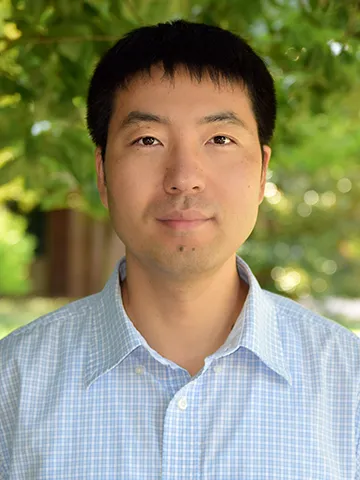
Jean-Baptiste Masson is a tenured Researcher at the Pasteur Institute since 2008. His work bridges Neuroscience , Biophysics , and Machine Learning , focusing on understanding decision-making processes in biological systems and developing innovative 3D visualization tools like DIVA and Genuage for medical imaging and single-molecule analysis.
Concha Bielza is a Full Professor of Statistics and Operations Research at the Department of Artificial Intelligence, Technical University of Madrid, since 2010. Her academic journey began with an M.S. in Mathematics from Universidad Complutense de Madrid (1989) and a Ph.D. in Computer Science from Technical University of Madrid (1996), where she received the extraordinary doctorate award. Her research focuses on Probabilistic graphical models Decision analysis Metaheuristics for optimization Data mining and classification models Applications in biomedicine, bioinformatics, neuroscience, industry, and sport analytics Recent publications emphasize Bayesian networks for dynamic microbial community simulation Advancements in Estimation of Distribution Algorithms Quantum computing integration with probabilistic models Feature selection in data streams Causal reinforcement learning in industrial contexts Semiparametric methods for optimization Explainability in Bayesian networks She has been recognized with 2014 UPM Research Prize 2020 Research Award in Machine Learning (India) 2024 National Award of Statistics (Spain) ELLIS Fellow (2023) Asia-Pacific Artificial Intelligence Association Fellow (2024) Bielza has supervised 23 PhD theses and contributes to scientific governance as a member of NorwAI's Scientific Advisory Board (2021). Her work spans theoretical advancements and real-world applications, with over 160 impact factor publications.
Nicolas Heess is an Honorary Professor affiliated with the Department of Computer Science at University College London. His research focuses on Machine Learning and Computer Vision , with a particular emphasis on generative models and their applications in image analysis. His publication history reveals a commitment to advancing probabilistic modeling techniques, including Boltzmann Machines and Restricted Boltzmann Machines, for tasks like shape representation, texture generation, and motion perception. These works intersect with broader disciplines of Computer Science Neuroscience Artificial Intelligence While no specific awards or student advisement details are mentioned in the available records, his collaborations with prominent researchers (e.g., Geoffrey Hinton, John Winn) highlight his engagement with cutting-edge academic networks.
Pedro Larrañaga is a Full Professor in Computer Science and Artificial Intelligence at the Technical University of Madrid (UPM) since 2007. Previously, he held academic positions at the University of the Basque Country as Assistant Professor (1985–1998), Associate Professor (1998–2004), and Full Professor (2004–2007). He earned his MSc in Mathematics (Statistics) from the University of Valladolid and a PhD in Computer Science from the University of the Basque Country, receiving an excellence award. His research spans probabilistic graphical models, optimization, data mining, and applications in biomedicine, bioinformatics, neuroscience, industry, and sports. Larrañaga leads extensive work on Bayesian networks, evolutionary algorithms, and high-dimensional data analysis. His recent publications emphasize scalable probabilistic modeling, quantum computing interfaces, and interpretable AI for biomedical and industrial contexts. Over 200 journal publications reflect sustained contributions to machine learning theory and computational intelligence. Awards & Fellowships: Fellow, European Association for Artificial Intelligence (2012) Fellow, Academia Europaea (2018) Fellow, Asia-Pacific Artificial Intelligence Association (2021) Fellow, Jakiunde—Academy for the Sciences, Arts, and Letters of the Basque Country (2022) Fellow, European Laboratory for Learning and Intelligent Systems (ELLIS) (2023) Fellow, IEEE (2023) Fellow, Industry Academy within the International Artificial Intelligence Industry Alliance (2024) Spanish National Prize in Computer Science (2013) Spanish Association for Artificial Intelligence Prize (2018) Amity Research Award in Machine Learning (2020) He has supervised 36 PhD theses and contributes to large-scale neuroscience collaborations, including brain morphology analysis and computational neuroanatomy. Research grants focus on Bayesian methodologies for industrial IoT, health informatics, and quantum algorithm development.
Nuria Oliver, PhD is a pioneering computer scientist and ACM Fellow , recognized as the first female Spanish computer scientist to achieve both ACM Distinguished Scientist and IEEE Fellow status. Current affiliations include Microsoft Research and former roles at MIT Media Lab. First female Spanish ACM Fellow IEEE Fellow Academia Europaea member Her research spans human behavior modeling , intelligent user interfaces , and mobile computing , with notable work in: Wearable context-aware systems (DyPERS, HealthGear) Music-adaptive exercise platforms (MPTrain, TripleBeat) Social network analysis (information propagation, community link modeling) Computer vision interfaces (LAFTER facial expression recognition) Scientific achievements include: 41 patents 15+ years of continuous multimodal systems research Recognized for LAFTER system (2000 paper) She actively promotes technology accessibility through: Media collaborations Technical/non-technical keynotes STEM outreach for girls
Pilar Fuster Parra is an Associate Professor in the Department of Mathematics and Computer Science at the University of the Balearic Islands. Her research focuses on probabilistic graphical models, decision analysis, data mining, and classification models with real-world applications. She is affiliated with the Soft Computing, Image Processing, and Aggregation (SCOPIA) R+D+I group. Education: M.Sc. in Mathematics from Universitat de València (1988) Ph.D. in Computer Science from Universitat de les Illes Balears (1996) Over the past five years, she has taught courses such as Mathematics II - Calculus for Informatics Engineering degrees, Mathematics II - Calculus for Automation and Industrial Electronic Engineering, and Statistical Learning and Decision-Making II for Master’s programs in Big Data Analysis. She also contributes to interdisciplinary programs like Data Analytics and Business Intelligence. Research Affiliations: Member of the Soft Computing, Image Processing, and Aggregation (SCOPIA) group Member of the Global Health (GH) R+D+I group
Mladen Nikolić is an Associate Professor at the Faculty of Mathematics, University of Belgrade, specializing in machine learning and automated reasoning. He actively contributes to the Machine Learning and Applications Group (MLA@MATF) and the Automated Reasoning GrOup (ARGO) . His research spans earthquake damage assessment , deep learning object tracking , LLM integration with tabular data , and astronomical data analysis . Recent work focuses on the RELAR Project for rapid earthquake loss assessment, CNN architectures for structural damage classification, and novel approaches to incorporating large language model priors into machine learning systems. His publications demonstrate strong interdisciplinary applications connecting computer science with seismology, transportation engineering, and astrophysics. Developed frameworks for earthquake loss assessment and recovery Advanced deep learning filters for non-linear motion tracking Integrated LLMs with tabular data processing systems Contributed to LSST astronomical data challenges Nikolić maintains active research collaborations through MLA@MATF and ARGO groups, with publications spanning machine learning theory, automated reasoning systems, and practical applications across multiple scientific domains. His work shows increasing focus on real-world deployment of AI systems for disaster response and scientific data analysis.
Tomer Ullman is an Associate Professor in the Department of Psychology at Harvard University, where he leads the Computation, Cognition, and Development Lab. He is also a member of the Center for Brains, Minds, and Machines (CBMM) and an affiliate of the Kempner Institute for Natural and Artificial Intelligence. Education : B.Sc. in Cognitive Science and Physics (Hebrew University, 2008), Ph.D. in Brain and Cognitive Sciences (MIT, 2015) Postdoctoral Training : Center for Brains, Minds, and Machines (2015-2018) Ullman's research focuses on computational models of high-level human cognition, particularly intuitive theories about physics and psychology, mental simulation in reasoning, and child development of social cognition. His work bridges cognitive science, AI development, and neuroscience through experimental and computational approaches. Recent publications analyze language model limitations in Theory of Mind tasks, mental simulation constraints , and emergent hierarchical emotion representations . His lab explores how humans and machines learn through probabilistic inference, with applications in child education and AI alignment. Scientific Awards : ICDL Best Paper Award (2012, with Bonawitz et al.) Ullman teaches courses on Decision-Making (PSY1322) and Imagination (PSY1340). His research has been funded by the National Science Foundation and CBMM.
Peter Manohar is a postdoctoral researcher in the Computer Science and Discrete Math group at the Institute for Advanced Study , focusing on Theoretical Computer Science with emphasis on algorithms, coding theory, and cryptography. His work explores spectral algorithms for semirandom and smoothed instances of NP-hard constraint satisfaction problems, linking these methods to coding theory, extremal combinatorics, and cryptography. Education: PhD in Computer Science from Carnegie Mellon University, advised by Venkatesan Guruswami and Pravesh K. Kothari B.S. in EECS from UC Berkeley, advised by Alessandro Chiesa and Ren Ng Research Trends: His recent publications highlight advancements in spectral refutation techniques, locally decodable/correctable codes, and connections between complexity theory and coding. Articles span venues like FOCS, STOC, APPROX, and arXiv, reflecting his interdisciplinary approach. Awards: He has received prestigious NSF and Cylab Presidential Fellowships, along with ARCS scholarships during his PhD. His work on quantum proofs (TCC 2019) and constraint satisfaction problems has been recognized in invited journal special issues. Teaching & Collaboration: Peter has taught courses at Carnegie Mellon, including Quantum Computing and Computer Graphics. He interned at TTIC in Summer 2023 and co-organized CMU's Theory Club, demonstrating active engagement in academic communities.
Hanti Lin serves as Associate Professor in the Department of Philosophy at the University of California, Davis, where his research bridges formal epistemology, philosophy of science, and computational methodologies. His work addresses foundational challenges in scientific inference, particularly focusing on justifying inductive reasoning beyond traditional statistical frameworks. Education: Ph.D. in Philosophy, Carnegie Mellon University (2013) M.S. in Logic, Computation and Methodology, Carnegie Mellon University (2010) M.A. in Philosophy, University College London (2007) B.A. in Physics, National Taiwan University (2003) Research Focus: Lin's scholarship centers on resolving Hume's problem of induction through novel convergence frameworks, with significant contributions to causal inference without faithfulness assumptions and unified theories of inductive logic . His interdisciplinary approach integrates statistics , machine learning theory , and formal epistemology to justify scientific inference methods that resist conventional statistical justification. Recent work demonstrates increasing sophistication in connecting theoretical computer science with philosophical epistemology. Publication Trends: Analysis of Lin's 15 most recent publications reveals a clear trajectory toward synthesizing machine learning practice with philosophical foundations. The period 2022-2025 shows heightened focus on internalist reliabilism in statistical practice, historical-philosophical analysis of machine learning , and unified convergence frameworks spanning formal learning theory, statistical inference, and supervised learning. This evolution reflects growing recognition of philosophy's role in addressing fundamental limitations in contemporary AI methodologies. Awards: No scientific awards were documented in the provided materials. Teaching & Mentoring: Lin teaches advanced courses including "Theory of Knowledge," "Formal Epistemology," and "Logic, Probability, and Artificial Intelligence," emphasizing rational justification in scientific inquiry. While specific advisees aren't listed, his curriculum design demonstrates commitment to training next-generation researchers in interdisciplinary methodology. His postdoctoral position at Australian National University preceded his current UC Davis appointment, establishing his research trajectory.
Fredrik Kahl is a Professor at Chalmers University of Technology, leading the Computer Vision Group under the Department of Signal Processing and Medical Technology. His research spans Computer Vision , Machine Learning , and Medical Image Analysis , with a focus on geometric deep learning and 3D reconstruction. University: Chalmers University of Technology Department: Signal Processing and Medical Technology Email: fredrik.kahl@chalmers.se His work addresses rotation equivariance , out-of-distribution detection , and privacy-preserving representations . Recent publications explore Gaussian splatting for 3D edge mapping, semi-supervised learning frameworks, and symmetry encoding in ReLU networks. Projects include collaborations with institutions like Wallenberg AI, Autonomous Systems and Software Program and grants from VINNOVA and Vetenskapsrådet (VR) .
Professor Yi Deng is affiliated with the School of Earth and Atmospheric Sciences at the Georgia Institute of Technology . His research focuses on climate variability across multiple timescales, atmospheric dynamics, and climate modeling. University: Georgia Institute of Technology School: School of Earth and Atmospheric Sciences Email: yi.deng@eas.gatech.edu Research interests include: Hydroclimate variability at regional scales Polar-tropical interactions ENSO and Annular Modes feedbacks Probabilistic graphical models Climate networks Atmospheric scale-interactions Aerosol-circulation coupling Surface heat flux parameterization Recent publications highlight trends in climate extremes, monsoon dynamics, surface flux modeling, and multiscale interactions. Key subfields include synoptic-scale atmospheric disturbances, energy transport mechanisms, and data-driven climate analysis tools. No scientific awards or student advising information were explicitly mentioned in the provided texts.
Dr. Yoshi Gotoh is a Lecturer and Student Projects Officer in the Department of Computer Science at the University of Sheffield's School of Computer Science . He holds a PhD from Brown University and a first degree in Engineering from the University of Tokyo. As a member of the Speech and Hearing (SpandH) research group, his work bridges audio-visual processing and language technologies. His core research explores: Video analysis and retrieval systems Natural language generation for video content 3D visual speech animation Crowd behavior modeling through trajectory clustering Medical imaging enhancements via colorization techniques Analysis of his 15 most recent publications reveals strong emphasis on multimodal systems combining computer vision with speech/language processing. Dominant themes include egocentric video analysis, human activity recognition, and cross-modal translation between visual and textual domains. He has secured significant research funding as Co-Principal Investigator: £218,226 from Innovate UK (2021-2024) for fake imagery detection £393,115 from Innovate UK (2018-2021) for unsupervised dubbing systems £284,248 from EPSRC (2001-2005) for spoken language summarization He leads projects within the Speech and Hearing laboratory, focusing on developing computational methods for audiovisual integration and video understanding systems.
Yongxin Chen is an Associate Professor in the School of Aerospace Engineering at the Georgia Institute of Technology. He received his BSc in Mechanical Engineering from Shanghai Jiao Tong University (2011) and a PhD in Mechanical Engineering from the University of Minnesota (2016). Prior to joining Georgia Tech, he held positions as a Research Fellow at Memorial Sloan Kettering Cancer Center (2016-2017) and an Assistant Professor at Iowa State University (2017-2018). His research spans control theory, machine learning, robotics, and optimal transport. Key areas include developing efficient MCMC algorithms, advancing diffusion models for generative AI, and integrating uncertainty synthesis into control systems. He leads the Foundations of Learning And Intelligent Robots (FLAIR) lab, relocated to Georgia Tech's CODA building in 2024, focusing on systems that harmonize autonomy, stochastic control, and optimization. 2023 : Best Paper at NeurIPS and CoRL, plenary talks at ACC and MTNS. 2022 : Donald P. Eckman Award, plenary talk at ACC. 2021 : Simons-Berkeley Fellowship and Balakrishnan Award. 2020 : NSF CAREER Award. His recent publications emphasize diffusion models (e.g., DEIS, gDDIM, DiffCollage) and optimal transport applications. He has graduated three PhD students and mentors active researchers in generative AI, robotics, and control theory. Collaborations include institutions like Duke, University of Minnesota, and international visitors.
Kazim Topuz is an Associate Professor of Business Analytics and Operations Management at the Collins College of Business, The University of Tulsa. He serves as Program Director of the Master of Business Analytics degree and holds a Ph.D. in Industrial Engineering from Wichita State University. Education Ph.D., Industrial Engineering, Wichita State University (Dissertation: Data Mining Applications in Healthcare) Master of Engineering, Information Systems Engineering, Lehigh University Master of Science, Industrial and Systems Engineering, Rutgers University His research focuses on designing probabilistic graphical models (Bayesian Belief Networks, Markov Networks) integrated with data mining techniques for data-driven decisions. He specializes in explainable AI applications across healthcare, accident severity analysis, student retention, and mental health domains. Topuz has published in leading journals such as European Journal of Operational Research, Decision Support Systems, and Information Systems Frontiers. He has served as special issue editor for Decision Support Systems and Annals of Operations Research. Scientific Awards 2025 Mayo Teaching Excellence Award 2023 IISE Gold Award 2022 Mayo Research Excellence Award Chapman Professorship Award (2020-2022) Wichita State University Outstanding Doctoral-level Student (2016) Turkish Ministry of National Education Fellowship Rutgers University Fellowship