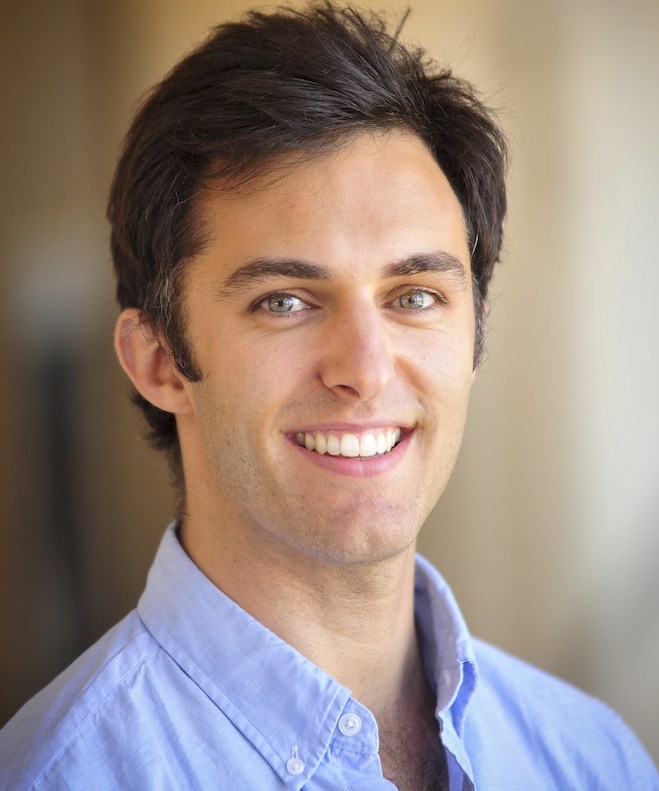
Daniel M. Roy is a Full Professor at the University of Toronto, with cross-appointments in the Department of Computer Science, Department of Statistical Sciences, and Department of Electrical and Computer Engineering. He serves as Research Director at the Vector Institute and holds the CIFAR Canada AI Chair. Research Focus: Foundational principles of prediction, inference, and decision-making under uncertainty across machine learning, statistics, mathematical logic, applied probability, and computer science. Scientific Contributions: Key work in learning theory, statistical network analysis, probabilistic programming, and information-theoretic frameworks for generalization. Awards: ICML 2024 Best Paper Award for "Information Complexity of Stochastic Convex Optimization" and promotion to Full Professor in 2024. Student Advising: Actively mentors Ph.D. candidates and postdoctoral researchers with strong quantitative backgrounds, particularly at the intersection of machine learning, statistics, and computer science. Email: daniel.roy@utoronto.ca
Helge Langseth is a Professor at the Department of Computer Technology and Informatics , within the Faculty of Information Technology and Electrical Engineering at the Norwegian University of Science and Technology (NTNU). His research focuses on Artificial Intelligence , Machine Learning , and Probabilistic Graphical Models , particularly Bayesian Networks and their applications in Decision Support Systems . Langseth's work addresses Explainable AI (XAI) , Reinforcement Learning , and Recommender Systems . He has contributed to Bayesian Optimization , Probabilistic Modeling , and Robotic Control in oceanic environments. His recent publications emphasize transparency , fairness , and scalability in AI systems, with applications spanning maritime trade, migraine diagnosis, and power grid management. He is affiliated with the Intelligent Systems Research Group at NTNU and actively mentors doctoral and master's students. Co-authored works with Yanzhe Bekkemoen , Sverre Herland , and Jørgen Hanssen reflect his role in advising the next generation of AI researchers.
Zhiyuan Wu is a Doctoral Research Fellow at the University of Oslo , affiliated with the Digital Signal Processing and Image Analysis research group under the Faculty of Mathematics and Natural Sciences . Education: Bachelor’s degree in Communication Systems and Information Technology from Lanzhou University, China Master’s degree from the Technical University of Munich, School of CIT Research Focus: Zhiyuan Wu specializes in machine learning, with particular emphasis on probabilistic graphical models, information theory, and tackling real-world challenges such as distributional shifts and privacy concerns. His work explores entropy regularization techniques to address label shift in distributed learning systems, aiming to improve model robustness and data privacy across diverse domains like medical applications. Publications & Research Trends: His recent publication at the International Conference on Learning Representations highlights a novel approach to mitigating label shift through entropy regularization. This aligns with his broader research goals of enhancing the adaptability and interpretability of machine learning models in dynamic, privacy-sensitive environments. Labs & Teams: He is actively involved with the Digital Signal Processing and Image Analysis (DSB) research group, contributing to collaborative projects that bridge theoretical advancements with practical implementations in machine learning.
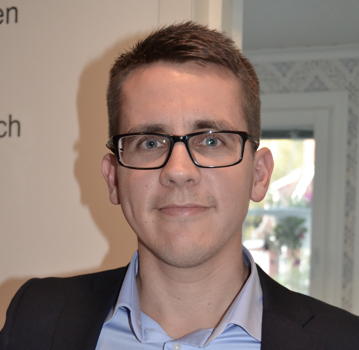
Ida Scheel is an Associate Professor in Statistics and Data Science at the University of Oslo , Department of Mathematics. She specializes in Bayesian hierarchical modeling, recommendation systems, and stochastic processes on networks. Her research interests include: Bayesian statistics and model diagnostics Data science applications in environmental and health domains Network-based machine learning Uncertainty quantification in predictive modeling Recent publication trends show a focus on Bayesian model validation, machine learning for product adoption prediction, and real-estate analytics. She contributes to interdisciplinary projects like BigInsight and CELS . Scientific awards : Sverdrup Prize for Young Researchers (2011) Advising : Supervised 8 PhD students (main/co-supervisor) in areas spanning Bayesian causal effects, neural network survival analysis, and model conflict detection. Key grants include participation in the Data Science@UiO and Integreat projects. Labs/teams : Active member of the Center for Computational Inference in Evolutionary Life Science (CELS) and the BigInsight center.
Johan Pensar is an Associate Professor of Statistics and Data Science at the University of Oslo's Department of Mathematics. He holds a PhD from Åbo Akademi University (2016) and was a postdoc at the University of Helsinki (2016–2020). His research focuses on statistical machine learning, probabilistic graphical models, causal inference, and applications in genomics. He has supervised multiple PhD students and co-supervised others in interdisciplinary projects, including causal modeling in healthcare and machine learning for microbiology. Education: PhD in Statistics, Åbo Akademi University, 2016 Postdoctoral Researcher, University of Helsinki, 2016–2020 Research Interests: Pensar's work integrates statistical theory with practical applications. Key areas include developing methods for causal discovery, probabilistic graphical models (e.g., Bayesian networks), and their use in genomics and healthcare. He emphasizes interpretable machine learning and robust statistical frameworks for complex data. Publications: Recent work spans causal inference, microbial genome analysis, and housing market prediction. His methods address challenges like confounding bias, generalization in ML, and uncertainty quantification in valuation models. Awards: Finnish Statistical Society Doctoral Thesis Award (2013–2016) Teaching & Advising: Pensar teaches advanced courses in statistical learning and probabilistic graphical models. He advises PhD students on causal modeling, ML in healthcare, and data science applications. He collaborates with industry partners like Integreat and Eiendomsverdi AS. Lab/Teams: He is affiliated with the Norwegian Centre for Knowledge-driven Machine Learning (Integreat) and leads research on Bayesian methods in ML.
Pekka Parviainen is an Associate Professor in the Department of Informatics at the University of Bergen, within the Faculty of Mathematics and Natural Sciences. His research spans machine learning, probabilistic modeling, and AI theory, with a focus on Bayesian and Markov networks, adversarial robustness, fairness, and energy forecasting. He is affiliated with the Center for Data Science (CEDAS), an active research center at the university. His research interests include: Structure learning in graphical models Probabilistic forecasting using graph neural networks Adversarial robustness and defense mechanisms Fairness in clustering and machine learning Optimization and approximation in learning algorithms Applications in renewable energy and quantum sensing His recent publications (2020–2025) reflect a strong theoretical grounding combined with real-world applications, particularly in energy systems and AI safety. The works trend toward scalable and interpretable models, with increasing focus on fairness and robustness. Key themes include Bayesian network learning, metric learning, and causal graph modeling. Scientific contributions include: Development of novel adversaries (e.g., Voronoi-epsilon) for measuring robustness Scalable algorithms for learning large DAGs and Bayesian networks Integration of continuous optimization with combinatorial heuristics Applications in electricity demand forecasting and gas sensing Parviainen advises PhD students, including Hyeongji Kim (2023 thesis on distance in machine learning), and collaborates extensively with researchers in Norway and internationally. He has received computational support via Sigma2 (NN9884K) and is part of the CEDAS project, which fosters interdisciplinary data science research. While no specific grants are detailed, his involvement in funded projects and high-impact publications indicates active grant engagement. He is associated with the Center for Data Science (CEDAS), where he contributes to advancing data-driven methodologies across domains. The team emphasizes scalable, robust, and fair AI systems, aligning with national and international research priorities in trustworthy machine learning.
Lei Jiao is a Professor in the Department of Information and Communication Technology at the University of Agder's Faculty of Engineering and Science. Previously serving as an Associate Professor from May 2014 to October 2022, Dr. Jiao has established himself as a leading researcher in artificial intelligence, with particular expertise in Tsetlin Machines and their applications across diverse domains. PhD in Information and Communication Technology, University of Agder (2008-2012) Master of Engineering in Communication and Information System, Shandong University (2005-2008) Bachelor of Engineering in Telecommunication Engineering, Hunan University (2001-2005) Dr. Jiao's research spans multiple cutting-edge areas including interpretable artificial intelligence, wireless communication protocols, network resource allocation, and signal processing. His work on Tsetlin Machines has pioneered new approaches to machine learning that emphasize interpretability while maintaining high performance. The research group he contributes to at the University of Agder focuses on Autonomous and Cyber-Physical Systems (ACPS), Battery recycling, and the Centre for Artificial Intelligence Research (CAIR). Analysis of Dr. Jiao's recent publications reveals a strong emphasis on interpretable AI systems, particularly through Tsetlin Machines. His work spans applications in GNSS jammer detection, crowd anomaly detection, DNA sequence classification, and hardware acceleration of machine learning models. The research consistently demonstrates how logical, rule-based approaches can provide transparent alternatives to traditional neural networks while maintaining competitive performance. Supervised numerous PhD students including Vojtech Halenka, Ahmed K. Kadhim, and Sindhusha Jeeru Mentored over 30 Master's thesis projects covering topics from Tsetlin Machines to signal processing and computer vision Collaborates extensively with Ole-Christoffer Granmo and other leading researchers in the AI field Dr. Jiao actively contributes to advancing the field through supervision of doctoral candidates, collaboration on major research projects, and development of novel machine learning approaches that balance performance with interpretability. His work bridges theoretical foundations with practical applications across telecommunications, computer vision, and natural language processing domains.
Luca Cibinel is a Doctoral Research Fellow at the University of Oslo, affiliated with the Department of Mathematics and the Statistics and Data Science group. His PhD project, supervised by Basil Ell, Johan Pensar, and Riccardo De Bin, focuses on developing statistical learning techniques for assessing and generating transition metal complexes based on observational data and theoretical knowledge. Prior to this, he earned a master's degree in mathematics from the University of Trento (2023), with a thesis on penalized likelihood inference for Gaussian covariance graph models. He also worked as an early-stage researcher at the University of Padua, investigating probabilistic graphical models for count data in high-dimensional scenarios. His research interests include statistical relational learning, probabilistic logic, and machine learning applications for graph-structured data. Luca is based at the Niels Henrik Abels hus in Oslo. Education: Master's in Mathematics, University of Trento (2023) Early-stage Researcher role at University of Padua (2024) Research Focus: Luca's work bridges statistical methodology and computational modeling, particularly in contexts requiring integration of theoretical and empirical data. His current project aims to create frameworks for evaluating and generating transition metal complexes, with potential applications in materials science and chemistry. Professional Affiliations: Faculty of Mathematics and Natural Sciences (student status), Statistics and Data Science research group. Links: LinkedIn Profile
Junbai Wang is a Researcher at the University of Oslo's Department of Clinical Molecular Biology. He holds a PhD in theoretical and computational physics from the University of Bergen and has conducted postdoctoral research at the Norwegian Radium Hospital and Columbia University. His expertise spans bioinformatics, computational biology, and data mining, with a focus on developing advanced algorithms to address challenges in cancer biology and genetic regulation. Key research interests include the design of computational tools for analyzing genomic data, such as chromatin architecture, regulatory mutations, and transcription factor interactions. Notable contributions include the BayesPI model for protein-DNA interactions and the IGAP pipeline for integrative genome analysis. Wang has supervised multiple PhD and master’s students in bioinformatics and computational biology. His work frequently involves collaborations with biologists and clinicians, aiming to bridge computational methods with translational research in oncology. Recent publications highlight advancements in understanding 3D chromatin dynamics in breast cancer and regulatory mutations in lymphoma. He is a member of the In Silico Study of Genome Regulation research group, emphasizing interdisciplinary approaches to decode gene regulation mechanisms. Collaborations span institutions like the Oslo University Hospital and NTNU, reflecting his commitment to collaborative, data-driven research.
Tore Selland Kleppe is a Professor of Mathematics at the University of Stavanger, affiliated with the Faculty of Science and Technology and the Department of Mathematics and Physics. His research focuses on computational statistics, Bayesian methods, Monte Carlo techniques, and their applications in econometrics and energy economics. Key research interests include Hamiltonian Monte Carlo (HMC) methods, stochastic volatility modeling, commodity price dynamics, and Markov-switching models. He has contributed to advancements in numerical integration for stochastic differential equations, adaptive sampling algorithms, and efficient computation in high-dimensional Bayesian models. Notable work includes developing dynamically rescaled HMC algorithms, incorporating transport maps and importance sampling for hierarchical models, and analyzing commodity futures using state-space frameworks. His publications span top journals like Journal of Computational and Graphical Statistics , Statistics and Computing , and Energy Economics . Collaborations involve experts in econometrics (e.g., Roman Liesenfeld, Atle Oglend) and computational methods. His recent work addresses challenges in restricted domain sampling, storage constraints in energy markets, and adaptive step-size strategies for MCMC efficiency. No awards or grants are explicitly mentioned, but his extensive publication record reflects sustained academic contributions. He actively participates in conferences like the International Conference on Econometrics and Statistics and Norwegian Statistical Association meetings.
Vera Haugen Kvisgaard is a Doctoral Research Fellow and PhD Candidate at the University of Oslo , affiliated with the Department of Mathematics under the Faculty of Mathematics and Natural Sciences. Her academic focus lies in computational causal inference and probabilistic graphical models. Email: verahk@math.uio.no Office: Room 809, Niels Henrik Abel's House Research Interests : Computational Causal Inference Probabilistic Graphical Models Bayesian Methods in Machine Learning Statistical Modeling for Socio-economic Assessments Academic Background : Combines economics and statistics from her studies at the University of Oslo and work at the Norwegian Ministry of Finance. Publication Highlight : Contributed to a 2022 socio-economic evaluation of infection control measures during the COVID-19 pandemic.
Henrik Lieng is an Associate Professor at OsloMet – storbyuniversitetet’s Faculty of Technology, Art and Design, Department of Computer Science. His research focuses on computer graphics, computer-aided design (CAD), and interactive systems. Primary Affiliation : Faculty of Technology, Art and Design – Department of Computer Science Research Areas : Vector graphics, gradient meshes, 3D shape modeling, and color-based ideation tools Henrik’s recent publications (2015–2017) highlight work on probabilistic modeling, shading curves, and collaborative design systems. Key conferences include SIGGRAPH and Pacific Graphics , with applications in digital art and interactive visualization. His research intersects computer graphics and artificial intelligence, emphasizing user-driven design tools and algorithmic workflows. Henrik collaborates with researchers like Jiri Kosinka, Neil Dodgson, and Flora Tasse. His work addresses challenges in gradient mesh interpolation, vector-based drawing, and collaborative ideation environments. No formal scientific awards or student advisement records are publicly available in the provided data.
Helge Langseth is Professor at NTNU's Department of Computer Science, researching computational structures for decision-making under uncertainty. His expertise includes Bayesian networks, probabilistic graphical models, decision support systems, and machine learning. He leads research on scalable learning algorithms and probabilistic AI methods. He teaches courses in artificial intelligence, deep learning, and probabilistic methods. Langseth has published extensively on Bayesian inference methods, mixture models, and applications in reliability engineering and intelligent systems.
Giampiero Salvi is a Professor at the Department of Electronic Systems, Norwegian University of Science and Technology (NTNU). He is affiliated with the Signal Processing research group and holds academic qualifications from La Sapienza University of Rome (Civil Engineering) and the Royal Institute of Technology (Dr.Scient). His research focuses on artificial intelligence, machine learning, speech processing, and human-machine interaction. Key contributions include advancements in speech recognition systems, neural network architectures for video prediction, and applications in healthcare analytics and cybersecurity. His work bridges theoretical foundations with practical implementations, such as developing pronunciation assessment frameworks for children, Parkinson’s disease detection via speech analysis, and real-time speaker diarization systems. He has contributed to foundational research in acoustic-to-articulatory mapping, explainable AI for clinical prediction, and multimodal dialogue systems. His research often addresses challenges in low-resource languages and clinical settings, emphasizing interdisciplinary collaboration. Salvi’s recent publications highlight trends in foundational models, generative AI for video and speech, and ethical AI applications in healthcare. He actively participates in international conferences and collaborates with institutions like KTH Royal Institute of Technology and the University of Tartu, reflecting his global academic network.
Andrew Muteti Musau is a Professor in Business Economics at Molde University College, Faculty of Business Administration and Social Sciences. He joined as an associate professor in 2021 and was promoted to professor in 2024. His research spans behavioral economics, energy economics, and macroeconomics, with a focus on replication studies and experimental methods. PhD in Economics from the University of Trento (2021) Master’s in Business Administration from the University of Agder (2014) Postdoctoral research in energy economics at INN University (2014) His research interests include behavioral economics, experimental economics, energy economics, and macroeconomics. He has contributed to econometrics via Stata programming tools and explored inefficiency determinants in energy sectors, emotional responses in sports, and financial literacy. Recent work investigates personality impacts on financial knowledge gaps. Publications span econometrics, energy economics, behavioral and experimental economics, and replication studies. Teaching areas include econometrics, behavioral economics, and decision theory. Musau collaborates with institutions like the University of Agder, INN University, and the University of Trento.