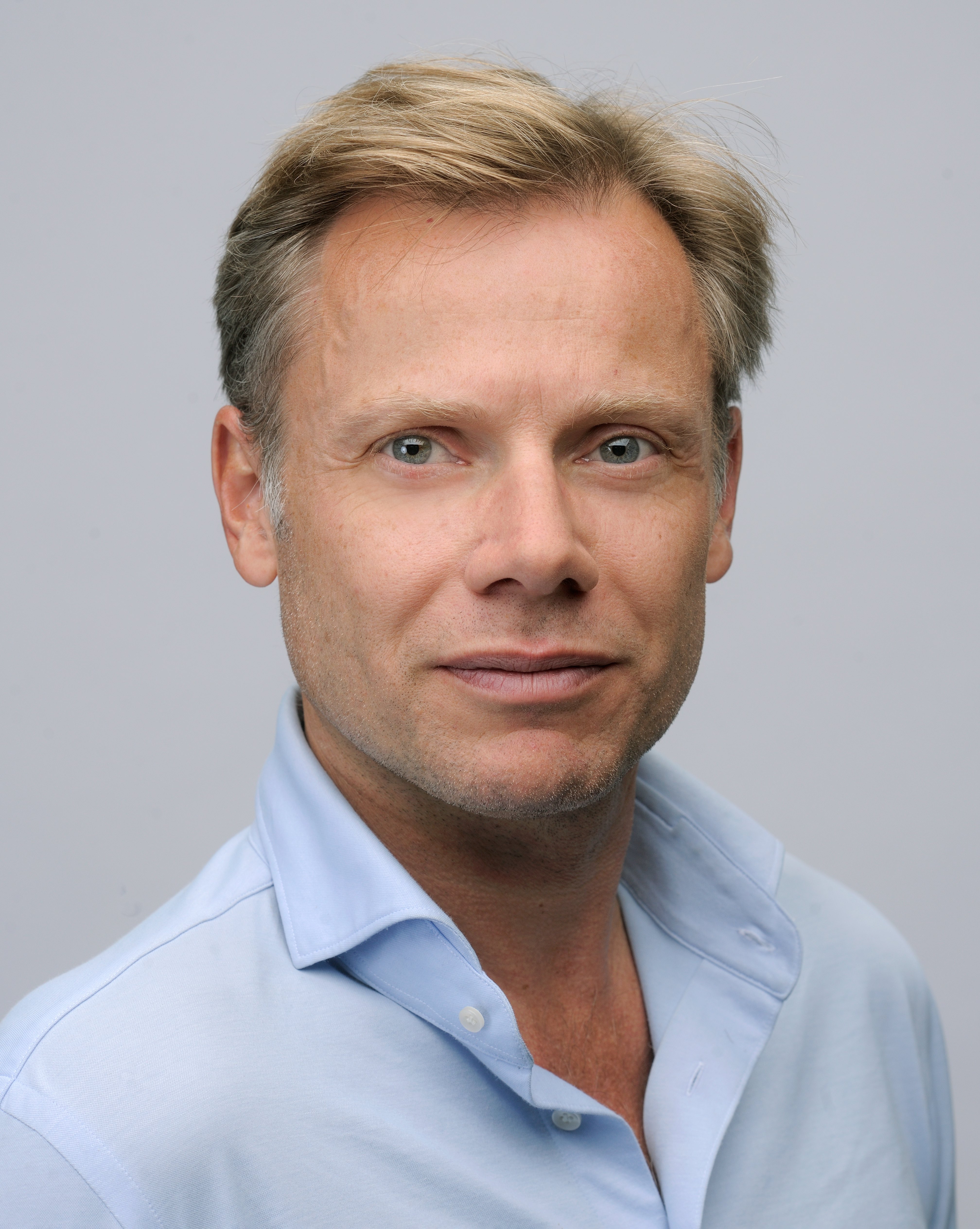
Dr. Peter J.F. Lucas is a Full Professor specializing in Datamanagement & Biometrics with over 35 years of experience in artificial intelligence, probabilistic graphical models, and clinical decision support systems. His research spans intelligent systems, machine learning, and eHealth, with a focus on applying Bayesian networks and probabilistic logic to medical and non-medical domains.
Ivana Nikoloska is an Assistant Professor at the Department of Electrical Engineering, Eindhoven University of Technology (TU/e). She is affiliated with the Center for Quantum Materials and Technology Eindhoven and BIASlab (Bayesian Intelligence and Stochastic Agents Lab). Her academic career includes prior roles as a Research Associate at King’s College London and a Visiting Researcher at Aalborg University. PhD: Monash University, Australia (2023) MSc & Dipl.-Ing.: University of Ss. Cyril and Methodius, North Macedonia Research Interests span foundational and applied machine learning, quantum computing, and information/communication engineering. Her work focuses on integrating Bayesian inference, variational methods, and quantum technologies for tasks like signal processing, channel estimation, and power control optimization. Quantum Machine Learning Bayesian Simulation-Based Inference Meta-learning for Wireless Systems Hybrid Quantum-Classical Architectures Stochastic Signal Processing Quantum Sensing & Metrology Notable Trends in Publications include quantum recurrent neural networks with adaptive gating, Bayesian frameworks for quantum sensing, and meta-learning applications in communication systems. She explores variational inference for planning and robust algorithms for channel estimation under non-ideal conditions.
Jan Draisma is a full professor of Mathematics at the University of Bern and a part-time full professor of Applied Algebra and Geometry at Eindhoven University of Technology (TU/e), where he is affiliated with the Department of Mathematics and Computer Science, specifically in Discrete Algebra and Geometry and Coding Theory and Cryptology. He obtained his Master's and Ph.D. degrees from TU/e cum laude and held a postdoctoral position at the University of Basel (2002–2005). He returned to TU/e as an assistant professor, later advancing to associate professor (2011–2016), and served as a part-time full professor at VU Amsterdam (2015–2016). His research focuses on the interplay between combinatorics, statistics, and algebraic geometry. Key areas include tropical geometry, algebraic statistics, symmetric systems of polynomial equations in infinitely many variables, and representation stability. His work often explores the structure of infinite-dimensional algebraic objects and their finite approximations. The most recent publications highlight trends in polynomial functors, topological Noetherianity, amoebas of linear spaces, and the geometry of tensor representations. These works reflect a deep integration of algebraic geometry with combinatorics and category theory, emphasizing stabilization phenomena and symmetry in algebraic structures. NWO Vici Award: Stabilisation in Algebra and Geometry (2015) NWO Vidi Award: Finite thanks to symmetry (2010) Draisma has received significant research funding, including the NWO Vidi and Vici grants, and two NWO Free Competition grants (2008, 2012). He has supervised 16 students and is actively involved in the academic community as an associate editor for Experimental Mathematics, SIAM Journal on Applied Algebra and Geometry, and Linear and Multilinear Algebra. He has held leadership roles in major conferences such as MEGA 2015 and SIAM AG 19. He is affiliated with the research groups in Discrete Algebra and Geometry and Coding Theory and Cryptology at TU/e and leads research activities centered on algebraic methods in discrete mathematics and statistics.
Erik Quaeghebeur is an Assistant Professor at Eindhoven University of Technology's School of Mathematics and Computer Science, focusing on uncertainty modeling in artificial intelligence. His work spans probabilistic circuits, imprecise probability theory, and wind energy applications. PhD in Applied Mathematics (Ghent University, 2002-2009) Master's in Applied Mathematics (Université catholique de Louvain, 2001-2002) Master's in Physics Engineering (Ghent University, 1998-2001) Research interests include probabilistic modeling under uncertainty, with applications in AI and wind energy systems. His recent work explores tensor factorizations, equivariant graph neural networks, and scalable probabilistic circuits. Scientific contributions include 60 research outputs and 2 datasets . Awards encompass the ERCIM Alain Bensoussan Fellowship (2013), BOF Postdoc (2010), and B.A.E.F. Francqui Fellowship (2009). He serves on committees for the Society for Imprecise Probability and acts as editorial board member for related conferences. Foundations of Artificial Intelligence course (since 2020) Uncertainty Representations and Reasoning course (since 2021)
Bert de Vries is a Professor at the Signal Processing Systems Group at Eindhoven University of Technology (TU/e), where he has been employed since January 2012. He maintains a dual career, also working at GN Hearing in the hearing aids industry since April 1999, where he holds both research and managerial roles. His academic journey began at TU/e, where he earned his MSc in Electrical Engineering in 1986, followed by a PhD from the University of Florida in 1991. Between 1992 and 1999, he worked at Sarnoff Research Center in Princeton, NJ, contributing to diverse signal and image processing projects. Professor de Vries's research centers on Bayesian Machine Learning, with particular focus on the Free Energy Principle and its applications to engineering problems. His work bridges theoretical neuroscience with practical signal processing systems, especially in biomedical applications. He directs the BIASlab research team at TU/e, which develops probabilistic programming tools including RxInfer.jl, ForneyLab.jl, GraphPPL.jl, ReactiveMP.jl, and Rocket.jl. His research spans active inference, variational message passing, probabilistic programming, and Bayesian neural networks, with applications ranging from hearing aids to multi-agent systems. Analysis of his recent publications reveals a strong trend toward practical implementations of Bayesian inference frameworks, particularly through Julia-based probabilistic programming tools. His work shows increasing focus on active inference applications, message passing algorithms, and the intersection of Riemannian geometry with probabilistic modeling. The research demonstrates consistent progression from theoretical foundations toward real-world engineering applications, particularly in biomedical signal processing and autonomous systems. Professor de Vries teaches a graduate-level course on Bayesian Machine Learning at TU/e and actively contributes to open-source software development through his GitHub profile (bertdv), with recent activity as recent as August 2025. His research team has developed several influential probabilistic programming libraries that have gained significant attention in the machine learning community. The BIASlab research group continues to advance the state of the art in Bayesian inference methods with applications in hearing technology, robotics, and signal processing.
Frank Röttger is an Assistant Professor at Eindhoven University of Technology, specializing in Mathematical Statistics. His primary research focuses on graphical models, multivariate extremes, and statistical inference in high-dimensional settings. Research Interests : Extreme value theory, probabilistic graphical models, causal inference in extremes, and data-driven risk modeling. Awards : NWO Prize (Scientific) - 2024 Organized Activities : Eurandom Workshop on Graph Laplacians, Multivariate Extremes, and Algebraic Statistics (2024) Causality in Extremes Workshop (2024) Courses Taught : Dependence Modeling Foundations of Statistics Mathematical Statistics Contact : Email: f.rottger@tue.nl
Marc Jochen Uetz is a Full Professor at the Mathematics of Operations Research department and affiliated with the Digital Society Institute. His research spans operations research and computer science, focusing on scheduling, game theory, and optimization problems. PhD in Mathematics from Technische Universität Berlin Research Interests: Active in algorithmic game theory and stochastic scheduling, he investigates equilibrium models, price of anarchy, and efficient resource allocation in transportation and network systems. His work contributes to UN Sustainable Development Goals related to education and infrastructure. Publication Trends: Recent work combines game theory with two-stage facility location, network routing, and stochastic scheduling of Bernoulli-type jobs. Key keywords include Nash equilibrium, approximation algorithms, and dynamic programming. Scientific Recognition: Excellent Reviewer Award (2017) Teaching Award (2018) Academic Activities: Currently chairs Platform Wiskunde Nederland, contributes to editorial work, and delivers invited talks at international conferences like IJCAI 2024.
Wouter Kouw is an Assistant Professor at the Electrical Engineering department of Eindhoven University of Technology (TU/e) , leading the Bayesian Intelligent Autonomous Systems lab. With a dual PhD in Computer Science (2018, TU Delft) and MSc in Neuroscience (2013, Maastricht University) , he bridges neurobiology and artificial intelligence through variational Bayesian inference and active inference frameworks. Research Focus : Probabilistic machine learning systems using message passing algorithms on factor graphs , applied to mobile robotics and adaptive control Key Projects : CONTACT-AI (contact-rich robot navigation), FEP-walker (active inference-based locomotion), and BayesBrain (hybrid neuro-in-silico computing) His work spans nonlinear system identification , uncertainty quantification , and sensor modeling , with recent publications in IEEE Transactions , Entropy , and Communications in Computer and Information Science . Awards include the Niels Stensen Fellowship (2017) and TU/e Team Science Award nomination (2023) . Collaborations extend to institutions in Germany, USA, and Denmark, with teaching responsibilities in Bayesian Machine Learning and Neuro Computation .
Prof. Marielle Stoelinga is a Professor at the University of Twente, Netherlands, working within the Electrical Engineering, Mathematics and Computer Science faculty in the Formal Methods and Tools department. She leads significant research initiatives in formal methods with applications to safety, security, and reliability engineering. Her research spans predictive maintenance , fault tree analysis , attack tree modeling , and the integration of safety and security through formal methods. She focuses on applying big data analytics to predict system failures, with particular emphasis on critical infrastructure including railway systems, satellite missions, and nuclear reactors. Her work bridges theoretical formal methods with practical applications in asset management. Analysis of her recent publications reveals a strong trend toward integrating safety and security analysis through attack-fault-defense trees, developing formal frameworks for risk assessment, and applying model checking techniques to real-world maintenance problems. Her research increasingly addresses the human and organizational aspects of predictive maintenance systems while maintaining rigorous formal foundations. 5 million euros research grant from Dutch National Organization for Scientific Research (NWO) for PrimaVera project Prof. Stoelinga leads the PrimaVera research project ( Predictive maintenance for Very effective asset management ), which takes a holistic approach to predictive maintenance spanning sensor systems, data science, maintenance optimization, and human factors. Her research group actively contributes to formal methods applications in critical infrastructure sectors including energy, transportation, and aerospace.
Thijs W. van de Laar is an Assistant Professor at the Eindhoven University of Technology in the Department of Electrical Engineering , affiliated with the Bayesian Intelligent Autonomous Systems lab (BIASlab) and the EAISI Foundational and High Tech Systems groups. His research focuses on intelligent systems for decision-making under dynamic conditions, particularly through scalable probabilistic programming implementations of Active Inference. Academic Background : PhD (2019, TU/e) in automated Bayesian signal processing algorithm design; MSc in natural sciences (biophysics, science communication, Radboud University). Van de Laar's research integrates probabilistic programming with active inference to develop autonomous agents capable of real-time adaptation. Key methodologies include variational message passing , factor graph representations , and free energy minimization . His recent publications examine active inference formalisms, factor graph applications in AI, and uncertainty reduction strategies. Collaborative work spans hearing aid technology, autonomous navigation, and synthetic intelligence development.
Silja Renooij is an Associate Professor at Utrecht University's Department of Information and Computing Sciences, specializing in Artificial Intelligence and Intelligent Systems . Her work bridges Bayesian networks , probabilistic graphical models , and human-centered AI , with a focus on uncertainty quantification, sensitivity analysis, and legal reasoning applications. Current affiliation: Utrecht University Department: Information and Computing Sciences Academic rank: Associate Professor Contact: s.renooij@uu.nl Research interests include: Bayesian network construction and sensitivity analysis Probabilistic reasoning in legal and medical domains Interpretable AI through scenario-based modeling Conflict detection in black-box systems Hybrid human-AI reasoning frameworks Probability elicitation and evidence evaluation Recent publications demonstrate her focus on explainable AI through MAP-independence analysis, legal evidence modeling , and robust decision support systems . Her work often combines argumentation theory with probabilistic graphical models , emphasizing human-AI collaboration in critical domains like healthcare and law.
Thijs van de Laar is an Assistant Professor at the BIASlab (Bayesian Intelligence and Autonomous Systems Laboratory) within the Department of Electrical Engineering at Eindhoven University of Technology. His research bridges advanced computational principles with real-world applications in uncertainty modeling. Education: PhD in Machine Learning (2019), Eindhoven University of Technology MSc in Natural Sciences (2010), Radboud University Nijmegen Research Focus: Bayesian machine learning, active inference, and probabilistic programming, with applications in autonomous agent control, hearing loss compensation, and efficient real-time decision-making systems. His work integrates insights from physics and neuroscience to develop novel computational frameworks. Software Contributions: Key contributor to ForneyLab.jl, a Julia toolbox for automated Bayesian inference through message passing on factor graphs. Also developed Herring.jl, a Poisson node extension for probabilistic modeling. Publications: His 15 most recent articles focus on variational message passing, active inference agents, epistemic value in graphical models, and factor graph-based algorithm design. These works span disciplines including artificial intelligence, control theory, and biomedical engineering.
Dr. S.A. Donderwinkel is a researcher at the Bernoulli Institute within the Faculty of Science and Engineering at the University of Groningen. Their work focuses on probability theory, random graph models, and stochastic processes, with recent publications exploring graphic sequences, critical tree structures, and directed configuration models. They actively contribute to academic research through collaborations and peer-reviewed publications. University: University of Groningen School: Faculty of Science and Engineering Department: Bernoulli Institute Role: Researcher Email: s.a.donderwinkel@rug.nl Research interests include: Integrated random walks and graphic sequences Critical tree analysis and Cauchy distributions Height bounds in random trees Universality in directed configuration models Asymptotic behavior of random structures Their recent publications (2024-2025) demonstrate expertise in probabilistic combinatorics and graph theory, with applications in theoretical computer science and mathematical physics. All articles exhibit rigorous peer-reviewed academic contributions.
Martin Roa-Villescas is a Doctoral Candidate and Teaching Assistant in the Department of Electronic Systems within the Electrical Engineering school at Eindhoven University of Technology (TU/e). He also holds an external position as a Docent (Lecturer) at Fontys University of Applied Sciences since August 2023. His educational background includes a B.Sc. in Electronic Engineering from the National University of Colombia (2010) and an M.Sc. in Embedded Systems from TU/e (2013). Between 2013 and 2018, he worked as an embedded software designer at Philips Research in Eindhoven. Roa-Villescas' research focuses on probabilistic graphical models, Bayesian machine learning, and tensor network applications. His work spans both theoretical advancements in probabilistic inference algorithms and practical implementations in open-source software. He has made significant contributions to optimizing message passing algorithms and developing efficient execution schedules for Bayesian inference. His recent publications demonstrate a clear trajectory toward improving the scalability and efficiency of probabilistic inference methods, with applications spanning audio signal processing, robotics, and hearing aid technology. The development of TensorInference, a Julia package for tensor-based probabilistic inference, represents his commitment to open-source tools that advance the field. As a researcher involved in the STW Zero Autonomous Acoustic Systems project (2017-2024), he has contributed to advancing acoustic sensing technologies through probabilistic modeling approaches. His work aligns with UN Sustainable Development Goals related to technology innovation and accessibility.
Frank van der Meulen is a Professor of Mathematical Statistics at the Vrije Universiteit Amsterdam (VU), where he leads the Department of Mathematics. He holds leadership roles including Director of the VU Bachelor Programme in Business Analytics, Chair of the Mathematical Statistics section at the Netherlands Society for Statistics and Operations Research (VVSOR), and Organizer of the nationwide Van Dantzig seminar. His research focuses on statistical inference for stochastic processes, Bayesian computation, and applications in fields like sports engineering, climate science, and maritime engineering. He has developed influential methods such as 'backward filtering forward guiding' for simulating conditioned Markov processes. Frank obtained his PhD in 2005 from VU Amsterdam and has held academic positions at TU Delft (2007–2022) before returning to VU as a Full Professor in 2022. He teaches courses in statistics, probability, and data science, and has authored packages like BridgeLandmarks and BayesianDecreasingDensity. His work bridges theoretical advancements with practical applications, emphasizing collaboration across disciplines. Research interests include Bayesian computational methods (MCMC, SMC), stochastic differential equations, and inference for diffusions on manifolds. Recent work explores stochastic phylogenetic models and fatigue calculations for maritime structures. He consults on statistical and machine learning projects, offering expertise through his GitHub repositories and published software tools.